Your cart is currently empty!
You may check out all the available trips and book one that suits you.
Continue Browsing Trips
Mathura Barsana Vrindavan Travel Guide: Have you ever imagined walking the same streets where Lord Krishna played his flute, or standing at the exact spot where divine love between Radha and Krishna unfolded? Welcome to the Braj region—a mystical triangle formed by Mathura, Barsana, and Vrindavan, where every stone whispers tales of devotion, every ghat echoes with ancient bhajans, and every temple radiates an energy that can only be described as divine.
This isn’t just another travel destination. This is the heartland of Krishna consciousness, where millions of devotees from across the globe come seeking spiritual awakening, cultural immersion, and a connection to something far greater than themselves. Whether you’re a devoted follower of Lord Krishna, a curious traveler exploring India’s spiritual heritage, or someone simply seeking peace in sacred spaces, this comprehensive guide will help you navigate these three extraordinary towns that form the soul of Krishna Bhakti.
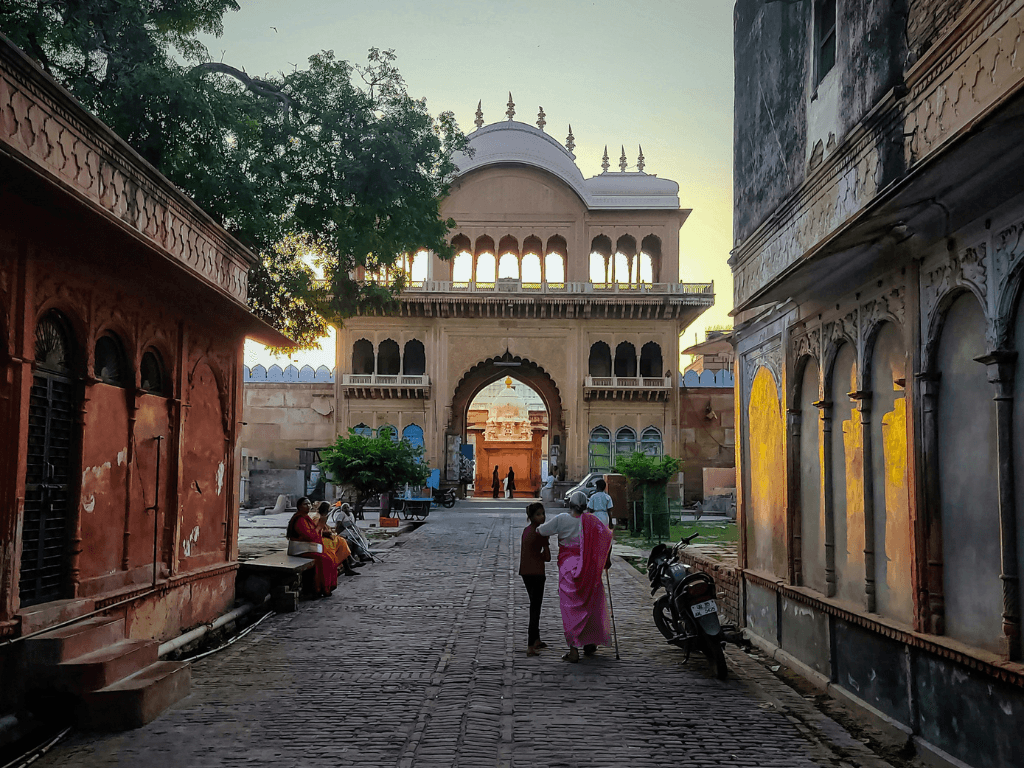
Think of these three towns as chapters in the same divine story. Mathura is where the story begins—the birthplace of Krishna, where a prison cell became the setting for a cosmic event. Barsana represents the feminine divine, the home of Radha Rani, whose love for Krishna defines the highest form of devotion. Vrindavan is where the love story unfolded, where Krishna performed his leelas (divine plays) and enchanted not just the gopis but the entire universe.
What makes this trinity special is how interconnected they are. Located within 15-50 kilometers of each other, these towns can be explored together, creating a complete pilgrimage experience. Each location offers something unique, yet they’re bound together by the common thread of Krishna’s life and teachings.
Picture this: Over 5,000 years ago, in a prison cell in Mathura, Devaki gave birth to her eighth child. The tyrannical King Kansa had imprisoned his sister and brother-in-law because of a prophecy that their eighth son would be his destroyer. That night, when Krishna was born, miracles unfolded—chains broke, guards fell asleep, prison doors opened, and Vasudeva carried the divine infant across the turbulent Yamuna River to safety in Gokul.
This isn’t just mythology—for millions of devotees, this is sacred history that shapes their faith. The Krishna Janmabhoomi Temple now stands on that very spot, making Mathura the most important destination for Krishna devotees worldwide.
While Krishna was born in Mathura, his eternal consort Radha grew up in Barsana, a picturesque town built on hillsides about 50 kilometers away. Radha represents the soul’s longing for the divine, and Barsana celebrates this through its temples, festivals, and the very landscape that witnessed her devotion.
The relationship between Radha and Krishna transcends the physical—it’s the ultimate expression of spiritual love, of the soul seeking union with the divine. When you visit Barsana, you’re not just seeing temples; you’re entering the realm where this sacred love story originated.
After his birth in Mathura, Krishna spent his childhood and youth in Vrindavan and nearby Gokul. This is where he performed his legendary leelas—stealing butter, dancing with the gopis, lifting Govardhan Hill, and playing his enchanting flute. Every grove, every pond, every ancient tree in Vrindavan has a story attached to it.
Vrindavan is where the playful, romantic, and utterly captivating aspect of Krishna’s personality shines through. It’s no wonder that even today, thousands of widows and devotees spend their final years here, chanting Krishna’s name and hoping to attain moksha (liberation) in his divine land.
Mathura serves as the gateway to the Braj region and is exceptionally well-connected. From Delhi, it’s approximately 150 kilometers—about a 3-hour comfortable drive on the well-maintained Yamuna Expressway. Trains run frequently from Delhi, taking about 2-3 hours, while buses are also readily available for budget travelers.
From Agra, Mathura is just 60 kilometers away, making it easy to combine your Taj Mahal visit with a spiritual journey. If you’re coming from Varanasi, you’re looking at about 700 kilometers—a full day’s journey by train or road, but absolutely worth it if you’re creating a comprehensive North India pilgrimage circuit.
For international travelers or those coming from distant Indian cities, the nearest airport is in Agra (about 60 km) with limited connectivity, or Delhi’s Indira Gandhi International Airport (about 160 km), which offers extensive domestic and international flights.
Once you’re in Mathura, getting to Barsana and Vrindavan is straightforward. Vrindavan is just 15 kilometers from Mathura—a quick 30-minute drive. Barsana is about 50 kilometers from Mathura and 42 kilometers from Vrindavan, taking roughly an hour to reach.
You have several options: local buses (budget-friendly but crowded), auto-rickshaws (for short distances within towns), hired taxis (comfortable but more expensive), or the smartest choice—booking with a reliable tour operator like TripCosmos.co who can provide comfortable transport with knowledgeable guides, ensuring you don’t waste time figuring out routes and can instead focus on your spiritual experience.
The moment you step into the Krishna Janmabhoomi Temple complex, you can feel the weight of history and devotion. This sprawling complex encompasses the actual prison cell where Krishna was born—now marked by a sanctum sanctorum that draws endless streams of pilgrims.
The temple itself has faced destruction and rebuilding multiple times through history, but the faith has remained unshaken. The current structure, though relatively modern, maintains the sanctity of the location. Security is tight (you’ll need to deposit cameras and phones), but this only adds to the sense of entering a truly sacred space.
Visit during the evening aarti to witness thousands of devotees singing bhajans, the air thick with incense, bells ringing in synchronized devotion, and an energy that’s absolutely electric. It’s not just a religious ceremony—it’s a collective expression of love for the divine that can move even the most skeptical hearts.
If Krishna Janmabhoomi is about historical significance, Dwarkadhish Temple is about artistic magnificence. Built in 1814, this temple dedicated to Lord Krishna showcases stunning Rajasthani architecture with intricate carvings, beautiful paintings depicting Krishna’s life, and an atmosphere of refined devotion.
What sets Dwarkadhish Temple apart is its management and upkeep—it’s impeccably maintained, and the daily rituals follow strict traditional protocols. The deity of Krishna here is adorned with different outfits and jewelry throughout the day, each darshan offering a unique visual treat. The evening aarti here is particularly spectacular, with elaborate decorations and synchronized bell-ringing that creates an almost hypnotic atmosphere.
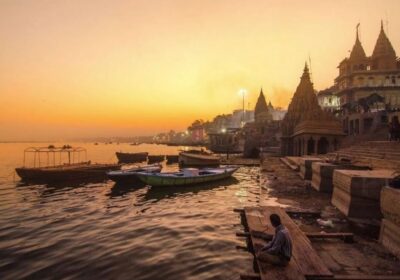
After slaying the demon King Kansa, Krishna is said to have rested at this ghat on the banks of River Yamuna—hence the name Vishram (meaning rest). Today, Vishram Ghat is the spiritual heart of Mathura, where pilgrims bathe in the holy river, offer prayers, and witness the stunning Yamuna Aarti each evening.
The ghat comes alive especially during festivals, but even on regular days, the sight of pilgrims performing rituals, sadhus meditating, and devotees offering diyas (lamps) to the river creates a scene straight out of ancient scriptures. Taking a boat ride on the Yamuna during sunrise or sunset provides a unique perspective of Mathura’s spiritual landscape.
About 26 kilometers from Mathura lies Govardhan Hill, famous for the legend where Krishna lifted the entire hill on his little finger to protect villagers from torrential rains sent by an angry Indra. Today, the Govardhan Parikrama (circumambulation of the hill) is a deeply sacred practice, with devotees walking the 21-kilometer path, often barefoot, as an act of devotion.
The town of Govardhan also houses several important temples including Giriraj Temple, Kusum Sarovar, and Mansi Ganga. Even if you don’t have time for the full parikrama, a visit to these sites provides beautiful insights into Krishna’s legends and spectacular views of the surrounding countryside.
Imagine climbing nearly 200 stairs carved into a hillside, each step bringing you closer to the temple dedicated to the eternal queen of Krishna’s heart. The Radha Rani Temple in Barsana, perched atop Brahma Hill, isn’t just a temple—it’s a pilgrimage within a pilgrimage.
The architecture is captivating, with beautiful stone carvings and traditional designs. But what truly stands out is the panoramic view from the top. As you catch your breath after the climb, you’re rewarded with a vista of the entire Barsana valley, and you understand why Radha would look out from here, hoping to catch a glimpse of Krishna coming from Nandgaon.
The temple complex includes shrines dedicated to Radha’s associates and family members, each with its own significance. The energy here is distinctly different from other Krishna temples—there’s a sweetness, a romantic devotion that permeates every corner.
If you visit Barsana during Holi season, you’re in for the experience of a lifetime. The Lathmar Holi of Barsana is world-famous—a unique celebration where women playfully beat men with sticks (lathis) while men try to shield themselves, all in good fun.
This tradition recreates the playful teasing between Krishna and the gopis. Krishna and his friends would come from Nandgaon to Barsana to play Holi with Radha and her friends, who would chase them away with sticks. Today, men from Nandgaon come to Barsana, and the local women continue this tradition with enthusiasm and laughter.
The atmosphere is absolutely electric—music, dancing, colors flying everywhere, and thousands of spectators from across the world. If you plan to visit during this time, book accommodations well in advance and consider hiring a guide through established operators like TripCosmos.co to navigate the crowds safely and position yourself for the best views.
Mor Kuti, meaning “Peacock Palace,” is where Krishna is believed to have danced with peacocks, adorning himself with peacock feathers—his iconic crown. The site offers a peaceful retreat with beautiful gardens and a temple, perfect for quiet contemplation.
Prem Sarovar, or “Lake of Love,” is a large sacred pond associated with Radha and Krishna’s divine pastimes. According to legend, this is where Radha and her friends would come to fill water, and Krishna would find excuses to meet her here. The sarovar is surrounded by ghats and temples, and the evening aarti reflected on the water’s surface creates an enchanting scene.
If there’s one temple that embodies the spirit of Vrindavan, it’s Banke Bihari. The deity here—Krishna in his enchanting, playful form—is believed to be so powerful that the curtain before the idol is closed and opened repeatedly during darshan to prevent devotees from being overwhelmed by the divine energy.
The temple is always crowded—and I mean always. Peak times see devotees waiting for hours, but somehow, this adds to the experience. The spontaneous kirtan sessions, the collective chanting, the momentary glimpse of the deity—it creates an emotional intensity that’s hard to describe. The temple doesn’t follow a strict schedule for aarti; instead, the deity is treated like a living being whose moods determine the day’s program.
Pro tip: Visit during early morning or late evening for relatively shorter queues, and avoid the weekends unless you’re prepared for massive crowds.
The ISKCON (International Society for Krishna Consciousness) Temple in Vrindavan offers a completely different experience. Founded by Srila Prabhupada, this temple complex is a modern marvel—spotlessly clean, well-organized, with extensive gardens and facilities.
The temple houses beautiful deities of Krishna Balaram and Radha Shyamasundar, and the evening aarti here is a spectacular, well-choreographed affair with excellent music and lighting. What makes ISKCON special is its accessibility for international visitors—everything is explained in English, volunteer guides are available, and there’s a certain comfort level that makes it perfect for first-time visitors to Indian spiritual sites.
The temple complex also includes a guesthouse, restaurant serving delicious sattvic food, and a museum documenting the spread of Krishna consciousness worldwide. If you’re interested in Krishna philosophy beyond the ritualistic aspects, the daily classes and discussions held here are extremely enlightening.
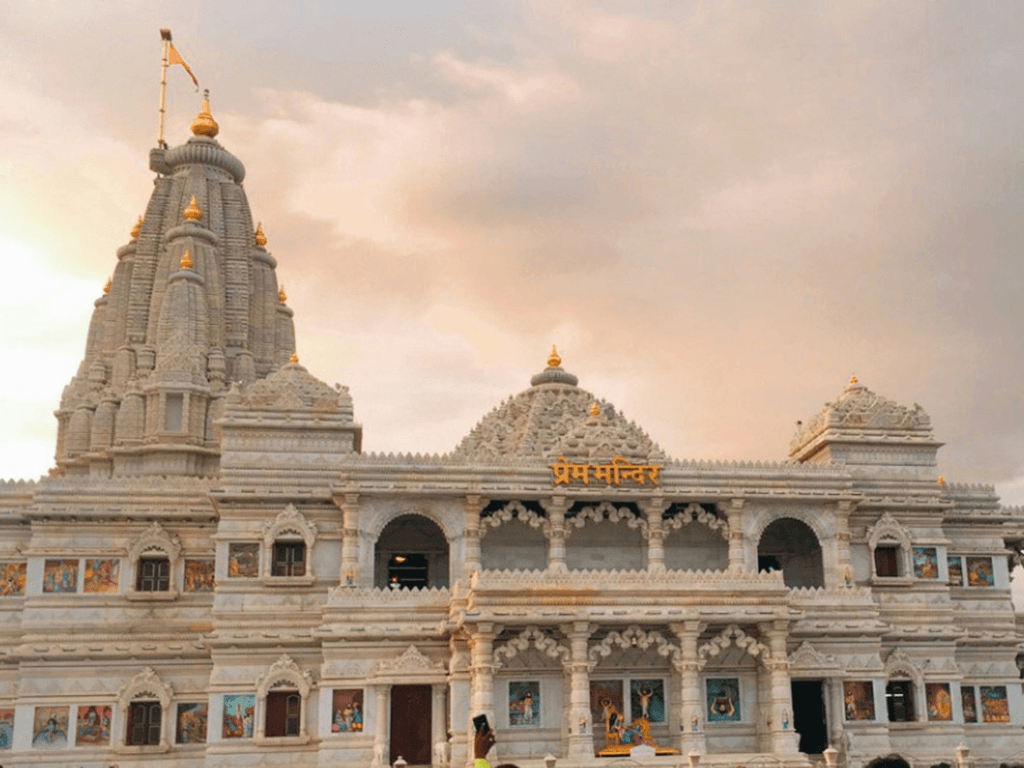
Built relatively recently (inaugurated in 2012), Prem Mandir stands as a stunning example of how traditional devotion can be expressed through modern architectural excellence. Made entirely of white marble, the temple is a visual masterpiece with intricate carvings depicting Krishna’s life stories on every wall, pillar, and archway.
But Prem Mandir’s true magic reveals itself after sunset. The temple is illuminated with colorful lights that change patterns, creating a dreamlike atmosphere. The musical fountain show in the temple complex is choreographed to devotional songs and is absolutely mesmerizing—jets of water dancing to music while lights create rainbow patterns.
The temple complex is wheelchair accessible and family-friendly, with gardens where you can sit and reflect. It’s one of the few spiritual sites that successfully blends devotion with aesthetic beauty, making it appealing to both the deeply religious and the appreciative tourist.
Among all the temples and ghats, Nidhivan stands apart—shrouded in mystery and believed to be the site where Krishna still performs his Raas Leela with Radha and the gopis every night. The trees here grow in unusual twisted pairs, said to be frozen gopis who participated in Krishna’s divine dance.
Local belief is so strong that the entire complex is cleared and closed by evening, and no one is allowed to stay overnight. Residents share stories of strange lights, music, and sounds heard from within after dark. The temple dedicated to Radha Krishna inside the complex has a bed where the deity is believed to rest at night, and devotees claim to find fresh flower petals and evidence of divine presence each morning.
Whether you believe in the mystical aspects or not, Nidhivan offers a unique, contemplative atmosphere. The ancient trees, the silence, the sense of something beyond ordinary perception—it’s an experience that stays with you long after you leave.
Timing can dramatically affect your experience in the Braj region. The ideal period is between October and March when temperatures are pleasant, ranging from 10°C to 25°C. The scorching summer months (April to June) see temperatures soaring above 45°C, making temple visits and outdoor exploration quite challenging. The monsoon season (July to September) brings relief but also humidity and potential travel disruptions.
However, if you want to see Braj at its absolute best, plan around the major Krishna festivals. Janmashtami, celebrating Krishna’s birth, transforms Mathura into a massive celebration ground with decorations, special darshans, theatrical performances of Krishna’s life, and devotional singing that continues through the night.
Holi in Barsana and Vrindavan is world-famous for good reason. The Lathmar Holi of Barsana (usually a week before the actual Holi date) and the flower Holi at Banke Bihari Temple are bucket-list experiences. The entire region is drenched in colors, music, and ecstatic devotion.
Radha Ashtami, celebrating Radha’s appearance, sees Barsana at its most decorated and devotional. Kartik Month (October-November) is considered especially auspicious, with elaborate evening aartis and special rituals across all three towns. Companies like TripCosmos.co offer specialized festival packages that include accommodation, transport, guided access to special ceremonies, and crowd management—invaluable during these peak times when the population of these towns multiplies several fold.
Accommodation in the Braj region caters to every budget and preference. Mathura offers the widest range of options, from budget dharamshalas and guesthouses starting at a few hundred rupees per night to comfortable mid-range hotels and a few upscale properties offering modern amenities.
Vrindavan has seen significant development in hospitality infrastructure. The ISKCON guesthouse is popular among international visitors for its cleanliness and vegetarian food. Several new hotels have emerged near Prem Mandir and along the main roads, offering comfortable stays. Many travelers prefer staying in Vrindavan as it provides a more immersive spiritual experience with morning temple bells and evening bhajans becoming part of your daily rhythm.
Barsana has limited accommodation options—mostly basic guesthouses and dharamshalas. Most travelers visit Barsana as a day trip from Mathura or Vrindavan.
For a hassle-free experience, especially during festivals, booking through tour operators like TripCosmos.co ensures you get clean, safe accommodation in convenient locations. Their local partnerships mean you avoid the gamble of finding decent lodging on arrival, which can be particularly challenging during peak seasons.
The food in Braj region is strictly vegetarian (and often vegan-friendly), reflecting the Krishna-conscious culture. You must try the local specialties that have been part of this region’s cuisine for centuries.
Mathura’s peda is legendary—this milk-based sweet has been made here for generations, with some shops claiming recipes hundreds of years old. The pedas come in various flavors, but the traditional ones remain most popular. Don’t leave without getting a box as prasad.
Kachori and jalebi for breakfast is a local favorite—crispy, spicy kachoris paired with syrup-soaked jalebis create a combination that might sound unusual but tastes divine. The numerous sweet shops offer an array of traditional Indian sweets—gulab jamun, rabri, malpua, and seasonal specialties.
In Vrindavan, the ISKCON restaurant serves wholesome sattvic meals—food prepared and offered to the deity before being served, believed to carry spiritual benefits. Several other restaurants around major temples offer similar prasad meals at reasonable prices.
For authentic North Indian thalis, small family-run restaurants throughout these towns serve simple, fresh, home-style food that’s both delicious and budget-friendly. Remember that alcohol and non-vegetarian food are not just unavailable but also culturally inappropriate in these sacred towns—embrace the sattvic diet as part of your spiritual journey.
Pressed for time? Here’s how to maximize a single day. Start early (6:00 AM) in Mathura with morning darshan at Krishna Janmabhoomi, followed by a quick visit to Dwarkadhish Temple. By 9:00 AM, head to Vrindavan for Banke Bihari darshan. Visit Prem Mandir and ISKCON Temple, having lunch at the ISKCON restaurant around 1:00 PM. In the afternoon, quickly visit Nidhivan, then drive to Barsana (arriving around 4:00 PM) for Radha Rani Temple darshan. Catch the evening aarti at Vishram Ghat in Mathura before departing. This is intense but covers the major highlights.
With two days, you can breathe and absorb more. Day one focuses on Mathura and Govardhan. Morning darshan at Krishna Janmabhoomi, visit Dwarkadhish Temple, explore Vishram Ghat, then drive to Govardhan. Visit key temples there, see Kusum Sarovar during sunset, attend evening aarti at Vishram Ghat back in Mathura.
Day two covers Vrindavan and Barsana. Early morning visit to Banke Bihari, ISKCON Temple for breakfast and peaceful time, Prem Mandir, Nidhivan, and afternoon trip to Barsana for Radha Rani Temple and Prem Sarovar. This itinerary allows time for meals, rest, and unhurried temple visits.
Three days let you truly immerse yourself. Follow the two-day itinerary above, then dedicate day three to deeper experiences: attend morning mangala aarti (pre-dawn worship) at Banke Bihari, take a heritage walk through old Vrindavan lanes, visit smaller, lesser-known temples each with unique stories, spend contemplative time at peaceful spots like Kesi Ghat, perhaps attend a spiritual discourse or kirtan session, and shop for traditional items like deity clothes, devotional music, books, and local handicrafts.
Planning a spiritual journey to multiple sacred sites involves more than just booking transport—it requires understanding temple timings, festival schedules, local customs, and the significance behind each location. This is where TripCosmos.co’s expertise becomes invaluable.
Based in Varanasi with extensive experience in North Indian pilgrimage tourism, TripCosmos.co understands what makes a journey to Mathura, Barsana, and Vrindavan truly meaningful. Their guides don’t just take you to temples—they share the stories, explain the rituals, and help you connect with the spiritual essence of each location.
What sets them apart? Complete customization based on your interests—whether you’re a devout Krishna bhakt wanting to attend every possible aarti, a first-time visitor needing hand-holding through Indian spiritual practices, a photographer seeking those perfect golden-hour shots, or a family wanting a comfortable balance of spirituality and comfort.
Their packages typically include comfortable, air-conditioned transportation with experienced drivers who know these routes like the back of their hand, knowledgeable guides well-versed in Krishna’s legends and temple histories, pre-arranged accommodation eliminating booking hassles, assistance with temple protocols and offerings, and 24/7 support should any issues arise.
TripCosmos.co also excels at creating combined itineraries. Many travelers combine the Braj circuit with nearby Agra (for the Taj Mahal), Ayodhya (for Ram Mandir), or even longer routes connecting to Varanasi and Prayagraj for a comprehensive North India spiritual journey. Their transparent pricing, proven track record, and genuine passion for showcasing India’s spiritual heritage make them an ideal partner.
Ready to plan your divine journey? Reach them at +91-9336116210 or visit www.tripcosmos.co to discuss your specific requirements and explore their various packages.
Before you embark on your Braj journey, keep these practical tips in mind. Dress modestly—this is a sacred region where traditional values are deeply respected. Long skirts or pants and covered shoulders are essential, especially for women. Comfortable walking shoes are a must as you’ll be covering significant ground, often on uneven surfaces and stairs.
Security at major temples is strict. You’ll need to deposit phones, cameras, and bags at most major temples in Mathura and some in Vrindavan. Carry small locks for lockers, and keep valuables minimal. Carry sufficient cash—while digital payments are increasingly accepted, many smaller temples, prasad shops, and local vendors operate on cash only.
Respect local customs and temple etiquette. Remove shoes before entering temples, don’t touch deities unless permitted by priests, maintain silence in sanctums, and always ask permission before photographing people or inside temples (many prohibit interior photography anyway).
Be prepared for crowds, especially at popular temples and during festivals. Patience is essential—you’re participating in centuries-old traditions alongside millions of devotees. The crowds are part of the experience, representing the collective devotion of Krishna bhakts worldwide.
Stay hydrated and take breaks. Temple hopping can be physically demanding, especially in warm weather. Listen to your body and don’t try to rush through everything. Sometimes, spending quiet time at one peaceful spot is more valuable than ticking off a checklist of temples.
Finally, keep an open heart and mind. The Braj region isn’t a tourist destination in the conventional sense—it’s a living, breathing center of faith. The true magic lies not just in the architecture or rituals, but in the atmosphere of devotion that permeates every corner.
Mathura, Barsana, and Vrindavan aren’t just three towns in Uttar Pradesh—they’re portals to a different era, a different state of consciousness, where the divine feels accessible and the ancient traditions are vibrantly alive. Whether you’re tracing Krishna’s footsteps as a devoted bhakt, exploring India’s rich cultural heritage as a curious traveler, or seeking spiritual solace in sacred spaces, this holy trinity offers experiences that can truly transform you.
From the moment of witnessing darshan at Krishna Janmabhoomi where the Lord was born, to climbing the hills of Barsana in devotion to Radha, to getting lost in the mystical lanes of Vrindavan where Krishna played—every moment in Braj is an opportunity to connect with something larger than yourself.
The beauty of this region lies in its accessibility. You don’t need to be a scholar of Vedic texts or a lifelong devotee to feel the magic. The stories are simple yet profound, the temples welcome everyone regardless of background, and the atmosphere naturally draws you into a contemplative state.
Planning your journey thoughtfully—choosing the right season, allowing sufficient time, understanding the significance of each location, and perhaps partnering with experienced guides like those at TripCosmos.co—can enhance your experience manifold. These aren’t just trips to be rushed through; they’re journeys to be savored, absorbed, and carried in your heart long after you leave.
So when will you answer Krishna’s call? When will you walk the ghats where he played, visit the forest groves where he danced, and stand in the very prison cell where the divine chose to take human form? The flute is playing, the dance continues, and Braj awaits your arrival.
Ideally, two to three days allow you to visit all major temples, participate in important aartis, and absorb the spiritual atmosphere without rushing. A well-planned one-day trip is possible if time is limited, covering the absolute highlights, but you’ll miss the deeper, more contemplative experiences. Three days enable you to explore at a relaxed pace, visit additional sites like Govardhan, attend multiple aartis, and even participate in morning rituals.
The best weather for comfortable sightseeing is between October and March, with pleasant temperatures ideal for temple visits and walking. However, if you want to experience the region at its most vibrant, visit during major festivals—Janmashtami (Krishna’s birthday, usually in August), Holi (February/March), Radha Ashtami (August/September), or during Kartik month (October/November). These festival periods require advance booking for accommodation and are significantly more crowded but offer unforgettable experiences.
Absolutely! The Braj region is one of India’s most welcoming pilgrimage destinations. The spiritual focus means the atmosphere is generally respectful and safe. However, first-time visitors benefit greatly from hiring local guides or booking through experienced operators like TripCosmos.co who can help navigate language barriers, explain customs, and ensure comfortable transport and accommodation. Basic vegetarian food is readily available, and the temples are accustomed to international devotees, especially in Vrindavan’s ISKCON Temple.
Yes, visiting all three in one day is feasible as they’re relatively close—Vrindavan is 15 km from Mathura (30 minutes), and Barsana is 50 km from Mathura (one hour). However, temple visits require time for darshan, queues, and absorbing the atmosphere. A one-day trip means focusing on 2-3 major temples in each location and requires early start (by 6 AM) and organized transportation. For a more meaningful experience without rushing, consider staying overnight.
Modest, conservative clothing is essential in all three sacred towns. For women, long skirts or pants covering ankles, tops covering shoulders and chest, and preferably a dupatta or scarf are recommended. Avoid shorts, sleeveless tops, and tight-fitting clothes. For men, full-length pants and shirts with sleeves are appropriate—avoid shorts and tank tops. Comfortable walking shoes that are easy to remove are important as you’ll be taking them off frequently. During summer, breathable cotton fabrics help cope with the heat while maintaining modesty.

Comments are closed.