Varanasi Evening Rides : When the sun begins its descent over the Ganges, Varanasi transforms into something altogether different—more mystical, more intense, more alive than even its remarkable daytime self. The evening hours in this ancient city reveal layers of spirituality, culture, and everyday life that remain hidden or subdued during daylight. For travelers seeking the authentic soul of Varanasi, the experiences between dusk and late evening offer encounters you’ll carry in memory long after you’ve left these sacred streets.
Evening rickshaw rides through Varanasi’s labyrinthine lanes and contemplative night walks along the ghats aren’t just transport or exercise—they’re immersive journeys into the heart of one of humanity’s oldest continuously inhabited cities. Whether you’re gliding through narrow alleys barely wider than your rickshaw, witnessing the spectacular Ganga Aarti ceremony, or walking the ancient ghats under a canopy of stars and temple lights, Varanasi after dark demands to be experienced, not just visited. Let me guide you through making the most of these magical evening hours.
The Magic of Varanasi Evenings
Why Evening is the Best Time to Experience Varanasi
Varanasi’s evenings possess a quality that daylight cannot replicate. The scorching heat that often makes midday exploration uncomfortable dissipates, replaced by gentle coolness that invites lingering at ghats and leisurely walks through markets. The golden hour light paints centuries-old temples and riverside structures in warm hues, creating photographic opportunities that professional photographers travel continents to capture.
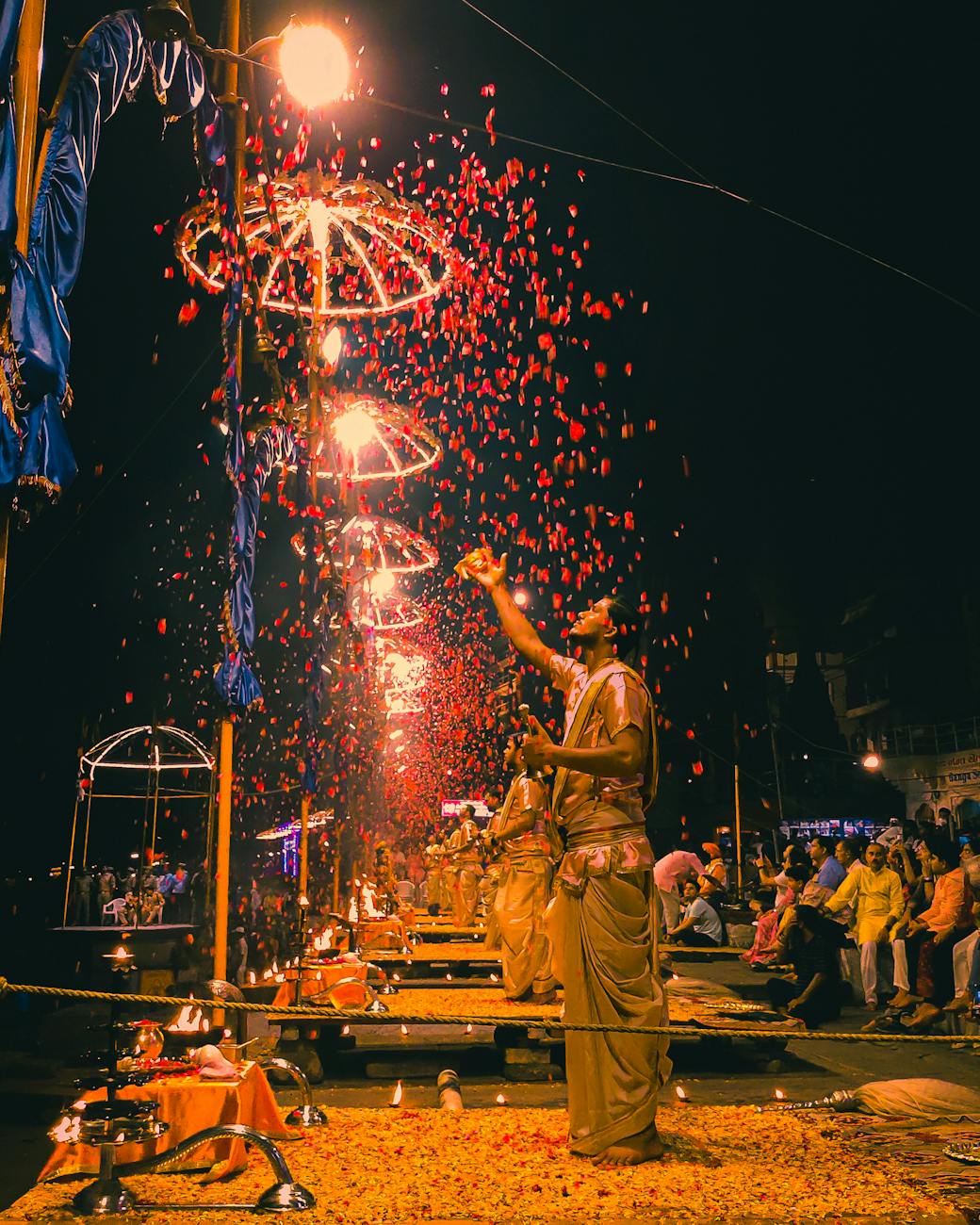
But beyond comfort and aesthetics, evening brings spiritual intensity to its peak. The Ganga Aarti at Dashashwamedh Ghat—arguably Varanasi’s most iconic ceremony—transforms the riverfront into a theater of devotion with fire, bells, mantras, and thousands of gathered souls. Temples conduct evening prayers that fill the lanes with sacred sounds. The boundary between the sacred and mundane blurs further than usual, and you feel Varanasi’s timeless essence more viscerally than during daylight’s practical distractions.
The Transformation from Day to Night
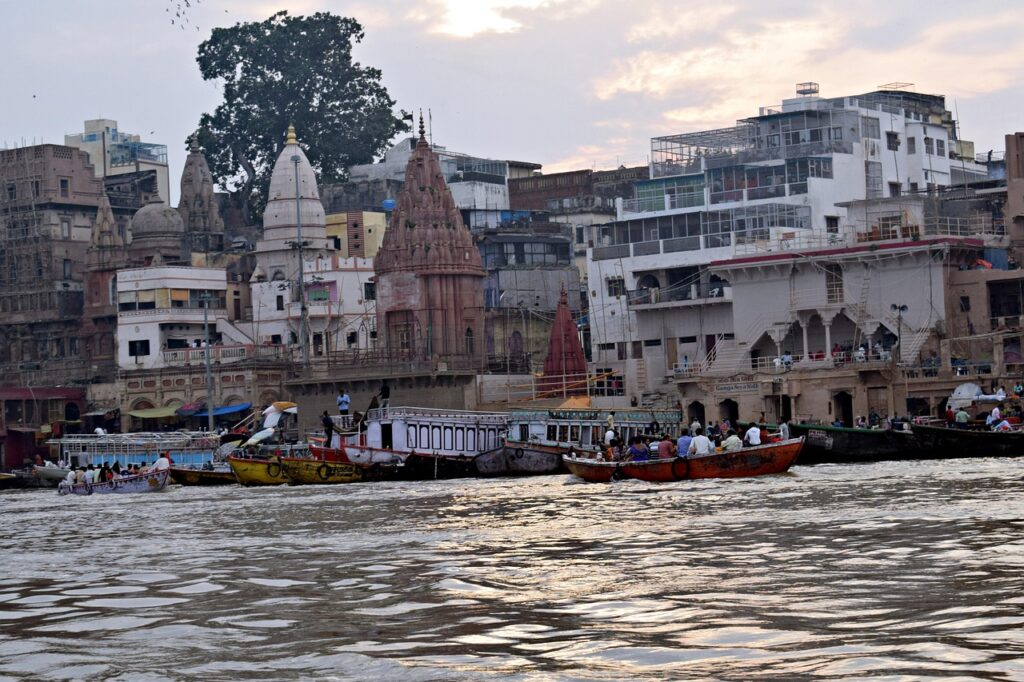
The transition from day to evening in Varanasi happens dramatically yet gradually. Around 4:00-4:30 PM, the quality of light changes, softening harsh shadows. Shops begin lighting oil lamps and electric bulbs, creating warm glows in dark doorways. Priests prepare for evening aarti, arranging elaborate brass lamp stands and ceremonial items along the ghats. The river itself seems to shift personality—from a working waterway where dhobis wash clothes and bodies are cremated, to a sacred stage where devotion takes center performance.
By 6:00 PM, as darkness settles, Varanasi’s night personality fully emerges. Temple bells ring continuously, their sounds layering across neighborhoods. Incense smoke rises from countless prayer spots, visible in streetlight beams. The ghats fill with people—some seeking spiritual experiences, others simply enjoying the cooler evening air. Street food vendors fire up their stalls, filling lanes with aromas of fresh jalebis, samosas, and Benarasi paan. This transformation, repeated daily for millennia, reminds you that Varanasi exists partly outside normal time, maintaining rhythms established long before our modern age.
Understanding Varanasi’s Evening Transport Options
Cycle Rickshaws: The Traditional Choice
Cycle rickshaws—those manually pedaled three-wheelers with bench seating for two—remain Varanasi’s most iconic and practical evening transport. These vehicles navigate the old city’s impossibly narrow lanes where even motorcycles struggle. Evening rickshaw rides offer unique perspectives: you’re positioned high enough to see over walls into courtyards, yet moving slowly enough to absorb details—a family gathered for evening tea, a shopkeeper lighting incense before a small shrine, children playing in ancient doorways.
The unhurried pace of cycle rickshaws suits Varanasi’s evening atmosphere perfectly. You’re not rushing through in an enclosed vehicle; you’re part of the street scene, experiencing evening sounds, smells, and sights directly. The rhythmic creaking of pedals and wheels, the bell dinged occasionally to alert pedestrians, and conversations with your rickshaw-wallah (often remarkably well-informed about city history and culture) become part of the journey itself. For short to medium distances in the old city, nothing beats the authenticity of cycle rickshaw travel.
Auto-Rickshaws for Longer Distances
When covering longer distances—say, from your hotel in Cantonment area to Dashashwamedh Ghat, or from Assi Ghat to Varanasi Junction railway station—auto-rickshaws (motorized three-wheelers) become practical necessities. These zippy vehicles navigate Varanasi’s main roads efficiently, getting you to evening destinations faster than cycle rickshaws while costing less than taxis.
Evening auto-rickshaw rides differ from daytime experiences primarily in atmosphere rather than function. The cooler air makes open-sided auto rides pleasant rather than dusty ordeals. Evening traffic, while still chaotic by Western standards, often flows slightly better than daytime congestion. However, areas near ghats during Ganga Aarti time (roughly 6:30-8:00 PM) experience significant traffic, with autos dropping passengers several hundred meters from the actual ghats due to road closures and crowds.
E-Rickshaws and Their Growing Presence
Electric rickshaws have rapidly expanded across Varanasi in recent years, offering a middle ground between cycle rickshaws and autos. They navigate narrow lanes like cycle rickshaws but powered by batteries rather than pedaling, making them faster and less physically demanding for drivers. Their quiet electric motors suit Varanasi’s evening spiritual atmosphere better than noisy petrol auto-rickshaws.
E-rickshaws operate most commonly on established routes—connecting main ghats, markets, and transport hubs. They often run shared routes with fixed per-person fares (₹10-20) but can also be hired privately. For evening travel, they’re particularly useful for slightly longer distances within the old city area where cycle rickshaws might be too slow and autos can’t access narrow lanes. Their growing popularity reflects Varanasi’s gradual modernization while maintaining the intimate, open-air travel experience that characterizes authentic city exploration.
Evening Rickshaw Routes and Experiences
From Ghats to Markets: Popular Evening Routes
Several classic evening rickshaw routes capture Varanasi’s multifaceted character. The journey from Dashashwamedh Ghat through Vishwanath Gali (temple lane) to Godowlia intersection takes you through the spiritual and commercial heart of old Varanasi. This 15-20 minute ride passes ancient temples, religious shops selling puja items, silk merchants’ establishments, and crowded food stalls—a sensory overload that perfectly encapsulates the city’s essence.
Another beloved route runs from Assi Ghat northward along or parallel to the river, connecting the relatively quieter southern ghat area with the bustling central ghats. This journey showcases Varanasi’s diversity—starting in the more residential, laid-back Assi neighborhood popular with long-term travelers and students, gradually intensifying in density and energy as you approach the core pilgrimage zone. Evening light filtering through lanes, temple bells echoing from various directions, and glimpses of the Ganges between buildings make this ride particularly atmospheric.
The Rickshaw Ride Through Old City Lanes
Rickshaw rides through Varanasi’s old city lanes deserve appreciation as experiences unto themselves, not merely as transport between destinations. These lanes—some dating back over a thousand years—wind unpredictably, occasionally opening into small squares before narrowing again to spaces where pedestrians must flatten against walls as your rickshaw passes. Buildings lean close overhead, sometimes connected by bridges, creating tunnel-like passages that block direct sunlight even at noon but feel perfectly scaled in evening lamplight.
Your rickshaw-wallah navigates this maze with practiced expertise, calling out warnings to pedestrians, negotiating narrow passages where millimeters matter, and occasionally backing up to allow opposing rickshaws to pass. The ride becomes a performance of spatial awareness and local knowledge. Meanwhile, you observe life happening in these lanes—families gathered in doorways, elderly men smoking hookahs in alcoves, women hanging laundry on lines stretched between buildings, chai stalls doing brisk evening business. It’s intimate, authentic, and utterly unlike anything you’ll experience in modern planned cities.
After dark, these lanes take on additional mystery and charm. Electric lights—some modern bulbs, some still traditional oil lamps—cast warm glows from shops and temples. The narrow dimensions that feel merely cozy in daylight become enveloping after sunset. Sounds amplify—bells, chants, conversations echo off close walls. The pace slows as visibility decreases and more pedestrians fill the lanes.
For visitors, this can feel simultaneously enchanting and slightly disorienting. Without clear landmarks and with similar-looking lanes branching repeatedly, you might lose all sense of direction within minutes. This is precisely why evening rickshaw rides prove so valuable—your driver navigates confidently while you simply experience the atmosphere without navigation stress. Trust the process, enjoy the journey, and appreciate that getting slightly “lost” in Varanasi’s evening lanes is exactly what many travelers travel halfway around the world hoping to experience.
Cost and Booking Evening Rickshaws
Fair Pricing for Evening Rides
Cycle rickshaw fares in Varanasi operate primarily through negotiation rather than meters. Understanding fair pricing prevents both overpaying and the unpleasant feeling of shortchanging someone working hard for modest earnings. Short distances within the old city (under 2 km) typically cost ₹30-60. Medium distances (2-4 km) generally run ₹60-100. Longer distances or complicated routes through maze-like lanes command ₹100-150.
Evening pricing doesn’t typically increase dramatically over daytime rates, unlike some cities where “night charges” apply. However, during Ganga Aarti time when demand peaks and traffic thickens around ghats, drivers may quote slightly higher rates—an extra ₹20-30 above normal. This reflects both increased demand and the reality that traffic congestion means they’ll complete fewer total trips during peak hours. For tourists, these amounts remain remarkably reasonable, especially considering the experience value.
Negotiation Tips for Night Travel
Successful rickshaw negotiation requires balancing cultural respect with practical awareness. Start by asking your hotel or guesthouse staff about fair rates to your intended destination—this establishes baseline expectations. When approaching rickshaw-wallahs, ask “Kitna loge?” (How much will you take?) rather than demanding a preset price. Listen to their quote, then counter if it seems inflated.
A useful approach: if quoted ₹100 for a ride you know should cost ₹60-70, respond with ₹50 and settle somewhere in the middle. Most experienced travelers find that gentle, friendly negotiation works far better than aggressive haggling. Phrases like “Thoda kam kar dijiye bhaiya” (Please reduce a bit, brother) maintain respect while seeking fair prices. If you genuinely cannot agree on a price, simply smile, say thank you, and approach another rickshaw. Often, the first driver will call you back with a reduced rate rather than lose the fare entirely.
The Ganga Aarti Experience by Rickshaw
Best Drop-Off Points for Aarti Viewing
The Ganga Aarti at Dashashwamedh Ghat draws enormous crowds, creating both transport challenges and opportunities. Rickshaws cannot penetrate the immediate ghat area during aarti time due to road closures and pedestrian density. Smart travelers arrange to be dropped at strategic points: Godowlia intersection (about 500 meters from the ghat) offers the closest vehicle access. From here, a 5-10 minute walk through Vishwanath Gali brings you to the aarti viewing area.
Alternatively, some prefer dropping at nearby ghats—Rajendra Prasad Ghat or Man Mandir Ghat—and walking along the riverfront to Dashashwamedh. This approach avoids the most crowded lanes and offers beautiful evening river views during your walk. For those watching from boats (a popular option), rickshaws can drop you at less-crowded embarkation points like Meer Ghat or Ahilyabai Ghat where boats await passengers for river-view aarti watching.
Timing Your Rickshaw Ride Around Aarti Schedule
Ganga Aarti occurs year-round at sunset—roughly 6:00 PM in winter and 7:00 PM in summer. Timing your rickshaw journey requires strategic thinking. Arrive too early and you’ll wait extensively; arrive too close to start time and you’ll face maximum crowds and traffic. The sweet spot: reaching drop-off points about 45-60 minutes before aarti begins.
This timing allows leisurely walks to the ghat, opportunities to explore surrounding lanes and shops, perhaps enjoying chai or street snacks while observing the pre-aarti preparations. You’ll also secure better viewing positions before the prime spots fill completely. For your return journey, wait at least 30 minutes after aarti concludes before seeking rickshaws—the immediate post-aarti period sees chaotic crowds and limited vehicle availability. Use this time to walk other ghats or explore evening markets, then find transport when the rush subsides.
Night Walks in Varanasi: A Spiritual Journey
Safe Walking Routes After Dark
Walking Varanasi after dark offers profoundly moving experiences that rickshaw rides cannot replicate. The most beloved and safe evening walk follows the ghats themselves—stone steps and platforms lining the Ganges. The route from Dashashwamedh Ghat south to Assi Ghat (or any portion thereof) presents minimal safety concerns as the area remains well-populated with pilgrims, tourists, and locals throughout evening hours.
Within the lanes, stick to busier routes—main thoroughfares like Vishwanath Gali remain active and safe into late evening. The area’s intense foot traffic, constant shop activity, and visible police presence (particularly near Kashi Vishwanath Temple) create secure environments for walking. Solo women travelers should still maintain normal urban caution—stay aware of surroundings, avoid deserted lanes, and perhaps walk with others if possible—but Varanasi’s spiritual atmosphere and the constant presence of pilgrims generally create respectful environments.
The Atmosphere of Evening Ghats
The ghats after dark possess an atmosphere simultaneously serene and charged with spiritual energy. Post-aarti, as crowds gradually disperse, the riverside settles into quieter rhythms. Small groups gather for prayers, individual seekers sit in meditation facing the dark river, priests offer blessings for modest donations, and cremation fires at Manikarnika Ghat continue their eternal work, reminding everyone of life’s impermanence.
Walking these ghats, you encounter the full spectrum of human experience condensed along these ancient stones. Laughter from groups of students sharing jokes at one ghat; silent tears from a family performing final rites at the cremation ghats; devotional singing from a small gathering at a riverside temple; tourists attempting to process the intensity of everything they’re witnessing. The Ganges itself becomes a dark, quiet presence—you hear its gentle lapping against stone steps and see reflected lights dancing on its surface.
Dashashwamedh to Assi Ghat Evening Walk
This classic walk, covering approximately 3-4 kilometers depending on exact route, requires 1-2 hours at a contemplative pace with stops for observation and photography. Starting from the energy of Dashashwamedh, you pass progressively quieter ghats as you move south. Manmandir Ghat features an observatory built by Maharaja Jai Singh II. Harishchandra Ghat, one of the cremation ghats, reminds you of Hindu beliefs about death and liberation.
Further south, ghats become less crowded and more residential in character. Kedar Ghat, Shivala Ghat, and Tulsi Ghat each have devoted local communities and unique personalities. By the time you reach Assi Ghat—where the Assi River joins the Ganges—the atmosphere shifts notably. This southern area attracts long-term travelers, yoga enthusiasts, and students, creating a more bohemian, international vibe than the intense pilgrimage energy of central ghats. Evening walks here reveal Varanasi’s diversity, showing how a single city contains multitudes.
Exploring Varanasi’s Night Markets on Foot
Vishwanath Gali and Its Evening Buzz
Vishwanath Gali—the main lane leading to Kashi Vishwanath Temple—transforms into a vibrant market after sunset. Shops selling religious items, traditional silk sarees, brassware, and souvenirs remain open well into the night. The lane pulses with energy: devotees heading to the temple, shopkeepers calling out to potential customers, beggars seeking alms, sadhus walking purposefully toward evening prayers, and tourists navigating the sensory overload.
Evening in Vishwanath Gali offers the best people-watching in Varanasi. Find a chai stall, order a small clay cup of sweet milky tea, and simply observe humanity flowing past. You’ll see elderly pilgrims barely managing the uneven stones but determined to reach the temple, families with small children navigating crowds, young couples attempting selfies, foreign tourists simultaneously fascinated and overwhelmed, and local residents going about daily business completely accustomed to this intensity.
Thatheri Bazaar’s Nighttime Character
Thatheri Bazaar—the brass and copper utensil market—operates actively into evening hours, particularly before festivals when households purchase new puja items. The experience of walking this market after dark differs markedly from daytime visits. Bright electric bulbs illuminate shop fronts displaying stacks of brass lamps, water vessels, bells, and ceremonial items, creating warm metallic glows against dark lane backgrounds.
The sounds change character too—the constant hammering of brass-smiths still echoes from workshops, but evening brings a different rhythm. Shop owners have more time to chat with browsers rather than rushing through sales. Prices might be more negotiable as the day’s end approaches and merchants prefer making sales rather than carrying inventory home. For anyone interested in purchasing traditional brassware, evening market visits often yield both better prices and more engaging interactions with artisans who’ve worked brass for generations.
Street Food Adventures After Sunset
Varanasi’s street food scene reaches its peak in evening hours when the heat subsides and appetites awaken. Kachori Gali near Dashashwamedh, Deena Chat Bhandar near Lahurabir, and countless other legendary street food spots see maximum activity between 6:00-10:00 PM. The famous Benarasi tamatar (tomato) chat, kachori-sabzi, lassi thicker than milkshakes, and fresh jalebis dripping with syrup attract locals and tourists alike.
Evening food adventures require both courage and wisdom. Choose vendors with visible crowds of locals—popularity indicates both good taste and food safety. Observe preparation methods briefly before ordering. Avoid cut fruits or anything sitting out unrefrigerated for long periods. Stick to items cooked fresh before your eyes—kachoris fried in hot oil, lassi whisked to order, jalebis emerging crispy from hot ghee. These precautions let you enjoy Varanasi’s incredible culinary traditions while minimizing digestive risks. The flavors you experience—perfected over centuries and passed down through generations—become taste memories you’ll crave years later.
Cultural Experiences During Evening Walks
Temple Visits and Evening Prayers
Varanasi’s countless temples conduct evening aarti ceremonies of varying scales. While nothing matches the spectacle of Ganga Aarti at the main ghat, smaller temple ceremonies offer more intimate spiritual experiences. The Sankat Mochan Hanuman Temple, Durga Temple (also called Durga Kund Mandir), and Tulsi Manas Temple all perform evening aartis worth witnessing.
Entering these temples during evening prayers provides cultural immersion many tourists miss. You’ll observe local devotional practices—how people approach deities, the gestures and prostrations performed, the offerings made, the ways families pray together. Most temples welcome respectful visitors regardless of religion. Appropriate dress (covering shoulders and knees), removing shoes before entering, and maintaining reverent quiet allow you to witness these ceremonies without disrupting them.
Music and Arts in the Lanes
Varanasi’s evening lanes occasionally surprise you with impromptu musical performances. Classical musicians practicing evening ragas, devotional bhajan singing sessions at small temples, or street performers demonstrating traditional instruments create soundscapes that transport you across centuries. The city has produced legendary classical musicians and maintains strong musical traditions.
During certain seasons, particularly around festivals, you might encounter more organized performances—classical dance recitals at cultural centers, folk music shows at ghats, or theatrical performances based on religious stories. Many hostels and cultural organizations in the Assi area organize evening music sessions where local musicians perform classical ragas. These experiences—often free or donation-based—offer authentic cultural engagement far beyond tourist entertainment. They connect you with living traditions that have flowed through these lanes for generations.
Encountering Sadhus and Spiritual Seekers
Evening walks inevitably bring encounters with sadhus—Hindu holy men in various orders distinguished by colored robes, ash-marked bodies, and distinctive hairstyles. Some sit in meditation at ghats, others walk purposefully toward temples, still others cluster at traditional smoking spots sharing chillums. These individuals range from deeply genuine spiritual practitioners to entrepreneurial characters capitalizing on tourist curiosity about exotic “holy men.”
Approach such encounters with respectful curiosity but healthy awareness. Genuine sadhus rarely aggressively solicit money or demand payment for photographs. If you wish to photograph someone, ask permission respectfully and offer a modest donation (₹10-50) as thanks. Engaging in conversations can prove fascinating—many sadhus, particularly those at popular ghats, speak some English and enjoy discussing philosophy. However, be aware that some interactions lead toward pressure for donations or dubious “blessings” requiring payment. Trust your instincts, remain polite, but feel comfortable declining uncomfortable situations.
Photography Opportunities at Night
Capturing the Lit-Up Ghats
Evening and night photography at Varanasi’s ghats challenges even experienced photographers but rewards persistence with stunning images. The interplay of temple lights, candle flames, reflected light on the Ganges, and the last traces of sunset creates complex lighting situations requiring technical skill and artistic vision. A camera capable of good low-light performance (or smartphone with night mode) becomes essential.
Key photography opportunities include: the Ganga Aarti ceremony with its dramatic fire offerings and massed lamps; the view from boats looking back at illuminated ghats; cremation fires at Manikarnika Ghat (though photograph respectfully from distance and never photograph grieving families); individuals performing evening prayers with diyas floating on the river; and the architectural details of temples and palaces illuminated by warm artificial light against darkening skies.
Street Photography Ethics and Tips
Street photography in Varanasi raises important ethical considerations. This is people’s home, their sacred space, not a human zoo for tourist cameras. Always ask permission before photographing people’s faces, especially during religious activities. A smile, gesture toward your camera, and questioning expression usually communicates your request across language barriers. Most people respond positively; respect those who decline.
Candid environmental shots—scenes showing activity without focusing on identifiable individuals—avoid many ethical concerns while still capturing atmospheric images. Photograph from positions that don’t disrupt activities or block pathways. Never photograph inside temples without explicit permission. Cremation ghats deserve special sensitivity—wide shots showing the scene from distance might be acceptable; close-ups of grieving families or bodies are absolutely not. Photography should capture Varanasi’s essence without exploiting vulnerable moments or violating privacy.
Safety Considerations for Evening Activities
General Safety Tips for Night Walks
Varanasi rates as relatively safe for tourists, but sensible precautions enhance security and peace of mind. Keep valuables secure and not openly displayed—phones and cameras worn on body straps rather than held loosely, wallets in front pockets or secured bags rather than back pockets. The crowds that make Varanasi fascinating also create opportunities for opportunistic pickpocketing.
Stay aware of your surroundings without appearing paranoid. Know roughly where you’re going and carry your hotel’s business card showing address in Hindi—helpful if you need to ask directions or take a rickshaw home. Travel with a friend when possible, particularly late at night. Charge your phone fully before evening outings and perhaps carry a portable charger. While serious safety incidents involving tourists remain rare, basic urban awareness prevents preventable problems.
Areas to Avoid After Dark
Most areas tourists typically visit remain safe into evening hours. However, certain locations deserve extra caution or avoidance after dark. Isolated ghat sections far from main activity areas and popular temples—particularly the extreme northern and southern ends—see less foot traffic and fewer security measures. While not necessarily dangerous, these areas offer fewer people to assist if problems arise.
Very narrow deserted lanes deep in residential areas away from main thoroughfares can be confusing to navigate after dark and might make visitors uncomfortable even if actual danger is minimal. Unless you know these areas well or have a local guide, stick to busier routes. The area around Varanasi Junction railway station, while not dangerous per se, sees more aggressive touts and beggars than tourist zones—remain alert and firmly decline unwanted “help” or rickshaw offers at inflated prices.
Traveling as Solo Women and Families
Women traveling solo in Varanasi need elevated but not overwhelming caution. The city sees many solo female travelers and pilgrims without incident, but India’s broader cultural context requires awareness. Dress conservatively—covered shoulders, long pants or skirts—both for cultural respect and to avoid unwanted attention. Avoid walking completely alone in deserted areas late at night; stay on populated ghat areas and main lanes.
Families with children face minimal safety concerns beyond normal vigilance about keeping track of kids in crowds and ensuring they don’t wander off in maze-like lanes. Children often enhance your experience—locals respond warmly to families, and your children’s natural curiosity and observations might lead you to experiences solo adults miss. Just maintain normal parental supervision levels and perhaps hold smaller children’s hands in busy areas like aarti crowds where you could easily become separated.
Combining Rickshaw Rides and Walking
Creating the Perfect Evening Itinerary
The ideal Varanasi evening combines strategic rickshaw rides with meaningful walks, leveraging each mode’s strengths. A sample itinerary: take a rickshaw from your hotel to Assi Ghat in late afternoon (around 5:00 PM). Walk leisurely northward along the ghats, observing preparations for evening. Stop at Kedar Ghat or Harishchandra Ghat for rest and contemplation. Continue walking toward Dashashwamedh, arriving about 45 minutes before aarti.
After experiencing aarti, walk through Vishwanath Gali exploring markets and perhaps stopping for street food. By 8:30-9:00 PM, hire a rickshaw for a return ride, enjoying a different perspective as you traverse lanes you walked earlier. This combination provides exercise, cultural immersion, rest when needed, and diverse experiences that pure walking or pure rickshaw travel cannot deliver. Adjust based on energy levels, weather, and specific interests.
When to Walk and When to Ride
Walk when: the weather is comfortable; you’re exploring compact areas like ghat sequences or market lanes; you want to photograph or observe activities closely; you’re not pressed for time; or you’re seeking meditative, contemplative experiences that walking’s slower pace facilitates. Varanasi reveals itself best to those willing to walk its lanes rather than rushing through in vehicles.
Take rickshaws when: covering longer distances, particularly between neighborhoods; you’re tired, hot, or uncomfortable; you’re traveling with luggage or shopping purchases; you want to reach destinations quickly; or you’re navigating confusing areas where getting lost would cause stress. Many travelers find their sweet spot involves roughly 60-70% walking and 30-40% rickshaw riding during evening explorations—enough walking for authentic immersion, enough riding to maintain comfort and efficiency.
Seasonal Variations in Evening Experiences
Winter Evenings and Festival Seasons
Winter months (November through February) offer Varanasi’s most pleasant evening temperatures—cool enough for comfortable walking and sitting at ghats, yet rarely cold enough to require heavy winter clothing. This season coincides with peak tourist and pilgrim season, meaning more crowded ghats and lanes but also more vibrant atmosphere with additional cultural programs and events. Major festivals like Dev Deepawali (in November) transform the ghats into spectacular displays of thousands of oil lamps.
Winter evenings allow for longer, more leisurely walks without heat exhaustion concerns. The clearer skies of winter also improve photography conditions, and the festive season energy adds special magic to already atmospheric evenings. However, this popularity means booking accommodations ahead, potentially higher rickshaw rates during peak times, and dealing with larger crowds at major sites. The trade-offs generally favor winter visits for most travelers unless you specifically prefer solitude over vibrant activity.
Monsoon and Summer Night Considerations
Summer evenings (April through June) bring relief from daytime’s punishing heat but remain quite warm—30-35°C (85-95°F) even after sunset. Shorter walks and more frequent rickshaw rides make sense during summer. The silver lining: far fewer tourists, more authentic local atmosphere, and enthusiastic hospitality from businesses grateful for off-season visitors. Summer evenings also feature spectacular thunderstorms that, while occasionally disrupting plans, create dramatic atmospheres with lightning illuminating temples and thunder echoing across the Ganges.
Monsoon season (July through September) brings unpredictable evening weather. Rain can start suddenly, turning lanes into small streams and making ghat steps slippery. However, the renewed green landscapes, dramatic clouded sunsets, and the romantic quality of temple lights reflecting in rain puddles attract some travelers specifically during monsoon. Carry umbrellas, wear appropriate footwear with good grip, and maintain flexible plans that accommodate weather-related changes. The reduced tourist numbers and rain-freshened air create unique charms that balance practical challenges.
Local Insights and Hidden Evening Gems
Lesser-Known Evening Spots
Beyond the famous ghats and markets, Varanasi hides numerous evening gems that few tourists discover. Assi Ghat’s evening aarti, while smaller than Dashashwamedh’s spectacle, offers a more intimate, less tourist-oriented ceremony with strong local participation. The Kedar Ghat area, with its distinctive red-painted temple, sees fewer visitors but maintains authentic devotional atmosphere.
For peaceful evening experiences away from crowds, explore the ghats between Rajendra Prasad Ghat and Meer Ghat—close enough to central action for safety but quiet enough for genuine contemplation. Some ashrams and cultural centers in the Assi area host evening music sessions, meditation gatherings, or philosophical discussions open to respectful visitors. Ask at cafes popular with long-term travelers about such events. These under-the-radar experiences often prove more memorable than hitting every major tourist site.
Connecting with Local Culture After Sunset
Deeper cultural connection happens through simple interactions repeated throughout your evening: saying “Namaste” to shopkeepers; accepting a chai offer and chatting briefly with the vendor; asking an elderly person sitting at a ghat about their experiences of Varanasi (many speak some English); or watching children play traditional games in the lanes and perhaps joining briefly if invited. These micro-interactions accumulate into genuine cultural understanding impossible to gain from guidebooks or guided tours.
Consider attending evening satsangs (spiritual gatherings) at various ashrams—many welcome visitors regardless of religious background. The Ramakrishna Mission, Parmarth Niketan, and several smaller ashrams conduct evening programs combining chanting, meditation, and talks on Hindu philosophy. Some local families who’ve opened homestays or small guesthouses invite guests to join their evening prayers or meals—opportunities for authentic cultural exchange. Varanasi rewards travelers who approach it with openness, respect, and genuine curiosity rather than merely checking items off a sightseeing list.
Conclusion
Varanasi’s evenings reveal the city’s soul in ways daylight hours, for all their intensity, cannot fully match. The combination of rickshaw rides through ancient lanes and contemplative walks along sacred ghats creates a multisensory experience that stays with you long after you’ve left these timeless streets. Whether you’re watching fire offerings rise toward darkening skies during Ganga Aarti, navigating narrow alleys barely illuminated by temple lamps, savoring street food perfected over centuries, or simply sitting on ghat steps observing the eternal river flow past, evening hours in Varanasi offer encounters with something beyond ordinary tourism.
The practical elements—understanding rickshaw pricing, knowing safe walking routes, timing activities around aarti schedules—serve the deeper purpose of allowing you to engage fully with Varanasi’s spiritual and cultural richness. These aren’t mere logistics; they’re gateways to experiences that might shift your perspectives on life, death, devotion, and the profound beauty of traditions maintained across millennia. Evening transport and walks become your vehicles—both literally and metaphorically—for accessing the sacred essence that makes Varanasi unlike any place on Earth.
As you plan your Varanasi evenings, remember that the best experiences often arise spontaneously—a conversation with a sadhu, an unexpected musical performance in a lane, a quiet moment of connection with the Ganges under stars. Let the rickshaw rides and walks create the framework, but remain open to the magic that happens in between. This ancient city has been transforming visitors for thousands of years. Allow your evening explorations to become part of that continuing tradition, and you’ll leave Varanasi changed in ways you might not immediately recognize but will continue discovering long after your journey ends.
FAQs
1. What is the best time to start an evening rickshaw and walking tour in Varanasi?
The ideal starting time is around 4:30-5:00 PM, giving you about 30-45 minutes before sunset to get positioned and observe the transition from day to evening. This timing allows you to experience the golden hour light for photography, watch preparations for evening aarti, and arrive at Dashashwamedh Ghat before the 6:00-7:00 PM ceremony (timing varies seasonally). Starting this early also means you’re not rushed and can explore at a contemplative pace that suits Varanasi’s spiritual atmosphere.
2. How much should I budget for evening rickshaw rides in Varanasi?
For a typical evening of exploration, budget approximately ₹200-400 for rickshaw transport if using them strategically (a few rides between key areas). A short ride within the old city costs ₹30-60, medium distances run ₹60-100, and longer routes or complicated journeys through maze-like lanes cost ₹100-150. If hiring a rickshaw for a full evening circuit (2-3 hours with multiple stops), negotiate a package rate of ₹300-500 depending on distance and waiting time. These costs remain remarkably affordable, especially considering the authentic cultural experience cycle rickshaws provide.
3. Is it safe for solo travelers to walk Varanasi’s ghats and lanes at night?
Yes, generally speaking, the main ghat areas and busy lanes like Vishwanath Gali remain safe into late evening due to constant activity, pilgrim presence, and visible security. Solo travelers—including women—regularly explore these areas without incident by following sensible precautions: stay in well-populated areas, avoid completely deserted lanes, keep valuables secure, and remain aware of surroundings. The area’s spiritual character and the constant presence of pilgrims create generally respectful atmospheres. That said, solo women should dress conservatively, avoid isolated areas very late at night, and trust their instincts about situations that feel uncomfortable.
4. Can I photograph the Ganga Aarti ceremony freely, or are there restrictions?
Photography during Ganga Aarti is generally permitted and expected—you’ll see hundreds of cameras and smartphones capturing the ceremony. However, practice respectful photography etiquette: don’t use disruptive flash repeatedly (one or two flash photos may be acceptable, but constant flashing disturbs the ceremony); don’t push through crowds or block others’ views to get shots; be mindful that this is a genuine religious ceremony, not a performance staged for tourists. If photographing from boats on the river, you’ll have excellent vantage points without disrupting the ceremony. The priests and participants have grown accustomed to documentation, but maintaining respect differentiates thoughtful photographers from inconsiderate tourists.
5. What should I wear for evening walks and rickshaw rides in Varanasi?
Dress conservatively and practically. For both cultural respect and comfort, wear covered shoulders and pants or long skirts extending below the knees—loose cotton clothing works best in Varanasi’s climate. Comfortable walking shoes with good grip are essential as ghat steps can be uneven and potentially slippery. Avoid expensive jewelry or displaying valuable items conspicuously. Bring a light scarf or shawl—useful for extra modesty when entering temples, protecting against evening breezes during rickshaw rides, or covering your head if visiting certain religious sites. Layer clothing as evenings can cool down, especially during winter months. Practical, modest clothing allows you to explore comfortably while showing appropriate respect for Varanasi’s sacred character.