Your cart is currently empty!
You may check out all the available trips and book one that suits you.
Continue Browsing Trips

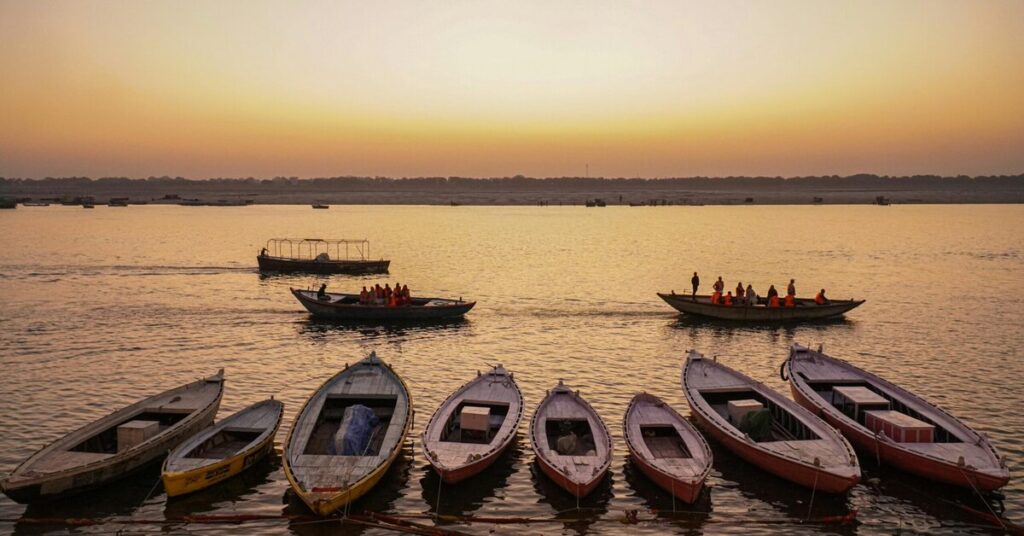
Ghats of Varanasi Sunrise Views in Varanasi , Have you ever witnessed the moment when darkness surrenders to light, when ancient stone steps emerge from shadow, and when thousands of voices unite in prayer as the sun breaks the horizon? If not, then you haven’t experienced sunrise at the ghats of Varanasi. This isn’t just another pretty dawn—it’s a spiritual phenomenon that has captivated souls for millennia.
Varanasi’s sunrise holds a legendary status among travelers, photographers, and spiritual seekers worldwide. The experience combines visual magnificence with profound spiritual energy, creating moments that etch themselves permanently into memory. As the first rays of sunlight touch the Ganges, the river transforms into liquid gold, reflecting centuries-old temples and the devotion of countless pilgrims beginning their day with sacred rituals.
What makes this experience truly unique isn’t just the stunning aesthetics—though trust me, the beauty will take your breath away. It’s the palpable sense of participating in something timeless. The same sunrise rituals you witness have been performed in essentially the same way for thousands of years. You’re not observing history; you’re immersed in a living tradition that connects present moment to ancient past.
In Hindu philosophy, sunrise represents far more than the earth’s rotation bringing daylight. It symbolizes the victory of knowledge over ignorance, consciousness over unconsciousness, and life over death. The Sanskrit word for sunrise, “Suryodaya,” literally means “the rise of the sun god,” treated not as a celestial event but as the awakening of divinity itself.
Ancient texts prescribe dawn as the most auspicious time for spiritual practices. The period between 4 AM and 6 AM, called “Brahma Muhurta,” is believed to be when the veil between material and spiritual realms becomes thinnest. This is why thousands of pilgrims gather at Varanasi’s ghats before sunrise—they’re seeking to harness this powerful transitional energy for prayers, meditation, and holy bathing.
The connection between sunrise and spiritual awakening runs deeper in Varanasi because of the city’s unique position as the abode of Lord Shiva. Devotees believe that bathing in the Ganges at sunrise while in Kashi (Varanasi’s ancient name) washes away sins accumulated across lifetimes, accelerating one’s journey toward moksha (liberation). This isn’t superstition to locals—it’s lived faith that brings millions to these ghats every year.
The magic of Varanasi’s sunrise changes character throughout the year, each season offering distinct experiences. However, the optimal period for most visitors runs from October through March, when weather conditions perfectly complement the spiritual atmosphere.
Winter months (November to February) create the most mystical conditions. Morning fog often blankets the river, and as sunrise approaches, the mist glows with ethereal light before gradually revealing the ghats like a slowly opening curtain. Temperatures during these months range from cool to cold (10-20°C), making early morning outings comfortable with a light jacket or shawl.
For photographers specifically, January and February offer exceptional clarity after the fog lifts, providing that perfect combination of interesting atmospheric conditions with sharp visibility. The golden light during winter sunrise is softer and lasts longer than in summer, giving you more time to capture those perfect shots.
Summer months (March to June) bring earlier sunrises—sometimes as early as 5:15 AM—and immediate warmth. While the heat becomes intense by 8 AM, the sunrise itself remains spectacular, with exceptionally clear skies and vibrant colors. Just be prepared for warmer temperatures even at dawn.
Monsoon season (July to September) creates the most dramatic and unpredictable sunrise experiences. Heavy clouds often obscure the sun, but when they part, the interplay of light, cloud formations, and the swollen river creates breathtaking scenes. This season is for adventurous souls who don’t mind occasional rain disrupting their plans.
Assi Ghat has emerged as the favorite sunrise destination for those seeking spiritual atmosphere without overwhelming crowds. Located at the southern end of Varanasi’s ghat stretch, where the Assi River meets the Ganges, this ghat attracts a different crowd—students, artists, spiritual seekers, and long-term residents rather than rushed tourists.
The morning aarti at Assi Ghat begins around 5:30-6:00 AM (depending on sunrise time), featuring young priests performing synchronized worship with elaborate brass lamps. Unlike the grand spectacle at Dashashwamedh, Assi’s ceremony feels more intimate and participatory. You’re not merely watching a performance; you’re joining a community ritual.
What sets Assi apart for sunrise viewing is the immediate surroundings. The ghat faces slightly east-northeast, providing excellent sunrise visibility while the southern embankment offers diverse vantage points. Yoga enthusiasts gather here for open-air morning sessions—imagine practicing sun salutations as the actual sun rises over the Ganges. The combination of yogic breathing, chanted mantras, and dawn’s first light creates an almost meditative high.
Photographers love Assi Ghat for its varied compositions: the morning aarti with fire and smoke, boats silhouetted against dawn colors, yogis in dramatic poses with the sunrise backdrop, and the gradual awakening of daily life around the ghat. The less commercial atmosphere here allows more authentic captures of spiritual Varanasi.
If Assi Ghat is an intimate gathering, Dashashwamedh at sunrise is a full-scale spiritual festival. This is Varanasi’s most famous and busiest ghat, and even at dawn, you’ll find remarkable activity. The energy here is palpable—hundreds of pilgrims taking holy dips, priests conducting elaborate ceremonies, bells ringing from multiple temples, and boats arriving continuously with visitors seeking the quintessential Varanasi experience.
The ghat’s name (“ten horse sacrifice”) references an ancient legend of Lord Brahma performing a grand sacrifice here, and the spiritual potency attributed to this location draws massive crowds. During sunrise, the broad steps become a theater of devotion: families conducting private pujas, individual worshippers performing their personal rituals, sadhus (holy men) in meditation, and tourists absorbing the spectacle.
What makes Dashashwamedh exceptional for sunrise viewing is the sheer scale and variety of activity. From a boat positioned in front of this ghat, you witness a massive panorama of spiritual life unfolding simultaneously—it’s visually overwhelming in the best possible way. The architecture here is also magnificent, with multiple temples and historic buildings rising behind the ghat, their spires catching first light magnificently.
The trade-off for this grandeur is crowds and commercialization. You’ll encounter aggressive boat operators, persistent sellers, and sometimes uncomfortably packed conditions. But if you want to witness Varanasi at its most vibrant and characteristic, Dashashwamedh at sunrise delivers that experience powerfully.
Manikarnika Ghat requires a different emotional preparedness because this is Varanasi’s primary cremation ghat. The eternal flames here never extinguish, burning continuously for centuries, and cremations occur around the clock, including during sunrise hours. Why include a cremation ghat in a sunrise viewing guide? Because nowhere else does Hindu philosophy’s view of existence—the cycle of birth, death, and rebirth—become more visually and viscerally evident.
Watching sunrise at Manikarnika is a profound philosophical experience. As new light symbolizing birth and renewal illuminates the ghat, the cremation fires continue their work, reminding viewers of mortality’s inevitability. This juxtaposition—life’s continuity represented by the eternal sunrise alongside life’s impermanence represented by cremation—creates a powerful meditation on existence itself.
The atmosphere here at dawn is intensely contemplative. The smoke from cremation fires mingles with morning mist, creating otherworldly visual effects. The families conducting last rites for loved ones, the dom (cremation attendant) community maintaining the fires, and the pilgrims performing rituals nearby create a scene unique in the world.
Photography here requires extreme sensitivity and discretion. While general scenes of the ghat are permissible, photographing cremations or grieving families is deeply inappropriate. Many photographers position themselves at respectful distances, capturing the atmospheric qualities—the smoke, the light, the ancient buildings—rather than exploiting personal tragedy. If you’re uncertain about capturing images here, simply observe and let the experience impact you without a camera mediating it.
Panchganga Ghat’s name means “five rivers,” referencing the belief that five sacred rivers—Ganges, Yamuna, Saraswati, Kirana, and Dhutapapa—converge here spiritually. This mythological significance makes it an exceptionally auspicious location for sunrise rituals. Pilgrims believe that bathing here at dawn multiplies spiritual benefits compared to other ghats.
The ghat’s architectural features enhance sunrise viewing considerably. A magnificent mosque with distinctive minarets rises immediately behind the ghat—a reminder of Varanasi’s composite culture. The interplay of Hindu ghats and Islamic architecture creates unique photographic compositions, especially as sunrise light illuminates the structures from the east.
Morning prayer activities at Panchganga are traditionally orthodox and beautiful. You’ll witness traditional Brahmin families conducting elaborate rituals that have been passed down through generations. The priests here often perform ceremonies with remarkable dedication and authenticity, making it ideal for those seeking to understand traditional Hindu practices.
From a boat, Panchganga offers excellent sunrise visibility with the added bonus of relatively lighter crowds compared to Dashashwamedh. The ghat faces a slight curve in the river, providing interesting perspectives for photography and allowing viewers to see several other ghats simultaneously as the expanding sunrise light gradually illuminates the entire cityscape.
Named after the revered poet-saint Tulsidas, who composed the Ramcharitmanas (Hindi version of the Ramayana) here in the 16th century, Tulsi Ghat carries a literary and devotional legacy that infuses the atmosphere with quiet reverence. This is where words, worship, and wisdom converge—appropriate for a sunrise experience that often leaves visitors searching for language to describe what they’ve witnessed.
The ghat itself is smaller and more intimate than the major tourist destinations, attracting primarily serious pilgrims and locals. This creates a peaceful morning ambiance perfect for quiet reflection and meditation. The absence of aggressive commercialization allows you to experience the ghats as they might have been decades ago—sacred spaces for personal spiritual practice rather than tourist attractions.
Several smaller temples surround Tulsi Ghat, including one dedicated to Tulsidas himself. As sunrise illuminates these structures, you can hear morning prayers and bhajans (devotional songs) emanating from multiple directions, creating a natural concert of devotion. The acoustics here—with temple bells, chanting, and the river’s gentle sounds—make it exceptionally suited for those seeking auditory as well as visual spiritual experiences.
For photographers and writers, Tulsi Ghat offers something special: the chance to create without distraction or crowds. You can set up your tripod without jostling others, frame compositions carefully, and spend time with individual subjects—whether architectural details, ritual activities, or the changing quality of light—without feeling rushed.
Harishchandra Ghat, one of Varanasi’s oldest ghats, shares Manikarnika’s function as a cremation site but receives far less attention from tourists. This relative obscurity makes it valuable for those seeking authentic experiences without crowds. The ghat is named after the legendary King Harishchandra, known for his unwavering truthfulness even amid extreme suffering—a story every Indian child learns.
Morning fog seems particularly persistent at Harishchandra, perhaps due to its specific river position or perhaps, as locals suggest, because of the spiritual energy concentrated here. The fog creates mystical conditions where shapes emerge gradually as sunrise progresses—boats materializing from mist, temples revealing themselves slowly, pilgrims appearing like phantoms before solidifying into reality.
The atmosphere here is contemplative and serious. Unlike the festival-like energy at some ghats, Harishchandra maintains a somber dignity appropriate to its dual function as both pilgrimage site and cremation ground. The cremation fires at sunrise, with smoke rising into dawn light, create hauntingly beautiful visuals while reminding viewers of life’s ephemeral nature.
For travelers seeking less commercialized, more authentic experiences, Harishchandra delivers. You’ll encounter fewer Western tourists and more genuine pilgrims. This allows for more meaningful interactions with locals who aren’t exhausted by constant tourist attention. Several elderly Brahmin priests here perform morning rituals with a devotion that feels entirely genuine rather than performative.
Kedar Ghat stands out architecturally, dominated by the striking red and white striped Kedareshwar Temple dedicated to Lord Shiva. This temple, with its distinctive South Indian architectural style, creates magnificent silhouettes against sunrise skies and serves as a dramatic backdrop for morning activities on the ghat.
The Bengali community has significant presence here, and you’ll witness morning rituals following Bengali Hindu traditions—slightly different in form and style from North Indian practices. This cultural variation adds richness to your understanding of Hinduism’s regional diversity. Bengali devotional songs (kirtans) often fill the morning air, their melodious rhythms complementing the visual beauty of sunrise.
From a compositional photography standpoint, Kedar Ghat offers exceptional opportunities. The temple’s distinctive architecture provides strong geometric elements for framing sunrise colors. The combination of temple silhouettes, morning worshippers, smoke from incense and small fires, and the changing light creates layer upon layer of visual interest.
The ghat’s steps descend steeply to the water, and during winter months when water levels drop, the exposed lower steps create interesting foreground elements for photographs. These aged stones, polished by centuries of feet and water, catch sunrise light beautifully, almost seeming to glow from within.
The quintessential Varanasi sunrise experience happens from a boat on the Ganges, gently drifting parallel to the ghats as dawn unfolds. Most sunrise boat tours last 1.5 to 2 hours, typically beginning around 5:30 AM (varying with seasonal sunrise times) and concluding around 7:30-8:00 AM. Your boat departs from whichever ghat you choose, usually Assi, Dashashwamedh, or one of the smaller accessible ghats.
As you glide along the river, your boatman (who often also serves as an informal guide) rows slowly southward, allowing you to witness multiple ghats sequentially. The experience feels almost dreamlike—the gentle rocking of the boat, the rhythmic splash of oars, the gradually brightening sky, and the unfolding panorama of spiritual life along the banks creates an almost trance-like state.
You’ll witness incredible diversity of activities: pilgrims taking holy dips, priests performing elaborate ceremonies, children playing at water’s edge, sadhus in meditation, yoga practitioners in riverside sessions, laundry workers (dhobis) beginning their day, and locals simply greeting the morning. This moving vantage point offers perspectives impossible from the ghats themselves—you see the entire architectural sweep of buildings rising behind the ghats, you witness interactions and activities pilgrims don’t expect land-based observers to see, and you experience the river as a living presence rather than merely a backdrop.
The best seating positions are at the boat’s center or slightly toward the back, where you can brace yourself comfortably while having unobstructed views in multiple directions. Bring a cushion or small pillow if you have one—wooden boat seats become uncomfortable during longer rides.
Booking boat rides in Varanasi ranges from extremely simple to potentially complicated, depending on your approach. The easiest method involves arranging through your hotel or guesthouse, which typically have established relationships with reliable boat operators. Expect to pay ₹500-₹1,000 per person for shared sunrise tours, or ₹2,000-₹4,000 for private boats accommodating 4-6 people.
Alternatively, you can book directly at the ghats, either the evening before or even the morning of your boat ride. Numerous boat operators cluster at major ghats like Dashashwamedh and Assi, and you can negotiate directly. This approach potentially saves money (you might pay 20-30% less than hotel bookings) but requires negotiation skills and caution against overcharging tourists.
Private boats offer significant advantages: flexibility in route and duration, ability to pause at specific locations for photographs, and more comfortable conditions without strangers packed in. Shared boats cost less but follow fixed routes and timings, and photography becomes challenging when you’re squeezed between other passengers.
Book directly with individual boat operators rather than through aggressive touts who intercept tourists—touts charge commission, inflating your costs while the actual boatman receives less. Look for operators with identification badges (issued by tourism authorities) and boats displaying registration numbers. Don’t hesitate to inspect the boat before committing—check for life jackets, assess general condition, and ensure comfortable seating.
While boat rides are generally safe, awareness of certain precautions ensures better experiences. First, verify that your boat has adequate life jackets for all passengers—regulation requires this, though enforcement varies. If life jackets aren’t readily visible, ask specifically. Operators should provide them immediately; hesitation suggests regulatory non-compliance.
Weather conditions matter significantly, especially during monsoon and winter seasons. Morning fog can become extremely dense, reducing visibility to mere meters. While experienced boatmen navigate confidently even in thick fog, extremely poor visibility can make rides uncomfortable for nervous passengers. If you’re anxious about this, check weather forecasts and consider postponing during advisories for particularly dense fog.
River currents strengthen during and after monsoon months when water levels rise. Higher water and stronger currents require more experienced handling, so ensure your boatman appears confident and knowledgeable. Ask locals or your hotel staff about current river conditions if you’re visiting during these periods.
Avoid boats that appear poorly maintained—visible damage, excessive water accumulation at the bottom, or missing oars suggest operators who might not prioritize safety. Don’t let eagerness to save money override safety concerns; paying slightly more for a well-maintained boat from a professional operator is always worthwhile.
Finally, respect the boatman’s expertise. If they advise against getting too close to certain areas (like active cremation ghats or areas with strong currents), follow their guidance. These professionals know the river intimately—their caution protects you.
The holy dip or “snaan” represents Hinduism’s most fundamental purification practice, and witnessing thousands of pilgrims entering the Ganges at sunrise creates powerful visual and emotional impact. The ritual isn’t casual bathing—it’s a carefully performed spiritual practice involving specific prayers, gestures, and intentions.
Traditional bathing customs vary by region, caste, and personal spiritual tradition, but most follow similar patterns: pilgrims wade into the river until waist-deep, face east toward the rising sun, cup water in their palms, and offer it back to the river while chanting mantras. Many immerse themselves completely three times, each immersion representing the washing away of sins from thought, word, and deed. Some collect Ganges water in copper vessels to carry home for blessing household altars.
Women often bathe while wearing full saris, wrapping themselves modestly while performing ablutions. Men typically wear simple dhotis or shorts. The entire process radiates devotion—these aren’t people merely cleaning themselves; they’re performing sacraments they believe cleanse their souls.
Observing these rituals requires respectfulness and appropriate distance. Never photograph bathers without permission, maintain respectful distance from people in prayer, and avoid standing between worshippers and the rising sun (which interrupts their directional prayers). Your presence should be unobtrusive—witness without intruding.
Dawn yoga sessions at the ghats have ancient precedent—yogic texts prescribe sunrise as the optimal time for practice, when prana (life force) flows most abundantly. Modern Varanasi has embraced this tradition enthusiastically, with multiple ghats hosting open-air group yoga sessions that welcome both experienced practitioners and curious beginners.
Assi Ghat leads in organized yoga offerings, with several schools conducting classes every morning. These sessions typically run from 6:00-7:30 AM, involving traditional hatha yoga postures, pranayama (breathing exercises), and concluding meditation. The settings are exceptional—you practice on stone steps overlooking the Ganges, with sunrise unfolding before you, temple bells ringing periodically, and the river’s energy enhancing your practice.
Most classes welcome drop-in participants for nominal fees (₹200-₹500 per session), and the quality of instruction is generally excellent—many teachers have studied yoga seriously for decades. Participating in riverside sunrise yoga ranks among Varanasi’s most spiritually rewarding activities, combining physical practice, natural beauty, and sacred atmosphere into transformative experiences.
Meditation spots are plentiful along the ghats. Find a relatively quiet section, settle onto the stone steps, and simply be present with the sunrise, the river sounds, and the ambient spiritual energy. Many visitors report that meditation comes more easily here than anywhere else they’ve practiced—the location itself seems to facilitate internal stillness.
Priests conducting morning ceremonies create some of the most visually striking elements of sunrise at the ghats. These learned Brahmins, many continuing family traditions stretching back generations, perform elaborate rituals with precision and devotion that captivates observers.
The traditional morning aarti at various ghats follows specific formats: the priest faces the river holding a multilevel brass lamp with multiple wicks, rotating it in prescribed circular patterns while chanting Sanskrit mantras. Bells ring, conch shells sound, and devotees standing nearby sing along with familiar prayers. Incense smoke mingles with morning mist, creating atmospheric effects photographers dream about.
Personal puja services are available for anyone seeking blessings or wishing to perform specific rituals. Priests offer various pujas—for ancestors, for removing obstacles, for health and prosperity, or simply general blessings. These services range from simple 15-minute ceremonies (₹200-₹500) to elaborate hour-long rituals (₹2,000-₹5,000+). Whether you participate as a believer or curious observer, the experience provides intimate insight into Hindu ceremonial traditions.
Understanding basic ritual elements enriches your observation: the priest uses items representing five elements (earth, water, fire, air, space), offerings typically include flowers, incense, camphor, sandalwood paste, and food items, and prayers invoke multiple deities while requesting blessings and protection. The rituals aren’t arbitrary—each gesture, material, and mantra serves specific spiritual purposes rooted in ancient philosophy.
Beyond the obvious spiritual activities, sunrise reveals the ghats as living, working neighborhoods where daily life unfolds with routines established over generations. This quotidian reality coexisting with profound spirituality illustrates Varanasi’s unique character—the sacred and mundane interweaving seamlessly.
Chai wallahs (tea sellers) arrive early, setting up their tiny stalls and lighting their first fires. The aroma of cardamom-spiced chai brewing soon mingles with river air and incense. Watching these entrepreneurs prepare for their day—arranging glasses, boiling water, mixing their secret spice blends—provides glimpses into Varanasi’s working-class life supporting the spiritual economy.
Flower sellers, usually women, arrive with enormous baskets of marigolds, roses, and lotus blooms destined for religious offerings. They sit on the ghat steps, stringing flowers into garlands with practiced fingers moving almost unconsciously fast. The visual impact of hundreds of orange marigolds, pink roses, and white lotus flowers arranged artistically provides stunning photography opportunities while documenting an ancient profession.
Vegetable vendors push carts through narrow lanes behind the ghats, calling out their wares in melodic Hindi. Barbers set up makeshift open-air salons, offering traditional straight-razor shaves to pilgrims who’ve taken sacred dips and want to complete ritual purification. Children appear, often helping family businesses before school or simply playing at the water’s edge under watchful grandparents’ eyes.
This awakening of daily life demonstrates that the ghats aren’t theme parks frozen in ancient times—they’re vibrant, evolving communities where the same families have lived for centuries, their lives rhythmically aligned with the river and the spiritual seekers who visit.
Capturing Varanasi’s sunrise challenges photographers with rapidly changing light conditions, high contrast scenes, and movement in nearly every frame. Start with these fundamental settings, then adjust based on specific conditions:
For the pre-sunrise blue hour (20-30 minutes before actual sunrise), use ISO 800-1600, aperture f/4-f/5.6, and shutter speeds around 1/60-1/125 second. This captures ambient light while maintaining reasonable sharpness. As sunrise approaches and light intensifies, drop ISO to 400-800 and increase shutter speed to 1/250-1/500 to handle the brightening scene.
During actual sunrise when the sun breaks the horizon, you’re dealing with extreme contrast—brilliant sun against darker ghats and buildings. Consider exposure bracketing (shooting multiple exposures of the same scene) for later HDR processing, or expose for the highlights (the bright sky and sun), accepting that shadows will deepen. The dramatic silhouettes this creates often produce more impactful images than balanced exposures that make everything visible but nothing striking.
Shoot in RAW format rather than JPEG—this provides maximum flexibility for recovering highlight and shadow detail during post-processing. Varanasi’s challenging lighting conditions make RAW’s extended dynamic range invaluable.
Consider using graduated neutral density filters (GND) to balance exposure between bright sky and darker land elements. A 2-stop or 3-stop GND filter darkens the sky portion, bringing it closer to land exposure and reducing the contrast your sensor must handle.
Varanasi’s visual richness sometimes overwhelms photographers—everywhere you point the camera seems worthy of capture. Developing compositional strategies helps create coherent, impactful images rather than random snapshots:
Silhouette compositions: Position subjects (boats, temples, people) between your camera and the sunrise, exposing for the bright sky and letting subjects become dark shapes. This technique creates dramatic, graphic images emphasizing form over detail.
Reflection photography: The Ganges at dawn often exhibits mirror-like calm before wind and boat traffic disturb it. Compose to include river reflections of ghats, temples, or sky colors, creating symmetrical compositions bisected by the horizon line.
Layered compositions: Use telephoto lenses (70-200mm) to compress perspective, stacking multiple ghats, buildings, and boats in densely layered compositions that emphasize Varanasi’s architectural density and visual complexity.
Human element: Include people in your compositions—pilgrims bathing, priests performing ceremonies, boatmen rowing—to provide scale, narrative, and emotional resonance. Environmental portraits showing people in context of the magnificent ghats tell richer stories than purely architectural shots.
Details and abstractions: Don’t photograph only wide, establishing shots. Capture details: weathered hands cupping water, flower offerings floating, the texture of ancient stone steps, smoke patterns from incense, fabric patterns of saris drying. These details collectively document Varanasi as completely as grand vistas.
Leading lines: Use the diagonal lines of ghat steps, the curved shoreline, boat alignments, or temple architectural elements to guide viewers’ eyes through your compositions toward focal points.
Photography ethics matter enormously in sacred spaces like Varanasi’s ghats. Your images shouldn’t come at the cost of disrespecting religious practices or exploiting vulnerable subjects:
Always ask permission before photographing individuals in close-up or medium shots where they’re clearly identifiable. A simple gesture—pointing to your camera and making questioning expression—usually suffices even without shared language. If someone declines, smile, thank them, and move on gracefully.
Sacred moments should remain unobserved: During particularly intimate spiritual moments—deep prayer, emotional grief at cremation ghats, or personal ceremonies—lower your camera and simply be present. Some moments are too sacred to photograph, and you’ll know them when you see them. The photograph you don’t take out of respect is often more valuable than any image you could capture.
Avoid flash photography during ceremonies and rituals—it’s disruptive and disrespectful. Modern cameras handle low light excellently; increase ISO instead.
Don’t treat people as props: The residents and pilgrims at the ghats are real people living their genuine lives, not actors performing for tourists. Photograph them with dignity, capturing authentic moments rather than directing them into posed “exotic” scenes.
Consider compensating portrait subjects: If someone graciously gives you time for extended portrait sessions, offering ₹50-₹100 (or small gifts like fruit) acknowledges their generosity. This isn’t bribery—it’s fair exchange for their time and presence.
Never photograph cremations or identifiable grieving families at Manikarnika or Harishchandra ghats. General atmospheric shots of these locations are acceptable, but documenting specific cremations or mourners exploits others’ grief.
Winter (November-February): Mornings can be genuinely cold, especially on the river where wind compounds the chill. Wear layers: thermal or long-sleeve shirt, sweater or fleece, and wind-resistant outer jacket. Bring a warm shawl or light blanket for boat rides—once you’re sitting still on the water, you’ll appreciate the extra warmth. Light gloves and a beanie or warm scarf help tremendously.
Summer (March-June): Even sunrise hours can be warm during summer months. Light, breathable cotton clothing works best—loose long pants or flowing skirts, and comfortable cotton shirts. Despite the heat, avoid shorts and sleeveless tops, which can seem disrespectful at sacred sites. A light cotton scarf serves multiple purposes: modesty covering, sun protection, and sitting cushion on stone steps.
Monsoon (July-September): Lightweight rain jacket or poncho is essential. Quick-dry fabrics are ideal since you might encounter rain or spray from the river. Bring backup clothing in a waterproof bag if you’re planning extended time at the ghats.
Footwear: Comfortable sandals or slip-on shoes work best because you’ll remove them frequently (temples, boats, sometimes even certain ghat areas require barefoot entry). Avoid elaborate lace-up shoes that become annoying to constantly remove and replace. The ghat steps can be slippery, especially when wet—footwear with good grip prevents embarrassing or dangerous falls.
If you’re staying in central Varanasi, walking to major ghats is usually feasible and pleasant. The old city’s lanes come alive in pre-dawn hours with pilgrims, vendors, and locals beginning their days. Walking through this awakening city provides atmospheric experiences taxis cannot offer. Allow 20-30 minutes from most central accommodations.
Auto-rickshaws operate even at early hours and charge ₹50-₹150 for trips to the ghats depending on distance. Agree on fares beforehand; drivers often quote inflated “early morning” prices to tourists. Rickshaws can only reach certain access points—the ghats themselves are pedestrian-only, so you’ll walk the final 5-10 minutes.
Many hotels and guesthouses offer early morning transportation, either included with accommodation or for nominal fees (₹100-₹300). This convenience eliminates navigation worries when you’re half-awake at 5 AM.
Bicycle rickshaws (cycle rickshaws) provide another option, though they’re slower than auto-rickshaws. The gentler pace allows you to observe the awakening city more thoroughly, and cycle rickshaws access narrower lanes auto-rickshaws cannot navigate.
Staying near the ghats: Accommodations within 5-10 minutes’ walk of major ghats cost more but offer significant convenience for sunrise viewing. You can wake up later, walk leisurely to the river, and easily return for breakfast after the sunrise experience. Numerous guesthouses and hotels line lanes near Assi, Dashashwamedh, and other major ghats, ranging from budget (₹800-₹2,000/night) to luxury heritage properties (₹8,000-₹25,000/night).
Staying in newer Varanasi areas: Accommodations in Cantonment or other modern areas offer more conventional hotels with reliable amenities (consistent hot water, WiFi, western toilets) at better prices. However, you sacrifice proximity—reaching ghats requires 20-40 minute travel, meaning earlier wake-up times and reliance on transportation.
For serious sunrise enthusiasts, staying near the ghats is worth the premium. The ability to reach the river within minutes transforms the experience from an exhausting expedition into a pleasant morning ritual. You can even visit multiple sunrises during your stay without it feeling burdensome.
Budget: Zostel Varanasi, Moustache Hostel Varanasi, and Ganpati Guest House offer clean, safe, budget accommodations (₹500-₹1,500/night) within reasonable distance of major ghats.
Mid-range: Ganges View Hotel, Suryauday Haveli, and Palace on Ganges provide comfortable rooms with varying levels of river views (₹3,000-₹8,000/night) and prime locations.
Heritage/Luxury: Brijrama Palace, Suryauday Haveli Boutique Hotel, and The Gateway Hotel Ganges provide exceptional service, heritage ambiance, and often private ghat access (₹10,000-₹30,000/night).
Book accommodations with ghat views if budget allows—waking to sunrise over the Ganges visible from your room is magical, and you can photograph from your terrace without competing for positions at crowded ghats.
Respecting Varanasi’s cultural and religious protocols ensures your presence enriches rather than disrupts the sacred atmosphere:
Dress modestly: Cover shoulders and knees at minimum. Flowing pants, long skirts, and long-sleeve or short-sleeve (not sleeveless) shirts show respect. Remove shoes when required—many boat operators and ghat sections near temples mandate barefoot entry.
Maintain appropriate noise levels: Speak quietly, turn phone ringers off, and avoid loud conversations. The dawn hours have their own acoustic quality of chanting, bells, and river sounds—let this ambiance remain undisturbed.
Don’t interfere with rituals: Keep reasonable distance from people in prayer or performing ceremonies. Don’t walk between worshippers and the river/sun during prayers. Don’t touch religious items, altars, or offerings without permission.
Handle sacred items respectfully: If you participate in offering flowers or lighting diyas, treat these acts with reverence even if you don’t share the beliefs. These are sacred practices to those around you.
Ask before sitting in certain areas: Some sections of ghats, particularly platforms near temples or areas where specific families conduct traditional rituals, are not appropriate for casual tourist sitting. If in doubt, ask nearby locals.
Dispose of trash properly: Carry a small bag for your trash and dispose of it appropriately, never in the river. Even though you’ll see others littering, you should model environmental respect.
Be mindful of photography: Review the photography etiquette section above. Your desire for images doesn’t supersede others’ privacy and dignity.
Show respect for sadhus and priests: These spiritual practitioners deserve courtesy. If you want to photograph them or ask questions, approach respectfully and understand that some may request small donations (₹20-₹50) for their time.
After sunrise immersion, nothing satisfies quite like breakfast at one of Varanasi’s ghat-side cafes. Several establishments have capitalized on their prime river locations, creating rooftop and balcony dining spaces with magnificent views.
Blue Lassi (near Manikarnika Ghat) has achieved legendary status for its lassi—creamy, fresh yogurt drinks available in dozens of flavors. The tiny shop is chaotic but worth visiting for arguably the best lassi in India.
Brown Bread Bakery (multiple locations including Assi Ghat area) serves Western-style breakfasts—excellent coffee, fresh-baked goods, pancakes, omelets—alongside Indian options. The rooftop seating overlooks the ghats beautifully.
Dosa Cafe (near Assi Ghat) specializes in South Indian breakfast—various dosas, idlis, and filter coffee—served with views of morning ghat activity.
Open Hand Cafe and Pizzeria Vaatika (Assi area) offer diverse menus from traditional Indian breakfast items to continental options, with pleasant terrace seating.
Most ghat-side cafes serve chai (₹10-₹20), traditional breakfast items like paratha, poha, or upma (₹50-₹150), and Western options (₹150-₹400). The combination of delicious food and river views while you decompress from the spiritual intensity creates perfect morning balance.
Post-sunrise hours (7:00-10:00 AM) offer ideal conditions for exploring Varanasi’s labyrinthine lanes and hidden corners. The city is fully awake but not yet overwhelmingly hot or crowded. Consider these walking routes:
Temple trail: Visit temples near your ghat—Kashi Vishwanath (most sacred Shiva temple, though non-Hindus cannot enter the inner sanctum), Annapurna Temple, Durga Temple, Sankat Mochan Temple. Each has distinct architectural style and spiritual significance.
Lanes and alleys exploration: Simply wander the old city’s maze-like lanes discovering scenes of daily life—children heading to school, shops opening, artisans at work (silk weavers, bangle makers, brass sculptors), small neighborhood temples, and architectural gems hidden down narrow passages.
Silk weaving centers: Varanasi’s famous Banarasi silk weaving happens in small workshops throughout the old city. Many weavers welcome visitors to observe their intricate work. This provides fascinating insight into the craftsmanship behind India’s most prized silk.
Several tour companies and independent guides offer organized walking tours (₹500-₹1,500 per person for 2-3 hour tours) that contextualize what you’re seeing with historical and cultural information. Quality guides transform random sightseeing into educational experiences.
Shops around the ghats specialize in spiritual and religious items that make meaningful souvenirs or gifts:
Rudraksha beads: Sacred seeds worn for spiritual protection and meditation support. Available as single beads (₹100-₹5,000+ depending on quality) or strung malas/necklaces (₹500-₹10,000+). Quality varies enormously; reputable shops guarantee authenticity.
Brass religious items: Incense holders, small deity statues, bells, and ceremonial lamps. Prices range from ₹100 for small items to ₹5,000+ for elaborate pieces.
Religious books: Many shops stock spiritual texts in English—Bhagavad Gita translations, Upanishads, yoga philosophy books. These provide means to continue exploring Hindu philosophy after leaving Varanasi.
Essential oils and incense: Varanasi produces excellent sandalwood oil, rose oil, jasmine oil, and incense. Small bottles (₹200-₹1,000) make portable, fragrant mementos.
Prayer items: Meditation beads (malas), prayer flags, sacred ash (vibhuti), kumkum (red powder for tilak marks), and small copper vessels for carrying Ganges water home.
Spiritual clothing: Silk or cotton meditation shawls, loose kurtas, and other traditional garments appropriate for spiritual practice (₹500-₹5,000).
Morning shopping is pleasant before midday heat and crowds intensify. Prices in ghat-area shops tend higher than markets elsewhere in Varanasi, but convenience and selection offset the premium. Always negotiate respectfully—starting offers typically run 40-60% above what sellers will ultimately accept.
Winter transforms Varanasi’s sunrise into something otherworldly through morning fog. Thick mist blankets the river, sometimes so dense you cannot see even nearby boats. As sunrise approaches, this fog begins glowing—first a faint luminescence, then increasingly brilliant until suddenly the sun burns through, dispersing the mist dramatically.
This fog creates unique photography opportunities: mysterious, atmospheric images with diffused light, silhouettes emerging from mist, and dramatic moments when visibility suddenly improves. However, it also poses challenges—autofocus struggles in fog, and you’ll need to protect equipment from moisture.
Temperature-wise, winter mornings range from genuinely cold (8-12°C) to pleasantly cool (15-20°C as the sun rises). Layer clothing and bring warm accessories. The cold actually enhances comfort compared to other seasons—you can stay at the ghats longer without heat discomfort, and physical activity (walking, climbing steps) remains pleasant rather than sweaty.
Winter is peak tourist season, meaning more crowds at popular ghats and higher accommodation prices. Book rooms well in advance (30-60 days minimum) for best selection and pricing.
Summer sunrises happen early—by late May, the sun rises around 5:15 AM—and temperatures at dawn range from warm (25-28°C) to hot (30-32°C by 7 AM). The advantage is exceptional clarity: crystal-clear skies, brilliant colors, and sharp visibility extending for kilometers.
Photography benefits from this clarity—architectural details, facial expressions, and distant ghats all render with crisp sharpness. Colors appear more saturated in the dry air. However, the dynamic range challenges intensify with harsher, more direct light creating extreme contrast.
The heat becomes oppressive by 8-9 AM, so plan sunrise activities to conclude early. Visit the ghats, enjoy your sunrise experience, then retreat to air-conditioned cafes or accommodations before the peak heat hours (11 AM-4 PM).
Summer is off-season for tourism, offering advantages: fewer crowds at ghats, significantly lower accommodation prices (often 30-50% below peak season), and more authentic experiences without tourist hordes. If you tolerate heat well and plan activities for early morning and evening, summer Varanasi can be incredibly rewarding.
Monsoon creates the most unpredictable sunrise conditions. Heavy cloud cover often obscures the sun completely, creating diffused, muted light rather than dramatic sunrise colors. Yet when clouds part, even partially, the interplay of light, dramatic cloud formations, and rain-washed air produces spectacular effects impossible in other seasons.
The swollen river during monsoon rises significantly, sometimes submerging lower ghat steps entirely. This changes the visual character—ghats appear truncated, and the distance between ghat top and water increases. The river itself flows faster and muddier, with more debris and occasionally impressive (though somewhat worrying) volume.
Rain can disrupt plans at any moment. Morning downpours force you to seek shelter, and boat rides become impossible during heavy rain. However, immediate post-rain periods often produce stunning light as sun breaks through dispersing clouds, creating ethereal, almost supernatural illumination.
Monsoon is low tourist season—accommodations are extremely affordable, ghats are least crowded, and you experience Varanasi at its most authentically local. Just build flexibility into plans, accept that some mornings won’t work out, and appreciate the dramatic conditions when they materialize.
Varanasi invites participation, not merely observation. Several practices welcome anyone, regardless of faith background:
Offering flowers to Ganga: Purchase a small basket of flowers (₹20-₹50) from ghat-side vendors. Hold them briefly while mentally setting an intention or prayer, then gently release them onto the water. This simple act connects you to the thousands who’ve made similar offerings for centuries.
Lighting diyas: Small clay lamps with cotton wicks, lit and floated on the river, represent illumination dispelling darkness. Purchase diyas (₹10-₹30), light them carefully, and set them afloat during dawn or dusk. Watching your lamp drift away carries surprising emotional resonance.
Taking a holy dip: If you’re comfortable with it, taking a dip in the Ganges is profound. Dress modestly (full clothes for women, shorts for men), wade in during quieter periods, and immerse yourself while facing the rising sun. Whether you believe in spiritual purification or not, the experience of joining this ancient practice affects most people deeply.
Attending aarti: Participate in morning aarti by standing with devotees, joining in simple refrains (many repeat “Om” or “Ganga Ma ki Jai”—praise to Mother Ganga), and receiving the aarti flame blessing (briefly passing hands over flames, then touching face to transfer blessings).
Meditation and prayer: Find a quiet spot on the ghats, sit comfortably, and simply be present. You don’t need specific religious belief to meditate on the river, reflect on life’s mysteries, or open yourself to the profound peace many experience here.
These practices create meaningful engagement beyond tourism, offering glimpses of why Varanasi captivates spiritual seekers worldwide.
Arriving too late: Many travelers underestimate what “sunrise” means—they arrive at 6:30 or 7:00 AM and miss the magic. The best light and most powerful atmosphere happen 30 minutes before sunrise through 30 minutes after. Set alarms, arrange transportation the night before, and commit to early departure.
Inappropriate clothing: Showing up in shorts, tank tops, or revealing clothing disrespects local customs and can result in uncomfortable situations or restricted access. Dress modestly—it’s simple courtesy.
Disrespectful behavior: Treating the ghats like amusement parks, photographing people without permission, making loud jokes during ceremonies, or otherwise failing to recognize the sacred nature of the space. Remember: this isn’t performed for tourists; it’s real spiritual practice by genuine believers.
Missing pre-sunrise moments: The period before actual sunrise—the blue hour when light gradually builds—is often more visually beautiful and spiritually atmospheric than after the sun appears. Arrive early enough to experience this magical transition.
Overpacking: Bringing excessive camera gear, large bags, or unnecessary items makes navigating crowded ghat steps and boat boarding miserable. Bring only essentials; you can always return later for different equipment.
Not confirming boat arrangements: If you’ve pre-booked boats, confirm timing and meeting location the evening before. Miscommunication about meeting points causes stress when you’re groggy at 5 AM.
Ignoring weather: Failing to check forecasts and prepare for conditions (bringing rain protection during monsoon, warm layers in winter) reduces comfort and potentially ruins experiences.
Rushing the experience: Sunrise at Varanasi deserves time. Rushing through to check boxes misses the entire point. Allow 2-3 hours minimum for sunrise viewing, boat rides, and simply absorbing the atmosphere.
Learn basic prayers: Even knowing simple mantras like “Om Namah Shivaya” or “Ganga Ma ki Jai” allows you to participate more authentically in aarti and creates connections with locals who appreciate your effort.
Understand symbolism: Reading about Hindu cosmology, the significance of the Ganges in mythology, and the philosophical concepts underlying rituals enriches what you witness. Books like “Banaras: City of Light” by Diana Eck provide excellent context.
Connect with locals: Respectful conversations with priests, long-time residents, or fellow pilgrims offer insights guidebooks cannot provide. Ask about their relationship with the river, their daily routines, what the ghats mean to them personally.
Journal your experience: Writing about what you observe, feel, and think while impressions remain fresh creates lasting records more valuable than photographs alone. Describe smells, sounds, emotions, unexpected moments—details that fade quickly from memory.
Return multiple mornings: Each sunrise is unique. Weather varies, you’ll notice different details, and your own receptivity changes day to day. Visiting multiple mornings reveals dimensions single visits cannot capture.
Practice gratitude: Take moments to consciously appreciate what you’re experiencing—the privilege of witnessing this ancient tradition, the beauty surrounding you, the peaceful start to your day. Gratitude deepens satisfaction and creates lasting positive memories.
Disconnect from devices periodically: While photographs are valuable, spend some time simply being present without camera or phone mediating the experience. Some of the most powerful moments happen when you’re fully engaged rather than photographing.
Sunrise at Varanasi’s ghats transcends typical tourist experiences. This isn’t sightseeing—it’s bearing witness to the intersection of human devotion and natural beauty, of ancient tradition and present moment, of individual spirituality and collective faith. The experience resonates on levels that surprise even skeptical travelers who arrive expecting merely picturesque scenery.
Whether you approach sunrise at the ghats as spiritual practice, photographic opportunity, cultural education, or simple appreciation of beauty, Varanasi delivers something profound. The memory of that golden light spreading across the Ganges, illuminating centuries-old stones and devoted faces, stays with you long after you’ve left India’s shores.
The ghats have witnessed this sunrise ritual for millennia, and they’ll continue long after we’re gone. Your presence there connects you to an unbroken chain of human spiritual seeking stretching back into the mists of history and forward into an unknowable future. That connection—feeling yourself part of something so much larger than individual existence—might be the greatest gift Varanasi’s sunrise offers.
So set your alarm, embrace the early morning darkness, and make your way to the ghats. What awaits you there has changed countless lives before yours. Perhaps it will change yours too.
No single “best” ghat exists because optimal choice depends on your priorities. For peaceful, spiritual atmosphere with yoga and aarti, Assi Ghat excels. For maximum energy and crowds capturing quintessential Varanasi vibrancy, Dashashwamedh delivers. For philosophical contemplation and unique perspectives, Manikarnika offers something no other location can. For mythological significance and beautiful architecture, Panchganga stands out. Most visitors benefit from experiencing multiple ghats across several mornings, each revealing different facets of Varanasi’s character. If you have time for only one sunrise, Assi Ghat probably offers the most well-rounded experience for first-time visitors—combining spiritual activities, reasonable crowds, excellent photography opportunities, and authentic atmosphere without overwhelming intensity.
Yes, Varanasi’s ghats at sunrise are generally safe for solo female travelers, with some common-sense precautions. The ghats are quite busy even at dawn with families, pilgrims, and other travelers, providing safety in numbers. Dress modestly (covering shoulders and knees minimum), stay in well-populated areas, and avoid extremely isolated ghat sections. If taking a boat tour, book through reputable operators recommended by your hotel rather than random touts. Many solo female travelers report feeling very safe at dawn specifically—the spiritual atmosphere and presence of families creates protective, respectful conditions. Walking to ghats in pre-dawn darkness through empty lanes poses more concern; consider arranging hotel transportation or traveling with others you’ve met. Trust your instincts—if a situation feels uncomfortable, remove yourself. Overall, sunrise at the ghats is one of the safer experiences in India for solo female travelers compared to many other tourist activities.
You absolutely can take a holy dip, and millions do safely every year. However, understand that the Ganges carries significant pollution, and health risks exist, particularly for those with compromised immune systems. If you choose to bathe: avoid submerging your head or getting water in your mouth, don’t bathe if you have open wounds, shower thoroughly with clean water and soap afterward, and consider taking preventive antibiotics if you’re particularly concerned (consult your doctor beforehand). Many travelers complete holy dips without any illness. The spiritual significance for those who value it often outweighs health concerns. However, if you have serious health conditions or strong concerns, you can participate symbolically by wading in ankle-deep and sprinkling water on yourself rather than full immersion. There’s no judgment either way—do what feels right for your situation. Whatever you decide, ensure your tetanus vaccination is current before traveling to India.
Budget expectations depend significantly on choices between luxury and budget options. At minimum, expect: shared boat ride (₹500-₹800 per person), simple breakfast at local cafe (₹100-₹200), chai (₹20-₹40), and flowers for offering (₹30-₹50)—total approximately ₹650-₹1,090 per person. Mid-range experience: private boat (₹2,000-₹3,000 split among 4-6 people = ₹500-₹750 each), better cafe breakfast (₹300-₹500), various offerings and tips (₹100-₹200)—total approximately ₹900-₹1,450 per person. Premium experience: private boat with extended tour and knowledgeable guide (₹4,000-₹6,000 for group), upscale breakfast at heritage hotel rooftop (₹600-₹1,000), yoga class participation (₹300-₹500)—total approximately ₹1,500-₹2,500 per person. These estimates exclude accommodation and transportation to ghats. Having ₹1,500-₹2,000 per person readily available covers most scenarios comfortably with buffer for spontaneous expenses.
With only one morning, maximize your experience through this optimized schedule: Arrive at Assi Ghat by 5:45 AM (30-45 minutes before sunrise depending on season). Spend 15 minutes observing the morning aarti and absorbing the atmosphere from the ghat steps. Board a pre-arranged boat around 6:00 AM for a 1.5-hour sunrise cruise covering multiple ghats (Assi to Dashashwamedh minimum, ideally extending to Manikarnika and Panchganga). This boat ride captures diverse ghat atmospheres, excellent photography opportunities, and the full sunrise spectacle. Disembark around 7:30 AM and have breakfast at a ghat-side cafe with river views (Brown Bread Bakery or similar). This schedule delivers essential Varanasi sunrise elements: spiritual ceremonies, boat perspective, architectural views, the actual sunrise, and time to reflect over breakfast. Book your boat the evening before, confirm timing and route, arrange transportation to Assi Ghat, and prepare equipment/clothing in advance. This preparation ensures your single morning isn’t wasted on logistics, maximizing actual experience time.

Comments are closed.