Your cart is currently empty!
You may check out all the available trips and book one that suits you.
Continue Browsing Trips
Prayagraj Tour Package Transportation and Travel Tips , Ever wondered how pilgrims navigate one of India’s holiest cities while maintaining their spiritual focus? Getting around Prayagraj might seem daunting at first, but with the right transportation knowledge and travel tips, your journey becomes as smooth as the sacred rivers flowing through this ancient city.
Prayagraj, the city where the Ganges, Yamuna, and mystical Saraswati converge, attracts millions of visitors annually. Whether you’re a spiritual seeker heading to the Triveni Sangam, a history enthusiast exploring Mughal architecture, or a traveler experiencing the magnificent Kumbh Mela, understanding the transportation landscape is crucial. This comprehensive guide will equip you with everything you need to know about moving around Prayagraj efficiently, safely, and affordably.
Prayagraj Tour Package Transportation and Travel Tips , Prayagraj Airport, also known as Bamrauli Airport, serves as the city’s air gateway. Located approximately 12 kilometers from the city center, this airport has undergone significant modernization in recent years. Daily flights connect Prayagraj to major metropolitan cities including Delhi, Mumbai, Bangalore, and Kolkata.
Once you land, you’ll find several transportation options waiting outside the terminal. Pre-paid taxi counters offer fixed-rate rides to various parts of the city, eliminating the hassle of fare negotiations. The journey to the city center typically takes 25-40 minutes, depending on traffic conditions. During peak tourist seasons or the Kumbh Mela, expect longer travel times.
App-based cab services like Ola and Uber also operate from the airport, usually offering competitive rates. If you’ve booked a tour package, many hotels provide complimentary airport pickup services—just confirm this beforehand with your accommodation provider.
Railway enthusiasts will appreciate that Prayagraj boasts excellent rail connectivity, being a crucial junction on the Indian Railways network. The city has three main railway stations: Prayagraj Junction (formerly Allahabad Junction), Prayagraj City (Rambagh), and Naini Junction across the river.
Prayagraj Junction is the largest and most well-connected station, with trains arriving from virtually every corner of India. Popular routes include Delhi (6-8 hours), Varanasi (2-3 hours), Lucknow (3-4 hours), Mumbai (24-26 hours), and Kolkata (12-14 hours). Numerous express and superfast trains make Prayagraj highly accessible.
What’s remarkable about traveling by train to Prayagraj? During the Kumbh Mela, Indian Railways operates hundreds of special trains to accommodate the massive influx of pilgrims. The railway administration also sets up temporary platforms and waiting areas to manage crowds efficiently.
Prayagraj’s road connectivity is equally impressive, with well-maintained national highways linking it to neighboring cities and states. National Highways 27, 30, and 96 pass through or near the city, making road travel convenient and scenic.
State-run bus services from Uttar Pradesh State Road Transport Corporation (UPSRTC) operate regular routes connecting Prayagraj to cities like Lucknow, Varanasi, Kanpur, Agra, and Delhi. These buses range from ordinary non-AC coaches to luxury Volvo services with reclining seats and air conditioning.
Private bus operators also run services on popular routes, often offering online booking facilities. The main bus terminals are at Zero Road and Civil Lines, both easily accessible from different parts of the city.
Driving to Prayagraj in your own vehicle? The roads are generally in good condition, especially the highway stretches. From Lucknow, the drive takes approximately 3-4 hours covering 200 kilometers. From Varanasi, it’s about 125 kilometers, roughly a 2.5-hour journey.
Several car rental agencies operate in Prayagraj and surrounding cities, offering self-drive and chauffeur-driven options. If you’re unfamiliar with Indian traffic conditions, hiring a car with an experienced local driver is recommended—they know the shortcuts, parking spots, and can navigate the sometimes chaotic traffic patterns.
Auto-rickshaws are the lifeline of Prayagraj’s local transportation. These three-wheeled vehicles are everywhere, zipping through traffic and offering affordable rides across the city. Most auto-rickshaws run on CNG (Compressed Natural Gas), making them relatively environmentally friendly.
Here’s the catch—many auto drivers don’t use meters, preferring to negotiate fares upfront. For short distances within the city, expect to pay ₹30-80, while longer rides to places like the Sangam or Allahabad Fort might cost ₹100-200. During peak hours or festivals, prices can double.
Pro tip? Always negotiate the fare before getting in. If the driver seems unreasonable, simply find another auto—there’s never a shortage. Having small change helps, as drivers often claim they don’t have change for larger notes.
For a more leisurely, eco-friendly experience, cycle-rickshaws are perfect for short distances, especially in crowded market areas where larger vehicles struggle. These manually pedaled rickshaws offer an authentic glimpse into traditional Indian transportation.
Cycle-rickshaws are ideal for exploring areas like Civil Lines, Chowk, and the narrow lanes around temples. Fares are negotiable, typically ranging from ₹20-50 for short rides. This mode of transport allows you to soak in the atmosphere while moving at a pace that lets you notice the architectural details and street life.
Modern technology has reached Prayagraj, with Ola and Uber operating throughout the city. These services offer transparent pricing, GPS-tracked rides, and cashless payment options—perfect for travelers who prefer avoiding fare negotiations.
The app-based cabs are particularly useful for early morning visits to the Sangam, late-night returns, or when you want air-conditioned comfort during scorching summers. Availability is generally good in central areas, though you might wait longer in peripheral neighborhoods.
Rates are reasonable, with a typical ride across the city costing ₹150-300. During surge pricing periods (like festivals or bad weather), fares increase, but the app shows multipliers transparently.
Prayagraj’s local bus network operates on various routes covering major areas and suburbs. These buses are the most economical option, with fares as low as ₹5-20 depending on distance. However, they can be crowded, especially during peak hours, and navigating routes requires some local knowledge or willingness to ask fellow passengers for help.
For adventurous travelers wanting an authentic local experience, city buses offer unmatched opportunities to interact with residents. Just be prepared for the packed conditions and basic amenities.
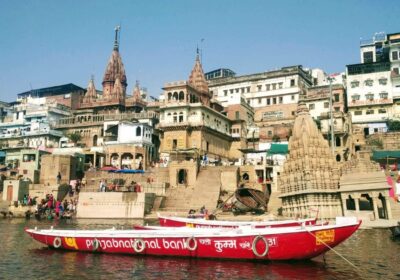
No visit to Prayagraj is complete without a boat ride at the Triveni Sangam. Motorboats and rowboats ferry visitors to the exact confluence point where the three rivers meet. This isn’t just transportation—it’s an integral part of the spiritual experience.
Boats operate from various ghats (riverfront steps), including Saraswati Ghat, Dashashwamedh Ghat, and Arail Ghat. Rates are typically fixed by local authorities—around ₹150-300 per person for a standard trip, with prices varying based on boat type and duration. Shared boats are more economical, while private boats cost more but offer flexibility in timing and route.
The best times for boat rides are early morning (5-7 AM) when the sunrise paints the sky in magnificent colors, and evening (4-6 PM) when the temperature is pleasant. During Kumbh Mela, boat services operate round the clock to accommodate the massive crowds.
The Kumbh Mela transforms Prayagraj into the world’s largest temporary human settlement, and transportation becomes a monumental challenge. The administration implements extraordinary measures to manage the movement of millions within a relatively small area.
Expect heavy traffic restrictions, with many roads closed to general vehicles during auspicious bathing dates (Shahi Snan). The authorities create a massive temporary infrastructure including pontoon bridges across the rivers, hundreds of kilometers of temporary roads, and designated parking areas far from the main bathing ghats.
During Kumbh Mela, special shuttle bus services operate from parking areas to the main event zones. These free or nominally priced services run continuously, transporting visitors who’ve parked their vehicles at designated lots, sometimes 5-10 kilometers away from the Sangam.
Color-coded routes help visitors navigate different sectors of the Mela grounds. The administration divides the massive area into sectors, each identified by colors and numbers, making it easier to find your camp or return point.
Traffic management during Kumbh Mela is a marvel of planning and execution. One-way systems, pedestrian-only zones, and vehicular restrictions are strictly enforced. Police and volunteers are stationed at every major intersection, guiding the massive crowds and ensuring smooth flow.
For visitors, the key is patience and flexibility. Plan to spend significant time walking—sometimes several kilometers—as vehicles cannot access most areas during peak periods. Comfortable walking shoes become your most important transportation tool during Kumbh Mela.
Hiring a car with a driver is perhaps the most convenient way to explore Prayagraj, especially if you’re visiting multiple attractions across the city. Local travel agencies and hotels can arrange this service, with daily rates typically ranging from ₹1,500-3,000 depending on the vehicle type and distance covered.
A local driver brings invaluable knowledge—they know the best routes to avoid traffic, where to find parking, the ideal times to visit popular spots, and often double as informal guides sharing local stories and recommendations. Communication is rarely a problem, as most drivers understand basic English and are accustomed to working with tourists.
Self-drive car rentals are available through national chains like Zoomcar and local agencies. This option suits travelers comfortable with Indian driving conditions—which can be quite different from Western standards. Traffic can appear chaotic, with vehicles, pedestrians, and animals sharing the road in seemingly random patterns.
Daily rental rates for compact cars start around ₹1,200-2,000, with fuel typically extra. You’ll need a valid driving license, identification proof, and usually a security deposit. GPS navigation apps like Google Maps work well in Prayagraj, making route-finding relatively straightforward.
An emerging trend in Prayagraj is bicycle and electric scooter rentals, perfect for exploring areas like Civil Lines with its wide roads and colonial-era buildings. Several shops near tourist areas offer rentals at ₹50-200 per day for bicycles and ₹300-500 for scooters.
Cycling gives you the freedom to stop whenever something catches your eye—a street food vendor, an interesting temple, or a colorful market. It’s also an excellent way to reduce your carbon footprint while traveling. Just be cautious of traffic and avoid cycling on busy highways.
Timing your movements can dramatically improve your Prayagraj experience. Early mornings (5-8 AM) offer the best conditions—cooler temperatures, lighter traffic, and the magical atmosphere of the city waking up. This is ideal for visiting the Sangam or major temples when crowds are thinner.
Avoid traveling during rush hours (9-11 AM and 5-7 PM) when office-goers create traffic congestion. Midday (12-3 PM) can be uncomfortably hot during summer months (April-June), making it better to rest during these hours and venture out in the evening.
Evenings (4-7 PM) are perfect for exploring markets and witnessing the beautiful aarti (prayer ceremonies) at various ghats. The temperature drops to pleasant levels, and the city takes on a vibrant energy.
While Hindi is the primary language in Prayagraj, English is understood by many in the tourism industry—hotel staff, established restaurants, and travel agencies. However, auto-rickshaw drivers, street vendors, and local shopkeepers might not speak English fluently.
Don’t let this deter you! Basic Hindi phrases go a long way: “Kitna?” (How much?), “Bahut mehnga hai” (Very expensive), “Thoda kam karo” (Reduce a little), and “Dhanyavaad” (Thank you) will enhance your interactions. Most locals appreciate when visitors make an effort to communicate in Hindi, even if it’s just a few words.
Smartphone translation apps work wonderfully in bridging language gaps. Google Translate’s conversation mode can facilitate real-time discussions, making even complex exchanges manageable.
Bargaining is an art form in India, and Prayagraj is no exception. Whether you’re negotiating auto-rickshaw fares, buying souvenirs, or arranging boat rides, expect the initial quote to be significantly higher than the actual price.
A general rule? Offer about 50-60% of the first price quoted, then gradually meet somewhere in the middle. This isn’t about being cheap—it’s about paying fair market value. Fixed-price stores display “Fixed Price Shop” signs, where bargaining isn’t expected or appreciated.
For transportation, know the approximate distance and typical fares before negotiating. Your hotel staff can provide guidance on reasonable rates for common routes. During festivals or late nights, accepting slightly higher fares is reasonable given increased demand.
Like any tourist destination, Prayagraj has its share of pickpockets and opportunistic thieves, particularly in crowded areas during festivals. Keep your valuables secure and within sight at all times. Use anti-theft bags with hidden pockets for passports and cash, and avoid displaying expensive jewelry or electronics.
When traveling in crowded spaces like the Kumbh Mela grounds or busy markets, carry a small crossbody bag worn in front rather than a backpack that’s easy to open without your knowledge. Store backup credit cards, extra cash, and important documents separately from your primary wallet.
Hotel safes should be used for passports, excess cash, and valuable items you don’t need during daily excursions. Many hotels provide safety deposit boxes free of charge or for a nominal fee.
Always check that the vehicle you’re boarding is legitimate—look for proper registration plates and, in the case of app-based cabs, verify the driver’s details match the app information. Avoid boarding overcrowded vehicles where pickpocketing is easier.
When taking auto-rickshaws or taxis at night, share your location with family or friends using smartphone apps. Sit in the back seat, and if something feels off about the driver or route, don’t hesitate to ask them to stop in a public place and exit.
For women travelers, sitting in the back seat of taxis and avoiding very late-night solo travel in unfamiliar areas is advisable. Prayagraj is generally safe, but standard precautions apply everywhere.
Keep these essential numbers saved in your phone:
Your hotel reception can also assist with emergencies and connecting you to appropriate services. Many hotels have tie-ups with doctors and can arrange medical assistance quickly if needed.
ATMs are plentiful throughout Prayagraj, especially in areas like Civil Lines, Katra, and near railway stations. Major banks like State Bank of India, HDFC, ICICI, and Axis Bank have extensive ATM networks. Most accept international cards (Visa, MasterCard), though transaction fees apply for foreign cards.
Withdraw cash during daytime hours from ATMs located inside bank premises or secure locations. Daily withdrawal limits vary by bank and card type, typically ranging from ₹10,000-50,000 for domestic cards.
Currency exchange facilities are available at the airport, major hotels, and some banks. However, rates at airports and hotels are generally less favorable than authorized money changers in the city. Carrying some Indian Rupees with you avoids the initial scramble for currency exchange upon arrival.
India’s digital payment revolution has reached Prayagraj, with many establishments accepting UPI payments (Unified Payments Interface), Paytm, Google Pay, and PhonePe. Even auto-rickshaw drivers and small vendors increasingly accept digital payments, though cash remains king in many situations.
Credit and debit cards are widely accepted at hotels, established restaurants, and branded stores. However, always carry sufficient cash for temples, street food, local transportation, and small shops that might not have card facilities.
The golden rule in Prayagraj—drink only bottled water. The local water supply isn’t suitable for visitors’ digestive systems, even if locals drink it without issues. Bottled water is available everywhere at ₹20-40 per liter. Check that the seal is intact before purchasing.
When it comes to food, exercise reasonable caution without missing out on the delicious local cuisine. Eat at busy restaurants where food turnover is high and food doesn’t sit for long periods. Avoid raw salads unless at upscale restaurants, and choose cooked foods served hot.
Street food is a huge part of the Prayagraj experience—those chaats and kulchas are too good to miss! Select vendors with visible cooking areas where you can see food being prepared fresh. If locals are queuing up, that’s usually a good sign.
Prayagraj has several good hospitals and medical facilities. Motilal Nehru Medical College, United Medicity Hospital, and Nazareth Hospital provide quality healthcare. Pharmacies (called “medical stores” locally) are abundant and usually open until late evening, with some operating 24/7 near major hospitals.
Carry a basic first-aid kit with antiseptic cream, bandages, pain relievers, anti-diarrheal medication, and any prescription medicines you regularly take. Pack more than you think you’ll need—better to have extras than to search for specific medications in an unfamiliar city.
Travel insurance that covers medical emergencies is highly recommended, especially if you’re an international visitor. Keep digital and physical copies of your insurance documents easily accessible.
Respecting local customs enhances your experience and earns you warm receptions from locals. When visiting temples and religious sites, remove your shoes at designated areas, cover your shoulders and knees, and avoid wearing leather items in certain temples.
Photography restrictions exist in some temples and at military installations like parts of Allahabad Fort. Always ask permission before photographing people, especially sadhus (holy men), who might expect a small donation if they agree to pose.
Public displays of affection are frowned upon in this traditional city. What might seem innocent in Western cultures—like kissing or excessive hugging—can make locals uncomfortable and is best avoided in public spaces.
During religious ceremonies, maintain a respectful demeanor. Avoid talking loudly, pointing your feet toward deities or people (considered disrespectful), and stepping over religious offerings placed on the ground.
How much should you budget for transportation in Prayagraj? For budget travelers using local buses, auto-rickshaws, and shared boats, allocating ₹300-500 per day covers most needs. This includes multiple short trips across the city and essential boat rides at the Sangam.
Mid-range travelers preferring app-based cabs and occasional car rentals should budget ₹800-1,500 daily. This provides comfortable, air-conditioned transport and flexibility in scheduling without breaking the bank.
Luxury travelers hiring private cars with drivers for entire days should allocate ₹2,000-3,500 daily, depending on the vehicle class and distances covered. This includes fuel, driver charges, and parking fees at most locations.
During Kumbh Mela, increase your transportation budget by 50-100% due to higher demand and restricted vehicle access requiring alternative arrangements like premium shuttle services or extended walking distances.
Navigating Prayagraj’s transportation landscape might seem overwhelming initially, but armed with these insights, you’ll move through the city like a seasoned traveler. From modern airport arrivals to traditional boat rides at the sacred Sangam, from bargaining with auto-rickshaw drivers to managing massive Kumbh Mela crowds, every transportation experience adds to your journey’s richness.
Remember, the goal isn’t just efficient movement from point A to point B—it’s about embracing the journey itself. That auto-rickshaw ride through bustling markets, the boat gliding toward the confluence point, the sunset walk along ancient ghats—these become treasured memories that define your Prayagraj experience.
So approach transportation with patience, curiosity, and a sense of adventure. Yes, there might be moments of confusion, occasional delays, and the need to adapt plans. But isn’t that what travel is truly about? The unexpected detours often lead to the most authentic experiences and meaningful connections with this timeless city.
For normal periods, finding transportation upon arrival is perfectly fine—auto-rickshaws, cabs, and rental options are readily available. However, during Kumbh Mela or other major festivals, advance booking is strongly recommended, especially for car rentals and airport transfers. Hotel pickup services should be confirmed at least 24-48 hours before arrival. App-based cabs can be booked on-the-spot year-round, though availability decreases during peak festival periods.
From Prayagraj Junction railway station to the Sangam area (approximately 8-10 kilometers), expect to pay ₹150-250 for an auto-rickshaw depending on traffic conditions and your bargaining skills. During festivals, this can increase to ₹300-400. Using app-based cabs provides transparent pricing, typically ₹180-280 for the same route. Always confirm the fare before starting your journey, or use the meter if the driver agrees to it.
App-based services like Ola and Uber are quite reliable in Prayagraj’s central areas, offering benefits like transparent pricing, GPS tracking, and cashless payments. They work well for point-to-point travel and are particularly useful for early morning or late-night trips. However, during Kumbh Mela or in remote areas, traditional auto-rickshaws might be more readily available. Having both options in your toolkit provides maximum flexibility—use apps when available, and don’t hesitate to hail traditional transport when needed.
During Kumbh Mela, embrace walking as your primary mode of transport within the festival grounds. Park your vehicle at designated parking areas (which can be 5-15 kilometers from the main bathing ghats) and use the free or low-cost shuttle services provided by the administration. Alternatively, stay at accommodations within walking distance of your target areas. Many visitors find that staying in the temporary camps set up during Kumbh Mela eliminates transportation headaches entirely. Plan your visits for non-peak bathing dates if you want to avoid the most extreme crowds. The key is adjusting expectations—movement will be slow, and patience is essential.
Prayagraj is generally safe for solo female travelers using standard safety precautions. App-based cabs are recommended over traditional taxis as they provide tracking and driver verification. When using auto-rickshaws, travel during daylight hours when possible, avoid isolated routes, and share your location with friends or family. Many female travelers report positive experiences, particularly when staying alert, dressing modestly, and trusting their instincts. The tourist police are helpful and approachable if you need assistance. Joining group tours for certain activities, especially during major festivals, can enhance both safety and enjoyment while providing opportunities to meet fellow travelers.
TripCosmos guarantees verified Kashi Vishwanath Sugam Darshan passes (zero line waiting), private Dev Deepawali & Ganga Aarti Bajra boats, and verified Toyota Innova Crysta cabs with trusted local chauffeurs.

One Comment
Comments are closed.