Your cart is currently empty!
You may check out all the available trips and book one that suits you.
Continue Browsing Trips

Varanasi Ayodhya Ghats Tour Package , Picture yourself standing on ancient stone steps that descend into sacred waters, where the first rays of dawn paint the river gold and the air fills with chants that have echoed for thousands of years. This is the magic of the ghats—those iconic riverfront staircases that define the spiritual landscape of Varanasi and Ayodhya. A ghats-focused tour package offers something truly special: an intimate encounter with India’s living spiritual traditions.
Unlike typical sightseeing tours that rush you from monument to monument, a ghats tour invites you to slow down, to sit, to observe, and to participate in rituals that connect the earthly to the divine. The ghats aren’t just architectural features—they’re stages where life, death, devotion, and daily routines play out in an endless, fascinating cycle.
Ghats hold immense spiritual significance in Hindu philosophy. The word “ghat” means steps leading down to a river, but these aren’t ordinary steps. They’re considered liminal spaces—thresholds between the physical and spiritual worlds. Rivers themselves are sacred in Hinduism, seen as goddesses who purify and bless.
In Varanasi, bathing in the Ganges at the ghats is believed to wash away sins and break the cycle of rebirth. In Ayodhya, the Sarayu River carries the blessings of Lord Rama himself. Millions of pilgrims visit these ghats annually, seeking spiritual cleansing, performing ancestral rites, or simply connecting with the divine.
Beyond spirituality, the ghats are architectural marvels. Built over centuries by various rulers, merchants, and devotees, each ghat tells its own story through its design. Some feature ornate temples, others have pavilions where classical music performances occur, and many showcase intricate stone carvings.
The ghats also serve as cultural hubs where traditional practices continue unchanged. You’ll witness wrestlers exercising, priests conducting ceremonies, washermen cleaning clothes, and artists practicing classical music—all activities that have happened in these exact spots for generations.
Varanasi boasts over 80 ghats stretching along a crescent-shaped bend of the Ganges, covering approximately six kilometers. Each ghat has its unique character, history, and purpose. Some are primarily for bathing, others for cremation, and many serve multiple functions.
The ghats create a continuous promenade along the river, and walking from one to another offers an ever-changing tableau of human activity. Early mornings see thousands bathing and praying, while evenings transform certain ghats into theatrical spaces for elaborate ceremonies.
This is Varanasi’s most famous and busiest ghat, always pulsating with activity. The name means “the ghat of ten horse sacrifices,” referring to a mythological sacrifice by Lord Brahma. Located in the heart of the old city, it’s easily accessible and serves as the main venue for the spectacular evening Ganga Aarti.
What makes Dashashwamedh special isn’t just its size or central location—it’s the energy. From dawn to midnight, something interesting is always happening here. Street vendors sell offerings, priests offer to perform pujas, boat operators invite tourists for rides, and pilgrims from across India congregate on its steps.
Located at the southern end of the ghat stretch, Assi Ghat is where the Assi River meets the Ganges. This ghat has a more relaxed, almost bohemian atmosphere compared to the chaotic Dashashwamedh. It’s become popular with long-term visitors, yoga practitioners, and those seeking a quieter spiritual experience.
Every evening, a smaller but equally beautiful aarti ceremony takes place here. The ghat also hosts classical music performances and is surrounded by cafes where travelers gather to exchange stories. Many visitors prefer Assi for its authentic, less touristy vibe.
This is Varanasi’s main cremation ghat, where funeral pyres burn continuously, 24 hours a day, 365 days a year. According to Hindu belief, being cremated here grants moksha (liberation from the cycle of rebirth). The cremation process follows ancient rituals, with families performing last rites for their loved ones.
Visiting Manikarnika can be intense and emotional. The ghat confronts you directly with mortality, yet there’s no sadness here—instead, there’s a profound acceptance of death as a natural transition. Photography is strictly prohibited out of respect for the deceased and their families, and visitors should maintain respectful silence.
Named after the legendary truthful king Harishchandra, this is another cremation ghat, smaller and older than Manikarnika. Legend says King Harishchandra worked here as a cremation ground keeper to honor his commitment to truth.
While less visited by tourists, Harishchandra offers a more intimate glimpse into Varanasi’s relationship with death. The ancient temples surrounding it and the continuous rituals create an atmosphere of timeless devotion.
This beautifully constructed ghat marks the mythological confluence of five rivers (though only the Ganges is physically visible). The impressive structure features a distinctive overhanging balcony built by the Marathas in the 18th century.
Panchganga is considered especially auspicious for bathing and performing rituals. The ghat becomes particularly crowded during festival times when pilgrims believe bathing here equals bathing at the confluence of all five sacred rivers.
While Ayodhya’s ghats may not be as numerous or grand as Varanasi’s, they carry equal spiritual weight. The Sarayu River is intimately connected with Lord Rama’s life story, from his coronation celebrations to his final departure from the earthly realm. The ghats here offer a more peaceful, contemplative atmosphere compared to Varanasi’s bustling riverfront.
This is Ayodhya’s most important and beautiful ghat, extensively renovated in recent years. The architecture blends traditional and modern elements, creating an impressive riverside promenade. Ram Ghat hosts the evening aarti ceremony, which, while smaller than Varanasi’s, is equally moving in its devotion.
The ghat serves as the main bathing and ritual spot for pilgrims visiting Ayodhya. During major festivals, especially Ram Navami, thousands gather here for celebrations, making it the spiritual heart of the city’s riverside.
According to legend, this is where Lord Rama took jal samadhi (entered the river waters) at the end of his earthly life. The ghat has a mystical quality, and devotees believe that bathing here cleanses the soul and brings peace. A temple at the ghat houses idols associated with this sacred event.
Guptar Ghat is usually quieter than Ram Ghat, making it perfect for those seeking a more meditative experience. The surrounding area has several ancient temples and ashrams that add to the spiritual atmosphere.
A relatively newer development, Naya Ghat has been beautified with modern amenities while maintaining its sacred character. It’s popular with local residents for morning and evening walks along the river. The ghat offers lovely views of the Sarayu and serves as a peaceful spot for contemplation.
While less historically significant than other ghats, Naya Ghat demonstrates Ayodhya’s evolution as it balances ancient traditions with modern infrastructure to accommodate growing numbers of pilgrims.
There’s something magical about experiencing the ghats at dawn and dusk. Sunrise brings a fresh, hopeful energy as the sun emerges from behind the eastern horizon, casting golden light across the water. Pilgrims take their holy dips, priests perform morning rituals, and the ghats slowly awaken to a new day.
Sunset offers a different kind of beauty—the light softens, colors deepen, and the entire atmosphere shifts toward evening ceremonies. The transition from day to night at the ghats feels like witnessing nature’s own spiritual practice.
Viewing the ghats from the water provides a completely different perspective. A boat ride, especially during sunrise or the evening aarti, allows you to appreciate the full sweep of the riverfront architecture and observe activities on multiple ghats simultaneously.
Many tour packages include boat rides as a highlight. The gentle movement of the boat, the reflection of lights on the water during evening aarti, and the soundscape of bells, chants, and prayers create an immersive sensory experience that’s impossible to replicate from land.
For photography enthusiasts, the ghats offer endless possibilities. The interplay of light and shadow, the vibrant colors of saris and flowers, the weathered faces of elderly pilgrims, and the dramatic ceremonies provide countless compelling subjects.
However, photography at the ghats requires sensitivity. Always ask permission before photographing people, especially during religious activities. Some activities, like cremations, are strictly off-limits for cameras. Respect and discretion should always take precedence over getting the perfect shot.
A comprehensive ghats tour package typically spans 3-5 days. Here’s what a typical 4-day itinerary might look like:
Day 1: Arrival in Varanasi, check-in, evening visit to Dashashwamedh Ghat for orientation and aarti ceremony viewing from a boat.
Day 2: Pre-dawn boat ride along the Varanasi ghats during sunrise, visit to multiple ghats on foot, afternoon rest, evening visit to Assi Ghat for yoga session and aarti.
Day 3: Travel to Ayodhya, visit Ram Ghat and other major ghats, participate in evening aarti at the Sarayu River, explore temples near the ghats.
Day 4: Morning rituals at Guptar Ghat, return to Varanasi or departure.
Most ghats-focused tour packages include guided walks along the ghats with explanations of their history and significance, boat rides at sunrise and sunset, attendance at evening aarti ceremonies, opportunities to participate in simple rituals like floating diyas (oil lamps) on the river, photography sessions with tips from guides, and sometimes yoga or meditation sessions at peaceful spots along the riverfront.
Tours typically run from early morning (around 5 AM for sunrise experiences) through late evening (ending after the 7-8 PM aarti ceremonies). This schedule matches the natural rhythm of ghat life and ensures you don’t miss the most spectacular moments.
Between morning and evening activities, packages usually include free time for rest, exploration, or additional activities like visiting nearby temples or markets.
There’s no better way to start your day than with a sunrise boat ride along the Varanasi ghats. As your boat glides through the misty morning waters, you’ll witness the ghats coming to life. Pilgrims descend the steps for their morning bath, priests light lamps at riverside temples, and the sun slowly reveals the full architectural splendor of the riverfront.
The silence of early morning, broken only by distant temple bells and the gentle splash of oars, creates a meditative atmosphere. Many visitors describe this experience as transformative—a moment of peace and clarity that stays with them long after their journey ends.
Several ghats, particularly Assi Ghat in Varanasi, have become centers for yoga and meditation. Morning sessions typically begin just after sunrise, when the air is fresh and the riverfront relatively quiet. Practicing yoga with the sacred river before you and ancient temples behind you adds a profound dimension to these disciplines.
Many tour packages can arrange yoga sessions with experienced instructors. Even if you’re a beginner, participating in these morning practices connects you with centuries-old traditions of spiritual discipline performed in these very locations.
The ghats host countless small pujas (prayer rituals) performed by individual priests for pilgrims throughout the day. Watching these intimate ceremonies offers insight into Hindu devotional practices. You’ll see priests creating sacred diagrams with colored powder, offering flowers and incense to river deities, and chanting mantras while performing fire rituals.
Unlike the grand evening aarti, these personal pujas feel more accessible and human-scaled. Some tour guides can arrange for you to participate in a simple puja, which becomes a meaningful personal experience rather than just observation.
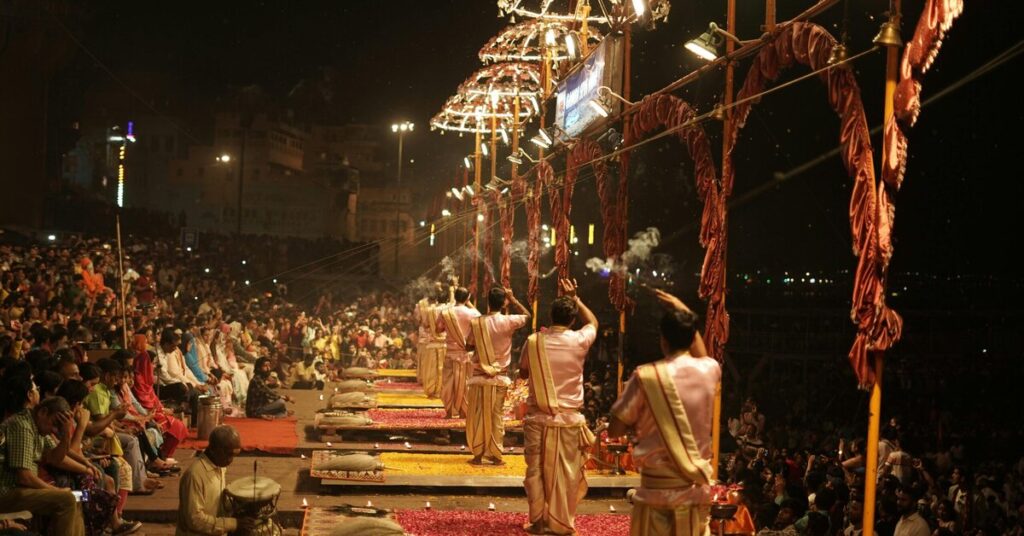
The Ganga Aarti at Dashashwamedh Ghat is one of India’s most spectacular religious ceremonies. Every evening at around 6:45 PM, seven young priests dressed in traditional attire perform a synchronized ritual that lasts about 45 minutes. They stand on raised platforms, wielding large brass lamps with multiple tiers of fire, moving through choreographed sequences while bells ring and devotional songs fill the air.
The aarti is both a prayer to the river goddess Ganga and a thanks offering for her life-giving waters. The priests use different ritual objects—incense sticks, fire lamps, flowers, and peacock-feather fans—each element carrying symbolic meaning. As darkness falls and thousands of spectators watch in rapt attention, the ceremony becomes a powerful collective expression of faith.
Ayodhya’s evening aarti at Ram Ghat offers a more intimate experience. While smaller in scale than Varanasi’s ceremony, it carries deep emotional resonance, especially for devotees of Lord Rama. The ceremony includes bhajans (devotional songs) specific to Rama’s glory, and the priests’ devotion is palpable.
The setting—with the Sarayu River flowing gently and temples illuminated in the background—creates a serene atmosphere. Many visitors find this aarti more personal and moving precisely because it’s less theatrical and more focused on pure devotion.
In Varanasi, you have several options for watching the Ganga Aarti. You can stand on the ghat itself (arrive early for a good spot), watch from a boat positioned in the river (included in many tour packages), or view from restaurants and hotels with ghat-facing balconies (more comfortable but less immersive).
In Ayodhya, the smaller scale means you can easily find a good viewing spot at Ram Ghat itself. Arriving 20-30 minutes before the ceremony starts ensures you get close to the action.
The ghats aren’t just tourist attractions—they’re living neighborhoods. Entire communities have called the ghats home for generations. Priests whose families have performed rituals here for centuries, boatmen who inherited their profession from their fathers, flower sellers who string marigolds before dawn, and countless others make their living from the river.
Observing daily life along the ghats reveals a world far removed from modern urban existence. You’ll see traditions practiced exactly as they have been for hundreds of years, creating a sense of timelessness that’s rare in today’s rapidly changing world.
Beyond religious rituals, the ghats host numerous traditional activities. Wrestlers practice ancient exercises at Tulsi Ghat, classical musicians perform morning ragas at Munshi Ghat, washermen (dhobis) clean clothes by beating them against stone slabs, and barbers offer riverside haircuts.
These activities aren’t performed for tourists—they’re genuine expressions of traditional livelihoods and practices. Witnessing them offers authentic insight into cultures that have adapted to modernity while maintaining their essential character.
Sadhus (Hindu ascetics) are a constant presence at the ghats, particularly in Varanasi. These spiritual seekers have renounced worldly life to pursue enlightenment. You’ll find them meditating in temple courtyards, performing elaborate rituals, or simply sitting in contemplation along the riverbank.
Some sadhus are welcoming and will discuss their spiritual paths with interested visitors. Others prefer solitude. Always approach respectfully, and if a sadhu indicates disinterest in conversation, simply move on. Never photograph sadhus without explicit permission—many expect a small donation in exchange for photos.
If you’re comfortable with the idea, taking a holy dip in the Ganges or Sarayu can be a meaningful experience. Devotees believe these waters purify both body and soul, washing away accumulated sins and negative karma.
The best time for bathing is early morning. Wear modest clothing (many pilgrims bathe fully clothed), and be aware that the water can be cold, especially in winter months. Keep your eyes and mouth closed while in the water, and shower thoroughly afterward. Many ghats have changing rooms and locker facilities for visitors.
Participating in simple offerings can create a personal connection to these sacred spaces. You can purchase flowers, incense, and small oil lamps from vendors at the ghats. The typical practice involves offering flowers to the river while silently making a prayer or setting an intention.
In the evening, many visitors float small leaf boats containing a candle and flowers on the river, a practice called “diya offering.” Watching your tiny light float away on the sacred waters creates a beautiful metaphor for releasing wishes and prayers to the divine.
For those interested in deeper participation, priests at the ghats can perform various rituals on your behalf. These might include pujas for ancestors, blessings for family members, or personal prayers for specific intentions. Your tour guide can help connect you with reputable priests and explain the meaning of different rituals.
These ceremonies typically involve Sanskrit chanting, offerings to sacred fire, and receiving tilak (sacred mark) and prasad (blessed food). While donations to the priest are customary, establish the amount beforehand to avoid misunderstandings.
The golden hours—the first hour after sunrise and the last hour before sunset—offer the most beautiful light for photography. During these times, the warm, directional light enhances colors and creates dramatic shadows that add depth to images.
The blue hour just before sunrise also provides excellent opportunities, with the soft, diffused light creating a mystical atmosphere. For capturing the aarti ceremonies, arrive early to scout angles and positions, as crowds make movement difficult once the ceremony begins.
Photography ethics at the ghats are crucial. Always ask permission before photographing people, especially during religious activities or bathing. Many will happily agree, while others prefer privacy—respect their wishes without argument.
Never photograph cremation ghats or funeral processions. These are sacred, private moments, and photographing them is deeply disrespectful. Similarly, avoid intrusive photography of sadhus, beggars, or people in vulnerable situations.
Beyond the obvious architectural beauty, look for details that tell stories: weathered hands making offerings, the intense concentration on a devotee’s face during prayer, the interplay of smoke and light during aarti, children playing on the steps, and the textures of ancient stone worn smooth by millions of feet.
Wide shots that capture the sweep of the ghats are impressive, but often the most powerful images are intimate moments that reveal the human dimension of spirituality practiced in these spaces.
Many major ghats now have facilities for tourists and pilgrims. Changing rooms allow you to change clothes before and after bathing, though they vary in cleanliness and privacy. Locker facilities let you secure valuables while you’re in the water or exploring.
At Dashashwamedh and other major ghats in Varanasi, several shops offer locker services for a small fee. In Ayodhya, Ram Ghat has recently developed facilities including clean changing rooms and security services for visitors’ belongings.
Official guides are available at most major ghats and can immensely enhance your experience. They explain the historical significance, identify different deities in temples, translate chanting, and share stories that bring the stones to life.
Hiring a guide through your tour package or from official tourism offices is recommended over accepting services from unofficial touts at the ghats, who may overcharge or provide inaccurate information.
Small tea stalls dot the ghats, offering chai (tea), snacks, and light meals. These simple establishments provide refreshment during your exploration. In Varanasi, several cafes and restaurants along the ghats offer river views with more extensive menus.
Always choose food vendors carefully—stick to hot, freshly prepared items and avoid raw foods or drinks with ice. Many ghat-side establishments now cater to tourists with Western menu options while maintaining authentic local flavors.
Standard ghats tour packages usually include accommodation for the tour duration, transportation between cities and to ghats, boat rides at sunrise and sunset, guided walks along the ghats, attendance at aarti ceremonies, and sometimes meals (usually breakfast, with other meals optional).
Higher-end packages might include private boats, exclusive aarti viewing arrangements, photography guides, yoga sessions, and ritual participation assistance. Always clarify what’s included before booking to avoid surprises.
Budget packages focusing primarily on ghats start around ₹6,000-10,000 per person for a 3-day tour with basic accommodation and group activities. Mid-range packages with better hotels and smaller groups cost ₹12,000-20,000 per person.
Premium packages offering luxury accommodation, private transportation, exclusive experiences, and personalized services range from ₹25,000-40,000 or more per person. Prices typically increase during peak seasons (October-March).
Many tour operators offer customization options. You might extend your stay to explore more ghats, add photography-focused sessions, include yoga and meditation training, arrange for ritual participation with priests, or combine the ghats tour with visits to other nearby destinations.
Discuss your interests and physical capabilities with the tour operator. Some ghat walks involve considerable stair-climbing and can be challenging for those with mobility issues, so modifications might be necessary.
The ghats can be slippery, especially when wet, so wear footwear with good grip (though you’ll remove shoes before entering temples). Watch your step on uneven stone stairs, and hold railings where available.
Keep valuables secure and be aware of your surroundings. Pickpocketing can occur in crowded areas. Avoid walking alone at isolated ghats late at night. During boat rides, always wear life jackets if provided, and don’t stand in the boat.
Modest clothing is essential. For men, long pants and shirts with sleeves are appropriate. Women should wear loose, long pants or long skirts with tops that cover shoulders and chest. Bring a light scarf or shawl for additional coverage when entering temples.
Comfortable walking shoes are important for ghat exploration, though you’ll need to remove them at temples. Consider bringing a separate pair of sandals that are easy to slip on and off. If you plan to take a holy dip, bring quick-dry clothing or a swimsuit that provides good coverage.
October through March offers the most pleasant weather for ghat visits. Temperatures are comfortable for walking and boat rides, and festival season brings added vibrancy. November’s Dev Deepawali in Varanasi is particularly spectacular, with all ghats illuminated by thousands of earthen lamps.
Winter mornings (December-January) can be quite cold and foggy, creating atmospheric conditions for photography but requiring warm layers. Avoid summer months (April-June) when temperatures soar above 40°C, making extended time outdoors uncomfortable.
A Varanasi Ayodhya ghats tour package offers more than sightseeing—it provides immersion into living spiritual traditions that have flowed continuously for millennia. The ghats are where philosophy becomes practice, where ancient wisdom meets daily life, and where the sacred and mundane exist in beautiful harmony.
Whether you’re drawn by spiritual seeking, cultural curiosity, photographic passion, or simple wanderlust, the ghats deliver profound experiences. The memories you’ll carry home—the mesmerizing aarti flames reflected in sacred waters, the peaceful sunrise boat rides, the weathered steps worn smooth by countless pilgrims, the chants echoing across the river—will remain vivid long after your journey ends.
These aren’t places you merely visit; they’re spaces that invite participation, contemplation, and transformation. So take that boat ride, attend that aarti, feel those ancient stones beneath your feet, and let the sacred rivers wash over your spirit. The ghats await with open arms and eternal blessings.
Early morning (5-7 AM) and evening (6-8 PM) are the most magical times. Sunrise offers peaceful boat rides and morning rituals with beautiful light, while evening brings spectacular aarti ceremonies. Midday can be hot and less atmospheric. If you can only choose one, don’t miss the evening aarti—it’s truly unforgettable.
A comprehensive ghats experience requires at least 2-3 days in Varanasi and 1 day in Ayodhya. This allows for sunrise boat rides, walking tours along multiple ghats, evening aarti ceremonies, and time to simply sit and absorb the atmosphere. Rushing through in a day means missing the depth and variety these sacred spaces offer.
While millions bathe safely in these sacred waters daily, concerns about water quality are valid. If you choose to bathe, do so at designated bathing ghats during morning hours, keep your head above water, and shower thoroughly afterward. Those with compromised immune systems or open wounds should avoid bathing. The spiritual significance makes it meaningful for many despite the water quality concerns.
You’re welcome to participate! During the ceremony, you can hold your own small lamp (available for purchase from vendors), join in the chanting if you know the words, and make offerings. The priests and other participants generally appreciate respectful participation. However, simple, reverent observation is equally acceptable and meaningful.
Unfortunately, most ghats have numerous steps and uneven surfaces that make wheelchair access challenging or impossible. Some newer or renovated ghats in Ayodhya have better accessibility, and viewing aarti from a boat can work for those with mobility limitations. If accessibility is a concern, discuss options with your tour operator beforehand to arrange appropriate alternatives.