Your cart is currently empty!
You may check out all the available trips and book one that suits you.
Continue Browsing Trips
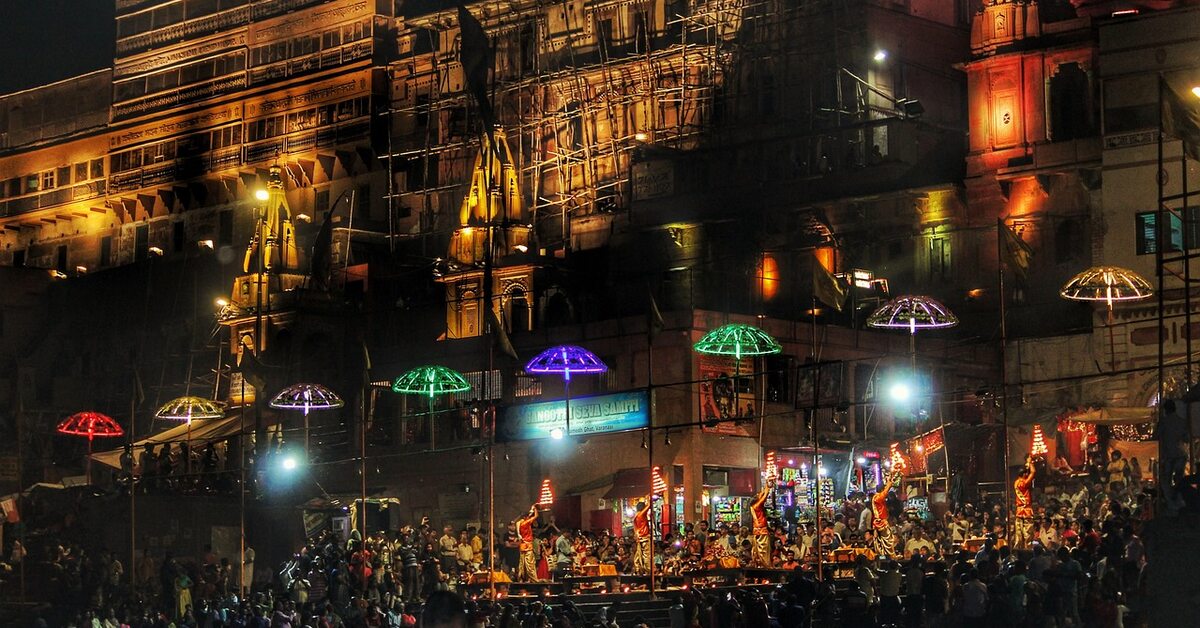
Ganga Aarti in Varanasi A Spiritual Experience from Gujarat , Imagine standing on ancient stone steps as twilight descends over the Ganges. The air fills with the sound of conch shells and bells. Seven priests in saffron robes lift massive brass lamps, flames dancing against the darkening sky. Hundreds of voices chant Sanskrit mantras in unison, and you feel something shift inside you—something beyond religion, beyond culture, touching something fundamentally human.
This is Ganga Aarti in Varanasi, and for travelers from Gujarat, it represents both profound familiarity and striking difference. You’ve attended temple aartis your entire life—at Somnath, Dwarka, Akshardham, or your neighborhood temple. You know the ritual elements: the lamps, the incense, the devotional songs. Yet nothing quite prepares you for the scale, the setting, and the raw spiritual energy of Ganga Aarti performed on the banks of India’s most sacred river.
This isn’t just a tourist attraction, though thousands of tourists witness it daily. It’s a living tradition connecting modern devotees with ancient practices, a moment where the divine feminine (Ganga Ma) receives offerings from grateful humans, a spectacle where the line between performance and prayer dissolves completely. For Gujarati travelers seeking spiritual experiences that transcend the familiar while honoring timeless traditions, Ganga Aarti offers exactly that convergence.
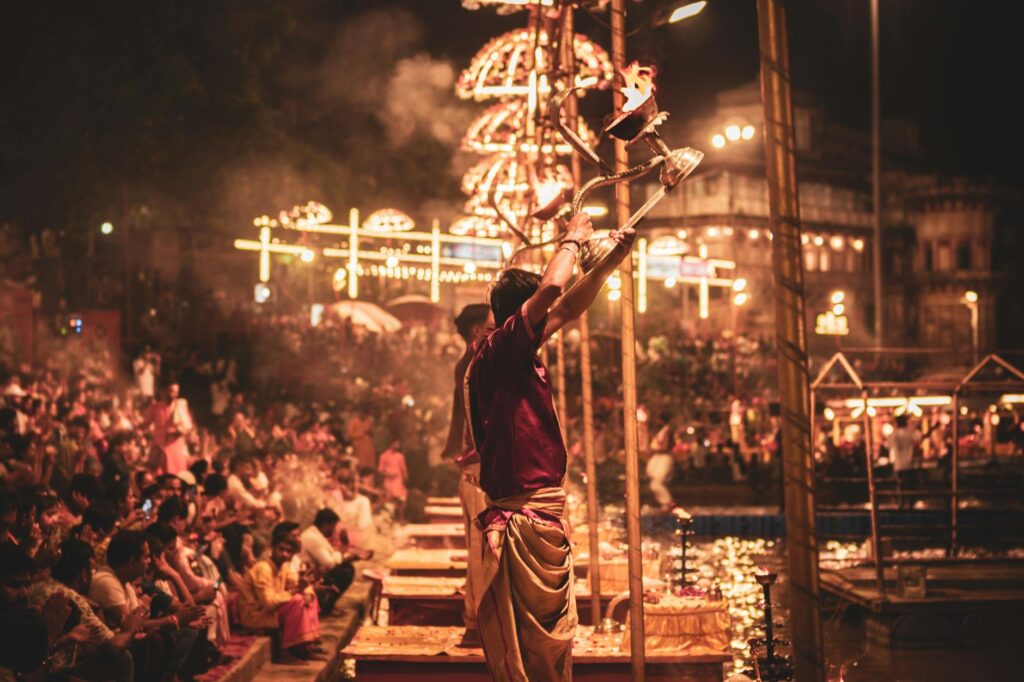
The word “aarti” comes from the Sanskrit “aratrika,” meaning something that removes darkness—both literal and spiritual. In Hindu worship tradition, aarti involves offering light (usually from wicks soaked in ghee or camphor) to deities while singing devotional songs. The circular motion of the lamp symbolizes the cycle of creation, the light represents divine presence, and the act represents the devotee’s gratitude and surrender.
Every Gujarati grows up with aarti. It’s the evening ritual at home when your mother or grandmother circles a small diya before the family shrine. It’s the temple ceremony before meals during festivals. It’s the Swaminarayan temple’s elaborate evening aarti with synchronized movements and musical accompaniment. The ritual is deeply embedded in Gujarati Hindu consciousness—comforting, familiar, almost automatic.
Ganga Aarti in Varanasi A Spiritual Experience from Gujarat, Varanasi’s Ganga Aarti takes this intimate, indoor ritual and explodes it into something monumental and public. The essential elements remain—offering light with devotion—but the scale, setting, and spiritual significance multiply exponentially.
In Gujarat’s temples, aarti is offered to murti (deity images) housed within sanctums. The deity is stationary, contained, represented through carved stone or metal. The worshippers are inside, protected from elements, following structured protocol.
Ganga Aarti flips this entirely. The deity—Ganga Ma—is the river itself, living, flowing, impossible to contain. The temple is the open sky, the walls are the ghats stretching along the riverbank, and nature itself becomes the sanctum. Instead of dozens or hundreds inside a temple, thousands gather on the ghats, in boats, along the riverbanks.
The energy differs too. Temple aartis, even grand ones at places like Akshardham, maintain a certain decorum—controlled entry, organized seating, prescribed behaviors. Ganga Aarti is controlled chaos—pilgrims, tourists, locals, sadhus, children, all jostling for position, the crowd swelling and shifting, yet somehow the ritual proceeds with perfect precision at its center.
For Gujarati visitors, this lack of structure can initially feel uncomfortable. You’re used to entering temples in a queue, knowing where to stand, following clear protocols. Here, you must create your own experience within the larger unstructured mass. That’s actually the spiritual lesson—finding your center amidst external chaos.
River worship in India predates even Hinduism as we know it today. The Rigveda, composed over 3,500 years ago, contains hymns praising sacred rivers. The Ganges specifically appears in later Vedic texts as a goddess who descended from heaven to earth, her fall broken by Shiva’s matted locks to prevent her force from destroying the world.
Varanasi’s relationship with the Ganges is ancient beyond precise dating. Archaeological evidence suggests continuous habitation here for at least 3,000 years, always centered on the river. For millennia, people have performed rituals on these ghats—bathing for purification, offering prayers, conducting last rites, and yes, lighting lamps in devotion.
The specific ritual of evening aarti to the river, while rooted in ancient tradition, evolved into its current form relatively recently. The synchronized, theatrical performance that tourists now witness developed primarily in the last few decades, influenced by both traditional practices and modern presentation sensibilities.
The formalized Ganga Aarti at Dashashwamedh Ghat in its current spectacular form began around the 1970s-80s. Local priests and community leaders, recognizing both spiritual significance and tourism potential, standardized the ceremony—timing it precisely at sunset, coordinating multiple priests, adding musical accompaniment, and creating the visual spectacle that now attracts global attention.
This doesn’t diminish its authenticity. Indian religious practice has always evolved—absorbing new influences, adapting to changed circumstances, finding new expressions for eternal truths. The modern Ganga Aarti represents this living tradition—ancient in essence, contemporary in execution.
For Gujarati visitors concerned about “authenticity,” remember that Gujarat’s own religious practices evolved similarly. The elaborate Swaminarayan temple aartis weren’t performed exactly this way 200 years ago. The Garba you dance during Navratri incorporates modern music and choreography. Tradition isn’t fossilized past—it’s living present that honors its roots.
Dashashwamedh Ghat’s name means “ghat of ten horse sacrifices.” According to legend, Lord Brahma performed ten ashwamedha yagnas (horse sacrifices) here to allow Shiva to return to Varanasi after a period of absence. The ghat’s spiritual significance thus predates even the Ganga Aarti ritual performed there today.
This layering of spiritual history—ancient legends, medieval practices, modern rituals—all coexisting at one location epitomizes Varanasi’s cultural depth. You’re not just watching a performance; you’re participating in a tradition connecting you to millennia of devotion at this exact spot.
For Gujarati Hindus, the theological concept is familiar: Ganga descended from heaven as a goddess, took form as a river, and her waters purify sins and grant liberation. Every Gujarati household performing daily prayers likely invokes the Ganges symbolically through water offerings, even if you’ve never actually seen the river.
But experiencing the Ganges in Varanasi transforms abstract theology into tangible reality. The river isn’t a metaphor here—it’s a physical, flowing, powerful presence. Millions bathe in her, drink her water, scatter ashes of loved ones in her current, and believe with unshakeable faith that she washes away accumulated karma.
The Ganga Aarti acknowledges this divine presence. It’s not worship OF the river as if the water itself holds magic. It’s worship THROUGH the river to the divine consciousness that permeates existence, which here manifests as this particular flow of water, this specific geographical feature that has sustained spiritual life for thousands of years.
Gujarat has its own sacred rivers—primarily the Narmada and Sabarmati. The Narmada, especially, holds immense spiritual significance, with devotees performing the Narmada Parikrama (circumambulation) taking years to complete. The river worship tradition isn’t foreign to Gujarati consciousness.
However, the Narmada and Sabarmati aren’t worshipped through elaborate evening aartis the way the Ganga is. Gujarat’s river rituals are more personal and internal—individual bathing, private offerings, quiet meditation on riverbanks. The communal, performative, spectacular element of Ganga Aarti represents a different cultural approach to the same underlying reverence.
Understanding this helps Gujarati visitors appreciate rather than judge the difference. Both approaches honor sacred waters—Gujarat’s quietly, Varanasi’s loudly. Both are valid expressions of devotion shaped by regional culture and historical circumstances.
At its core, Ganga Aarti represents pranam (respectful greeting/surrender) to nature itself. In our increasingly urban, climate-controlled lives—whether in Ahmedabad or Varanasi—we lose connection with natural forces. We forget that water sustains us, that rivers nourish civilizations, that without these “resources” (horrible modern term for sacred elements), we don’t exist.
Ganga Aarti restores that remembrance. Standing on the ghat, watching priests offer light to the flowing river, you reconnect with ancient human understanding: we’re not masters of nature but participants within it, dependent on it, grateful to it.
This message resonates universally, regardless of specific religious beliefs. Gujarati visitors of all backgrounds—Hindu, Jain, even secular—can appreciate this ecological-spiritual wisdom: honor the earth, respect the waters, remember your dependence on forces greater than human engineering.
This is THE Ganga Aarti most people mean when discussing the ritual. Located centrally among Varanasi’s ghats, Dashashwamedh hosts the most elaborate ceremony daily at sunset (timing varies seasonally, roughly 6:00-7:30 PM).
Seven priests perform synchronized rituals using massive multi-tiered brass lamps, each weighing several kilograms. The ceremony lasts about 45 minutes, accompanied by recorded or live music, chanting, and conch shell blowing. The synchronized movements, the uniform robes, the massive flames against the twilight sky—it’s designed for visual impact and succeeds magnificently.
For first-time visitors from Gujarat, start here. Yes, it’s crowded. Yes, it’s touristy. But it’s also genuinely powerful, beautifully executed, and provides the full Ganga Aarti experience that you came to witness. You can explore more intimate versions afterward, but this spectacular ceremony deserves experiencing at least once.
Assi Ghat, at Varanasi’s southern end, performs a morning aarti called “Subah-e-Banaras” (Morning of Varanasi) around 5:30-6:00 AM. This ceremony is smaller, less touristed, and offers a different energy—peaceful, meditative, focused on sunrise rather than sunset symbolism.
Many Gujarati travelers, especially those used to early morning temple visits back home, prefer Assi’s morning aarti. The crowd consists more of genuine devotees than camera-wielding tourists. The ritual feels less performative, more devotional. The sunrise over the Ganges adds natural beauty that requires no human enhancement.
If you’re staying in the Assi area (popular with Gujarati families for its restaurants and accommodations), the morning aarti becomes easy to incorporate into your schedule. Wake early, walk to the ghat, experience the aarti, follow it with chai at a riverside cafe—it’s a perfect Varanasi morning.
Several other ghats perform smaller aartis, usually at sunset:
Prayag Ghat: Medium-sized ceremony, fewer crowds than Dashashwamedh Rana Mahal Ghat: Very small, intimate, almost private feeling Kedar Ghat: Traditional, local flavor, minimal tourist presence Rajendra Prasad Ghat: Modest ceremony near Assi area
These smaller aartis appeal to Gujarati visitors seeking authentic devotional experience over spectacle. You’ll stand among locals for whom this is daily spiritual practice, not tourist attraction. The priests may not be professional performers but longtime practitioners. The ceremony might lack choreographic perfection but gains in genuine devotional intent.
Consider experiencing both—the grand Dashashwamedh performance and a smaller, neighborhood aarti. Together, they provide complete understanding of how Varanasi worships its river.
Preparations begin hours before the ceremony. Priests arrive early to set up the five circular platforms (chauki) where they’ll stand during the ritual. They arrange the ritual objects: the large brass lamps (with five or seven tiers), the incense holders, the conch shells, the yak-tail whisks, the peacock-feather fans, and the cloth offerings.
The lamps themselves require careful preparation—wicks must be positioned correctly, ghee or oil filled to appropriate levels, ensuring they’ll burn steadily through the entire ceremony. The priests also prepare themselves spiritually—bathing, wearing clean traditional attire, performing personal prayers.
For Gujarat visitors arriving early, watching these preparations provides cultural education. It’s like arriving at a Gujarat temple before aarti begins and watching the priests prepare the murti, light the diyas, arrange the offerings. The ritual’s visible preparation emphasizes that this isn’t spontaneous performance but carefully maintained tradition.
The main Dashashwamedh Ghat ceremony employs seven priests (brahmins), each standing on a designated platform. Why seven? In Hindu cosmology, seven is sacred—seven chakras, seven sages (saptarishis), seven sacred cities. The number itself carries symbolic weight.
Each priest performs identical movements simultaneously, creating visual harmony. They don’t have individual “roles” so much as collective responsibility—together, they represent the human devotional response to divine presence. Their synchronization demonstrates discipline, training, and spiritual focus.
The head priest (usually eldest or most experienced) stands at the center position and may initiate key transitions. But fundamentally, the seven function as one—individual egos sublimated into collective devotional offering. This concept—individual merging into unified whole for spiritual purpose—resonates with Gujarati cultural values of community over individual, group harmony over personal distinction.
The ceremony follows a structured progression, each element carrying symbolic meaning:
1. Flower Offering: The ceremony begins with priests offering flowers to the river, symbolizing the earth’s bounty being returned to its source.
2. Incense Offering: Next comes incense, representing the element of air and the prayers rising upward to the divine.
3. Lamp Offering (Main Aarti): This is the centerpiece—priests lift the heavy multi-tiered lamps and wave them in circular patterns. The movement represents the sun’s path, the cosmic wheel, and the cycle of time. Different tiers of lamps symbolize different cosmic realms.
4. Water Offering: Priests use water from the Ganges itself, offered back to the river in recognition that everything returns to its source.
5. Fire Offering: A special camphor flame burns bright and smokeless, symbolizing the element of fire and pure consciousness without material residue.
6. Yak-Tail Whisk: The priests wave yak-tail whisks and peacock fans, traditional royal symbols adapted for divine service—treating the goddess Ganga as the sovereign she is.
7. Concluding Prayers: The ceremony ends with collective prayers, conch shell blowing, and bell ringing—a crescendo of sound marking completion.
Understanding this sequence transforms watching from passive observation to active comprehension. You’re not just seeing pretty fire displays—you’re witnessing a carefully structured theological statement about elements, cosmic order, and proper human relationship with the divine.
Each ritual object carries layers of meaning familiar to Gujarati Hindus from temple worship:
Conch Shell (Shankh): Its sound represents primordial sound (Om), warding off negative energies and announcing divine presence. The conch’s natural spiral mirrors cosmic creation patterns.
Bells (Ghanta): Bell sounds stimulate divine attention (symbolically) and human awareness (practically), marking ritual transitions and keeping participants mentally present.
Fire Lamps (Diya/Aarti): Fire symbolizes knowledge destroying ignorance, light dispelling darkness. The multiple tiers represent multiple cosmic levels—physical realm, subtle realm, causal realm, and beyond.
Incense (Dhoop): The fragrant smoke represents prayers ascending to higher realms, the transformation of material substance into subtler forms.
These aren’t unique to Ganga Aarti—they appear in Gujarat’s temples too. But scale and context change their impact. A small bell in your home shrine versus dozens of bells ringing across the ghat creates different psychological effects. Similarity of elements with difference of execution helps Gujarati visitors feel both at home and challenged by new perspectives.
The sunset aarti at Dashashwamedh Ghat is what most people seek. Timing varies seasonally:
November-February (Winter): Approximately 6:00-6:30 PM March-May (Summer): Approximately 7:00-7:30 PM June-October (Monsoon/Post-monsoon): Approximately 6:30-7:00 PM
Arrive at least 45 minutes early—even earlier during peak tourist season (October-March). The ceremony begins precisely at sunset, timed to transition from daylight to darkness, symbolizing the shift from manifest to unmanifest reality.
For Gujarati travelers accustomed to punctual schedules (trains, flights, meetings), the precision of this ancient ritual will feel familiar. Unlike some aspects of Varanasi that operate on “Indian time,” the Ganga Aarti begins when scheduled, ready or not.
The Assi Ghat morning aarti (Subah-e-Banaras) begins around 5:30 AM during winter, slightly later in summer (6:00-6:30 AM). This timing captures sunrise—the transition from darkness to light, symbolically representing ignorance to knowledge, night of delusion to day of understanding.
Morning aarti attracts fewer tourists and more local devotees, creating different energy—quieter, more meditative, less performative. The cool morning air, the gradually brightening sky, the birds beginning their chorus—nature itself enhances the spiritual atmosphere.
For Gujarati early risers (many Gujarati households maintain morning worship routines), this timing feels natural. You’re not fighting your biological clock but working with it. Morning aarti followed by boat ride and riverside breakfast creates perfect start to a Varanasi day.
Winter (November-February): Best time. Comfortable weather, clear skies, excellent photography light. However, evenings get cold (5-10°C), especially near the river. Carry shawls or jackets—significantly warmer clothing than needed in Gujarat.
Summer (March-June): The aarti itself remains powerful, but weather poses challenges. Temperatures exceed 40°C, and evening heat can make crowd tolerance difficult. Gujarat travelers used to Ahmedabad’s summer might manage, but the humidity near the river intensifies discomfort.
Monsoon (July-September): Rain can disrupt ceremonies (though they proceed unless conditions are dangerous). The unpredictability frustrates travelers on tight schedules. However, post-monsoon (late September-October) brings revived beauty—lush surroundings, cleaner air, fewer crowds.
Festival Periods: Dev Deepawali (fifteen days after Diwali) sees the largest crowds. Every ghat performs aarti, and millions of lamps illuminate the riverbank. If you want spectacle, this is peak time. If you want intimacy, avoid it.
For Dashashwamedh Ghat’s main aarti, arriving 45-60 minutes early is essential. The best spots—front rows on the ghat steps, directly facing the ceremony platforms—fill quickly. By 15-20 minutes before start time, you’ll struggle finding any spot with clear view.
Where to position yourself:
Ghat Steps Center: Best viewing but most crowded. You’ll be shoulder-to-shoulder with other viewers.
Ghat Steps Sides: Slightly angled view but less packed. Reasonable compromise between view and comfort.
Upper Steps: Farther from action but elevated view. Good for photography and those who need personal space.
Behind the Ceremony: Photographers sometimes position here for unique angles—shooting toward the river with priests in foreground.
For Gujarati families with elderly members or young children, upper steps work better. The physical compression in front rows can be overwhelming, especially if claustrophobia triggers easily. Remember, you’ll be standing (or sitting on steps) for over an hour total—comfort matters.
Standing on the ghat steps is the traditional, immersive way to experience aarti. You’re among the crowd, feeling the collective energy, participating in the communal experience. The chanting surrounds you, the smoke drifts past you, and you’re not just observer but participant.
Advantages: Free, authentic experience, feeling of participation, best for absorbing atmosphere.
Disadvantages: Crowded, pickpockets operate here, view can be blocked, no seating, standing for extended period, difficult bathroom access.
Tips for Ghat Viewing:
Renting a boat provides alternative perspective—watching from the river, seeing the ghats illuminated from water level, avoiding crowd stress. Boats cost ₹200-600 depending on negotiation skills, boat size, and season.
Advantages: Unique perspective, photogenic backdrop, avoiding crowds, romantic/contemplative atmosphere, easier for elderly/children.
Disadvantages: Costs money, slightly distant view, harder to hear chanting/music, dependent on boatman’s positioning, limited stability for photography.
Boat Viewing Tips:
Many Gujarati families prefer boat viewing, especially those with mixed-age groups. It combines spectacle viewing with comfortable experience, avoiding crowd stress while maintaining the ceremony’s visual impact.
Photography is permitted, but etiquette matters:
Do:
Don’t:
Technical Suggestions:
For Gujarati photographers accustomed to shooting festivals back home (Navratri, Uttarayan), similar principles apply—balance capturing moments with respecting participants and not disrupting events.
Gujarat’s temple aartis, even grand ones at Akshardham or Swaminarayan temples, operate within buildings. The grandest holds perhaps 1,000-2,000 people. Ganga Aarti at Dashashwamedh accommodates thousands on the ghats plus hundreds in boats—sheer scale creates different energy.
The openness transforms experience. No ceiling contains the chanting, no walls hold the smoke. The sound disperses into the sky, the incense merges with river breeze, and the ritual becomes part of the larger natural setting rather than distinct from it. This “temple without walls” concept changes how you perceive worship itself.
Gujarat’s aartis happen in designated sacred spaces—temples where religious authority controls access and atmosphere. You enter with certain mindset, following established protocols, within structures specifically designed to evoke reverence.
Ganga Aarti happens on public ghats—spaces that simultaneously serve religious and mundane purposes. Before aarti begins, the same ghats host bathing, laundry, children playing, and daily life. The sacred isn’t separated from ordinary—it emerges from within ordinary existence.
This integration challenges Gujarati sensibilities trained toward separation (temple separate from market, worship separate from daily routine, sacred times separate from normal times). Varanasi insists that sacred permeates everything constantly, requiring recognition not segregation.
Temple aartis gather participants who chose to attend temple at that time. Ganga Aarti gathers residents, pilgrims, tourists, seekers, and wanderers—people with vastly different intentions, beliefs, and backgrounds. Yet somehow, during those 45 minutes, disparate individuals merge into singular collective energy.
This spontaneous communitas (anthropological term for temporary community)—strangers united through shared ritual participation—creates powerful psychological effect. You feel connected to people you’ll never speak with, simply through standing together, watching together, and implicitly participating in collective acknowledgment of something greater than individual existence.
For Gujarati visitors, this mirrors the communal energy of Garba or Navratri celebrations—that moment when individual identity dissolves into the group dance, the collective rhythm, and shared devotional fervor. Ganga Aarti creates similar transcendence through different medium—stillness and watching rather than movement and dancing, but achieving comparable spiritual-psychological effect.
Ganga Aarti is deliberately spectacular. The brass lamps are massive and ornate. The flames dance vigorously in the evening breeze. The priests’ robes—saffron, gold, red—add color against the stones and river. The smoke creates ethereal patterns. The darkening sky provides dramatic backdrop as twilight transitions to night.
This visual richness isn’t accidental—it’s designed to overwhelm ordinary consciousness, breaking through the mental noise that dominates daily life. In a sense, it’s bhakti yoga through beauty—using aesthetic experience to trigger spiritual awareness.
For Gujaratis from visually colorful culture (think Navratri decorations, textile patterns, rangoli art), this aesthetic intensity feels somewhat familiar. But scale and setting—the massive lamps, the wide river, the endless stone steps—still impress even Gujarati sensibilities accustomed to visual abundance.
The soundscape layers multiple elements: Sanskrit chants, conch shells, bells, recorded music or live instruments, the river’s gentle lapping, boat oars splashing, and the crowd’s collective murmur. This sonic texture creates immersive environment impossible to ignore or intellectually filter.
Sound affects human consciousness profoundly. The rhythmic chanting entrains brainwaves toward meditative states. The bells’ sharp punctuation interrupts mental wandering. The conch’s sustained note triggers primal responses (ancient humans used conch signals for communication and warning).
Gujarati visitors familiar with bhajan sessions or temple kirtan recognize these sound elements but not combined at this scale and intensity. The experience becomes overwhelming in positive sense—too much to mentally process, forcing you into direct sensory experience rather than intellectual analysis.
Smell is the sense most directly connected to memory and emotion (neuroscience confirms this). The incense used during aarti—typically sandalwood, camphor, and special resins—creates fragrance simultaneously calming and alerting.
The burning ghee from lamps adds subtle richness. The river itself carries earthy mineral scent. Occasionally, jasmine or marigold from nearby flower vendors drifts through. These combined aromas create olfactory signature unique to Varanasi—instantly recognizable if you later encounter similar combinations.
For Gujarati visitors, certain scents trigger home memories—specific incense used in family temples, particular flowers from weddings or festivals. Ganga Aarti’s fragrances are similar yet distinct enough to create new associations, new sense memories that will forever connect with this experience.
Before experiencing Ganga Aarti, clarify your intention. Are you:
None of these are wrong, but awareness helps frame experience appropriately. If seeking spiritual depth, arrive with prayerful mindset, perhaps chanting your personal mantra beforehand, creating internal receptivity. If primarily cultural interest, approach with anthropological curiosity, observing details and patterns.
Most Gujarati visitors blend intentions—you’re both devotee and observer, both participant and documenter. That’s fine. Just be conscious of your mental framework so you can adjust if needed.
Gujarat’s dominant Hindu traditions (Swaminarayan, Pushtimarg, various Shaiva and Vaishnava sampradayas) each have specific theological positions and ritual preferences. Varanasi’s Ganga Aarti doesn’t represent any single sampradaya—it’s pan-Hindu, inclusive, incorporating elements various traditions share.
Some Gujaratis, particularly those from stricter traditional backgrounds, might notice theological differences. The deity concept (worshipping the river as goddess), the grandeur (some traditions prefer simplicity), the public spectacle (some prefer privacy in worship)—these might clash with your specific tradition’s approach.
Approach with openness. This doesn’t mean abandoning your tradition but recognizing that Hindu dharma’s vastness allows multiple valid expressions. What you’re witnessing isn’t “wrong” or “right”—it’s different, shaped by different geography, history, and cultural context.
Many Gujarati Jains also attend Ganga Aarti, viewing it as cultural rather than strictly religious experience. The ritual’s natural elements (fire, water, air), the reverence for life forces, and the philosophical depth resonate across sectarian boundaries.
For Women:
For Men:
General Clothing Tips:
For Ghat Viewing: 45-60 minutes before aarti time. Allows choosing spot, settling in, observing pre-ritual atmosphere. Arriving 15-20 minutes before means poor viewing position or no clear view at all.
For Boat Viewing: 45 minutes before, but you’ll board boat maybe 20-30 minutes before, watching from water as crowds gather onshore. The pre-aarti river perspective provides unique experience.
Post-Aarti Departure: Don’t rush off immediately after. The dispersing crowds create chaos. Sit for additional 10-15 minutes, letting crowds thin, reflecting on the experience. Many small shrines line the ghats—explore these while masses depart.
Crowds are inevitable and intense. Strategies for Gujaratis used to some crowding (train stations, festival venues) but perhaps not at this density:
Mental Approach: Accept crowding as part of the experience, not problem to overcome. Fighting it creates frustration. Accepting it allows flow.
Physical Positioning: Establish your spot early and maintain it gently but firmly. Indian crowds respect those who stand their ground politely.
Family Strategy: Keep group together. Hold children’s hands. Establish meeting point if separated.
Breathing: Crowd anxiety often stems from shallow breathing. Conscious deep breathing maintains calm even in dense press of people.
Personal Space: Will be violated. Repeatedly. By people from different cultures with different proximity norms. It’s not personal—it’s context. Maintain boundaries where possible, yield gracefully where necessary.
Pickpocket Risk: Real and significant. Tourists are targets. Gujarati travelers visibly from out-of-town (by dress, language, behavior) especially draw attention.
Prevention:
Women’s Safety: Generally safe in the public aarti crowd, but be aware. Groups better than solo. Avoid isolated ghat areas before/after. Trust instincts—if someone feels off, move away.
Child Safety: Hold young children’s hands constantly. Ghat steps can be slippery (especially if wet), and the crowd surge can separate families. Establish what-if-separated plan before arriving.
Health Precautions:
After experiencing Dashashwamedh’s grand performance, explore smaller ghat aartis for contrast. These offer intimate experiences closer to traditional devotional practice without tourism overlay.
Kedar Ghat (evening): Small aarti performed by local priests, primarily for neighborhood residents. Arrive casually, sit on steps, observe quietly. No performance pressure, no synchronized choreography—just sincere offering of light to the river.
Panchganga Ghat (morning): Multiple ghats converge here (hence “five Ganges”). Morning ritual includes local priests and dedicated early-rising devotees. Peaceful, meditative atmosphere.
Rajendra Prasad Ghat: Near Assi, small evening aarti attended mostly by local residents and long-term spiritual seekers staying in nearby ashrams. Often followed by informal bhajan singing.
These smaller aartis might seem unimpressive after Dashashwamedh’s spectacle, but they offer something equally valuable—authenticity without performance. Here you witness how locals worship their river daily, not for tourists but for themselves, maintaining traditions regardless of external observation.
For Gujarati travelers, these smaller aartis mirror your own neighborhood temple’s quiet evening aarti—familiar in scale and intimacy while still distinctly Varanasi in character.
Ganga Aarti doesn’t require active participation—observation is completely acceptable. Many visitors (including Indians from other regions) attend primarily as cultural spectators. There’s no pressure to “perform” devotion.
However, participation options exist if you choose:
Minimal Participation:
Moderate Participation:
Full Participation:
Find your comfort level organically. You might start as pure observer and gradually feel pulled toward greater participation. Or observation might satisfy completely. Honor your genuine feelings rather than forcing participation out of obligation.
Many Gujarati visitors, especially from devotional backgrounds, naturally participate moderately—chanting familiar mantras (even if different from Ganga Aarti’s specific verses), offering mental prayers, and treating the experience as genuine darshan rather than touristic entertainment.
Collecting anecdotal reports from Gujarati travelers who’ve experienced Ganga Aarti reveals common emotional patterns:
Initial Overwhelm: First-timers often report feeling overwhelmed—by crowds, scale, sensory intensity. It takes 10-15 minutes to adjust, process, and settle into experience.
Unexpected Emotion: Many report unexpected tears or emotional surges, even those who came primarily as tourists. Something about the ritual’s beauty, the collective energy, or personal spiritual readiness triggers emotional release.
Cultural Pride: Indian travelers often feel pride seeing their cultural-spiritual heritage celebrated at such scale, performed with such dedication, attracting global attention.
Contemplation: The aarti triggers philosophical reflection—about life, death, meaning, tradition, and personal spiritual path. Many sit quietly on ghats afterward, simply processing.
Desire to Return: Surprisingly many first-time visitors immediately want to return next evening, suggesting the experience creates appetite rather than satisfying curiosity completely.
Comparative Thoughts: Gujarati visitors specifically report comparing with home traditions—sometimes favorably impressed by Varanasi’s grandeur, sometimes missing Gujarat’s organized cleanliness, often appreciating both as valid expressions.
Photographs Insufficient: Nearly universal response: photographs and videos fail capturing the experience. The energy, the atmosphere, the physical presence—these don’t translate to screens, creating both frustration (can’t share fully with those who didn’t attend) and appreciation (glad I experienced it personally).
These patterns suggest Ganga Aarti succeeds at its implicit goal—creating powerful enough experience that viewers either transform or at minimum remember significantly. It’s not just pleasant entertainment but meaningful encounter with living tradition.
As the final prayers conclude, the bells stop ringing, and the crowds begin dispersing, you might feel disoriented—emerging from intense experience back into ordinary consciousness. Take a moment before rushing away. Sit on the ghat steps, watch the river continue its eternal flow, and absorb what you’ve witnessed.
Ganga Aarti offers Gujarati travelers more than tourist attraction check-off. It provides encounter with a different expression of the spiritual tradition you already know. It demonstrates that the same underlying devotion—the same desire to connect with something greater, the same gratitude for existence, the same acknowledgment of mystery—finds expression through infinitely varied cultural forms.
When you return to Gujarat, you’ll see your own traditions with fresh eyes. The evening aarti at your family temple might feel simultaneously familiar and newly meaningful, as you recognize it as one thread in India’s vast devotional tapestry. You might approach it with renewed appreciation, less automatic habit and more conscious participation.
Perhaps you’ll integrate something from Varanasi into your personal practice—lighting a lamp for the Ganges (symbolically present in all water), chanting “Har Har Gange” occasionally, or simply carrying the memory of that evening when fire met water and something within you shifted, even if you can’t quite articulate how or why.
That’s the real blessing of Ganga Aarti—not the spectacle itself but what it awakens within you. The outer ritual merely reflects the inner movement, and if you’ve experienced it genuinely, you carry that light home, where it continues illuminating your path long after the physical flames have been extinguished.
Not at all mandatory. Many devotees do bathe before aarti as part of complete spiritual practice, but most attendees (especially tourists) simply watch the ceremony. If you choose to bathe, do so at designated bathing ghats, be aware of river current strength, respect local bathing customs (most bathe fully clothed in saree/dhoti), and be cautious about water quality if you have sensitive skin or immune issues. Most Gujarati visitors observe rather than bathe, which is completely acceptable.
Absolutely yes. Ganga Aarti is public ceremony performed in open space—anyone can attend regardless of religion or background. Many Jains, Christians, Muslims, Buddhists, and people of all backgrounds witness the aarti, treating it as cultural experience rather than religious participation. Respectful observation is all that’s required. The ceremony’s emphasis on natural elements (fire, water) and reverence for life-giving forces resonates across religious boundaries. Just maintain appropriate respectful behavior, and you’re welcome.
Boat costs vary significantly based on negotiation, season, and boat size. Expect ₹200-300 per person for shared boat (holding 6-8 people) or ₹800-1,200 for private boat seating 4-5 people comfortably. Rates triple during Dev Deepawali and peak season. Negotiate firmly—initial asking prices might be double or triple final prices. Agree on total cost, duration, and positioning BEFORE boarding. Many Gujarati travelers successfully bargain by being friendly but firm, walking away if needed, and comparing multiple boatmen’s offers.
Yes, with considerations. For elderly: The physical requirements (standing/sitting on stone steps for 60+ minutes, navigating uneven surfaces, crowd management) can be challenging. Boat viewing suits elderly better—seated, comfortable, avoids crowds. For children: The spectacle captivates most kids, but very young children (under 5-6) might get restless during 45-minute ceremony. Bring quiet snacks/water, be prepared to leave early if needed, and hold children’s hands constantly. Many Gujarati multi-generational families successfully attend by choosing boat viewing, arriving early for good spots, and maintaining patience.
Yes, but unobtrusively. The main ceremony proceeds regardless of individual actions. You can silently recite your personal mantras, offer mental prayers, close your eyes for meditation, or hold your hands in prayer position throughout. Some visitors bring small flowers to offer in the river afterward. What’s not appropriate: loud personal chanting that disrupts others, attempting to approach the priests during ceremony, or performing elaborate personal rituals that require space or attention. Your personal devotion can absolutely accompany the collective ritual—just do so quietly and without disrupting the shared experience.

One Comment
Comments are closed.