Your cart is currently empty!
You may check out all the available trips and book one that suits you.
Continue Browsing Trips
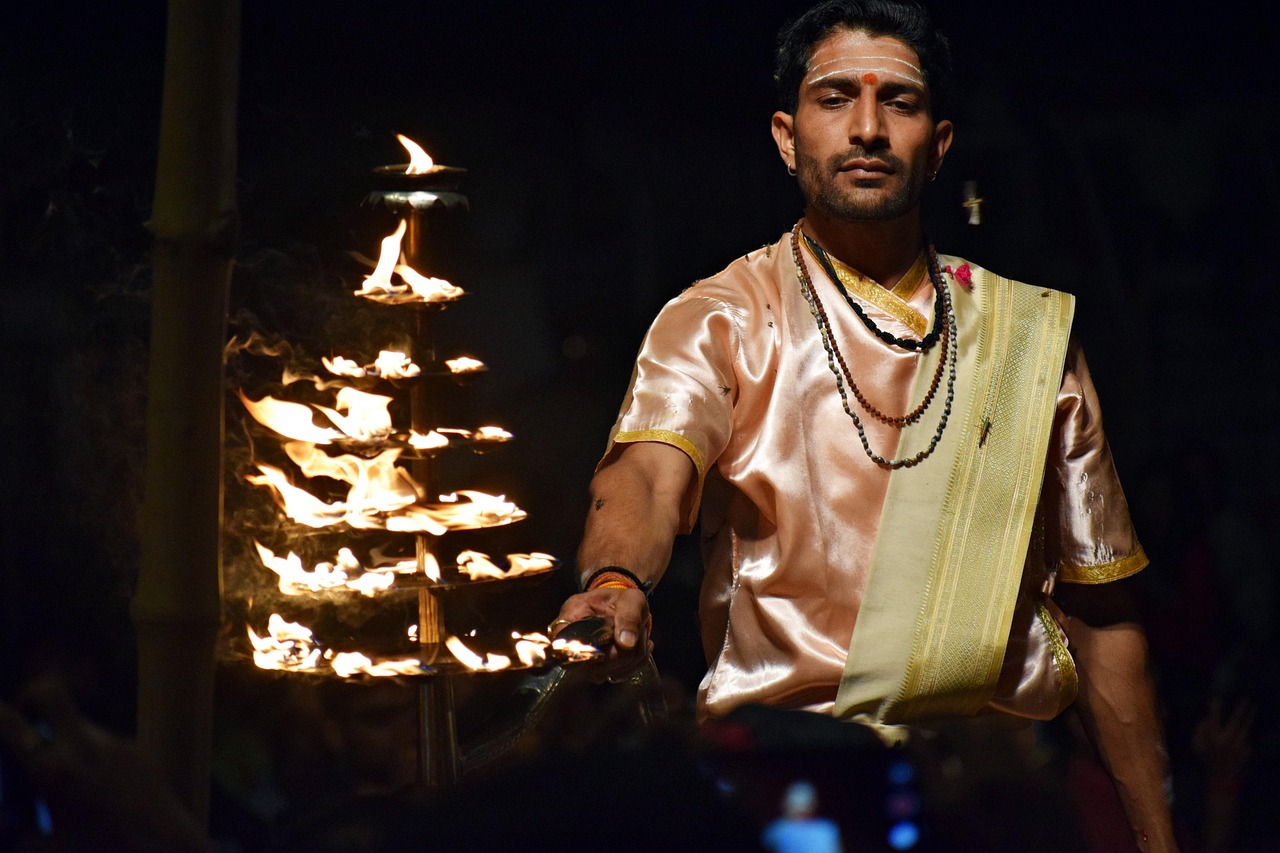
Boat vs Walking Along Ghats What Families Prefer , Picture this: You’re standing at the edge of the Ganges with your family, watching the sun paint the sky in shades of orange and pink. The ancient ghats of Varanasi stretch before you, filled with pilgrims, priests, and centuries of sacred tradition. You’re facing a choice that every family visiting Varanasi must make—should you explore these spiritual staircases from the water on a boat, or should you walk along them, stepping directly into the flow of life?
This isn’t just a logistical decision. For families, especially those traveling with children, elderly parents, or first-time visitors to India, this choice can make the difference between a magical experience and a stressful ordeal. The ghats of Varanasi are unlike anything most families will have encountered before, and understanding which approach suits your family best is crucial to creating those unforgettable memories you’re hoping for.
Let me walk you through what real families actually prefer and why, so you can make an informed decision that works for your unique family dynamics.
Before we dive into preferences, let’s clarify what each option actually entails.
A boat ride along the ghats gives you a panoramic perspective of Varanasi’s waterfront. You’re floating on the sacred Ganges, watching the entire cityscape unfold from a comfortable distance. You see the architecture, the rituals, the colors, and the chaos—but you’re observing it all from a peaceful vantage point. It’s like watching a living documentary where you’re surrounded by the scene but not entirely immersed in it.
The boat creates a natural boundary between you and the intense energy of the ghats. You can take photos without being jostled, your children can move around (somewhat) safely, and you have a guide (the boatman) who controls the pace and provides context.
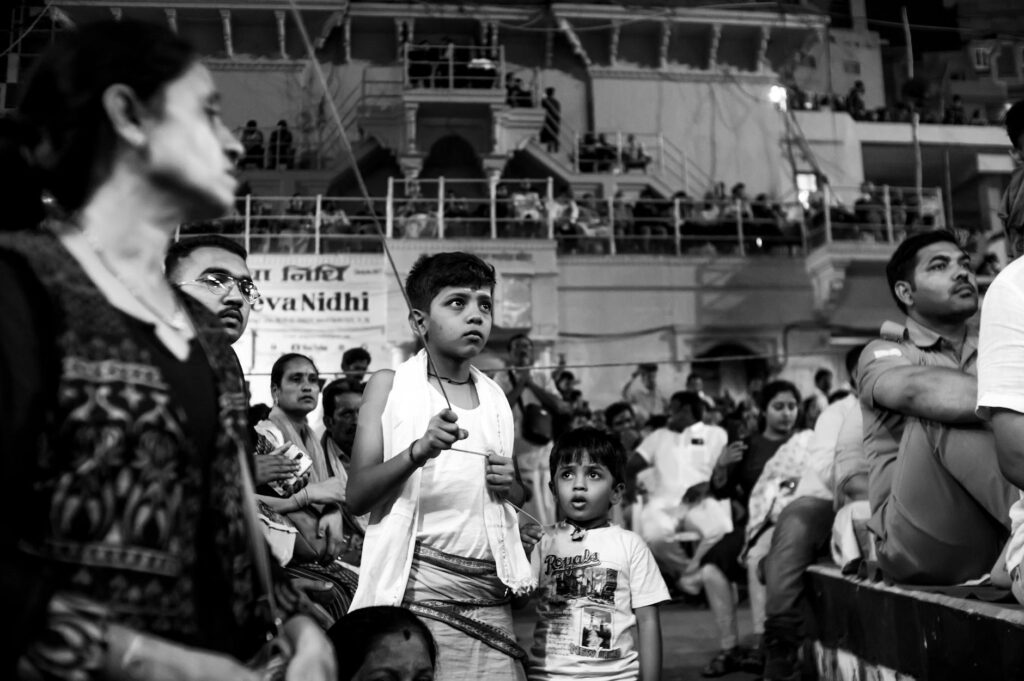
Walking the ghats is a completely different beast. You’re in the thick of it—stepping over offerings, navigating through crowds of pilgrims, dodging wandering cows, and breathing in the incense mixed with the unmistakable smell of the river. You can touch the ancient stones, speak directly with locals, enter temples, watch ceremonies up close, and truly feel the spiritual pulse of Varanasi.
It’s raw, unfiltered, and intensely sensory. You’re not just seeing Varanasi; you’re participating in it. But this intensity comes with challenges, especially for families who aren’t accustomed to the organized chaos that defines Indian spiritual sites.
When families are making this decision, several factors weigh heavily on their minds.
Let’s be honest—Varanasi can feel overwhelming, especially for parents responsible for keeping track of children. The ghats have uneven steps, narrow passageways, and areas where the stone is worn smooth and slippery. There are no railings in many places, and during busy times, crowds can surge unexpectedly.
From a boat, these safety concerns largely disappear. Yes, you need to ensure children don’t lean too far over the edge, but the risk of getting lost, separated, or injured is significantly lower. Many parents report feeling much more relaxed on a boat, which allows them to actually enjoy the experience rather than constantly counting heads and scanning for hazards.
Families traveling with young children or elderly members need to think about basic comforts. Walking the ghats means dealing with:
A boat provides a contained space where you can bring water, snacks, and necessities. If a child gets fussy or grandma gets tired, you’re already in a relatively comfortable setting where they can rest.
Here’s where it gets interesting. Different family members might prefer different experiences. Teenagers often find walking the ghats more engaging—they can take their own photos, interact with locals, and feel more independent. Younger children (ages 5-10) might actually prefer the boat because it feels like an adventure and they can see everything without getting exhausted.
Elderly grandparents often appreciate the boat because it doesn’t tax them physically, yet they still get comprehensive views and can point things out to grandchildren. However, some active seniors prefer walking because they want the authentic ground-level experience.
This is perhaps the most philosophical consideration. Do you want your family to observe Varanasi or participate in it? Walking allows for participation—your children can offer flowers to the river, light candles, interact with priests, and feel like they’re part of something rather than tourists watching it. This creates more meaningful memories and learning opportunities.
However, for families who feel overwhelmed by cultural differences or have very young children who might not understand the significance of what they’re seeing, observation from a boat might be more appropriate. You can explain things, point out details, and gradually acclimate your family to this intense environment.
Let me break down the boat experience from a family perspective.
Controlled Environment: You have a defined space that contains your family. No one’s wandering off or getting separated in crowds.
Comprehensive Views: In an hour or two on a boat, you’ll see more ghats than you could comfortably walk in half a day, especially with children in tow.
Better Photography Opportunities: Without crowds blocking your view, you can capture stunning family photos with the ghats as a backdrop.
Less Physically Demanding: No climbing stairs, no heat exhaustion, no tired little legs that suddenly can’t go another step.
Peaceful Reflection: There’s something meditative about being on the water that allows for family conversations and shared wonder without the distraction of navigating crowds.
Consistent Narration: A good boatman will explain what you’re seeing, ensuring everyone learns together without the need to read guidebooks while walking.
Elderly and Disabled Friendly: Far more accessible for family members with mobility challenges.
Limited Mobility: Once you’re on the boat, you’re committed. If a child suddenly needs a bathroom or someone gets motion sickness, you can’t just step away.
Sun and Weather Exposure: You’re sitting in direct sunlight with minimal shade options, which can be tough for fair-skinned children or during summer months.
Motion Sensitivity: Some children (and adults) get queasy on boats, even on relatively calm river water.
Less Tactile Experience: Younger children who learn through touch and interaction might feel disconnected from what they’re seeing.
Potential Boredom for Active Kids: Sitting relatively still for an hour or more can be challenging for high-energy children who need to move.
Distance from the Action: You can’t spontaneously decide to enter a temple or participate in a ritual you find interesting.
Now let’s look at the walking experience through a family lens.
Authentic Immersion: Your family experiences Varanasi as it truly is—sensory, spiritual, and sometimes chaotic.
Educational Opportunities: Children can ask questions directly to locals, priests, or shopkeepers, creating real cultural exchanges.
Flexibility: You control the pace entirely. See something interesting? Stop and explore. Someone needs a break? Find a chai shop and rest.
Physical Activity: For families with energetic children, walking provides an outlet for that energy while exploring.
Deeper Connections: The memories formed from participating in rituals, touching ancient stones, and interacting with locals tend to be more meaningful and lasting.
Free to Explore: Unlike a boat ride where you pay per person, walking costs nothing and can be done at your own schedule.
Photographic Variety: You can capture intimate details, facial expressions, and architectural elements that you’d miss from a boat.
Exit Options: If the experience becomes too much, you can always leave, find your hotel, or adjust your route.
Overwhelming Sensory Input: The smells, sounds, sights, and crowds can be intense, especially for young children or family members with sensory sensitivities.
Safety Navigation: Parents must be vigilant about uneven surfaces, gaps in the ghats, aggressive monkeys, and getting separated in crowds.
Exhausting: The combination of heat, humidity, stairs, and distances quickly tires out children and elderly family members.
Persistent Vendors: Families with children are magnets for vendors selling everything from toys to paintings, which can become frustrating.
Hygiene Concerns: The ghats aren’t always clean, and bathroom facilities are scarce and often unsanitary.
Getting Lost: The ghats can be confusing to navigate, with many looking similar, and losing your bearings with children in tow is stressful.
Emotional Intensity: Walking past cremation ghats or witnessing poverty up close can be difficult for children to process.
Here’s where we get to the heart of the matter—what do actual families choose, and why?
Most families with young children overwhelmingly prefer boat rides, and the reasons are practical. Toddlers and young children have limited stamina, short attention spans, and constant needs for snacks, bathrooms, and comfort. A boat ride contains these needs in a manageable way.
Parents report that the novelty of being on a boat keeps young children engaged for the duration. The movement of the water, the sights passing by, and the contained adventure feel exciting to little ones. Plus, parents aren’t constantly worrying about their child running toward the water’s edge or touching something they shouldn’t.
However, I’d recommend keeping boat rides for this age group to one hour maximum. Even the most patient five-year-old will get restless after that. Some families do a compromise: a short morning boat ride to see the ghats, then a brief, controlled walk along one or two ghats later in the day when children are fresh and parents can manage the experience in small doses.
Teenagers present a different dynamic. Many teens find boat rides boring—they want to be where the action is. They want to take their own photos, explore independently (within reason), and feel like they’re having an authentic experience, not just a tourist one.
Families with teenagers often prefer walking the ghats, with parents setting boundaries and meeting points. Teens enjoy the freedom to walk ahead, browse shops, and interact with locals their own age. They’re also old enough to understand and appreciate the cultural and spiritual significance of what they’re witnessing.
That said, many families with teens do both: a boat ride first to orient everyone and see the layout, then walking exploration where teens get more autonomy while still staying within the family unit.
When you’re traveling with kids, parents, and grandparents, the preference often depends on who’s less mobile. If grandparents have mobility issues, most families opt for boat rides because it’s the one experience everyone can share comfortably.
However, multi-generational families frequently split up: younger, more mobile members walk the ghats while elderly members take a boat ride, meeting up afterward to share experiences. This allows everyone to explore in the way that suits them best.
Interestingly, many grandparents report preferring boat rides not because of mobility but because the vantage point allows them to point things out to grandchildren, share stories, and create teaching moments without the distraction of navigating crowds.
Elderly family members with good mobility often surprise people by preferring to walk. Many older travelers want the authentic experience and feel that watching from a boat is “cheating.” They want to climb those ancient steps, touch the stones, and feel connected to the spiritual energy.
However, the reality often hits after 20-30 minutes. The stairs become challenging, the heat draining, and the crowds stressful. Smart families with elderly members start walking early in the morning when it’s cooler and less crowded, walk for 30-45 minutes, then transition to a boat ride to see the rest of the ghats comfortably.
Time is a precious commodity when traveling with family. A boat ride is time-efficient—you can see dozens of ghats in 1-2 hours. Walking, on the other hand, might cover only 5-8 ghats in the same timeframe, especially when accounting for children’s pace and rest stops.
For families with limited time in Varanasi (1-2 days), a boat ride maximizes what you can see. If you have 3-4 days, you can afford to spend time walking and really exploring specific ghats in depth.
Consider also the time of day. Morning boat rides work well for families because children are fresh and the heat is manageable. Evening boat rides for the Aarti ceremony are popular because they provide a spectacular finale to the day. Walking during midday heat with children is generally a recipe for meltdowns.
Let’s talk money. Walking the ghats is essentially free—you might buy some offerings, chai, or snacks, but there’s no entrance fee or cost to explore on foot.
Boat rides cost anywhere from 200-500 rupees per person for shared boats, or 1500-3000 rupees for a private family boat. For a family of four, that’s a significant expense compared to free walking.
However, consider hidden costs of walking: you’ll likely buy more snacks and drinks because physical activity in heat demands it. You might need to hire a guide (500-1000 rupees) to navigate safely and explain what you’re seeing. You might spontaneously enter temples that request donations. By the time you add these up, the cost difference isn’t as dramatic as it first appears.
Many families feel the boat ride is worth the expense because it’s a unique, memorable experience that’s difficult to replicate elsewhere. Walking the ghats, while valuable, is something you can theoretically do in many riverside cities.
Here’s an important consideration: what will your family actually remember from this trip?
From a boat, you’ll remember the visual spectacle—the colorful buildings, the sweep of the ghats, the rituals happening along the waterfront, the sunrise or the Aarti ceremony. It’s a photographer’s dream and creates stunning family photos.
From walking, you’ll remember the smells, the textures, the conversations, the taste of chai at a ghat-side shop, the feeling of ancient stones under your feet, and the eye contact with pilgrims and priests. These multisensory memories often prove more lasting, especially for children.
Children, in particular, remember experiences they physically participated in more than those they observed. If your goal is creating deep, lasting family memories, walking might win. But if you want stunning photos to remember the trip by, the boat provides better opportunities.
Safety is where boats clearly win for most families. The risks of walking the ghats with children are real:
Hygiene is also concerning when walking. Children touch everything, and the ghats aren’t sanitized tourist attractions. Public bathrooms range from barely acceptable to “no way is my child using that.” Hand sanitizer becomes your best friend.
On a boat, you control the environment. You can bring hand wipes, snacks you trust, and water bottles. There’s no risk of children picking up street food of questionable origin or touching things you’d rather they didn’t.
Here’s my honest recommendation for most families: do both, but in the right order.
Start with a boat ride, preferably on your first morning in Varanasi. This orients your family to the layout, helps you identify which ghats you’d like to explore more closely, and gives everyone an overview without overwhelming them. It’s also exciting enough to capture children’s imaginations.
Then, later that day or the next day, walk a selected portion of the ghats. Choose 3-5 ghats that looked interesting from the boat, and explore them on foot during cooler hours. This way, you’re not attempting to walk the entire waterfront with tired children, but you’re still getting that immersive, ground-level experience.
This combined approach gives you the best of both worlds: the comprehensive views and safety of boating, plus the authentic cultural immersion of walking. Many families report this as the perfect balance.
Let me share what some families have told me:
The Johnsons (two parents, kids aged 4 and 7) chose only boat rides: “We wanted to, but walking with a four-year-old in that heat and those crowds? No way. The boat let us see everything peacefully, and the kids thought it was a big adventure.”
The Patels (three generations traveling together) did both: “Grandma and grandpa took the boat with our 6-year-old while my husband and I walked with our teenagers. We met up for lunch and everyone had stories to share. Perfect compromise.”
The Rodriguezes (parents with a 12-year-old daughter) walked only: “We specifically wanted the authentic experience. Yes, it was hot and chaotic, but those are the moments we remember. Our daughter talks about the ladies doing laundry and the priest who let her light a candle more than she would have from just seeing it from a boat.”
The Chens (parents with twin 8-year-olds) did boat first, then walking: “The boat ride helped us understand the layout and pick out what we wanted to see up close. Then walking felt less overwhelming because we weren’t trying to see everything on foot.”
Here’s how to decide what’s right for your family:
Assess your family’s tolerance levels: Are they adventurous and adaptable, or do they prefer comfort and predictability? Be honest about this.
Consider ages and mobility: Very young children and elderly members tip the scales toward boat rides.
Think about your trip goals: If photos are important, choose the boat. If cultural education matters more, walk.
Check the weather: In summer heat (April-June), boat rides are more comfortable. In pleasant winter weather (November-February), walking is more enjoyable.
Evaluate your schedule: Limited time = boat rides for efficiency. More time = walking for depth.
Ask your children: Kids old enough to have an opinion often surprise you with their preferences. Involve them in the decision.
Book a private boat if budget allows: Shared boats stick to schedules and routes that might not suit your family’s needs.
Hire a local guide for walking: If walking with children, a guide helps navigate safely and provides context that makes the experience educational.
So, boat or walking—what do families prefer? The truth is, there’s no universal answer. Families with young children and elderly members lean heavily toward boat rides for safety, comfort, and comprehensive viewing. Families with teenagers and active members often prefer the immersive authenticity of walking the ghats. And increasingly, families are discovering that doing both—in thoughtful combination—provides the richest Varanasi experience.
What matters most is being honest about your family’s specific needs, energy levels, and travel goals. Varanasi is intense, beautiful, overwhelming, and unforgettable. Whether you experience it from the water or on foot, your family will create memories that last a lifetime. Choose the approach that lets everyone in your family feel safe, engaged, and connected to this ancient spiritual city.
The ghats have welcomed pilgrims and travelers for thousands of years. They’ll welcome your family too, in whatever way you choose to explore them.
Absolutely! This is actually one of the smartest approaches. Many families use the boat ride to scout out which ghats look most interesting, then return on foot to explore those specific areas. This eliminates the pressure of trying to walk the entire ghat stretch with children while still giving you the immersive experience.
Evening walks can be safe in the main ghat areas like Dashashwamedh and Assi Ghat where the evening Aarti draws crowds and there’s good lighting. However, walking lesser-known ghats after dark isn’t recommended for families. The uneven surfaces become harder to see, and some areas get quite isolated. Evening boat rides to watch the Aarti are generally safer and provide better views of the ceremony anyway.
For responsible teenagers (14+), walking the main ghats during daylight hours can be acceptable, but set clear boundaries. Designate specific ghats they can explore, establish check-in times via phone, warn them about persistent vendors, and ensure they stay in well-populated areas. Many families feel comfortable with this level of supervised independence, as Varanasi is generally safe during daytime in tourist areas.
This is common! Bring entertainment: snacks, water, a small toy, or digital devices loaded with games if that’s your parenting style. Many boatmen don’t mind if you bring coloring books or small activities. Also, engage children by making it interactive—have them count temples, spot different colored boats, or look for animals. Most importantly, don’t book boat rides longer than one hour for children under 8.
Unfortunately, no. The ghats are ancient stone steps and narrow passageways—completely stroller-inaccessible. If you have toddlers, you’ll need to carry them, use a baby carrier, or opt for boat rides instead. This is one of the main reasons families with babies and toddlers strongly prefer boat experiences over walking the ghats.