Your cart is currently empty!
You may check out all the available trips and book one that suits you.
Continue Browsing Trips

How Families Plan a 2-Day Spiritual Visit in Varanasi Without Stress , Planning a spiritual family trip to Varanasi in just two days sounds almost contradictory, doesn’t it? How do you introduce your family to one of the world’s most ancient spiritual centers, create meaningful experiences for everyone from grandparents to children, honor the sacred nature of the place, and somehow not end up exhausted, overwhelmed, or stressed out?
Yet this is exactly what countless families do—and many do it beautifully. The key isn’t having more time or unlimited resources. It’s about strategic planning that acknowledges both the spiritual aspirations and the practical realities of traveling with a family.
A spiritual visit differs fundamentally from regular tourism. You’re not just checking off sights; you’re creating space for contemplation, connection, and possibly transformation. But you’re doing this with children who need snacks, elderly parents who need rest, and teenagers who need meaning. The planning must honor both dimensions—the transcendent and the mundane.
Let me walk you through how families successfully plan two-day spiritual visits to Varanasi that leave everyone feeling enriched rather than exhausted, connected rather than frustrated, and spiritually nourished rather than overwhelmed.
Before we dive into the how, let’s understand why two days is such a common choice.
Varanasi is spiritually intense. For children and even adults encountering this level of spiritual energy for the first time, extended exposure can actually become counterproductive. After three or four days, spiritual experiences can start blending together, children’s attention wanes, and the profound becomes routine.
Two days provides enough time to experience the essential spiritual dimensions—sunrise on the Ganges, temple darshan, the Aarti ceremony, and personal rituals—without oversaturation. It’s long enough to move beyond surface tourism into something deeper, but not so long that the intensity becomes exhausting.
How Families Plan a 2-Day Spiritual Visit in Varanasi Without Stress , Most families don’t have unlimited vacation time. A two-day Varanasi visit fits comfortably within a longer India itinerary or can be a focused long weekend trip. It requires taking perhaps three days off work (including travel days), which is achievable for most families without depleting vacation budgets.
One day feels rushed—you’re constantly moving to the next thing without time to absorb. Three or four days can become challenging with children who struggle with Varanasi’s intensity. Two days is often just right: enough time to breathe and reflect, but finite enough that even hesitant family members can commit.
The foundation of a stress-free spiritual visit begins weeks before you arrive.
Stress often comes from the gap between expectations and reality. Families reduce this gap through honest conversations:
Discuss what you’ll experience: Talk openly about what Varanasi offers—ancient temples, sacred river rituals, cremation ceremonies, intense crowds, and spiritual energy. Don’t sanitize it, but also don’t sensationalize it.
Define success: What would make this trip meaningful? For parents, it might be participating in a puja ceremony together. For children, it might be floating a diya on the Ganges. For grandparents, it might be darshan at Kashi Vishwanath. When everyone knows what matters, you can prioritize accordingly.
Accept limitations: You won’t see everything. You won’t understand everything. You won’t have perfect Instagram moments at every turn. That’s fine. The goal is meaningful connection, not comprehensive coverage.
Establish behavioral agreements: What behavior do you expect at temples? How will you handle disagreements? What are the non-negotiables? Having these conversations at home prevents conflicts in stressful moments.
Children need age-appropriate preparation to engage meaningfully rather than be confused or frightened:
For young children (3-8): Use simple stories from Hindu mythology. Read picture books about India or the Ganges. Explain that you’ll see people praying in different ways and that’s beautiful. Prepare them that they’ll see fire, bells, and lots of people—it’s not scary, it’s celebration.
For tweens (9-13): Provide more context about Hinduism’s core concepts—karma, reincarnation, the significance of the Ganges. Watch documentaries together. Discuss why death rituals are public and what they mean. Encourage questions without judgment.
For teenagers (14+): Engage them intellectually. Discuss comparative religion, the role of ritual in human life, or the intersection of ancient traditions and modern India. Ask for their thoughts rather than just lecturing. Consider giving them a spiritual “assignment”—like journaling about their experiences or photographing moments of devotion.
Different families have different spiritual frameworks. Some are Hindu families seeking connection with their heritage. Others are from different faith traditions looking to understand another spiritual path. Some are secular families seeking meaning and connection beyond religion.
Define what “spiritual” means for your family specifically:
When you know what you’re seeking, you can structure experiences accordingly rather than just following generic tourist patterns.
Stress-free spiritual visits don’t happen spontaneously. They emerge from thoughtful planning at specific intervals.
This is when you make the commitments that shape everything else:
Choose your dates: Consider festival timing. Visiting during Dev Deepawali or Mahashivratri adds spiritual intensity but also crowds. Regular dates offer calmer, more contemplative experiences.
Book accommodation: For spiritual visits, location matters enormously. Choose hotels within walking distance of Assi Ghat or Dashashwamedh Ghat—being close to the spiritual action reduces transportation stress and allows spontaneous participation in ceremonies you might otherwise miss.
Research spiritual programs: Some ashrams and spiritual centers offer family-appropriate programs—morning meditation, yoga classes, satsangs. If this interests you, research options and make advance contact.
Decide on guide vs. independent: For spiritual depth, a knowledgeable guide who can explain symbolism, answer questions, and facilitate appropriate participation is invaluable. Book a guide with specific expertise in Hindu spirituality, not just general tourism.
Set your budget: Spiritual experiences in Varanasi can be free (watching the Aarti) or costly (private pujas, donations, offerings). Decide your budget for spiritual participation, knowing that authentic engagement often involves some financial contribution.
Now you create your actual schedule:
Build your day-by-day outline: Map out the spiritual experiences you want to include, when they’ll happen, and how long each needs. Build this with significant buffer time between activities.
Make specific bookings: Reserve sunrise boat rides, book temple tours if doing organized ones, arrange any special ceremonies you want to participate in (private pujas, special darshans).
Prepare spiritually: Begin family practices at home—maybe morning prayers together, lighting candles, or simply sitting quietly as a family. This creates continuity between home and Varanasi.
Gather spiritual materials: Consider what you might want to bring—offerings for the Ganges, flowers for temples, appropriate clothing for ceremonies. Some families bring prayer books or spiritual texts relevant to their tradition.
Create a packing list: Include items that support spiritual practice—meditation cushions if you use them, journals for reflection, appropriate modest clothing, items for personal rituals.
The final countdown focuses on practical readiness:
Reconfirm all bookings: Check that your hotel, guide, boat ride, and any special experiences are still confirmed.
Brief family members: Hold a final family meeting reviewing the schedule, behavioral expectations, and what everyone’s looking forward to.
Pack thoughtfully: Ensure everyone has appropriate clothing, that spiritual items are packed, and that practical necessities (medications, snacks, comfort items) are ready.
Download offline resources: Maps, temple information, basic Hindi phrases for spiritual contexts (“Namaste,” “Pranam,” “Dhanyavaad”).
Set intentions: Encourage each family member to think about what they hope to gain from this spiritual visit. Write these down to reflect on afterward.
Where you stay profoundly affects the stress level of a spiritual family visit.
For a two-day spiritual visit, location trumps almost everything else:
Assi Ghat area: Peaceful, less touristy, close to morning yoga and meditation opportunities. Good for families seeking calmer spiritual experiences. About 20 minutes from the main temple area.
Dashashwamedh Ghat area: Center of spiritual action. Walking distance to Kashi Vishwanath Temple and evening Aarti. More crowded but maximum immersion.
Between Assi and Dashashwamedh: Balances accessibility with relative peace. Many family-friendly guesthouses in this zone.
For spiritual visits specifically, being within walking distance of at least one major ghat is crucial. Spontaneous early morning walks to the river or evening participation in ceremonies becomes possible without transportation logistics.
For spiritual travel with families, certain amenities matter more than usual:
Quiet spaces: Unlike party-oriented travel, spiritual visits need peaceful accommodations where you can reflect, meditate, or simply decompress from intense experiences.
Flexible meal times: Spiritual experiences often happen at dawn or late evening. Hotels with flexible dining or in-room options reduce stress around feeding everyone at odd hours.
Rooftop or garden spaces: Having a peaceful outdoor space to gather as a family, discuss experiences, or practice morning yoga/meditation adds tremendous value.
Helpful staff: For spiritual visits especially, staff who can explain customs, arrange appropriate offerings, or connect you with authentic experiences are worth far more than fancy amenities.
Clean, comfortable rooms: After intense spiritual experiences, your family needs a genuine refuge for rest and recovery.
This is a key tension for spiritual family visits. Heritage properties right on the ghats offer maximum authenticity and proximity to spiritual action, but often lack modern comforts that help families manage stress.
Most families find the sweet spot in mid-range hotels that offer:
The most authentic guesthouse on the ghat doesn’t help your spiritual journey if children can’t sleep due to noise, elderly parents struggle with facilities, or exhaustion prevents morning meditation. Comfort enables spirituality for families in ways solo spiritual seekers might not require.
Here’s a framework that families consistently find successful.
The first day creates foundation and context.
Begin your spiritual visit at dawn—this is non-negotiable for families seeking meaningful spiritual connection. The morning energy on the Ganges is qualitatively different from any other time.
5:30 AM: Wake up. Yes, this is early, especially with children. But sunrise is when Varanasi reveals its spiritual essence. Prepare the night before so morning departure is smooth—clothes laid out, simple breakfast arranged, everyone knows the plan.
6:00 AM: Arrive at your starting ghat and board a boat. Choose a private boat for families—you can control pace, ask questions freely, and children can move around within reason.
6:00-7:30 AM: Boat ride during sunrise. This isn’t just sightseeing. Encourage family members to be mostly quiet, to observe pilgrims bathing, to feel the atmosphere. Point out specific practices—people offering prayers, doing yoga, priests performing ceremonies. Ask your boatman to explain what you’re seeing.
7:30-8:00 AM: Either participate in morning prayers on a ghat, or return to your hotel for a family breakfast where you discuss what you experienced. What did everyone notice? How did it feel? This reflection time transforms observation into spiritual experience.
Key stress-reduction strategies: Book the boat the day before. Bring light jackets (mornings can be cool). Pack some simple snacks and water. Don’t expect children to sit perfectly still for 90 minutes—build in movement and questions. Take photos, but don’t let photography dominate the experience.
After breakfast and perhaps a short rest, visit a temple for darshan (sacred viewing of the deity).
9:30 AM: Head to either Kashi Vishwanath Temple (if your family is prepared for crowds and security) or the Sankat Mochan Temple or BHU Vishwanath Temple (less crowded, more family-friendly alternatives).
10:00-11:00 AM: Temple darshan. If you have a guide, they should explain:
Participate in whatever feels right—offering flowers, receiving prasad, sitting quietly, circumambulating. Don’t force participation, but invite it.
11:00-11:30 AM: Sit together in or near the temple complex. Let everyone absorb the experience. Answer children’s questions. Acknowledge if anyone found aspects difficult or uncomfortable—that’s valid.
Key stress-reduction strategies: Avoid visiting Kashi Vishwanath on Mondays (busiest) unless there’s specific spiritual significance. Go mid-morning rather than peak times. Prepare children for crowds, security, and removing shoes. Carry hand sanitizer. Don’t rush—sitting quietly observing is as valuable as approaching the deity.
This extended afternoon break is essential for families and critical for stress-free spiritual travel.
12:00-1:00 PM: Lunch at your hotel or a peaceful restaurant. Choose vegetarian food in alignment with the sacred atmosphere you’re cultivating.
1:00-3:30 PM: Rest time. This isn’t optional—it’s the difference between a meaningful two days and exhausted misery. Options:
3:30-4:00 PM: Light afternoon tea or snack, discussion of evening plans, gentle preparation for the Aarti ceremony.
Key stress-reduction strategies: Don’t feel guilty about this “downtime.” Spiritual experiences require processing time. Intense experiences without integration become overwhelming. This rest period is when minds and hearts absorb the morning’s experiences.
The evening Aarti is the spiritual crescendo of Day One.
5:00-6:00 PM: Light activity—perhaps a short walk through the old city lanes, visiting a shop selling spiritual items (prayer beads, incense, small deities), or simply walking along the ghats as they transition from day to evening.
6:00-7:00 PM: Position yourself for the Aarti. Your choices:
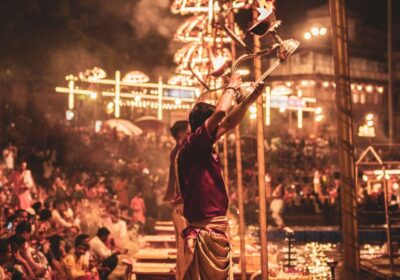
7:00-7:45 PM: Experience the Aarti. The ceremony involves:
Encourage your family to really be present. Explain that this same ceremony has happened here for centuries. They’re witnessing a living tradition.
7:45-8:00 PM: After the ceremony, many families participate by:
8:00 PM+: Dinner together, reflecting on the day’s experiences. What moved you? What was challenging? What do you want to understand better?
Key stress-reduction strategies: Decide on boat vs. ghat based on your children’s ages and temperaments. If on the ghat, position yourself where you can exit quickly if needed. Bring small offerings prepared in advance. Don’t fight the crowds—accept them as part of the experience. Take photos but also ensure everyone spends time simply watching and feeling.
The second day builds on the foundation of Day One with opportunities for deeper engagement.
6:00-6:30 AM: Begin with family meditation or yoga, either at your hotel’s rooftop (if available) or at a ghat. Some families join public yoga classes that happen at Assi Ghat. Others simply sit together watching the sunrise, each in their own contemplation.
6:30-7:30 AM: Second morning boat ride, but with a different intention. Yesterday was about introduction; today is about personal connection. Encourage family members to think about what they’re grateful for, what questions they’re sitting with, what this experience means for them personally.
7:30-8:30 AM: Participate in a morning aarti (smaller than evening) at a ghat, or spend time sitting on the ghats watching the morning rituals of locals—this is when Varanasi feels least touristy and most authentic.
8:30-9:00 AM: Return for breakfast, sharing morning insights.
Key stress-reduction strategies: Today’s morning should feel less scheduled than yesterday. Allow spontaneity and individual preference. If someone wants to sleep in instead of the boat ride, that’s okay. Day Two is about personal spiritual connection, not completing a checklist.
This time is for deeper engagement:
Option A: Visit an ashram: Many ashrams welcome visitors for morning programs—perhaps a talk on Vedanta philosophy, a bhajan (devotional singing) session, or simple conversation with a swami or spiritual teacher. This can be profoundly meaningful for families, giving context to what you’ve observed.
Option B: Return to a temple that resonated: Spend more quiet time at a temple from yesterday, now that you understand it better. Participate more fully in rituals, sit longer in meditation, or simply offer a personal prayer or intention.
Option C: Spiritual teacher meeting: Some families arrange to meet with a pandit (learned person) or spiritual teacher who can answer questions, explain philosophies, or provide blessings. Your hotel or guide can arrange appropriate contacts.
Option D: Service activity: Some families find spiritual meaning in seva (service). This might be participating in food distribution, helping at a ghat, or contributing to a charitable organization. Discuss this with local contacts to find appropriate options.
Key stress-reduction strategies: Choose based on family interests and energy levels. Don’t overschedule this morning—one meaningful activity is better than rushing through multiple options. If everyone’s tired, it’s fine to have a gentler morning walking, shopping for spiritual items, or simply being present at the ghats.
12:00-1:00 PM: Lunch together, discussing the morning.
1:00-2:30 PM: Brief rest, but lighter than Day One since you’ll leave Varanasi tomorrow.
2:30-4:00 PM: Personal or family rituals. This is the heart of Day Two’s spiritual dimension. Options families frequently choose:
Offering ritual: Create offerings to float on the Ganges—flowers, candles, prayers written on biodegradable paper. Do this together as a family, each person offering something meaningful.
Family puja: Arrange a small private puja ceremony with a priest where your family participates together. This might be a general blessing, a prayer for specific intentions, or a ceremony marking a family milestone.
Personal time: Give each family member 30-60 minutes for individual spiritual time—whatever that means to them. Sitting at a ghat, journaling, walking meditation, visiting a specific temple alone, or simply reflecting.
Ritual bath: For Hindu families especially, a ritual bath in the Ganges carries deep significance. Decide if this is appropriate for your family and plan accordingly with proper guidance.
Key stress-reduction strategies: Don’t force universal participation. If not everyone wants to bathe in the Ganges, that’s fine. Respect individual comfort levels with ritual participation. The goal is meaningful engagement, not mandatory uniformity.
4:30-6:00 PM: Choose a closing activity that feels right:
6:00-7:00 PM: If you didn’t watch the Aarti from the ghat on Day One, do so tonight. If you did watch from the ghat, take a boat tonight for a different perspective. If you watched from a boat, watch from the ghat tonight.
7:00-8:00 PM: Closing family circle. Find a quiet spot—your hotel rooftop, a peaceful ghat area, or a cafe with views. Discuss:
This reflection transforms two days of activities into an integrated spiritual experience with lasting meaning.
Key stress-reduction strategies: Don’t pack your last evening tightly. Allow space for spontaneity and processing. If someone wants one final boat ride or needs to buy forgotten items, that’s fine. The closing circle shouldn’t feel forced—if it happens naturally over dinner, that’s perfect.
Certain approaches consistently reduce stress for families on spiritual visits.
Never schedule activities back-to-back. The spiritual itinerary above builds in transition time between experiences. This allows for:
Buffer time is the difference between rushing frantically between spiritual experiences (which destroys their meaning) and moving peacefully through your days.
Notice the afternoon rest periods in both days. Many families resist this, feeling they’re “wasting” precious time in Varanasi. But spiritual experience requires integration time. Intense morning experiences followed by rushed afternoons followed by intense evenings creates spiritual indigestion.
Rest periods allow:
Families who skip rest periods almost always report more stress, arguments, and exhaustion. Those who honor rest periods report deeper spiritual experiences and better family dynamics.
The itineraries provided offer structure, but they’re not rigid. Successful families hold plans lightly:
Structure prevents aimless wandering and ensures you hit key experiences. Flexibility prevents structure from becoming stressful when reality doesn’t cooperate with plans.
Different ages engage spiritually in different ways.
Young children connect spiritually through:
Sensory experiences: The bells, the smells of incense, the sight of flames, the feeling of water. Name these sensory experiences and ask what they notice.
Story and imagination: Tell them simple stories about the Ganges, about gods and goddesses, about why people come here. Their imagination makes spiritual concepts accessible.
Participation: Give them something to do—light a candle, float an offering, ring a bell, distribute prasad. Active participation creates meaning for children more than passive observation.
Nature connection: Help them notice the river, the birds, the sunrise. For young children, connecting with nature is spiritual practice even if they don’t understand theological concepts.
Simple rituals: Create simple family rituals they can understand—a morning gratitude practice, an evening blessing, a prayer before meals. Repetition creates spiritual structure children grasp.
Tweens need more substance but still concrete connections:
Context and explanation: They can understand more complex ideas. Explain karma, reincarnation, the concept of moksha. Connect what they’re seeing to these bigger ideas.
Questions and discussion: Encourage their questions, even challenging ones. “Why do people believe this?” “Does this make sense?” “What would you do?” Spiritual engagement at this age often comes through intellectual exploration.
Comparative thinking: Help them compare what they’re seeing to their own spiritual or religious background. What’s similar? What’s different? What resonates?
Personal meaning-making: Ask them what these experiences mean to them personally, not just what they’re “supposed” to mean.
Responsibility: Give them age-appropriate spiritual responsibilities—maybe they’re in charge of morning offerings, or they lead a family discussion, or they journal about spiritual insights to share.
Teenagers often have the capacity for deep spiritual engagement if approached respectfully:
Philosophical depth: Engage them in real philosophical discussions. What is the nature of the soul? What makes something sacred? How do ritual and meaning relate? They can handle complex ideas.
Authenticity: Teenagers have excellent BS detectors. Don’t pretend to know what you don’t, or force enthusiasm you don’t feel. Honest exploration (“I’m not sure what I believe about this, but I find it fascinating”) resonates more than fake certainty.
Independence: Allow them some independent spiritual exploration. Maybe they spend an hour alone at the ghats, or visit a temple individually, or have a private conversation with a guide about their questions.
Social justice connections: Many teenagers connect spiritually through justice concerns. Talk about poverty you’re witnessing, environmental issues affecting the Ganges, or social dimensions of spirituality.
Personal choice: Respect their right to opt out of certain experiences. If they don’t want to participate in a particular ritual, that’s okay. Forcing participation destroys spiritual meaning.
Spiritual experiences happen within practical realities.
For two-day spiritual visits, arrange transportation strategically:
Pre-book airport/station pickup: Don’t start your spiritual journey negotiating with aggressive touts. Have confirmed pickup so you arrive peacefully.
Walking primary, rickshaws secondary: For spiritual connection, walking along the ghats and through lanes creates presence that vehicle travel doesn’t. But have a reliable auto-rickshaw service (your hotel can usually provide numbers) for when distance or exhaustion makes walking impractical.
Boat bookings in advance: Book your sunrise boat for Day One the evening before, and your other boat rides with your hotel or a reputable operator. This eliminates morning negotiation stress.
Consider a private driver for specific needs: If you have elderly family members or plan to visit sites requiring vehicle access, arrange a driver for specific time blocks rather than trying to hail transport as needed.
Food affects energy levels and health, which affects spiritual capacity:
Light breakfasts: Heavy breakfasts before morning boat rides can lead to nausea. Choose light, easily digestible options.
Vegetarian alignment: Many families choose vegetarian food during spiritual visits, aligning their diet with the sattvic (pure, balanced) quality they’re seeking spiritually. This also reduces food safety risks.
Hydration priority: Carry water bottles constantly. Dehydration drains energy needed for spiritual experiences.
Safe food sources: Choose restaurants with consistent positive reviews for hygiene. Hotel food is typically safest. Street food can be part of your experience, but choose busy stalls where food turns over quickly.
Strategic eating times: Eat well when you have time to digest (during afternoon rest), and lightly before major spiritual experiences.
Snacks for children: Always carry simple snacks for children. Hunger meltdowns destroy spiritual atmosphere for everyone.
What you wear affects both respect and comfort:
Modest, comfortable clothing: Loose cotton clothes that cover shoulders and knees for everyone. Comfortable for walking, appropriate for temples, and breathable in heat.
Layering options: Mornings can be surprisingly cool; bring light jackets or shawls.
Comfortable, secure footwear: You’ll remove shoes frequently at temples. Sandals or slip-on shoes that are comfortable for walking but easy to remove work best. Bring or buy a cloth bag to carry shoes when needed.
Sun protection: Hats, sunglasses, and sunscreen for everyone. Spiritual experiences are hard to appreciate when you’re sun-sick.
Scarves or dupattas: Especially for women, these provide versatile coverage for temples, sun protection, and warmth.
Practical carrying solution: A comfortable backpack or shoulder bag for carrying water, snacks, sunscreen, offerings, shoes, and spiritual items.
The tension between spiritual aspirations and family logistics is real.
Acknowledge the tension: Don’t pretend it doesn’t exist. Yes, ideally you’d meditate at sunrise undisturbed by children needing bathroom breaks. Reality differs from ideals. Accept this rather than resenting it.
Frame family needs as part of the practice: Patience with a restless child, finding creative ways to engage a bored teenager, caring for an elderly parent’s comfort—these are spiritual practices too. Service and compassion toward family members is as spiritual as any ritual.
Take turns when needed: If one parent wants to spend an hour in deep meditation while the other minds energetic children, take turns. Everyone gets some spiritual depth without compromising family function.
Adjust expectations appropriately: Your spiritual experience with family won’t look like a solo spiritual seeker’s experience. That doesn’t make it less valid—just different. Your practice is family-centered spirituality, not individual mysticism.
Find the spiritual in the mundane: Feeding your children a peaceful meal together, laughing at the chaos, helping each other navigate challenges—these moments carry spiritual significance when approached with awareness.
Certain predictable stress points affect families on spiritual visits:
Stress Point #1: Morning wake-ups Solution: Prepare everything the night before. Set multiple alarms. Frame it positively (“We get to see something amazing!”) rather than as punishment. Accept that it’s hard but worthwhile.
Stress Point #2: Temple crowds and waiting Solution: Bring activities for children (small quiet toys, books). Visit during less crowded times. If lines are unbearable, it’s okay to skip or shorten temple visits. The Ganges is where Varanasi’s primary spiritual energy resides anyway.
Stress Point #3: Cultural confusion and embarrassment Solution: Have a guide for first-time spiritual experiences who can explain before you commit errors. Accept that some mistakes happen—apologize, learn, move on. Most locals are gracious with well-intentioned visitors.
Stress Point #4: Different spiritual interest levels Solution: Don’t force uniformity. One person might want three hours at a temple while another wants 20 minutes. Find middle ground, take turns, or split up for specific activities.
Stress Point #5: Intense or disturbing sights Solution: Prepare family members (especially children) for what they might see. Provide context that helps make sense of it. Allow them to skip experiences beyond their comfort level. Have discussions afterward to process difficult observations.
Stress Point #6: Exhaustion accumulation Solution: Honor rest periods. Don’t feel obligated to fill every moment. It’s fine to spend an afternoon simply sitting peacefully at your hotel after intense morning experiences.
Stress Point #7: Budget conflicts Solution: Discuss and agree on spiritual spending in advance. Some expenses (offerings, donations, private pujas) are optional; decide as a family what you want to invest in spiritually.
Two days in Varanasi offers opportunity to create family rituals with lasting significance:
Morning gratitude practice: Start each day naming one thing you’re grateful for. Continue this practice after returning home, connecting daily life to your Varanasi experience.
Evening reflection circle: Each evening, share one moment that moved you. This creates space for everyone’s experience to be honored.
Offering ritual: Create an offering together—flowers arranged by children, prayers written by teenagers, intentions spoken by parents. The collaborative creation makes it meaningful to everyone.
Photo and story sharing: Each family member chooses one photo from the day and explains why it matters to them. This surfaces different perspectives and ensures everyone’s experience is valued.
Memory preservation: Create a family journal where everyone contributes—drawings from young children, written reflections from older members, photos, even pressed flowers or small mementos.
Commitment ceremony: On your final evening, each family member shares one thing they commit to taking home from this experience. It might be a practice (daily meditation), an attitude (more patience), or a value (gratitude). Write these down to revisit months later.
These rituals transform your Varanasi visit from a vacation into a touchstone experience that shapes family life going forward.
A knowledgeable spiritual guide transforms experiences from observation to understanding:
What a good spiritual guide provides:
When to use a guide: Consider a guide for:
When you don’t need a guide:
Many families use a guide strategically—for the first morning and perhaps one temple visit—but explore independently otherwise. This balances depth with autonomy.
Technology’s role in spiritual experiences is nuanced:
Helpful uses:
Problematic uses:
Many families establish “technology windows”—specific times when devices are allowed—and “sacred times” when they’re put away. This honors both documenting memories and being fully present.
Planning a stress-free two-day spiritual family visit to Varanasi is entirely possible, but it requires intentionality that transcends typical vacation planning. You’re not just scheduling activities—you’re creating conditions for spiritual experience within the complex reality of family dynamics.
The families who report the most meaningful experiences share common approaches: they prepare thoughtfully weeks in advance, they build in ample rest and flexibility, they honor different family members’ needs and capacities, they balance structure with spontaneity, and they approach both the profound and the mundane as part of a unified spiritual journey.
Two days is both wonderfully sufficient and tantalizingly brief. Sufficient because Varanasi’s essential spiritual character can be experienced in focused, present days—sunrise on the Ganges, temple darshan, the Aarti ceremony, personal rituals, and family reflection. Brief because each of these experiences opens doors to depths you could explore for weeks.
But this brevity creates focus. With only two days, you naturally prioritize what matters most. You can’t see everything, so you must choose what resonates. This selective engagement often creates more meaning than longer, more diffuse visits.
The stress-free aspect comes not from eliminating all challenges—Varanasi will always be intense, crowded, and occasionally uncomfortable—but from expecting challenges and planning so they don’t overwhelm the spiritual essence you’re seeking.
When you return home, your family will carry more than memories of sights seen. You’ll carry a shared experience of something profound—of witnessing devotion that spans millennia, of participating in rituals connecting you to something larger, of facing questions about meaning and purpose together, and of creating moments of beauty and connection amid chaos.
That’s what two days of thoughtful spiritual family travel in Varanasi offers. Not comprehensive understanding of Hinduism or Indian spirituality—that’s a lifetime pursuit—but a meaningful encounter that enriches your family’s spiritual life going forward.
Two days can absolutely provide a genuine spiritual experience if planned thoughtfully. You won’t comprehend Varanasi’s full spiritual depth—that takes years, not days—but you can meaningfully experience its essential spiritual character: the sacred Ganges at dawn, temple worship, the Aarti ceremony, and personal ritual participation. The key is depth over breadth: experiencing a few things fully rather than rushing through many things superficially. Many families report that two focused spiritual days create more lasting impact than longer, less intentional visits. The brevity actually helps maintain the heightened awareness that spiritual experience requires.
This balance comes through reframing what spiritual experience means with children. For young children, spiritual experience isn’t primarily intellectual understanding—it’s sensory engagement, wonder, and felt connection. A five-year-old floating a candle on the Ganges is having a genuine spiritual moment, even if they can’t articulate Hindu philosophy. Create participatory experiences (lighting diyas, offering flowers, simple prayers), use storytelling to make concepts accessible, keep individual experiences short, and build in rest time. Also recognize that your own spiritual practice with children includes patience, creativity, and finding meaning in family connection itself. Your children’s spiritual development happens over years—these two days plant seeds rather than requiring full blooms.
Absolutely. Varanasi offers profound spiritual experiences regardless of your religious background. Many Christian, Muslim, Buddhist, Jewish, and secular families report deeply meaningful visits. The key is approaching with respect, openness, and clarity about what you’re seeking. You might be learning about another spiritual tradition, reflecting on universal spiritual questions, experiencing the power of sustained devotion, or simply connecting with something larger than daily life. Frame your visit as spiritual exploration rather than religious conversion. Most spiritual teachers and guides appreciate sincere seekers from any background. The Ganges, ancient temples, and rituals can move you spiritually without requiring you to adopt Hindu beliefs.
Preparation is far better than avoidance or surprise. Children who unexpectedly witness cremations often become frightened or confused. Those prepared with age-appropriate context generally handle it well and even find it meaningful. For children under 6-7, you might say “People in India believe that having their body returned to the river after death is very special and beautiful. We might see this happening. It’s not scary—it’s how people here honor those who have died.” For older children, provide more philosophical context about Hindu beliefs about death, reincarnation, and moksha. Most children who’ve been prepared respond with thoughtful curiosity rather than distress. That said, respect individual sensitivities—if a particular child struggles despite preparation, viewing from a boat rather than walking Manikarnika Ghat on foot offers appropriate distance.
Integration is key to lasting impact. Before leaving Varanasi, hold a family discussion about what you’ll take home: maybe a daily practice (morning gratitude inspired by sunrise on the Ganges), a value (tolerance after witnessing diverse expressions of devotion), or a reminder (photos of the Aarti on your phone to recall that moment of connection). Create tangible links: perhaps a small altar at home with items from Varanasi, or a monthly “remember Varanasi” family discussion. Continue practices you began there—meditation, family reflection time, or ritual offerings. Most importantly, reference the experience in daily life: “Remember how we felt watching the sunrise together in Varanasi? Let’s bring that presence to our morning today.” Spirituality becomes lasting when it infuses daily life, not when it’s compartmentalized as a special trip. Your two days provide raw material—the integration work continues for months afterward.