Your cart is currently empty!
You may check out all the available trips and book one that suits you.
Continue Browsing Trips
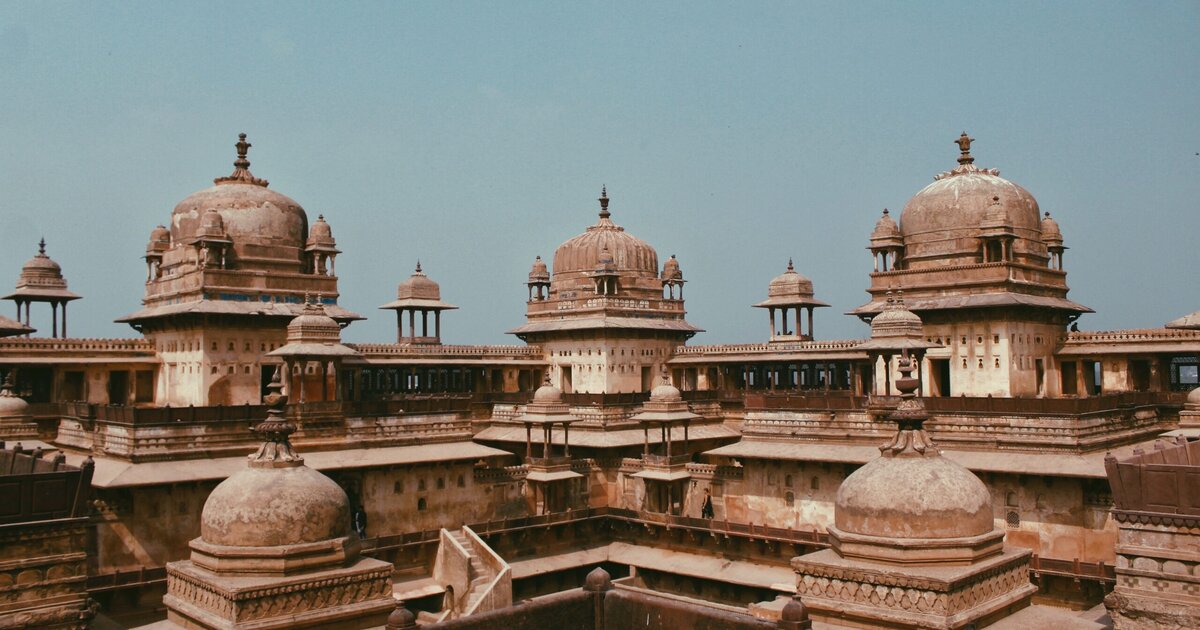
Best Route for Ayodhya Family Trip , Most Ayodhya route guides tell you the same thing: visit Hanuman Garhi first, then Ram Mandir, then Kanak Bhawan, then Saryu Ghat. That temple sequence is correct — but it only answers half the route question.
The more complex half is this: given where your family is starting from, what is the smartest way to travel to Ayodhya, how do you fit it into a multi-city pilgrimage, and in what order should your cities fall to minimise backtracking and maximise your time at each destination?
That depends entirely on your origin city. A family from Delhi has different options and a different optimal route than a family from Varanasi, Kolkata, or Lucknow. This guide maps out the best Ayodhya family trip route for each major starting point — including how to extend smartly into the broader UP sacred circuit.
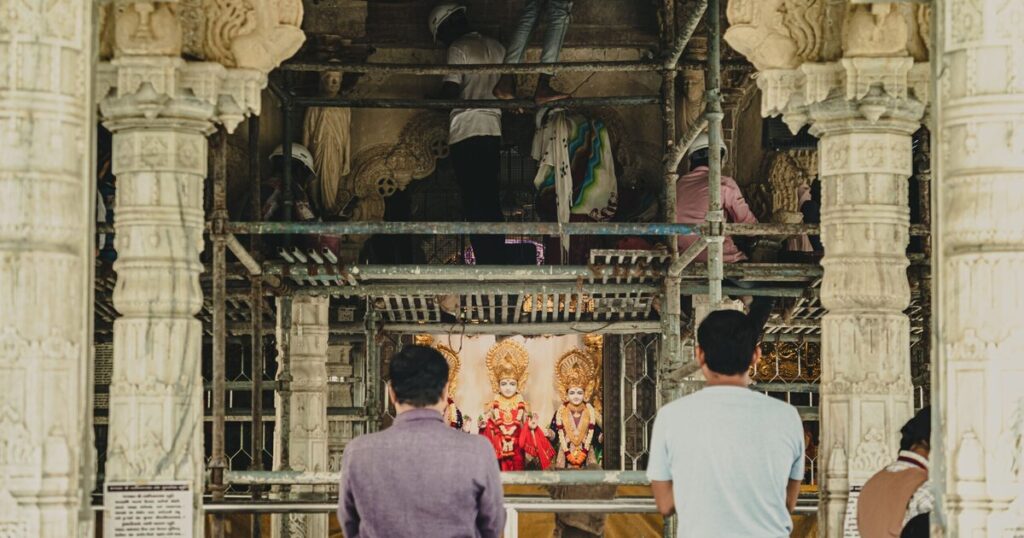
Before origin-city routing, establish the correct sequence inside Ayodhya itself. This applies regardless of where you’re travelling from.
The recommended family temple sequence:
Stop 1 — Hanuman Garhi (8:30–9:15 AM) Ayodhya’s tradition holds that Lord Hanuman, guardian of the city, is visited before proceeding to Ram Lalla. Hanuman Garhi sits on a hilltop with 76 steps — go first, while energy is highest. For elderly family members who cannot climb, base darshan with prasad is perfectly complete. Allow 45 minutes including the climb and rest.
Stop 2 — Ram Janmabhoomi / Ram Mandir (9:30 AM – 11:00 AM) The centrepiece. If you have a Sugam Darshan e-pass booked (free, via srjbtkshetra.org, 15 days in advance), you enter through the priority lane. Without a pass, the mid-morning queue on weekdays is 45–90 minutes. The sanctum darshan itself is 3–5 minutes. The entire experience inside the complex — security, queue, sanctum, exit — takes 60–90 minutes with a pass, longer without.
Stop 3 — Kanak Bhawan (11:15 AM – 11:45 AM) The golden Ram-Sita shrine, a 5-minute walk from the Ram Mandir complex. Many families rush past this in their focus on Ram Mandir — a genuine mistake. Kanak Bhawan is one of the most beautifully decorated temples in Ayodhya and never as crowded as the main complex. Free entry. 30 minutes is enough.
Stop 4 — Midday Rest and Lunch (12:00 PM – 2:00 PM) The Ram Mandir closes from noon to 2:00 PM for midday rituals. Use this break for lunch at a local vegetarian restaurant near the Rampath. For families with young children or elderly members, a hotel rest during this window is worth building in.
Stop 5 — Nageshwarnath Temple + Treta Ke Thakur (2:30 – 3:30 PM) Two historically significant temples most day-trippers miss. Nageshwarnath — Ayodhya’s ancient Shiva temple — and Treta Ke Thakur, believed to contain an idol installed during the Treta Yuga itself. Both are quieter, more meditative, and give children a genuine sense of Ayodhya’s multi-layered sacred history.
Stop 6 — Saryu Ghat and Ram Ki Paidi (4:30 – 5:30 PM) The riverfront walk at dusk, before the aarti crowd builds. Ram Ki Paidi — the stepped ghats on the Saryu — is where families traditionally take a holy dip. October to March, this is deeply pleasant. April to June, plan for the shade.
Stop 7 — Saryu Aarti (6:30 – 7:30 PM) Arrive at the ghat by 6:00 PM to secure a good viewing position for the aarti at dusk. Unlike Varanasi’s Ganga Aarti — which is best viewed from a boat — the Saryu Aarti is most powerful from the ghat itself, seated close to the priests. The atmosphere in the post-Ram Mandir era has grown considerably; this is now a full ceremony worth staying for.
Distance: ~200 km | Travel time: 4 to 4.5 hours | Highway: NH27
Varanasi-to-Ayodhya is the single most popular inter-city pilgrimage route in Uttar Pradesh. Families coming from Varanasi — or combining both cities in one trip — have the most route flexibility of any origin city.
Day trip format (most common): Depart Varanasi by 5:00–5:30 AM. Breakfast stop on NH27 at approximately 8:00 AM. Reach Ayodhya by 9:30 AM — perfectly timed for Hanuman Garhi before the mid-morning Ram Mandir crowd. Complete the full temple sequence. Depart Ayodhya by 8:00 PM after the Saryu Aarti. Back in Varanasi by 11:00–11:30 PM.
This is a long day — 16 to 18 hours door-to-door. Manageable for adults and teenagers. Not recommended for families with children under 10 or elderly grandparents. For those groups, the overnight format is strongly preferable.
Overnight format (recommended for families): Day 1: Varanasi sightseeing (Kashi Vishwanath, Ganga Aarti, boat ride). Night in Varanasi. Day 2: Depart Varanasi 7:00 AM. Reach Ayodhya by 11:30 AM. Afternoon temple circuit. Night in Ayodhya near Ram Mandir. Day 3: Early morning Ram Mandir darshan (6:30 AM golden window). Complete Kanak Bhawan, Nageshwarnath. Saryu Ghat morning. Return to Varanasi or depart home.
The 3N4D Varanasi Ayodhya Tour Package from TripCosmos follows this exact structure — with accommodation in both cities, private cab throughout, and guided darshan at both Ram Mandir and Kashi Vishwanath included.
Vehicle recommendation:
Distance: ~135 km | Travel time: 2.5 to 3 hours | Highway: NH27 / NH330
Lucknow is the closest major city to Ayodhya, making it the most practical day-trip origin. Families based in Lucknow, or those arriving at Lucknow Airport and heading to Ayodhya first, have the easiest logistics of any route.
Recommended approach: Depart Lucknow by 6:30–7:00 AM. Reach Ayodhya by 9:30 AM. Complete full temple circuit including Saryu Aarti. Return to Lucknow by 9:00–9:30 PM comfortably. This is genuinely doable as a single day without exhaustion for most family groups.
Extending the trip: Lucknow + Ayodhya + Naimisaranya forms an excellent 2-night, 3-day North UP circuit. Naimisaranya — the ancient forest where the Puranas were first recited, in Sitapur district — is 2 hours from Lucknow and rarely crowded. This lesser-known circuit gives families a deeply spiritual experience beyond the main pilgrimage crowd.
For families coming from outside India or from South India via Lucknow Airport, the route of Lucknow → Ayodhya → Varanasi or Ayodhya → Prayagraj → Varanasi covers the full sacred triangle in a logical geographic progression without backtracking.
Distance: ~640 km by road | Travel time: 9–10 hours | Better option: Train or flight
Delhi to Ayodhya by road is a long drive — not recommended as a family car journey, especially with children or elderly members. The right approach from Delhi:
By train: Delhi to Ayodhya Cantt is 7–8 hours by express train (3AC recommended). Several trains run this route, including the Vande Bharat Express. Book on IRCTC 60 days in advance, especially for October–February peak season.
By flight: Delhi to Ayodhya (Maharshi Valmiki International Airport, AYJ) — approximately 1 hour. IndiGo and Air India operate this route. Flight + private cab from the airport to the temple zone is the fastest and most comfortable option for families with tight schedules.
Recommended family route from Delhi: Delhi (flight or overnight train) → Ayodhya (1 night, early morning darshan Day 2) → Varanasi (cab transfer, 200 km, 4.5 hours) → Varanasi 2 nights → return home.
This progression — Ayodhya first, Varanasi after — means your family arrives in Ayodhya fresh, completes darshan at its most peaceful, and then moves to Varanasi for a richer multi-day experience. It avoids the common mistake of doing Varanasi first, then making an exhausting same-day Ayodhya day trip.
The 4N5D Varanasi Prayagraj Ayodhya Tour Package covers the full circuit from whichever city your family enters from — TripCosmos handles all inter-city transfers throughout.
Distance: ~165 km | Travel time: 3 to 3.5 hours | Highway: NH30 / NH27 via Sultanpur
Prayagraj to Ayodhya is a straightforward highway journey — commonly done as a day trip by families already visiting Prayagraj for Sangam darshan.
Recommended sequence for the full sacred triangle: Prayagraj (Sangam + Allahabad Fort + Anand Bhawan) → 1 night in Prayagraj → Ayodhya (3.5 hours, morning departure) → Ayodhya full day or overnight → Varanasi (4.5 hours from Ayodhya via NH27).
This route covers all three vertices of the UP sacred triangle — Prayagraj, Ayodhya, Varanasi — in a logical geographic triangle without any route reversal. It’s the most efficient multi-city family pilgrimage circuit in North India when starting from Prayagraj.
The complete Varanasi Prayagraj Ayodhya itinerary guide breaks down the full three-city circuit with costs, timing, and vehicle options for every group size.
Distance by train: 12–15 hours (Kolkata to Ayodhya Junction) | Better approach: Fly to Varanasi
For families from Kolkata, Bhubaneswar, or Northeast India, the most practical approach to an Ayodhya family trip is:
Fly into Varanasi (Lal Bahadur Shastri International Airport, VNS — well-connected from Kolkata, Bhubaneswar, Guwahati). Spend 2 nights in Varanasi. Then do the Varanasi → Ayodhya leg by private cab (4.5 hours). Spend 1–2 nights in Ayodhya. Return home from Varanasi or continue to Prayagraj.
This avoids the painfully long Kolkata–Ayodhya train journey and packages the trip into a coherent sacred circuit with a single entry/exit point.
Vehicle choice determines how comfortable the inter-city legs feel — particularly for families with children under 10 or elderly grandparents.
| Group Size | Recommended Vehicle | Why |
|---|---|---|
| 2–4 people | Swift Dzire or Innova Crysta | Comfortable legroom for 4-5 hour inter-city drives |
| 4–6 people | Innova Crysta (7-seater) | Enough space for luggage and passengers on overnight trips |
| 7–9 people | Innova Crysta + one sedan, or 9-seater Tempo Traveller | Keeps the family together |
| 10–15 people | 12-seater Tempo Traveller | Most cost-efficient per-person; ideal for joint families |
TripCosmos operates all vehicle types on every route described above — with drivers familiar with the specific pilgrimage timing considerations on each leg. For joint families of 10 or more, the Tempo Traveller hire from Varanasi is the most popular choice for the full UP circuit.
Saving Ayodhya as a day trip at the end of a long Varanasi visit. By Day 4 or 5 of a Varanasi trip, families are genuinely tired. Ayodhya on a day trip from Varanasi then becomes a rushed, exhausting blur. If Ayodhya matters — and it should — give it its own overnight stay rather than bolting it to the end of a Varanasi trip.
Routing Delhi → Varanasi → Ayodhya → back to Delhi. This is geographic backtracking. Delhi → Ayodhya → Varanasi → Delhi is a cleaner route on the map and eliminates 400 unnecessary kilometres.
Not sequencing the Saryu Aarti into the day plan. Many families leave Ayodhya before 5:00 PM — missing the Saryu Ghat aarti entirely. The aarti is one of the most memorable parts of an Ayodhya visit. If your family is leaving by evening, restructure the temple sequence so Saryu Ghat is the final stop before departure, not an afterthought you ran out of time for.
Travelling to Ayodhya directly without Sugam Darshan pass. Without the free Sugam Darshan e-pass booked in advance, your family joins the general queue — which can mean 90 minutes to 3 hours of standing. This is avoidable entirely and the booking takes 10 minutes. Do it 15 days before departure at srjbtkshetra.org.
TripCosmos operates daily on every route described in this guide — Varanasi to Ayodhya, Lucknow to Ayodhya, Prayagraj to Ayodhya, and the full UP sacred triangle. The team manages inter-city cab bookings, temple circuit timing, hotel reservations in each city, and Sugam Darshan coordination across the full itinerary.
For families coming from outside UP, the Varanasi Ayodhya Tour Package (3N4D) and the 4N5D Varanasi Prayagraj Ayodhya Package cover the most complete family circuits with all routing handled end-to-end.
Share your family’s origin city, travel dates, and group size on WhatsApp — TripCosmos sends back a complete route plan and cost breakdown within 60 minutes.
Website: https://tripcosmos.co WhatsApp: +91 9336116210
The recommended sequence is Hanuman Garhi first (76 steps; for young children this is an adventure, not a burden), then Ram Mandir darshan with a Sugam e-pass to avoid long queue waits, then Kanak Bhawan, then a midday lunch and rest during the noon temple closure, then Nageshwarnath and Treta Ke Thakur, then Saryu Ghat walk, and finally the evening aarti. This sequence matches the devotional tradition, minimises backtracking across the city, and ends with the most visually spectacular experience of the day.
Both work well, but for different trip structures. Lucknow is closer (2.5–3 hours) and better for a standalone Ayodhya day trip. Varanasi is the better starting point if you’re combining both cities in a single pilgrimage — the Varanasi to Ayodhya leg flows naturally into a multi-day sacred circuit, and TripCosmos manages the full route in one booking.
A day trip is possible — departing Varanasi by 5:00–5:30 AM and returning by 11:00 PM. But for families with children under 10 or elderly grandparents, a 16-hour day is genuinely exhausting and can overshadow the spiritual experience. An overnight stay in Ayodhya is the recommended format — it allows an early morning darshan on Day 2 in the golden quiet window, the most peaceful darshan of any visit.
The most geographically logical sequence is: Prayagraj → Ayodhya → Varanasi (for families entering from the west) or Varanasi → Prayagraj → Ayodhya (for families entering from the east). The route Varanasi → Ayodhya → Prayagraj → back to Varanasi involves doubling back and is not recommended. The 4N5D Varanasi Prayagraj Ayodhya Tour Package routes the circuit without any backtracking.
For October to March travel, book 4–6 weeks in advance — hotels near the Ram Mandir and private vehicles fill up fast during this period. For festival dates (Ram Navami, Dev Deepawali, Makar Sankranti), book 2–3 months in advance. The Sugam Darshan e-pass should be booked exactly 15 days before your visit date at midnight when slots open.
The best route for an Ayodhya family trip is the one that matches your origin city, your group’s physical capacity, and your broader pilgrimage ambitions. A family from Lucknow and a family from Kolkata have completely different optimal routes to the same destination. Getting the approach right — the inter-city leg, the city sequence, the overnight-versus-day-trip decision — determines whether Ayodhya feels like a meaningful pilgrimage or a rushed logistics exercise.
Ayodhya’s significance in Hindu tradition is ancient, but the city’s new infrastructure makes the visit more accessible than at any previous point in history. The route is there. The darshan is free. The Saryu Aarti is waiting.
TripCosmos will handle the rest.
Visit: https://tripcosmos.co | WhatsApp: +91 9336116210



Comments are closed.