Your cart is currently empty!
You may check out all the available trips and book one that suits you.
Continue Browsing Trips
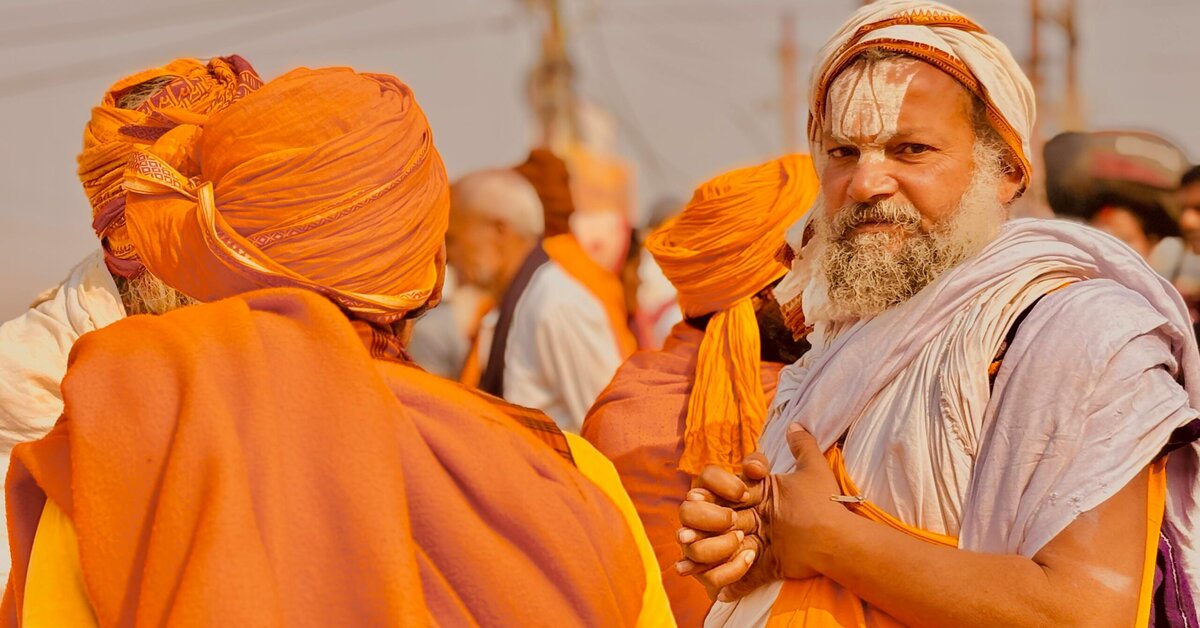
How to Avoid Rush During Your Prayagraj Visit , Prayagraj is one of the most visited pilgrimage cities in India — and one of the most underestimated in terms of crowd management. The Triveni Sangam draws millions of pilgrims through the year, not only during Kumbh Mela. Even on ordinary pilgrimage days, the Sangam ghat, the Hanuman Mandir, and the main crossing points in the city can become genuinely difficult to navigate without preparation.
The good news: most of the rush in Prayagraj is entirely predictable. And predictable crowds have predictable gaps. This guide shows you exactly how to find them.
The first step to avoiding crowds in Prayagraj is understanding when they peak.
Weekends and public holidays bring the heaviest domestic pilgrim traffic. Saturday and Sunday see significantly larger Sangam crowds than Monday through Thursday. If your dates are flexible, a midweek visit reduces crowd density by 40–50% at most major sites.
Festival dates are the most intense periods — Makar Sankranti, Maghi Purnima, Basant Panchami, and Mahashivratri all draw enormous numbers. During Kumbh and Ardh Kumbh years, these dates see numbers that make normal crowd management impossible. Check the Hindu calendar before finalising dates.
Morning and evening windows are when crowds concentrate. The Sangam is busiest between 7 AM and 10 AM when pilgrims come for snan, and again at the Ganga Aarti time in the evening. The quietest window at the Sangam is between 11 AM and 2 PM — not ideal in summer due to heat, but genuinely calm in winter months.
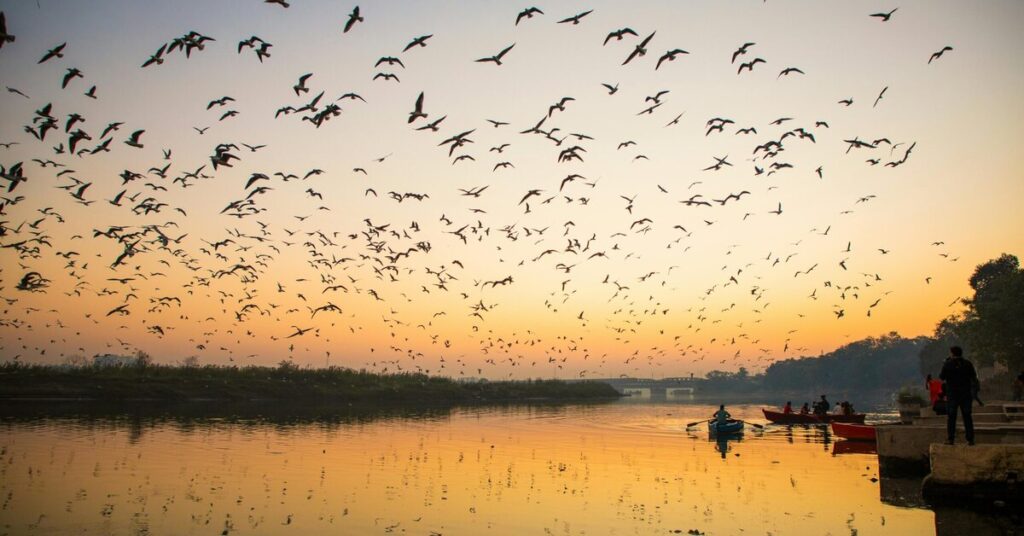
The single most effective crowd-avoidance strategy in Prayagraj is arriving at the Triveni Sangam before 6 AM. The boat operators are active, the ghats are accessible, and the rush that builds between 7:30 AM and 10 AM has not yet arrived.
A pre-dawn boat ride to the Sangam point — the exact confluence of the Ganga, Yamuna, and the invisible Saraswati — in relative quiet is a completely different experience from the midmorning version surrounded by hundreds of boats jostling for space.
This requires a pre-booked, reliable vehicle that can depart your hotel at 5:00–5:30 AM without any last-minute uncertainty. A pre-booked cab from Tripcosmos handles this precisely — your driver is confirmed, departure time is fixed, no ghat-side negotiation required.
The boat situation at Prayagraj’s Sangam ghats is one of the most chaotic on-the-ground experiences in North India during peak hours. Dozens of boat operators compete aggressively for passengers, prices are quoted inconsistently, and the social pressure of a crowd makes calm decision-making difficult.
Pre-booking a Sangam boat ride through a verified operator eliminates all of this. You arrive at the ghat knowing your boat is waiting, your price is confirmed, and you do not need to negotiate anything on arrival. Tripcosmos handles multi-city tour packages that include Prayagraj Sangam boat arrangements as part of the complete plan — avoiding the ghat-side scramble entirely.
Most pilgrims try to combine the Sangam snan, the Akshayavat darshan inside Allahabad Fort, and the Hanuman Mandir in a single morning. This creates a cascade of queues and rushed transitions that leaves visitors feeling they experienced nothing properly.
Split these across different time slots or different days if your itinerary allows. The Akshayavat — the sacred immortal banyan tree inside the Fort — is best visited in the late morning or early afternoon when the Sangam crowd has thinned. The Hanuman Mandir at Daraganj, famous for its reclining Hanuman idol, is quietest in the early afternoon between 12 PM and 3 PM.
Sequencing matters. Do the Sangam first thing in the morning, rest through midday, then do the Fort and temple circuit in the late afternoon before the evening aarti.
Where you stay in Prayagraj determines how much transit time you lose each day. The Civil Lines area puts you within 15–20 minutes of the Sangam ghat by car, in a quieter, well-served part of the city with reliable vehicle access. The Daraganj area places you closer to the Hanuman Mandir.
Staying on the wrong side of the city — across the Yamuna Bridge, for instance — adds 30–45 minutes of traffic to every morning departure, which compounds across a two or three day visit into significant lost time.
Prayagraj’s key pilgrimage sites are spread across a larger geographic area than most visitors expect. The Sangam, the Fort, the Hanuman Mandir, Mankameshwar Temple, and Bharadwaj Ashram are not walkable from each other. Without a dedicated vehicle, you are negotiating fresh transport at every transition — a time-consuming process that becomes exhausting by the second day.
A pre-booked full-day Tripcosmos cab handles all transitions smoothly. For families or groups of six or more, a Tempo Traveller keeps everyone together and eliminates the coordination overhead of splitting across multiple autos.
For those combining Prayagraj with Varanasi or Ayodhya, Tripcosmos offers seamless inter-city transfers with the same verified driver — no handoff to strangers between cities.
Tripcosmos is based in Prayagraj and knows the city’s crowd patterns, ghat logistics, and pilgrimage circuits from the inside. Whether you need a single day’s cab hire or a complete Varanasi–Prayagraj–Ayodhya tour package, the team builds it around your dates and your group.
📍 Website: https://tripcosmos.co 📱 WhatsApp: +91 9336116210
Weekday mornings before 6:30 AM are the quietest window at the Sangam. Midweek visits (Monday–Thursday) outside major festival dates see significantly smaller crowds than weekends. Avoid Makar Sankranti, Mahashivratri, and all Kumbh-related dates unless the festival experience itself is your purpose.
A focused itinerary covering the Triveni Sangam boat ride, Allahabad Fort and Akshayavat, and the Hanuman Mandir can be completed in one full day with good planning and a dedicated vehicle. Two days allows a more comfortable, unhurried pace with time for the evening Ganga Aarti and any additional temples.
Yes. Tripcosmos arranges dedicated full-day cab hire for Prayagraj with experienced local drivers who know the pilgrimage circuit, the best ghat approach points, and the optimal sequencing of sites to minimize time wasted in transit and queues.
Rush in Prayagraj is predictable — which means it is avoidable. Arrive early, sequence your sites thoughtfully, pre-book your boat and transport, and choose midweek dates where possible. The Triveni Sangam at dawn, with quiet water and no competing boats crowding the confluence point, is worth every bit of the planning it takes to get there.