Your cart is currently empty!
You may check out all the available trips and book one that suits you.
Continue Browsing Trips
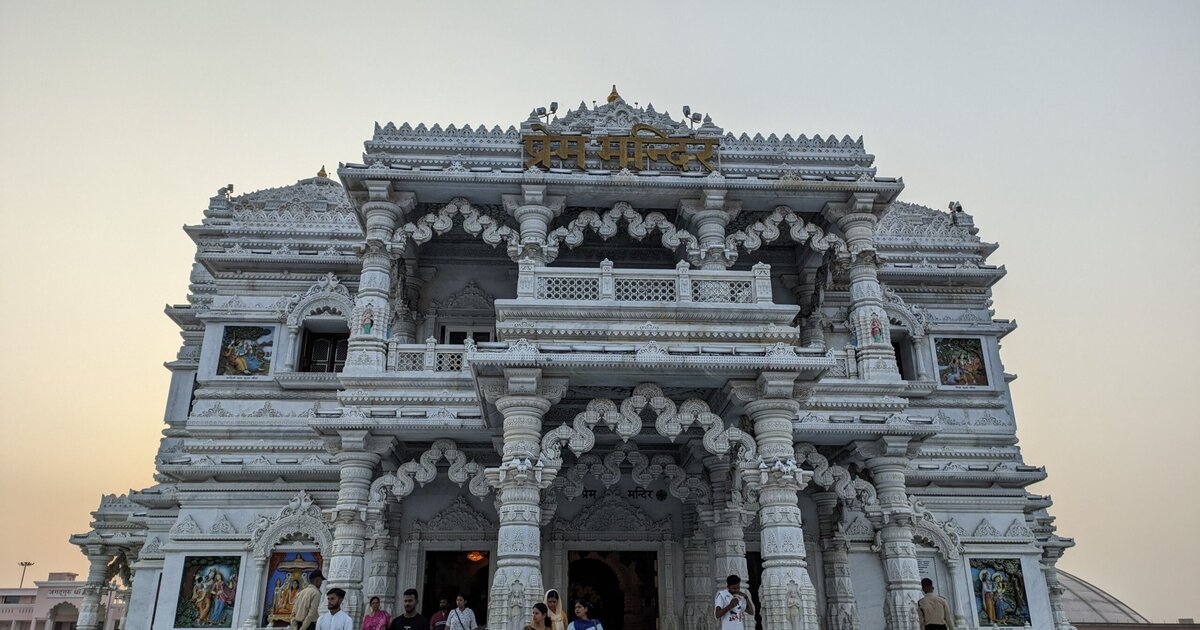
Family Temple Circuit in Uttar Pradesh — what Varanasi, Ayodhya & Prayagraj gives every generation. Packages from ₹11,999. TripCosmos — WhatsApp +91 9336116210.
Every family that completes the Uttar Pradesh temple circuit returns changed in some way. But the changes are different for each generation — and understanding this is what makes UP the finest multi-generational travel destination in India.
Grandparents receive the fulfilment of a lifetime’s devotion. Parents receive the experience of seeing their children encounter the sacred geography that shaped the stories they grew up with. Children receive something harder to name — a first encounter with the living reality behind the myths, rituals, and prayers that form the invisible architecture of their family’s life.
No beach resort, hill station, or heritage tour does all three simultaneously. The UP temple circuit does.
Most family travel compromises. The adults want culture, the children want stimulation, the grandparents need accessibility and rest. Destinations are chosen to minimise conflict rather than maximise meaning.
UP’s temple circuit is unusual because it doesn’t require compromise. Each city on the sacred triangle — Varanasi, Ayodhya, Prayagraj — offers something specifically powerful for each age group, and those things happen to be the same city at the same time.
Uttar Pradesh’s position in Hindu sacred geography is unmatched — three of the seven sacred cities of Hinduism, two major Shakti Peethas, the birthplace of Lord Ram, and the sacred confluence of three holy rivers, all within a connected 600-kilometre circuit.
For grandparents: Kashi is often the single most significant spiritual destination of a Hindu life — the Jyotirlinga, the ghats, the belief that dying in Kashi grants liberation. For elderly grandparents completing this darshan, the emotional weight is something adult children frequently describe as the most profound thing they have witnessed in a parent. The Kashi Vishwanath VIP darshan removes the queue burden entirely. A private boat on the Ganga at dawn removes the crowd. What remains is the experience itself — unhurried, complete, and exactly what they have waited for.
For parents: Varanasi delivers the rare experience of seeing your parents truly at peace in a place that matters to them — and simultaneously watching your children encounter something genuinely new. The Ganga Aarti from a private boat is the moment most parents cite as the point where the trip became something more than a holiday.
For children: The Ganga Aarti is the first experience that breaks through the resistance most children bring to pilgrimage travel. The scale of it — the lamps, the sound, the river, the crowd on the ghats — is not something any screen has prepared them for. Children who have been reluctantly dragged along tend to go quiet at the Ganga Aarti. Something registers. The Sarnath deer park — where the Buddha gave his first sermon — engages children through the archaeological and natural setting. Durga Temple is memorable for the monkeys. Manikarnika is handled age-appropriately but gives older children a genuine encounter with life’s impermanence that no classroom provides.
For grandparents: The Ram Mandir darshan after the consecration of January 2024 carries a specific emotional charge for elderly Hindus that is difficult to describe to those who did not live through the preceding decades. Many grandparents have tears at the gate before they have even seen the idol. Plan the early morning window (6:30 AM) and book the Sugam Darshan e-pass in advance — the priority lane protects elderly pilgrims from the general queue. The Saryu Ghat evening aarti, seated near the river at dusk, is the close that most grandparents describe as the most peaceful moment of the entire circuit.
For parents: Ayodhya is the city where the Ramayana’s backstory becomes physically real — the Hanuman Garhi hilltop your children climbed, the Kanak Bhawan’s golden idols, the Ram Mandir standing exactly where it should have always stood. For parents who grew up hearing the Ramayana from their own parents, bringing their children to Ayodhya completes a generational loop in a way that most pilgrimage destinations cannot.
For children: Hanuman Garhi’s 76 steps are an adventure. Younger children treat the climb as a challenge. Older children, briefed beforehand on Hanuman’s role as guardian of Ayodhya, understand the significance. The Ram Mandir prison cell comparison — Ram born in Varanasi’s Kashi Vishwanath city, Ram’s birthplace in Ayodhya — gives children who know the Ramayana a narrative thread connecting the two cities. The Saryu Ghat at dusk is one of the few evening sacred experiences accessible to young children without crowd or safety concerns.
For grandparents: The Triveni Sangam holy dip is often the most ritually significant act of an elderly pilgrim’s life — particularly if the visit coincides with Pitru Paksha (September 26 to October 10, 2026) when the dip is performed as an act of ancestral devotion. A private boat puts your family at the exact confluence point with no strangers present. The boatman assists elderly pilgrims into the water. The moment of the dip, at the meeting of the three rivers, is the one most families say changed something permanently in the grandparent they brought.
For parents: Prayagraj is where the invisible becomes visible — two rivers of different colours meeting in open water, the sacred Saraswati present beneath the surface. Standing at the Sangam point on a private boat with your parents and your children, offering flowers on the water together, is the kind of multi-generational moment that cannot be engineered at any other destination.
For children: The Sangam boat ride is genuinely exciting for children — open water, the visible colour-line where Ganga meets Yamuna, the floating wooden platform, the optional wade into the river. The Gupt Godavari caves at Chitrakoot (if your circuit extends there) are the single most child-engaging experience on the entire UP circuit — knee-deep water, low cave ceilings, underground river. Children who have been politely bored at some temple stops come alive in the caves.
The most complete multi-generational UP family circuit:
Day 1–2: Varanasi Sunrise Ganga boat (pre-booked private). Kashi Vishwanath VIP darshan. Sarnath for children. Durga Temple. Ganga Aarti from private boat (evening). Two nights near the ghats — walking distance from both boat boarding and temple.
Day 3: Varanasi → Ayodhya (4.5 hours) Arrive afternoon. Saryu Ghat evening aarti. Night in Ayodhya near Ram Mandir.
Day 4: Ayodhya Early morning Ram Mandir darshan (6:30 AM, Sugam pass). Hanuman Garhi. Kanak Bhawan. Saryu Ghat afternoon walk. Night in Ayodhya or drive to Prayagraj.
Day 5: Prayagraj Triveni Sangam private boat and holy dip. Bade Hanuman Ji. Akshayavat. Return to Varanasi or departure city.
This 5-day format gives each city its proper time and keeps each day’s physical demands within the capacity of elderly grandparents while remaining engaging for children throughout.
Vehicle: An Innova Crysta for families of 5–7 is the non-negotiable choice — high seating for elderly boarding, adequate legroom for children, and the same driver across all 5 days who learns the family’s pace and needs. For joint families of 10 or more, a Tempo Traveller keeps everyone together. TripCosmos provides both options on the complete UP sacred circuit with experienced drivers.
Pre-booking essentials for multi-generational trips:
The 4N5D Varanasi Prayagraj Ayodhya Tour Package covers the complete multi-generational circuit with private cab, all passes, Ganga boat, and Sangam boat in one confirmed booking. For families of 10 or more, the Tempo Traveller service from Varanasi manages all group transport. For the Varanasi Ganga Aarti boat specifically, the private boat at Dashashwamedh Ghat is bookable as a standalone for families already visiting.
Website: https://tripcosmos.co WhatsApp: +91 9336116210
The Varanasi (2 nights) → Ayodhya (1 night) → Prayagraj (1 day) circuit is the most complete multi-generational format — giving grandparents their most significant darshans, parents the narrative arc of the Ramayana geography, and children the Ganga Aarti, Sarnath, Hanuman Garhi steps, and Sangam boat experience. The 4N5D Varanasi Prayagraj Ayodhya Tour Package covers this circuit from ₹11,999 per person.
Build midday rest into every day — 12:00 PM to 3:00 PM is the critical window. Early morning starts (5:30–6:00 AM) keep the sacred sites quiet for grandparents and exciting for children without midday heat. Private vehicles give complete flexibility — the driver waits, the family moves at its own pace, no shared transport schedule to meet. TripCosmos coordinates elderly-specific pacing on all multi-generational packages.
Consistently, the Ganga Aarti from a private boat in Varanasi. The scale — the lamps, the sound, the river, the crowd on the ghats viewed from the water — breaks through the resistance most children bring to pilgrimage travel. The Triveni Sangam boat ride at Prayagraj and Sarnath’s deer park are strong second and third experiences for children.
For October to March travel: 4–6 weeks minimum. For festival dates (Dev Deepawali, Ram Navami, Kartik Purnima): 8–12 weeks. The Sugam Darshan e-pass for Ayodhya must be booked exactly 15 days before your visit date. VIP Kashi Vishwanath passes are arranged by TripCosmos at the time of package booking.
Yes — with the right planning. Private vehicle, Kashi Vishwanath VIP pass, Sugam Darshan e-pass for Ayodhya, private Sangam boat at Prayagraj, and hotels within walking distance of the main sacred sites at each city. These five decisions eliminate the physical demands that make multi-day pilgrimage difficult for elderly visitors. TripCosmos manages all five as standard on every multi-generational family package.



One Comment
Comments are closed.