Your cart is currently empty!
You may check out all the available trips and book one that suits you.
Continue Browsing Trips
Ganga Mahotsav Varanasi 2026 runs November 19–24 in Varanasi, culminating in Dev Deepawali. Why attend both? Complete guide & packages. TripCosmos — WhatsApp +91 9336116210.
Every year, hundreds of thousands of visitors plan their Varanasi November visit around one date: Dev Deepawali. They arrive the day before, attend the festival on the 24th, and leave within 48 hours. They return home with extraordinary photographs and the memory of a million diyas on the Ganga — and no knowledge that they were in Varanasi during the final days of one of the finest cultural festivals in India.
Ganga Mahotsav runs for five days immediately before Dev Deepawali — beginning on Prabodhini Ekadashi and culminating on Kartik Purnima, which is Dev Deepawali itself. The two festivals are not separate events that happen to fall near each other. They are two movements of the same November composition — Ganga Mahotsav as the cultural crescendo, Dev Deepawali as the spiritual finale.
Understanding this changes how you plan your November Varanasi visit entirely.
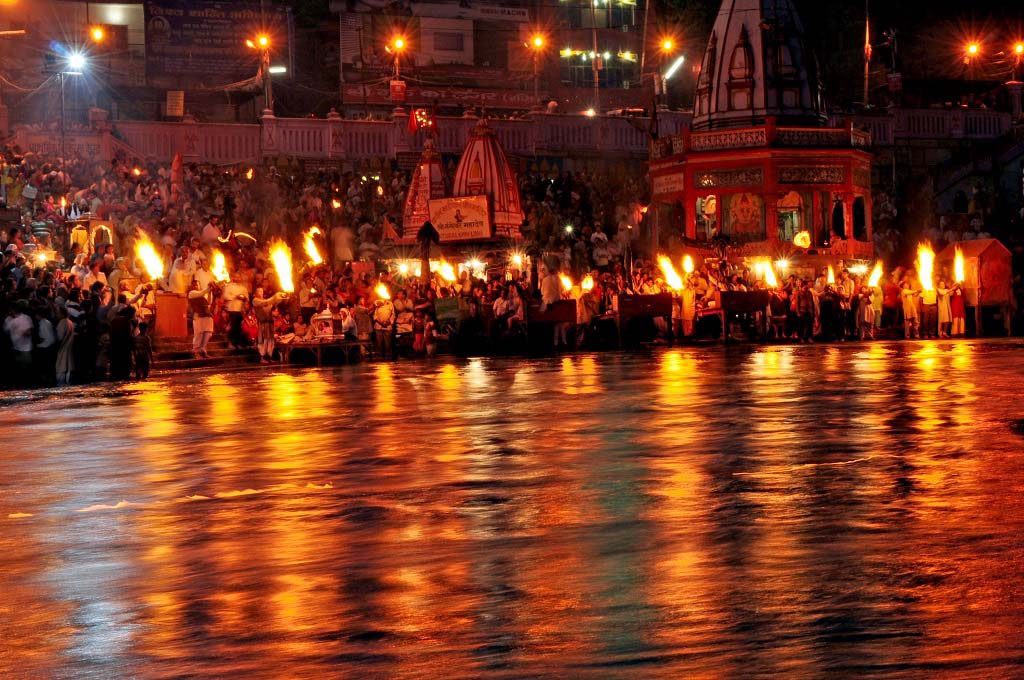
Ganga Mahotsav is a five-day festival organised by the UP Tourism Department on the ghats of Varanasi — specifically at Rajendra Prasad Ghat and Dashashwamedh Ghat. It is not a religious festival in the conventional sense. It is a cultural one: India’s finest classical performers, craftsmen from over 20 Indian states, boat races on the Ganga, traditional sports, a 10-day parallel Gandhi Shilp Bazar, and an evening Ganga Aarti that is more elaborate during Mahotsav than at any other time of year.
The performances alone distinguish Ganga Mahotsav from every other November event in North India. The festival has featured Ustad Bismillah Khan, Pandit Channulal Misra, Girija Devi, Birju Maharaj, Zakir Hussain, Amjad Ali Khan, and Vilayat Khan across its history — the most consistently distinguished classical performance roster of any Indian cultural festival. The stage is the Ganga riverfront. The audience sits on the ghats or watches from boats. The backdrop is the illuminated Dashashwamedh. There is no equivalent setting for classical music and dance anywhere in India.
2026 Ganga Mahotsav dates: November 19–24, 2026 (Prabodhini Ekadashi to Kartik Purnima / Dev Deepawali). The festival runs for 5 days and ends with Dev Deepawali on the final evening.
Day 1 (November 19) — Prabodhini Ekadashi: Festival Opening The formal opening ceremony at Rajendra Prasad Ghat — priests, government officials, the traditional lighting of the festival lamp. Evening: the first classical performance of the Mahotsav season. The atmosphere on Day 1 is the most intimate of any day — before the main crowd arrives.
Days 2–3 (November 20–21) — Cultural Peak The most diverse programming of the festival. Kathak, Bharatnatyam, Odissi, and Hindustani classical music performances run in parallel across multiple ghat stages. The Gandhi Shilp Bazar at its most active — craftsmen from more than 20 states selling their work directly. Boat races on the Ganga in the morning. Kite flying competitions. Wrestling at the ghat. The Ganga Aarti each evening, more elaborate than its regular format.
Day 4 (November 22) — The Quietest Day The second-to-last day of the Mahotsav before the Dev Deepawali crowd begins flooding the city. This is the day serious culture enthusiasts prefer — the performances are at their most polished (artists have had three days to settle into the Varanasi atmosphere) and the ghats are more navigable than they will be on November 23 or 24.
Day 5 (November 23 — Chhoti Dev Deepawali) The dress rehearsal evening. A smaller version of the diya illumination — a preview of the following night’s main event. Significantly less crowded than Dev Deepawali itself. For visitors who cannot manage the November 24 crowds, Chhoti Dev Deepawali offers 80% of the visual experience at 20% of the crowd.
Day 6 (November 24 — Dev Deepawali / Kartik Purnima) The festival finale. All 84 ghats illuminated simultaneously with over a million diyas. The Ganga Aarti at its most spectacular. The Ganga Mahotsav concludes as Dev Deepawali reaches its climax — the cultural arc and the spiritual arc meeting on the same night.
The single most common Varanasi November regret TripCosmos hears: “We arrived just for Dev Deepawali and didn’t know about Ganga Mahotsav.”
Here is what the combined 6-day visit gives you that a 2-day Dev Deepawali-only visit cannot:
Context. Watching classical Kathak at Rajendra Prasad Ghat on Day 2 of Ganga Mahotsav, then watching the Ganga Aarti from a private boat on Dev Deepawali night — you understand Varanasi differently after both. The cultural tradition and the spiritual tradition are the same city expressing itself in two different registers.
Access. The Gandhi Shilp Bazar brings craftsmen from across India — Banarasi silk weavers, brass workers, block printers, terracotta artists — to a single location on the ghats. For families who want to buy directly from artisans without navigating Varanasi’s market lanes, this is the finest shopping opportunity the city offers all year.
The best boat days. November 20–22 on the Ganga, during the Mahotsav but before Dev Deepawali, is when the river is at its most beautiful for a boat ride — the festival decorations are up, the evening aartis are more elaborate than usual, and there are fewer boats competing for position. The private boat for evening aarti viewing during Ganga Mahotsav is available at standard pricing and standard availability — entirely unlike the ₹60,000/vessel pricing of Dev Deepawali itself.
The photographers’ advantage. Dev Deepawali photography is extraordinarily competitive — hundreds of boats, thousands of photographers, the most coveted single-night photograph in Varanasi’s calendar. Ganga Mahotsav evenings, with performance stages lit along the ghats, decorated boats on the river, and the enlarged Aarti reflected on the water — these are the most underrated photography opportunities in Varanasi and almost entirely uncrowded by visiting photographers.
Day 1 (Nov 19): Arrive Varanasi. Ganga Mahotsav opening ceremony. Evening aarti from the ghat.
Day 2 (Nov 20): Morning boat ride (standard pricing, no festival premium). Kashi Vishwanath VIP darshan. Evening: first major classical performance at Rajendra Prasad Ghat.
Day 3 (Nov 21): Gandhi Shilp Bazar. Sarnath day visit. Evening: Ganga aarti and second major performance.
Day 4 (Nov 22): Ghat walk. Best photography day. Evening: most polished classical performance of the Mahotsav — final night before Dev Deepawali crowds arrive.
Day 5 (Nov 23): Chhoti Dev Deepawali. Smaller diya illumination. Final Mahotsav performances. Private boat recommended — available at pre-festival pricing for the last time.
Day 6 (Nov 24): Dev Deepawali. Pre-dawn Kartik Purnima snan. Full day plan per TripCosmos’s Dev Deepawali itinerary. Private heritage boat for the evening — pre-booked months earlier.
TripCosmos manages the complete 6-day Ganga Mahotsav + Dev Deepawali Varanasi package as a single confirmed booking — accommodation near Dashashwamedh, private cab throughout, Ganga Mahotsav performance access, Kashi Vishwanath VIP pass, and Dev Deepawali private boat all confirmed before departure.
For the Dev Deepawali boat specifically — the Dev Deepawali Boat + Ritual Tour Package starts from ₹5,999 per person. For the Kashi Ganga Mahotsav cultural experience and November Varanasi planning, the Kashi Ganga Mahotsav 2026 guide on TripCosmos gives the complete programme context. Private cabs for all November Varanasi movements are available through the TripCosmos cab service.
Ganga Mahotsav and its cultural significance in Varanasi has grown since the 1980s from a regional tourism initiative into one of North India’s most distinguished cultural events — and the one most consistently underestimated by visitors who focus entirely on Dev Deepawali.
Website: https://tripcosmos.co WhatsApp: +91 9336116210
Ganga Mahotsav 2026 runs from November 19 to November 24 — beginning on Prabodhini Ekadashi and culminating on Kartik Purnima (Dev Deepawali). The five-day festival is organised by UP Tourism at Rajendra Prasad Ghat and Dashashwamedh Ghat with classical performances, craft fairs, boat races, and the spectacular Dev Deepawali finale.
No — they are connected but distinct. Ganga Mahotsav is a five-day cultural festival featuring classical music, dance, craft exhibitions, and sporting events. It culminates on Dev Deepawali (Kartik Purnima), which is the religious festival of the million diyas and Ganga Aarti. Ganga Mahotsav is the cultural arc; Dev Deepawali is the spiritual finale of the same November sequence.
Six days is the recommended format — arriving on November 19 for the Mahotsav opening and leaving after November 24’s Dev Deepawali. This gives the complete experience of both events without any rushed elements. The middle days (November 20–22) are the most relaxed and the best for photography, shopping at the Gandhi Shilp Bazar, and experiencing classical performances without crowd pressure.
Significantly — yes. Ganga Mahotsav evening boat rides for the enlarged Aarti are priced at standard Varanasi boat rates (₹1,200–₂,000 for a private group boat). The same boat on Dev Deepawali night costs ₹60,000 for a private vessel. For families wanting the boat-and-aarti experience without the Dev Deepawali premium, the Ganga Mahotsav evenings on November 20–22 offer 80% of the visual atmosphere at 5% of the Dev Deepawali boat cost.
Yes — hotels near Dashashwamedh Ghat fill up for the full November 19–24 week. The last three days (November 22–24) especially command full occupancy and premium rates. Book accommodation for the entire 6-day period as a single block — checking in on November 19 secures the accommodation before the late-arrivals for Dev Deepawali push prices up.
Comments are closed.