Your cart is currently empty!
You may check out all the available trips and book one that suits you.
Continue Browsing Trips
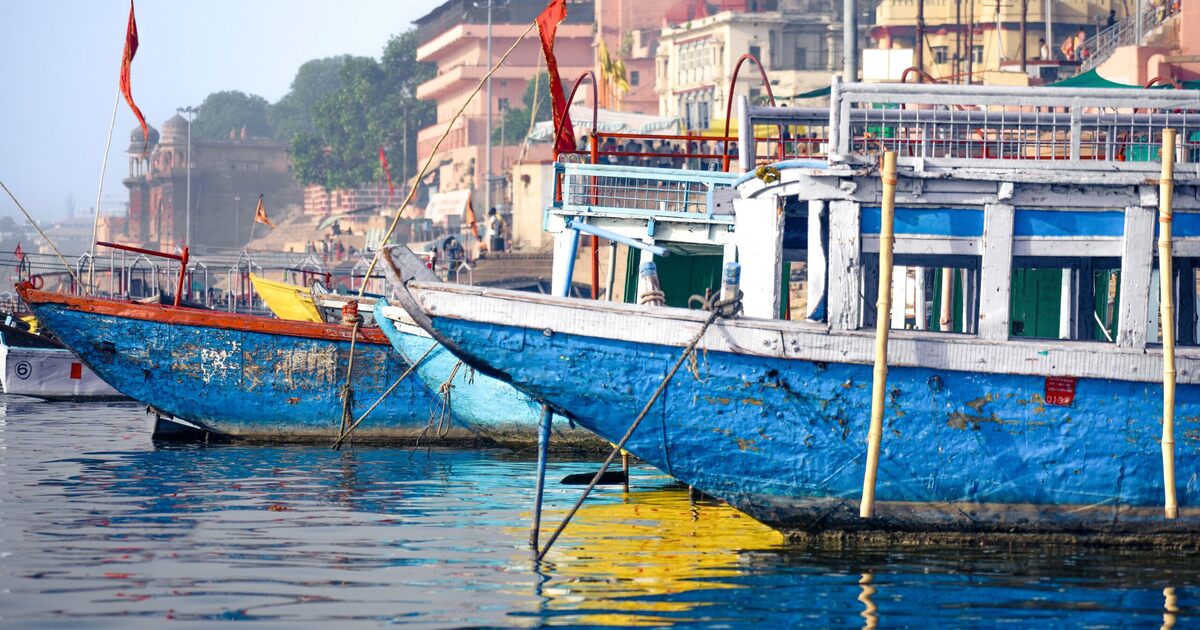
Foreign Tourist Boat Ride During Shravan , Ganga boat ride during Shravan in Varanasi — what foreign tourists see, the Kanwar Yatra, cultural context & private boat guide. Plan with Tripcosmos 2026.
Most international travel guides recommend visiting Varanasi between October and February — the cool, dry season when crowds are manageable, the river is at a good level, and the weather is comfortable. This is solid advice. But it misses something that experienced Varanasi visitors know: the Shravan month — Lord Shiva’s sacred month, running through July and August — is one of the most visually and culturally extraordinary times to experience Varanasi from the Ganga, precisely because of what the city becomes during this period.
For foreign tourists who are willing to plan around the heat and the monsoon, a Shravan boat ride on the Ganga offers something the October–February season simply cannot — the sight of a living sacred city in the full expression of its most important annual devotional moment.
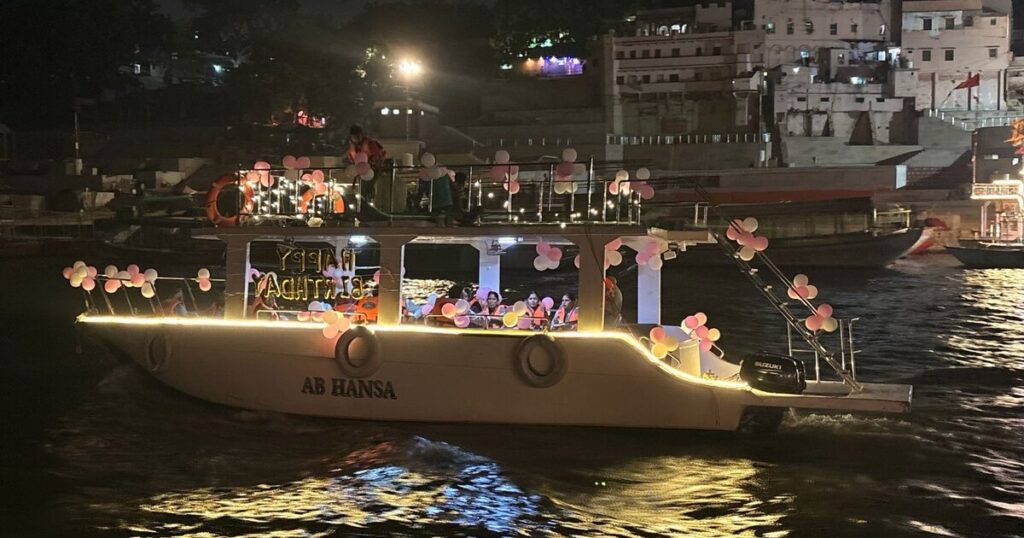
A Ganga boat ride during Shravan is a fundamentally different visual and sensory experience from the same ride in December.
The most immediately striking difference: the Kanwariyas. These are devotees — often young men, traveling in large groups — who walk hundreds of kilometres carrying decorated yokes (kanwars) loaded with pots of sacred Ganga water, which they will pour over Shivalingas in their home temples upon return. During Shravan, the ghats of Varanasi are filled with Kanwariyas at various stages of their journey — collecting water from the Ganga at the ghats, performing rituals before departure, chanting devotional songs in groups.
From the river, this sight is extraordinary. The ghats — which in December carry a relatively controlled atmosphere of pilgrims and tourists — become something entirely different during Shravan: a living expression of mass devotion that has continued unbroken for centuries. The scale, the energy, the sound of collective chanting rising from the ghats across the water — there is nothing quite like it in the world of religious travel.
The Ganga itself is also different. Shravan falls during and after monsoon — the river is fuller, darker, and more powerful than the post-winter low it maintains in January and February. The current is visible. The water has a different quality of presence. The ghats, with their lower steps partially submerged, create a different visual relationship between the city and the river.
For foreign tourists encountering Shravan Varanasi for the first time, some cultural orientation transforms observation into genuine understanding.
Why Shravan is significant: Shravan is the holiest month for Lord Shiva in the Hindu calendar. According to Hindu tradition, the cosmic churning of the ocean (Samudra Manthan) happened during this month — producing both the nectar of immortality and a devastating poison that Shiva drank to save the universe. Shravan worship honors this sacrifice. The Jalabhishek — pouring Ganga water over Shivalingas — is an offering of cooling, purifying water to the deity who burns with the heat of what he consumed. Understanding this transforms the sight of thousands of devotees filling pots from the river from a curious ritual into a theologically coherent act of devotion.
What the Kanwariyas represent: The Kanwar Yatra is one of the largest annual religious pilgrimages in the world — drawing millions of participants across North India. The walk is a form of tapas (austerity) — a physical offering of effort and endurance to Lord Shiva. Many Kanwariyas walk barefoot. Many carry their kanwar on their shoulders without setting it down on the ground for the entire journey. The decorated, colourful kanwars — each group’s is unique — create a visual spectacle on the ghats that no other season produces.
An English-speaking guide on your Tripcosmos boat ride provides exactly this kind of context in real time, answering questions as scenes unfold rather than leaving you to observe without understanding.
Best timing: The pre-dawn window — 5:00 AM to 7:00 AM — is the most powerful on any day in Varanasi, and particularly so during Shravan. The Brahma Muhurta hour before sunrise is when devotees perform their Ganga snan and Jalabhishek rituals. From the river at this hour, the collective devotional energy is at its highest and the visual scene — lamp-lit ghats, pilgrims in the water, priests chanting — is as powerful as Varanasi gets.
Best format: A private boat for foreign tourists during Shravan is the clear recommendation. The ghats are significantly more crowded than off-season — a private boat gives your group space, positioning choice, and the ability to stay at particularly significant ghat sections for as long as you want. Tripcosmos’s foreign tourist boat packages cover this format with English-speaking guides, international safety standards, and transparent pricing.
Heat management: Shravan is hot — 30°C to 36°C even in the mornings, and significantly hotter by midday. Schedule the boat ride for sunrise or late evening. Carry water. Light, breathable clothing is essential. The boat ride itself, on the river with a breeze, is significantly more comfortable than walking the ghats in the same conditions.
Monsoon rain: A light rain during a Shravan boat ride is not a problem — it is actually one of the most atmospheric experiences available on the Ganga, with the monsoon sky and the incense-filled river air combining in a way that is genuinely unforgettable. Operators manage heavy rain days through rescheduling. Confirm the operator’s weather policy at booking.
Photography: Shravan offers extraordinary photography opportunities — the Kanwariyas, the fuller river, the monsoon light, and the extraordinary visual density of the ghats during this period make for images that are completely distinct from winter season photographs. A VIP sunrise boat ride package includes prime positioning for photography during the golden hour.
The visitors who experience Varanasi during Shravan consistently describe it differently from those who visit in peak season. The crowd is more devotional and less tourist-oriented. The city is in genuine celebration rather than its standard pilgrimage mode. The energy from the ghats — the chanting, the Kanwariya groups, the constant movement of dedicated pilgrims — creates an atmosphere that feels less like tourism and more like witnessing something real.
This is what many foreign tourists come to India seeking — an authentic engagement with living religious tradition at its most complete expression. Shravan at Varanasi, experienced from the river with the right cultural orientation, delivers this more completely than any other single experience in North India.
Tripcosmos manages Shravan boat rides for foreign tourists with English-speaking guides, private boat arrangements, pre-dawn pickup, and full cultural context throughout the experience. The team also coordinates Kashi Vishwanath VIP darshan during Shravan for international visitors who want to combine the river experience with temple darshan — using the VIP Darshan Travel Planning Guide format specifically adapted for foreign visitors unfamiliar with the temple’s protocols.
For international visitors extending the visit to Ayodhya or Prayagraj, Tripcosmos handles the complete multi-city tour with consistent English communication and verified AC transport throughout.
Shravan 2026 runs 22nd July to 19th August. Shravan Somvar dates: 27 July, 3 August, 10 August, 17 August — the most powerful and most visually intense dates for a Ganga boat ride.
According to Shravana’s significance in Hindu tradition, this month is considered the holiest period of the year for Shiva devotion and the Kanwar Yatra is one of the largest annual religious pilgrimages on earth — making a Shravan boat ride in Varanasi one of the most genuinely extraordinary cultural travel experiences available in Asia.
📍 Website: https://tripcosmos.co 📱 WhatsApp: +91 9336116210
Yes — with appropriate planning. Shravan (July–August) offers the most visually and culturally intense Varanasi experience of the year, with Kanwariya pilgrimages, elevated devotional atmosphere, and the fuller monsoon Ganga. The trade-off is heat and occasional rain. Foreign tourists who schedule outdoor visits in the early morning and late evening, use AC transport between sites, and work with an operator experienced with international visitors will find Shravan one of the most extraordinary times to experience the city.
The Kanwar Yatra is one of the world’s largest annual religious pilgrimages — millions of Shiva devotees across North India who walk hundreds of kilometres carrying pots of sacred Ganga water on decorated yokes (kanwars) to pour over Shivalingas in their home temples. During Shravan, Varanasi’s ghats are filled with Kanwariyas at various stages of this journey. From a Ganga boat ride, the sight of the ghats filled with these pilgrims — their decorated kanwars, their group chanting, their collective devotional energy — is one of the most powerful visual experiences available in India.
A private boat with an English-speaking guide is strongly recommended for foreign tourists during Shravan. The ghats are significantly more crowded than off-season, making a private boat’s positioning flexibility and dedicated guide essential. The guide’s cultural context — explaining what the Kanwariyas are doing, why the Jalabhishek is being performed, what each ritual means — transforms the visual experience from observation into genuine understanding. Tripcosmos’s foreign tourist packages cover this format from ₹1,799 per person.
Varanasi during Shravan is not the Varanasi that most travel guides describe. It is louder, more intense, more devoted, and more alive with the specific energy of a city that is in the middle of its most sacred month. From the Ganga, this is all visible — the fuller river, the Kanwariya-lined ghats, the pre-dawn devotional rituals, the collective expression of a faith that has not changed in three thousand years.
For foreign tourists willing to plan carefully around the heat and the season, a Shravan boat ride in Varanasi is one of the most extraordinary cultural travel experiences available anywhere in the world.
Har Har Mahadev.

One Comment
Comments are closed.