A Buddhist Pilgrim Tour , Imagine walking the same paths where Prince Siddhartha transformed into Buddha, where the first sermon echoed through deer parks, and where enlightenment itself was achieved under a sacred tree. For Buddhists worldwide, these aren’t just historical sites—they’re living monuments to the journey from suffering to liberation, from ignorance to awakening. The Buddhist pilgrim circuit through Varanasi, Sarnath, and Bodh Gaya offers exactly this profound experience: a chance to trace the footsteps of the Buddha through the most crucial moments of his spiritual journey.
This sacred triangle in Bihar and Uttar Pradesh represents the heart of Buddhism’s origin story. Here, approximately 2,500 years ago, one man’s quest for truth resulted in teachings that would eventually spread across Asia and the world, transforming countless lives. Today, pilgrims from Thailand, Myanmar, Sri Lanka, Tibet, Japan, Korea, Vietnam, and beyond converge on these sites, creating a truly international spiritual community united by the Dharma.
What makes this pilgrimage particularly special is its accessibility to everyone, regardless of whether you’re a devoted Buddhist practitioner, a casual student of Buddhism, or simply someone interested in history and spirituality. The teachings of Buddhism—focused on compassion, mindfulness, and understanding the nature of suffering—resonate universally, and these sites offer tangible connections to where it all began.
Varanasi – The Ancient City Context
Varanasi’s Connection to Buddhism
While Varanasi is primarily known as a Hindu holy city, its significance to Buddhism shouldn’t be overlooked. This ancient city served as the backdrop for Buddha’s early spiritual journey. The Buddha himself visited Varanasi multiple times during his teaching years, and the city’s nearby suburb of Sarnath became the site of one of Buddhism’s most important events—the first turning of the Dharma wheel.
Understanding Varanasi’s broader spiritual context enriches the Buddhist pilgrimage experience. The city represents the religious milieu in which Buddhism emerged—a time of intense spiritual seeking, when various teachers offered different paths to liberation. The Buddha’s teachings arose in dialogue with (and sometimes in opposition to) the Brahmanical traditions that dominated Varanasi, making the city an important contextual element in Buddhism’s story.
The Spiritual Atmosphere of the Eternal City
Varanasi’s ancient character, with its narrow lanes, riverside ghats, and pervasive spiritual atmosphere, helps pilgrims connect with the India that existed during Buddha’s time. While the modern city differs dramatically from the sixth century BCE, something essential remains—the Ganges still flows, the cycles of life and death continue on the ghats, and the search for spiritual truth still draws seekers from around the world.
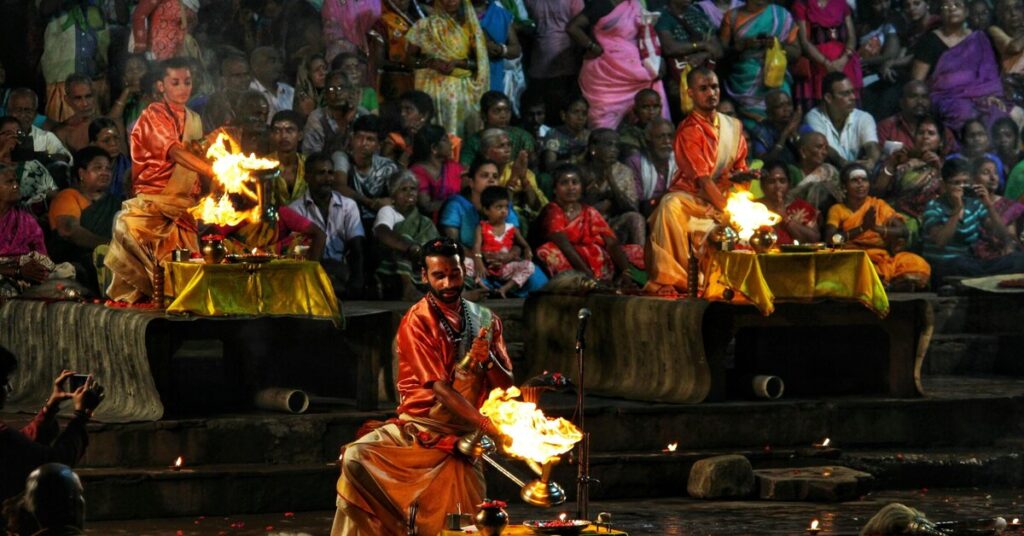
Spending time in Varanasi before visiting Sarnath and Bodh Gaya provides valuable context. Walking the ghats at sunrise, observing cremations at Manikarnika Ghat, and witnessing the evening aarti ceremonies offers insights into the Hindu worldview that Buddhism both emerged from and challenged. The Buddha’s teachings on impermanence, suffering, and non-attachment become more vivid when you’ve witnessed the stark realities of life and death that Varanasi displays so openly.
Preparing for the Buddhist Pilgrimage
Varanasi serves as an excellent starting point or base for your Buddhist pilgrimage. The city offers good transportation connections, abundant accommodation options, and easy access to Sarnath (just 10 kilometers away). Many Buddhist pilgrims arrive in Varanasi, visit Sarnath, then proceed to Bodh Gaya, creating a logical geographical and spiritual progression.
Use your time in Varanasi to prepare mentally and spiritually for the pilgrimage ahead. Visit Buddhist-friendly shops that sell prayer flags, malas (prayer beads), incense, and other items you might want for offerings or practice. Take time for meditation and reflection, perhaps joining a meditation group or visiting one of the city’s quieter temples. The transition from Varanasi’s intense sensory experience to the more contemplative atmosphere of Sarnath and Bodh Gaya creates a powerful journey in itself.
Sarnath – Where the Dharma Wheel Turned
The Significance of Buddha’s First Sermon
Sarnath holds a unique place in Buddhist history as the site where Buddha delivered his first sermon after achieving enlightenment. After his awakening under the Bodhi tree in Bodh Gaya, Buddha walked nearly 250 kilometers to this deer park near Varanasi, seeking the five ascetics who had been his companions during his years of extreme austerities. These five had abandoned him when he gave up extreme asceticism, but Buddha knew they would understand his teachings.
In this deer park, Buddha taught the Four Noble Truths and the Noble Eightfold Path—the foundational doctrines of Buddhism. This discourse, known as the Dhammacakkappavattana Sutta (Setting in Motion the Wheel of Dharma), marked the beginning of Buddha’s teaching career and the formal establishment of the Buddhist Sangha (community). The five ascetics became his first disciples, and from this small beginning, Buddhism began its journey across the world.
Standing in Sarnath, you’re literally at the birthplace of the Buddhist teaching tradition. This realization creates a powerful emotional and spiritual impact for many pilgrims, who describe feeling a tangible connection to those ancient moments when dharma first spread into the world.
The Dhamek Stupa and Archaeological Wonders
The Dhamek Stupa dominates Sarnath’s landscape—a massive cylindrical structure rising 43 meters high and 28 meters in diameter. Built around the 5th century CE (though possibly standing on the site of an earlier structure from Ashoka’s time), this stupa marks the spot where Buddha delivered his first sermon. The intricate geometric and floral patterns carved into its stone surface showcase the artistic sophistication of ancient Indian Buddhist architecture.
Walking around the Dhamek Stupa, practicing circumambulation (walking clockwise around sacred objects as a form of meditation and devotion), you join a tradition that has continued for centuries. The worn stones beneath your feet have been walked by countless pilgrims, each carrying their own aspirations, questions, and devotion. The stupa itself, though essentially solid stone, radiates a presence that many describe as peaceful and centering.
Exploring the Ancient Monastery Ruins
Surrounding the Dhamek Stupa are extensive ruins of ancient monasteries and structures that once made Sarnath a thriving Buddhist center. For centuries, this was a major site of Buddhist learning and practice, housing thousands of monks and attracting scholars from across Asia. The Chinese pilgrims Xuanzang and Faxian both visited Sarnath in the 5th and 7th centuries, leaving detailed descriptions of its glory.
Walking among these ruins—foundation stones, walls, and steps that once supported a vibrant monastic community—evokes a bittersweet sense of Buddhism’s rise and decline in its homeland. These stones witnessed intense philosophical debates, meditation practices, and the daily routines of monastic life. Though the community that created them has long dispersed, something of their spiritual aspiration seems to linger in the quiet spaces between the ruins.
The Ashoka Pillar and Lion Capital
Emperor Ashoka, who embraced Buddhism after the bloody Kalinga War in the 3rd century BCE, erected pillars across his empire to spread Buddhist teachings. The Ashoka Pillar at Sarnath, though now only a stump (it was broken during invasions), was once crowned with the famous Lion Capital—four lions standing back-to-back, representing power and courage in all directions.
This Lion Capital, now India’s national emblem, resides in the Sarnath Museum. Seeing it in person reveals its remarkable artistry and preservation. The lions’ expressions convey both strength and serenity, embodying the Buddhist ideal of power tempered by wisdom and compassion. The Dharma wheel beneath the lions connects directly to Sarnath’s significance as the place where the wheel of teaching was set in motion.
Modern Temples and International Buddhist Presence
Sarnath today hosts numerous temples built by Buddhist communities from different countries, creating a fascinating international Buddhist village. The Mulagandha Kuti Vihar, built in 1931 by the Mahabodhi Society, features beautiful frescoes depicting Buddha’s life painted by a Japanese artist. The temple’s peaceful gardens and the towering Bodhi tree (grown from a sapling from the original tree in Bodh Gaya) create perfect environments for meditation.
The Thai temple, with its characteristic Southeast Asian architecture and golden Buddha image, offers a completely different aesthetic. The Tibetan temple displays colorful thangkas and prayer wheels, while the Japanese temple exemplifies Zen simplicity. Visiting these temples reveals how Buddhism adapted to different cultures while maintaining its core teachings—a lesson in unity within diversity.
Each temple welcomes visitors regardless of nationality or religious background. Many offer meditation sessions, Dharma talks, and opportunities to interact with monks and nuns from different traditions. These interactions enrich your understanding of Buddhism’s global reach and the various ways practitioners interpret and embody the Buddha’s teachings.
The Sarnath Museum’s Treasures
The Sarnath Archaeological Museum houses an incredible collection of Buddhist art and artifacts excavated from the area. Beyond the famous Lion Capital, you’ll find numerous Buddha and Bodhisattva sculptures spanning different periods and styles—from the Gupta period’s sublime artistry to later developments.
The museum’s collection illustrates Buddhism’s evolution through its artistic expressions. Early Buddhist art avoided depicting Buddha directly, using symbols like footprints, Bodhi trees, and Dharma wheels. Later periods developed the iconic Buddha images we recognize today, with various mudras (hand gestures) conveying different teachings and aspects of enlightenment. Studying these artifacts provides art historical context while deepening your appreciation for how Buddhists across centuries sought to make the ineffable tangible.
Bodh Gaya – The Place of Enlightenment
Under the Bodhi Tree: The Center of Buddhist Universe
If Buddhism has a geographic heart, it’s here—under the Bodhi tree in Bodh Gaya, where Prince Siddhartha became Buddha. After years of seeking, trying various teachers and extreme ascetic practices, he sat beneath this tree and vowed not to rise until he had found the answer to suffering. On the full moon night of Vaisakh (April-May), he achieved enlightenment, understanding the nature of suffering, its causes, its cessation, and the path leading to liberation.
The current Bodhi tree is a direct descendant of that original tree. The lineage is remarkably well-documented: Emperor Ashoka’s daughter, the nun Sanghamitta, took a cutting from the original tree to Sri Lanka in the 3rd century BCE. When the original tree in India was destroyed, a sapling from the Sri Lankan tree was brought back and planted here. So in a beautiful circle, the tree under which you sit connects directly to the one under which Buddha sat 2,500 years ago.
Sitting beneath the Bodhi tree’s spreading branches, touching the vajrasana (diamond throne) marking Buddha’s meditation spot, creates an indescribable experience for many pilgrims. Tears flow, insights arise, and a profound sense of connection to something timeless occurs. Even skeptics often report feeling something significant in this place—whether you attribute it to the location’s inherent sanctity, the collective devotion of millions of pilgrims, or simply the power of being at such a historically important site.
The Mahabodhi Temple Complex
Architecture and Sacred Spaces
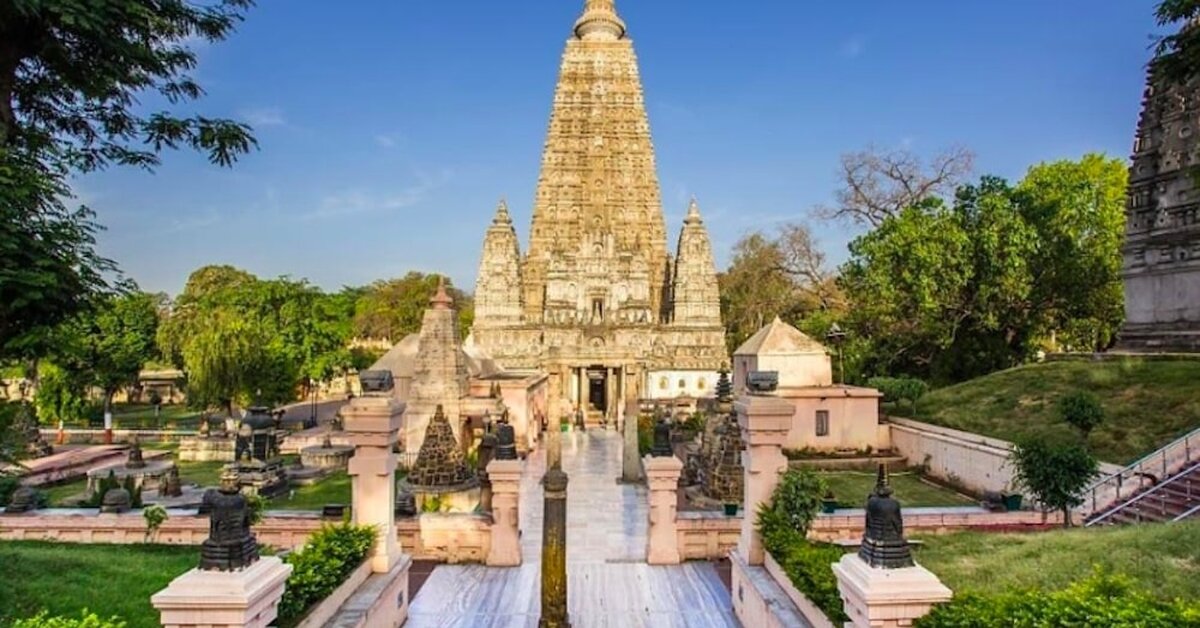
The Mahabodhi Temple, a UNESCO World Heritage site, rises majestically beside the Bodhi tree. Built initially by Emperor Ashoka and renovated multiple times, most recently in the 19th century, the temple exemplifies classic Indian Buddhist architecture with its pyramidal spire reaching 55 meters high. The structure itself becomes a teaching—its upward-reaching form symbolizing the aspirant’s journey toward enlightenment.
The temple’s exterior features numerous Buddha images in small niches, each carved with exquisite detail. Walking around the temple’s exterior (circumambulation is a common practice), you’ll notice devotees touching these images, leaving gold leaf offerings, and prostrating in devotion. The temple complex includes several meditation platforms, smaller shrines marking other spots significant to Buddha’s enlightenment story, and the sacred pool (Lotus Pond) where Buddha bathed after his enlightenment.
Inside the main sanctum, a large gilded Buddha statue in the bhumisparsha mudra (earth-touching gesture) sits facing east—the same direction Buddha faced during his enlightenment. The atmosphere inside is thick with incense smoke, the murmur of prayers, and an almost palpable devotional energy accumulated from countless pilgrims’ offerings and prayers.
Meditation and Circumambulation
Bodh Gaya naturally invites meditation practice. Throughout the day and night, practitioners from around the world sit in meditation around the complex—some on cushions, others on prayer mats, many in full lotus position. The Tibetan tradition encourages full-body prostrations as a practice, and you’ll see devotees performing these with impressive devotion, some completing thousands over the course of their pilgrimage.
The temple complex offers a circumambulation path that pilgrims walk while reciting mantras, telling prayer beads, or simply maintaining mindful awareness. Walking this path, you become part of an endless stream of practitioners who have circumambulated this sacred site for centuries. The repetitive circular movement, combined with the visual focus on the temple and Bodhi tree, creates a naturally meditative state.
Many pilgrims rise before dawn to meditate when the complex is quieter and the energy feels particularly potent. Morning meditation sessions under the Bodhi tree, as the sun rises and birds sing in the branches above, offer some of the most memorable moments of the pilgrimage.
International Monasteries: A Global Buddhist Village
Bodh Gaya has transformed into an international Buddhist village, with monasteries built by Buddhist communities from Thailand, Tibet, Myanmar, Japan, Bhutan, China, Vietnam, Korea, and many other countries. Each monastery reflects its home country’s architectural style and Buddhist tradition, creating a fascinating global spiritual showcase within a small geographic area.
The Tibetan monasteries are particularly impressive, with colorful murals, spinning prayer wheels, and opportunities to observe or participate in Tibetan Buddhist practices. The Thai temple, with its characteristic golden spires, offers another aesthetic entirely. The Japanese temples embody Zen simplicity, while the Bhutanese monastery displays the distinctive architectural style of the Himalayas.
Many monasteries offer free accommodation to pilgrims (donations expected), meditation courses, Dharma talks, and vegetarian meals. Staying in a monastery provides immersive experience into Buddhist monastic life and opportunities to interact with monks and nuns from different traditions. Even if you don’t stay in a monastery, visiting several reveals Buddhism’s remarkable diversity and the various cultural expressions of its core teachings.
The Niranjana River and Sujata Village
The Niranjana River (now often dry or just a trickle) played a crucial role in Buddha’s enlightenment story. After nearly starving himself through extreme asceticism, Siddhartha bathed in this river, accepting that the extreme path wasn’t leading to truth. He then accepted milk-rice from a village woman named Sujata, breaking his fast and abandoning the ascetic approach that had proved fruitless.
Sujata village, a short walk or rickshaw ride from the main temple complex, contains a stupa marking where Sujata lived. Visiting this site reminds pilgrims of Buddhism’s Middle Way teaching—the path between extreme indulgence and extreme asceticism. The simple village setting, in stark contrast to the grand temples, emphasizes Buddhism’s roots in ordinary human experience and Buddha’s insight that enlightenment doesn’t require supernatural conditions but arises from correct understanding and practice.
Practicing Buddhism in Bodh Gaya
Bodh Gaya isn’t just a site to visit; it’s a place to practice. Many pilgrims spend extended time here—days, weeks, or even months—using the sacred atmosphere to deepen their meditation practice and understanding of Dharma. Numerous organizations offer meditation retreats, ranging from introductory weekend programs to intensive 10-day Vipassana courses.
Dharma talks by visiting teachers occur frequently, particularly during the winter pilgrimage season when Tibetan teachers, including occasionally the Dalai Lama, give teachings and empowerments. These events draw thousands of practitioners from around the world, creating extraordinary gatherings of the global Buddhist community.
Even if you’re not doing formal retreat or attending teachings, simply being in Bodh Gaya invites practice. The environment supports meditation, contemplation, and mindfulness in ways that ordinary life rarely does. Many pilgrims report that insights or breakthroughs in their practice occurred here—whether due to the location’s intrinsic qualities, the supportive community, or simply having dedicated time away from normal life responsibilities.
The Buddhist Circuit Beyond
Rajgir: The Mountain of Enlightenment Teachings
If your pilgrimage schedule allows, extending beyond the Varanasi-Sarnath-Bodh Gaya triangle enriches your understanding of Buddha’s teaching years. Rajgir, about 80 kilometers from Bodh Gaya, holds great significance as a place where Buddha spent many rainy seasons teaching. The Gridhakuta (Vulture’s Peak) is where Buddha delivered many important sutras, including the Heart Sutra and parts of the Lotus Sutra.
Climbing the steps to Vulture’s Peak, you follow Buddha’s footsteps to this natural amphitheater where he taught. The views from the summit are spectacular, and the peaceful atmosphere makes it easy to imagine Buddha sitting here, surrounded by disciples, teaching the Dharma. A Japanese-built Peace Pagoda, accessible by ropeway, offers another stunning viewpoint and place for reflection.
Rajgir also features hot springs considered sacred, ruins of ancient monasteries, and several caves where Buddha and his disciples meditated. The town’s more relaxed atmosphere compared to Bodh Gaya’s intensity provides a welcome change of pace.
Nalanda: Ancient University of Buddhist Learning
Nalanda, close to Rajgir, was once the world’s first residential university and a premier center of Buddhist learning. From the 5th to 12th centuries CE, this massive institution housed thousands of students and teachers from across Asia, offering advanced studies in Buddhist philosophy, logic, medicine, mathematics, and astronomy.
The extensive ruins—temple foundations, monastery cells, lecture halls, and the library base—testify to Nalanda’s former grandeur. Walking these ruins, you can almost hear echoes of philosophical debates and scholarly discussions that occurred here. Great Buddhist thinkers like Nagarjuna, Shantideva, and Atisha studied or taught at Nalanda, and its influence shaped Buddhism throughout Asia.
The modern Nalanda Museum houses artifacts from the site, including beautiful Buddha statues and architectural fragments. A new Nalanda University, established nearby, attempts to revive the ancient institution’s legacy as a center for international scholarship and cultural exchange.
Vaishali and Other Sacred Sites
Vaishali, where Buddha delivered his final sermon before passing into Parinirvana, represents another important pilgrimage site. The Ashoka pillar here, crowned with a single lion, remains in remarkable condition. The stupa marking the spot where Buddha’s final sermon occurred and the tank where he received his last offering of water create poignant connections to Buddhism’s final chapter.
Other sites in the extended Buddhist circuit include Kushinagar (where Buddha achieved Parinirvana), Lumbini in Nepal (Buddha’s birthplace), and Kapilavastu (Buddha’s childhood home). Completing the full circuit requires more time—typically two weeks minimum—but offers comprehensive immersion in Buddha’s life journey from birth through enlightenment to his passing.
Planning Your Buddhist Pilgrimage
Suggested Itinerary: 5-7 Days
For the core Varanasi-Sarnath-Bodh Gaya circuit:
Days 1-2: Varanasi and Sarnath
- Day 1: Arrive in Varanasi, orient yourself to the city, visit main ghats, evening Ganga Aarti
- Day 2: Early morning visit to Sarnath (arrive at sunrise for peaceful atmosphere), explore Dhamek Stupa, monastery ruins, visit various international temples, afternoon at Sarnath Museum, return to Varanasi
Days 3-5: Bodh Gaya
- Day 3: Morning travel to Bodh Gaya (250 km, 5-6 hours by car or train to Gaya then taxi), afternoon settle in, evening visit to Mahabodhi Temple
- Day 4: Full day at Mahabodhi Temple complex—early morning meditation under Bodhi tree, circumambulation, explore the complex thoroughly, visit Thai temple and other monasteries
- Day 5: Visit Sujata village and Niranjana River, explore more monasteries (Tibetan, Japanese, Bhutanese), attend evening prayers or teachings if available
Days 6-7: Extension Options
- Day 6: Day trip to Rajgir and Nalanda (early start recommended), return to Bodh Gaya
- Day 7: Final morning at Bodh Gaya for meditation, then departure
This itinerary balances site visits with spiritual practice time. Feel free to adjust based on your interests—some pilgrims prefer spending less time in Varanasi and more in Bodh Gaya for extended meditation practice.
Transportation and Connectivity
Varanasi serves as the logical starting point with its international airport and excellent train connections. From Varanasi to Bodh Gaya, you can travel by car (about 250 kilometers, 5-6 hours), hire a taxi, or take a train to Gaya (the nearest railway station to Bodh Gaya, 13 kilometers away). Many pilgrims prefer hiring a car with driver for flexibility and comfort.
Sarnath sits just 10 kilometers from Varanasi—an easy auto-rickshaw or taxi ride. Many visitors make Varanasi their base and do Sarnath as a day trip, though staying overnight in Sarnath offers a more peaceful experience.
For the extended circuit including Rajgir and Nalanda, having a hired car becomes especially convenient. The distances are manageable but connections via public transport can be complicated and time-consuming.
Best Time for Buddhist Pilgrimage
October through March offers the most pleasant weather. Winter months (November-February) are ideal, with comfortable temperatures for walking and outdoor meditation. This period also coincides with the peak pilgrimage season when many international Buddhist groups visit, creating vibrant community atmosphere and more frequent teachings and ceremonies.
The Buddha Purnima (full moon in May) celebrates Buddha’s birth, enlightenment, and passing—all believed to have occurred on full moon days. Bodh Gaya during Buddha Purnima transforms into a massive celebration with special ceremonies, though crowds are intense and accommodation scarce.
Summer (April-June) brings extreme heat (often exceeding 40°C), making outdoor exploration uncomfortable. Monsoon season (July-September) brings humidity and rain but fewer crowds and lower prices. If you don’t mind the weather, these off-peak times offer more solitude for contemplation.
Accommodation for Pilgrims
Both Sarnath and Bodh Gaya offer diverse accommodation options. Monasteries, particularly Tibetan ones, often provide free or low-cost accommodation for serious Buddhist practitioners (donations expected and appreciated). These offer authentic experiences but come with rules—early wake-up times, participation in prayers, vegetarian food, and no alcohol.
Regular hotels range from budget guesthouses to comfortable mid-range options to a few upscale hotels. Bodh Gaya especially has developed good tourism infrastructure with many hotels catering specifically to international Buddhist pilgrims. Book in advance during peak season (November-February) as accommodation fills quickly.
Varanasi offers the widest range of accommodation. Many Buddhist pilgrims stay near the ghats for the atmospheric experience, though the area can be noisy and crowded. Quieter options exist in the cantonment area with easy access to Sarnath.
Spiritual Practices and Pilgrimage Etiquette
Buddhist pilgrimage differs from tourism in its intentionality and practice. Consider incorporating these practices:
Mindful Walking: Whether circumambulating stupas or walking between sites, maintain awareness of each step, treating the walking itself as meditation rather than just transportation.
Offerings: Bring incense, flowers, candles, or make monetary donations at temples. These offerings express respect and support the sites’ maintenance.
Prostrations: In Tibetan tradition, full-body prostrations accumulate merit and express devotion. If physically able and comfortable, consider incorporating prostrations at key sites.
Meditation: Take time at each significant site for seated meditation. The locations’ spiritual atmosphere supports deeper practice than you might experience at home.
Chanting: Learn key Buddhist texts like the Heart Sutra or refuge prayers. Chanting at sacred sites connects you to centuries of practitioners who chanted the same words in the same places.
Respectful Dress and Behavior: Dress modestly at temples, remove shoes where indicated, walk clockwise around sacred objects, avoid loud conversation, and turn off phone ringers in temples and meditation areas.
Photography: While photography is generally allowed, be sensitive about photographing people at prayer or meditation. Ask permission when appropriate, and remember that experiencing the moment directly often matters more than capturing it digitally.
Conclusion
The Buddhist pilgrimage through Varanasi, Sarnath, and Bodh Gaya offers far more than historical tourism. It’s a journey through the geography of awakening—from the deer park where teaching began to the tree under which wisdom flowered. For Buddhist practitioners, walking these grounds creates tangible connections to the Buddha and the living tradition he established. For others, the pilgrimage offers insights into one of humanity’s great spiritual traditions and the universal human search for freedom from suffering.
What makes this pilgrimage truly special is how the ancient sites coexist with living Buddhist practice. These aren’t dead monuments preserved behind glass but active spiritual centers where monks chant, pilgrims meditate, and the Dharma continues to be studied, practiced, and transmitted. You don’t just observe Buddhism here; you witness it alive and flourishing, adapting to modern times while maintaining connections to its ancient roots.
Whether you complete the journey in a focused week or extend it to explore the broader Buddhist circuit, the pilgrimage offers opportunities for transformation. Many pilgrims report that something shifts during this journey—perspectives clarify, commitment deepens, or simply a sense of peace arises that continues long after returning home. In the Buddha’s words, the path must be walked by each person individually. These sacred sites simply provide especially supportive environments for taking those steps.
FAQs
1. Do I need to be Buddhist to visit these sacred sites?
Not at all! These sites welcome visitors of all faiths and backgrounds. Buddhist sacred sites are generally more open and welcoming than some other religious sites—there’s rarely any restriction based on religion. Whether you’re Buddhist, curious about Buddhism, interested in history and archaeology, or simply traveling in the region, you’ll be welcomed. That said, approaching with respect and genuine interest enhances your experience. Many non-Buddhists report finding these sites profoundly moving and gaining valuable insights into Buddhist philosophy and practice, regardless of their own religious affiliations.
2. What should I bring for a Buddhist pilgrimage?
Essentials include comfortable walking shoes (you’ll remove them frequently at temples), modest clothing covering shoulders and knees, a meditation cushion or mat if you’re particular about what you sit on, sunscreen and hat for outdoor sites, water bottle, and any medications you need. For spiritual practice, consider bringing a mala (prayer beads), prayer flags or khatas (white scarves) for offerings, incense, and candles. A journal for recording insights and experiences can be valuable. If you plan to stay in monasteries, bring earplugs (early morning prayers start very early) and a sleeping bag or lightweight blanket as accommodation can be basic. A headlamp or small flashlight helps in places with limited electricity.
3. How physically demanding is this pilgrimage?
The core circuit is moderately easy. Sites involve walking on relatively flat ground, though some areas have uneven surfaces or steps. Bodh Gaya requires minimal physical effort—the Mahabodhi Temple complex is compact and flat. Sarnath similarly involves modest walking. Extensions like Vulture’s Peak in Rajgir require climbing significant steps (though a ropeway offers an alternative). Most people with average fitness manage fine, but those with mobility issues should research specific sites’ accessibility. The climate (heat in summer, cold in winter) poses more challenge than the physical demands. Pace yourself, stay hydrated, and take breaks as needed.
4. Can I participate in meditation or teachings without prior Buddhist training?
Absolutely! Many monasteries and centers offer beginner-friendly meditation instruction and Dharma talks in English and other languages. Bodh Gaya especially has numerous opportunities for newcomers to learn meditation techniques and basic Buddhist philosophy. Vipassana centers offer structured 10-day courses for beginners (though these require commitment and following strict rules). For less formal instruction, simply approach monks or nuns at monasteries—most are happy to offer basic guidance to sincere seekers. The environment naturally encourages practice, and you’ll learn much simply by observing experienced practitioners and participating in group activities like circumambulation or prayer sessions.
5. What’s the best way to respect local customs and Buddhist etiquette?
Key points include: dress modestly (shoulders and knees covered at temples), remove shoes before entering temples, walk clockwise around stupas and sacred objects, avoid pointing feet toward Buddha images or monks, don’t touch monks (especially important for women), refrain from loud talking or disruptive behavior in sacred spaces, ask permission before photographing people at prayer, avoid public displays of affection, and be mindful that some areas prohibit photography entirely. When making offerings, use your right hand or both hands (left hand alone is considered impolite). If uncertain about protocol, observe others or politely ask—people are generally understanding of sincere visitors learning appropriate behavior.