

Ayodhya Guptar Ghat , Have you ever wondered where divinity meets mortality? Where ancient legends breathe through the very stones beneath your feet? Welcome to Guptar Ghat, one of Ayodhya’s most mystical and revered locations. Nestled along the serene banks of the River Sarayu, this sacred ghat holds a secret that has captivated millions of devotees for thousands of years—it’s believed to be the exact spot where Lord Ram, the seventh avatar of Lord Vishnu, took his final exit from the earthly realm.
Guptar Ghat isn’t just another pilgrimage site; it’s where mythology transforms into tangible reality. For devotees of Lord Ram, visiting this ghat is like touching the very essence of their faith. The air here seems different, charged with an inexplicable spiritual energy that makes even skeptics pause and reflect. But what makes this place so special? Let’s dive deep into the sacred waters of history, mythology, and spirituality that surround Guptar Ghat.
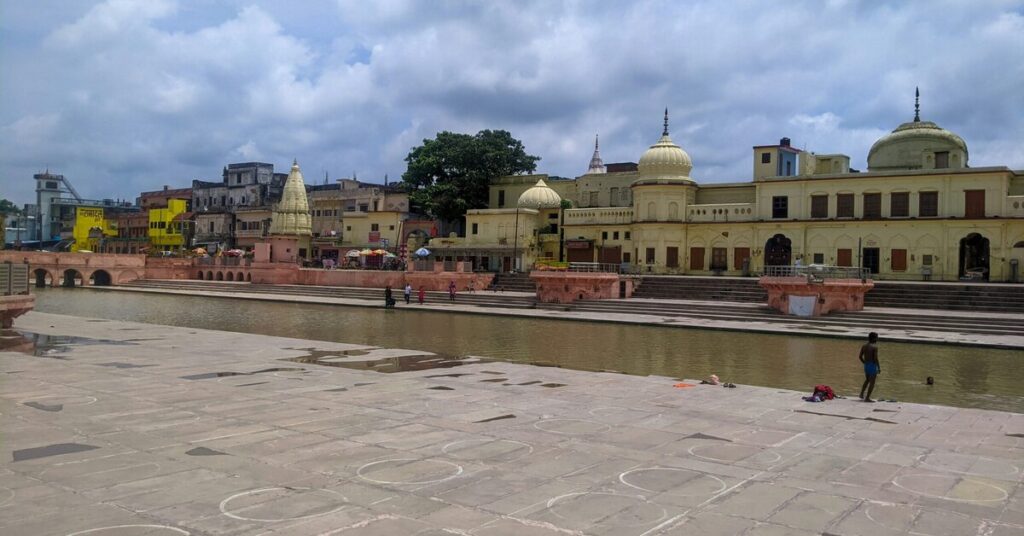
The Legendary Tale of Lord Ram’s Disappearance
The story of Lord Ram’s disappearance is both poignant and profound. According to Hindu scriptures, after ruling Ayodhya for thousands of years and establishing the ideal kingdom of Ram Rajya, Lord Ram decided it was time to return to his divine abode. The circumstances leading to this decision are fascinating and deeply philosophical.
Legend has it that when Lord Ram’s ring accidentally fell and rolled into a crack in the palace floor, he sent his devoted servant Hanuman to retrieve it. What Hanuman discovered in the underworld was mind-boggling—millions upon millions of identical rings! The serpent king Vasuki then revealed a cosmic truth: whenever Ram incarnates on Earth, this same incident occurs, marking the end of that particular incarnation. This revelation made Ram realize that his earthly duties were complete.
Following this divine sign, Lord Ram walked to the banks of River Sarayu with his brothers and devoted followers. Here at Guptar Ghat, he took “Jal Samadhi”—a mystical departure where he walked into the river waters and merged with the cosmic consciousness. Unlike ordinary death, this was a conscious, voluntary exit from the physical plane. His body didn’t die; it simply dissolved into divine light, returning to its source.
The word “Guptar” itself means “secret” or “hidden” in Sanskrit, referring to this mysterious and sacred event. The ghat received this name because the divine departure happened away from public view, witnessed only by his closest family and devotees. It was a moment so sacred, so profound, that it needed to remain somewhat veiled in mystery.
Historical and Religious Significance
Guptar Ghat’s importance in Hindu religious tradition cannot be overstated. Ancient texts dating back thousands of years mention this sacred spot with reverence and awe. The Skanda Purana, one of the major eighteen Mahapuranas, specifically references this location as the site of Lord Ram’s final earthly moments.
What makes Guptar Ghat historically significant is its continuous worship tradition. Unlike many ancient sites that fell into obscurity over centuries, this ghat has maintained an unbroken lineage of devotion. Generation after generation of priests, pilgrims, and devotees have kept the flame of faith burning bright here. Archaeological evidence suggests that religious activities at this site have continued for at least two millennia, making it one of the oldest continuously worshipped spots in India.
The ghat serves as a powerful reminder of the Hindu concept of life, death, and rebirth. It teaches that endings are not final—they’re merely transitions to new beginnings. Lord Ram’s disappearance wasn’t a death in the conventional sense; it was a transformation, a return to the divine source from which he came. This philosophical depth makes Guptar Ghat not just a historical monument but a living classroom of spiritual wisdom.
For devotees, taking a dip in the Sarayu waters at Guptar Ghat is believed to wash away sins and grant moksha (liberation). The belief is that since Lord Ram himself sanctified these waters with his divine presence, they possess extraordinary purifying powers. Many elderly Hindus express their wish to breathe their last near this ghat, hoping to achieve the same divine merger that Lord Ram experienced.
Architectural Features of Guptar Ghat
The Main Temple Complex
The temple complex at Guptar Ghat is a beautiful blend of ancient spirituality and architectural elegance. The main temple houses several deities, with Lord Ram naturally taking center stage. The sanctum sanctorum features exquisite idols of Ram, Sita, Lakshman, and Hanuman, crafted with devotional precision. The temple’s architecture reflects traditional North Indian temple design, with intricate carvings depicting scenes from the Ramayana adorning the walls and pillars.
What strikes visitors immediately is the peaceful atmosphere within the temple premises. Despite being a popular pilgrimage site, there’s a meditative quality to the space that invites introspection. The temple courtyard often resonates with the chanting of “Jai Shri Ram” and the ringing of bells, creating a symphony of devotion that touches the soul.
Sacred Structures and Shrines
Beyond the main temple, Guptar Ghat houses several smaller shrines dedicated to various deities associated with Lord Ram’s life. There’s a shrine for Hanuman, Ram’s most devoted follower, positioned so that he eternally gazes toward his beloved Lord. Another shrine commemorates Chakravarti Samrat Raja Ram, celebrating his role as the ideal king.
One particularly interesting structure is the memorial marking the exact spot where Lord Ram is believed to have entered the river. This sacred platform is always adorned with fresh flowers and continuously receives offerings from devotees. The architectural design ensures that pilgrims can approach this spot respectfully while maintaining the site’s sanctity.
The Holy Steps Leading to River Sarayu
The stone steps (ghats) leading down to River Sarayu are perhaps the most photographed feature of this sacred site. These steps, worn smooth by countless feet over centuries, seem to carry the weight of history in every groove and indentation. During festivals and auspicious occasions, these steps become a cascade of humanity as thousands descend to take holy dips.
The ghats are designed with practical devotion in mind—wide enough to accommodate large crowds yet intimate enough to maintain the personal spiritual experience. Early morning at these steps is magical, with the rising sun casting golden reflections on the water while priests perform elaborate aarti ceremonies, their lamps creating dancing lights that seem to communicate with the river itself.
Spiritual Practices at Guptar Ghat
Rituals Performed by Devotees
The spiritual practices at Guptar Ghat are as diverse as the devotees who perform them. Many pilgrims begin their visit with a holy bath in the Sarayu, believing that the river’s waters carry Lord Ram’s divine blessings. After bathing, devotees typically perform puja (worship) at the main temple, offering flowers, incense, and prayers.
A particularly moving ritual is the “tarpan” ceremony, where devotees offer water and prayers for their deceased ancestors. The belief is that performing tarpan at Guptar Ghat ensures peace for departed souls and helps them on their spiritual journey. The sight of elderly devotees standing waist-deep in the river, hands folded in prayer, eyes closed in devotion, is profoundly touching.
The Significance of Taking a Dip
Why is bathing at Guptar Ghat considered so spiritually significant? The answer lies in the concept of “tirtha”—a sacred ford or crossing place where the material and spiritual worlds intersect. Guptar Ghat is considered one of the most powerful tirthas because Lord Ram himself sanctified it through his divine presence.
Taking a dip here isn’t just about physical cleansing; it’s a symbolic act of spiritual purification. Devotees believe that the Sarayu waters at this spot can wash away not just the sins of this lifetime but karmic debts accumulated over many lifetimes. The act of immersion represents a willingness to let go of ego, attachment, and worldly concerns, emerging renewed and spiritually refreshed.
Special Ceremonies and Festivals
Guptar Ghat truly comes alive during special occasions and festivals. Ram Navami, celebrating Lord Ram’s birth, transforms the ghat into a spectacular display of devotion. Thousands of devotees gather, the air fills with bhajans (devotional songs), and elaborate ceremonies continue throughout the day and night.
Another significant observance is Kartik Purnima, the full moon day in the month of Kartik (October-November). On this day, devotees perform “deepdan”—offering floating lamps on the river. As darkness falls, thousands of small oil lamps float on the Sarayu, creating a breathtaking river of lights. It’s as if the stars have descended to pay homage to the spot where divinity touched Earth.
Connection to River Sarayu
River Sarayu holds immense mythological importance in Hindu tradition. This isn’t just any river; it’s considered one of the seven sacred rivers of India, mentioned extensively in ancient texts. The Sarayu has witnessed the entire saga of the Ramayana—from Ram’s childhood games on its banks to his final departure.
Why did Lord Ram choose this particular spot for his divine exit? The answer lies in the river’s spiritual significance and its connection to Ayodhya. The Sarayu has always been considered the lifeline of Ayodhya, both literally and metaphorically. Just as it nourished the city with water, it also nourished its spiritual consciousness. For Lord Ram to merge with the Sarayu at Guptar Ghat was symbolic—he was returning to the source, completing the circle of his earthly incarnation at the very river that had witnessed his entire journey.
The river at this point is particularly calm and serene, creating perfect conditions for meditation and spiritual contemplation. Many saints and sages over the centuries have chosen to meditate on these banks, drawn by the powerful spiritual vibrations that permeate the atmosphere.
Guptar Ghat in Hindu Scriptures
References in Valmiki Ramayana
While the Valmiki Ramayana doesn’t explicitly name “Guptar Ghat,” it describes Lord Ram’s final moments with poetic beauty. The epic narrates how Ram, accompanied by his brothers and devoted subjects, walked toward the Sarayu for his heavenly ascent. The description of this event matches the location and circumstances associated with Guptar Ghat, establishing the scriptural foundation for this site’s sanctity.
The Uttara Kanda (the final book of Ramayana) describes how celestial beings descended to welcome Ram back to the divine realm. This supernatural occurrence, witnessed by those present on the riverbank, transformed an ordinary geographical location into a sacred space that has been revered for millennia.
Mentions in Puranic Literature
The Puranas, encyclopedic texts of Hindu mythology and tradition, provide more detailed references to Guptar Ghat. The Skanda Purana explicitly mentions this tirtha and prescribes specific rituals to be performed here. According to these texts, even a brief visit to Guptar Ghat and a sincere prayer can yield spiritual benefits equivalent to performing elaborate yajnas (fire sacrifices).
The Brahmanda Purana narrates that the gods themselves visit this spot in disguise to pay homage to Lord Ram’s memory. Such scriptural endorsements have solidified Guptar Ghat’s position in the Hindu pilgrimage hierarchy, making it an essential stop for anyone seeking to trace Lord Ram’s footsteps.
The Cultural Impact on Ayodhya
Guptar Ghat isn’t just a religious site; it’s a cultural cornerstone that has shaped Ayodhya’s identity over millennia. The ghat influences local customs, festivals, and even the daily rhythm of life in this ancient city. Generations of Ayodhya residents have grown up with stories of Guptar Ghat, absorbing its spiritual significance through family traditions and community celebrations.
Local artisans have created countless paintings, sculptures, and crafts depicting the scene of Lord Ram’s departure from Guptar Ghat. These artistic expressions have spread Ayodhya’s cultural influence far beyond its geographical boundaries. Folk songs and devotional music about Guptar Ghat form an essential part of the region’s cultural heritage, passed down through generations.
The ghat also plays a crucial role in Ayodhya’s pilgrimage circuit. Most pilgrims visiting Ayodhya include Guptar Ghat in their itinerary, often concluding their visit here as it represents the culmination of Lord Ram’s earthly journey. This consistent pilgrim traffic has sustained local economies for centuries, with priests, boatmen, flower sellers, and various service providers depending on the ghat for their livelihood.
Visiting Guptar Ghat: A Pilgrim’s Guide
Best Time to Visit
Timing can significantly enhance your Guptar Ghat experience. The best months are October through March when the weather is pleasant and conducive to outdoor spiritual activities. The scorching summer months (April-June) can make the experience physically challenging, though deeply devoted pilgrims visit year-round.
Early morning visits are particularly magical. Arriving at sunrise allows you to witness the ghat awakening—priests performing morning aarti, the river mist slowly clearing, and the first rays of sun illuminating the temple spires. This time offers a more peaceful, meditative experience compared to the afternoon crowds.
Special occasions like Ram Navami, Diwali, and Kartik Purnima transform Guptar Ghat into a spectacular celebration of faith. However, be prepared for large crowds during these festivals. If you prefer solitude for spiritual contemplation, avoid these peak periods.
How to Reach Guptar Ghat
Guptar Ghat is easily accessible from various parts of Ayodhya. If you’re staying in the main city area, it’s approximately 3-4 kilometers from the Ram Janmabhoomi temple complex. Auto-rickshaws and cycle-rickshaws are readily available and provide an authentic local travel experience.
For those arriving from outside Ayodhya, the nearest airport is in Lucknow (approximately 140 kilometers away). From Lucknow, you can hire a taxi or take a bus to Ayodhya. The recently improved road infrastructure has made the journey comfortable and relatively quick.
Ayodhya Junction railway station is well-connected to major Indian cities. From the station, Guptar Ghat is about 20 minutes away by auto-rickshaw. Many pilgrims prefer walking from central Ayodhya to Guptar Ghat, treating the journey itself as a spiritual exercise and an opportunity to absorb the city’s sacred atmosphere.
Nearby Attractions
Your visit to Guptar Ghat can be combined with several other significant sites in Ayodhya. The Ram Janmabhoomi temple, marking Lord Ram’s birthplace, is an essential stop. Hanuman Garhi, a fortress-temple dedicated to Hanuman, offers panoramic views of Ayodhya and the Sarayu.
Kanak Bhawan, gifted to Sita by Ram’s stepmother Kaikeyi, houses beautiful idols of Ram and Sita wearing golden crowns (hence the name “Kanak” meaning gold). The Nageshwarnath Temple, believed to have been established by Kush (Ram’s son), is another important pilgrimage point.
Don’t miss the opportunity to take a boat ride on the Sarayu. These rides offer a unique perspective of Ayodhya’s ghats and temples while providing a peaceful break from walking. Many boatmen are knowledgeable about local history and mythology, making the ride both relaxing and educational.
Conservation and Maintenance Efforts
Preserving Guptar Ghat’s sanctity while accommodating increasing pilgrim numbers is an ongoing challenge. The Uttar Pradesh government, in collaboration with the Archaeological Survey of India, has undertaken several initiatives to maintain and restore the ghat’s structures. Recent projects have focused on strengthening the river embankment, renovating the stone steps, and improving facilities for devotees.
The cleaning and maintenance of the Sarayu riverbed is another priority. Regular dredging operations ensure that the river maintains adequate depth for ritual bathing. Environmental awareness campaigns encourage pilgrims to avoid polluting the sacred waters, emphasizing that maintaining the river’s purity is itself an act of devotion.
Community involvement has been crucial in preservation efforts. Local temple committees, comprising respected citizens and religious leaders, actively participate in the ghat’s upkeep. Volunteer groups organize regular cleaning drives, especially after major festivals when pilgrim numbers swell dramatically.
Modern amenities like clean toilets, drinking water facilities, and changing rooms have been added without compromising the site’s traditional character. The challenge lies in balancing development with preservation—making the ghat accessible and comfortable for visitors while maintaining its ancient spiritual ambiance.
Personal Experiences: Stories from Devotees
What makes Guptar Ghat truly special are the countless personal stories of spiritual transformation associated with it. Devotees from across the world have reported profound experiences here—moments of clarity, emotional healing, and spiritual awakening that have changed their lives.
One elderly pilgrim from South India shared how visiting Guptar Ghat fulfilled his life’s biggest dream. He had read about this sacred spot in his childhood and spent decades saving for this pilgrimage. When he finally stood on the ghat’s steps, tears streaming down his face, he felt an overwhelming sense of completion, as if his soul had found its way home.
A young professional from Mumbai described her experience as “stepping into a different dimension.” Despite being skeptical about religious sites, she felt an inexplicable peace at Guptar Ghat that stayed with her long after she returned to her hectic city life. She now visits annually, treating it as a spiritual reset button.
Many devotees report experiencing visions or dreams after visiting Guptar Ghat. While skeptics might dismiss these as products of emotional intensity, for the believers, they represent genuine divine communication. These personal testimonies, passed through families and communities, continue to draw new pilgrims to this sacred spot.
The Symbolism Behind the Name “Guptar”
The name “Guptar” carries deep symbolic meaning. “Gupt” or “Guptar” in Sanskrit means “secret,” “hidden,” or “concealed.” This name encapsulates several layers of significance related to Lord Ram’s disappearance.
First, it refers to the hidden, mystical nature of Ram’s departure. Unlike ordinary deaths that are visible and physical, Ram’s exit was a divine mystery—his body didn’t remain; it merged with cosmic consciousness. This transformation happened away from public spectacle, witnessed only by his immediate family and devoted followers. The “secret” wasn’t about hiding information but about the sacred, ineffable nature of the event itself.
Second, “Guptar” symbolizes the hidden wisdom embedded in this event. Lord Ram’s voluntary departure teaches profound truths about dharma, duty, and the nature of existence. These lessons aren’t always obvious; they require contemplation and spiritual maturity to understand. The ghat’s name reminds us that the deepest spiritual truths are often hidden beneath the surface, waiting for sincere seekers to discover them.
Third, the name suggests that divine presence is sometimes hidden in plain sight. Guptar Ghat looks like any other riverbank, yet it pulses with sacred energy. Similarly, the divine exists everywhere, often unrecognized by those who aren’t spiritually attuned. The ghat teaches us to look beyond the physical and perceive the sacred dimensions that surround us.
Modern-Day Relevance
In today’s fast-paced, technology-driven world, Guptar Ghat’s relevance might seem questionable to some. Yet, the steadily increasing number of visitors—both pilgrims and tourists—suggests otherwise. In fact, the ghat’s importance seems to be growing in contemporary times.
Modern life’s stresses and complexities make sacred spaces like Guptar Ghat more valuable than ever. People seek respite from digital overload, finding in this ancient ghat a rare opportunity to disconnect from devices and reconnect with something timeless and profound. The simple act of sitting on the steps, watching the river flow, offers therapeutic benefits that no app or wellness program can replicate.
Young Indians, even those raised in urban environments far from traditional religious practices, are increasingly drawn to heritage sites like Guptar Ghat. They’re searching for roots, for connection to their cultural identity, and for spiritual frameworks that give meaning to their lives. Guptar Ghat provides all of this in an authentic, accessible form.
The ghat has also gained popularity among international spiritual seekers. Yoga practitioners, meditation enthusiasts, and students of Eastern philosophy visit Ayodhya specifically to experience Guptar Ghat’s energy. Social media has played a role here—beautiful photographs of the ghat, especially during evening aarti, have captured global imagination, introducing this sacred spot to audiences who might never have heard of it otherwise.
Conclusion
Guptar Ghat stands as a luminous bridge between mythology and reality, between the ancient past and the living present. This sacred spot on the Sarayu’s banks isn’t merely a geographical location marked on maps—it’s a spiritual coordinate in the journey of countless souls seeking connection with the divine.
The story of Lord Ram’s disappearance from this very ghat teaches us profound lessons about life, duty, and the ultimate return to our source. Every stone step, every ripple in the river, every whispered prayer at this site echoes with the magnificent truth that divinity once walked here, loved here, ruled here, and finally dissolved back into cosmic consciousness from here.
Whether you’re a devoted pilgrim or a curious traveler, Guptar Ghat offers something unique—a chance to stand where legend became reality, to touch waters sanctified by divine presence, and to experience the peculiar peace that only sacred spaces can provide. In our modern world of constant noise and distraction, Guptar Ghat remains an oasis of stillness, a reminder that some mysteries are meant to be felt rather than understood, experienced rather than explained.
As the Sarayu continues its eternal flow past this sacred ghat, it carries with it not just water but centuries of devotion, millions of prayers, and the unchanging promise that the divine, though sometimes hidden (gupt), is always present for those who seek with sincere hearts.
FAQs
1. What is the best time of day to visit Guptar Ghat?
Early morning, preferably around sunrise (between 5:30 AM to 7:00 AM), is ideal for visiting Guptar Ghat. At this time, you’ll experience the beautiful morning aarti ceremony, witness the ghat awakening to a new day, and enjoy a more peaceful atmosphere with fewer crowds. The morning light reflecting off the Sarayu creates a magical ambiance perfect for meditation and spiritual contemplation.
2. Is there an entry fee to visit Guptar Ghat?
No, there is no entry fee to visit Guptar Ghat or to take a holy dip in the River Sarayu. However, if you wish to perform special pujas or rituals, you may need to pay the priests for their services. These charges vary depending on the type and complexity of the ceremony. It’s advisable to agree on prices beforehand to avoid any misunderstandings.
3. Can non-Hindus visit Guptar Ghat?
Absolutely! Guptar Ghat welcomes visitors of all faiths and backgrounds. While it is a sacred Hindu site, the spiritual atmosphere is inclusive and peaceful. Non-Hindu visitors should dress modestly and be respectful of religious ceremonies and practices taking place. Many international tourists visit Ayodhya and Guptar Ghat to understand Hindu culture and spirituality better.
4. What is the significance of bathing in the Sarayu at Guptar Ghat?
Bathing in the Sarayu at Guptar Ghat is considered highly auspicious because this is where Lord Ram took his final departure from the earthly realm. Devotees believe that the waters here have been permanently sanctified by Ram’s divine presence and possess extraordinary purifying powers. Taking a dip is thought to wash away sins, grant spiritual merit, and bring one closer to moksha (liberation). The ritual bath is both a physical cleansing and a symbolic act of spiritual renewal.
5. Are there accommodation facilities near Guptar Ghat?
While Guptar Ghat itself doesn’t have accommodation facilities right on its premises, Ayodhya offers numerous options ranging from budget dharamshalas (pilgrim rest houses) to comfortable hotels. Most accommodations are located in the main city area, within 3-5 kilometers of Guptar Ghat. During major festivals, it’s advisable to book accommodations well in advance as the city experiences a significant influx of pilgrims. Many temple trusts also operate free or low-cost dharamshalas for pilgrims who cannot afford commercial accommodations.