
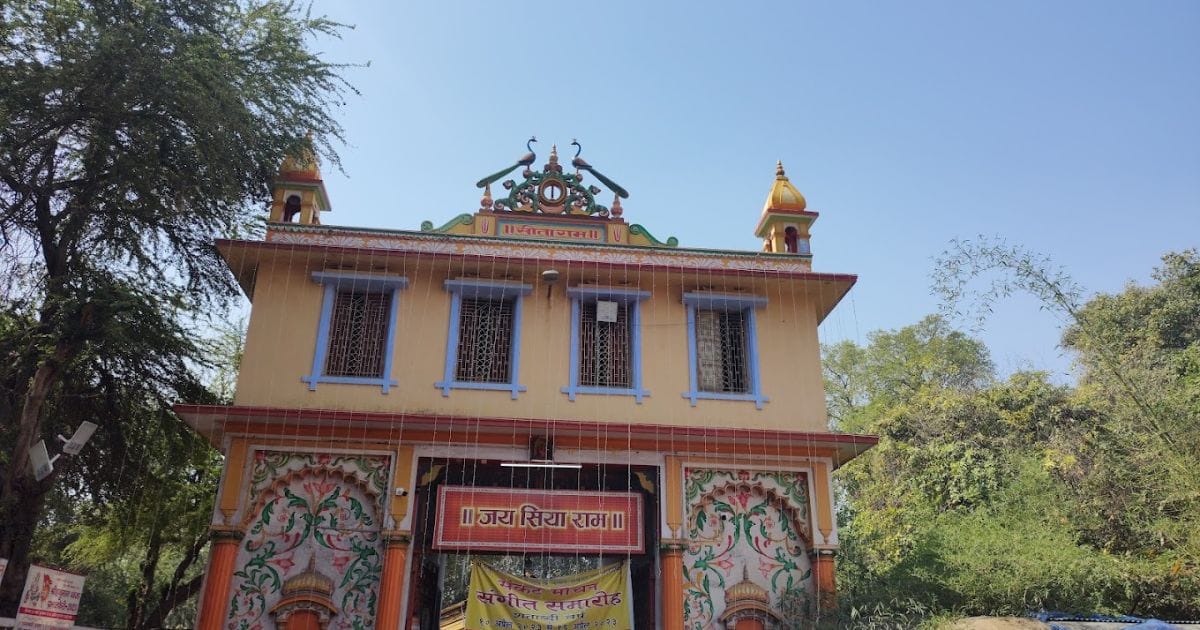
Ayodhya Hanuman Garhi , Have you ever felt the pull of divine energy calling you to a sacred place? Hanuman Garhi in Ayodhya is one such magnetic destination that draws millions of devotees every year. Perched atop a hill in the holy city of Ayodhya, this ancient temple stands as a testament to unwavering faith and devotion to Lord Hanuman, the mighty monkey god revered for his strength, courage, and boundless loyalty to Lord Rama.
Hanuman Garhi isn’t just another temple—it’s a spiritual fortress that has witnessed centuries of devotion, countless prayers, and miraculous experiences. The very air around this sacred site seems to vibrate with divine energy, making it one of the most important pilgrimage destinations in northern India. Whether you’re a devout Hindu seeking blessings or a curious traveler exploring India’s spiritual heritage, Hanuman Garhi offers an experience that transcends the ordinary.
The Historical Background of Hanuman Garhi
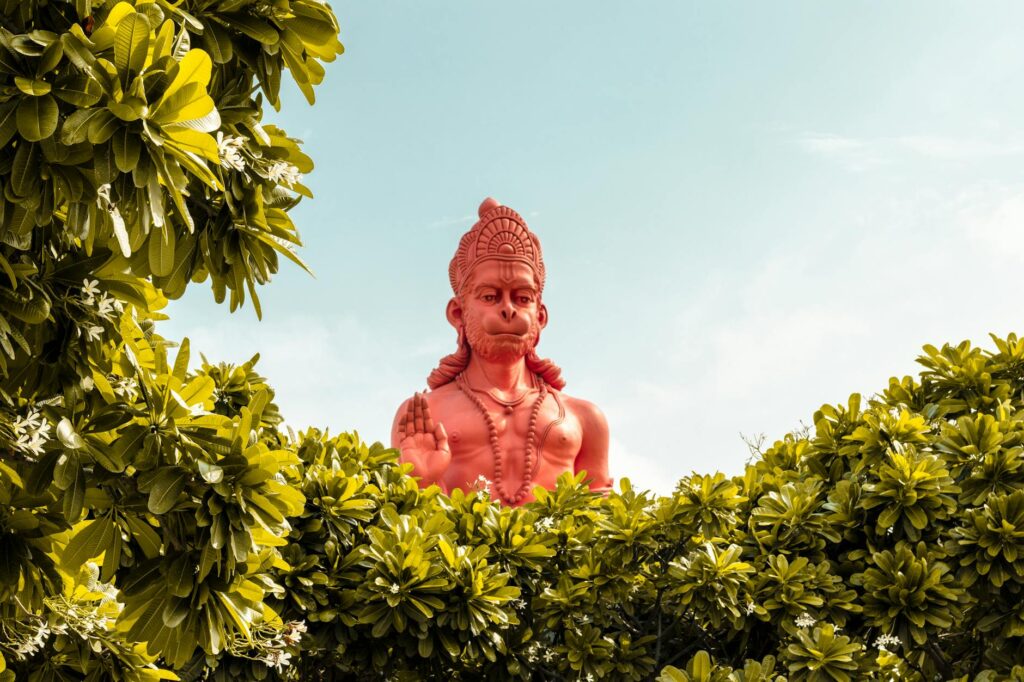
The history of Hanuman Garhi stretches back into the mists of time, intertwining mythology with documented historical records. According to popular belief, this temple marks the spot where Lord Hanuman resided in a cave, keeping eternal vigil over Lord Rama’s birthplace. The name “Garhi” itself means fortress, reflecting the temple’s protective role and its fortress-like architectural design.
Historical records suggest that the current structure was built in the 10th century, though the site itself has been a place of worship for much longer. The temple was renovated and strengthened during the reign of Nawab of Awadh in the 18th century, and the Baba Neem Karoli has been credited with significant contributions to its present form. Over the centuries, various rulers and devotees have contributed to its maintenance and expansion, each adding their own chapter to this sacred site’s rich tapestry.
The temple has survived invasions, political upheavals, and the test of time, standing firm as a beacon of faith. Local legends speak of miraculous protections during times of conflict, with devotees attributing the temple’s preservation to Lord Hanuman’s divine intervention. This historical resilience has only deepened the reverence that pilgrims feel when they climb its sacred steps.
Architectural Splendor of Hanuman Garhi
The Fortress-Like Structure
The architecture of Hanuman Garhi immediately captures your attention with its imposing fortress-like appearance. Built in a distinctive style that combines religious sanctity with military architecture, the temple complex sits atop a hill, accessible only through a steep climb. The outer walls are thick and sturdy, reminiscent of medieval fortifications, symbolizing Lord Hanuman’s role as the eternal guardian.
The structure showcases elements of traditional Hindu temple architecture blended with practical defensive features. Red and white colors dominate the exterior, creating a striking visual against the Ayodhya skyline. As you approach, you can’t help but feel you’re entering not just a temple, but a sacred citadel where the divine warrior himself stands guard.
The 76 Steps Leading to Devotion
Perhaps the most iconic feature of Hanuman Garhi is the 76-step climb that devotees must undertake to reach the main temple. These aren’t just ordinary steps—they’re a symbolic journey, a physical manifestation of spiritual ascent. Each step represents a challenge overcome, a prayer offered, and a commitment to faith.
The climb might seem daunting, especially during the hot summer months, but devotees embrace it as part of their spiritual practice. Many pilgrims chant “Jai Shri Ram” or “Jai Bajrang Bali” with each step, transforming the physical effort into a moving meditation. The steps are worn smooth by millions of feet over centuries, each mark a testament to enduring devotion.
The Main Sanctum and Deity
Once you reach the top, you enter the main sanctum, where the deity of Lord Hanuman awaits. The idol depicts Hanuman in his maternal form—unique to this temple—with baby Rama on his lap. This unusual representation showcases Hanuman’s nurturing devotion and his role as protector of the infant Lord Rama.
The sanctum’s interior is adorned with intricate carvings, religious paintings, and offerings from devotees. The atmosphere is thick with the fragrance of incense, flowers, and the energy of countless prayers. The walls are decorated with scenes from the Ramayana, bringing the epic tale to life around you. Silver-plated doors add to the sanctum’s grandeur, while the constant sound of bells and devotional songs creates an immersive spiritual environment.
Religious Significance and Mythology
Lord Hanuman’s Connection to Ayodhya
Why is Hanuman Garhi in Ayodhya so significant? The answer lies in the deep connection between Lord Hanuman and this ancient city. Ayodhya is the birthplace of Lord Rama, and Hanuman’s entire life was dedicated to serving Rama with absolute devotion. According to Hindu scriptures, after Rama’s coronation and eventual departure from the mortal world, Hanuman chose to remain in Ayodhya, watching over the sacred city and Rama’s birthplace.
This eternal vigil is what Hanuman Garhi commemorates. The temple represents Hanuman’s undying loyalty—a devotion so pure that it transcends time itself. For devotees, visiting Hanuman Garhi means connecting with this timeless bond between master and servant, between the divine and the devoted.
The Guardian of Lord Rama’s Birthplace
Legend has it that Lord Hanuman continues to guard Ram Janmabhoomi (Lord Rama’s birthplace) from his vantage point at Hanuman Garhi. Local tradition holds that before visiting Ram Janmabhoomi, devotees should first seek blessings at Hanuman Garhi—after all, you should greet the gatekeeper before entering the palace.
This guardian role isn’t merely symbolic. Many devotees report feeling a protective presence at the temple, a sense of safety and divine watchfulness. The positioning of the temple on a hill overlooking Ayodhya reinforces this guardian imagery, with Hanuman literally standing watch over the entire city.
Stories and Legends Associated with the Temple
Countless stories surround Hanuman Garhi, passed down through generations of devotees and priests. One popular legend tells of how Hanuman appeared in the dream of a local saint, guiding him to the cave where the temple now stands. Another tale speaks of miraculous healings—devotees with incurable ailments finding relief after sincere prayers at the temple.
There are stories of devotees whose wishes were fulfilled in unexpected ways, of divine interventions during personal crises, and of the powerful energy that many visitors report experiencing. Whether you view these as literal miracles or manifestations of faith’s power, they form an integral part of the temple’s living tradition.
The Spiritual Experience at Hanuman Garhi
Daily Rituals and Worship Practices
Every day at Hanuman Garhi begins before dawn with the Mangala Aarti, the first prayer ceremony that awakens the deity. The rhythmic chanting, the melodious bells, and the flickering oil lamps create an atmosphere that touches something deep within the soul. Throughout the day, various pujas and rituals take place, each with its own significance and timing.
The priests maintain strict ritual purity and follow traditional procedures passed down through generations. Devotees can participate in special pujas, offering flowers, coconuts, sweets, and prayers. The evening aarti is particularly spectacular, with hundreds of devotees gathering to sing devotional songs, creating a powerful collective energy that seems to lift you beyond ordinary consciousness.
Festival Celebrations
Hanuman Jayanti Celebrations
Hanuman Jayanti, celebrating Lord Hanuman’s birth, transforms Hanuman Garhi into a sea of devotion. The entire temple complex decorates itself in vibrant colors, with special decorations, lights, and floral arrangements. Thousands of devotees gather, some traveling from distant places, to celebrate their beloved deity’s birthday.
The celebrations begin days in advance, with continuous recitations of Hanuman Chalisa and Ramayana. On the main day, special abhisheks (ritual baths) are performed, and prasad is distributed to everyone present. The energy is infectious—you can’t help but be swept up in the joyous celebration of devotion.
Ram Navami, marking Lord Rama’s birth, holds special significance at Hanuman Garhi. After all, where would Hanuman’s devotion find meaning without Rama? The temple conducts elaborate ceremonies, with priests and devotees recreating scenes from Rama’s life. The connection between the nearby Ram Janmabhoomi and Hanuman Garhi becomes especially poignant during this festival, with processions moving between the two sacred sites.
The Journey to Hanuman Garhi
How to Reach Ayodhya
Reaching Ayodhya has become increasingly convenient in recent years. The city is well-connected by rail, road, and air. The nearest airport is at Lucknow, approximately 130 kilometers away, with regular flights from major Indian cities. From Lucknow, you can hire a taxi or take a bus to reach Ayodhya.
Ayodhya Junction railway station connects to major cities across India, making train travel a popular and economical option. The station is just a few kilometers from Hanuman Garhi, easily accessible by auto-rickshaw or cycle-rickshaw. If you prefer road travel, several state and private buses operate regular services to Ayodhya from nearby cities.
Best Time to Visit
Timing your visit to Hanuman Garhi can significantly enhance your experience. The winter months from October to March offer pleasant weather, making the climb up those 76 steps much more comfortable. The temperature remains moderate, and the clear skies create perfect conditions for exploring the temple and nearby attractions.
However, if you want to experience the temple at its most vibrant, consider timing your visit with major festivals like Hanuman Jayanti (usually in April) or Ram Navami (March or April). The spiritual energy during these times is palpable, though you should be prepared for large crowds. Summer months (April to June) can be extremely hot, while the monsoon season (July to September) brings heavy rainfall that might affect your travel plans.
Entry Timings and Guidelines
Hanuman Garhi welcomes devotees from early morning until late evening. The temple typically opens around 5:00 AM for the morning aarti and closes around 9:00 PM after the evening ceremonies. However, these timings can vary during festivals and special occasions, so it’s wise to check in advance.
There’s no entry fee for the temple, though donations are always welcome and go toward maintaining the temple and supporting charitable activities. Photography is generally allowed in the outer areas but may be restricted inside the main sanctum—always ask permission before taking photos. Mobile phones should be on silent mode, and visitors are expected to maintain the sanctity of the space through respectful behavior.
Cultural Impact and Community Connection
The Temple’s Role in Local Life
Hanuman Garhi isn’t just a tourist attraction or a place of worship—it’s woven into the very fabric of Ayodhya’s community life. Local residents have grown up with the temple as a constant presence, marking life’s milestones with visits to seek blessings. Births, marriages, business ventures, exams—people turn to Hanuman Garhi during all significant moments.
The temple employs numerous local residents as priests, administrators, cleaners, and support staff, contributing significantly to the local economy. Around the temple, a thriving ecosystem of flower sellers, prasad vendors, and small businesses has developed, all dependent on the steady stream of pilgrims.
Social and Charitable Activities
Like Lord Hanuman himself, who embodied selfless service, Hanuman Garhi engages in various charitable activities. The temple trust runs programs feeding the poor, providing medical assistance to needy devotees, and supporting educational initiatives in the surrounding area. During disasters or emergencies, the temple often serves as a coordination center for relief efforts.
These activities reflect the deeper purpose of temples in Hindu tradition—not just as places of worship, but as centers of community welfare and social cohesion. By visiting and supporting Hanuman Garhi, devotees contribute to these ongoing charitable efforts.
Nearby Attractions in Ayodhya
Ram Janmabhoomi Temple
No visit to Ayodhya is complete without visiting Ram Janmabhoomi, the birthplace of Lord Rama. Located just a short distance from Hanuman Garhi, this site holds immense religious and historical significance. The recently constructed grand temple complex has become a major pilgrimage destination, attracting devotees from across the world.
The connection between Ram Janmabhoomi and Hanuman Garhi creates a powerful spiritual circuit. Many devotees prefer to visit both sites in a single trip, experiencing the complete Ayodhya pilgrimage.
Kanak Bhawan
Kanak Bhawan, also known as Sone-ka-Ghar, is another magnificent temple in Ayodhya, dedicated to Lord Rama and Sita. According to legend, it was gifted to Sita by Rama’s stepmother Kaikeyi after their wedding. The temple features beautiful gold-plated idols and intricate artwork, offering a different but equally moving spiritual experience.
Located about two kilometers from Hanuman Garhi, Kanak Bhawan makes an excellent addition to your Ayodhya temple circuit, showcasing the diversity of architectural and devotional styles in this sacred city.
Saryu River Ghats
The banks of the Saryu River hold special significance in Hindu mythology. Taking a holy dip in the Saryu is believed to cleanse sins and bring spiritual merit. The evening aarti at the river ghats creates a mesmerizing spectacle, with hundreds of lamps floating on the water, priests chanting mantras, and devotees absorbed in prayer.
The ghats also offer a peaceful contrast to the bustling temple atmosphere—a place for quiet reflection and connection with nature’s divinity. Many pilgrims begin or end their Ayodhya visit with a visit to the Saryu, completing the spiritual cycle.
Tips for Visitors
Dress Code and Etiquette
While Hanuman Garhi doesn’t enforce a strict dress code, modest clothing is expected and appreciated. Men typically wear shirts and trousers or traditional Indian attire like kurta-pajama. Women should avoid wearing shorts, short skirts, or revealing clothing—a salwar-kameez, saree, or modest western wear with covered shoulders and knees is appropriate.
Remember to remove your shoes before entering the temple premises. Most temples have designated shoe-keeping areas. Maintain silence or speak softly within the temple, avoid pointing your feet toward the deity, and refrain from eating or smoking on the premises. These simple acts of respect enhance not just your experience but that of all devotees around you.
Photography Guidelines
Photography rules at religious sites can be sensitive. At Hanuman Garhi, you can generally take photos in the outer areas and of the temple exterior. However, photography inside the main sanctum is typically restricted or requires special permission. Always ask the temple authorities before taking photos inside.
Even where photography is allowed, be mindful of other devotees. Avoid using flash during ceremonies, don’t obstruct people’s worship for the sake of a photo, and never photograph priests or devotees without their permission. Remember, you’re visiting a living place of worship, not just a tourist site.
Accommodation Options
Ayodhya offers accommodation options ranging from budget dharamshalas (pilgrim rest houses) to comfortable hotels. Many dharamshalas near Hanuman Garhi provide basic but clean accommodation at very affordable rates, sometimes even free for genuine pilgrims. These offer an authentic pilgrimage experience and the opportunity to meet fellow devotees.
For those seeking more comfort, several mid-range and premium hotels have opened in Ayodhya in recent years, offering modern amenities while maintaining proximity to major temples. Booking in advance is highly recommended, especially during festival seasons when accommodation becomes scarce.
The Spiritual Transformation
What makes Hanuman Garhi truly special isn’t just its history, architecture, or rituals—it’s the transformation that happens within visitors. Many people report experiencing unexpected peace, clarity, or emotional release during their visit. Whether you believe this comes from divine intervention or the power of sacred spaces to quiet our busy minds, the effect is undeniable.
The temple teaches us valuable lessons through Lord Hanuman’s example: the power of devotion, the strength found in service, and the courage to face life’s challenges. In our modern world of constant distraction and material pursuit, Hanuman Garhi offers a reminder of timeless spiritual values. It’s a place where the ancient and the contemporary meet, where tradition continues to thrive, and where the divine still feels accessible.
Perhaps that’s the real miracle of Hanuman Garhi—not dramatic supernatural events, but the quiet transformation of hearts, the strengthening of faith, and the reminder that something sacred still exists in our increasingly secular world.
Conclusion
Ayodhya’s Hanuman Garhi stands as more than a temple—it’s a living testament to the enduring power of faith, devotion, and spiritual heritage. From its fortress-like architecture perched atop a hill to the 76 steps that challenge and transform pilgrims, every aspect of this sacred site tells a story of devotion that spans millennia.
Whether you visit as a devout pilgrim seeking Lord Hanuman’s blessings, a spiritual seeker exploring India’s rich religious traditions, or simply a curious traveler interested in experiencing authentic sacred spaces, Hanuman Garhi offers something profound. The temple’s unique blend of mythology, history, architecture, and living tradition creates an experience that touches something deep within us.
As you descend those 76 steps after your visit, you carry with you not just memories and photos, but perhaps a piece of that divine energy, a reminder of the power of faith, and the timeless example of Lord Hanuman’s boundless devotion. In a world that often feels chaotic and uncertain, places like Hanuman Garhi remind us of what remains constant—the human yearning for connection with something greater than ourselves.
So when will you make your pilgrimage to this abode of Lord Hanuman? The eternal guardian waits, ready to bless all who climb those sacred steps with sincere hearts.
FAQs
1. What is the best time of day to visit Hanuman Garhi?
Early morning is ideal for visiting Hanuman Garhi, preferably around 5-6 AM. You’ll experience the beautiful morning aarti, avoid the afternoon heat and crowds, and witness the temple at its most peaceful. The evening aarti (around 7 PM) is another excellent time if you want to experience the temple’s vibrant devotional atmosphere with maximum energy.
2. Can non-Hindus visit Hanuman Garhi?
Yes, Hanuman Garhi welcomes visitors of all faiths. However, all visitors should respect the temple’s sanctity by following the dress code, behavioral guidelines, and showing reverence for the religious practices happening around them. Hindu temples in India are generally inclusive spaces that appreciate sincere respect regardless of one’s religious background.
3. How long does it take to visit Hanuman Garhi?
A typical visit to Hanuman Garhi takes about 1-2 hours. This includes the time to climb the 76 steps, have darshan (viewing of the deity), offer prayers, explore the temple complex, and descend. If you want to participate in specific rituals or attend the aarti, plan for additional time. During festivals or peak pilgrimage seasons, expect longer waits.
4. Are there any special pujas or ceremonies available at Hanuman Garhi?
Yes, Hanuman Garhi offers various special pujas that devotees can book through the temple authorities. These include abhishek (ritual bath of the deity), special aartis, and customized prayer ceremonies. You can inquire at the temple office about available options, their significance, and associated donations. The temple priests can guide you on which puja might be most appropriate for your specific intentions.
5. Is Hanuman Garhi accessible for elderly or physically challenged visitors?
The 76-step climb to Hanuman Garhi can be challenging for elderly or physically challenged visitors. While there’s no elevator or alternative access, temple volunteers and family members often assist those who need help. Take the climb slowly, rest as needed, and don’t hesitate to ask for assistance. Some elderly devotees choose to offer prayers from the base, believing that sincere devotion matters more than physical presence at the top.