Ayodhya Ram Mandir: A Guide to the Sacred Temple , In January 2024, one of Hinduism’s most significant religious events in modern times took place—the consecration (Pran Pratishtha) of the Ram Mandir in Ayodhya. This magnificent temple, dedicated to Lord Rama, marks the culmination of a centuries-old aspiration for millions of Hindus worldwide. Rising majestically on the banks of the sacred Saryu River, the Ram Mandir isn’t just a place of worship—it’s a symbol of faith, perseverance, and cultural identity.
Ayodhya, the ancient city believed to be Lord Rama’s birthplace, has been transformed into a modern pilgrimage destination while retaining its spiritual essence. The Ram Mandir complex, with its stunning Nagara-style architecture, intricate pink sandstone carvings, and sacred atmosphere, attracts millions of devotees and visitors annually. Whether you’re a devout pilgrim seeking spiritual connection or a cultural enthusiast interested in India’s religious heritage, the Ram Mandir offers an experience that’s both profound and unforgettable.
This comprehensive guide will help you navigate everything about visiting the Ayodhya Ram Mandir—from its historical significance and architectural marvels to practical information about darshan, accommodation, and exploring the sacred city of Ayodhya.
The Spiritual Significance of Ayodhya
Ayodhya in Hindu Scriptures
Ayodhya holds immense spiritual significance in Hindu tradition. The name “Ayodhya” literally means “the city that cannot be conquered,” reflecting its importance as the capital of the ancient Kosala Kingdom. The city is extensively mentioned in Hindu scriptures, particularly the Ramayana, one of India’s two great epics. Sage Valmiki’s Ramayana describes Ayodhya as a prosperous, righteous city ruled by the Ikshvaku dynasty, of which Lord Rama was the most celebrated descendant.
Lord Rama’s Birthplace
For Hindus, Ayodhya’s primary significance is as the birthplace of Lord Rama, the seventh avatar of Lord Vishnu. Rama is revered as Maryada Purushottam—the perfect man who embodied dharma (righteousness), duty, honor, and virtue. The exact spot of his birth, known as Ram Janmabhoomi, is where the Ram Mandir now stands. Visiting this sacred site is considered deeply auspicious, offering devotees the opportunity to connect with the divine energy associated with Rama’s earthly manifestation.
One of the Seven Sacred Cities
Ayodhya is counted among the Sapta Puri—the seven sacred cities in Hinduism that are believed to grant moksha (liberation from the cycle of rebirth). The other six are Mathura, Haridwar, Varanasi, Kanchipuram, Ujjain, and Dwarka. This designation elevates Ayodhya to a place of supreme spiritual importance, making a pilgrimage here not just religiously meritorious but spiritually transformative.
Historical Background of Ram Mandir
Ancient Temple Traditions
Historical and archaeological evidence suggests temple worship at this site dates back many centuries. Various accounts from travelers, historians, and religious texts mention temples dedicated to Lord Rama existing in Ayodhya from ancient times. The tradition of worshipping Rama at his birthplace has been continuous, though the physical structures have changed through history.
The Disputed Site’s History
The site became subject of a complex legal and religious dispute spanning several decades. Without delving deeply into controversy, it’s important to acknowledge that the site’s history involved competing religious claims that led to prolonged legal proceedings. Various structures existed at different periods, and the site’s ownership and use became matters of intense debate and litigation.
The Legal Journey and Supreme Court Verdict
The legal dispute was finally resolved by the Supreme Court of India in November 2019. The court’s verdict awarded the disputed land to a trust for the construction of a Ram temple while allocating alternative land for a mosque. This judgment paved the way for the temple’s construction while attempting to balance the interests of different communities. The verdict was based on extensive examination of historical, archaeological, and legal evidence.
Temple Construction and Consecration
Following the Supreme Court verdict, the Shri Ram Janmabhoomi Teerth Kshetra Trust was formed to oversee temple construction. The foundation stone (Bhoomi Pujan) was laid by Prime Minister Narendra Modi on August 5, 2020. Construction proceeded rapidly using traditional architectural principles and modern engineering. The Pran Pratishtha (consecration ceremony) took place on January 22, 2024, with elaborate Vedic rituals performed to install divine energy in the main idol. This ceremony, attended by thousands including dignitaries, religious leaders, and devotees, marked a historic moment for Hindu community worldwide.
Architecture and Design of Ram Mandir
Nagara Style Architecture
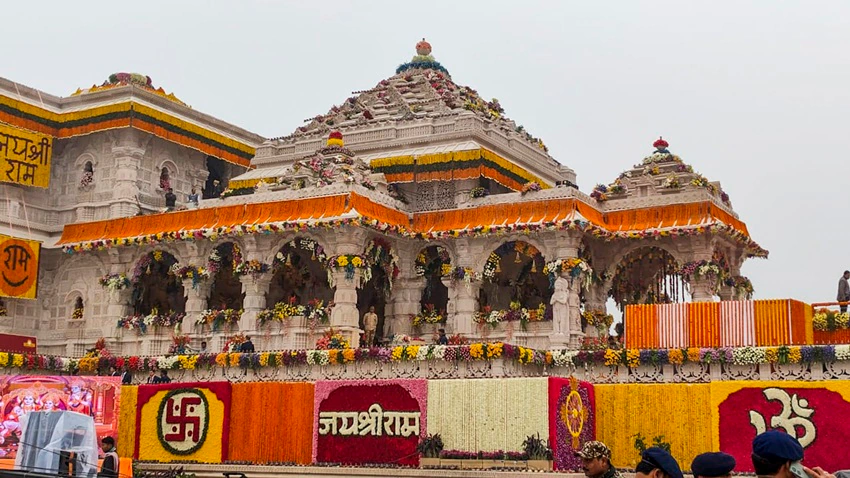
The Ram Mandir follows the traditional Nagara style of temple architecture, which is characteristic of North India. This style features a beehive-shaped tower (shikhara) rising above the main sanctum, with each tier becoming progressively smaller. The Nagara style emphasizes verticality, symbolizing the ascent from earthly to divine realms. The temple’s design references ancient Hindu architectural texts (Shilpa Shastras) that provide detailed guidelines for temple construction.
Temple Structure and Layout
The Ram Mandir is a three-story structure with impressive dimensions—approximately 380 feet long, 250 feet wide, and 161 feet high. The temple complex is designed to accommodate large numbers of devotees while maintaining sacred atmosphere. The structure includes multiple mandaps (halls), subsidiary shrines, and extensive corridors. The architectural plan ensures proper flow of visitors while providing spaces for various religious ceremonies.
The Main Sanctum (Garbhagriha)
The garbhagriha (sanctum sanctorum) houses the main deity—Ram Lalla (infant form of Lord Rama). This innermost chamber is the temple’s spiritual heart, designed according to precise Vastu Shastra principles. The sanctum’s atmosphere is maintained to facilitate deep devotional experience, with controlled lighting and acoustic properties that enhance the sacred ambiance.
Materials and Craftsmanship
The temple is constructed primarily using pink sandstone sourced from Rajasthan, known for its durability and aesthetic beauty. No steel or iron has been used in the main structure, adhering to traditional temple construction principles. The foundation uses granite for strength and stability. The construction employed traditional techniques including interlocking stones, ensuring the structure’s longevity for centuries.
Intricate Carvings and Sculptures
The Ram Mandir features extraordinary sculptural work depicting scenes from the Ramayana, various deities, celestial beings, flora, and fauna. Master sculptors and artisans have created intricate carvings on pillars, walls, ceilings, and doorways. Each sculpture carries symbolic meaning and contributes to the temple’s narrative of Rama’s life and teachings. The craftsmanship represents a revival of traditional stone carving skills, with artisans trained specifically for this project.
The Ram Lalla Idol
History of the Original Idol
Prior to 2024, a smaller idol of Ram Lalla (infant Rama) was worshipped at the site. This idol, installed in 1949, became the focus of devotion for decades. Devotees maintained continuous worship despite challenging circumstances and limited access during the legal dispute period. This original idol represented the faithful’s unwavering devotion throughout the temple’s uncertain years.
The New Idol Consecrated in 2024
For the consecration, a new idol of Ram Lalla was sculpted by renowned sculptor Arun Yogiraj from Karnataka. The idol, carved from a single piece of black stone (Krishna Shila), depicts Lord Rama as a five-year-old child standing in a graceful posture. The idol is approximately 51 inches tall and captures both divine majesty and childhood innocence. The sculpture’s facial expression conveys serenity, compassion, and divinity, inviting devotees into spiritual connection.
Symbolism and Significance
The choice of depicting Rama as a child (Ram Lalla) carries deep symbolism. It represents the eternal divine manifesting in innocent form, making the deity accessible and endearing to devotees. The child form also connects to the site’s significance as his birthplace. The idol’s posture, ornamentation, and features are designed according to iconographic traditions described in Hindu scriptures, ensuring theological authenticity.
Temple Complex Features
Additional Shrines and Deities
Beyond the main sanctum, the Ram Mandir complex includes shrines dedicated to other deities associated with Rama’s story. These include deities like Hanuman (Rama’s devoted servant), Sita (Rama’s consort), Lakshmana (Rama’s brother), and other figures from the Ramayana. Each shrine maintains its own ritual schedule and offers devotees opportunities for comprehensive spiritual engagement.
Mandaps and Halls
The temple features several mandaps serving different purposes. The Sabha Mandap (assembly hall) accommodates large gatherings for religious discourses and ceremonies. The Nritya Mandap (dance hall) is designed for cultural performances depicting Rama’s life. The Rang Mandap provides space for devotees to sit, meditate, and absorb the sacred atmosphere. Each mandap is architecturally distinct with unique ceiling designs and pillar carvings.
Landscaping and Gardens
The surrounding landscape has been carefully designed with gardens, water features, and walking paths. Trees mentioned in the Ramayana have been planted, creating ecological and mythological connections. The landscaping provides peaceful spaces for contemplation away from the main worship areas. Water bodies within the complex serve ritual purposes while enhancing aesthetic appeal.
Museum and Cultural Center
Plans include a comprehensive museum documenting the temple’s history, Ayodhya’s archaeological heritage, and the Ramayana’s cultural influence. The cultural center will host exhibitions of temple art, traditional crafts, and educational programs about Hindu culture and philosophy. These facilities aim to provide visitors with deeper understanding beyond the devotional experience.
Visiting Ram Mandir: Practical Information
How to Reach Ayodhya
Ayodhya’s connectivity has improved dramatically with infrastructure development. By air, the new Maharishi Valmiki International Airport Ayodhya Dham serves domestic flights from major cities like Delhi, Mumbai, Bangalore, and more. By train, Ayodhya Junction (railway code: AY) and Ayodhya Cantt stations connect to major cities across India. The railway stations have been upgraded to handle increased pilgrim traffic. By road, Ayodhya is well-connected via national highways, approximately 135 km from Lucknow (the state capital), 180 km from Varanasi, and accessible from other Uttar Pradesh cities.
Temple Timings and Entry
The Ram Mandir generally opens early morning (around 6:30-7:00 AM) and closes by evening (around 7:00-7:30 PM), though timings may vary by season and festivals. Entry is free for all visitors—no tickets are required for general darshan. The temple management prioritizes smooth flow of devotees, with separate queues and entry points designed to handle large crowds. Special timings apply during festivals when extended hours accommodate increased visitors.
Dress Code and Guidelines
Visitors should dress modestly and respectfully. Traditional Indian attire is preferred but not mandatory. Men should wear shirts/kurtas with trousers/dhotis, avoiding shorts and sleeveless shirts. Women should wear sarees, salwar kameez, or modest western clothing covering shoulders and knees, avoiding revealing or tight clothing. Footwear must be removed before entering the temple premises—dedicated shoe storage facilities are provided. Head covering is not mandatory but some devotees choose to cover heads as a mark of respect.
Security and Prohibited Items
Security screening is mandatory for all visitors. Prohibited items include mobile phones, cameras, electronic devices, bags, eatables, tobacco products, leather items, and sharp objects. Secure cloakrooms near entry points store prohibited items for retrieval after darshan. The restrictions ensure temple sanctity and visitor safety. Be prepared for thorough security checks similar to airport security procedures.
Darshan (Viewing) Guidelines
Free Darshan Process
General darshan is free and operates on first-come, first-served basis. Devotees queue in designated lines that lead through the temple complex to the main sanctum. The queue system is well-organized with barricades, volunteers, and signage guiding visitors. Queue management varies by crowd size—during normal days, wait times might be 1-3 hours; during festivals, expect significantly longer waits. Volunteers and temple staff assist throughout, ensuring smooth movement.
VIP Darshan Options
For senior citizens, differently-abled persons, and VIP guests, special darshan arrangements may be available. These typically involve shorter waiting times and separate entry routes. Advance registration or medical certificates may be required for these provisions. Contact the temple administration or check official websites for current procedures regarding special darshan categories.
Best Times to Visit
Weekdays generally see smaller crowds than weekends. Early morning darshan (immediately after opening) and late afternoon slots typically have shorter queues than mid-day. Off-season months (except festivals) offer more comfortable visiting experiences. Avoid festival periods unless you specifically want to experience festive celebrations—Ram Navami, Diwali, and major holidays see enormous crowds requiring extensive waiting.
Expected Wait Times
Wait times vary dramatically based on season, day of week, and any special events. On average weekdays during non-festival periods, expect 2-4 hour waits from queue entry to darshan completion. Weekends might extend to 4-6 hours. During major festivals, waits can exceed 8-12 hours or more. Plan accordingly—carry water, wear comfortable footwear for standing, and have realistic time expectations.
Accommodation Options in Ayodhya
Budget Hotels and Dharamshalas
Ayodhya offers numerous budget accommodations suitable for pilgrims. Dharamshalas (pilgrim guesthouses) provide basic, clean rooms at nominal charges (₹200-800 per night). Government-run and trust-operated dharamshalas offer affordable options, though facilities are basic. Budget hotels (₹800-2,000 per night) provide slightly better amenities with private bathrooms, fans/AC, and basic furniture. Areas near Ram Ki Paidi and around the temple complex have concentrated budget options.
Mid-Range Hotels
Mid-range hotels (₹2,000-5,000 per night) offer comfortable rooms with modern amenities—air conditioning, television, WiFi, attached bathrooms, and often restaurants. Several national hotel chains and local properties provide reliable mid-range options. These hotels balance comfort and affordability, suitable for families and travelers seeking decent facilities without luxury pricing. Booking in advance is recommended, especially during peak pilgrimage seasons.
Luxury Hotels and Resorts
Luxury accommodations (₹5,000-15,000+ per night) have emerged with Ayodhya’s tourism development. These include heritage hotels, luxury resorts, and premium properties offering spacious rooms, fine dining, spa facilities, concierge services, and elegant ambiance. Some properties feature Ramayana-themed decor and architecture, enhancing the cultural experience. Luxury hotels are concentrated in newer development areas and along the Saryu riverfront.
Government Guest Houses
Government guest houses and circuit houses offer accommodation for officials and can sometimes accommodate general visitors if available. UP Tourism operates facilities in Ayodhya providing clean, government-maintained rooms at reasonable rates. Availability might be limited, and advance booking through official channels is necessary.
Other Sacred Sites in Ayodhya
Hanuman Garhi
Hanuman Garhi is one of Ayodhya’s most important temples, dedicated to Lord Hanuman. Situated on a hill requiring 76 steps to reach, this temple is believed to be the spot where Hanuman resided while guarding Ayodhya. The temple features a striking architecture with fortress-like appearance. Devotees believe visiting Hanuman Garhi before Ram Mandir darshan is auspicious, as Hanuman is considered the gatekeeper to Lord Rama’s presence.
Kanak Bhawan
Kanak Bhawan, meaning “Golden Palace,” is a beautiful temple dedicated to Lord Rama and Sita. Legend holds that this palace was gifted to Sita by Rama’s stepmother Kaikeyi after their marriage. The temple features stunning architecture with gold-plated spires and houses beautiful idols of Rama and Sita wearing crowns (Mukut), hence also called “Sita ki Rasoi.” The temple’s artwork and peaceful atmosphere make it a must-visit.
Nageshwarnath Temple
One of Ayodhya’s oldest temples, Nageshwarnath is dedicated to Lord Shiva. According to tradition, this temple was established by Kush (Lord Rama’s son) and has been continuously worshipped since ancient times. The temple’s Shiva Lingam is believed to have been installed by Kush himself. The temple complex includes other shrines and represents Ayodhya’s Shaiva tradition complementing its Vaishnava prominence.
Sita Ki Rasoi
Sita Ki Rasoi (Sita’s Kitchen) is a small temple within Kanak Bhawan complex believed to be where Goddess Sita once cooked for her family. Devotees can see kitchen utensils, stoves, and cooking implements displayed as sacred artifacts. Though small, this site holds emotional significance, connecting devotees to the domestic aspect of divine figures and humanizing the mythological narrative.
Ram Ki Paidi Ghats
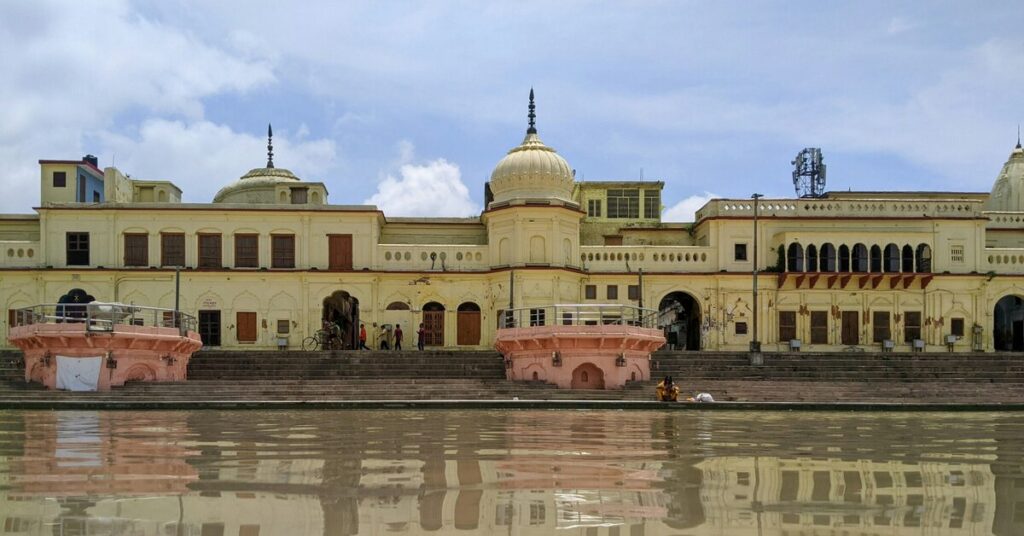
Ram Ki Paidi is a series of ghats (steps leading to water) on the Saryu River. This is Ayodhya’s primary bathing ghat where pilgrims take ritual baths considered spiritually purifying. The ghats are architecturally beautiful, especially when illuminated during evening aarti ceremonies. Boats offer river cruises providing unique perspectives of Ayodhya’s temples and ghats. The ghats become particularly vibrant during festivals, especially Diwali when thousands of diyas (earthen lamps) are lit along the riverbank.
Religious Rituals and Ceremonies
Daily Aarti Timings
The Ram Mandir follows structured ritual schedules. Morning aarti (Mangala Aarti) typically occurs around 5:30-6:00 AM, awakening the deity. Midday aarti (Madhyahna Aarti) happens around noon. Evening aarti (Sandhya Aarti) at sunset is the grandest daily ceremony, attracting maximum devotees. Night aarti (Shayan Aarti) around 8:00-9:00 PM prepares the deity for rest. Exact timings vary seasonally and are announced by temple authorities. Witnessing aarti offers powerful spiritual experiences with hymns, incense, bells, and collective devotion.
Special Pujas and Offerings
Devotees can sponsor special pujas through temple administration. Options include abhishek (ritual bathing of deity), archana (special prayer recitation), and various sevas (services). Offerings traditionally include flowers, fruits, coconuts, and sacred tulsi leaves. The temple distributes prasad (sanctified offerings) to all visitors. Monetary donations support temple operations and charitable activities. All puja services are optional—simple heartfelt prayer is equally valued.
Festival Celebrations
Major Hindu festivals are celebrated with special ceremonies, decorations, and extended timings. Festivals particularly associated with Lord Rama see elaborate celebrations with special puja rituals, cultural programs, processions, and community feasts. The entire Ayodhya city participates, creating festive atmosphere beyond the temple itself.
Major Festivals at Ram Mandir
Ram Navami, celebrating Lord Rama’s birth, is Ayodhya’s biggest festival. Falling in March-April (Chaitra month), the nine-day celebration culminates on Ram Navami day with grand ceremonies. The temple organizes continuous Ramayana recitations, bhajan performances, processions, and special pujas. Hundreds of thousands of devotees converge on Ayodhya, creating an electrifying spiritual atmosphere. The birth moment (typically around noon) is marked with elaborate rituals and celebrations.
Diwali in Ayodhya
Diwali holds special significance in Ayodhya as it commemorates Lord Rama’s return to his kingdom after 14 years of exile. Ayodhya celebrates Diwali with unparalleled grandeur—lakhs of diyas illuminate the entire city, creating breathtaking spectacle. The Saryu riverbanks, ghats, temples, and streets are decorated with lights. Cultural programs, fireworks, and community celebrations continue for several days. Visiting Ayodhya during Diwali offers unforgettable experiences, though accommodation and darshan involve significant crowds and planning.
Vivah Panchami
Vivah Panchami celebrates the marriage anniversary of Lord Rama and Goddess Sita. Falling in November-December, this festival re-enacts the divine wedding with elaborate ceremonies. Special decorations adorn temples, and marriage rituals are symbolically performed. Devotees consider witnessing these ceremonies highly auspicious, especially for couples seeking marital blessings.
The nine-night festival honoring Goddess Durga also has significance in Ayodhya, as Sita is considered an incarnation of Shakti (divine feminine power). Special pujas honor Sita-Durga connection, and the festival atmosphere complements preparations for Ram Navami, which immediately follows Navratri.
Food and Dining in Ayodhya
Vegetarian Tradition
Ayodhya follows strict vegetarian traditions—meat, fish, eggs, and alcohol are prohibited throughout the city. This reflects the city’s sacred status and religious sensibilities. All restaurants and eateries serve exclusively vegetarian food. Visitors should respect this tradition, refraining from bringing non-vegetarian items into the city.
Local Cuisine Specialties
Ayodhya offers traditional Awadhi and North Indian vegetarian cuisine. Must-try local specialties include malpua (sweet pancakes), khasta kachori, samosas, various chaats, lassi, and traditional thalis featuring dal, vegetables, roti, rice, and sweets. The cuisine reflects Uttar Pradesh’s rich culinary heritage while adhering to sattvic (pure) food principles. Street food vendors near temples and ghats serve affordable, tasty snacks.
Recommended Restaurants
Several restaurants serve quality meals. Options range from simple dhabas offering basic thalis (₹100-200) to comfortable restaurants providing diverse menus (₹300-600 per person). Restaurants near major temples and in hotel properties offer reliable options. Popular choices include Tulsi Smriti Bhawan, Rajghat Restaurant, and various eateries in the Ram Path area. During peak seasons, expect waiting times at popular establishments.
Prasad Distribution
The Ram Mandir and other temples distribute prasad (sanctified food offerings) to visitors. Common prasad includes sweets, dry fruits, and sacred items. Receiving and consuming prasad is considered spiritually beneficial, symbolizing receiving divine grace. Temple authorities ensure prasad quality and hygiene. Devotees can also purchase prasad boxes from authorized vendors near temples.
Shopping in Ayodhya
Religious Items and Souvenirs
Markets around Ram Mandir and other temples sell extensive religious items: small Ram idols and pictures, rudraksha malas (prayer beads), sacred threads, puja thalis, incense, religious books, and CDs of devotional music. Ayodhya-specific souvenirs include miniature temple replicas and items with Ramayana themes. These make meaningful gifts and mementos of your pilgrimage.
Local Handicrafts
Ayodhya and surrounding regions produce beautiful handicrafts including wooden crafts, clay artifacts, paintings depicting Ramayana scenes, and traditional textiles. Supporting local artisans preserves traditional crafts while providing authentic souvenirs. Government emporiums and craft centers offer quality-assured handicrafts at fair prices.
Best Shopping Areas
The main shopping areas include roads around Ram Janmabhoomi complex, markets near Hanuman Garhi, and the Naya Ghat area. These markets offer religious items, souvenirs, snacks, and necessities. Bargaining is expected in market areas. For fixed-price shopping, government emporiums and established stores are reliable options.
Transportation Within Ayodhya
Local Auto-Rickshaws and Taxis
Auto-rickshaws are the primary local transport, connecting temples and sites across Ayodhya. Fares should be negotiated before starting (typical short distances: ₹30-50; longer routes: ₹80-150). Prepaid auto stands at railway stations offer fixed-price convenience. Taxis and app-based cabs are available for more comfortable travel, though availability varies. Full-day auto or taxi hire (₹1,000-2,000) makes sense for comprehensive temple visits.
E-Rickshaws
Electric rickshaws operate on fixed routes, offering eco-friendly, affordable transport (₹10-30 per ride). They’re slower than autos but economical for short distances and connect major temples and markets. E-rickshaw availability has increased with city modernization efforts.
Walking Routes
Many major temples lie within walking distance in central Ayodhya. The Ram Mandir to Hanuman Garhi distance is about 2 km, comfortably walkable. Walking allows experiencing Ayodhya’s atmosphere, discovering small temples, and interacting with local culture. However, consider weather—summers can be extremely hot, making walking challenging during midday.
Ayodhya Development and Infrastructure
New Airport and Connectivity
The Maharishi Valmiki International Airport Ayodhya Dham, inaugurated in late 2023, has transformed accessibility. The modern airport with capacity for handling millions of passengers annually serves domestic flights from major cities. International connectivity is planned, potentially bringing global pilgrims directly to Ayodhya. The airport features Ramayana-themed architecture and artwork, making arrival itself a cultural experience.
Railway Station Upgrades
Ayodhya’s railway stations have undergone extensive modernization. Ayodhya Dham Junction (the upgraded name) features improved platforms, waiting areas, modern amenities, and enhanced passenger facilities. The station’s design incorporates temple architecture elements, aligning infrastructure with the city’s spiritual character. Increased train connectivity links Ayodhya to major cities across India.
Road Development
New highways and expressways have dramatically improved road connectivity. The Purvanchal Expressway reduces travel time from Lucknow to under 2 hours. Roads within Ayodhya have been widened, resurfaced, and beautified. Street lighting, signage, and traffic management have improved, making navigation easier for visitors.
Smart City Initiatives
Ayodhya is being developed under Smart City mission with focus on sustainable urban development, digital infrastructure, waste management, and tourism facilities. Initiatives include WiFi hotspots, surveillance cameras for security, digital information kiosks, and app-based visitor services. These modernizations aim to balance ancient spiritual character with contemporary visitor expectations.
Cultural and Historical Museums
Ram Katha Museum
The planned Ram Katha Museum will present Lord Rama’s life story through multimedia exhibits, dioramas, artifacts, and interactive displays. It will showcase the Ramayana’s various versions across different cultures, demonstrating the epic’s pan-Asian influence. The museum aims to educate visitors, especially younger generations, about cultural heritage.
Archaeological Findings
Various archaeological excavations in Ayodhya have uncovered artifacts spanning different historical periods. A museum displaying these findings—ancient pottery, coins, sculptures, and structural remains—provides historical context to Ayodhya’s civilizational continuity. These exhibits complement religious experience with academic perspective.
Art Galleries
Art galleries showcasing traditional and contemporary works inspired by Ramayana themes offer cultural enrichment. Paintings, sculptures, and crafts by renowned and emerging artists provide artistic interpretations of the epic, demonstrating how ancient narratives continue inspiring creative expression.
Photography Guidelines at Ram Mandir
**Permitted Areas**
Photography is generally permitted in the temple complex’s outer areas, gardens, and exterior architecture. These areas provide ample opportunities for capturing the temple’s magnificent architecture, intricate carvings, and overall grandeur. The beautifully landscaped gardens and water features also make excellent photography subjects.
Restrictions Inside Sanctum
Photography and videography are strictly prohibited inside the main sanctum (garbhagriha) and in certain interior temple areas. This restriction preserves the sanctity of worship spaces and respects the privacy of devotees during their spiritual moments. Mobile phones and cameras are not allowed inside due to security protocols, reinforcing these restrictions. Violation of photography rules may result in confiscation of devices or other penalties.
Best Photography Spots
The best external photography spots include the temple’s main entrance showcasing the grand facade, various angles capturing the shikhara (spire) against the sky, and the temple reflected in water bodies within the complex. Early morning and late afternoon provide the best natural lighting for architectural photography. The surrounding ghats, especially during evening aarti, offer atmospheric photography opportunities. Always be respectful—avoid photographing devotees without permission and prioritize worship activities over photo opportunities.
Tips for First-Time Visitors
Planning Your Trip
Plan your Ayodhya visit well in advance, especially during festival seasons. Book accommodation 2-3 months ahead for popular periods. Allocate at least 2-3 days for a comprehensive visit covering Ram Mandir and other significant temples. Research temple timings, darshan processes, and current crowd situations. Check weather forecasts—summers (April-June) are extremely hot, while winters (November-February) offer pleasant conditions. Monsoons (July-September) bring rain but fewer crowds.
What to Carry
Carry minimal belongings since most items aren’t allowed inside the temple. Essential items include: valid ID proof, a small amount of cash (many places don’t accept cards), water bottle (empty it before security), necessary medications, sunscreen and hat for daytime, modest extra clothing, and a small bag for storing items in cloakrooms. Keep photocopies of important documents. Carry a printed hotel address and emergency contacts.
Health and Safety Precautions
Stay hydrated, especially during summer—carry water and drink regularly. Use sunscreen and wear hats for sun protection. Comfortable walking shoes are essential for standing in queues and temple visits. Be cautious with street food if you have a sensitive stomach. Carry basic medications for common ailments. Keep emergency numbers handy including local police, hospital, and your embassy (for international visitors). Travel insurance is recommended.
Respecting Local Customs
Ayodhya is a deeply religious city with conservative cultural norms. Dress modestly at all times. Public displays of affection should be avoided. Respect temple rules even if they seem restrictive. Remove shoes where indicated and never point feet toward deities or religious texts. Speak softly in sacred spaces. Ask permission before photographing people. Show respect for local religious practices even if they’re unfamiliar. Your respectful behavior enhances your experience and honors the community hosting you.
Ayodhya’s Economic and Tourism Impact
Pilgrimage Tourism Boom
The Ram Mandir’s consecration has triggered unprecedented tourism growth. Ayodhya now attracts millions of visitors annually, transforming from a quiet temple town to a major pilgrimage destination. This influx has positioned Ayodhya among India’s top religious tourism sites alongside Varanasi, Tirupati, and Amritsar. The economic impact extends beyond immediate tourism revenue to long-term development opportunities.
Local Business Growth
Local businesses have flourished with increased visitor numbers. Hotels, restaurants, shops, and service providers have expanded operations. New enterprises have emerged—tour operators, travel agencies, souvenir shops, and hospitality ventures. Traditional businesses like handicrafts and religious items have found larger markets. This commercial growth has elevated living standards for many residents.
Employment Generation
Tourism development has created thousands of jobs directly in hospitality, transportation, guiding services, and retail sectors. Indirect employment in construction, manufacturing, and support services has also expanded significantly. Youth from Ayodhya and surrounding areas have found local employment opportunities, reducing migration to larger cities. Skill development programs train locals for tourism industry roles, creating sustainable livelihoods.
Environmental and Sustainability Initiatives
Green Temple Practices
The Ram Mandir incorporates several environmental sustainability measures. Solar panels supplement energy needs, reducing fossil fuel dependence. Rainwater harvesting systems collect and reuse water. Waste segregation ensures proper disposal and recycling. The use of natural, biodegradable materials in daily operations minimizes environmental impact. These practices set standards for religiously sensitive yet environmentally conscious temple management.
Saryu River Conservation
The Saryu River, sacred in Hindu tradition, faces pollution challenges from increased activity. Conservation initiatives include sewage treatment plants preventing direct discharge, riverbank beautification preventing erosion, regular cleaning drives removing solid waste, and awareness campaigns encouraging pilgrims to avoid polluting activities. Government and community organizations collaborate on river protection, recognizing its spiritual and ecological importance.
Waste Management Systems
Managing waste from millions of visitors is a significant challenge. Modern waste management infrastructure includes segregated waste collection, processing facilities for organic and inorganic waste, recycling programs, and composting of biodegradable materials. Public awareness campaigns encourage visitors to minimize waste and dispose responsibly. These systems are crucial for maintaining cleanliness and environmental health.
Conclusion
The Ayodhya Ram Mandir represents far more than architectural magnificence or religious significance—it embodies faith, cultural identity, and centuries of devotion culminating in a sacred space that welcomes millions seeking spiritual connection. Whether you approach it as a devout pilgrim, cultural enthusiast, or curious traveler, the temple and the ancient city of Ayodhya offer experiences that are profound, memorable, and transformative.
From the moment you glimpse the temple’s soaring shikhara against the sky to the deeply moving experience of darshan before Ram Lalla, from exploring Ayodhya’s other sacred sites to witnessing evening aarti along the Saryu’s banks, every moment connects you to something ancient and eternal. The city itself—with its narrow lanes, bustling markets, and pervasive spiritual atmosphere—provides context that enriches the temple visit.
As you plan your journey to this sacred city, remember that pilgrimage is as much about the journey as the destination. Approach with respect, patience, and openness. Let the crowds teach you about collective devotion, the rituals about tradition’s continuity, and the temple’s beauty about human aspiration reaching toward the divine.
Ayodhya awaits with its timeless stories, sacred energies, and the promise of experiences that touch not just your itinerary but your soul. May your visit to the Ram Mandir be blessed, memorable, and spiritually fulfilling.
FAQs
1. How much time should I allocate for Ram Mandir darshan?
For the complete darshan experience including waiting in queue, security checks, and actual temple visit, allocate 3-5 hours during normal days. During weekends, this may extend to 5-7 hours. Festival periods can require 8-12 hours or even more. Beyond darshan time, consider additional hours for visiting other temples in Ayodhya—Hanuman Garhi, Kanak Bhawan, and ghats. A comfortable itinerary should plan 2-3 days for Ayodhya, allowing unhurried exploration without feeling rushed. Early morning visits typically involve shorter waits, so planning accordingly can optimize your time.
2. Is there any online booking system for Ram Mandir darshan?
As of now, the general darshan at Ram Mandir is free and does not require advance booking—it operates on a first-come, first-served basis. However, temple authorities periodically update systems to manage crowds better, so online booking might be introduced in the future. For current information, check the official Shri Ram Janmabhoomi Teerth Kshetra website or contact the temple administration. Special darshan categories (VIP, senior citizens, differently-abled) may have separate procedures. Always verify information from official sources before your visit to avoid misinformation.
3. What is the best season to visit Ayodhya Ram Mandir?
The best time to visit Ayodhya is during winter months from October to March when temperatures are pleasant (15°C-30°C), making long queues and walking between temples comfortable. November to February is particularly ideal with cool weather. However, major festivals like Ram Navami (March-April) and Diwali (October-November) fall in this period, bringing enormous crowds—visit during these times only if you want festival experiences and can handle crowds. Summer months (April-June) see temperatures exceeding 40°C, making visits uncomfortable. Monsoon (July-September) brings relief from heat but also rain and humidity, plus fewer crowds for those who don’t mind weather challenges.
4. Are there facilities for elderly visitors and differently-abled persons at Ram Mandir?
Yes, the Ram Mandir complex has been designed with accessibility considerations. Ramps and wheelchair-accessible pathways facilitate movement for differently-abled visitors. Special darshan arrangements with shorter queues and dedicated entry points are available for elderly and differently-abled persons—medical certificates or age proof may be required. Wheelchairs are available at the temple premises. Volunteers and staff assist those needing support. Restroom facilities include accessible options. For best experience, inform temple authorities about special requirements in advance, and consider visiting during less crowded periods when facilities can be accessed more easily.
5. Can international tourists visit Ram Mandir, and what documents do they need?
Absolutely! International tourists are welcome to visit Ram Mandir. Required documents include a valid passport and Indian visa (appropriate category). Carry your passport or copies for identification during security checks. There are no special permissions required specifically for temple visit. However, international visitors should be aware of cultural norms—dress modestly, respect religious practices, and follow temple guidelines. English signage and information are increasingly available. Consider hiring a local guide who can provide cultural context and assist with language barriers. Many hotels catering to international guests have emerged, making Ayodhya increasingly accessible for foreign visitors seeking authentic spiritual experiences.