Banaras Mosques , When people think of Banaras, images of ancient temples, ghats, and Hindu spirituality typically come to mind. But there’s another layer to this city’s identity—one that’s equally rich, historic, and integral to its character. The Islamic heritage of Banaras, woven through centuries of history, has contributed significantly to the city’s cultural tapestry, adding distinct threads of architecture, art, music, cuisine, and tradition.
Walk through the narrow lanes of Madanpura or near Chowk, and you’ll discover a different Banaras. Here, the call to prayer (azaan) mingles with temple bells, the aroma of kebabs blends with incense, and elegant mosque minarets stand alongside temple spires. This is the Banaras that embodies Ganga-Jamuni tehzeeb—the syncretic culture where Hindu and Islamic traditions have coexisted, influenced each other, and created something uniquely beautiful.
The mosques of Banaras aren’t just places of worship—they’re architectural treasures, historical monuments, and living testimonies to centuries of Islamic presence in this ancient city. From the grand Alamgir Mosque overlooking the Ganges to smaller neighborhood mosques tucked into winding alleys, each tells stories of faith, artistry, and the Muslim community’s contributions to Banaras’s remarkable identity.
Historical Context: Islam in Banaras
Early Islamic Influence
Islam’s arrival in Banaras can be traced back to the medieval period, though the exact timeline remains debated by historians. By the 12th and 13th centuries, Muslim traders, Sufi saints, and eventually rulers had established presence in the city. Unlike sudden conquest, Islam’s integration into Banaras happened gradually through trade, spiritual missions by Sufi saints, and administrative changes under various sultanates.
Medieval Period and Mughal Era
The most significant Islamic architectural and cultural development occurred during the Mughal period, particularly under Aurangzeb’s reign in the late 17th century. Several major mosques were constructed during this era, including the Alamgir Mosque. The Mughal administration brought Persian cultural influences, Islamic architectural styles, and patronage of arts that left lasting impressions on the city.
However, this period wasn’t without tension. Historical records indicate both conflict and cooperation between different communities, with periods of temple destruction followed by eras of relative harmony. Understanding this complex history requires moving beyond simplistic narratives to appreciate the nuanced reality of medieval Indian society.
The Syncretic Culture of Banaras
What makes Banaras special is how different traditions ultimately learned to coexist. The concept of Ganga-Jamuni tehzeeb—named after the confluence of the Ganges and Yamuna rivers—represents the blending of Hindu and Islamic cultures. In Banaras, this manifested in shared festivals, mutual respect among artisans, collaborative business ventures, and even spiritual practices that borrowed from both traditions. This syncretism, though sometimes strained, has been Banaras’s defining characteristic.
Architectural Significance of Banaras Mosques
Mughal Architectural Elements
Banaras mosques showcase classic Mughal architectural features: grand domes (often bulbous or onion-shaped), tall minarets with balconies, pointed arches, and symmetrical layouts. The use of red sandstone combined with white marble creates striking visual contrasts. Courtyards with fountains for ablution (wuzu) follow traditional Islamic architectural principles of providing water features for ritual purification.
Indo-Islamic Design Features
What distinguishes these mosques is their Indo-Islamic character—a fusion of Islamic architectural principles with local Indian building traditions. You’ll notice Hindu temple motifs occasionally integrated into designs, local stone types used alongside imported materials, and adaptations to India’s climate such as deeper eaves for monsoon protection and courtyards designed for air circulation in hot weather.
Local Adaptations and Influences
Banaras mosques often reflect local building techniques and materials. The use of Chunar sandstone (quarried nearby), incorporation of local decorative patterns, and sometimes even structural elements borrowed from temple architecture demonstrate how Islamic buildings adapted to their environment while maintaining their religious identity.
Major Mosques of Banaras
Gyanvapi Mosque – History and Controversy
Located adjacent to the Kashi Vishwanath Temple, the Gyanvapi Mosque is perhaps the most historically significant and controversial Islamic structure in Banaras. Built during Aurangzeb’s reign in 1669, it stands on a site that has been subject to longstanding disputes. The mosque features typical Mughal architecture with its prayer hall, courtyard, and remnants of what appears to be earlier temple structures.
The Gyanvapi Mosque has been at the center of legal and religious debates for decades, with ongoing litigation regarding its history and status. For visitors, it represents a complex intersection of faith, history, and contemporary politics. Currently, photography and tourist access are restricted due to security concerns and legal proceedings.
Alamgir Mosque (Beni Madhav Ka Darera)
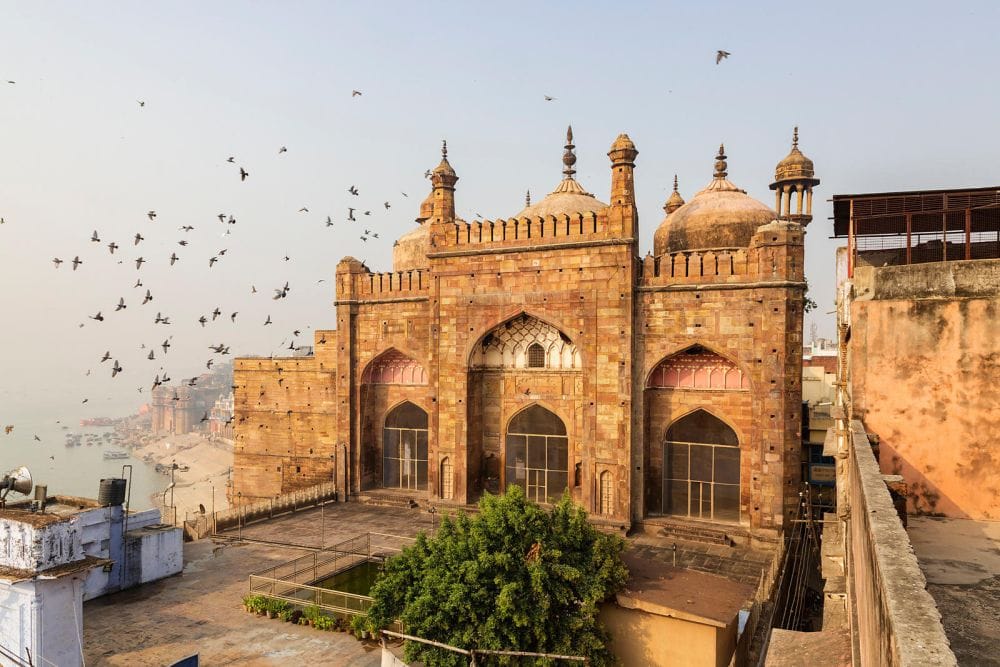
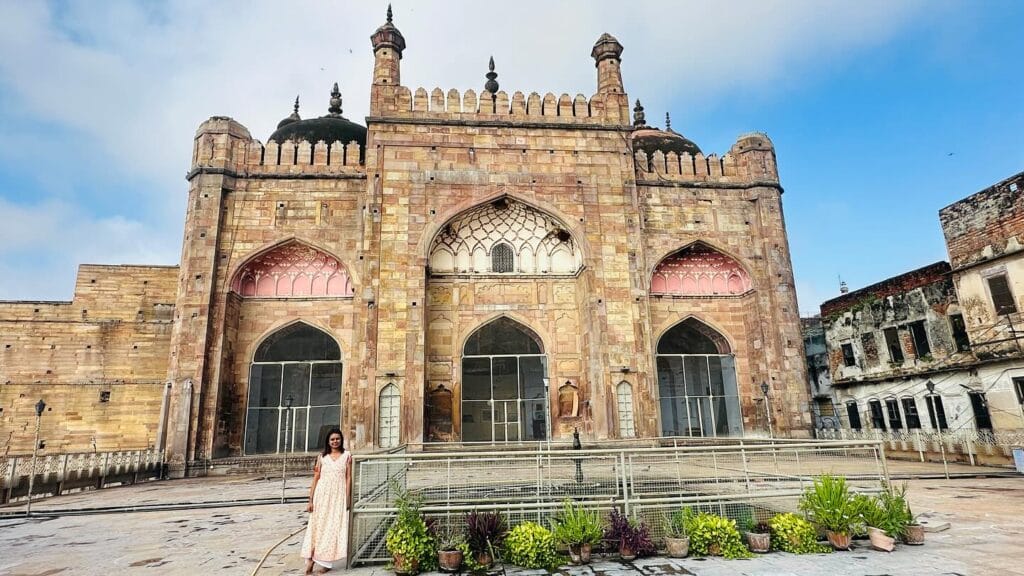
Perched prominently on Panchganga Ghat, the Alamgir Mosque is one of Banaras’s most visible Islamic structures. Also built during Aurangzeb’s reign, this mosque features two towering minarets that dominate the riverfront skyline. The mosque’s location—overlooking the sacred Ganges—makes it architecturally and symbolically significant.
The mosque is built on an elevated platform with stone steps leading up from the ghat. Its two minarets, approximately 71 meters high, are visible from various points along the river. The structure showcases Mughal architectural mastery with its proportions, stone craftsmanship, and strategic positioning. The mosque remains active for prayers and offers stunning panoramic views of the Ganges from its courtyard.
Fatman Mosque
Located in the Aurangabad area, the Fatman Mosque is a beautiful example of Mughal-era architecture. Lesser-known than the Alamgir Mosque but equally impressive architecturally, this mosque features elegant proportions, well-preserved decorative elements, and a peaceful courtyard. The mosque serves the local Muslim community and maintains its traditional function as a center for prayer and religious education.
Hazrat Sayyed Salar Masud Dargah
While technically a dargah (shrine) rather than a mosque, this site holds immense religious significance for Banaras’s Muslim community and attracts devotees from across the region. The dargah is dedicated to Ghazi Miyan Salar Masud, a 11th-century warrior saint. The complex includes a mosque alongside the main shrine, and exemplifies the Sufi tradition’s influence in Banaras.
The annual urs (death anniversary celebration) attracts thousands of devotees, including both Muslims and Hindus, demonstrating the syncretic spiritual culture of the region. Qawwali performances during these celebrations showcase the rich tradition of Sufi devotional music.
Jama Masjid Near Chowk
The Jama Masjid in the Chowk area serves as a central mosque for Banaras’s Muslim community. Built in a traditional congregational mosque style, it features a large prayer hall that can accommodate hundreds of worshippers during Friday prayers and Eid celebrations. The mosque’s architecture, though simpler than the monumental Mughal structures, represents the functional beauty of Islamic religious architecture.
Lesser-Known Mosques Worth Visiting
Lal Khan Mosque
This smaller neighborhood mosque near Bengali Tola showcases traditional Islamic architecture on a more intimate scale. Named after a local figure, the Lal Khan Mosque serves its immediate community and represents the numerous smaller mosques that form the backbone of Islamic religious life in Banaras. Its red sandstone construction and modest dome make it architecturally interesting.
Madanpura Mosque
Located in the heart of Banaras’s primary Muslim neighborhood, the Madanpura Mosque is an active community center. While not as architecturally grand as the Mughal-era structures, it’s culturally significant as the religious hub of a vibrant Muslim quarter. The area around the mosque comes alive during Islamic festivals and offers authentic glimpses into the daily religious life of Banaras’s Muslims.
Neighborhood Mosques in Old City
Throughout Banaras’s old city, you’ll find dozens of small mosques—some centuries old, others more recent—serving specific neighborhoods and communities. These mosques, often tucked into narrow lanes and easily missed by casual visitors, are where you’ll witness the living practice of Islam in Banaras. Their simplicity contrasts with the grand historical mosques, but their role in community life is equally important.
The Muslim Quarter: Madanpura and Surrounding Areas
Cultural Life in Muslim Neighborhoods
Madanpura and adjacent areas like Meerghat and Khojwan represent the heart of Banaras’s Muslim community. Walking through these neighborhoods feels different from the rest of the city—the architecture changes, with houses featuring enclosed courtyards and jharokhas (protruding balconies). You’ll see women in burqas shopping at markets, hear Urdu conversations, and smell kebabs being prepared in traditional tandoors.
These areas maintain distinct cultural identities while remaining integrated into the broader city. During Ramadan, the streets come alive at night with iftar gatherings. During Eid, entire neighborhoods celebrate together with special prayers, feasts, and new clothes. This community cohesion has preserved Islamic traditions across generations.
Traditional Crafts and Businesses
Muslim artisans in Banaras have historically dominated certain crafts, particularly the famous Banarasi silk weaving. Muslim weavers have been creating intricate brocade sarees for centuries, passing skills through families. The zardozi (metallic embroidery) work, leather crafting, perfume making (attar), and metalwork traditions are also associated with Muslim craftspeople.
Many workshops in Muslim neighborhoods still practice these traditional crafts using age-old techniques. Visiting these workshops offers insights into artisanal traditions that are cultural treasures of Banaras, transcending religious boundaries in their artistic significance.
Community Spaces and Institutions
Beyond mosques, Muslim neighborhoods feature madrasas (religious schools), community halls, and charitable institutions (wakfs). These spaces serve educational, social, and welfare functions, maintaining community bonds and providing support systems. Organizations running free medical camps, educational programs, and social services demonstrate the community’s institutional strength and social consciousness.
Islamic Contributions to Banaras Culture
Weaving and Textile Industry
The Banarasi silk industry—perhaps the city’s most famous economic and cultural contribution—owes much to Muslim weavers. The intricate brocade work, the famous kalga and bel patterns, and the zari (metallic thread) work techniques were perfected by Muslim artisan families over generations. Today, Muslim weavers continue to dominate this industry, creating sarees that are worn by brides across India and exported worldwide.
This craft represents beautiful cultural synthesis—sarees with Hindu motifs like lotuses and peacocks created by Muslim artisans, worn in Hindu weddings, and appreciated universally. It’s a perfect example of how art transcends religious boundaries.
Music and Performing Arts
Banaras’s musical heritage includes significant Islamic contributions. The legendary shehnai maestro Bismillah Khan, a devout Muslim, performed daily at the Vishwanath Temple, embodying the city’s syncretic spirit. Thumri and other semi-classical vocal styles developed with contributions from Muslim ustads (masters). The tabla tradition and various instrumental gharanas (schools) in Banaras have included Muslim musicians who’ve enriched the city’s classical music landscape.
Culinary Influences
Banarasi cuisine’s savory side owes much to Islamic culinary traditions. The kebabs, biryanis, kormas, and meat preparations that are now considered quintessentially Banarasi were introduced and perfected by Muslim cooks. The famous Banarasi biryani, the seekh kebabs at eateries near Chowk, and the nihari (slow-cooked meat stew) available in Muslim neighborhoods showcase this culinary heritage.
Even vegetarian Banarasi cuisine shows influences—the use of certain spices, cooking techniques, and the tradition of rich, elaborate preparations reflect the influence of Mughlai cooking styles adapted to vegetarian ingredients.
Urdu Literature and Poetry
Banaras has been a center of Urdu literature and poetry, with numerous Muslim poets, writers, and scholars contributing to this rich tradition. Mushairas (poetry gatherings) have been part of Banaras’s cultural life, where both Hindu and Muslim poets participate. The tradition continues today, though diminished, keeping alive the beautiful Urdu literary tradition that is part of Banaras’s cultural wealth.
Sufi Traditions in Banaras
Dargahs and Sufi Saints
Sufism, with its emphasis on love, tolerance, and direct spiritual experience, found fertile ground in Banaras. Several dargahs dedicated to Sufi saints dot the city, attracting devotees regardless of religious affiliation. These shrines represent Islam’s mystical dimension and have historically been spaces of inter-religious harmony, where Hindus and Muslims both seek blessings and spiritual solace.
The presence of these Sufi shrines contributed to Islam’s more peaceful integration into Banaras’s religious landscape, as Sufi saints emphasized spiritual values over rigid orthodoxy and welcomed seekers from all backgrounds.
Qawwali and Devotional Music
Qawwali, the devotional music tradition associated with Sufism, has a presence in Banaras, particularly during urs celebrations at dargahs. These musical performances, combining poetry, rhythm, and spiritual fervor, create transcendent experiences for listeners. The tradition of qawwali in Banaras connects to broader North Indian Sufi musical traditions while maintaining local flavors.
Syncretic Spiritual Practices
Sufi traditions in Banaras often absorbed local spiritual practices, creating unique syncretic forms. You might find dargahs where both Hindu and Muslim rituals coexist, or spiritual practices that blend elements from both traditions. This flexibility and openness characterized Sufi approaches and contributed to relatively peaceful coexistence in a predominantly Hindu city.
Islamic Festivals in Banaras
Eid-ul-Fitr Celebrations
Eid-ul-Fitr, marking the end of Ramadan, transforms Muslim neighborhoods in Banaras. Early morning, thousands gather at designated Idgahs (open-air prayer grounds) and mosques for special Eid prayers. The Jama Masjid and other major mosques overflow with worshippers dressed in new clothes. After prayers, families exchange visits, share special foods like sewaiyan (vermicelli pudding) and sheer korma, and distribute charity.
The markets in Madanpura and Chowk areas buzz with activity days before Eid, with shops selling clothes, bangles, henna, and special food items. The festive atmosphere in these areas rivals any Hindu festival celebration, showcasing the city’s multi-religious character.
Eid-ul-Adha and Qurbani
Eid-ul-Adha, the festival of sacrifice, is observed with ritual animal sacrifice (qurbani) following morning prayers. Designated areas for qurbani ensure the practice follows religious requirements and municipal regulations. The meat is distributed among family, friends, and especially the poor, emphasizing the festival’s charitable dimension.
Muharram Processions
Muharram, particularly its tenth day (Ashura), is commemorated with solemn processions by Shia Muslims in Banaras. Tazias (replica structures representing the tomb of Imam Hussain) are carried through streets accompanied by mourning rituals and majlis (gatherings where Hussain’s martyrdom is recounted). These processions, while religious in nature, attract spectators from all communities and represent a significant cultural event in the city’s annual calendar.
Urs Celebrations at Dargahs
The annual urs celebrations at various dargahs bring together diverse crowds. These multi-day events include qawwali performances, religious discourses, charitable food distribution, and special prayers. The syncretic nature of these gatherings—where Hindus and Muslims both participate—exemplifies Banaras’s unique spiritual culture.
Hindu-Muslim Harmony and Ganga-Jamuni Tehzeeb
Despite periodic tensions, Banaras has numerous examples of shared cultural spaces where Hindu and Muslim traditions overlap. Markets where Hindu and Muslim merchants work side by side, neighborhoods where temples and mosques exist in proximity, and cultural events that attract mixed audiences all demonstrate this coexistence.
The Ganges itself is a shared space—while sacred to Hindus, the river is also respected by Banaras’s Muslims, many of whom live along its banks and whose mosques overlook its waters.
Inter-Community Relationships
Personal relationships across religious lines are common in Banaras. Business partnerships, neighborly friendships, and even participation in each other’s festivals happen regularly. Hindu customers commissioning Muslim weavers for wedding sarees, Muslim customers buying puja items from Hindu shopkeepers, and children from both communities playing together in lanes—these everyday interactions form the basis of communal harmony.
Examples of Coexistence
The legendary Bismillah Khan playing shehnai at the Vishwanath Temple daily is perhaps the most famous example of Hindu-Muslim harmony in Banaras. But countless other examples exist: Hindu artisans working under Muslim master weavers, Muslim mechanics maintaining temple vehicles, shared community wells, and mutual assistance during floods and emergencies. These examples, though less celebrated, form the reality of daily life in Banaras.
Famous Muslim Personalities from Banaras
Bismillah Khan – The Shehnai Maestro
Ustad Bismillah Khan (1916-2006) is Banaras’s most celebrated Muslim cultural figure. Born in Dumraon, Bihar, he made Banaras his home and became synonymous with the shehnai. He performed at India’s Independence Day ceremony in 1947 and received the Bharat Ratna, India’s highest civilian honor. Despite international fame, he remained devoted to Banaras, playing daily at the Vishwanath Temple and along the Ganges ghats.
His life exemplified the Ganga-Jamuni tehzeeb—a devout Muslim whose music was deeply connected to Hindu spiritual spaces, who saw no contradiction in this, and who was equally revered by people of all faiths. His statement “Kashi is my soul” reflected his deep connection to the city.
Scholars and Religious Leaders
Banaras has produced numerous Islamic scholars, including teachers at various madrasas who’ve contributed to Islamic jurisprudence and theology. Maulanas (religious scholars) from Banaras have gained respect across India for their learning. The city’s tradition of Islamic scholarship, though less known than its Hindu scholarship, has been substantial.
Artists and Craftspeople
Countless master weavers, calligraphers, musicians, and craftspeople from Banaras’s Muslim community have achieved recognition. Families of zari workers, brocade weavers, and textile designers have maintained their crafts across generations, creating artworks that are treasured nationally and internationally.
Islamic Education in Banaras
Traditional Madrasas
Banaras hosts several traditional madrasas where Islamic religious education is imparted. These institutions teach Quranic studies, Arabic language, Islamic jurisprudence, and theology using traditional pedagogy. Students from across India come to study at established madrasas in Banaras, continuing centuries-old educational traditions.
Arabic and Urdu Learning Centers
Beyond religious education, various institutions teach Arabic and Urdu languages. These centers help preserve linguistic heritage and provide skills for religious scholarship, translation work, and cultural preservation. The decline of Urdu in modern India makes these centers increasingly important for maintaining this linguistic tradition.
Modern Educational Institutions
The Muslim community in Banaras also runs modern educational institutions offering secular education alongside religious instruction. Schools and colleges serving primarily Muslim students while being open to all provide quality education and help community members access opportunities in contemporary India.
Visiting Mosques in Banaras: Practical Guide
Etiquette and Dress Code
When visiting mosques in Banaras, dress modestly—both men and women should cover arms and legs. Women should carry scarves to cover their heads when entering prayer areas. Remove footwear before entering (designated spaces for shoe storage are usually provided). Maintain quiet and respectful behavior, especially during prayer times. Non-Muslims may not be allowed into certain areas, particularly during prayers—respect these restrictions.
Best Times to Visit
Visit outside of the five daily prayer times for most access and least disruption. Friday afternoon Jummah (congregational) prayers are particularly busy—visiting then means large crowds and restricted access. Early mornings and late afternoons on weekdays are generally best for tourist visits. During Ramadan, timings shift significantly around iftar (breaking fast) and evening prayers.
Photography Guidelines
Always ask permission before photographing inside mosques. Many mosques don’t allow photography of interiors or worshippers. Exterior architecture is usually fine to photograph. Be especially cautious about photographing women. If permission is granted, be discreet and don’t use flash during prayers or religious activities.
Respectful Tourism
Remember these are active religious spaces, not just historical monuments. Your visit should not disrupt worship or community activities. Consider hiring a local guide who can provide context, facilitate respectful access, and explain significance without causing offense. Some mosques may request donations for maintenance—contributing modestly is appropriate and supports preservation efforts.
The Banarasi Muslim Cuisine
Kebabs and Meat Dishes
Banaras’s Muslim quarters are famous for their meat preparations. The seekh kebabs, galouti kebabs (so tender they melt in the mouth), and boti kebabs served at small eateries near Chowk and in Madanpura are legendary. The marinades, spice blends, and cooking techniques—often family secrets passed through generations—create distinctive flavors that differ from kebabs in other cities.
Biryani and Rice Preparations
Banarasi biryani has its own character—less about showiness and more about depth of flavor. The Muslim eateries serving biryani use traditional dum pukht (slow cooking in sealed vessels) methods, allowing spices and meat to meld perfectly with rice. The result is subtle, aromatic, and deeply satisfying.
Street Food Specialties
Beyond formal restaurants, street vendors in Muslim areas serve specialties like nihari (slow-cooked stew eaten with bread for breakfast), paya (trotters curry), and various kebab rolls. These street foods, while simple in presentation, carry complex flavors developed through hours of cooking and generations of perfected recipes.
Famous Eateries in Muslim Areas
While specific shop names change over time, the area around Gyan Kuppi, parts of Chowk, and lanes in Madanpura are known for authentic Muslim cuisine. Shops that have operated for decades serve regulars who’ve been coming for generations. Asking locals for recommendations usually leads to the best experiences—these aren’t fancy restaurants but simple eateries where food quality speaks louder than ambiance.
Islamic Calligraphy and Art in Banaras
Mosque Decorations
The mosques of Banaras feature beautiful Islamic calligraphy, typically verses from the Quran rendered in elegant Arabic script. The Mughal-era mosques showcase stone carving with floral and geometric patterns adhering to Islamic artistic principles of avoiding figurative representation. The interplay of calligraphy, geometric designs, and floral motifs creates visually harmonious spaces conducive to prayer and contemplation.
Traditional Crafts
Islamic artistic traditions manifest in various crafts practiced by Banaras’s Muslim artisans. Zardozi embroidery featuring intricate patterns, the art of creating decorative mihrabs (prayer niches), metalwork with Islamic motifs, and bookbinding for religious texts all represent living artistic traditions.
Contemporary Islamic Art
Modern Muslim artists from Banaras work in various mediums, creating contemporary art that engages with Islamic themes, cultural identity, and social issues. While less visible than traditional crafts, this contemporary artistic expression represents the evolution of Islamic artistic traditions in changing times.
Challenges and Preservation Efforts
Maintaining Historic Structures
Many historic mosques in Banaras face maintenance challenges. Limited resources, bureaucratic hurdles in getting heritage status recognition, and sometimes neglect threaten these architectural treasures. The Alamgir Mosque and other major structures require constant maintenance to prevent deterioration from pollution, weather, and age.
Community Conservation Initiatives
Local Muslim communities often take initiative in preserving mosques and Islamic heritage sites through voluntary donations and labor. Wakf boards (Islamic charitable endowments) managing properties attempt conservation within limited budgets. Community elders documenting oral histories and traditions play crucial roles in preserving intangible heritage.
Government and NGO Support
Archaeological Survey of India (ASI) protects some major mosques as heritage monuments, providing official recognition and maintenance support. Various NGOs working on heritage conservation have included Islamic monuments in their portfolios. However, more systematic support is needed to adequately preserve Banaras’s Islamic architectural and cultural heritage.
The Future of Islamic Heritage in Banaras
Youth Engagement
Younger generations of Banaras Muslims face choices between traditional occupations and modern careers, traditional neighborhoods and newer residential areas, and cultural preservation versus assimilation. Engaging youth in appreciating their heritage while preparing them for contemporary opportunities is crucial. Cultural programs, heritage awareness initiatives, and skill development in traditional crafts with modern marketing represent ways forward.
Tourism Potential
Islamic heritage tourism in Banaras remains underdeveloped despite significant potential. Creating heritage walks focusing on Islamic architecture and history, developing cultural centers showcasing Muslim contributions to Banarasi culture, and including Islamic sites in mainstream tourism circuits could generate revenue supporting conservation while promoting inter-community understanding.
Cultural Documentation
Systematic documentation of Banaras’s Islamic heritage—architectural surveys, oral history projects, craft documentation, and digital archiving—is essential for preservation. Academic research, documentary films, and publications can ensure that even if physical structures deteriorate or traditions fade, records remain for future generations.
How to Experience Islamic Heritage in Banaras
Heritage Walks
Several organizations and independent guides offer heritage walks focusing on Banaras’s Islamic heritage. These walks typically cover major mosques, pass through Muslim neighborhoods, visit artisan workshops, and include stops at eateries serving traditional Muslim cuisine. Such walks provide context that independent visits might miss and support local guides and businesses.
Cultural Tours
More comprehensive cultural tours can include attending qawwali performances at dargahs, visiting during Islamic festivals, watching master weavers at work, and experiencing the evening atmosphere in Muslim neighborhoods during Ramadan. These experiences require more planning and often benefit from having connections in the community or working with cultural organizations.
Community Interactions
The most meaningful experiences often come from personal interactions. Visiting artisan workshops and conversing with craftspeople, attending cultural programs organized by community groups, or simply striking up conversations with shopkeepers and residents can provide insights no guidebook offers. Respectful curiosity and genuine interest usually meet with warmth and openness.
Conclusion
The mosques and Islamic heritage of Banaras represent an integral, though often overlooked, dimension of this ancient city’s identity. From the imposing Alamgir Mosque overlooking the Ganges to humble neighborhood mosques serving local communities, from the intricate brocades woven by Muslim artisans to the soulful shehnai melodies of Bismillah Khan, Islamic contributions have enriched Banaras immeasurably.
Understanding Banaras completely requires appreciating this Islamic heritage alongside its more famous Hindu character. The city’s true essence lies not in religious homogeneity but in its remarkable, if imperfect, synthesis of diverse traditions. The Ganga-Jamuni tehzeeb that allowed Muslim weavers to create sarees for Hindu brides, enabled a Muslim musician to play daily at Hindu temples, and permitted mosques and temples to coexist along the same lanes—this is the Banaras worth celebrating and preserving.
As visitors explore this eternal city, taking time to visit its mosques, walk through its Muslim neighborhoods, taste its Islamic culinary heritage, and learn about Muslim contributions to its culture provides a more complete, nuanced understanding. It reminds us that India’s greatest cities have always been pluralistic, that cultural richness comes from diversity, and that the sacred can manifest in many forms along the same holy river.
The Islamic heritage of Banaras isn’t separate from its soul—it’s woven into the very fabric of what makes this city eternal, resilient, and endlessly fascinating.
FAQs
1. Can non-Muslims visit mosques in Banaras?
Yes, non-Muslims can generally visit mosques in Banaras, though access may be restricted during prayer times. Major historic mosques like the Alamgir Mosque usually welcome respectful visitors outside of prayer hours. However, some mosques, particularly those in sensitive locations or under legal disputes, may have restrictions . Always dress modestly (covered arms and legs), women should carry scarves for head covering, remove footwear, and maintain respectful behavior. It’s best to visit with a local guide who can facilitate appropriate access and provide cultural context. Some areas within mosques may be off-limits to non-Muslims, especially during prayers—respect these boundaries.
2. What is the best time to visit the Islamic heritage sites in Banaras?
The best time to visit Islamic heritage sites is during the cooler months from October to March when weather is pleasant for walking tours. Within each day, early mornings (after Fajr prayer, around 6-8 AM) or late afternoons (between Asr and Maghrib prayers, around 3-5 PM) are ideal—avoiding the five daily prayer times when access is restricted and mosques are busy. If you want to experience Islamic culture fully, visiting during Ramadan offers unique atmosphere with special nighttime activities, though services and access timings will differ. Avoid visiting during Friday afternoon (Jummah prayers) when mosques are most crowded.
3. Are there guided tours focusing specifically on Islamic heritage in Banaras?
Yes, several tour operators and independent guides offer heritage walks focusing on Banaras’s Islamic history and culture. These tours typically include visits to major mosques like Alamgir Mosque, walks through Muslim neighborhoods like Madanpura, stops at weaving workshops, and food experiences at Muslim eateries. Organizations like Varanasi Walks and individual heritage enthusiasts conduct such tours. Costs typically range from ₹500-1,500 per person. Booking through reputable platforms or getting recommendations from your hotel ensures quality experiences. Such guided tours provide cultural context and respectful access that independent visits might miss.
4. What should I know about Islamic dietary laws if trying Muslim cuisine in Banaras?
Muslim eateries in Banaras serve halal food—meat from animals slaughtered according to Islamic law. These establishments don’t serve pork or alcohol, and maintain cleanliness standards according to Islamic dietary laws. The meat preparations—kebabs, biryanis, nihari—are made using halal-certified meat. For non-Muslim visitors, this simply means the food follows specific preparation guidelines, which many consider ensures quality and hygiene. If you’re vegetarian, many Muslim eateries also serve excellent vegetarian dishes. The cuisine reflects Mughlai and Awadhi influences with rich gravies, aromatic spices, and slow-cooking techniques.
5. How has the relationship between Hindu and Muslim communities in Banaras evolved historically?
The relationship has been complex and evolved significantly over centuries. Initial Islamic arrival in medieval times saw both conflict (including temple destructions) and gradual integration. The Mughal period brought Islamic architectural and cultural flourishing alongside religious tensions. Colonial times introduced new dynamics as British policies sometimes exacerbated communal differences. Post-independence, India’s secular framework provided legal protections while periodic communal tensions continued. However, daily life in Banaras has generally maintained the Ganga-Jamuni tehzeeb—practical coexistence through shared economic interests, personal relationships, and cultural exchanges. The reality is nuanced: while legal disputes over religious sites continue and political tensions occasionally flare, most Hindu and Muslim residents maintain working relationships and mutual respect in their daily lives.