Banaras Navratri Festival , Have you ever witnessed a city transform into a living temple? That’s exactly what happens in Banaras during Navratri. For nine sacred nights, this ancient city—already steeped in spirituality—elevates its divine energy to extraordinary heights. The air becomes thick with incense, temple bells ring continuously, devotional songs echo through narrow lanes, and millions of oil lamps illuminate the night. This is Navratri in Banaras, where the celebration of Goddess Durga isn’t just a festival—it’s a spiritual phenomenon.
Banaras, the city of Lord Shiva, holds a special relationship with the divine feminine. During Navratri, this connection intensifies as the city celebrates Shakti (divine feminine power) in all her magnificent forms. From the grand Durga Kund Temple to countless neighborhood shrines, from elaborate pandals to simple home altars, every corner of Banaras reverberates with devotion to the Mother Goddess.
Whether you’re a devout pilgrim seeking spiritual awakening, a culture enthusiast wanting to witness authentic traditions, or a curious traveler looking for unique experiences, Navratri in Banaras offers something truly unforgettable.

Nine Forms of Goddess Durga
Why nine days? Because Navratri honors the nine divine forms of Goddess Durga, each representing different aspects of the supreme feminine power. These forms—Shailaputri, Brahmacharini, Chandraghanta, Kushmanda, Skandamata, Katyayani, Kalaratri, Mahagauri, and Siddhidatri—symbolize the goddess’s journey from a young maiden to the supreme cosmic power. Each day brings specific rituals, colors, and offerings dedicated to that particular manifestation.
The Victory of Good Over Evil
At its core, Navratri celebrates the eternal truth that goodness ultimately triumphs over evil. The festival commemorates Goddess Durga’s battle against the buffalo demon Mahishasura, who had terrorized the heavens and earth. After nine days and nights of fierce combat, the goddess slayed the demon on the tenth day, which is celebrated as Vijayadashami or Dussehra. This story isn’t just mythology—it’s a metaphor for the internal battle we all face against our own demons: anger, jealousy, ignorance, and ego.
Banaras isn’t just any city—it’s considered the abode of Lord Shiva, and Shakti (the goddess) is considered Shiva’s inseparable power. The city’s spiritual energy is believed to be exceptionally potent during Navratri. Ancient texts describe Banaras as a tirtha (sacred crossing point) where the veil between the material and spiritual worlds is thinnest. During Navratri, devotees believe this veil becomes even more transparent, making it an especially auspicious time for spiritual practices and seeking divine blessings.
Ancient Temple Traditions
Navratri celebrations in Banaras date back thousands of years. Ancient temple records mention elaborate Durga puja rituals performed by priests and scholars. The Durga Kund Temple, one of the city’s most important Shakti temples, has been hosting Navratri celebrations for centuries. Historical accounts describe how devotees would gather for nine consecutive nights of worship, chanting, and offerings.
Royal Patronage and Evolution
During the 18th and 19th centuries, the Maharajas of Banaras became major patrons of Navratri celebrations. Royal families would organize grand pujas, sponsor cultural performances, and distribute food to thousands of devotees. These royal traditions influenced the festival’s evolution, adding elaborate decorations, theatrical performances of the Ramayana (Ramlila), and community feasts that continue today.
Modern-Day Celebrations
Today’s Navratri in Banaras beautifully blends ancient traditions with contemporary expressions. While temple rituals remain unchanged for centuries, new elements have emerged—themed pandals, LED decorations, sound systems broadcasting bhajans, and organized cultural programs. Yet the spiritual essence remains intact. The city has found a way to modernize without losing its soul.
The first Navratri falls in the Hindu month of Chaitra (March-April), welcoming spring. This is considered highly auspicious for spiritual practices and marks the beginning of the Hindu new year in many traditions. Chaitra Navratri is more subdued compared to its autumn counterpart but equally sacred. Devotees observe fasts, visit temples, and perform home pujas.
The second and more popular Navratri occurs in Ashwin (September-October), celebrating the arrival of autumn. This is the grand celebration most people associate with Navratri. In Banaras, Sharad Navratri coincides with the famous Ramlila performances, creating a month-long festival atmosphere. The pleasant weather makes it ideal for attending outdoor programs and temple visits.
Which One to Attend
If you can only attend one, Sharad Navratri offers the full festival experience with elaborate celebrations, perfect weather, and the added excitement of Ramlila and Dussehra. However, Chaitra Navratri provides a more intimate, less crowded spiritual experience if you prefer quieter devotion over grand spectacle.
Famous Durga Temples in Banaras
Durga Kund Temple – The Monkey Temple
The Durga Kund Temple, popularly called the Monkey Temple due to its large monkey population, is Banaras’s most important Durga shrine. Built in the 18th century by a Bengali Maharani, this temple houses a beautiful idol of Goddess Durga with eight arms. During Navratri, the temple becomes the epicenter of celebrations. Thousands of devotees queue for hours to offer prayers. Special aartis are performed multiple times daily, and the temple courtyard hosts cultural programs every evening.
Sankat Mochan Hanuman Temple Celebrations
While primarily dedicated to Lord Hanuman, the Sankat Mochan Temple celebrates Navratri with great fervor. Since Hanuman is considered a devotee of Lord Rama (an avatar of Vishnu), and the festival culminates with Rama’s victory over Ravana, the connection is strong. The temple organizes continuous readings of sacred texts, classical music performances, and special pujas throughout the nine days.
Kashi Vishwanath Temple Complex
The holiest Shiva temple in Banaras also celebrates Navratri, honoring the goddess as Shakti—Shiva’s divine consort and power. Special abhishekams (ritual baths of the deity) and aartis are performed. The newly renovated temple complex becomes beautifully decorated, and the entire area buzzes with devotional energy.
Tulsi Manas Temple
This white marble temple, known for its walls inscribed with verses from the Ramcharitmanas, hosts special Durga pujas during Navratri. Since the Ramayana’s culmination—Rama’s victory over Ravana—coincides with Navratri’s conclusion, the temple connects both narratives beautifully through its celebrations.
Smaller Neighborhood Temples
Banaras has hundreds of smaller Durga temples scattered across neighborhoods. During Navratri, these come alive with local community celebrations. The intimacy of these gatherings—neighbors cooking prasad together, children singing bhajans, elderly women conducting puja—offers authentic experiences you won’t find at larger tourist temples.
Day 1 – Shailaputri Puja
The first day honors Shailaputri, the daughter of the mountains. Associated with the root chakra, she represents the beginning of spiritual awakening. Devotees wear grey or white, offer jasmine flowers, and seek blessings for stability and strength. In Banaras, temples perform special morning pujas, and homes establish their Navratri altars with fresh decorations.
Day 2 – Brahmacharini Puja
The second form represents penance and devotion. Associated with the sacral chakra, Brahmacharini inspires spiritual discipline. The color of the day is orange. Devotees offer sugar to the goddess, symbolizing the sweetness that comes from spiritual practice. Temple programs include devotional singing focused on hymns praising the goddess’s dedication.
Day 3 – Chandraghanta Puja
The third day celebrates Chandraghanta, the goddess who wears a crescent moon on her forehead. She represents courage and bravery, associated with the solar plexus chakra. Red is the auspicious color. Offerings include milk and sweets. In Banaras, this day often sees increased temple attendance as the festival momentum builds.
Day 4 – Kushmanda Puja
Kushmanda, the creator of the cosmic egg, is worshipped on the fourth day. She represents the sun’s energy and is associated with the heart chakra. Royal blue is worn, and devotees offer red flowers. This mid-point of Navratri sees temples hosting special havans (fire ceremonies) invoking the goddess’s creative power.
Day 5 – Skandamata Puja
The fifth day honors Skandamata, the mother of Kartikeya (Skanda). Associated with the throat chakra, she represents nurturing motherhood. Yellow is the day’s color, and bananas are offered. Many temples in Banaras organize special programs for mothers and children on this day.
Day 6 – Katyayani Puja
Katyayani, the warrior goddess, is celebrated on the sixth day. Born to sage Katyayan, she’s one of the fiercest forms and is associated with the third eye chakra. Green is worn, and honey is offered. In Banaras, martial arts demonstrations and programs highlighting women’s strength often mark this day.
Day 7 – Kalaratri Puja
The seventh day venerates Kalaratri, the fiercest form who destroys ignorance and evil. Despite her terrifying appearance, she bestows courage and is associated with the crown chakra. White is the auspicious color. This night sees intense devotional activities across Banaras temples, with many devotees observing night-long vigils.
Day 8 – Mahagauri Puja and Durga Ashtami
Mahagauri represents purity and peace. The eighth day, Durga Ashtami, is extremely significant. Associated with all chakras in harmony, she’s adorned in pink. This day includes Kanya Puja, where young girls are worshipped as manifestations of the goddess. Across Banaras, families invite young girls to their homes, wash their feet, offer meals, and give gifts—a beautiful tradition emphasizing reverence for the divine feminine.
The ninth day celebrates Siddhidatri, the granter of supernatural powers and spiritual perfection. She represents complete spiritual attainment. Purple is worn, and elaborate offerings are made. Maha Navami involves intensified rituals including Sandhi Puja—conducted at the junction moment when Ashtami ends and Navami begins, considered supremely auspicious. Banaras temples stay open all night for devotees wanting to participate in this powerful ritual.
Special Rituals and Traditions
Ghatasthapana – The Beginning
Navratri begins with Ghatasthapana, the ceremonial installation of a sacred pot (kalash) symbolizing the goddess. Filled with water and topped with coconut, mango leaves, and flowers, this pot becomes the deity’s seat for nine days. The ritual timing is astrologically determined, and in Banaras, priests at major temples perform elaborate Ghatasthapanas that devotees can witness.
Kanya Puja – Worshipping Young Girls
One of Navratri’s most beautiful traditions is Kanya Puja, typically performed on Ashtami or Navami. Young pre-pubescent girls (typically nine, representing the nine forms) are worshipped as living embodiments of the goddess. In Banaras, this tradition is widely observed. Families invite girls, wash their feet, apply tilak, offer them meals with sweets, and give small gifts or money. It’s deeply moving to see the reverence with which these children are treated.
Sandhi Puja – The Most Auspicious Moment
Sandhi Puja occurs at the precise moment when Ashtami ends and Navami begins. This 48-minute junction period is considered extraordinarily powerful for worship. Devotees believe the goddess slayed Mahishasura during this time. In major Banaras temples, Sandhi Puja draws massive crowds. The atmosphere becomes electrically charged with devotional fervor, with continuous chanting, drumming, and offerings.
Durga Visarjan – The Farewell
After nine days of worship, the goddess’s idols are immersed in the Ganges on Vijayadashami (Dussehra). In Banaras, colorful processions carry beautifully decorated Durga idols through the streets to various ghats. Accompanied by music, dancing, and chanting, these processions create carnival-like atmospheres. The actual immersion is bittersweet—devotees bid tearful farewells to the Mother Goddess while dancing in celebration of her victory.
Pandals and Decorations Across Banaras
Traditional vs Modern Pandals
Pandals are temporary structures housing goddess idols for public worship. Banaras features both traditional bamboo-and-cloth pandals maintaining century-old aesthetics and modern elaborate structures with sophisticated lighting and sound systems. Traditional pandals near Dashashwamedh Ghat and Bengali Tola maintain authentic simplicity, while newer pandals in residential areas showcase creativity with themes and innovations.
Theme-Based Decorations
Modern pandals often adopt themes—recreating famous temples, depicting mythological scenes, highlighting social messages, or showcasing regional art forms. Some Banaras pandals have featured themes like “Save the Ganges,” “Women Empowerment,” and recreations of Himalayan cave shrines. These themes add educational and artistic dimensions to religious celebrations.
Famous Pandal Locations
Must-visit pandal areas include Bengali Tola (the Bengali community’s elaborate celebrations), Sigra (known for artistic pandals), Cantonment (modern themed pandals), and Asi Ghat area (riverside pandals with Ganges backdrops). Pandal hopping—visiting multiple pandals in one evening—is a popular activity. Each neighborhood tries to outdo others, creating friendly competition that benefits visitors with diverse experiences.
Ramlila Performances
Banaras’s famous Ramlila—a theatrical enactment of the Ramayana—runs throughout Navratri and culminates on Dussehra with Ravana’s effigy burning. Multiple Ramlilas happen simultaneously across the city, from amateur neighborhood productions to the famous Ramnagar Ramlila patronized by the Maharaja. These performances, some lasting several hours, offer immersive experiences of India’s epic storytelling traditions.
Classical Music Concerts
Banaras, being a major center of Hindustani classical music, hosts concerts during Navratri. Renowned musicians perform at temples and cultural venues. The Sankat Mochan Temple’s music festival often coincides with Navratri, offering evening performances by leading vocalists and instrumentalists. Listening to classical ragas in ancient temple courtyards creates transcendent experiences.
Dandiya and Garba Nights
While dandiya and garba are traditionally Gujarati, their popularity has spread nationwide. Several venues in Banaras now organize dandiya nights during Navratri, particularly in Sigra and Cantonment areas. These energetic dance celebrations attract younger crowds and provide different flavor to the festival’s predominantly devotional character.
Devotional Singing and Bhajans
The soundtrack of Navratri in Banaras is continuous bhajan singing. Temples organize group devotional singing sessions (bhajan sandhyas) every evening. The repetitive, melodious hymns praising the goddess create meditative atmospheres. Joining these sessions, even without knowing the language, connects you to collective devotional energy that’s truly powerful.
Traditional Fasting Rules
Many devotees observe fasts during Navratri, following specific dietary rules. Complete fasting (only water) is practiced by some. Others follow phalahar (fruit-based diet) or eat one meal daily. Certain foods are avoided—grains, onions, garlic, non-vegetarian items, and alcohol. Instead, devotees consume fruits, milk, nuts, potatoes, and special fasting flours like singhara (water chestnut) and kuttu (buckwheat).
Sattvic Food Options
Navratri emphasizes sattvic (pure) foods that promote clarity and calmness. In Banaras, numerous eateries serve special Navratri thalis with dishes like sabudana khichdi, kuttu puris, aloo jeera, samak rice preparations, and fruit-based desserts. These meals are surprisingly delicious—fasting doesn’t mean boring food in India!
Different prasads are distributed at temples each day. Common offerings include halwa, kheer, fruits, and dry fruits. The Durga Kund Temple distributes large quantities of prasad daily. Receiving and consuming prasad is considered receiving the goddess’s blessing—never refuse it, even if you’re full. You can always take it with you to share later.
Many restaurants in Banaras offer special Navratri menus. Blue Lassi, Kashi Chat Bhandar, and Banaras Chaat House serve excellent fasting options. For sit-down meals, restaurants in hotels near Assi Ghat provide comfortable environments with varied Navratri thali options. Street vendors also sell specific Navratri snacks throughout the city.
Traditional Clothing and Jewelry
Navratri is perfect for shopping for traditional attire. Banaras’s famous silk sarees in the nine auspicious colors of Navratri are highly sought after. Markets overflow with ethnic wear, jewelry, bangles, and accessories. Women often buy new outfits to wear during temple visits, following the tradition of wearing different colors each day.
Puja Items and Idols
Shops selling religious items do brisk business during Navratri. From small Durga idols and pictures to puja thalis (plates), incense, flowers, and decorative items—everything needed for home worship is available. The markets near Vishwanath Gali and Thatheri Bazaar are excellent for religious shopping.
Best Markets to Explore
Vishwanath Gali offers religious items and traditional clothing. Thatheri Bazaar is famous for brass and copper vessels often used in puja. Chowk area has the widest variety of everything from fabrics to jewelry. Godowlia Chowk and Lahurabir are great for modern accessories and decorative items. Bargaining is expected and part of the fun!
Dress Code and Etiquette
When visiting temples during Navratri, dress modestly. Women should wear clothes covering shoulders and knees—traditional Indian attire like salwar kameez or sarees are perfect, but modest western clothing is also acceptable. Men should avoid shorts and sleeveless shirts. Remove footwear before entering temple premises. Many temples don’t allow leather items inside.
Photography Guidelines
While photography is generally allowed outside temples and at pandals, be respectful. Always ask permission before photographing people, especially during religious ceremonies. Some temple inner sanctums prohibit photography—respect these rules. The best photographs come from respectful observation rather than intrusive clicking. Candid shots of devotion, decorations, and ceremonies make beautiful memories.
Best Times to Visit Temples
Early morning (5-7 AM) offers peaceful temple experiences before crowds arrive. The morning aarti is spiritually uplifting. Evening aartis (6-8 PM) are more elaborate with larger gatherings and special ceremonies. If crowds bother you, visit during mid-morning or afternoon when temples are relatively quieter. For major rituals like Sandhi Puja, arrive at least an hour early.
Joining Local Celebrations
Don’t be shy about participating in community celebrations. Banaras residents are generally welcoming to respectful visitors. If you see a neighborhood pandal celebration, you can join the aarti or sit for bhajan sessions. Many families don’t mind visitors observing Kanya Puja. Showing genuine interest and respect usually results in warm welcomes and invitations to participate more deeply.
Accommodation and Travel Tips
Where to Stay
Book accommodation well in advance—Navratri is peak season. Areas near Assi Ghat offer comfort with good restaurants and easier traffic access. Dashashwamedh Ghat area puts you in the heart of action but can be noisy and crowded. Hotels in Cantonment offer comfort and quiet but require travel to reach temples. Heritage hotels like Suryauday Haveli and Brijrama Palace offer luxury with cultural atmosphere.
Getting Around the City
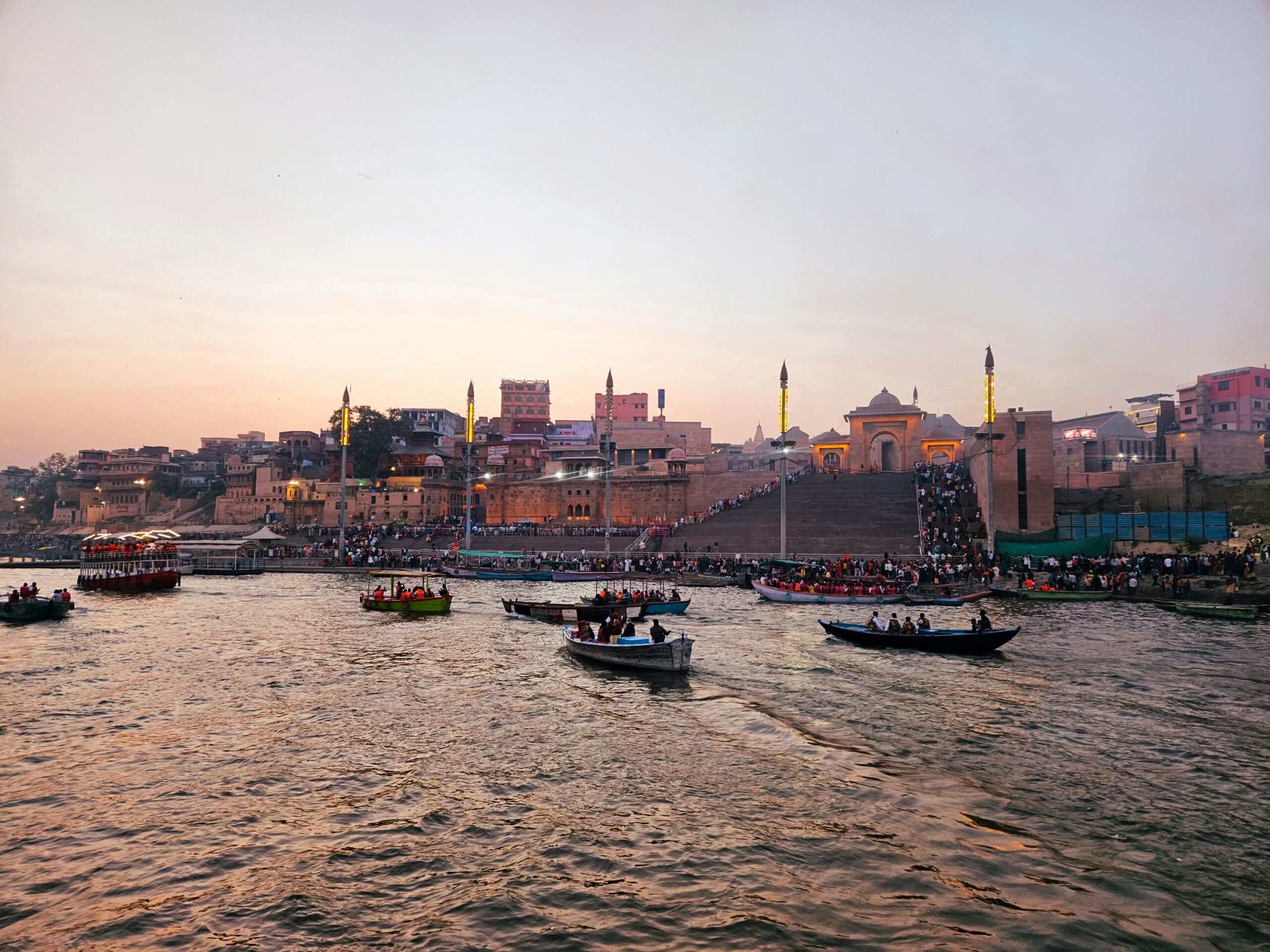
During Navratri, traffic in old city areas becomes challenging. Auto-rickshaws are your best bet for reaching major temples. For exploring old city lanes, walking is necessary and actually the best way to experience the festival atmosphere. Boats from Assi Ghat to Dashashwamedh Ghat offer river routes avoiding traffic while providing beautiful perspectives of the celebrating city.
Booking in Advance
Hotels, train tickets, and flights fill up quickly during Navratri-Dussehra period. Book at least 2-3 months in advance for good options. If you’re planning to attend specific cultural programs at venues like Sankat Mochan, check if advance tickets are available. For special temple darshans with shorter queues, many temples offer online booking—check their official websites.
Streets Come Alive
Walking through Banaras during Navratri is sensory overload in the best way. Streets are decorated with lights and banners. Temporary shops sell flowers, puja items, and snacks. Loudspeakers broadcast bhajans and announcements. Processions carrying goddess idols or Ramlila actors in costume appear suddenly, accompanied by drums and dancing crowds. The energy is infectious—you can’t help but get swept up in the celebration.
The Sound of Devotion
Close your eyes anywhere in Banaras during Navratri and you’ll hear layers of sound—temple bells, aarti conch shells, bhajan singing, loudspeakers chanting mantras, drums from Ramlila performances, vendors calling out, children laughing. This constant soundscape might seem chaotic, but there’s a rhythm to it. It’s the sound of millions of hearts united in devotion, and it’s strangely harmonious.
Community Spirit
One of Navratri’s most beautiful aspects is the community spirit it creates. Rich and poor, young and old, locals and visitors—all come together in celebration. Pandal committees serve free food. Neighbors help each other with puja arrangements. Strangers become friends as they stand in temple queues together. This sense of collective joy and shared purpose is what makes Navratri in Banaras truly special.
Photography Opportunities
Temple Decorations
The artistic decorations at temples and pandals offer stunning photography subjects. The interplay of lights, flowers, fabrics, and traditional motifs creates visually rich compositions. The Durga Kund Temple with its illuminated spires and the decorated pandals at Bengali Tola are particularly photogenic. Early morning and evening golden hours provide the best natural lighting.
Processions and Ceremonies
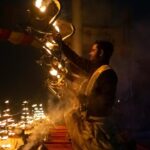
The Durga Visarjan processions on Dussehra are photography goldmines—colorful idols, traditional music, devotees dancing, dramatic Ganges backdrops. Aarti ceremonies with their fire offerings, ringing bells, and devotees’ expressions of faith make compelling subjects. The Sandhi Puja’s intensity, captured in devotees’ faces and the frenzied ritual activity, tells powerful stories.
Candid Moments of Devotion
The most moving photographs often come from unguarded moments—an elderly woman’s tears during aarti, a child’s wonder seeing the decorated goddess, priests deep in ritual concentration, friends laughing while pandal hopping. These human moments against Banaras’s ancient backdrop create photographs with soul.
The Culmination
While Navratri celebrates the goddess’s nine-day battle, Dussehra (Vijayadashami) celebrates her ultimate victory. The tenth day marks triumph of good over evil, virtue over vice, knowledge over ignorance. In Banaras, this culmination brings the festival’s energy to a crescendo before the celebratory release of Durga Visarjan.
Ramlila’s Grand Finale
Dussehra also celebrates Lord Rama’s victory over Ravana, which is why Ramlila performances reach their climax on this day. The final episode depicts the great battle and Ravana’s death. The connection between Durga’s victory over Mahishasura and Rama’s victory over Ravana—both representing dharma’s triumph—makes Dussehra a double celebration.
Ravana Dahan Celebrations
The burning of Ravana’s effigy (Ravana Dahan) on Dussehra evening is spectacularly popular in Banaras. Multiple locations across the city host effigy burnings. The Ramnagar Fort grounds see the grandest celebration with massive effigies of Ravana, his son Meghnath, and brother Kumbhakarna being set ablaze accompanied by fireworks. Thousands gather to witness this symbolic destruction of evil, cheering as flames consume the demon king.
Conclusion
Experiencing Navratri in Banaras isn’t just attending a festival—it’s witnessing a city transform into a living expression of devotion. For nine days and nights, this ancient city’s spiritual energy intensifies, creating an atmosphere where the sacred feels tangible and the divine seems within reach.
From the first moment when Ghatasthapana establishes the goddess’s presence, through the nine days of worship honoring her different forms, to the emotional farewell during Visarjan, Navratri takes you on a journey. It’s a journey through India’s rich traditions, through communal celebration, through personal devotion, and ultimately, through your own spiritual depths.
Whether you find yourself moved to tears during an aarti, dancing in a Visarjan procession, savoring special prasad, watching skilled artisans create gorgeous pandals, or simply sitting by the Ganges absorbing the devotional atmosphere—Navratri in Banaras will touch something deep within you.
The goddess may depart on the tenth day, but her blessings remain. And the memories of celebrating her victory in this timeless city along the sacred river will stay with you forever, calling you back to experience the divine feminine’s power once again in the eternal city of Kashi.
FAQs
Navratri dates change annually as they’re based on the Hindu lunar calendar. Sharad Navratri typically falls in September or October, while Chaitra Navratri occurs in March or April. For 2025, Sharad Navratri is expected around early October (exact dates will be announced based on lunar calculations). The festival begins on the first day of the bright fortnight in the Hindu month and continues for nine days, concluding with Vijayadashami (Dussehra) on the tenth day. Check Hindu calendar websites or local Varanasi tourism websites for precise dates as they’re announced several months in advance.
Absolutely! Banaras welcomes visitors of all faiths to experience Navratri celebrations . Most temples allow everyone to attend aartis and observe ceremonies. However, some temple inner sanctums may be restricted to Hindus only—respect these restrictions. Pandals and cultural programs are completely open to all. Show respect by dressing modestly, following temple rules about footwear and photography, and maintaining quiet reverence during ceremonies. Most Banaras residents appreciate respectful interest from visitors of all backgrounds who want to experience and understand their traditions.
Banaras is generally safe during Navratri, with large crowds and heightened security around temples and celebration areas. However, women traveling alone should take standard precautions: stay in reputable accommodations, avoid isolated areas late at night, use registered taxis or autos, keep valuable jewelry minimal, and stay aware of surroundings in crowded spaces. During busy times like Sandhi Puja when temples are extremely crowded, unwanted touching can occur—stay alert and don’t hesitate to speak up. Many women travel solo to Banaras during Navratri without issues by following sensible safety practices.
Budget varies based on your accommodation and lifestyle choices. For a comfortable 4-5 day trip during Navratri: accommodation costs ₹1,500-3,000 per night for mid-range hotels (budget options available from ₹800); food costs approximately ₹500-800 daily; local transportation ₹300-500 daily; temple offerings and donations ₹500-1,000 total; shopping and miscellaneous ₹2,000-5,000. Total approximate budget: ₹15,000-25,000 per person for 5 days, excluding travel to/from Banaras. Budget travelers can manage with ₹8,000-12,000, while luxury seekers might spend ₹40,000+. Temple visits and most cultural programs are free.
Essential items include: modest traditional or conservative clothing (salwar kameez, kurtas, or modest western wear); comfortable walking shoes you can remove easily at temples; a scarf or dupatta (useful for women to cover heads in some temples); a small bag for carrying footwear; sunscreen and hat for daytime; medications including digestive aids; hand sanitizer; water bottle; power bank for your phone; small flashlight for navigating evening crowds; and cash in small denominations for offerings and purchases. If attending Sandhi Puja or night programs, carry a light shawl as evenings can be cool. Don’t overpack—you’ll buy festival items locally, and lighter luggage helps navigate crowded areas.