Best 3 Days Varanasi Itinerary for Family , Are you ready to take your family on a journey through one of the world’s oldest living cities? Varanasi isn’t just another tourist destination—it’s a living, breathing testament to thousands of years of continuous civilization, spirituality, and culture. But here’s what matters most for families: it’s also an incredible adventure that will captivate everyone from your curious six-year-old to your spiritually-inclined grandmother.
Planning a family trip to Varanasi might seem daunting at first. You’ve probably heard about the crowds, the intensity, the sensory overload. Maybe you’re wondering if it’s suitable for children, whether your teenagers will complain, or if elderly family members can manage the physical demands. Let me put your mind at ease: with the right itinerary and proper planning, Varanasi offers one of the most enriching family travel experiences you’ll ever have.
Why does three days work perfectly for families? It’s enough time to experience the essence of Varanasi without overwhelming younger travelers or exhausting anyone. You’ll witness the legendary Ganga Aarti ceremonies, take magical sunrise boat rides, explore ancient temples, taste incredible food, and even venture to nearby Sarnath—all while maintaining a comfortable pace that accommodates different ages and energy levels.
This isn’t just sightseeing. Your children will receive living history lessons that no textbook could provide. They’ll see traditions practiced continuously for millennia, experience a completely different worldview, and develop cultural awareness that will shape their understanding of the world. For parents and grandparents, it’s an opportunity to share profound spiritual and cultural experiences with the next generation.
Let’s design your perfect three-day family adventure in Varanasi—one that balances must-see attractions with rest time, mixes education with fun, and creates memories that your family will treasure forever.
Essential Pre-Trip Planning for Families
Before we dive into the daily itinerary, let’s cover the crucial planning elements that separate stressful family trips from smooth, enjoyable ones.
Choosing the Right Travel Season
Timing can make or break your family’s Varanasi experience. The ideal window for visiting with children is October through March, with November to February being the sweet spot. During these months, temperatures hover between 10-25°C (50-77°F)—comfortable for everyone from toddlers to grandparents.
Why avoid other seasons? April through June brings brutal heat that regularly exceeds 40°C (104°F). This isn’t just uncomfortable—it’s genuinely dangerous for children and can severely limit what you’re able to do. Imagine trying to keep energetic kids happy when stepping outside feels like walking into an oven!
The monsoon season (July-September) brings its own challenges. The ghats become slippery—a serious safety concern when you’re managing multiple children on ancient stone steps. Heavy rains can flood narrow lanes, and the high humidity makes everything feel exhausting.
Selecting Family-Friendly Accommodation
Location matters enormously when traveling with family. I strongly recommend staying near Assi Ghat rather than in the dense old city center. Why? Assi Ghat offers better infrastructure, wider streets, easier vehicle access, and a more relaxed atmosphere while still being authentically Varanasi.
What should you look for in family accommodation?
- Space: Family suites or interconnecting rooms so everyone isn’t cramped
- Reliable amenities: Strong air conditioning, hot water (winter mornings can be surprisingly cold), and backup power
- Elevator access: Crucial if traveling with elderly family members or young children
- In-house restaurant: Invaluable when children get hungry at odd hours or when you need a quick, safe meal option
- Swimming pool (if possible): A huge bonus for kids who need to burn energy
Some excellent family-friendly options include hotels like Rivatas by Ideal, Brijrama Palace (if budget allows), and various well-reviewed guesthouses in the Assi Ghat area. Always read recent family reviews before booking.
Smart Packing for Family Travel
Layering is your friend in Varanasi. Winter mornings can be genuinely cold (around 10°C/50°F), especially on the river, but by afternoon, you might be in t-shirts as temperatures climb to 25°C (77°F).
Essential items for every family member:
- Comfortable walking shoes with good grip (you’ll walk on uneven, sometimes slippery surfaces)
- Modest clothing (shoulders and knees covered for temple visits)
- Light jacket or sweater for early mornings
- Sun protection: hats, sunglasses, and sunscreen (yes, even in winter!)
Must-haves when traveling with children:
- Hand sanitizer and antibacterial wipes (absolute necessities—use them constantly!)
- Personal water bottles for everyone
- Healthy snacks (crackers, nuts, dried fruit) for hungry moments
- Basic medical kit: fever reducers, anti-diarrheal medication, band-aids, any prescription medicines
- Entertainment for downtime: books, tablets with downloaded content, cards, or travel games
- Backup phone charger and power bank
- Small flashlight or headlamp (power cuts happen, and lanes can be dark)
Setting Expectations with Your Family
Before leaving home, have honest conversations with your children about what they’ll experience. Show them photos and videos of Varanasi. Explain that they’ll see things very different from home—sacred cows wandering streets, people bathing in the river for religious reasons, cremation ceremonies, poverty alongside wealth, and intense crowds.
For younger children, frame it as an adventure story: “We’re going to a magical city that’s over 3,000 years old, where the river is so sacred that people travel from all over the world to visit it.”
For teenagers who might be skeptical, emphasize the unique aspects: “This is nothing like anywhere else you’ll ever go. The photography opportunities are incredible, and you’ll have stories none of your friends can match.”
Setting realistic expectations prevents overwhelm and helps everyone approach the experience with curiosity rather than anxiety.
Day 1: Gentle Introduction to Varanasi’s Soul
Morning: Arrival and Settlement (8:00 AM – 12:00 PM)
Let’s assume your family arrives in Varanasi in the morning, either by flight into Lal Bahadur Shastri International Airport (about 25 km from the city center) or by train at Varanasi Junction or Kashi Railway Station.
The journey from airport to Assi Ghat takes roughly 45 minutes to an hour, depending on traffic. If arriving by train, your hotel can arrange pickup—it’s worth the convenience when managing luggage and tired children.
Resist the temptation to rush out immediately! This is critical for successful family travel. Early morning journeys are exhausting, especially if you’ve changed time zones. Use your first few hours to:
- Check into your hotel and let everyone claim their space
- Take refreshing showers—you’ll feel human again
- Eat a proper breakfast at your hotel (familiar, safe food to start)
- Let younger children nap if needed
- Unpack enough to feel organized
Use this settling-in time productively. Sit with your family and brief them on what’s ahead today. Show them photos of the ghat you’ll visit. Explain what a ghat is, why the Ganges is sacred to millions of people, and what they might observe.
For children, I suggest saying something like: “Today we’re going to visit special steps that go down to a holy river. You’ll see people praying, taking baths because they believe the water is sacred, and boats on the river. It might seem strange at first, but we’re going to watch respectfully and learn about why these things are important to people here.”
Afternoon: First Ghat Experience at Assi Ghat (2:00 PM – 5:00 PM)
After a late lunch at your hotel or a nearby restaurant, head to Assi Ghat for your family’s first direct encounter with the Ganges and ghat life. Assi Ghat is perfect for this initial experience because it’s less overwhelming than the central ghats, has better facilities, and offers a more relaxed introduction to Varanasi’s intensity.
What makes Assi Ghat ideal for families? The ghat has wide steps where everyone can sit comfortably. The atmosphere is relatively peaceful—you’ll see local residents doing yoga, people meditating quietly, children flying kites, and colorful sadhus (holy men) sitting under umbrellas. It’s Varanasi, but at a gentler pace.
Activities at Assi Ghat:
Observation and learning: Simply sitting on the ghat steps watching life unfold is valuable. Point out interesting things to your children: the flower vendors selling marigold garlands for offerings, the priests conducting small ceremonies, the boats being painted and repaired, the different architectural styles of buildings lining the ghat.
Make it interactive: “Can you count how many boats you see?” “What colors are the buildings?” “Look at that person praying—they’re offering flowers to the river. Why do you think they do that?”
Short boat ride: Consider taking a 30-minute boat ride along this section of the Ganges. Most children love being on the water, and it gives a different perspective of the ghats. The boatmen are usually wonderful with families and will point out interesting sights. Negotiate the price beforehand (around ₹400-500 for 30 minutes is reasonable) and ensure there are enough life jackets if you feel they’re necessary.
Interact with local culture: Assi Ghat attracts many sadhus who are often happy to talk with visitors (some expect small donations). If your children are curious, this can be a fascinating cultural exchange—but always ask permission before photographing.
Café break: Assi Ghat has several family-friendly cafes with both Indian and Western food options. Take a break here for cold drinks, snacks, or just to use clean restrooms. The cafes also provide excellent people-watching vantage points where you can sit comfortably while children rest.
Evening: Assi Ghat Evening Aarti (5:30 PM – 7:00 PM)
Assi Ghat hosts its own evening Ganga Aarti, which is absolutely perfect for a family’s first aarti experience. It’s much smaller and less crowded than the famous Dashashwamedh Ghat ceremony, making it ideal for children who might feel overwhelmed by massive crowds or have shorter attention spans.
The aarti usually begins around 6:00 PM in winter (timings shift with sunset times across seasons). Arrive 20-30 minutes early to secure good seating positions on the steps—being comfortable makes a huge difference in how much everyone enjoys the experience.
What will your family witness?
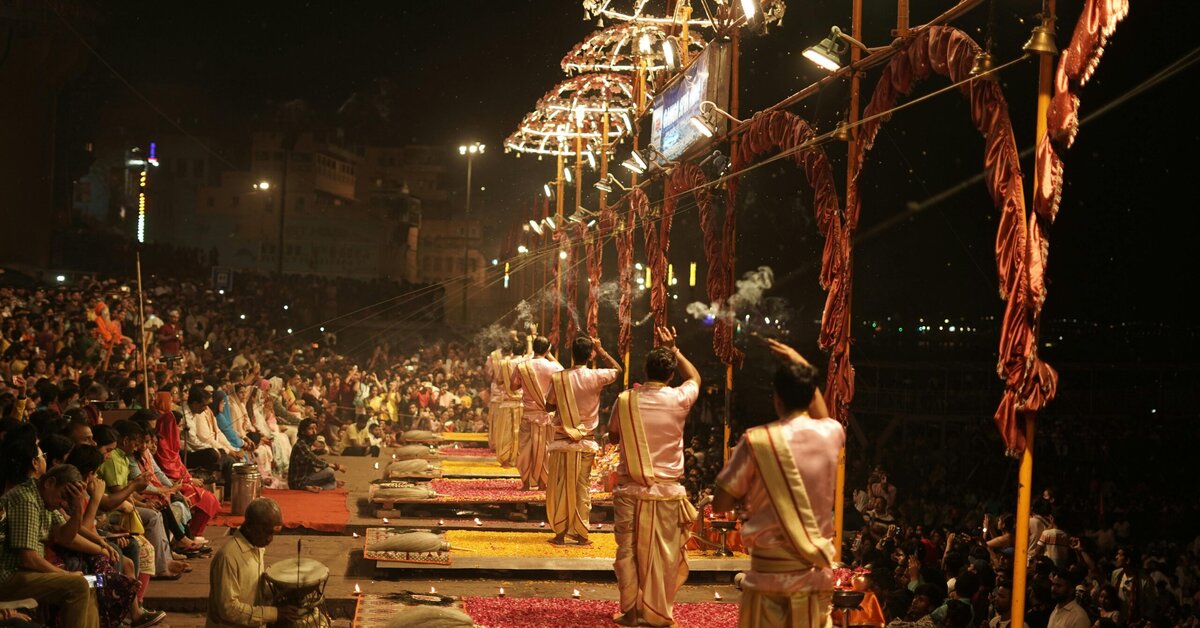
As evening settles, priests dressed in saffron-colored traditional attire assemble on a platform at the ghat. They begin the ceremony with the ringing of bells and blowing of conch shells—sounds that have signaled this ritual for thousands of years.
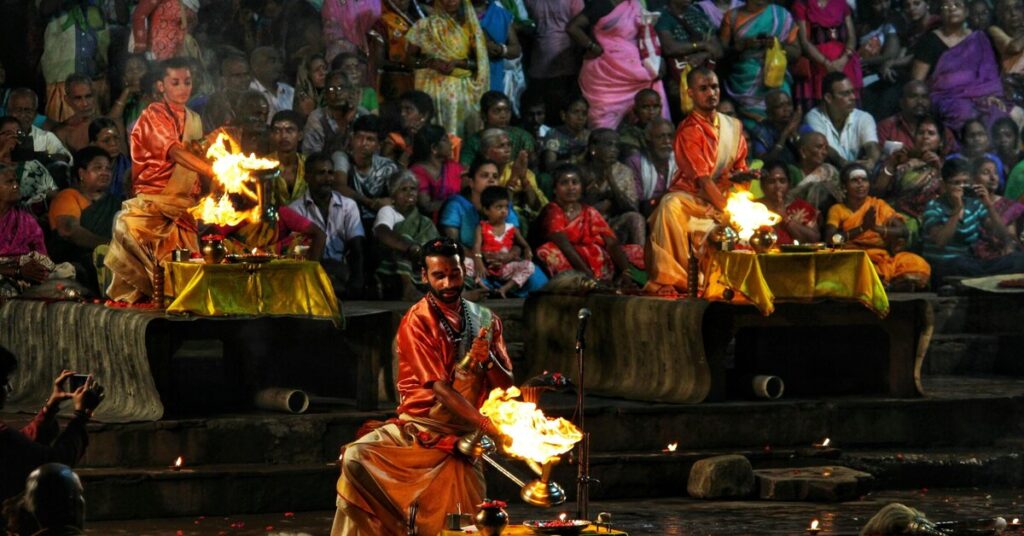
The priests perform synchronized movements with large brass lamps (diyas) containing multiple wicks. These lamps are moved in elaborate circular patterns—offered to the river, the sky, and the four directions. The flames create beautiful designs in the dimming light, and their reflection dances on the river’s surface.
The entire ceremony is accompanied by devotional chanting (mantras), music, and the aromatic smoke of incense. The atmosphere becomes almost hypnotic—even children typically sit quietly, mesmerized by the spectacle.
Engaging children during the aarti:
Before it begins, explain: “This is a ceremony to honor the river and give thanks. It’s been done the same way for thousands of years. Watch how the priests move together perfectly.”
During the ceremony, let them observe without too much narration—the experience speaks for itself. After it ends, ask questions: “What did you notice?” “How did it make you feel?” “Why do you think people do this every single evening?”
This aarti lasts about 30-45 minutes—manageable for most children’s attention spans. If younger children get restless, you can discreetly move to the back or side without disturbing others.
Dinner: Comfortable Family Meal (7:30 PM – 9:00 PM)
After the spiritual intensity of the aarti, everyone will be ready for food! Return to your hotel restaurant or visit one of Assi Ghat’s family-friendly eateries.
Recommended family restaurants near Assi Ghat:
Brown Bread Bakery: Run by a charitable organization (Learn for Life Society), this café serves excellent food—both Indian and continental options. The menu includes pizzas, pastas, sandwiches, Indian curries, and great desserts. The atmosphere is relaxed, the staff are friendly with children, and profits support education programs for underprivileged kids—it feels good to eat here!
Open Hand Café: Another multi-cuisine option with comfortable seating and a diverse menu. They can adjust spice levels, and they’re used to serving families with varying food preferences.
Pizzeria Vatika Café: Despite the name, they serve much more than pizza. Good Indian options alongside familiar Western food—perfect when your family has different preferences.
First-day dinner strategy: Don’t push adventurous eating on Day 1, especially if you have jet-lagged or tired children. Familiar comfort food is perfectly fine—there’s plenty of time to explore Indian cuisine over the next two days when everyone is rested and adjusted.
After dinner, return to your hotel early. First days in intense new environments are exhausting, even when they’re amazing. An early bedtime ensures everyone is refreshed for the early morning adventure on Day 2.
Day 2: Sunrise Magic, Sarnath Serenity, and Evening Spectacle
Pre-Dawn: Sunrise Boat Ride Preparation (5:00 AM – 5:45 AM)
I know—waking children before dawn sounds like a recipe for disaster. But trust me on this: the sunrise boat ride on the Ganges will become one of your family’s most treasured memories from the entire trip. The experience is so magical that even the grumpiest teenager tends to forget they were woken up early!
Wake-up strategy:
Set multiple alarms (5:00 AM). Have light snacks ready—biscuits, bananas, or granola bars. Don’t attempt a full breakfast; you’ll eat properly after the boat ride. Make hot beverages for adults and warm milk for children.
Dress in layers—it’s genuinely cold on the river before sunrise, especially in December and January. Think: long pants, long-sleeved shirts, sweaters or light jackets, and scarves. You can always remove layers as the sun rises and temperatures warm, but you can’t add warmth you didn’t bring!
Leave your hotel by 5:30 AM. If staying near Assi Ghat, you’re perfectly positioned. If staying elsewhere, arrange transportation the night before so there’s no morning confusion.
Early Morning: Sunrise Boat Ride (5:45 AM – 7:45 AM)
Head to Dashashwamedh Ghat, Assi Ghat, or wherever your pre-arranged boatman will meet you. This boat ride should cover the stretch from Assi Ghat to Manikarnika Ghat (the main cremation ghat) and back—a journey of about 1.5 to 2 hours.
Pre-negotiated boat costs: ₹600-800 for the boat (not per person) for a 2-hour ride is reasonable. Confirm the route and duration before starting. Most boatmen are photographers at heart and will offer to take family photos with the sunrise and ghats as backdrop—definitely take advantage of this!
Why is this experience so special?
As your boat glides away from the ghat in the predawn darkness, the city is just waking up. Gradually, the eastern sky begins to lighten—first dark blue, then navy, then shades of purple, orange, and finally brilliant gold as the sun emerges.
As light spreads, the ghats come alive with morning activities. You’ll pass people performing surya namaskar (sun salutations), priests conducting private ceremonies, devotees taking ritual baths, children playing, and elderly people sitting in quiet meditation.
Each ghat has its own character: some are vibrant and crowded, others peaceful and contemplative. You’ll see laundry being washed (dhobi ghats), buffaloes being bathed, silk merchants opening shops, and flower sellers arranging their colorful offerings.
The morning light transforms everything—golden sunlight illuminates the ancient buildings, creates long shadows on the steps, and sparkles on the river’s surface. It’s photographer’s paradise, and even children with smartphones will capture stunning images.
Passing Manikarnika Ghat:
You’ll pass Manikarnika Ghat, where cremations occur continuously, 24 hours a day. This is Varanasi’s main cremation ghat—for Hindus, being cremated here ensures moksha (liberation from the cycle of rebirth).
How to handle this with children?
Prepare them beforehand: “We’re going to pass a place where Hindu people cremate their loved ones. It might look different from what we’re used to, but it’s very sacred to them. We’ll pass by respectfully and quietly.”
Most children handle this better than parents expect. From the boat, you’re at a respectful distance. If a child seems disturbed, simply turn their attention elsewhere without making a big deal of it—”Look at those beautiful flower garlands” or “See that beautiful building?”
For older children and teenagers, this can spark important conversations about different cultural practices around death, the concept of the soul, and how various traditions help people cope with loss.
Engaging different ages during the boat ride:
Younger children (3-7): Play gentle games—”Can you spot a cow?” “Count how many boats we pass.” “What colors do you see?” Give them your phone or camera to take photos—children love having this responsibility.
Children (8-12): Explain what’s happening at different ghats. Tell them stories from Hindu mythology about the Ganges. Challenge them to sketch or write about what they observe.
Teenagers: Let them experience it somewhat independently—they’ll often put in earbuds and just absorb the scene. Respect their need for some internal processing. Many teenagers are profoundly moved by this experience in ways they don’t express immediately.
Adults and elderly: This quiet morning time on the river often becomes deeply meditative and spiritual, regardless of personal religious beliefs. There’s something profound about witnessing these ancient rituals that connects humans across cultures and generations.
Morning: Breakfast and Rest (8:00 AM – 11:00 AM)
After the boat ride, everyone will be hungry and ready for a substantial breakfast. Head to a good café or restaurant for a proper meal.
Recommended breakfast spots:
Dolphin Restaurant (near Meer Ghat): Offers rooftop seating with beautiful ghat views. Serves both Indian breakfast options (parathas, poha, idli-sambar) and continental choices (eggs, toast, pancakes, fresh fruit).
Brown Bread Bakery: Excellent breakfast menu with freshly baked breads, spreads, eggs prepared various ways, and good coffee.
Your hotel restaurant: Sometimes the most convenient option, especially if you have very young children who need to use the bathroom or are getting overtired.
After breakfast, return to your hotel for mandatory rest time. This is absolutely crucial for successful family travel! The early wake-up and sensory intensity of the boat ride are exhausting, even when they’re wonderful.
Give everyone 1-2 hours for rest. Younger children might nap. Older kids can relax, organize photos, or journal about their experiences. Adults can rest, plan the afternoon, or simply decompress.
This downtime is when experiences actually process and become meaningful memories. Don’t skip it in an attempt to see more things—you’ll end up with cranky, overtired family members who can’t enjoy anything.
Late Morning to Afternoon: Sarnath Excursion (11:00 AM – 4:00 PM)
Sarnath, located just 10 kilometers northeast of Varanasi, makes a perfect half-day family excursion. This is one of Buddhism’s four most sacred sites—where Buddha delivered his first sermon after attaining enlightenment.
Why Sarnath is perfect for families:
The contrast with Varanasi is remarkable. After the intensity and crowds of the old city, Sarnath feels spacious, peaceful, and organized. There’s room for children to move around freely. The temperature is usually slightly cooler due to more vegetation. And there’s genuine historical and educational value that even children can appreciate.
Transportation: Hire a private car with driver for the round trip—it costs around ₹1,000-1,500 for the half-day and eliminates all transportation stress. The drive takes about 30-40 minutes each way.
What to see and do in Sarnath:
1. Dhamek Stupa (30-45 minutes)
Start with the Dhamek Stupa, a massive cylindrical structure that’s been standing for over 1,500 years. At 43.6 meters high and 28 meters in diameter, its sheer size impresses children.
Tell them: “This was built piece by piece, brick by brick, over 1,500 years ago. Imagine how many people worked on it! It marks the exact spot where Buddha gave his first teaching.”
Walk around the stupa (Buddhists traditionally circle clockwise as a sign of respect). The surrounding deer park (Mrigadava) is where Buddha preached, and it’s beautifully maintained with green lawns—children can actually run around a bit here, which they probably need after sitting in the car!
Look for the archaeological ruins of monasteries surrounding the stupa. Unlike many roped-off monuments, children can actually walk through these ruins, touching ancient bricks and imagining monks living here centuries ago. This tactile, hands-on experience makes history real.
2. Sarnath Archaeological Museum (45 minutes to 1 hour)
This small but excellent museum houses some of India’s most important Buddhist artifacts. The star attraction is the original Ashoka Pillar lion capital—the symbol that became India’s national emblem (the one you see on every rupee coin and official document).
The museum is air-conditioned, clean, and well-maintained—a comfortable environment for families. It’s small enough that you won’t exhaust children with hours of walking, but substantial enough to be worthwhile.
Making the museum engaging for children:
Younger children: “Let’s find the four lions! Can you see which way each lion is looking? Why do you think they made this?”
Older children: Explain the symbolism—the four lions represent Buddha’s teaching spreading in all directions, the wheel represents the dharma (Buddhist teachings), and the different animals on the base have specific meanings.
Teenagers: The historical context fascinates many teens—Emperor Ashoka’s transformation from a violent conqueror to a Buddhist peace advocate after the bloody Kalinga War is a compelling story.
The museum also displays beautiful Buddha statues, carved stone panels, and artifacts from the monasteries. Even if your family isn’t particularly interested in Buddhism, the artistic and historical value is significant.
3. Mulagandha Kuti Vihar Temple (30 minutes)
This modern temple (built 1931) features stunning frescoes painted by Japanese artist Kosetsu Nosu depicting scenes from Buddha’s life. The artwork is beautiful and helps children visualize Buddhist stories.
The temple is active, so you might witness monks chanting or meditating—another meaningful cultural experience. The atmosphere is peaceful and welcoming to visitors of all backgrounds.
The beautiful gardens surrounding the temple provide a nice space for children to relax before returning to Varanasi’s intensity.
4. Lunch in Sarnath (30-45 minutes)
Several simple restaurants near the temple complex serve clean, vegetarian food (Sarnath maintains a Buddhist vegetarian tradition). The food is basic but safe and satisfying.
Alternatively, pack snacks and have a picnic in the deer park grounds—children often enjoy this more than restaurant meals, and the outdoor setting is pleasant.
Late Afternoon: Return and Rest (4:00 PM – 6:00 PM)
Return to Varanasi by around 4:00 PM. After the Sarnath excursion, everyone needs another rest period before the evening’s main event.
Use this time for:
- Quick showers to refresh
- Light snacks
- Organizing photos from the amazing morning boat ride
- Mental preparation for the Dashashwamedh Ghat Ganga Aarti—tonight’s big experience!
Evening: The Grand Dashashwamedh Ghat Ganga Aarti (6:00 PM – 8:30 PM)
Tonight, you’ll experience the most famous ceremony in Varanasi—the spectacular Ganga Aarti at Dashashwamedh Ghat. This is the “big show”—far larger and more elaborate than yesterday’s intimate aarti at Assi Ghat.
The scale and spectacle:
Seven young priests, dressed in matching traditional attire, perform perfectly synchronized rituals on raised wooden platforms. They manipulate enormous multi-tiered brass lamps (some with 108 wicks!), ringing large bells, blowing conch shells, and moving in choreographed patterns while thousands of devotees watch.
The ceremony is accompanied by amplified devotional music, the smoke of incense and ritual fire, and the energy of a massive crowd—often 3,000-5,000 people during peak season. The visual spectacle is extraordinary, especially as darkness falls and the lamplight becomes more prominent against the night sky.
Strategic planning for families:
This aarti’s popularity creates crowd management challenges for families. Here are your best strategies:
Option 1: Very early arrival (recommended for most families)
Arrive 90 minutes before the aarti begins (it typically starts at 7:00 PM in winter, earlier in summer). This gives you time to secure good seating positions on the ghat steps before crowds arrive.
Look for spots:
- On the side platforms (less crowded than directly in front)
- Slightly elevated so children can see over people’s heads
- With something to lean against for comfort during the wait
- Near an edge or aisle for easier exit if needed
Bring items to make waiting comfortable: water bottles, snacks, perhaps a light blanket to sit on, and entertainment for children (books, tablets with downloaded content, card games).
Assign roles: have one or two adults secure the seating while others handle bathroom trips, purchase snacks, or manage restless children who can’t sit still for 90 minutes.
Option 2: Boat viewing (often best for families with young children)
Book seats on a boat anchored facing the aarti platforms. This costs extra (₹500-1,000 per person depending on season and negotiation) but offers significant advantages:
- Guaranteed excellent views without arriving super early
- Less crowded, more personal space
- Easier management of restless young children
- Ability to leave easily if someone gets overwhelmed
- Often safer feeling for parents worried about crowd management
The downside is you’re slightly more distant from the action and lose some of the immediate energy of being within the crowd. But for many families, especially those with children under 8, this is the superior option.
Option 3: Private ghat-side seating (premium option)
Some tour companies and ghat-side buildings offer reserved seating areas—essentially private balconies or platforms with chairs. This is the most expensive option (₹2,000+ per person) but provides the best combination of proximity and comfort. Worth considering for families with elderly members or those who want guaranteed comfort.
During the aarti:
The ceremony lasts about 45 minutes. Even children with short attention spans often become completely absorbed—the synchronized movements, the music, the flickering lamps, the crowd’s collective energy create a genuinely mesmerizing atmosphere.
For younger children: Point out details—”Look how they’re all moving exactly together!” “See how big those lamps are—imagine how heavy they must be!” “Listen to all the bells ringing!”
For older children and teens: Let them photograph and video (not with flash). This gives them a participatory role. Afterward, ask what stood out to them or how it compared to yesterday’s smaller aarti.
After the aarti:
The crowd disperses slowly. Don’t rush—trying to push through dense crowds with children is stressful and potentially unsafe. Stay seated for 10-15 minutes while the initial crush clears, then make your way out calmly.
Dinner: Celebrating a Full Day (8:30 PM – 10:00 PM)
After two amazing experiences today (sunrise boat ride and grand aarti), your family deserves a good dinner!
Restaurant recommendations:
Kashi Chat Bhandar (near Dashashwamedh Ghat): If your family is ready for authentic North Indian street food in a sit-down setting. Famous for chaat, kachoris, and sweets. Not for the very conservative eater, but excellent if your family is adventurous.
Dosa Café (Assi Ghat): South Indian cuisine (dosas, idlis, uttapams) which many children love. The food is naturally vegetarian, relatively mild, and filling.
Pizzeria Vatika or Brown Bread Bakery: If you need familiar comfort food after an intense day—no judgment! Sometimes pizza or pasta is exactly what tired children need.
Your hotel restaurant: Often the path of least resistance after a long day, and that’s perfectly fine.
After dinner, return to your hotel. Day 2 has been packed with experiences—sunrise boat ride, Sarnath exploration, and the grand aarti. Everyone will be ready for a good night’s sleep before tomorrow’s final day of adventures.
Day 3: Temples, Markets, and Meaningful Farewells
Morning: Kashi Vishwanath Temple Complex (8:00 AM – 10:30 AM)
Start your final day with a visit to Varanasi’s most sacred Hindu temple—the Kashi Vishwanath Temple, dedicated to Lord Shiva. This temple has been the spiritual heart of Varanasi for over a thousand years.
Recent transformations:
The temple complex underwent massive redevelopment recently, creating a much more accessible and manageable experience for visitors, including families. The new complex includes:
- Wide pedestrian pathways (no more navigating impossibly narrow lanes!)
- Better security and organization
- Clean facilities including restrooms
- Multiple entry and exit points reducing crowd congestion
- Beautiful lighting and landscaping
Important information for families:
Entry restrictions: Non-Hindus cannot enter the inner sanctum where the main Shiva lingam (sacred symbol) resides. However, non-Hindus can visit the complex, view the temple from designated areas, and experience the overall atmosphere.
If your family includes both Hindus and non-Hindus, decide whether Hindu family members want to enter the inner sanctum separately while others wait, or if everyone prefers to experience the complex together from the permitted areas. There’s no wrong choice—both offer meaningful experiences.
What to expect:
The temple attracts thousands of devotees daily, creating an atmosphere of intense spiritual energy. You’ll hear constant chanting, see priests conducting ceremonies, observe devotees offering flowers and milk to Shiva, and experience Hinduism as a living, practicing tradition rather than something in history books.
Practical considerations:
Security: Everyone must pass through security screening. No electronics are allowed inside—phones, cameras, power banks, smartwatches, tablets must all be deposited at secure counters near the entrance. You’ll receive a token and can collect items when leaving.
Given this rule, don’t bring valuables you don’t need. Carry only essentials: ID, money, and any religious items you want to offer.
Dress code: Modest clothing required—shoulders and knees covered for everyone. No shorts, short skirts, or sleeveless tops.
Timing: Early morning (8:00-10:00 AM) is generally less crowded than later in the day. Avoid Mondays if possible—Monday is especially sacred to Shiva, creating massive crowds.
Footwear: You’ll remove shoes before entering the temple complex. Some areas have shoe storage facilities; in others, you’ll walk barefoot. The pathways are clean but prepare children for this experience.
Teaching moments:
Use this visit to explain Hindu beliefs about Shiva (the destroyer and transformer), the significance of temples as divine dwellings, and why pilgrimage is important in Hinduism.
For younger children: “This is like the home of a god named Shiva. People come from all over India to pray here. Let’s be very quiet and respectful, just like we would be visiting someone important.”
For older children and teens: Explain the historical significance—how this temple has been destroyed and rebuilt multiple times over centuries, becoming a symbol of resilience and faith.
Mid-Morning: Breakfast with a View (10:30 AM – 11:30 AM)
After the temple visit, everyone will be ready for breakfast. Head to one of Varanasi’s rooftop cafes for food with spectacular ghat views.
Recommended spots:
Lotus Lounge (near Meer Ghat): Beautiful rooftop views of the Ganges, good food, and a relaxed atmosphere perfect for families.
Dolphin Restaurant: Another excellent rooftop option with extensive menus accommodating various preferences.
Brown Bread Bakery: If you’ve grown to love this place (many families do!), it’s perfect for breakfast too.
Use this relaxed breakfast time to reflect on your journey. Ask family members what’s been their favorite experience so far. Start processing all you’ve seen and done—these conversations are where family memories solidify.
Late Morning to Afternoon: Shopping and Exploration (11:30 AM – 3:00 PM)
Dedicate your final half-day to shopping and exploring Varanasi’s famous lanes and markets. This is where you’ll find unique souvenirs and experience the city’s commercial energy.
What to buy in Varanasi:
1. Banaras Silk (Banarasi Silk)
Varanasi is world-famous for silk weaving, particularly the elaborate Banarasi saris with intricate gold and silver brocade work. Even if you’re not buying full saris (which can cost thousands!), consider:
- Silk scarves and stoles (beautiful, portable souvenirs)
- Silk cushion covers
- Small silk pouches or bags
- For women: beautiful dupattas (long scarves worn with Indian outfits)
Where to buy: Thatheri Bazaar and shops around Godowlia Chowk offer good selection. For higher quality with fixed prices (no bargaining hassle), visit government emporiums like UP Handloom.
2. Brass and Metalwork
Varanasi’s brass industry produces everything from religious items to decorativepieces:
- Brass diyas (oil lamps)—practical and beautiful
- Small deity statues
- Bells and gongs
- Decorative plates and bowls
- Intricate brass jewelry
Where to buy: Thatheri Bazaar specializes in brassware. The name literally means “brass workers’ market”!
3. Wooden Toys and Crafts
Traditional lacquered wooden toys make wonderful gifts for children back home:
- Hand-painted animals
- Spinning tops
- Bangles and bracelets
- Small decorative boxes
These are authentic Indian crafts, reasonably priced, and children love them.
4. Rudraksha Beads and Spiritual Items
Varanasi offers excellent quality rudraksha malas (prayer beads), small Shiva lingams, prayer bells, and other spiritual items—meaningful souvenirs for the spiritually inclined.
5. Textiles and Clothing
Beyond silk, look for:
- Block-printed cotton fabrics
- Traditional kurtas and salwar kameez sets
- Bedspread and wall hangings
- Handwoven shawls
Shopping strategies for families:
Bargaining 101: In most shops and all street markets, bargaining is expected. Typical strategy: offer 40-50% of the asking price and negotiate from there. Don’t bargain aggressively—treat it as a friendly exchange.
Turn bargaining into a learning experience for older children: “In many cultures, bargaining is normal and even fun. It’s like a game where both sides try to reach a fair price.” Let teenagers try negotiating for small items under your supervision—it’s a valuable skill!
Manage expectations with young children: Shopping in crowded markets can be boring and frustrating for young kids. Consider:
- Taking turns—one adult shops while another takes children to a café or park
- Giving children a small budget (₹200-500) to pick their own souvenirs
- Planning shopping around children’s interests (toy shops, craft demonstrations)
- Keeping shopping sessions short (45 minutes max before breaks)
Quality and authenticity: Sadly, some shops sell fake “silk” and low-quality items at silk prices. Buy from established shops with good reviews. If buying expensive items, consider government emporiums where quality is assured (though prices are higher).
Silk weaving workshop visit: If time allows, visit a traditional silk weaving workshop. Many weavers work from homes in the Madanpura and Jaithpura areas. Watching a master weaver create intricate patterns on a hand loom is mesmerizing for all ages. Some workshops welcome visitors (small donations appreciated), while others are organized through tour companies.
Lunch: Final Varanasi Meal (1:30 PM – 2:30 PM)
For your last lunch in Varanasi, consider trying something you haven’t experienced yet:
Option 1: Traditional thali meal
A thali is a platter featuring multiple dishes—rice, bread, various curries, dal (lentils), raita (yogurt), chutney, and dessert. It’s an excellent way to sample variety, and most restaurants can adjust spice levels for children.
Recommended for thalis: Baati Chokha restaurant specializes in traditional Bihari cuisine. The baati chokha (baked wheat balls with mashed spiced vegetables) is interesting and not too challenging for most children.
Option 2: Lassi and street snacks
Varanasi’s lassi (yogurt drink) is legendary. The famous Blue Lassi shop has been operating for generations, serving lassi in earthen cups with endless flavor options.
Pair lassi with street snacks like samosas, kachoris, or chaat from clean, busy vendors. By Day 3, your family has likely adjusted enough to handle street food safely (assuming you choose wisely).
Option 3: Comfort food
If your family is ready for a break from Indian cuisine, places like Pizzeria Vatika offer excellent Western options. There’s no shame in wanting familiar food—three days of intense cultural immersion is a lot!
Afternoon: Final Cultural Experience or Relaxation (3:00 PM – 5:00 PM)
For your final afternoon, choose one of these options based on your family’s energy and interests:
Option 1: Classical Music Performance or Cultural Program
Varanasi is one of India’s great centers for classical music. Several venues offer afternoon performances or demonstrations:
- International Music Centre Ashram (Kabir Chaura): Often has performances or can arrange private demonstrations
- Sankat Mochan Temple: Sometimes hosts evening classical music events
- Various cultural centers around Assi Ghat
Even children unfamiliar with Indian classical music often find it fascinating when they can see the instruments up close and understand the tradition behind it.
Option 2: Visit Ramnagar Fort
Located across the Ganges, this 18th-century fort houses a quirky museum with vintage cars, royal palanquins, weapons, astronomical clocks, and other historical artifacts.
Children often love the vintage car collection—these are real maharaja vehicles, not reproductions! The fort itself is atmospheric, and you get different views of Varanasi from this side of the river.
To reach Ramnagar Fort, you can take a boat across (an adventure itself) or drive over the bridge (about 30 minutes from central Varanasi).
Option 3: Cooking Class
Several organizations offer short family-friendly cooking classes where you can learn to make Indian snacks or dishes:
- Brown Bread Bakery sometimes offers cooking classes
- Shashi Cooking Class (Assi Ghat area) is popular with families
- Various homestays and cultural centers offer cooking experiences
Children love the hands-on experience, and you take home skills to recreate Varanasi flavors long after your trip ends.
Option 4: Simply Relax and Reflect
After two intense days, maybe your family just needs unstructured time. Options:
- Relax at a nice café, letting children play or draw
- Return to your hotel pool if it has one
- Take a final leisurely walk along the ghats at your own pace
- Sit by the river and simply watch life unfold
- Organize photos and let family members share their favorite moments
Sometimes the best travel moments are unscheduled. Don’t feel pressured to squeeze in every possible activity.
Evening: Final Ghat Visit and Departure Preparations (5:00 PM – 7:00 PM)
Take one last walk along the ghats—perhaps revisiting Assi Ghat where your journey began, or exploring a section you haven’t visited yet.
This unstructured time often yields beautiful spontaneous experiences:
- Watching kite-flyers at sunset
- Seeing another small aarti at a different ghat
- Having a final conversation with your boatman or a friendly shopkeeper
- Taking last photos
- Purchasing final small souvenirs from ghat vendors
For many families, this quiet farewell to the Ganges becomes one of the most meaningful parts of the entire trip.
Reflection activity for children:
Give each family member a few minutes to share:
- Their favorite moment from the trip
- One thing that surprised them
- One thing they’ll always remember
- One thing they’ll tell friends about Varanasi
These conversations help process experiences and create shared family narratives that strengthen for years.
Dinner and Departure (7:00 PM onwards)
Have an early dinner, either at your hotel or at a favorite restaurant from the past few days. Often, families want to return to a place they particularly enjoyed—there’s comfort in the familiar after intense new experiences.
After dinner, final packing and hotel checkout. If you have a late-night departure, most hotels allow late checkout for an additional fee, or will at least let you store luggage and use common areas.
Departure to airport or train station:
Allow plenty of time—Varanasi traffic can be unpredictable, and narrow lanes near ghats can create delays. For flights, aim to leave 3 hours before departure. For trains, 90 minutes to 2 hours is usually sufficient.
As you drive away from Varanasi, take one last look at this extraordinary city. Your family has experienced something truly unique—a glimpse into one of humanity’s oldest continuous civilizations, a tradition that has survived and thrived for over 3,000 years.
Practical Tips for Different Family Configurations
Families with Toddlers and Preschoolers (Ages 0-5)
Biggest challenges:
- Maintaining routines in an unpredictable environment
- Managing overstimulation
- Safety in crowded, uneven terrain
- Food fussiness
Strategies that work:
- Prioritize sleep and nap schedules—build the itinerary around these
- Bring or buy familiar snacks and comfort foods
- Use baby carriers in addition to strollers (strollers are limited use in narrow lanes)
- Book accommodations with bathtubs if possible—familiar bath routines help
- Don’t force all experiences—it’s fine to have one parent stay with a sleeping toddler while others explore
- Lower expectations—seeing less is fine when traveling with very young children
Best parts of Varanasi for this age:
- Boat rides (the motion is often soothing)
- Watching animals (cows, dogs, monkeys, birds)
- Colors and lights of the aarti
- Playing in hotel pools or open spaces
Families with School-Age Children (Ages 6-12)
This age is often ideal for Varanasi! Children are old enough to appreciate experiences, young enough to be adaptable, and at the perfect age for learning.
Engagement strategies:
- Give them journals or sketchbooks to document experiences
- Assign “jobs”—official family photographer, cultural ambassador, navigator
- Create learning games: count temples, identify deities, learn Hindi numbers
- Let them interact with local children (with supervision)
- Encourage questions and provide age-appropriate answers
Best parts of Varanasi for this age:
- Everything, honestly—this age group typically loves Varanasi
- The boat rides are adventures
- The ghats are fascinating
- The food is interesting (if presented well)
- The cultural differences spark curiosity rather than anxiety
Families with Teenagers (Ages 13+)
Challenges:
- Potential resistance to unfamiliar experiences
- Need for independence and personal space
- Technology addiction and desire to stay connected
- Self-consciousness in unusual situations
Strategies:
- Give them some control over the itinerary
- Allow photography and social media (India has good connectivity)
- Provide philosophical and historical context that respects their intelligence
- Allow some independent exploration time (in safe areas, in groups if possible)
- Don’t over-explain or talk down to them
Best parts of Varanasi for this age:
- Photography opportunities (extremely Instagram-worthy)
- Philosophical and spiritual dimensions
- The exoticism and uniqueness (gives them stories peers don’t have)
- Street food adventures
- Shopping for unique items
Many teenagers initially skeptical about Varanasi end up profoundly moved by it. The key is allowing them to discover this in their own way rather than forcing appreciation.
Multigenerational Families (Including Grandparents)
Special considerations:
- Mobility limitations
- Health concerns
- Different stamina levels
- Potential for conflicting preferences
Strategies:
- Choose accommodations near Assi Ghat (better infrastructure)
- Don’t over-schedule—quality over quantity
- Book boat rides from accessible ghats
- Consider hiring wheelchair assistance if needed
- Build in substantial rest time for everyone
- Split up when necessary—some family members explore while others rest
Benefits: Multigenerational trips to Varanasi are often deeply meaningful. Grandparents may be more spiritually moved by the experience, creating profound conversations across generations. These shared experiences strengthen family bonds in lasting ways.
Health, Safety, and Practical Considerations
Staying Healthy
Water: Only bottled water, always. Check seals before opening. Even for brushing teeth, many travelers use bottled water to be safe. Avoid ice in drinks unless you’re certain it’s from purified water.
Food safety:
- Eat at busy restaurants (high turnover means fresh food)
- Avoid raw vegetables and unpeeled fruit from unknown sources
- Street food: choose vendors with visible cooking, high turnover, and clean setups
- Start with mild foods and gradually try spicier items
- Carry hand sanitizer and use it constantly, especially before eating
Common issues and solutions:
- Mild stomach upset: Usually resolves quickly. Stay hydrated, eat simple foods (rice, toast, bananas), and use over-the-counter remedies.
- Respiratory issues: Air quality can be poor. Sensitive individuals might benefit from masks. Stay indoors during particularly bad air quality days.
- Fatigue: Normal given the early mornings, heat, and sensory intensity. Built-in rest time is essential.
Medications to bring:
- Anti-diarrheal (Imodium or similar)
- Fever reducer/pain reliever
- Antihistamines
- Any prescription medications (bring extra)
- Antibiotic ointment for cuts and scrapes
- Basic first aid supplies
Safety Considerations
Varanasi is generally safe for families, but standard travel precautions apply:
Crowd safety:
- Keep young children’s hands held in dense crowds
- Establish a meeting point if someone gets separated
- Take photos of children each morning (record of what they’re wearing)
- Give older children cards with hotel name/address and emergency contacts
Traffic safety:
- Traffic is chaotic—teach children to never step into roads without adult guidance
- Watch for motorcycles and cycles in narrow lanes
- Be alert even in pedestrian areas
Valuables:
- Use hotel safes for passports and extra cash
- Carry only what you need for the day
- Be discreet with expensive cameras and jewelry
Scams and touts:
- Ignore aggressive vendors and touts
- Never accept “free” services—they’re never free
- Book boats and tours through your hotel or reputable agencies
- Be wary of “officials” demanding fees—real officials don’t approach tourists
Women and girls:
- Dress modestly (cultural respect and practical safety)
- Be aware in very crowded situations
- Women traveling with family typically experience fewer issues than solo travelers
Money Matters
Cash is king in Varanasi. Many small vendors, boats, and even some restaurants don’t accept cards.
Budget estimates for a family of four (3 days):
- Accommodation: ₹3,000-10,000 per night depending on comfort level
- Meals: ₹2,000-4,000 per day
- Boat rides: ₹1,000-2,000 total
- Sarnath trip: ₹2,000-3,000 including transport and entry fees
- Shopping: Variable (₹5,000-50,000+ depending on purchases)
- Miscellaneous (snacks, tips, small purchases): ₹1,000-2,000 per day
Total estimated budget: ₹20,000-50,000+ (approximately $250-600 USD) depending on accommodation choices and shopping habits.
ATMs: Available throughout Varanasi, but can have long lines and sometimes run out of cash. Withdraw money from hotel or mall ATMs when possible (more reliable than street ATMs).
Tipping: Not traditionally expected everywhere, but appreciated:
- Boatmen: ₹100-200 extra if they did a great job
- Restaurant servers: 10% if service charge isn’t included
- Hotel staff: ₹50-100 for helpful service
- Guides: ₹500-1,000 per day depending on quality
What to Do If Things Go Wrong
Lost in the lanes: Varanasi’s old city is genuinely confusing. If lost:
- Don’t panic—locals are generally helpful
- Show hotel card to shopkeepers and ask directions
- Use Google Maps if you have data (surprisingly effective even in narrow lanes)
- Head toward the river and find a recognizable ghat
Medical emergency:
- Your hotel can direct you to the nearest good hospital
- Heritage Hospital and Shiv Prasad Gupta Hospital are reputable options
- Keep your travel insurance information accessible
- For minor issues, many hotels have relationships with doctors who make hotel visits
Lost items:
- Report to hotel immediately
- File police report if necessary for insurance claims
- Check with boatmen, restaurants, or shops where you recently visited
Child becomes ill:
- Most issues are minor (stomach upset, fatigue, mild cold)
- Hotel staff can recommend pediatricians
- Keep children hydrated and rested
- Don’t hesitate to seek medical attention if concerned
Making It Educational and Meaningful
Pre-Trip Preparation
Books to read together (age-appropriate selections):
- Hindu mythology stories (especially about Shiva and Ganga)
- “India: A Spiritual Adventure” (for teens)
- Picture books about Indian culture (for young children)
- Buddha’s life story before visiting Sarnath
Movies to watch:
- Documentaries about Varanasi
- “Samsara” (visually stunning, includes Varanasi scenes)
- Age-appropriate Bollywood films for cultural context
Research activities:
- Have children research one aspect of Varanasi to present to the family
- Look at maps together and learn about the Ganges
- Study basic Hindi phrases
- Learn about Hindu and Buddhist beliefs and practices
During the Trip
Active learning approaches:
- Journal writing: Each evening, have family members write or draw about the day
- Photography projects: Each child gets a theme to photograph
- Cultural interviews: Encourage conversations with locals (with supervision)
- Comparison exercises: How is this different from home? How is it similar?
Questions to discuss as a family:
- Why do you think the river is sacred to so many people?
- How do people’s beliefs affect how they live their daily lives?
- What can we learn from seeing different ways of life?
- How does history continue to influence the present here?
- What does “spirituality” mean, and how is it expressed in Varanasi?
Post-Trip Activities
Keeping memories alive:
- Create a family photo book or album
- Make a scrapbook with tickets, maps, photos, and journal entries
- Cook Indian meals together using recipes or techniques learned
- Share presentations at school (many teachers welcome this!)
- Stay connected with any people you met (if appropriate)
Deepening learning:
- Read more about Hinduism and Buddhism
- Study Indian history and geography
- Learn more Hindi phrases
- Explore Indian art and music
- Follow news about India to stay connected
Three days in Varanasi will challenge your family, fascinate your family, and quite possibly transform your family. This isn’t your typical beach vacation where everyone zones out individually. Varanasi demands presence, engagement, and openness to experiences that might initially feel uncomfortable.
But here’s what makes it extraordinary: these three days become shared family narratives that strengthen over time. Years from now, you’ll reference “Remember that sunrise boat ride in Varanasi?” or “Remember when we saw the Ganga Aarti together?” These shared experiences, especially ones that pushed you outside comfort zones, create family bonds that last lifetimes.
For children, Varanasi offers lessons that can’t be taught in classrooms: cultural humility, respect for different beliefs, awareness of how most of the world lives, and understanding that their way isn’t the only way. These lessons shape global citizens with empathy and perspective.
For parents, it’s an opportunity to model curiosity, respect, and adventurousness. Your children watch how you react to unfamiliar situations, how you treat people different from yourselves, and whether you approach differences with openness or judgment.
For grandparents, Varanasi often provides profound spiritual experiences and the joy of seeing younger generations encounter something genuinely meaningful.
Yes, there will be challenging moments. Someone will get tired and cranky. The food might upset a stomach. The crowds might feel overwhelming. The poverty might be disturbing. The intensity might exhaust you. That’s all part of the journey.
But you’ll also witness sunrises that take your breath away. You’ll see your children’s eyes widen with wonder at the evening aarti. You’ll have unexpected conversations with locals that reveal our common humanity. You’ll watch ancient traditions that have survived thousands of years. You’ll experience the sacred in everyday life.
Varanasi doesn’t change everyone who visits, but it changes many. Give yourselves permission to be affected by this place. Let it challenge your assumptions, broaden your perspectives, and deepen your family connections.
The ghats have welcomed pilgrims and seekers for over 3,000 years. Now they’re waiting to welcome your family. Are you ready for the journey?
FAQs
1. Is Varanasi too intense or inappropriate for young children?
Varanasi can be intense, but thousands of families visit successfully with children of all ages. The key is managing expectations and pacing. Children are often more adaptable than adults expect—they tend to find the boats, animals, colors, and activities fascinating rather than overwhelming. The main considerations are the presence of cremation ghats (which can be explained age-appropriately) and ensuring adequate rest time. Many families report that Varanasi was one of their children’s favorite travel experiences because it’s so different from anywhere else.
2. How do we handle the visible poverty and begging, especially with children asking questions?
This is one of the more challenging aspects of visiting Varanasi with children. Be honest: explain that not everyone has the same opportunities and resources. Discuss why direct giving can be complicated (encouraging begging, exploitation of children by adults, etc.). Instead, consider donating to reputable organizations working in Varanasi, eating at social enterprises like Brown Bread Bakery that support education programs, or contributing to your hotel’s community initiatives. Use these observations to spark conversations about global inequality, gratitude, and social responsibility—valuable lessons for children.
3. Can we find child-friendly food, or will picky eaters struggle?
Varanasi has plenty of options for picky eaters. Areas like Assi Ghat have cafes serving continental food (pizza, pasta, sandwiches), and most restaurants can prepare mild versions of Indian dishes. Familiar items like rice, plain naan bread, grilled chicken, French fries, and fresh fruit are widely available. Hotels typically offer multiple cuisine options at breakfast. While it’s wonderful to introduce children to Indian cuisine, you won’t starve them if they refuse!
4. What if our departure is scheduled for Day 2 or we only have 2 days instead of 3?
A 2-day itinerary can still be meaningful by prioritizing key experiences: Day 1—arrival, Assi Ghat exploration, and small aarti; Day 2—early sunrise boat ride, rest, then Dashashwamedh Ghat grand aarti. Skip Sarnath and shopping unless they’re priorities for your family. Two days gives you Varanasi’s essence even if less comprehensive. If departing mid-Day 2, do the sunrise boat ride on Day 2 morning, followed by light temple/market exploration before departure.
5. Is it safe to take the sunrise boat ride with young children who can’t swim?
Yes, with reasonable precautions. The Ganges at Varanasi flows relatively calmly (not rapids or rough water). Boats are stable, wooden vessels. Boatmen are experienced and safety-conscious. If concerned, request life jackets (availability varies—your hotel can arrange boats with life jackets). Sit in the middle of the boat, keep young children between adults, and stay seated during the ride. In decades of operating sunrise boat rides, serious accidents are extremely rare. The greater “danger” is actually keeping children quiet and still enough to enjoy the peaceful atmosphere!