

Varanasi Guided Temple Tour for First-Time Visitors , Varanasi’s maze of ancient temples can overwhelm first-time visitors confronting the city’s sensory intensity, complex religious practices, and labyrinthine geography. A guided temple tour specifically designed for newcomers transforms potential confusion into meaningful introduction, providing essential context, navigational assistance, and cultural interpretation that enable confident, respectful engagement with one of Hinduism’s holiest cities. This comprehensive guide explores how professional guidance elevates first visits from disorienting experiences into profound spiritual and cultural journeys that establish foundations for deeper future exploration.
Why First-Time Visitors Need Guided Tours
Varanasi Guided Temple Tour for First-Time Visitors , Varanasi operates according to rhythms, customs, and spatial logic unfamiliar to most first-time visitors, particularly those from Western backgrounds or without extensive Hindu religious knowledge. The city presents immediate challenges: narrow, confusing lanes where GPS fails; temple protocols varying by location; appropriate behavior at cremation ghats; distinguishing authentic spiritual practices from tourist performances; and navigating aggressive touts, unauthorized guides, and potential scams targeting obvious newcomers.
Professional guides eliminate these obstacles while providing invaluable educational context. They navigate efficiently through congested old city lanes, handle security protocols at major temples, explain religious symbolism and mythology underlying architectural features, interpret ceremonies and rituals occurring around you, facilitate appropriate darshan etiquette, and protect you from common tourist traps and overcharging. Beyond practical logistics, quality guides function as cultural interpreters bridging the vast gap between visitors’ backgrounds and Varanasi’s complex Hindu spirituality.
First-time visitors particularly benefit from guides’ ability to calibrate explanations to your knowledge level and interests. Whether you’re a devout Hindu seeking traditional pilgrimage experiences, a spiritual seeker exploring diverse traditions, or a curious traveler interested primarily in history and culture, good guides adjust commentary accordingly rather than delivering one-size-fits-all narratives inappropriate for your actual engagement level.
Essential Temples in First-Time Itineraries
Thoughtfully designed first-time temple tours balance must-see major sites with manageably paced experiences avoiding exhausting temple-hopping that produces confusion rather than understanding. Typical tours cover 5-7 temples over 4-6 hours, allowing adequate time at each location for explanation, observation, and personal reflection.
Kashi Vishwanath Temple naturally anchors every first-time itinerary as one of Hinduism’s twelve Jyotirlingas where Lord Shiva manifests as cosmic lord. Your guide navigates the complex security procedures (no cameras, phones must be deposited, only small bags permitted), explains the temple’s profound theological significance in Hindu cosmology, and guides appropriate darshan protocols. The intense crowds and security can overwhelm without guidance, but guides know optimal timing and efficient routes minimizing stress while maximizing meaningful engagement.
Sankat Mochan Hanuman Temple provides excellent counterpoint—spacious, less congested premises with welcoming atmosphere perfect for newcomers. Guides explain Hanuman’s role in Hindu devotional practice, share stories about temple founder Tulsidas, and help you understand different worship expressions—from elaborate puja ceremonies to simple offerings by everyday devotees. The temple’s relative accessibility makes it ideal for observing and photographing Hindu practices respectfully.
Durga Temple, recognizable by its distinctive red color and resident monkey population, showcases goddess worship traditions. Guides contextualize Durga within Hindu theological frameworks, explain tantric elements in worship practices, and share local legends about the temple’s origins. The active monkey presence requires caution—guides help navigate safely while appreciating the animals’ religious significance.
Tulsi Manas Temple offers architectural and literary interest beyond pure religious focus. Built relatively recently (1964) at the location where saint-poet Tulsidas composed the Ramcharitmanas, the marble temple features walls inscribed with verses from this beloved Hindi version of the Ramayana. Guides explain Tulsidas’s significance in making sacred texts accessible beyond Sanskrit scholars and the Ramcharitmanas’s continued influence in North Indian religious life.
New Vishwanath Temple at Banaras Hindu University campus provides modern temple contrast to ancient sites. The spacious premises, marble construction, and less intense atmosphere appeal to visitors overwhelmed by old city congestion. The temple’s scale and architectural grandeur impress, while guides explain how contemporary Hinduism maintains traditions while adapting to modern contexts.
Annapurna Temple near Kashi Vishwanath honors the goddess of nourishment. Guides explain the theological relationship between Annapurna (divine feminine energy) and Vishwanath (divine masculine consciousness), helping visitors understand Hindu concepts of complementary divine forces beyond Western monotheistic frameworks.
What Professional Guides Provide
Cultural Context and Interpretation represents guides’ most valuable contribution. When you observe priests performing elaborate rituals, guides explain each element’s symbolic meaning rather than leaving you watching confusing actions. They contextualize practices that might initially seem strange or primitive—ritual bathing in polluted rivers, elaborate offerings to stone statues—within sophisticated theological frameworks treating these as symbolic expressions of profound spiritual concepts rather than literal superstitions.
Logistical Navigation includes knowing which temple entrances avoid longest queues, where to safely deposit shoes and belongings, how to navigate security checkpoints efficiently, when temples close for afternoon breaks, and optimal timing to avoid both overwhelming crowds and disappointingly empty moments missing active worship.
Language Assistance proves essential for meaningful interaction. Guides translate temple priests’ blessings, help you communicate if you want specific pujas performed, explain donation expectations (protecting you from overcharging while ensuring appropriate contributions), and facilitate conversations with worshippers if opportunities arise for cross-cultural dialogue.
Photography Guidance includes knowing where photography is permitted versus prohibited, suggesting optimal angles and lighting for allowed photos, and ensuring your photography remains culturally sensitive—never pointing cameras toward cremation activities, asking permission before photographing identifiable individuals, and maintaining appropriate distance during intimate spiritual moments.
Safety and Scam Prevention means guides intervene when aggressive vendors target you, verify accurate pricing when purchases are appropriate, identify legitimate versus fraudulent “priests” offering unwanted services, and ensure safe navigation through crowded areas where pickpocketing occurs.
Tour Timing and Duration Considerations
Morning Tours (7:00 AM-12:00 PM) capture temples during active worship when spiritual atmosphere peaks. You’ll witness morning aarti ceremonies, observe devotees performing traditional rituals, and experience authentic religious life. However, mornings also bring larger crowds, particularly at Kashi Vishwanath. Morning tours work best for serious spiritual seekers or those interested in active religious observation rather than quiet architectural appreciation.
Afternoon Tours (2:00-6:00 PM) offer practical advantages—cooler temperatures during winter, fewer crowds at major temples, and more relaxed pacing. Many temples close 12:00-4:00 PM for afternoon breaks, requiring route planning around available sites. Afternoon tours suit those prioritizing architecture and cultural learning over witnessing peak devotional activities.
Full-Day Tours (8:00 AM-6:00 PM) provide comprehensive experiences including multiple temples, boat rides, lunch breaks, and possibly Sarnath visits. These work well for travelers with just one day in Varanasi wanting maximum coverage. However, full-day temple immersion can overwhelm first-timers—the sensory intensity, emotional impact of cremation ghats, and information overload sometimes prove excessive. Unless you have unusual stamina and genuine deep interest, half-day tours often provide more digestible, enjoyable experiences.
Choosing the Right Guide
Guide quality varies enormously, directly impacting experience quality. Government-Authorized Guides identified by official badges represent the safest, most reliable option. These guides pass examinations demonstrating knowledge and maintain standards protecting reputations. However, government authorization guarantees basic competence, not necessarily exceptional insight or personality fit.
Specialized Temple Guides often include brahmin priests or scholars with deep theological knowledge but variable language skills and tourist communication abilities. These guides excel at religious and philosophical explanation for genuinely interested visitors but may frustrate those wanting more general cultural overview or practical tourism orientation.
English Proficiency varies significantly. When booking, specifically request guides with excellent English if language quality matters greatly to your experience. Many guides speak functional English adequate for basic information but lack vocabulary for nuanced theological or historical discussions. Premium rates for guides with advanced English skills (often educated at universities or with extensive international tourist experience) prove worthwhile for intellectually curious visitors.
Personal Chemistry matters more than credentials sometimes. Reviews mentioning guides by name, emphasizing patience, humor, cultural sensitivity, and adaptability signal individuals transcending technical competence to create genuinely memorable experiences. Request specific well-reviewed guides when booking rather than accepting random assignments.
Pricing and Value Expectations
Professional guided temple tours typically cost ₹1,500-3,000 for half-day (4-5 hours) and ₹2,500-5,000 for full-day services. Government-authorized guides charge regulated rates, while private guides negotiate individually. Pricing generally includes guide services only—temple donations, transportation, meals, and entrance fees (minimal in Varanasi as most temples are free) cost extra.
Premium guides with exceptional English, specialized knowledge (art history, religious studies), or particular skills (photography guidance) command ₹3,500-6,000 for half-days. While expensive, these specialists deliver qualitatively different experiences—intellectually rigorous, highly personalized, and precisely calibrated to sophisticated interests.
Group tours with shared guides reduce per-person costs (₹500-1,000 per person) but sacrifice personalization and flexibility. First-time visitors often benefit more from private guides allowing question-asking without group pressure and pacing adjustments matching individual engagement levels.
Maximizing Your Guided Tour Experience
Prepare with Background Reading so guides build on foundations rather than starting from zero. Basic understanding of major Hindu gods (Shiva, Vishnu, Durga), concepts like dharma and moksha, and Varanasi’s overall significance enables guides to provide depth rather than remedial introduction.
Ask Questions Freely but avoid monopolizing time with endless interrogation. Good guides welcome sincere questions but need space to deliver structured information. Note questions arising during explanations, then ask during transitions between temples rather than interrupting mid-explanation.
Express Your Interests Clearly at the tour’s beginning. If you’re particularly interested in architecture versus theology, photography versus spiritual practice, women’s religious roles versus general overview, communicate this so guides can emphasize relevant aspects and minimize less interesting elements.
Respect Your Guide’s Expertise while maintaining healthy skepticism about subjective claims. Guides possess valuable knowledge but also personal biases, incomplete information, or occasionally outdated understanding. Accept historical and cultural facts they provide while recognizing interpretations of religious significance reflect their perspectives rather than universal truths.
Provide Feedback and Fair Compensation at tour conclusions. Quality guides appreciate honest feedback about what worked well and what could improve, helping them refine services. Tips (₹300-500 for satisfactory half-day tours, ₹500-1,000 for exceptional full-day experiences) show appreciation for good service and incentivize continued quality.
Common First-Timer Mistakes to Avoid
Over-scheduling represents the most common error. Planning to visit 12 temples in one day guarantees exhaustion and superficial engagement. Quality guides help newcomers understand that experiencing 5-6 temples meaningfully surpasses rushing through twice that number mindlessly.
Photography Obsession where visitors experience temples entirely through camera screens rather than direct observation reduces meaningful engagement. Guides encourage balanced approaches—photographing memorable moments while spending significant time simply present and observing.
Inappropriate Dress causes preventable problems. Guides remind first-timers about modest clothing (covering shoulders and knees), removing shoes before temple entry, and avoiding leather items in some temples, but arriving inappropriately dressed wastes time and creates discomfort.
Excessive Skepticism or Judgment about Hindu practices creates barriers to understanding. While maintaining your own beliefs, approach observations with open curiosity rather than dismissive superiority about practices differing from your background. Guides appreciate visitors seeking genuine understanding versus those critiquing traditions from positions of assumed cultural superiority.
Beyond Temples: Complementary First-Visit Experiences
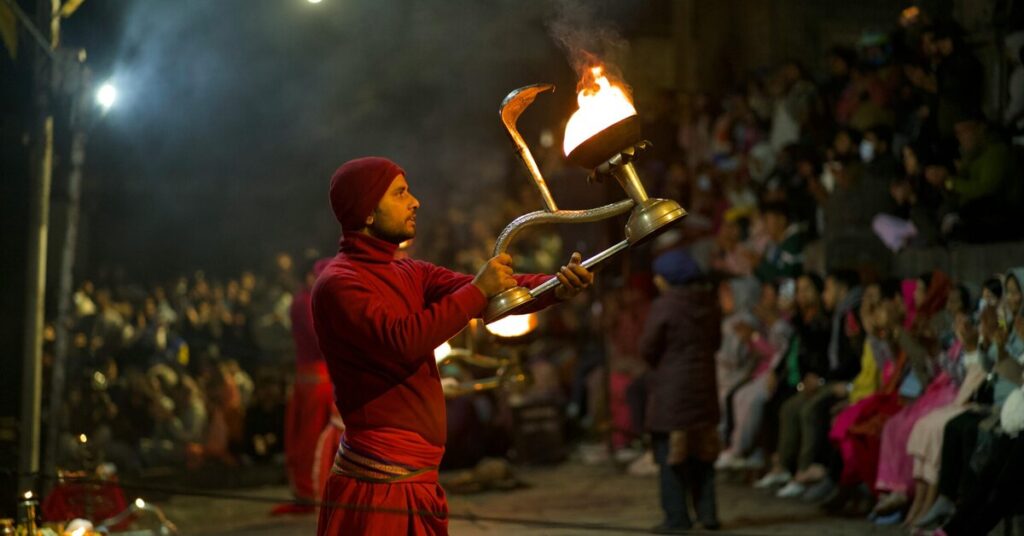
Quality guides often suggest complementing temple tours with related experiences enriching first-time understanding. Ghat Walks provide perspectives on how temples connect to riverfront spiritual geography. Evening Ganga Aarti at Dashashwamedh Ghat showcases Hindu ceremonial traditions in spectacular settings. Brief Sarnath Visits introduce Buddhist heritage providing comparative context for understanding Varanasi’s multi-religious significance.
Some guides arrange Meetings with Priests or Scholars for visitors wanting deeper theological discussions beyond tour time constraints. Others facilitate Home Visits with local Hindu families explaining how Varanasi’s spirituality manifests in everyday domestic life rather than just formal temple settings.
Setting Realistic Expectations
First-time Varanasi visits inevitably involve sensory overload, occasional confusion, and moments of discomfort regardless of guide quality. The city’s intensity—heat, crowds, pollution, poverty, and direct confrontation with death at cremation ghats—challenges even experienced travelers. Guides mitigate difficulties but cannot eliminate them entirely.
Understand that comprehensive Varanasi understanding requires multiple visits. First tours provide foundational orientation enabling future deeper exploration. Accept confusion and incomplete understanding as natural rather than failures of guidance or personal inadequacy. The city reveals itself gradually over time rather than surrendering all mysteries during single visits.
Conclusion
Varanasi guided temple tours designed specifically for first-time visitors provide essential scaffolding transforming overwhelming complexity into accessible introduction to one of humanity’s most remarkable spiritual landscapes. Through expert navigation, cultural interpretation, practical assistance, and personalized pacing, quality guides enable newcomers to engage meaningfully and respectfully with living Hindu traditions while establishing foundations for potential deeper future engagement. The investment in professional guidance—whether measured in money spent or trust extended—pays dividends in understanding, safety, and memorable experiences that transcend simple tourism, offering instead genuine cross-cultural encounter and, for many visitors, unexpected spiritual awakening regardless of their entering religious orientation.
Frequently Asked Questions
Q1: Do I need to be Hindu or have religious knowledge to take a guided temple tour?
Absolutely not—guides specifically design first-time tours for visitors of all backgrounds, including those with zero Hindu religious knowledge. Quality guides excel at explaining complex theological concepts accessibly without assuming prior understanding, using analogies and comparisons helping visitors from different cultural backgrounds grasp unfamiliar ideas. Many first-time visitors are non-Hindu tourists interested primarily in cultural education, and guides adjust explanations accordingly—emphasizing historical, architectural, and social aspects alongside religious significance. However, visitors should approach tours with respectful curiosity rather than dismissive skepticism. You needn’t believe in Hindu theology to appreciate its sophistication or respect practitioners’ sincere faith. Guides welcome questions about concepts seeming strange or confusing, understanding that genuine cross-cultural learning requires safe space for honest inquiry. Some visitors worry about being pressured toward Hindu religious participation, but reputable guides never proselytize or expect adoption of Hindu practices. You’re free to observe, learn, and appreciate without personal spiritual commitment. The tours work equally well for devout practitioners of other faiths seeking interfaith understanding and secular tourists interested in cultural anthropology.
Q2: How should I handle donations and offerings at temples—what’s expected?
Temple donation expectations confuse many first-time visitors, as practices vary by temple and context. Guides provide invaluable assistance navigating this complexity. Generally, major temples like Kashi Vishwanath have donation boxes where voluntary contributions (₹10-100 based on your means and inclination) are appreciated but not mandatory. Smaller temples may have priests offering blessings or placing tilak (forehead mark), after which small donations (₹10-50) are customary though not obligatory. Your guide clarifies when donations are truly voluntary versus expected compensation for specific services like special pujas or blessings. They also protect you from aggressive “priests” (often unauthorized individuals) demanding excessive payments or claiming that large donations are mandatory. Reasonable total donation amounts for full-day temple circuits typically range ₹200-500, though you may choose to give more or less based on personal feelings and financial circumstances. Guides often suggest purchasing offering items (flowers, incense) from vendors outside temples if you want to participate in worship rituals, helping you navigate fair pricing (typically ₹20-50 for offering packets). Never feel pressured to donate beyond your comfort level, and don’t hesitate to ask your guide privately about appropriate amounts before entering temples where expectations exist.
Q3: What should I do if I feel uncomfortable or overwhelmed during the tour?
Communicate immediately with your guide—they’re experienced managing first-timer overwhelm and can adjust accordingly. Common sources of discomfort include sensory overload from crowds, heat, and intense stimuli; emotional impact of poverty, cremation ghats, or intense devotional displays; physical exhaustion from walking in heat; or simply information overload from continuous new experiences. Good guides recognize overwhelm signs (appearing dazed, stopping engagement, expressing desire to leave) and respond appropriately—suggesting rest breaks at cafés with AC and clean bathrooms, modifying remaining itinerary to reduce intensity, or even ending tours early if distress is genuine. Never feel embarrassed about needing breaks or expressing discomfort; guides prefer honest communication enabling adjustments over struggling tourists pushing beyond reasonable limits. If specific elements cause distress (perhaps cremation ghats prove too confronting), guides can skip those while maintaining overall tour value. Some visitors experience unexpected emotional reactions—tears during aarti ceremonies, anxiety near cremation sites, or profound spiritual stirring. These reactions are completely normal and guides handle them with sensitivity and patience. If you have known anxiety triggers, medical conditions, or strong emotional sensitivities, mention these when booking so guides can prepare appropriately and avoid unnecessarily triggering situations.
Q4: Can guides accommodate specific interests like photography, architecture, or women’s religious roles?
Yes, specialized interests represent exactly where private guides add most value compared to generic group tours. When booking, clearly communicate specific focuses—perhaps you’re an architecture student interested in temple construction styles across different periods, a photographer wanting optimal shooting locations and lighting advice, a women’s studies scholar exploring female religious practices, or a philosophy student interested in theological concepts underlying rituals. Guides adjust itineraries and commentary accordingly—perhaps selecting temples with particularly interesting architectural features versus those with primarily religious significance, or spending extra time explaining goddess worship traditions if that’s your interest. Many guides have specialized knowledge in particular areas; requesting guides with specific expertise (art history, religious philosophy, photography) ensures optimal matches. However, maintain realistic expectations—guides are generalists with broad knowledge, not specialists with PhD-level expertise in narrow subfields. They provide solid, informed overview of specialized topics rather than academic-level detail. If your interests are extremely specialized, consider supplementing guided tours with separate meetings with professors, artists, or practitioners focused specifically on your areas of interest. Guides can often facilitate these connections if they understand your serious scholarly or professional interests.
Q5: How do guides handle situations with aggressive vendors, touts, or inappropriate behavior?
Experienced guides excel at managing these common challenges that often overwhelm first-time visitors navigating independently. Guides intervene when aggressive vendors target you, firmly declining unwanted services or products using local language and cultural understanding that commands respect. They recognize common scams—fake “priests” demanding money for unwanted blessings, vendors drastically overcharging foreigners, touts offering “free” services then demanding payment—and protect you from these situations. Their mere presence deters many would-be scammers, as locals recognize guides won’t tolerate exploitation of their clients. If inappropriate behavior occurs—sexual harassment, threatening demands, or physical intimidation—guides escalate appropriately, involving temple authorities, police, or simply removing you from situations. However, understand that guides cannot eliminate all hassles inherent in busy public spaces. Minor vendor approaches, children asking for money, or people staring curiously at foreign visitors represent normal aspects of Varanasi street life rather than dangerous situations requiring intervention. Part of first-time guide value includes helping you distinguish genuinely problematic situations from merely uncomfortable but harmless cultural differences. Trust your guide’s judgment about when to ignore minor annoyances versus when situations warrant action. If you ever feel your guide isn’t adequately protecting you from genuine problems, speak up clearly—reputable guides prioritize client safety and comfort above all else.