3 Holy Cities Tour from Varanasi with Private Cab , The sacred triangle of Varanasi, Ayodhya, and Prayagraj represents the spiritual heart of North India. While group tours and public transportation offer ways to visit these holy cities, nothing matches the flexibility, comfort, and control of exploring them with your own private cab. But how do you plan this journey effectively? What does a private cab tour actually involve, and is it worth the investment?
A private cab transforms the standard pilgrimage circuit into a personalized spiritual journey. You decide when to leave, where to stop, how long to spend at each location, and where you want to linger versus move quickly. There’s no waiting for stragglers, no rigid schedules dictated by tour operators, and no compromising your experience to accommodate group dynamics. For families, couples, or small friend groups, the private cab option offers unmatched value and freedom.
This comprehensive guide walks you through planning your three holy cities tour from Varanasi with a private cab—covering everything from choosing the right vehicle and driver to optimizing your route, managing costs, and creating an itinerary that balances spiritual depth with travel practicality.
Why the Private Cab Option Changes Everything
Freedom vs. Fixed Group Schedules
3 Holy Cities Tour from Varanasi with Private Cab , Group tours operate on inflexible timelines: departure at 6 AM sharp, 45 minutes at each temple, lunch at the designated restaurant, back to the bus by 5 PM. Miss the departure time? You’re left behind or scrambling to catch up. Find a temple particularly moving and want to spend extra time? Too bad—the schedule says move on.
Private cabs eliminate this tyranny of schedules. Want to watch the sunrise at Varanasi’s ghats and then depart for Ayodhya at 9 AM instead of 6 AM? Done. Discover that Kanak Bhawan in Ayodhya resonates deeply and you want an extra hour there? No problem. Need to stop for bathroom breaks, photo opportunities, or simply to stretch your legs? You’re in control.
This flexibility becomes crucial during spiritual journeys where the most meaningful moments often come unexpectedly. Maybe it’s an evening aarti you stumble upon, a conversation with a sadhu that provides insight, or simply the need to sit quietly at a ghat processing your emotions. Group tours rush past these moments; private cabs allow you to embrace them.
Comfort and Privacy Considerations
Public transportation and shared tours mean:
- Sitting with strangers for hours
- No control over vehicle cleanliness
- Shared bathroom stops (often inadequate)
- Lack of secure luggage storage
- No climate control flexibility
- Group dynamics affecting your experience
Private cabs provide:
- Travel only with people you chose
- Maintained, clean vehicles
- Stops whenever needed at clean facilities
- Your luggage stays secure and accessible
- Temperature control to your preference
- Conversations and experiences remain private
- Space to rest, nap, or simply decompress
For families with children, elderly travelers, or anyone with specific comfort needs, this difference is transformative. Privacy also matters for religious practices—some travelers want to chant mantras, listen to devotional music, or discuss spiritual experiences without self-consciousness around strangers.
Understanding the Holy Trinity Circuit
Varanasi: The Eternal City
Varanasi, also called Kashi or Banaras, stands as Hinduism’s holiest city. Situated on the Ganges River, it’s dedicated to Lord Shiva and considered the best place to achieve moksha (liberation from the cycle of rebirth). The city has been continuously inhabited for over 3,000 years, making it one of the world’s oldest living cities.
Why Varanasi matters:
- Bathing in the Ganges here cleanses sins
- Dying here brings immediate moksha
- The Kashi Vishwanath Temple houses one of the twelve Jyotirlingas
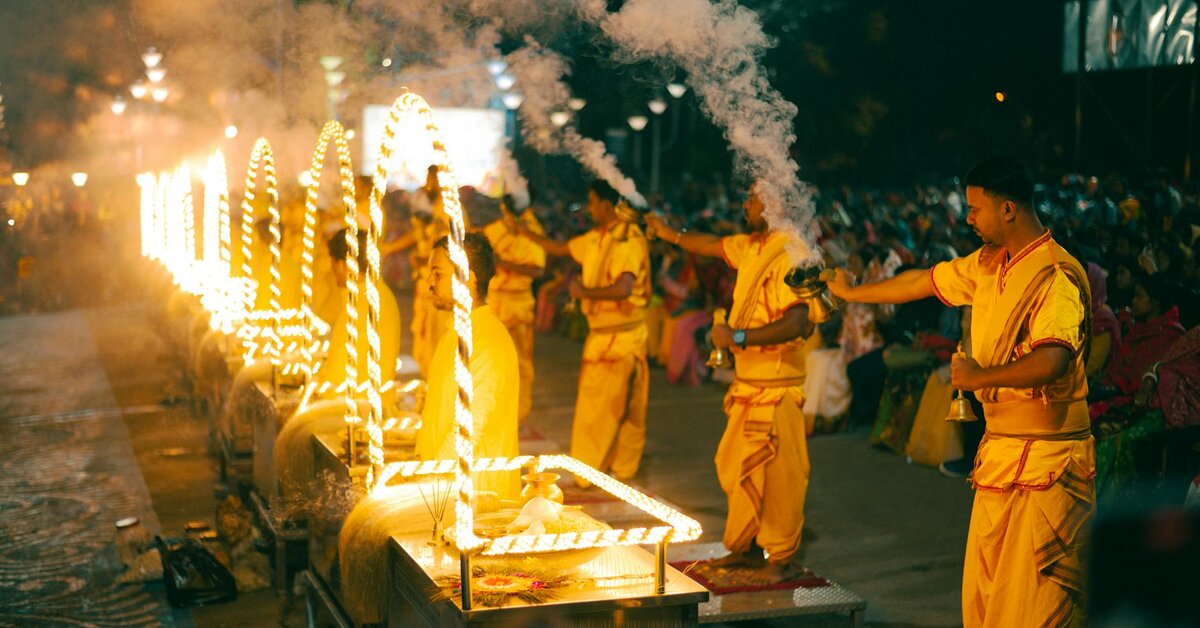
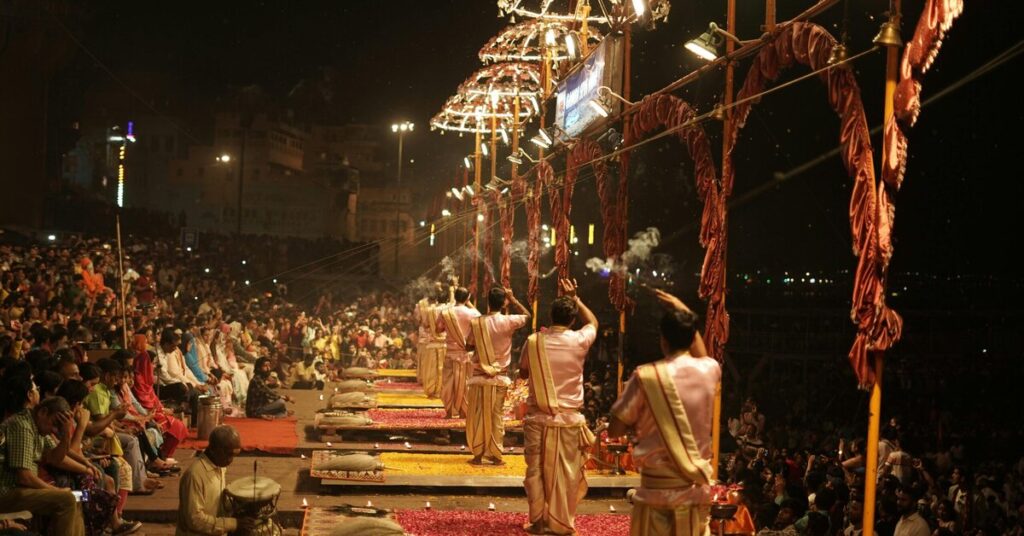
- The evening Ganga Aarti is one of Hinduism’s most spectacular rituals
- Sarnath nearby is where Buddha gave his first sermon
Varanasi serves as the ideal starting point for your three-city tour—excellent transportation connections, abundant accommodations, and the infrastructure to prepare for the journey ahead.
Ayodhya: Ram’s Sacred Birthplace
Ayodhya, on the banks of the Sarayu River, is identified as Lord Ram’s birthplace and the capital of the ancient Kosala kingdom described in the Ramayana. For devotees of Ram, visiting Ayodhya represents a profound spiritual completion.
Why Ayodhya matters:
- Ram Janmabhoomi (birthplace site) with the newly consecrated Ram Mandir
- Associated with 14 years of Ram’s exile described in Ramayana
- Multiple temples marking sites from Ram’s life
- Sarayu River bathing considered highly auspicious
- Connection to Treta Yuga (second age in Hindu cosmology)
The 2024 inauguration of the Ram Mandir has renewed Ayodhya’s prominence, with improved infrastructure making it more accessible than ever for pilgrims.
Prayagraj: Confluence of Three Rivers
Prayagraj (formerly Allahabad) stands at the Triveni Sangam—the confluence of the Ganges, Yamuna, and mythical Saraswati rivers. This meeting point is considered supremely sacred, with bathing here believed to wash away sins and bring blessings.
Why Prayagraj matters:
- Site of the Kumbh Mela, world’s largest religious gathering
- Bathing at Sangam during auspicious times brings liberation
- Mentioned in ancient texts as Prayag, the “place of sacrifice”
- Historical significance beyond religion (Allahabad played crucial role in Indian independence)
- Multiple temples and ghats along the rivers
Together, these three cities offer a comprehensive spiritual journey—Shiva’s eternal city, Ram’s birthplace, and the liberation of the Sangam. Visiting all three creates a pilgrimage that touches multiple dimensions of Hindu spirituality.
Optimal Tour Duration and Routing
5-Day Comprehensive Itinerary
This balanced option allows thorough exploration without rushing:
Day 1: Varanasi
- Morning: Sunrise boat ride on Ganges
- Late morning: Kashi Vishwanath Temple
- Afternoon: Rest at hotel
- Evening: Ganga Aarti at Dashashwamedh Ghat
Day 2: Varanasi to Ayodhya (200 km, 4-5 hours)
- Morning: Visit Sarnath before departure
- Afternoon: Drive to Ayodhya with lunch stop
- Evening: Check-in, rest, orientation walk
Day 3: Ayodhya
- Full day exploring Ram Mandir, Hanuman Garhi, Kanak Bhawan
- Sarayu River ghats
- Evening aarti if available
Day 4: Ayodhya to Prayagraj (165 km, 3-4 hours)
- Morning: Any remaining Ayodhya sites
- Midday: Drive to Prayagraj
- Evening: Visit Triveni Sangam for orientation
Day 5: Prayagraj and Return to Varanasi (120 km, 2.5-3 hours)
- Early morning: Sangam bathing (optional)
- Late morning: Temple visits
- Afternoon: Return drive to Varanasi
4-Day Express Option
For those with limited time:
Day 1: Varanasi essentials (boat ride, main temple, evening aarti) Day 2: Varanasi to Ayodhya, afternoon Ayodhya exploration Day 3: Full Ayodhya morning, drive to Prayagraj afternoon, evening Sangam visit Day 4: Early Prayagraj activities, return to Varanasi
This compressed schedule works but feels rushed, especially for elderly travelers or those wanting contemplative time at each location.
6-7 Day Relaxed Pilgrimage
Ideal for thorough exploration and spiritual immersion:
Days 1-2: Varanasi (extra time for additional temples, Sarnath, perhaps Ramnagar Fort) Days 3-4: Ayodhya (unhurried exploration, participation in rituals, possible day trip to nearby Naimisharanya) Days 5-6: Prayagraj (comprehensive temple visits, possible inclusion of Vindhyachal or Chitrakoot) Day 7: Buffer day or leisurely return
This pacing allows for:
- Rest days when needed
- Deeper engagement with each location
- Flexibility for unexpected discoveries
- Weather delays or changed plans
- Medical or personal needs
Choosing Your Private Cab
Vehicle Options and Passenger Capacity
Sedan (Toyota Etios, Honda City, Maruti Dzire):
- Capacity: 4 passengers comfortably (3 adults + 1 child ideal)
- Luggage: Limited boot space, 2-3 medium suitcases
- Best for: Couples or small families with minimal luggage
- Cost: Most economical option
- Comfort: Good for shorter distances, adequate AC
SUV (Toyota Innova, Mahindra Xylo):
- Capacity: 6-7 passengers with reasonable comfort
- Luggage: Substantial space, 4-5 suitcases easily
- Best for: Families, groups of 4-6 people
- Cost: Mid-range pricing
- Comfort: Excellent suspension, spacious, best for long drives
- Most recommended for this circuit
Tempo Traveller:
- Capacity: 12-14 passengers
- Best for: Larger family groups, friends traveling together
- Cost: Higher but divided among many passengers
- Comfort: Bus-like seating, good for large groups
- Overkill for groups under 8 people
Luxury options (Toyota Fortuner, Honda Accord):
- Premium comfort and prestige
- Significantly higher costs
- Usually unnecessary unless specific preferences
Recommendation: Toyota Innova or equivalent SUV hits the sweet spot for most travelers—comfortable, spacious, reliable, and appropriately priced for multi-day journeys.
AC vs. Non-AC Considerations
Always choose AC for this circuit. Here’s why:
Temperature management: North India experiences extremes—summer heat exceeds 40°C (104°F), winter can be surprisingly cold. AC provides both cooling and heating.
Dust and pollution: Roads between cities are dusty. Without AC, windows stay open, filling the vehicle with dust and exhaust fumes.
Comfort during long drives: 4-5 hour drives in non-AC vehicles become exhausting, especially in heat.
Minimal cost difference: The AC premium is relatively small (₹500-1,000 extra per day) compared to overall tour costs.
Health considerations: Elderly travelers or those with respiratory issues need climate-controlled environments.
The only exception: if traveling during peak winter (December-January) when temperatures are consistently pleasant and you specifically prefer open windows. Even then, having AC available provides flexibility.
Driver Qualifications That Matter
Not all drivers are equal. Essential qualifications:
Experience with this circuit:
- Knows all three cities’ layouts
- Familiar with temple locations and parking areas
- Understands best routes and traffic patterns
- Has completed this tour multiple times
Language skills:
- Hindi fluency (obviously)
- Basic English if you don’t speak Hindi
- Regional dialect understanding helps
Driving competence:
- Clean, safe driving record
- Defensive driving in chaotic traffic
- Highway experience (not just city driving)
- Night driving capability if needed
Personal qualities:
- Punctual and reliable
- Patient with tourist questions/needs
- Respectful of religious sensitivities
- Honest about costs and recommendations
- Flexible with changing plans
What to verify:
- Valid commercial driving license
- Vehicle insurance and permits
- Contact references from previous customers
- Understanding of your itinerary
- Agreement on per-day hours and overtime charges
Good drivers enhance the journey significantly—providing local insights, suggesting good restaurants, navigating efficiently, and becoming part of your travel experience. Poor drivers create stress and safety concerns.
Complete Day-by-Day Itinerary
Day 1: Varanasi Exploration
5:30 AM: Meet your cab at hotel for sunrise boat ride
- Drive to designated ghat (Dashashwamedh or Assi)
- 90-minute boat ride on Ganges watching sunrise and morning rituals
- Return to hotel by 7:30 AM
8:00 AM: Breakfast at hotel, rest
10:00 AM: Visit Kashi Vishwanath Temple
- Drive to temple area (walking distance from some locations)
- Security procedures and darshan (allow 2-3 hours including queue)
- Explore new Kashi Vishwanath Corridor
1:00 PM: Return to hotel for lunch and afternoon rest (essential in summer)
5:00 PM: Evening activities
- Visit Tulsi Manas Temple, Durga Temple, or other sites based on interest
- OR visit a rooftop cafe for sunset views
6:30 PM: Position for Ganga Aarti
- Drive to boat departure point OR reserved restaurant balcony
- Witness spectacular evening aarti ceremony
- Return to hotel by 8:30 PM
Dinner: Hotel or nearby restaurant, early sleep
Day 2: Varanasi to Ayodhya
7:00 AM: Breakfast at hotel
8:00 AM: Check out, visit Sarnath (10 km from Varanasi)
- 90 minutes exploring Buddhist sites
- Dhamek Stupa, museums, meditation
10:30 AM: Begin drive to Ayodhya (200 km, 4-5 hours)
- Stop after 2 hours at highway dhaba for refreshments/bathroom
- Lunch stop around 1:00 PM at decent restaurant
3:00 PM: Arrive Ayodhya, check into hotel
- Rest and refresh
5:30 PM: Orientation visit to Sarayu ghats
- Watch evening activities
- Light walk around area
- Return for dinner and rest
Day 3: Ayodhya Darshan
6:00 AM: Early start for Ram Mandir
- Queue for darshan (expect 1-3 hours depending on crowds)
- Security procedures, darshan, exploration
9:30 AM: Return to hotel for breakfast
10:30 AM: Visit Hanuman Garhi
- 70+ steps climb to hilltop temple
- Spend time at this significant site
12:00 PM: Visit Kanak Bhawan
- Beautiful temple with Ram-Sita idols
- Less crowded, peaceful atmosphere
1:30 PM: Lunch and extensive rest period
5:00 PM: Evening temple visits
- Nageshwarnath Temple, Treta Ke Thakur, or others based on energy
- Return to Sarayu ghats if desired
7:00 PM: Dinner and rest
Day 4: Ayodhya to Prayagraj
7:00 AM: Breakfast
8:00 AM: Any remaining Ayodhya sites OR leisurely morning
10:00 AM: Check out, begin drive to Prayagraj (165 km, 3-4 hours)
- Rest stop after 90 minutes
- Lunch stop at clean highway restaurant
2:00 PM: Arrive Prayagraj, check into hotel
- Rest period
5:00 PM: Visit Triveni Sangam for orientation
- View the confluence
- Understand bathing procedures for next day
- Watch evening activities
- Optionally take short boat ride
7:30 PM: Return for dinner
Day 5: Prayagraj and Return
5:30 AM: Early visit to Sangam (optional bathing)
- Drive to designated parking
- Boat to bathing area or riverbank access
- Bathing rituals for those interested
- Collect Sangam water if desired
8:00 AM: Return to hotel for breakfast and cleanup
10:00 AM: Temple visits
- Hanuman Mandir (unique reclining Hanuman)
- Alopi Devi Temple
- Anand Bhavan museum (Nehru family home) if interested
1:00 PM: Lunch, check out
2:00 PM: Begin return drive to Varanasi (120 km, 2.5-3 hours)
- Arrive Varanasi by 5:30 PM
- Check into hotel or proceed to railway station/airport based on onward plans
This itinerary is flexible—adjust timing based on your energy, interests, and pace.
Route Planning and Travel Times
Best Routes Between Cities
Varanasi to Ayodhya (200 km): Route: Via NH 31 and NH 27 Time: 4-5 hours depending on traffic Road condition: Good national highway, well-maintained Key stops: Jaunpur (historic city, optional detour), highway dhabas near Akbarpur
Ayodhya to Prayagraj (165 km): Route: Via NH 27 and NH 35 Time: 3-4 hours Road condition: Excellent highway Key stops: Ramnagar, Pratapgarh (optional heritage sites)
Prayagraj to Varanasi (120 km): Route: Via NH 2 (Grand Trunk Road) Time: 2.5-3 hours Road condition: Good highway, can have traffic near cities Key stops: Handia (river crossing), Phaphamau (historic fort)
Total driving: Approximately 485 km over 4-5 days (manageable and not exhausting)
Rest Stop Recommendations
Highway travel in India requires strategic stops:
Bathrooms:
- Modern highway rest stops (increasing along major routes)
- Petrol pumps with clean facilities (HP, Indian Oil typically maintain standards)
- Hotel restaurants (cleanest option, small courtesy purchase appreciated)
Avoid: Random roadside stops unless driver confirms they’re clean
Food stops:
- Highway dhabas (authentic experience, variable cleanliness)
- Restaurant chains (Bikanervala, Haldiram’s, McDonald’s along some routes)
- Hotel restaurants in smaller towns
Pro tip: Ask your driver for recommendations—they know which stops are tourist-friendly with clean facilities.
Timing stops:
- Plan bathroom stops every 2 hours maximum
- Food/meal stops after 3-4 hours driving
- Leg-stretch stops whenever anyone feels stiff
Avoiding Traffic Bottlenecks
City entry/exit timing matters:
- Leave Varanasi by 8:00-8:30 AM to avoid morning rush
- Avoid entering any city between 5:00-7:00 PM (evening traffic peak)
- Weekend traffic heavier in all cities
Festival times:
- Ram Navami in Ayodhya (March/April): Massive crowds, plan extra time
- Kumbh Mela periods in Prayagraj: Circuit becomes extremely challenging
- Diwali everywhere: Traffic chaos, book accommodations well ahead
Highway construction:
- NH 27 and NH 2 undergo periodic widening—expect some delays
- Monsoon (July-September): Occasional flooding or pothole development
- Check current conditions before departure
Driver knowledge: Experienced drivers know alternate routes around congestion—trust their recommendations.
Accommodation Strategy
Hotel Recommendations in Each City
Varanasi:
Budget (₹1,500-2,500/night):
- Hotel Ganges View, Tridev Hotel
- Zostel Varanasi (hostel with private rooms)
Mid-range (₹3,000-6,000/night):
- Hotel Meraden Grand
- Hotel Rivatas by Ideal
- Ganpati Guest House (heritage property)
Premium (₹8,000+/night):
- Radisson Hotel Varanasi
- Hotel Hindusthan International
- BrijRama Palace (luxury heritage)
Ayodhya:
Budget (₹1,200-2,000/night):
- Hotel Raghunandan
- Ram Bhawan Guest House
Mid-range (₹2,500-5,000/night):
- Hotel Sita Palace
- Lord’s Plaza Ayodhya
- Clarks Inn Ayodhya
Premium (₹6,000+/night):
- The Rahi Ayodhya
- Premium properties near Ram Mandir (newly developed)
Prayagraj:
Budget (₹1,500-2,500/night):
- Hotel Yatrik
- Hotel Presidency
Mid-range (₹3,000-6,000/night):
- Hotel Milan Palace
- Hotel Allahabad Regency
- The Legend Hotel
Premium (₹8,000+/night):
- Hotel Kanha Shyam
- Grand Continental (if available)
Booking Flexibility with Private Cab Tours
Private cab tours allow accommodation flexibility:
Change plans mid-tour: Unlike pre-booked packages, you can:
- Extend stays in cities you love
- Shorten stays where you’ve seen enough
- Upgrade/downgrade hotels based on actual experience
- Book additional nights on the fly
Location freedom:
- Stay near main sites or in quieter areas
- Choose based on actual experience vs. online reviews
- Driver can recommend options and take you to view before booking
Budget management:
- Splurge on nice hotels in one city, economize in another
- Adjust daily based on actual spending vs. planned
Booking strategy:
- Book first night in each city advance (security)
- Keep subsequent nights flexible if comfortable with spontaneity
- Peak seasons require advance booking everywhere
- Off-season allows walk-in bookings at better rates
Cost Breakdown and Budgeting
Cab Rental Costs
Sedan (basic):
- ₹2,500-3,500 per day ($30-42)
- Typically includes 250-300 km per day
- Driver allowance included
- Extra km: ₹10-12 per km
SUV (Toyota Innova or similar):
- ₹4,000-6,000 per day ($48-72)
- 250-300 km daily limit
- Driver allowance included
- Extra km: ₹14-16 per km
5-day rental estimate:
- Sedan: ₹15,000-20,000 ($180-240)
- SUV: ₹25,000-35,000 ($300-420)
What’s typically included:
- Driver salary and allowance
- Fuel for agreed km
- Toll taxes
- State permits
- Basic insurance
Extra charges:
- Overtime (beyond 10-12 hours/day): ₹150-250 per hour
- Night driving (10 PM – 6 AM): Premium or refusal
- Hill station surcharges (not applicable this circuit)
- Parking fees at hotels/sites
Total Trip Budget Estimates
Per person costs for 5-day tour (couple traveling together):
Budget Option (₹20,000-28,000 per person / $240-336):
- Cab rental shared: ₹7,500-10,000
- Accommodation (budget hotels): ₹6,000-8,000
- Food (simple restaurants): ₹4,000-6,000
- Entry fees, tips, misc: ₹2,500-4,000
Mid-Range (₹35,000-50,000 per person / $420-600):
- Cab rental shared: ₹12,500-17,500
- Accommodation (comfortable 3-4 star): ₹12,000-18,000
- Food (good restaurants, some hotel dining): ₹7,000-10,000
- Guides, entry fees, misc: ₹3,500-4,500
Comfortable (₹60,000-85,000 per person / $720-1,020):
- Cab rental (better vehicle/service): ₹15,000-20,000
- Accommodation (best available): ₹25,000-35,000
- Food (hotel restaurants, variety): ₹12,000-18,000
- Guides, VIP darshan, shopping, misc: ₹8,000-12,000
Group economics: Costs decrease significantly per person in groups of 4-6 sharing one vehicle.
Money-Saving Strategies
Without compromising experience:
Vehicle choice:
- Sedan sufficient for 2-3 people (₹10,000 saved vs. SUV)
- Book directly with reliable operators (avoid intermediary markup)
- Negotiate multi-day packages (better rates than daily rentals)
Accommodation:
- Stay in budget/mid-range properties (perfectly adequate for this circuit)
- Book directly vs. through aggregators (sometimes better rates)
- Consider guesthouses near temples (basic but clean and spiritual atmosphere)
Food:
- Hotel breakfasts fill you for half the day
- Local restaurants vs. tourist-oriented ones (₹200 vs. ₹500 per meal)
- Street food if stomach permits (delicious and cheap)
- Carry snacks and water (reduces emergency purchases at inflated prices)
Activities:
- Most temples free entry
- Guides optional if you research well
- Morning activities generally free vs. paid evening programs
What not to compromise:
- Vehicle safety and comfort (false economy leading to misery)
- Accommodation security and cleanliness (health risks not worth savings)
- Bottled water (medical costs dwarf savings)
Must-Visit Sites in Each City
Varanasi’s Essential Experiences
Non-negotiable:
- Sunrise boat ride: The defining Varanasi experience
- Kashi Vishwanath Temple: Main Shiva temple, newly renovated
- Evening Ganga Aarti: Spectacular ceremony at Dashashwamedh Ghat
- Walk through old city lanes: Authentic atmosphere, ancient city feel
Highly recommended:
- Sarnath: Buddha’s first sermon site, peaceful Buddhist complex
- Assi Ghat: Less touristy, local pilgrimage atmosphere
- Manikarnika Ghat: Cremation ghat (observe respectfully, no photos)
- BHU campus and New Vishwanath Temple: Beautiful modern temple, spacious
If time permits:
- Ramnagar Fort: Across river, vintage car collection
- Alamgir Mosque: Mughal architecture
- Various smaller temples (Annapurna, Durga Temple, etc.)
Ayodhya’s Sacred Temples
Essential:
- Ram Janmabhoomi/Ram Mandir: The primary reason most visit Ayodhya
- Hanuman Garhi: Major Hanuman temple on hilltop
- Kanak Bhawan: Beautiful temple, Ram-Sita idols
- Sarayu River ghats: Morning or evening visits for peaceful atmosphere
Important:
- Treta Ke Thakur: Site of Ashwamedha Yagna
- Nageshwarnath Temple: Ancient Shiva temple
- Sita Rasoi: Kitchen associated with Sita
- Ram Ki Paidi: Series of ghats, recently beautified
If interested:
- Dashrath Mahal ruins
- Moti Mahal
- Various smaller temples marking Ramayana sites
Prayagraj’s Holy Sangam
Essential:
- Triveni Sangam: Confluence viewing/bathing, spiritual focal point
- Hanuman Mandir: Unique reclining Hanuman idol
- Alopi Devi Temple: Important Shakti Peeth
Recommended:
- Anand Bhavan: Nehru family home, independence movement museum
- Allahabad Fort: Mughal fort with Akshayavat (limited public access)
- Khusro Bagh: Mughal tombs, beautiful gardens
- All Saints Cathedral: Gothic architecture for variety
Various ghats:
- Saraswati Ghat
- Dashashwamedh Ghat (different from Varanasi’s)
- Multiple others along rivers
Driver as Local Guide
What Drivers Know (and Don’t Know)
Good drivers provide:
- Practical directions and parking locations
- Best times to visit to avoid crowds
- Restaurant recommendations (where locals eat)
- General city orientation
- Current road conditions and traffic patterns
- Basic information about major sites
Drivers typically don’t provide:
- Detailed historical narratives
- Theological or scriptural explanations
- In-depth site significance
- Ritual procedures and participation guidance
- Multiple language translation
- Academic or specialized knowledge
Realistic expectations: Drivers are transportation experts who know practical logistics. They’re not tour guides or religious scholars. Appreciate their knowledge within its domain without expecting expertise beyond it.
When to Hire Additional Guides
Hire local guides when:
- You want deep understanding of site significance
- Historical and architectural details matter to you
- You’re unfamiliar with Hindu traditions and rituals
- Language barriers make independent exploration difficult
- Complex sites (like Kashi Vishwanath Corridor) benefit from expert navigation
- You want to participate in rituals properly
Guide costs:
- ₹500-1,000 for 2-3 hours at specific sites
- ₹1,500-2,500 for half-day city guiding
- Often worth it at Ram Mandir and Kashi Vishwanath for first-time visitors
Finding guides:
- Hotel recommendations
- Official tourism office lists
- Temple information centers
- Your driver may know reliable guides (verify independently)
Combination approach works well: Driver handles logistics and transportation; hire local guides at 2 -3 key sites for in-depth experiences.
Seasonal Considerations
Best Months for This Circuit
October-November (Excellent):
- Pleasant weather (20-28°C / 68-82°F)
- Post-monsoon greenery
- Festivals: Dussehra, Diwali (crowded but atmospheric)
- Clear skies for photography
- Comfortable for all-day activities
December-January (Very Good):
- Cool to cold (10-22°C / 50-72°F)
- Morning fog can be beautiful but affects visibility
- Winter clothing necessary
- Fewer mosquitoes
- Smaller crowds except around Christmas/New Year
February-March (Excellent):
- Warming but comfortable (15-30°C / 59-86°F)
- Flowers blooming
- Holi festival (March, joyful but chaotic)
- Ram Navami (March/April in Ayodhya—massive crowds)
- Ideal temperatures
April-May (Challenging):
- Hot to extremely hot (32-45°C / 90-113°F)
- Only morning and evening activities comfortable
- Lower accommodation rates
- Smaller crowds
- Requires AC and frequent water breaks
June (Pre-monsoon, Difficult):
- Extreme heat plus humidity
- Generally not recommended
July-September (Monsoon, Mixed):
- Heavy rainfall
- Flooding risks in Prayagraj
- Beautiful greenery
- Slippery temple steps
- Very few tourists
- Dramatic skies for photography
- Challenging but rewarding for adventurous travelers
Recommendation: October-November or February-March for optimal experience.
Weather and Road Conditions
Summer road conditions:
- Excellent highway surfaces
- Heat mirages affect visibility
- Vehicle AC essential
- Carry extra water
- Start very early to avoid midday heat
Monsoon considerations:
- Roads generally passable on major highways
- Occasional flooding in low-lying areas
- Longer travel times due to reduced speeds
- Prayagraj Sangam area can flood
- Beautiful landscapes worth the challenges
Winter conditions:
- Perfect road conditions
- Morning fog can delay departures
- No weather-related travel concerns
- Comfortable for all aspects of touring
Safety and Emergency Protocols
Vehicle Safety Checks
Before starting tour, verify:
- Valid vehicle insurance and registration
- Functioning seatbelts for all passengers
- Working AC/heating
- Tire condition (including spare)
- Working headlights, indicators, wipers
- First aid kit present
- Driver’s license validity
During tour:
- Insist on safe speeds (don’t encourage racing)
- Take breaks every 2-3 hours (prevents driver fatigue)
- Speak up about unsafe driving
- Ensure children use seatbelts
- Store luggage securely
Medical Emergency Planning
Preparation:
- Know hospital locations in each city (driver should know)
- Carry health insurance information
- Have emergency contact numbers
- Bring adequate medications plus extras
- Travel with basic first aid supplies
If medical issues arise:
- Your driver becomes crucial for quick hospital transport
- Major cities have decent medical facilities
- Travel insurance should cover treatment
- Keep all medical receipts for insurance claims
Communication and Connectivity
Mobile networks:
- Jio and Airtel have best coverage on this circuit
- Occasional dead zones on highways
- All cities have good connectivity
- Public WiFi limited to hotels
Staying connected:
- Ensure phone fully charged daily
- Carry power bank
- Download offline maps (Google Maps works well)
- Share itinerary with family/friends
- Check in regularly
Emergency numbers:
- Emergency services: 112
- Police: 100
- Ambulance: 102
- Your cab company’s emergency number
- Hotel contact numbers
Booking Your Private Cab
Reliable Rental Companies
National companies:
- Savaari Car Rentals
- Ola Outstation
- Zoom Cars
- Clear Car Rental
Regional operators:
- Varanasi-based: Varanasi Taxi Services, UP Tours and Travels
- Local operators often provide personalized service
Booking platforms:
- Company websites (direct booking)
- Phone booking (negotiate better than apps sometimes)
- Hotel concierge arrangements
- Travel agent coordination
What to Verify Before Confirming
Essential confirmations:
- Exact vehicle model (not just “SUV” but specific model)
- Driver details (name, contact, experience)
- Per-day km limit and extra km charges
- Included costs (fuel, tolls, driver allowance)
- Excluded costs (parking, entry fees, overtime)
- Cancellation policy
- Payment terms (advance, balance, mode)
- Contact number for emergencies
- Written agreement or booking confirmation
Questions to ask:
- “Will the same driver continue all days or change?”
- “What happens if vehicle breaks down?”
- “Are tolls included in quoted price?”
- “What are overtime charges beyond 10 hours?”
- “Can itinerary be modified during tour?”
Red flags:
- Unwilling to provide driver details in advance
- No written agreement
- Prices significantly below market (quality concerns)
- Pushy sales tactics
- No reviews or references available
Customization Options
Adding Chitrakoot or Vindhyachal
Chitrakoot (from Prayagraj):
- Additional 135 km (3 hours)
- Ramayana sites where Ram spent 11.5 years of exile
- Adds 1-2 days to itinerary
- Less developed, more authentic pilgrimage feel
- Beautiful natural setting
Vindhyachal (from Prayagraj):
- 70 km (1.5 hours)
- Important Shakti Peeth
- Can be covered as day trip
- Less crowded than main circuit
- Adds Goddess worship dimension
Sarnath (already commonly included):
- 10 km from Varanasi
- Buddhist pilgrimage site
- Usually added as half-day on Varanasi-Ayodhya travel day
Extended Stays in Preferred Cities
Why extend:
- Deeper exploration of sites
- More relaxed pace
- Participation in multi-day festivals
- Rest days (especially for elderly travelers)
- Waiting for auspicious bathing dates
Best cities to extend:
- Varanasi: Endless exploration possibilities, Ganga immersion benefits from multiple days
- Ayodhya: If visiting around Ram Navami, extend to experience full celebrations
- Prayagraj: During Kumbh Mela periods, extended stays necessary to experience fully
Private cab advantage: Easy to modify plans. Simply inform driver and company about changes, pay additional daily rental, enjoy flexibility.
Conclusion
The three holy cities tour from Varanasi with a private cab represents one of North India’s most spiritually significant journeys. The private cab option transforms this pilgrimage from a logistical challenge into a comfortable, flexible exploration where you control the pace, timing, and depth of engagement.
Yes, private cabs cost more than group tours or public transportation. But the value—measured in comfort, flexibility, privacy, and overall experience quality—justifies the investment for most travelers. You’re not just paying for transportation; you’re investing in peace of mind, spontaneity, and the ability to create a journey that matches your spiritual aspirations rather than someone else’s schedule.
From watching sunrise on the Ganges in Varanasi to seeking blessings at Ram’s birthplace in Ayodhya to bathing at the sacred Sangam in Prayagraj, this circuit offers profound experiences that resonate for lifetimes. Having the freedom to absorb these moments fully, without rushing to catch buses or accommodating group dynamics, makes all the difference between a trip you took and a pilgrimage you experienced.
Plan thoughtfully, choose your vehicle and driver carefully, maintain realistic expectations about travel times and site visits, and remain flexible. The sacred geography of these three cities has drawn pilgrims for millennia—your private cab simply provides the modern comfort to experience these ancient traditions at your own perfect pace.
FAQs
1. Is it safe for solo travelers, especially women, to book private cabs for this circuit?
Yes, with proper precautions. Book through reputable companies with verified drivers and good reviews. Share your itinerary and driver details with family/friends. Use companies that provide real-time GPS tracking. Many women complete this circuit safely with private cabs—the key is choosing established operators over random street negotiations. Daytime travel reduces concerns significantly. Consider slightly higher-cost companies with better safety protocols rather than bargain options. Your cab company should provide emergency contact numbers and responsive customer service.
2. Can we modify the itinerary during the tour or must we follow the pre-planned route?
Private cab tours offer excellent flexibility. You can modify timing, extend stays, add/skip sites, and adjust based on weather, energy, or interests. Inform your driver about changes; they’ll adapt. However, major route changes (adding distant cities) require discussion with the rental company about additional charges. Minor modifications (staying an extra hour at a temple, changing lunch stops) are typically accommodation without issue. This flexibility is a primary private cab advantage over fixed group tours.
3. What happens if the vehicle breaks down during the tour?
Reputable cab companies should provide replacement vehicles, typically within 2-4 hours depending on location. Your booking contract should specify breakdown protocols. Companies operating this circuit regularly have backup systems. While waiting, drivers usually arrange temporary accommodation if needed. This is why booking through established companies matters—they have resources to handle problems. Keep the company’s emergency number handy and document any additional expenses caused by breakdowns for potential reimbursement discussions.
4. Are we expected to pay for the driver’s food and accommodation?
Driver allowances are typically included in your rental cost—they cover their basic meals and simple accommodation. You’re not expected to pay additionally unless you invite them to eat at your restaurant or stay at your hotel level (rarely necessary). Drivers usually have their own arrangements at budget lodges. However, offering tea/snacks during long drives is a courteous gesture that’s appreciated but not mandatory. Clarify this with your rental company during booking to avoid confusion.
5. How much should we tip the driver at the end of a 5-day tour?
Tipping ₹500-1,500 ($6-18) total is standard, depending on service quality and your satisfaction. Excellent, helpful drivers who went beyond basic duties deserve the higher end. Adequate but unremarkable service merits the lower end. Consider their assistance level: Did they help with luggage? Provide good recommendations? Show patience with changes? Handle problems gracefully? Factor these into your tip. Some travelers tip ₹200-300 daily instead of one final amount. Tipping is appreciated but not legally mandatory—base it on actual service received.