Bodhgaya Travel Guide : Imagine sitting beneath the same tree where, 2,600 years ago, a prince became a Buddha. Where human consciousness took a quantum leap forward. Where meditation yielded the insights that would transform millions of lives across continents and centuries. Welcome to Bodhgaya—the most sacred pilgrimage site in Buddhism, the place where Gautama Buddha attained enlightenment and where seekers from every corner of the globe still come searching for peace, wisdom, and awakening.
Bodhgaya isn’t just a historical site or a religious monument. It’s a living spiritual ecosystem where ancient traditions meet contemporary practice, where monks from Thailand sit beside pilgrims from Tibet, where Japanese meditation techniques coexist with traditional Indian devotion, and where the universal message of Buddha’s teachings transcends all boundaries of nationality, language, and culture.
Whether you’re a practicing Buddhist seeking to walk where the Buddha walked, a meditation practitioner wanting to deepen your practice in the most auspicious location possible, a spiritual seeker exploring different wisdom traditions, or a curious traveler interested in Buddhist culture and philosophy, this comprehensive guide will help you navigate, understand, and fully experience this extraordinary destination.
Why Bodhgaya is the Spiritual Heart of Buddhism
Among the four great pilgrimage sites associated with Buddha’s life—Lumbini (birthplace), Bodhgaya (enlightenment), Sarnath (first teaching), and Kushinagar (passing into parinirvana)—Bodhgaya holds the most exalted position. This is where the transformation happened, where after years of searching and practicing extreme asceticism, Siddhartha Gautama sat beneath a pipal tree and vowed not to rise until he had found the truth.
What makes Bodhgaya universally significant across all Buddhist traditions—Theravada, Mahayana, Vajrayana—is that enlightenment is the core of Buddha’s message. The birth, the teachings, and even the death are secondary to that one moment under the Bodhi tree when ignorance was dispelled and complete wisdom was realized. Every Buddhist tradition, regardless of its specific practices or philosophical emphasis, traces its lineage back to that moment of awakening.
Today, Bodhgaya functions as a kind of United Nations of Buddhism. Temples representing different countries and traditions stand side by side, each expressing Buddha’s teachings through its unique cultural lens. Thai temples showcase royal elegance, Japanese temples embody Zen minimalism, Tibetan monasteries burst with colorful iconography, and Burmese temples demonstrate architectural grandeur. Yet all point to the same truth realized under that ancient tree.
The Story of Enlightenment: Understanding Bodhgaya’s Significance
Prince Siddhartha’s Journey to Buddhahood
To truly appreciate Bodhgaya, you need to understand the extraordinary story that unfolded here. Prince Siddhartha, born into luxury and shielded from suffering, left his palace at age 29 after encountering sickness, old age, and death. For six years, he practiced extreme asceticism with five companions in the nearby forests, pushing his body to the brink of death through fasting and self-mortification.
Realizing that neither indulgence nor self-torture led to enlightenment, Siddhartha accepted food from a village girl named Sujata (a pivotal moment commemorated at Sujata Kuti). His companions, thinking he had abandoned the spiritual path, left him in disgust. Alone but determined, Siddhartha came to the Bodhi tree, spread kusha grass for a seat, and sat down with an unshakeable resolve.
What happened during that night of meditation has been described in various Buddhist texts. Siddhartha faced mental obstacles personified as Mara (the tempter)—sensual desires, fear, doubt, restlessness. Through deepening meditation, he successively attained higher states of consciousness, recalled his past lives, understood the law of karma, and finally, as dawn broke, achieved complete enlightenment—understanding the Four Noble Truths and the path to liberation from suffering.
The tree under which this occurred became known as the Bodhi Tree (Tree of Awakening), and the spot where he sat became the Vajrasana (Diamond Throne). From that moment, Siddhartha became Buddha—the Awakened One—and the teachings that would become one of the world’s great religions were born.
The Sacred Bodhi Tree and Its Living Legacy
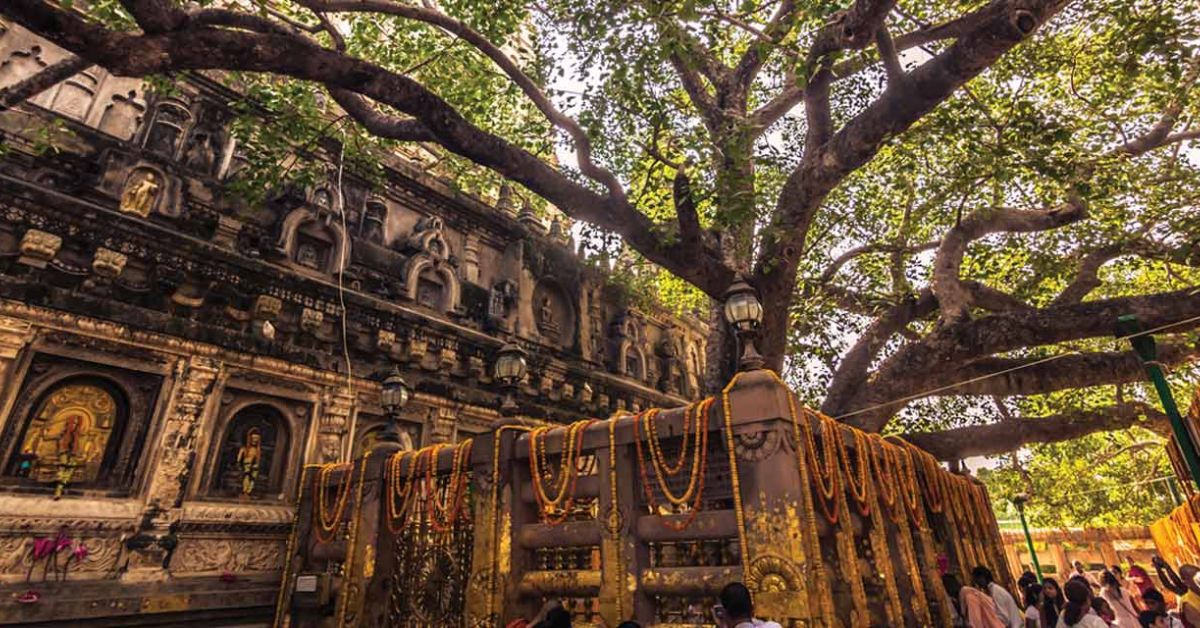
The original Bodhi tree under which Buddha attained enlightenment no longer exists, but its direct descendant stands in the same location today. The tree has a fascinating history—Emperor Ashoka’s daughter Sanghamitta took a sapling from the original tree to Sri Lanka in the 3rd century BCE, where it was planted and still grows at Anuradhapura. When the original tree in Bodhgaya was destroyed, a sapling from the Sri Lankan tree was brought back and planted at the original site.
The current Bodhi tree is therefore a direct genetic descendant of the tree under which Buddha sat. For Buddhists, this living link to that transformative moment carries immense significance. Pilgrims circumambulate the tree, meditate beneath its spreading branches, and touch its trunk with reverence, seeking blessings and inspiration for their own spiritual journeys.
The tree’s leaves are considered sacred and are often taken by pilgrims as blessed souvenirs. The tree sheds leaves year-round, and collecting a naturally fallen Bodhi leaf is considered auspicious. Various traditions have developed around the tree—some pilgrims tie colored strings to its branches with prayers and wishes, others perform prostrations around it, and meditation practitioners sit beneath it for extended periods.
How to Reach Bodhgaya
By Air: Gaya Airport Connection
The nearest airport to Bodhgaya is Gaya International Airport, located just 12 kilometers away—approximately a 20-30 minute drive. The airport has improved significantly in recent years with direct flights from major Indian cities including Delhi, Mumbai, Kolkata, and Varanasi. Some international flights also connect Gaya with Bangkok and Colombo, catering to Buddhist pilgrims from Southeast Asia and Sri Lanka.
From the airport, prepaid taxis and app-based cabs are available for the short journey to Bodhgaya. The road is well-maintained, and the drive provides your first glimpses of the peaceful countryside surrounding this sacred town. Many hotels offer airport pickup services if arranged in advance.
The proximity of the airport makes Bodhgaya one of the most accessible Buddhist pilgrimage sites, particularly convenient for international visitors or those with limited time who want to fly in, spend a few days in deep retreat, and fly out without lengthy ground travel.
By Train: Gaya Junction Gateway
Gaya Junction is the main railway station serving Bodhgaya, located about 16 kilometers from the town. This is a major station on the Eastern Railway network with excellent connectivity to Delhi, Kolkata, Varanasi, Patna, and other major cities. Several express trains including Rajdhani and Shatabdi services stop here.
From Gaya Junction, local buses, shared jeeps, auto-rickshaws, and taxis are readily available for the 30-45 minute journey to Bodhgaya. The road passes through Gaya town and rural areas before reaching Bodhgaya. Prepaid taxi services are available at the station, or you can book through ride-sharing apps.
Some trains also stop at Bodhgaya Railway Station, a smaller station just 5 kilometers from the temple complex, but this station has limited train services. Check train schedules carefully—if your train stops at Bodhgaya station, it’s much more convenient; otherwise, Gaya Junction is your destination.
By Road: Connecting from Major Cities
Bodhgaya is well-connected by road to major cities and pilgrimage sites in the region. From Varanasi, it’s approximately 250 kilometers—about a 5-6 hour drive via NH 19. From Patna (Bihar’s capital), it’s 110 kilometers taking about 2.5-3 hours. From Kolkata, you’re looking at 480 kilometers or 10-11 hours of driving.
State transport buses operate regularly from these cities, offering budget-friendly travel options. Private taxis and car rentals provide more comfort and flexibility. The roads are generally in decent condition, though sections can be challenging during monsoon season.
Many travelers combine Bodhgaya with Varanasi (for Hindu pilgrimage and Ganga experience) and sometimes extend to Prayagraj and Ayodhya, creating a comprehensive North India spiritual circuit. Tour operators like TripCosmos.co specialize in these multi-destination itineraries with comfortable transport, eliminating the hassle of navigating unfamiliar routes and allowing you to focus on the spiritual journey rather than logistics.
The Mahabodhi Temple Complex: Crown Jewel of Bodhgaya
Architecture and Historical Significance
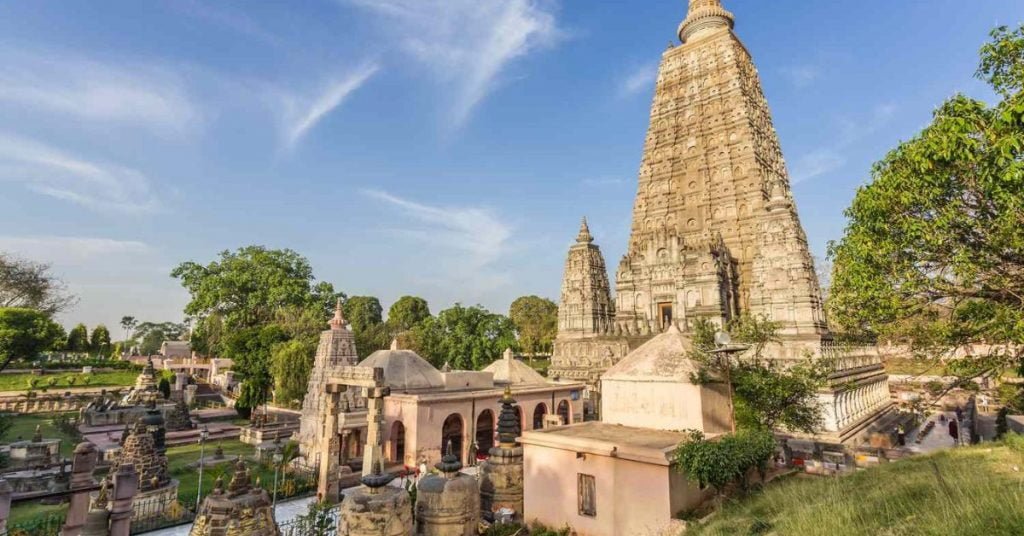
The Mahabodhi Temple is the centerpiece of Bodhgaya and one of the oldest brick structures surviving in India. The present temple dates from the 5th-6th century CE, though the site has been continuously sacred since Buddha’s enlightenment. The architecture is distinctive—a 50-meter tall pyramidal spire (shikhara) rising from a square base, covered with intricate carvings depicting Buddha’s life, jataka tales, and various Buddhist symbols.
Emperor Ashoka, Buddhism’s greatest patron, first enshrined the Bodhi tree in a temple structure in the 3rd century BCE. The current temple was built during the Gupta period and has undergone various renovations and restorations over centuries. In 2002, it was designated a UNESCO World Heritage Site, recognized as “an outstanding example of Indian brick architecture” and for its “unique importance as the place where the Buddha attained supreme and perfect Insight.”
The temple complex is managed by a committee with representation from both the Government of India and Buddhist monks. This ensures maintenance of the site while respecting its sacred nature. The atmosphere within the complex is reverent yet welcoming—monks in maroon robes chant sutras, pilgrims from different countries perform prostrations, meditation practitioners sit in silent contemplation, and first-time visitors wander with awe, all sharing the sacred space harmoniously.
The Vajrasana: Seat of Enlightenment
Inside the Mahabodhi Temple, directly beneath the golden Buddha statue that sits inside the sanctum, lies the Vajrasana—the diamond throne or seat of enlightenment. This is the precise spot where Buddha sat when he attained enlightenment. According to Buddhist tradition, all Buddhas of the past attained enlightenment at this exact location, and all future Buddhas will also realize awakening here.
The current Vajrasana is a red sandstone slab installed during Emperor Ashoka’s time to mark the sacred spot. While you cannot sit directly on the Vajrasana (it’s protected within the temple), you can view it and feel the extraordinary energy of this location. Many practitioners report profound meditation experiences simply by being in proximity to this spot.
The main Buddha statue inside the temple, covered in gold, depicts Buddha in the earth-touching mudra (bhumisparsha mudra)—the gesture he made when calling the earth to witness his enlightenment. The statue is beautifully illuminated, and the sanctum maintains a constant atmosphere of devotion with offerings of flowers, incense, and butter lamps.
Walking Meditation Around the Complex
The Mahabodhi Temple complex includes extensive grounds perfect for walking meditation (cankrama). A marked path circumambulates the main temple and the Bodhi tree, allowing practitioners to combine physical movement with meditation practice—a technique Buddha himself used and taught.
The complex also includes several significant spots: the Animeshalocha Stupa marking where Buddha stood gazing at the Bodhi tree without blinking for seven days after enlightenment, the Ratnachakrama where Buddha practiced walking meditation, the Ratnaghara Stupa marking where Buddha spent the third week after enlightenment, and the Muchalinda Lake where Buddha meditated during a storm and was protected by the naga king Muchalinda.
Each of these locations has meditation practitioners throughout the day and night. The complex is open from early morning until evening (approximately 5 AM to 9 PM), and experiencing it at different times offers varied perspectives. Early morning brings serious meditators and monks performing rituals. Afternoon sees more tourists and casual visitors. Evening, especially around sunset, brings a magical quality as the temple is illuminated and evening prayers begin.
International Buddhist Temples: A Global Spiritual Village
One of Bodhgaya’s most unique features is its collection of temples built by different Buddhist nations, each showcasing their distinctive architectural style while housing images of Buddha and serving as meditation and prayer centers. Walking through Bodhgaya feels like traveling the Buddhist world in a few kilometers.
Thai Monastery: Royal Elegance
The Thai Monastery (Wat Thai Buddhagaya) is one of the most visually striking temples in Bodhgaya. Built in traditional Thai architectural style with golden spires, intricate carvings, and colorful decorations, it houses a beautiful bronze Buddha statue. The temple complex includes a meditation hall, library, and accommodation for Thai pilgrims.
What’s particularly special about the Thai temple is its active community. Thai monks reside here and conduct regular prayer ceremonies, meditation sessions, and teachings, many in English for international visitors. The meticulously maintained gardens provide peaceful spaces for contemplation. During Thai Buddhist festivals, the temple comes alive with special celebrations, traditional music, and offerings.
Japanese Temple: Zen Serenity
The Japanese Temple (Indosan Nipponji) offers a completely different aesthetic—minimalist Zen architecture with clean lines, simple materials, and a large bell that rings out across Bodhgaya several times daily. Inside, a large Buddha statue in the Zen style sits in meditation posture, and the overall atmosphere emphasizes simplicity and direct experience over elaborate decoration.
The temple also houses a Japanese Peace Pagoda on a nearby hilltop, reached by climbing stairs that offer increasingly expansive views of Bodhgaya. The white stupa-style pagoda is part of a global network of peace pagodas built by the Japanese Buddhist organization Nipponzan Myohoji. The climb is moderate but worthwhile, especially for sunset views over the town.
Tibetan Monastery: Colorful Devotion
Several Tibetan monasteries represent different schools of Tibetan Buddhism. The main Tibetan Temple (Karma Temple) features typical Tibetan architectural elements—brightly painted colors, elaborate murals depicting the life of Buddha and various deities, prayer wheels, and always the distinctive Tibetan prayer flags fluttering in the breeze.
The Tibetan Monastery is particularly active during winter months when His Holiness the Dalai Lama often visits Bodhgaya and offers teachings. Even when he’s not present, the monastery buzzes with activity—monks debating philosophy in the courtyard, practitioners performing prostrations, continuous butter lamp offerings, and the sound of chanting and ritual instruments creating an atmosphere of intensive spiritual practice.
Chinese, Bhutanese, and Other National Temples
The Chinese Temple showcases distinct Chinese Buddhist architecture with curved roofs, dragons, and a serene garden. Inside, you’ll find statues in the Chinese artistic tradition and often hear chanting in Mandarin. The Bhutanese Monastery brings Himalayan flavor with its fortress-like architecture and vivid paintings.
Other temples represent Vietnam, Myanmar (Burma), Sri Lanka, Nepal, and other Buddhist nations. Each maintains its cultural identity while honoring the universal Buddha dharma. Visiting these temples isn’t just architectural tourism—it’s experiencing how Buddhism adapted to and was shaped by different cultures while maintaining its essential teachings.
Most temples welcome visitors respectfully dressed and behaving appropriately. Many offer meditation sessions, teachings, and cultural programs. Some provide accommodation for serious practitioners. The diversity creates a unique atmosphere—you can literally travel the Buddhist world in a morning, gaining appreciation for the religion’s remarkable adaptability and universal appeal.
Other Sacred Sites in Bodhgaya
Sujata Kuti: Where the Journey Changed
Sujata Kuti, located across the Falgu River about 7 kilometers from the main temple area, marks the spot where Sujata, a village girl, offered milk rice (kheer) to Siddhartha after his years of severe asceticism had brought him to the brink of death. This offering represented a crucial turning point—Siddhartha realized that extreme self-mortification was not the path to enlightenment and that he needed to nourish his body to support deep meditation.
The site includes a small stupa marking the location and a Bodhi tree planted there. The area is peaceful and rural, offering a stark contrast to the more developed main temple area. Visiting Sujata Kuti helps complete the enlightenment narrative—understanding that Buddha’s middle way between indulgence and asceticism began with this simple act of compassionate offering.
The journey to Sujata Kuti provides glimpses of rural Bihar life—villages, agricultural fields, and the seasonal river crossings that can be challenging during monsoon. Many pilgrims combine this visit with nearby Dungeshwari Caves where Siddhartha practiced asceticism before accepting Sujata’s offering.
Dungeshwari Cave Temples (Mahakala Caves)
About 12 kilometers from Bodhgaya, perched on a hillside, lie the Dungeshwari Caves where Siddhartha practiced severe asceticism for six years before moving to Bodhgaya. The caves have been converted into small temples housing statues of Buddha and are maintained by both Hindu and Buddhist practitioners, creating an interesting interfaith atmosphere.
The climb to the caves involves about 400 stairs and takes 20-30 minutes, but it’s not extremely strenuous and is manageable for most visitors. Along the way, you pass small shrines, local vendors selling offerings and snacks, and increasingly beautiful views of the surrounding countryside. At the top, besides the cave temples, there’s a Hindu temple dedicated to Mahakala (a form of Shiva), reflecting the syncretic religious practices common in this region.
The caves themselves are small and simple—natural rock formations where you can stand or sit, imagining the extreme dedication of Siddhartha’s practice here. The atmosphere is contemplative, and many visitors report feeling moved by the thought of Buddha’s years of intense seeking before finding the middle path. The panoramic views from the hilltop are spectacular, especially during early morning or late afternoon.
The Great Buddha Statue
The 25-meter tall Great Buddha Statue (also called the 80-foot Buddha Statue) is a relatively modern addition to Bodhgaya, inaugurated in 1989. Made from red granite and sandstone, it depicts Buddha in meditation posture and sits in a beautiful garden complex. While not ancient or historically significant like the Bodhi tree, the statue has become an iconic Bodhgaya landmark.
The statue’s base contains a small temple with relics, and the surrounding gardens include representations of Buddha’s disciples and other figures. The location offers good views of the statue against the sky, making it popular for photography. The complex is particularly beautiful during early morning and evening when the lighting enhances the statue’s peaceful expression.
Located a few kilometers from the main Mahabodhi Temple complex, visiting the Great Buddha Statue is easily combined with trips to the various international temples, many of which are in the same general area. The peaceful gardens provide nice contrast to the busier main temple area and are good for quiet contemplation.
Best Time to Visit Bodhgaya
The ideal time to visit Bodhgaya is during the winter months from October to March when temperatures are pleasant and comfortable for exploring temples, walking, and outdoor meditation. Daytime temperatures range from 20°C to 28°C, perfect for spending long hours at the Mahabodhi Temple complex. Nights can be cool (down to 10°C in December-January), so light jackets are needed, but this coolness is actually pleasant for sleeping and early morning meditation.
Summer (April to June) brings intense heat, with temperatures often exceeding 40°C. Visiting during these months requires adjusting your schedule—early morning and late evening activities, with midday rest indoors. Many international practitioners avoid summer, so accommodation is easier to find and prices are lower, but the heat can significantly impact your experience.
Monsoon (July to September) transforms the landscape with greenery and cooler temperatures, but heavy rains can disrupt travel plans and outdoor activities. The Mahabodhi Temple complex becomes muddy, and crossing to sites like Sujata Kuti may be difficult when the river rises. However, the lush landscape has its own beauty, crowds are minimal, and the atmosphere can be quite meditative with rain sounds providing natural ambiance.
Festival Seasons and Special Buddhist Celebrations
Bodhgaya’s spiritual energy intensifies dramatically during major Buddhist festivals and events. Buddha Purnima (also called Vesak), celebrated on the full moon in April/May, commemorates Buddha’s birth, enlightenment, and parinirvana all together. The Mahabodhi Temple is spectacularly decorated, special ceremonies occur throughout the day and night, and thousands of pilgrims from across the world gather for prayers and celebrations.
The winter months (November to February) bring the Kagyu Monlam (the Tibetan prayer festival), when thousands of Tibetan Buddhist monks and practitioners gather for teachings, prayers, and practices. The Dalai Lama often visits Bodhgaya during this period to offer teachings, drawing tens of thousands of devotees. When he’s scheduled to teach, accommodation becomes scarce and expensive, but the opportunity to receive teachings from His Holiness makes the challenges worthwhile for many.
Various meditation courses, retreats, and teaching programs occur throughout the year, particularly in winter. Many Buddhist organizations and meditation centers offer courses ranging from weekend introductions to month-long intensive retreats. These programs attract serious practitioners and create an intensified spiritual atmosphere in the town.
If you want to experience Bodhgaya at its most vibrant and crowded, visit during major festivals or when the Dalai Lama is teaching. If you prefer quieter contemplation with fewer crowds, visit during off-season months, avoiding festival periods and major holidays. Companies like TripCosmos.co can advise on timing based on your preferences and help secure accommodation during challenging peak periods.
Where to Stay in Bodhgaya
Budget Guesthouses and Monastery Stays
Bodhgaya offers accommodation for every budget, starting with basic guesthouses and backpacker hostels (₹300-800 per night) providing simple rooms with fans, shared or basic private bathrooms, and minimal amenities. These are functional and acceptable for budget travelers who plan to spend most time at temples rather than in their rooms.
Many Buddhist monasteries and meditation centers offer accommodation for serious practitioners, usually at nominal cost or donation basis. These monastery stays provide authentic experience—waking to morning prayers, sharing meals with monks and fellow practitioners, participating in meditation sessions, and living within active spiritual communities. However, monastery accommodations typically require adherence to rules—early wake-up times, vegetarian food, no alcohol, and participation in some activities. It’s best suited for genuine practitioners rather than casual tourists.
Some popular monastery guesthouses include the Burmese Vihar, Thai Monastery guest rooms, and various Tibetan monastery accommodations. Advance booking is essential, especially during peak season, and some require letters of introduction or proof of Buddhist practice. The experience is invaluable for those seeking immersion in Buddhist practice rather than just sightseeing.
Mid-Range and Luxury Hotels
Mid-range hotels (₹2000-5000) in Bodhgaya offer comfortable rooms with air conditioning, attached Western-style bathrooms, WiFi, and often in-house restaurants. Hotels like Hotel Tathagat International, Royal Residency, and Hotel Bodhi Tree provide good value with clean, comfortable accommodation, helpful staff, and convenient locations near the main temple area.
For luxury seekers, several upscale properties have emerged in recent years. The Lotus Nikko Hotel (₹8000-15000) is Bodhgaya’s premier property, offering Japanese-style luxury with beautiful gardens, excellent service, multiple dining options, spa facilities, and a peaceful atmosphere perfect for relaxation after spiritual practices. The hotel also houses Japanese cultural elements and often hosts meditation sessions.
Other upscale options include Hotel Mahamaya and various heritage properties that combine comfort with character. These luxury hotels often attract Buddhist teachers and high-ranking monks during teaching seasons, creating an atmosphere where you might find yourself sharing breakfast with renowned meditation masters or philosophical scholars.
Location matters in Bodhgaya. Hotels near the Mahabodhi Temple complex allow walking to the temple for early morning and late evening meditations without needing transport. Properties slightly further away are generally quieter and offer more spacious grounds. Consider your priorities—convenience versus tranquility—when choosing accommodation.
Booking through established tour operators like TripCosmos.co ensures accommodation matches your expectations, is properly located, and comes with backup support if problems arise—valuable in a place where language barriers and varying quality standards can challenge independent bookings.
Experiencing Buddhist Culture and Practices
Meditation Sessions and Teachings
One of Bodhgaya’s greatest gifts is the abundance of meditation instruction and Buddhist teachings available, many offered freely or by donation. Various centers and monasteries conduct regular meditation sessions open to visitors—both introduction classes for beginners and advanced practices for experienced meditators.
The Root Institute for Wisdom Culture, just outside Bodhgaya, offers structured meditation courses including their popular 10-day Vipassana retreats. The Tergar Meditation Community hosts teachings and practices in the Tibetan tradition. Many monasteries conduct daily meditation sessions in the mornings and evenings, and during winter months, the schedule of teachings intensifies dramatically with multiple options available daily.
If you’re interested in deeper study, winter months offer extraordinary opportunities. Respected teachers from various Buddhist traditions come to Bodhgaya to offer teachings, knowing that serious practitioners will make the pilgrimage here. Topics range from basic Buddhist philosophy to advanced tantric practices, from practical meditation instruction to scholarly textual studies.
For many visitors, the opportunity to meditate beneath or near the Bodhi tree is the highlight of their visit. The Mahabodhi Temple complex allows meditation throughout its open hours, and many practitioners spend hours or even full days sitting in various spots within the grounds, drawing inspiration from the location’s spiritual energy.
Participating in Prayer Ceremonies
Different temples conduct their own prayer ceremonies according to their traditions, and most welcome respectful observers or participants. The Tibetan Monastery holds elaborate pujas (prayer ceremonies) with ritual music, chanting, and offerings. The Thai Temple conducts chanting sessions in Pali language. The Mahabodhi Temple itself has specific puja times with Sanskrit chanting and traditional rituals.
Participating doesn’t require being Buddhist or knowing the language or procedures. Respectful presence is welcome—sit quietly, observe, and allow the sounds and atmosphere to work on you. Many visitors report that even without understanding the words, the collective energy of devoted practitioners creates powerful experiences.
During major festivals or when important teachers are present, special ceremonies occur that can be extraordinarily moving. The Tibetan prayer ceremonies during Monlam, involving thousands of monks chanting in unison, create sounds and atmospheres unlike anything most Westerners have experienced. Butter lamp offerings at dusk, when hundreds of lamps are lit around the Bodhi tree, create visual beauty combined with spiritual significance.
Food and Dining in Bodhgaya
Bodhgaya’s food scene reflects its international Buddhist community combined with local Bihar cuisine. Most restaurants serve vegetarian food, aligning with Buddhist principles of non-harm, though some places do serve meat for those who eat it. The quality and variety have improved significantly in recent years as the town has developed its tourist infrastructure.
The Tibetan restaurants serve momos (dumplings), thukpa (noodle soup), tingmo (steamed bread), and butter tea—hearty, flavorful food perfect after cold mornings of meditation. Mohammad Ali Restaurant has been serving excellent Tibetan food for decades and is a Bodhgaya institution. Green Momo Restaurant and others along the main road offer similar menus at budget-friendly prices.
Thai restaurants provide curry dishes, pad thai, spring rolls, and other Southeast Asian flavors. These are particularly popular with Thai pilgrims but welcome all visitors. Japanese restaurants serve ramen, sushi, and traditional Japanese meals, often run by or catering to the Japanese Buddhist community.
Indian restaurants offer standard North Indian fare—dal, paneer dishes, roti, rice, and various vegetables—along with South Indian options like dosas and idlis. The local Bihar specialty is litti chokha (roasted wheat balls served with mashed spiced vegetables), available at local eateries and worth trying for authentic regional flavor.
Western-style cafes have emerged catering to international visitors, serving coffee (real coffee, not just instant), sandwiches, pasta, burgers, and baked goods. The Lotus Cafe and Be Happy Cafe are popular spots for breakfast and casual meals, offering comfortable seating, WiFi, and English-speaking staff.
Monastery guesthouses typically serve simple vegetarian meals as part of the accommodation package. These meals are basic but wholesome—rice, dal, vegetables, bread—and eating in the monastery dining hall alongside monks and fellow practitioners adds to the immersive spiritual experience.
Food safety is generally good at established restaurants catering to international tourists, but exercise normal caution—drink bottled water, avoid street food from unhygienic vendors, and gradually introduce yourself to spicy Indian food if you’re not accustomed to it. Most restaurants understand dietary restrictions and can accommodate vegan, gluten-free, or other special requirements if informed.
Suggested Itineraries for Different Travelers
One-Day Essential Bodhgaya
If you only have one day (though this is truly rushing through a place that deserves more time), arrive early at the Mahabodhi Temple complex by 6 AM. Spend 2-3 hours meditating near the Bodhi tree, circumambulating the temple, and absorbing the sacred atmosphere. Visit the main temple sanctum to see the Vajrasana and golden Buddha. Walk around the complex visiting the various stupas marking specific spots of Buddha’s post-enlightenment activities.
Mid-morning, walk or drive to see several international temples—perhaps the Thai, Tibetan, and Japanese temples as highlights. Each visit takes 20-30 minutes. Have lunch at a local restaurant. Afternoon, visit the Great Buddha Statue and perhaps one or two more international temples you’re particularly interested in. Late afternoon, if time permits, quick trip to Dungeshwari Caves (though this requires 3-4 hours total including travel and climbing). Return to Mahabodhi Temple for evening prayers and to spend final time beneath the Bodhi tree as the sun sets. This is a packed schedule that covers key sites but allows minimal contemplative time.
Two-Day Complete Exploration
Two days allow proper exploration without constant rushing. Day one: Early morning to mid-afternoon at the Mahabodhi Temple complex—meditation, circumambulation, visiting all the significant spots within the grounds, perhaps attending any teachings or ceremonies happening. Take time to simply sit beneath the Bodhi tree, absorbing the significance of the location. Mid-afternoon, walk through town visiting several international temples in the main temple area, experiencing the diversity of Buddhist expressions.
Day two: Early morning departure to Dungeshwari Caves—experience where Buddha practiced asceticism, climb to the hilltop temples, enjoy views, and return by late morning. After lunch, visit Sujata Kuti across the river to complete the narrative of Buddha’s journey to enlightenment. Afternoon visit to the Great Buddha Statue and any international temples not covered on day one. Evening return to Mahabodhi Temple for final meditation and prayers. This itinerary covers all major sites with reasonable time for contemplation at each.
Three to Four-Day Meditation Retreat
With 3-4 days, Bodhgaya transforms from sightseeing destination to genuine retreat space. Establish a daily practice schedule—early morning meditation at the Mahabodhi Temple (5-8 AM), breakfast, perhaps attending any teachings or meditation sessions offered by various centers mid-morning, lunch, afternoon practice or study, evening meditation again at the temple complex, dinner, and early rest. This rhythm allows deep engagement with meditation practice in the most auspicious location.
Use day trips strategically—perhaps dedicate one day to visiting Dungeshwari Caves and Sujata Kuti, another to exploring the international temples, but keep most of your time focused on practice rather than sightseeing. Many retreat participants find that after the initial exploration of sites, they naturally gravitate toward spending most time in meditation beneath or near the Bodhi tree, feeling the pull of the location’s spiritual energy.
Consider enrolling in a structured meditation course if available during your visit. Many centers offer weekend or week-long programs that provide systematic instruction, group practice support, and often include teachings on Buddhist philosophy alongside meditation techniques. This structured approach, combined with the location’s blessings, can significantly deepen your practice.
The retreat approach requires accommodation that supports practice—quiet location, simple but comfortable, perhaps with meditation space. Monastery guesthouses are ideal for this, immersing you in the rhythm of monastic life. The discipline of regular practice, combined with minimal external distractions and the spiritual energy of Bodhgaya, creates conditions where genuine transformation becomes possible.
Nearby Destinations: Rajgir and Nalanda
Bodhgaya combines beautifully with two other important Buddhist pilgrimage sites located within 80-100 kilometers: Rajgir and Nalanda. Many pilgrims visit all three in a comprehensive Bihar Buddhist circuit, and it’s easily manageable as a day trip from Bodhgaya or as an overnight extension.
Rajgir (approximately 80 km from Bodhgaya) is where Buddha spent several years teaching and where many important events occurred. The Vulture’s Peak (Gridhakuta Hill), accessible by ropeway, is where Buddha delivered several important teachings including the Heart Sutra. The location offers spectacular views over the valley and surrounding hills. Rajgir also houses hot springs considered sacred, various stupas and monasteries, and ruins of ancient fortifications. The Japanese Peace Pagoda here is architecturally impressive and provides panoramic views.
Nalanda (about 100 km from Bodhgaya, near Rajgir) was the world’s first residential university, flourishing from the 5th to 12th centuries CE. At its peak, it housed 10,000 students and 2,000 teachers, with massive libraries and teaching halls. Though destroyed in the 12th century, the extensive ruins still give sense of the institution’s grandeur. Walking through the remains of monasteries, meditation cells, and lecture halls where Buddhist philosophy and science were taught at the highest levels is deeply moving for anyone interested in Buddhist intellectual history.
A day trip covering both Rajgir and Nalanda is possible but rushed. Ideally, leave Bodhgaya early morning, spend 2-3 hours in Rajgir (climbing Vulture’s Peak, visiting the hot springs, seeing the Peace Pagoda), have lunch, then proceed to Nalanda for 1-2 hours exploring the archaeological complex and museum, returning to Bodhgaya by evening. Alternatively, stay overnight in Rajgir and explore both sites more leisurely over two days.
Tour operators like TripCosmos.co arrange these extensions seamlessly, with comfortable transport, knowledgeable guides who explain the historical and spiritual significance of each site, and proper time allocation. Their experience in the region means they know the best sequence of visits, timing to avoid crowds, and how to maximize your experience of these important sites.
Why TripCosmos.co Enhances Your Bodhgaya Pilgrimage
While Bodhgaya is relatively accessible for independent travel, partnering with experienced Buddhist pilgrimage specialists like TripCosmos.co transforms a good visit into an exceptional one. Their expertise spans the entire Buddhist circuit of North India, and their approach recognizes that Buddhist pilgrimage requires different sensibilities than conventional tourism.
Based in Varanasi with extensive experience across Bihar and Uttar Pradesh, TripCosmos.co understands both the logistical challenges and the spiritual aspirations of Buddhist pilgrims. Their guides don’t just show you temples—they explain the Buddha’s life story in context, help you understand the significance of different practices you’re witnessing, and share insights into how different Buddhist traditions express the same fundamental teachings.
What distinguishes them is cultural sensitivity and practical support. They know which monasteries welcome visitors for meditation, when teachings are scheduled, how to participate respectfully in ceremonies, and how to navigate language barriers. They arrange accommodation matching your needs—whether that’s a monastery guesthouse for immersive experience or a comfortable hotel for those wanting modern amenities after days of spiritual practice.
Their Bodhgaya packages typically include comfortable air-conditioned transport from major cities (Varanasi is particularly common as many travelers combine Hindu and Buddhist pilgrimage sites), experienced English-speaking guides knowledgeable about Buddhism and its history, quality accommodation pre-arranged (crucial during peak seasons when good places fill months in advance), assistance with meditation course enrollment if desired, and extensions to Rajgir and Nalanda with seamless logistics.
For travelers creating comprehensive pilgrimage circuits, TripCosmos.co’s expertise across multiple destinations is invaluable. They can combine Bodhgaya with Varanasi (for Hindu pilgrimage, Ganga Aarti, and Sarnath where Buddha gave his first teaching), Prayagraj (for the holy confluence), Ayodhya (for Hindu pilgrimage), and even extend to other Buddhist sites like Kushinagar or Lumbini in Nepal. Their itineraries balance structured activities with free time for personal practice and reflection.
Their 24/7 support is particularly valuable in Bihar where language barriers can be significant and where unexpected challenges (transport delays, accommodation issues, or health concerns) require local knowledge and connections to resolve quickly. Their transparent pricing eliminates the stress of constant negotiation, and their established relationships mean better service at hotels, restaurants, and with local guides.
Whether you’re a first-time visitor to India needing comprehensive support, an experienced Buddhist practitioner wanting to focus on practice rather than logistics, a group requiring coordination, or an international pilgrim needing cultural bridging, TripCosmos.co provides the support that allows you to focus on the spiritual purpose of your journey.
Ready to walk where Buddha walked and meditate where enlightenment was attained? Contact TripCosmos.co at +91-9336116210 or visit www.tripcosmos.co to discuss your Bodhgaya pilgrimage and explore their Buddhist circuit packages.
Essential Travel Tips for Buddhist Pilgrims
Before embarking on your Bodhgaya pilgrimage, keep these practical considerations in mind. Dress modestly and appropriately for temple visits—long pants or skirts covering knees, shoulders covered, and shoes that are easy to remove as you’ll be taking them off frequently. Many practitioners wear traditional Buddhist or Asian clothing, but this isn’t required—comfortable, modest, and respectful dress in any style is fine.
The Mahabodhi Temple complex has security screening similar to airports. Large bags are not permitted inside, and you’ll need to deposit phones, cameras, and other electronics at the entrance (small lockers are provided). This device-free environment actually enhances the experience, allowing full presence without digital distractions. Consider bringing a small bag for essentials like water, meditation cushion, and perhaps a notebook.
Bring meditation supplies if you plan to practice extensively. A meditation cushion or mat makes sitting more comfortable, especially for extended periods. The temple complex has some sitting areas, but many practitioners bring their own cushions. Shawls or blankets are useful for early morning and evening when temperatures drop, and for covering shoulders in temples.
Respect Buddhist practices and spaces. Don’t point your feet toward Buddha images (considered disrespectful in Asian Buddhist culture). Walk clockwise around stupas and sacred objects. Maintain silence in meditation areas. Don’t disturb practitioners deep in meditation or prayer. Ask permission before photographing monks or ceremonies. These courtesies show respect for living spiritual traditions.
Stay hydrated, especially if spending long hours outdoors meditating or walking between temples. Bihar can be hot, and the focused intensity of spiritual practice sometimes makes people forget basic physical needs. Eat regularly—meditation and spiritual practice require physical energy. The sattvic vegetarian food available supports practice while avoiding the heaviness that makes meditation difficult.
Health precautions matter. Drink only bottled or filtered water. Be cautious with street food, especially during summer when food safety issues increase. Bring basic medications for common issues—stomach upset, headaches, and any personal prescriptions. Consider malaria prophylaxis if traveling during monsoon season. Travel insurance covering medical evacuation is wise for international visitors, as advanced medical facilities are not available in Bodhgaya itself (nearest major hospital is in Gaya).
Language barriers exist but are manageable. Many temple staff, guesthouse operators, and restaurant workers speak at least basic English, especially in establishments catering to international pilgrims. Learning a few words of Hindi helps with local interactions and shows respect. Patience and good humor go far when communication challenges arise.
Cash is essential. While some hotels and restaurants accept cards, many operations are cash-only. ATMs exist in Bodhgaya but can be unreliable, so bring sufficient cash from larger cities. Keep small denomination notes for donations, tips, and small purchases.
Shopping for Spiritual Souvenirs and Handicrafts
Bodhgaya offers unique shopping opportunities focused on spiritual items and Buddhist artifacts rather than typical tourist souvenirs. The streets around the Mahabodhi Temple complex are lined with shops selling Buddha statues in various sizes and materials (bronze, brass, stone, resin), thangka paintings (traditional Tibetan Buddhist scroll paintings), prayer flags, singing bowls, malas (prayer beads), incense, Buddhist texts and scriptures, meditation cushions, and traditional Tibetan and Buddhist clothing.
Quality varies dramatically, so shop carefully. For authentic items, established shops with good reputations are safer than street vendors. Prices are negotiable—expect to bargain, but do so respectfully. If buying Buddha statues or religious artifacts, ensure they’re made respectfully and will be treated respectfully in your home. Many Buddhist traditions consider it inappropriate to place Buddha images in disrespectful locations like bathrooms or floors.
The Tibetan Refugee Market offers handicrafts made by Tibetan refugees—carpets, sweaters, jewelry, bags, and various crafts. Purchasing directly from artisan communities supports their livelihoods and cultural preservation. The Thai Temple and other national monasteries sometimes sell country-specific religious items—amulets, Buddhist texts in various languages, and traditional crafts.
Bodhi tree leaves, collected naturally after falling from the sacred tree, are available from vendors around the Mahabodhi Temple. Many pilgrims take these home as blessed objects. Some vendors also sell Bodhi seeds (actually from a different tree species) used for making malas. Be cautious of claims about age or origin—much of what’s sold is recent production rather than ancient artifacts, regardless of vendor claims.
Books on Buddhism, meditation, and Buddhist philosophy are available at several bookshops including the Mahabodhi Society bookshop and various monastery bookstores. These offer better selections than typical Indian bookstores and include texts in multiple languages. Consider purchasing teachings from the particular Buddhist tradition you’re interested in—these become meaningful reminders of your pilgrimage long after returning home.
When shopping, remember that the most valuable things you take from Bodhgaya aren’t physical objects but the experiences, insights, and spiritual inspiration. The photographs, statues, and prayer flags support memory, but the transformation of consciousness that meditation and pilgrimage can catalyze is the true treasure.
Conclusion
Bodhgaya stands as a testament to the transformative power of human consciousness. Twenty-six centuries ago, a determined seeker sat beneath a tree and refused to move until he had understood the nature of suffering and its cessation. What arose from that night of meditation—the teachings, practices, and philosophical framework we now call Buddhism—has touched hundreds of millions of lives across continents and cultures.
When you visit Bodhgaya, you’re not just seeing historical monuments or beautiful temples. You’re connecting with a living spiritual tradition that continues to evolve while maintaining its essential core. You’re walking where countless pilgrims have walked, each seeking their own understanding, their own peace, their own awakening. The Bodhi tree that witnessed Buddha’s enlightenment still stands, its leaves rustling in the same wind, its shade offering the same refuge.
The beauty of Bodhgaya lies in its accessibility across different levels of engagement. You can visit as a tourist appreciating architectural heritage and cultural diversity. You can come as a spiritual seeker exploring meditation and Buddhist philosophy. You can arrive as a devoted Buddhist fulfilling a lifetime dream of pilgrimage to the most sacred site in your tradition. Bodhgaya welcomes all approaches, offering different gifts to different visitors based on their intentions and receptivity.
The practical aspects of visiting have improved significantly over recent decades. The infrastructure now supports comfortable visits without sacrificing the authentic spiritual atmosphere. The international Buddhist community has created a unique global village where different traditions coexist harmoniously. The local community has adapted to welcoming pilgrims while maintaining the sacred character of the location.
Whether you spend a single day touching the Bodhi tree and meditating in its shadow, or weeks engaged in intensive retreat practice, Bodhgaya offers something you cannot find elsewhere—direct connection to the moment and location where enlightenment was attained. For Buddhists, this connection is sacred and transformative. For seekers of all traditions, it offers inspiration that profound realization is possible through dedicated practice and unflinching inquiry into the nature of existence.
Planning your visit thoughtfully—choosing appropriate timing, allowing sufficient duration, understanding the significance of key sites, respecting local customs and Buddhist traditions, and perhaps partnering with knowledgeable guides like those at TripCosmos.co—ensures that your pilgrimage is meaningful, comfortable, and transformative. The seeds of wisdom planted in Bodhgaya can continue growing long after you return home, influencing how you live, how you treat others, and how you understand yourself.
The Buddha’s teachings emphasize that enlightenment isn’t about a particular location—it’s about transforming your mind. Yet there’s something powerful about practicing in the place where that ultimate transformation first occurred. The atmosphere, the collective intention of millions of practitioners over centuries, the blessings of the lineage, and perhaps something indefinable in the location itself—all combine to create conditions particularly conducive to spiritual growth.
So when will you make your pilgrimage to Bodhgaya? When will you sit beneath the Bodhi tree, close your eyes, and touch the same practice that led to Buddha’s awakening? When will you walk the path where enlightenment was first demonstrated as a human possibility? The tree is still there, the teachings are still available, and the path to awakening remains open to all who sincerely seek it.
Your journey awaits at the place where consciousness itself took a quantum leap forward, where one person’s realization became a gift to all humanity, and where the possibility of awakening continues to call seekers from every corner of the world.
FAQs
1. How many days should I spend in Bodhgaya?
A minimum of two days allows you to visit the main sites without excessive rushing—the Mahabodhi Temple complex, several international temples, the Great Buddha Statue, and perhaps Dungeshwari Caves. Three to four days provides time for deeper meditation practice, attending teachings if available, and making day trips to nearby Rajgir and Nalanda. Serious practitioners often spend weeks or months, particularly during winter when numerous meditation courses and teachings are offered. If time is extremely limited, even a single day visiting the Mahabodhi Temple and meditating beneath the Bodhi tree is meaningful, though you’ll miss many significant sites.
2. What is the best time to visit Bodhgaya?
October to March offers the best weather—comfortable temperatures (15-28°C) perfect for meditation and temple visits. Winter months (November to February) also bring major Buddhist events, teachings by renowned masters including sometimes the Dalai Lama, and the Kagyu Monlam prayer festival. However, this is also peak season with higher prices and crowded accommodation. Summer (April-June) is intensely hot (40°C+) but less crowded. Monsoon (July-September) brings rain and humidity but also lush landscapes and minimal crowds. Buddha Purnima (April/May) and other Buddhist festivals create extraordinary spiritual atmosphere despite crowds.
3. Can non-Buddhists visit Bodhgaya and its temples?
Absolutely! Bodhgaya welcomes visitors of all backgrounds, faiths, and levels of Buddhist knowledge. The Mahabodhi Temple complex, international temples, and meditation centers are open to respectful visitors regardless of religious affiliation. Many people visit simply to learn about Buddhism, experience meditation, or appreciate the architectural and cultural diversity. What matters is respectful behavior—modest dress, appropriate conduct in sacred spaces, and genuine interest in understanding rather than just photographing. Many meditation centers offer introduction courses perfect for complete beginners, and you’ll find that Buddhist communities are generally very welcoming and happy to explain their traditions.
4. How do I get from Varanasi to Bodhgaya?
Varanasi to Bodhgaya is approximately 250 kilometers, easily manageable as part of a combined Hindu-Buddhist pilgrimage circuit. Options include: flying from Varanasi to Gaya (short flight, then 30-minute drive to Bodhgaya), taking a train to Gaya Junction (5-6 hours, several daily options including faster express trains), or hiring a car/taxi for road journey (5-6 hours via NH19). Many travelers book combined Varanasi-Bodhgaya packages through operators like TripCosmos.co who arrange comfortable transport, allow stops at interesting points en route, and handle all logistics. This combination is particularly popular as it covers two of India’s most significant spiritual sites representing different traditions.
5. Is it possible to stay in a monastery in Bodhgaya?
Yes, many monasteries and meditation centers offer accommodation for serious practitioners, usually at nominal cost or donation basis. These monastery stays provide authentic immersion in Buddhist practice—participating in morning prayers, sharing vegetarian meals, attending meditation sessions, and living within an active spiritual community. However, this isn’t hotel accommodation—expect simple rooms, basic amenities, early wake-up times, and rules about conduct. Some monasteries require advance booking and letters of introduction or proof of Buddhist practice. Popular options include the Burmese Vihar, Thai Monastery guest facilities, various Tibetan monastery accommodations, and meditation centers like Root Institute. For those seeking this experience, booking assistance through knowledgeable operators like TripCosmos.co helps navigate the application processes and find appropriate placements.