
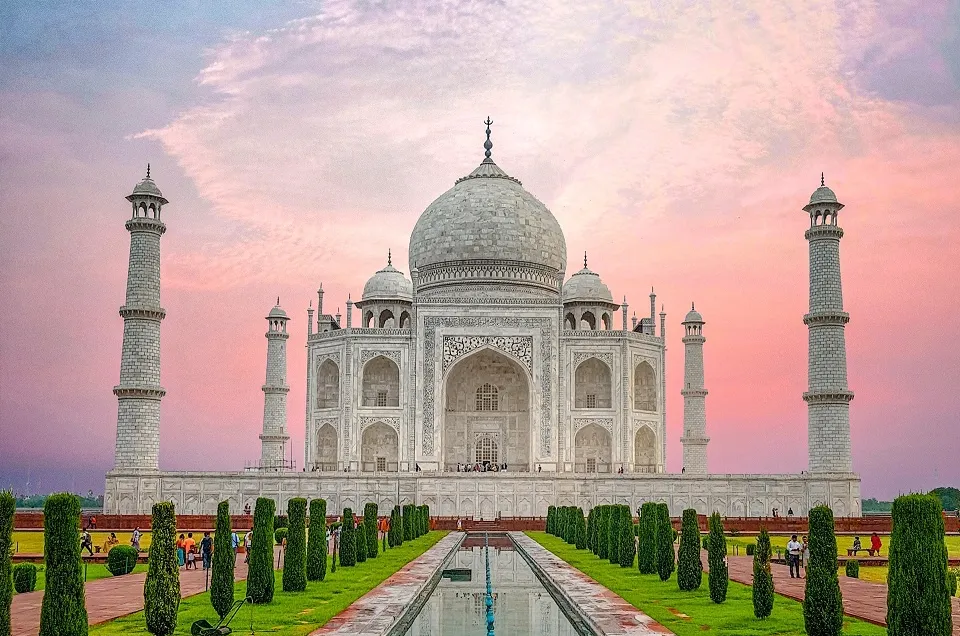
Delhi Agra Travel Guide : Imagine standing before the world’s most beautiful monument to love while the morning sun paints its white marble in shades of pink and gold. Then, within hours, you’re navigating the bustling lanes of one of the world’s oldest continuously inhabited cities, where ancient mosques stand beside modern skyscrapers. Welcome to the Delhi-Agra circuit—India’s most iconic travel route that perfectly captures the country’s extraordinary blend of history, culture, and contemporary vibrancy.
This isn’t just another tourist route. The Delhi-Agra corridor represents the very heart of India’s golden age, a journey through the Mughal Empire’s greatest architectural achievements, and a sensory experience that encompasses everything from UNESCO World Heritage Sites to mouthwatering street food. Whether you’re an international traveler making your first trip to India, a history enthusiast tracing the footsteps of emperors, or an Indian explorer discovering your own heritage, this comprehensive guide will help you navigate, understand, and truly experience these two magnificent cities.
Why Delhi and Agra Form India’s Most Popular Travel Circuit
There’s a reason why millions of travelers every year choose the Delhi-Agra route as their introduction to India. These two cities are separated by just 230 kilometers but connected by centuries of shared history, architectural brilliance, and cultural richness. Together, they offer the perfect snapshot of India’s imperial past while showcasing its dynamic present.
Delhi serves as both the ancient capital of multiple empires and the modern capital of the world’s largest democracy. It’s where you can have breakfast near a 12th-century tower, lunch in a contemporary art district, and dinner in a Mughal-era marketplace—all within a single day. Agra, meanwhile, houses not one but three UNESCO World Heritage Sites within its boundaries and represents the pinnacle of Mughal architectural achievement.
What makes this circuit particularly appealing is its accessibility. The infrastructure connecting these cities is excellent, travel times are manageable, and the sheer density of world-class attractions means you maximize experiences while minimizing transit time. It’s India at its most navigable without sacrificing authenticity or grandeur.
Understanding the Historical Connection Between Delhi and Agra
The Mughal Legacy That Binds Them
To truly appreciate Delhi and Agra, you need to understand the Mughal Empire that shaped them both. The Mughals, who ruled much of the Indian subcontinent from the 16th to 19th centuries, had a particular genius for administration, art, and architecture. Delhi served as their primary capital, while Agra held special significance as an alternate capital and the site of their most ambitious architectural projects.
Emperor Akbar the Great established Agra as a major Mughal stronghold in the 16th century, transforming it from a provincial town into an imperial capital rivaling any city in the world. His grandson, Shah Jahan, would go on to create the Taj Mahal here—a monument so perfect that it’s become synonymous with India itself. Meanwhile, Delhi saw the construction of the Red Fort, Jama Masjid, and Chandni Chowk under the same emperor, creating an architectural legacy that defines both cities today.
Architectural Marvels Spanning Two Cities
What’s fascinating is how you can trace architectural evolution across both cities. Humayun’s Tomb in Delhi, built in the 1570s, introduced Persian-style garden tombs to India and directly inspired the Taj Mahal’s design nearly a century later. The Red Fort in Delhi and Agra Fort share design elements while showcasing how Mughal architecture evolved over generations.
This architectural dialogue between the cities means your journey isn’t just about ticking off famous monuments—it’s about understanding how artistic vision, technological innovation, and imperial ambition combined to create structures that still take your breath away five centuries later.
How to Travel Between Delhi and Agra
By Train: The Fastest and Most Comfortable Option
The train journey between Delhi and Agra represents Indian Railways at its best. The Gatimaan Express, India’s fastest train on this route, covers the distance in just 100 minutes, departing Delhi at 8:10 AM and arriving in Agra at 9:50 AM. The Shatabdi Express is another excellent option, known for its punctuality, cleanliness, and onboard meals.
Train travel offers several advantages: you avoid highway traffic, enjoy comfortable seating with air conditioning, get to witness the Indian countryside, and arrive directly in the heart of Agra. Booking is straightforward through the IRCTC website or app, though popular trains often sell out days in advance, especially during peak tourist season (October to March).
For first-time visitors, the train experience itself becomes part of your India story—watching the landscape transform, observing fellow travelers, enjoying chai served in clay cups at platforms, and feeling the rhythm of rail travel that’s been connecting India for over 150 years.
By Road: Highway Adventures and Scenic Routes
The Yamuna Expressway, a modern six-lane highway completed in 2012, has revolutionized road travel between Delhi and Agra. The 165-kilometer expressway reduces travel time to about 3 hours in comfortable conditions, with rest stops, service stations, and smooth riding throughout.
Road travel offers flexibility—you can stop at Mathura and Vrindavan (the Krishna pilgrimage sites) en route, adjust your schedule freely, and carry luggage without train restrictions. You can drive yourself, hire a taxi for the day, or book with professional tour operators who provide comfortable vehicles with experienced drivers and optional guides.
The Yamuna Expressway route is particularly scenic during early morning or late afternoon, with sunrise and sunset painting the North Indian plains in beautiful colors. However, be prepared for potential delays if traveling during festivals or long weekends when traffic increases significantly.
By Air: When Time is Precious
While there’s no regular commercial flight service between Delhi and Agra, helicopters and charter flights are available for luxury travelers or those with extremely tight schedules. This option is expensive (starting from approximately ₹15,000-20,000 per person) but reduces travel time to under an hour including ground transport.
Most travelers, however, find that train or road options provide the best balance of time, cost, and experience. The short distance means that flying doesn’t actually save much time when you account for airport procedures and ground transport on both ends.
Delhi: The Capital of Incredible Experiences
Red Fort: Where Emperors Ruled
Walking through the massive gates of the Red Fort, you’re entering the seat of Mughal power in its zenith. Built by Shah Jahan in the mid-17th century, this imposing fortress of red sandstone served as the Mughal emperors’ residence for nearly 200 years. The name “Red Fort” comes from its distinctive red sandstone walls, but don’t let that fool you—inside awaits an intricate complex of palaces, pavilions, and gardens that showcase Mughal architecture at its finest.
The Diwan-i-Aam (Hall of Public Audience) where the emperor met common citizens, the Diwan-i-Khas (Hall of Private Audience) that once housed the famous Peacock Throne, and the stunning Rang Mahal with its central water channel all tell stories of imperial grandeur. The evening sound and light show narrates Delhi’s history through the fort’s perspective—definitely worth attending if you have time.
Every year on Independence Day (August 15th), India’s Prime Minister hoists the national flag here and addresses the nation, continuing a tradition that connects contemporary India with its historical roots.
Qutub Minar: Ancient Engineering Marvel
Standing 73 meters tall, Qutub Minar is the world’s tallest brick minaret and a testament to 12th-century engineering brilliance. Built by Qutb-ud-din Aibak in 1193 to celebrate his victory, the tower features intricate carvings, verses from the Quran in Arabic calligraphy, and architectural details that have survived earthquakes and centuries of weathering.
What many visitors miss is the Qutub Complex surrounding the tower. The Iron Pillar of Delhi, dating to the 4th century CE, stands here in remarkable corrosion-free condition—a metallurgical mystery that still puzzles scientists. The incomplete Alai Minar tower and the beautiful arches of Quwwat-ul-Islam Mosque add layers to the site’s historical significance.
Visit during late afternoon when the sunlight creates beautiful shadows on the red sandstone and the tourist crowds thin out. The surrounding park is perfect for a peaceful walk after exploring the monuments.
India Gate and Central Delhi’s Colonial Grandeur
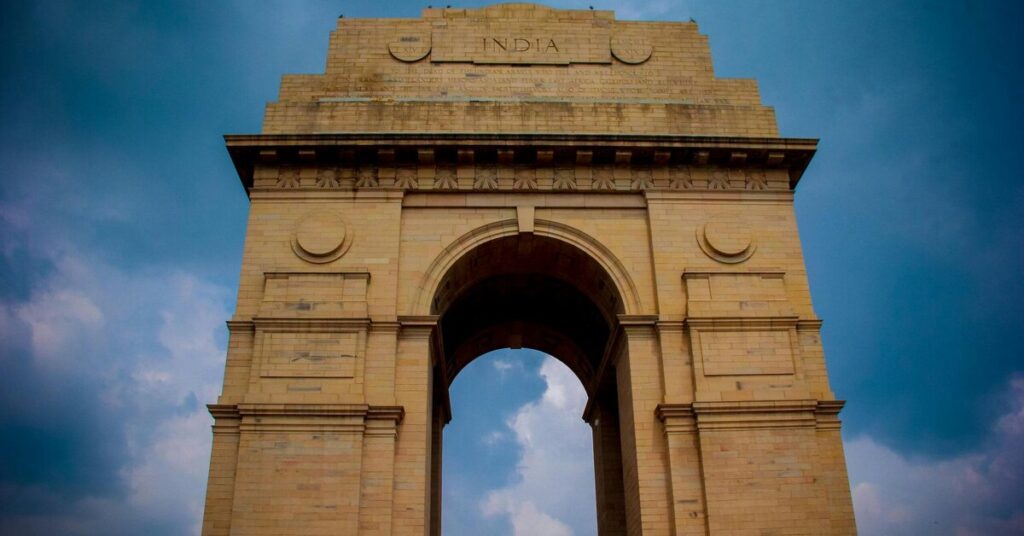
India Gate, the 42-meter war memorial arch, stands as one of Delhi’s most recognizable landmarks. Built in the 1920s to commemorate Indian soldiers who died in World War I, it anchors Central Delhi’s grand avenue—the Rajpath—that stretches from the President’s House (Rashtrapati Bhavan) to the National Stadium.
The area around India Gate transforms into a vibrant public space during evenings and weekends, with families picnicking on the lawns, vendors selling ice cream and snacks, and a general atmosphere of urban leisure that showcases Delhi’s contemporary culture. The illuminated monument at night is particularly photogenic.
Nearby, the National War Memorial completed in 2019 honors Indian soldiers who sacrificed their lives post-independence. The concentric circles of structures and the eternal flame create a moving tribute worth including in your visit.
Humayun’s Tomb: The Taj Mahal’s Predecessor
If you visit only one monument in Delhi besides the Red Fort, make it Humayun’s Tomb. This magnificent garden tomb, built in 1570 for Mughal Emperor Humayun, introduced Persian architecture to the Indian subcontinent and directly inspired the Taj Mahal’s design.
The symmetry is breathtaking—a red sandstone and white marble structure set in the center of Persian-style Charbagh (four-quadrant) gardens, with water channels, pathways, and geometrically laid out plants creating a vision of paradise on earth. The tomb chamber itself features intricate marble work and houses not just Humayun but several other Mughal royals.
The recently restored complex is a UNESCO World Heritage Site and offers excellent photo opportunities, especially during early morning when soft light enhances the red and white marble contrast. The peaceful gardens provide a stark contrast to Delhi’s urban chaos just outside the walls.
Jama Masjid and Chandni Chowk: Old Delhi’s Beating Heart
Jama Masjid, India’s largest mosque, dominates Old Delhi’s skyline. Built by Shah Jahan in 1656, it can accommodate 25,000 worshippers in its courtyard. The mosque’s architectural grandeur—three great gates, four towers, and two minarets standing 40 meters high—is matched by its spiritual significance as one of India’s most important Islamic sites.
Visitors are welcome outside prayer times (dress modestly and remove shoes). Climbing the minaret offers panoramic views of Old Delhi, though the narrow stairs aren’t for the claustrophobic or those with mobility issues.
Right next to Jama Masjid lies Chandni Chowk, the legendary marketplace established in the 17th century. This isn’t a tourist market—it’s a living, breathing commercial hub where locals have shopped for 400 years. The narrow lanes burst with wholesale shops, street food vendors, centuries-old establishments, and an energy that’s quintessentially Indian.
Exploring Chandni Chowk is best done on foot or via cycle rickshaw (a fun experience in itself). Don’t miss Paranthe Wali Gali for fried bread, Karim’s for Mughlai cuisine, and the wedding card market for a glimpse into elaborate Indian wedding preparations.
Agra: Beyond the Taj Mahal
Taj Mahal: Experiencing the Monument of Love
What can be said about the Taj Mahal that hasn’t been said a million times before? This white marble mausoleum, built by Emperor Shah Jahan for his beloved wife Mumtaz Mahal, is widely considered the world’s most beautiful building. Yet, reading about it and actually standing before it are completely different experiences.
The Taj is built to be approached slowly—through gates that frame your first glimpse, across gardens that build anticipation, until finally you stand before the monument itself. The proportions are so perfect that it appears to float, the white marble seems to change color with the light (pink at dawn, golden at sunset, pearl white during midday), and the intricate inlay work using 28 types of precious and semi-precious stones is so detailed you could spend hours examining just one panel.
Insider tips: Arrive at sunrise (gates open at 6 AM) for the best light and smallest crowds. The Taj is closed on Fridays. Photography is allowed outside but not inside the main mausoleum. Hiring an official guide is worthwhile—they share stories and architectural details that transform your visit from sightseeing to understanding. And yes, despite being India’s most visited monument, it absolutely lives up to the hype.
Agra Fort: The Red Sandstone Masterpiece
Just 2.5 kilometers from the Taj Mahal sits Agra Fort, a massive red sandstone fortress that served as the main residence of Mughal emperors until 1638. This UNESCO World Heritage Site is often overshadowed by the Taj, but it deserves equal attention for its architectural brilliance and historical significance.
The fort complex encompasses palaces, mosques, audience halls, and private chambers spanning several architectural styles. The Jahangiri Mahal showcases Hindu-Muslim architectural fusion, the Khas Mahal displays pure Mughal elegance with its white marble work, and the Musamman Burj tower offers poignant history—this is where Shah Jahan was imprisoned by his son and spent his final years gazing at the Taj Mahal where his wife lay buried.
The fort’s museums house artifacts from Mughal times, including weapons, miniature paintings, and royal belongings. Allow at least 2-3 hours to properly explore the complex. The audio guide available at the entrance is excellent for understanding the historical context of different sections.
Fatehpur Sikri: The Abandoned Mughal Capital
About 40 kilometers from Agra lies one of history’s most fascinating stories—an entire imperial capital built, used for barely 15 years, and then abandoned. Fatehpur Sikri, built by Emperor Akbar in 1571, was his dream capital combining the best of Mughal architecture with Akbar’s unique vision of religious synthesis.
The entire complex, built from red sandstone, remains remarkably well-preserved. The Buland Darwaza (Gate of Magnificence) is one of the highest gateways in the world. Inside, the Panch Mahal (five-story palace), Jama Masjid, and the tomb of Saint Salim Chishti showcase Mughal architecture at its experimental best, blending Persian, Indian, and Islamic design elements.
Why was this magnificent city abandoned? The commonly accepted theory is water scarcity, though some historians debate this. Whatever the reason, walking through Fatehpur Sikri feels like stepping into a time capsule—the buildings remain but the life that animated them is gone, creating an atmospheric, slightly melancholic experience.
Plan for a half-day trip from Agra. The site is exposed with limited shade, so visit during cooler hours and carry water. Local guides are available and recommended for understanding the complex’s layout and significance.
Mehtab Bagh: Sunset Views Across the Yamuna
Want to see the Taj Mahal without the crowds and from a unique perspective? Cross the Yamuna River to Mehtab Bagh, a charbagh garden complex directly opposite the Taj Mahal. This “moonlight garden” was supposedly designed for viewing the Taj by moonlight and offers unobstructed views across the river.
Mehtab Bagh is particularly magical during sunset when the setting sun bathes the Taj in golden light, and you can photograph it with the river in the foreground—a perspective impossible from the main monument. The garden itself is peaceful, well-maintained, and far less crowded than the Taj Mahal proper.
Entry fees are minimal (₹25 for Indians, ₹300 for foreigners), and photography is unrestricted. Many photographers and serious Taj enthusiasts consider this location superior for photos compared to the main monument. Visit during your second day in Agra after you’ve seen the Taj up close.
Best Time to Visit Delhi and Agra
Timing your Delhi-Agra trip significantly impacts your experience. The ideal period is October through March when temperatures range from pleasant to cool (10°C to 25°C). This is peak tourist season for good reason—the weather allows comfortable sightseeing, and several festivals add cultural richness to your visit.
The brutal summer months (April to June) see temperatures soaring above 45°C in both cities. Exploring outdoor monuments becomes challenging, and the heat can be dangerous if you’re not accustomed to it. The monsoon season (July to September) brings relief from heat but also humidity, unpredictable rain, and potential travel disruptions.
Seasonal Considerations and Festival Times
October-November offers perfect weather plus the festive season—Diwali transforms both cities with lights and celebrations. Delhi’s air quality deteriorates during this period due to crop burning in neighboring states, but it’s still manageable for short visits. January-February can be chilly early morning and evening, requiring light jackets, but daytime remains pleasant.
If you’re interested in experiencing India’s cultural vibrancy, plan around festivals. Republic Day (January 26th) in Delhi features spectacular parades and celebrations. Holi (February/March) brings color and joy to Agra. The Taj Mahotsav in February is a 10-day cultural festival in Agra showcasing crafts, cuisine, and performances.
However, festival periods also mean higher prices, crowded monuments, and advance booking requirements for accommodation and trains. Weekends see domestic tourist crowds, especially at the Taj Mahal. If possible, plan your Agra visit for weekdays and morning hours.
Where to Stay in Delhi and Agra
Budget-Friendly Accommodations
Both cities offer excellent budget accommodations for travelers watching expenses. Delhi’s Paharganj area near New Delhi Railway Station has numerous budget hotels and backpacker hostels starting from ₹500-1500 per night. The area is convenient for transport but can be chaotic and noisy. Zostel and Moustache hostels offer cleaner, more organized budget stays with social atmosphere and better locations.
Agra’s Taj Ganj area, within walking distance of the Taj Mahal, is budget traveler headquarters with hotels ranging from ₹800-2500. Many rooftop restaurants here offer Taj views while dining. The area is tourist-oriented, so expect persistent touts and higher prices compared to local standards, but the location convenience is unbeatable.
Mid-Range and Luxury Options
Delhi’s mid-range hotels (₹3000-8000) are plentiful in areas like Karol Bagh, Connaught Place, and near Delhi Airport. These offer comfortable rooms, reliable service, and often include breakfast. For luxury, Delhi excels with five-star properties like The Imperial, Taj Palace, and The Oberoi offering world-class service, heritage architecture, and prime locations.
Agra’s mid-range and luxury segment has improved dramatically over the past decade. Hotels like Taj View Agra, ITC Mughal, and The Oberoi Amarvilas offer varying levels of luxury, with Amarvilas providing the ultimate splurge—rooms with direct Taj Mahal views and service that justifies the premium pricing.
For hassle-free booking and reliable quality, partnering with established tour operators like TripCosmos.co ensures accommodation matches your expectations, is located conveniently, and comes with backup support if issues arise.
Culinary Journey: Must-Try Foods in Both Cities
Delhi’s Street Food Paradise
Delhi’s street food scene is legendary and absolutely not to be missed (assuming your stomach can handle it). Paranthe Wali Gali in Old Delhi serves stuffed parathas (fried bread) in dozens of varieties. Karim’s near Jama Masjid has served legendary Mughlai cuisine since 1913—their mutton korma and kebabs are stuff of legend.
For vegetarian delights, try chaat at Bengali Market or Chandni Chowk—golgappas (pani puri), aloo tikki, dahi bhalla create flavor explosions in your mouth. Nizamuddin’s Ghalib Kabab Corner serves phenomenal kebabs and rolls. For desserts, Old Famous Jalebi Wala in Chandni Chowk and Roshan Di Kulfi in Karol Bagh are institutions.
Delhi also excels in regional cuisines—South Indian dosas at Sagar Ratna, Punjabi food at Moti Mahal, and modern Indian dining at restaurants in Hauz Khas Village or Khan Market. The city’s food diversity means you could eat something different every meal for months.
Agra’s Mughlai Delights
Agra’s cuisine reflects its Mughal heritage with rich, aromatic dishes. Petha, the translucent sweet made from white pumpkin, is Agra’s signature—Panchhi Petha Store is the most famous retailer. While it looks unappetizing, good quality petha is actually delicious in its subtle sweetness.
For Mughlai food, Pinch of Spice and Esphahan at The Oberoi Amarvilas serve excellent preparations. Street food lovers should try bedai and jalebi for breakfast at Deviram Sweets. Agra’s tandoori cuisine is exceptional—restaurants near Taj Ganj serve excellent kebabs, tandoori chicken, and naan.
Don’t miss trying dal moth (a spicy snack mixture), gajak (sesame seed and jaggery candy), and if you’re adventurous, the parathas stuffed with everything from potato to paneer to even banana. Dining with a Taj view from rooftop restaurants in Taj Ganj creates memorable experiences, though food quality varies—ask for recommendations.
Suggested Itineraries for Different Travelers
One-Day Agra Trip from Delhi
The classic same-day Taj trip is India’s most popular day tour. Start early—depart Delhi by 6:30 AM by car (or catch the 8:10 AM Gatimaan Express). Arrive in Agra by 9:30-10:00 AM, proceed directly to the Taj Mahal for 2-3 hours. Lunch at a good restaurant, then visit Agra Fort for 2 hours. If time permits, quick stop at Mehtab Bagh for sunset views. Depart Agra by 6-7 PM, reaching Delhi by 9-10 PM.
This is intense but doable and satisfying if you only have one day. However, you’ll miss Fatehpur Sikri and experience both cities at their most rushed. Book everything in advance—Taj tickets, transport, and if taking the train, return tickets.
Two-Day Delhi and Agra Exploration
Two days allow proper exploration of both cities. Day one in Delhi: Start at Red Fort, explore Chandni Chowk and Jama Masjid, lunch in Old Delhi, afternoon visit to Humayun’s Tomb and India Gate area, evening at Connaught Place or Hauz Khas Village.
Day two: Early morning departure to Agra (arrive by 10 AM), visit Taj Mahal until lunch, afternoon at Agra Fort, evening at Mehtab Bagh for sunset, return to Delhi by night or stay overnight in Agra and return next morning after revisiting the Taj at sunrise (many people find the second visit even more moving than the first).
Three to Four-Day In-Depth Experience
With 3-4 days, you can truly appreciate both cities without rushing. Dedicate two full days to Delhi, adding Qutub Minar, Lotus Temple, Akshardham Temple, and specific areas of interest (shopping in Dilli Haat, heritage walks in Mehrauli, contemporary art in galleries). Take a food tour to properly experience Delhi’s culinary diversity.
Spend 1.5-2 days in Agra: Visit the Taj at both sunrise and sunset, thoroughly explore Agra Fort, take a half-day trip to Fatehpur Sikri, visit Mehtab Bagh, explore local markets, and sample Agra’s cuisine without rushing. This pace allows for rest, spontaneous discoveries, and truly absorbing the atmosphere rather than just checking off monuments.
Shopping Experiences in Delhi and Agra
Delhi offers shopping for every budget and preference. Chandni Chowk’s wholesale markets sell everything from wedding cards to electronics at rock-bottom prices. Dilli Haat is a government-run open-air market offering handicrafts from across India—perfect for authentic souvenirs at fair prices. Connaught Place combines street shopping with branded stores. For high-end purchases, Khan Market and Select Citywalk Mall cater to luxury shoppers.
Sarojini Nagar and Lajpat Nagar markets offer export surplus and knock-offs at bargain prices if you enjoy hunting through piles of clothes. Janpath for hippie-style clothes, jewelry, and accessories. Always bargain in markets—starting at 50% of the quoted price is normal.
Agra specializes in marble inlay work (similar to Taj Mahal’s decoration), leather goods, and carpets. Sadar Bazaar and Kinari Bazaar are main shopping areas. Be extremely careful when buying marble inlay—much of what’s sold as “marble” is actually soap stone. Reputable government emporia like UP Handlooms offer authentic products at fixed prices. Avoid shops that your taxi driver or guide recommends unless you’re comfortable with potential commissions built into prices.
Why TripCosmos.co Elevates Your Delhi-Agra Journey
Planning a Delhi-Agra trip involves countless decisions—train vs. car, which monuments, where to eat, avoiding scams, managing time efficiently. This is where TripCosmos.co’s expertise transforms a good trip into an exceptional one.
Based in Varanasi with deep North India knowledge, TripCosmos.co specializes in creating seamless travel experiences across the region. Their Delhi-Agra packages include comfortable air-conditioned transport with professional drivers who know the best routes and timings, knowledgeable guides who bring monuments to life with stories and context rather than just reciting facts, pre-arranged monument tickets avoiding long queues, and restaurant recommendations that locals actually use.
What distinguishes them is customization based on your interests. History buffs get deeper context about Mughal architecture and politics. Food lovers get curated culinary experiences beyond standard tourist restaurants. Photographers get positioned at the right places at the right times for best light. Families with children get pacing that prevents exhaustion and activities that engage young travelers.
Their packages work for every traveler type—solo explorers wanting safety and structure, couples seeking romantic experiences, families needing logistical support, groups requiring coordination, and international visitors wanting cultural context and language assistance.
TripCosmos.co also excels at creating extended itineraries. The Delhi-Agra circuit combines beautifully with nearby destinations—add Jaipur for the complete Golden Triangle, include Mathura-Vrindavan for Krishna pilgrimage, extend to Varanasi and Prayagraj for spiritual journeys, or connect to Ayodhya to witness the newly built Ram Mandir. Their expertise across North India means your entire journey is cohesively planned and expertly executed.
With transparent pricing, 24/7 support, and a genuine passion for showcasing India’s heritage, TripCosmos.co handles the logistics while you focus on experiences. Reach them at +91-9336116210 or visit www.tripcosmos.co to discuss your specific requirements and explore their various packages.
Essential Travel Tips and Safety Advice
Before embarking on your Delhi-Agra journey, keep these practical tips in mind. Dress modestly and comfortably—lightweight, breathable fabrics, comfortable walking shoes, and layers for air-conditioned spaces. Women should be particularly mindful of modest dressing, especially at religious sites.
Stay hydrated but drink only bottled water. Delhi Belly is real, and contaminated water is a common culprit. Gradually introduce yourself to street food rather than diving straight into the spiciest options. Carry basic medicines for stomach upset, headaches, and any personal prescriptions.
Be alert for scams. Common ones include fake tour guides at monuments, taxi drivers taking you to commission-earning shops, overpricing for foreigners, and marble inlay shops claiming government affiliation. Official guides wear badges issued by the Archaeological Survey of India or state tourism. Pre-booking transport and guides through reputable operators eliminates most scam risks.
Keep valuables secure and stay aware of surroundings, especially in crowded areas like Chandni Chowk. Both Delhi and Agra are generally safe for tourists, but petty theft and pickpocketing occur in crowded places. Women should avoid isolated areas after dark and consider using reputable transport rather than random taxis at night.
Respect local customs at religious sites—remove shoes, dress modestly, don’t photograph where prohibited, and maintain respectful behavior. Ask permission before photographing people, especially women. Tipping is expected for guides (₹200-500 depending on service quality and group size), drivers (₹200-300 per day), and restaurant service staff (10% of bill if service charge not included).
Combining Delhi-Agra with Extended North India Tours
The Delhi-Agra circuit serves as an excellent foundation for extended North India exploration. Adding Jaipur creates the famous Golden Triangle—India’s most popular tourist circuit covering Delhi’s history, Agra’s romance, and Jaipur’s royal heritage. This 5-7 day journey gives a comprehensive introduction to North India.
For spiritual seekers, extending from Delhi-Agra to Mathura-Vrindavan-Barsana adds Krishna devotion to Mughal history. Further extension to Varanasi, Prayagraj, and Ayodhya creates a comprehensive spiritual and cultural journey spanning Hindu pilgrimage sites and Mughal monuments.
Adventure travelers can head to Rishikesh from Delhi for yoga and white-water rafting, or to the hill stations of Himachal Pradesh and Uttarakhand for mountain experiences. Wildlife enthusiasts can visit Bharatpur Bird Sanctuary (very close to Agra) or Ranthambore National Park for tiger safaris.
TripCosmos.co specializes in such multi-destination itineraries, handling the complex logistics of traveling across North India while ensuring each destination receives adequate time and attention. Their local expertise and established networks mean smooth transitions between destinations and authentic experiences throughout.
Conclusion
The Delhi-Agra journey isn’t just about visiting monuments—it’s about connecting with a history that shaped the Indian subcontinent, experiencing architecture that represents human achievement at its finest, tasting cuisines that have evolved over centuries, and understanding a culture that balances ancient traditions with modern aspirations.
From the moment you walk through the massive gates of Red Fort to that breathtaking instant when you first see the Taj Mahal, from navigating the chaotic charm of Chandni Chowk to watching sunset paint Agra Fort in golden light—these experiences accumulate into something profound. You’re not just sightseeing; you’re time traveling through centuries, walking in the footsteps of emperors, and witnessing the tangible results of human creativity and devotion.
The beauty of this circuit lies in its accessibility. Unlike remote pilgrimage sites or hard-to-reach natural wonders, Delhi and Agra are remarkably easy to navigate, especially with proper planning. The infrastructure is solid, English is widely understood in tourist areas, and the sheer concentration of world-class attractions means every day is packed with memorable moments.
Whether you’re spending a whirlwind 24 hours rushing between the Taj Mahal and Delhi’s highlights, or taking a leisurely week to deeply explore both cities with extensions to nearby destinations, the Delhi-Agra corridor offers experiences that stay with you forever. The Taj Mahal at sunrise, the call to prayer echoing from Jama Masjid, the taste of authentic Mughlai kebabs, the intricate marble inlay work, the stories whispered by ancient fort walls—these aren’t just tourist experiences; they’re connections to something timeless.
Planning thoughtfully makes all the difference. Understanding the best times to visit monuments, knowing which foods to try, respecting local customs, avoiding common tourist traps, and perhaps most importantly, partnering with knowledgeable guides who can transform sightseeing into understanding—these elements elevate your journey from good to extraordinary.
Companies like TripCosmos.co exist precisely for this purpose—to handle the complexities of Indian travel while you focus on experiencing, absorbing, and enjoying. Their expertise in North Indian tourism, commitment to authentic experiences, and comprehensive support systems mean you can relax into your journey rather than constantly worrying about logistics and potential problems.
So when will you answer the call of India’s most iconic travel circuit? When will you stand before the Taj Mahal as countless millions have before you, each finding their own meaning in its perfect beauty? When will you lose yourself in Old Delhi’s labyrinthine lanes, discovering treasures that guidebooks never mention? The Mughal emperors built for eternity, and their legacy awaits your discovery.
Your Delhi-Agra adventure isn’t just another trip—it’s your personal chapter in a story that spans millennia. The monuments have witnessed empires rise and fall, yet they stand ready to reveal their secrets to you. All you need to do is take that first step.
FAQs
1. How many days do I need to properly explore Delhi and Agra?
For a comprehensive but manageable experience, 3-4 days is ideal—two full days in Delhi covering major monuments like Red Fort, Qutub Minar, Humayun’s Tomb, Jama Masjid, and India Gate, plus 1.5-2 days in Agra for the Taj Mahal (ideally at both sunrise and sunset), Agra Fort, and a half-day trip to Fatehpur Sikri. If time is extremely limited, a packed 2-day itinerary covering highlights is possible, or even a same-day Agra trip from Delhi focusing solely on the Taj Mahal and Agra Fort. However, more time allows for deeper exploration, rest, and spontaneous discoveries.
2. What is the best way to travel between Delhi and Agra?
The Gatimaan Express train (departing Delhi at 8:10 AM, arriving Agra at 9:50 AM) is the fastest and most comfortable option, covering the distance in just 100 minutes with air-conditioned comfort and onboard meals. The Shatabdi Express is another excellent train option. For flexibility and the ability to stop at places like Mathura en route, hiring a car or booking through a tour operator provides door-to-door service via the Yamuna Expressway (approximately 3 hours). Train tickets should be booked in advance through the IRCTC website, especially during peak tourist season (October-March).
3. What are the Taj Mahal’s opening hours and best visiting time?
The Taj Mahal is open from sunrise to sunset (approximately 6:00 AM to 6:30 PM) every day except Friday when it’s closed for prayers. The absolute best time to visit is at sunrise when gates open at 6:00 AM—you’ll experience the monument in soft morning light with the smallest crowds and see the white marble change colors as the sun rises. Sunset is also beautiful though more crowded. Midday visits mean harsh light and maximum crowds but are sometimes necessary due to schedule constraints. Book tickets online in advance through the Archaeological Survey of India website to avoid long queues at ticket counters.
4. Is Delhi-Agra safe for solo female travelers and international tourists?
Yes, both cities are generally safe for tourists, including solo female travelers, with reasonable precautions. Stick to well-populated areas, use reputable transport (avoid random taxis late at night), dress modestly respecting local customs, keep valuables secure in crowded places, and stay alert for common scams. Solo female travelers should avoid isolated areas after dark and consider staying in areas with strong tourist infrastructure like Paharganj in Delhi or Taj Ganj in Agra. Booking through established tour operators like TripCosmos.co provides additional security through professional guides, vetted drivers, and 24/7 support. The vast majority of visitors have safe, wonderful experiences in both cities.
5. Can I combine Delhi-Agra with other North Indian destinations?
Absolutely! Delhi-Agra forms the core of several popular circuits. Adding Jaipur creates the Golden Triangle (5-7 days total), India’s most famous tourist route. Nearby Mathura-Vrindavan can be added for Krishna pilgrimage experiences. Extended itineraries can include Varanasi, Prayagraj, and Ayodhya for comprehensive spiritual journeys, or Rishikesh for yoga and Himalayas experience, or Ranthambore for tiger safaris. TripCosmos.co specializes in creating such multi-destination itineraries with seamless logistics, comfortable transport, quality accommodation, and expert guides across North India. Their packages can be completely customized based on your interests, time availability, and budget.