
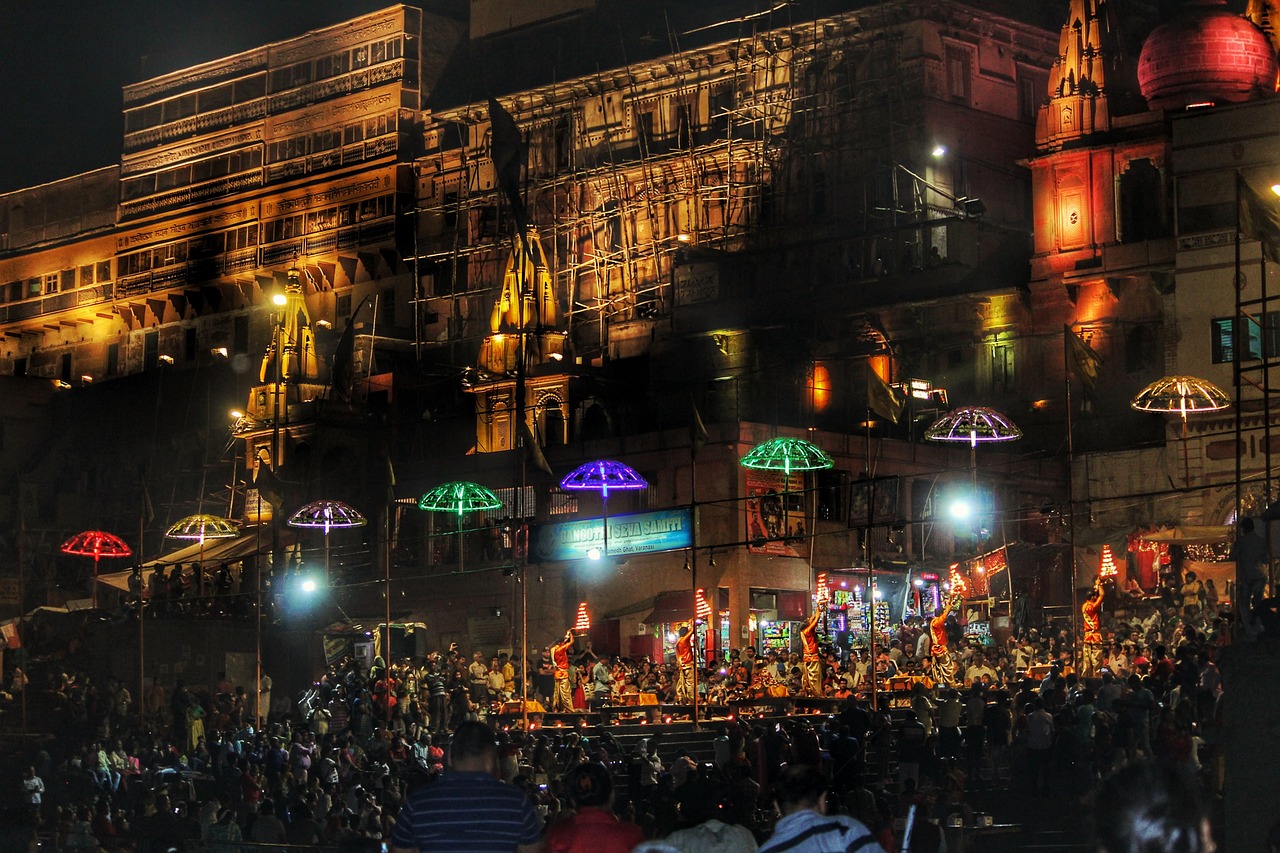
Ganga Aarti Booking Online , The evening Ganga Aarti ceremony at Varanasi’s Dashashwamedh Ghat represents one of India’s most spectacular spiritual experiences, drawing thousands of pilgrims and tourists nightly to witness synchronized priests performing elaborate fire worship rituals honoring the sacred Ganges. As popularity has surged, viewing options have evolved from simply arriving at the ghat to numerous booking alternatives including online reserved seating, boat arrangements, and VIP platforms. This comprehensive comparison explores online advance booking versus on-spot arrangements, examining costs, convenience, experience quality, and flexibility to help you determine which approach best suits your circumstances, travel style, and priorities.
Understanding Ganga Aarti Viewing Options
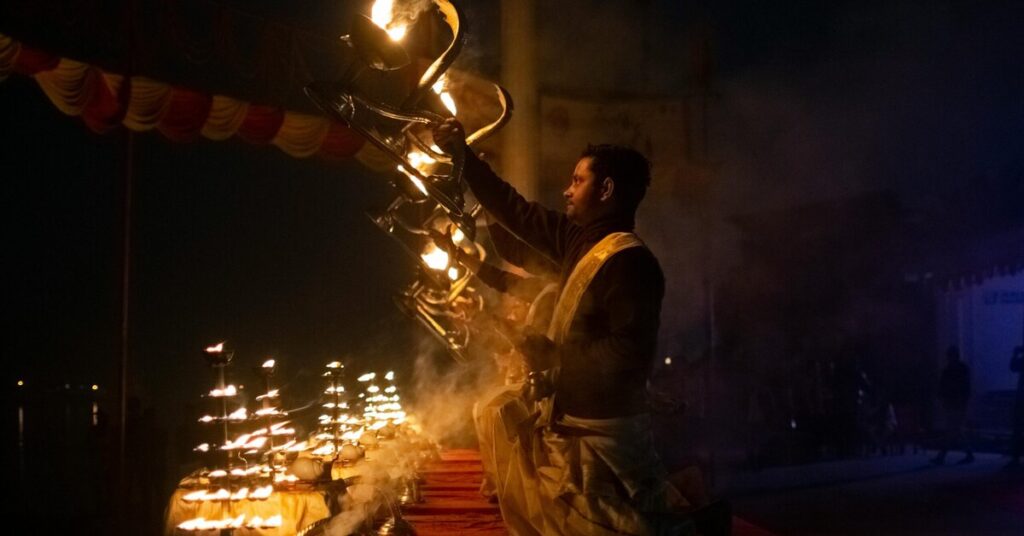
Ganga Aarti Booking Online , The nightly Ganga Aarti at Dashashwamedh Ghat begins around 6:45-7:00 PM (timing varies seasonally) and lasts approximately 45-60 minutes. Seven young priests perform synchronized worship using massive brass lamps, conch shells, incense, and peacock-feather fans while devotional music and chanting create powerful spiritual atmosphere. The ceremony occurs outdoors on multi-tiered stone platforms, with viewing possibilities ranging from free general ghat access to premium paid seating arrangements.
Viewing Options include: standing or sitting on open ghat steps (free but crowded), reserved platform seating providing elevated unobstructed views (₹300-800 per person), VIP seating in front rows closest to priests (₹800-1,500 per person), private boat positioning on the river offering water-level perspectives (₹500-1,500 per person depending on boat type and position), and exclusive rooftop/balcony viewing from buildings overlooking the ghat (₹1,000-3,000+ per person at select heritage properties).
Each viewing method offers distinct advantages, and the online-versus-on-spot question applies primarily to reserved seating and boat arrangements, as free ghat access requires no booking while exclusive rooftop venues typically mandate advance reservations regardless.
Online Advance Booking: Advantages
Guaranteed Access and Seating represents online booking’s primary advantage, particularly during peak tourist season (October-March) and major festivals when crowds swell dramatically. Advance reservations guarantee specific seats or boat positions, eliminating uncertainty about availability upon arrival. During Diwali, Dev Deepawali, or long holiday weekends, on-spot arrangements can be completely sold out, leaving you with only crowded free viewing options.
Time Efficiency and Convenience means you bypass on-arrival scrambling—no need to search for booking offices, negotiate with multiple operators, compare prices under pressure, or waste valuable vacation hours arranging what could have been secured in minutes online weeks earlier. You arrive in Varanasi with logistics resolved, focusing immediately on experiences rather than arrangements.
Price Transparency and Comparison Shopping online enables leisurely evaluation of multiple operators’ offerings through websites and booking platforms displaying clear pricing, seating categories, customer reviews, and photographic evidence of actual viewing positions. This transparency prevents the information asymmetry that disadvantages tourists negotiating on-spot with limited knowledge about fair pricing or quality differences between operators.
Payment Security through reputable online platforms provides transaction protection, digital receipts, and recourse mechanisms if services aren’t delivered as promised. Credit card chargebacks or platform dispute resolution offers safety nets absent when paying cash to ghat-side operators whose accountability ends once they have your money.
Confirmation and Communication via email or WhatsApp provides written records of exact booking details—date, time, seating type, meeting points, contact numbers—reducing miscommunication risks. Many online bookings include pre-arrival communication explaining logistics, answering questions, and providing reassurance that eliminates arrival anxiety.
Package Integration allows bundling aarti arrangements with broader tour packages including hotels, transportation, and sightseeing, often at bundled discounts. Online tour operators frequently offer comprehensive packages where aarti viewing integrates seamlessly with other activities, creating cohesive experiences rather than disjointed separate arrangements.
Online Advance Booking: Disadvantages
Flexibility Loss means you’re committed to specific dates and times potentially weeks in advance. If your travel plans change—delayed trains, flight cancellations, schedule adjustments—modifying online bookings ranges from difficult to impossible depending on operator policies. Strict cancellation terms often result in partial or complete payment forfeiture for changes made within days of reserved dates.
Weather Uncertainties can’t be predicted accurately weeks ahead. Booking premium seating for dates that turn out rainy or unpleasantly cold means paying for compromised experiences. While the aarti proceeds regardless of weather, heavy rain or extreme cold significantly diminish comfort, and you’ve paid premium prices for experiences you might have skipped if booking on-spot after assessing actual conditions.
Overpaying for Uncertain Value occurs when booking without personal assessment of viewing position quality. Photographs and descriptions don’t fully convey actual sightlines, crowd density, or audio clarity from specific seats. You might pay ₹500-800 for “premium seating” that on-arrival inspection reveals as mediocre compared to superior positions available on-spot for similar or less money from competing operators you didn’t know existed.
Limited Spontaneity reduces the adventure and flexibility many travelers value. Perhaps you’d prefer attending on a night when you’re particularly energized rather than when pre-booking committed you, or maybe you’d rather skip aarti entirely after discovering other compelling Varanasi experiences occupying that evening.
Scam Vulnerability exists with unverified online operators. Fraudulent websites mimicking legitimate services, operators accepting payment then disappearing, or businesses severely misrepresenting seating quality all target tourists booking remotely without ability to verify claims. While reputable platforms mitigate this, individual operator websites or third-party agents vary enormously in reliability.
On-Spot Booking: Advantages
Maximum Flexibility allows responsive decision-making based on actual circumstances—your energy levels, weather conditions, competing activities, and spontaneous schedule changes. Feeling exhausted after intensive temple visits? Skip aarti without forfeiting deposits. Weather perfect? Book immediately and attend that evening.
Direct Assessment of Options means inspecting actual seating areas, boat conditions, and viewing angles before committing money. You can visit multiple operators, compare their offerings firsthand, and make informed choices based on direct observation rather than website photographs that may be outdated or deceptive.
Negotiation Opportunities frequently yield better prices than fixed online rates, particularly during off-peak periods or when booking close to ceremony start time when operators prefer selling remaining seats at discounts over leaving them empty. Skilled negotiators sometimes secure ₹300-400 seats for ₹200-250, or free boat ride upgrades, through direct bargaining impossible with fixed online pricing.
Local Recommendations from hotel staff, fellow travelers, or even rickshaw drivers often identify quality operators or viewing positions that online research never revealed. Personal referrals carry weight, and on-spot booking enables acting immediately on valuable insider information discovered during your Varanasi stay.
Payment Flexibility includes cash transactions avoiding credit card processing fees or currency conversion charges, and ability to walk away if operators seem unprofessional or prices feel exploitative—options unavailable after committing payment online weeks earlier.
On-Spot Booking: Disadvantages
Availability Uncertainty creates stress, particularly during peak season. After arriving hopeful for premium seating only to discover everything sold out, you’re relegated to crowded free viewing or expensive last-minute options from exploitative operators charging premiums for remaining seats. This uncertainty undermines vacation relaxation and wastes time on logistics rather than experiences.
Time and Energy Consumption searching for operators, comparing options, and negotiating drains precious vacation hours and mental energy, especially exhausting after morning sightseeing and afternoon rest. The convenience of arriving with arrangements already secured, simply showing confirmation and enjoying the experience, has genuine value that on-spot booking sacrifices.
Information Disadvantages mean you’re negotiating from positions of ignorance about fair pricing, operator reputations, and alternative options. Unscrupulous operators exploit tourist unfamiliarity, overcharging or misrepresenting seating quality knowing you lack reference points for evaluation. The power imbalance favors operators who do this daily over tourists doing it once.
Language Barriers complicate direct negotiations for non-Hindi speakers. Misunderstandings about pricing, seating locations, or timing create frustrations preventable through written online confirmations. Professional online operators typically communicate clearly in English; ghat-side operators vary enormously in language capabilities.
Scam and Safety Risks escalate when dealing with unknown operators at crowded ghats. Without online verification tools—websites, reviews, booking platform accountability—you’re vulnerable to outright fraud (taking payment but providing no service), severe overcharging, or even safety concerns from unlicensed boat operators using unseaworthy vessels. The anonymous cash transaction nature of on-spot booking provides minimal recourse when problems arise.
Peak Period Stress turns on-spot booking from slight inconvenience into genuinely difficult challenges during major festivals when demand far exceeds supply. The scramble for limited seats creates competitive, stressful environments antithetical to the spiritual peace aarti ceremonies ideally inspire.
Hybrid Approach: Strategic Combination
Many experienced travelers employ hybrid strategies combining both approaches’ advantages. Book online for peak dates when you’re visiting during festivals, holidays, or high season and want guaranteed premium experiences. The peace of mind and guaranteed access justify modest premiums. Book on-spot for off-peak dates or when your schedule is uncertain, leveraging flexibility and negotiation opportunities when availability isn’t concerning.
Another variation: Book boats online, seating on-spot. Boat arrangements benefit more from advance booking given limited boat numbers and importance of good positioning, while platform seating typically maintains adequate availability for on-spot booking except during absolute peak periods.
Cost Comparison Across Methods
Free Ghat Viewing: ₹0 (but requires arriving 45-60 minutes early for any decent viewing spot, significant crowd jostling, limited ability to see details from distance)
On-Spot Platform Seating: ₹200-500 typically (negotiable), though prices surge to ₹500-800 during peaks when availability is scarce
Online Platform Seating: ₹300-800 depending on operator and seating tier, fixed non-negotiable pricing
On-Spot Boat Rides: ₹100-200 per person for shared boats (negotiable), ₹600-1,000 for private boats (negotiable)
Online Boat Rides: ₹150-300 per person shared, ₹800-1,500 private boats, fixed pricing
Premium Online Packages: ₹1,000-3,000+ including VIP seating, dinner, guided experiences, transfers—these comprehensive packages rarely available on-spot
Recommendations by Traveler Type
First-Time Visitors: Online booking recommended. The certainty, convenience, and reduced stress allow focusing on the experience itself rather than logistics in an unfamiliar city. The modest premium over on-spot rates proves worthwhile for peace of mind.
Return Visitors/India-Experienced Travelers: On-spot booking works well. Your familiarity with India, negotiation confidence, and comfort with uncertainty enable leveraging on-spot advantages without significant disadvantages.
Peak Season Travelers: Definitely book online. The availability concerns and inflated on-spot prices during peak periods mean advance booking provides both certainty and often better value despite seeming premiums.
Off-Season Travelers: On-spot booking is ideal. Abundant availability means no access concerns, and negotiation yields genuinely better prices than online fixed rates. Maximum flexibility serves well when weather and personal energy are uncertain.
Budget Backpackers: On-spot negotiation or free ghat viewing aligns with budget priorities. However, even backpackers might consider modest online bookings (₹300 range) worthwhile for guaranteed good experiences versus risky free viewing where you might see nothing.
Families with Children/Elderly: Online booking strongly recommended. The guaranteed seating, clear meeting points, and reduced arrival scrambling with tired children or less mobile elderly members justify any premium costs.
Luxury Travelers: Online premium packages only. The comprehensive VIP experiences with dinner, guides, and exclusive viewing aren’t typically available on-spot, and time-is-money calculations make convenience paramount.
Booking Timeline Considerations
If choosing online booking, reserve 7-14 days ahead during regular season, 3-4 weeks for peak periods. Last-minute online booking (2-3 days ahead) remains possible but reduces choice and occasionally encounters sold-out status for premium options.
On-spot booking works even day-of-arrival, though morning/afternoon booking for that evening proves easier than arriving at ghat just before ceremony when operators are busy with confirmed bookings. The 3-6 PM window offers optimal on-spot booking timing.
Conclusion
Neither online advance booking nor on-spot arrangements for Ganga Aarti viewing are universally “better”—each serves different priorities and circumstances. Online booking trades flexibility and potential cost savings for certainty, convenience, and peace of mind, particularly valuable for first-time visitors, peak season travel, or those prioritizing relaxation over adventure. On-spot booking preserves maximum flexibility and negotiation opportunities while risking availability issues and consuming time/energy, working best for experienced travelers during off-peak periods comfortable with uncertainty. Understanding your personal priorities—certainty versus flexibility, convenience versus cost optimization, planned structure versus spontaneous adventure—enables strategic choices ensuring your Ganga Aarti experience, however arranged, achieves its intended purpose: bearing witness to one of India’s most mesmerizing spiritual ceremonies in ways aligned with your travel philosophy and practical circumstances.
Frequently Asked Questions
Q1: If we book online but the weather is terrible or we’re too tired, can we get refunds?
Refund policies vary significantly by operator, making this crucial to clarify before booking. Typical policies: Most operators offer partial refunds (50-70%) for cancellations made 24-48 hours before the event, though some charge 100% for cancellations within 48 hours. Weather-related cancellations typically aren’t operator responsibility—the aarti proceeds rain or shine, so poor weather doesn’t constitute service failure warranting refunds. However, reputable operators sometimes offer rescheduling for the next evening if you notify them with reasonable advance notice. Fatigue cancellations similarly don’t usually qualify for refunds as the service was available as booked; your choice not to attend is personal decision rather than operator failure. Recommendations: Book through platforms offering cancellation protection or travel insurance if you’re concerned about potential cancellations. Read fine print carefully regarding cancellation windows and conditions. Consider on-spot booking if you anticipate high likelihood of schedule changes—the flexibility loss of online booking isn’t worth modest savings if you’ll probably cancel anyway. Some premium operators offer flexible rescheduling within your stay dates, though this is uncommon with budget options.
Q2: How much cheaper can we negotiate on-spot compared to online prices?
Negotiation success depends on multiple factors: season, time of day you’re booking, your negotiation skills, operator’s current booking status, and your willingness to walk away. Realistic expectations: During off-peak season or slow days, skilled negotiators can achieve 20-30% discounts from initial asking prices, perhaps securing ₹400 seats for ₹250-300. However, during peak season, operators know demand exceeds supply and rarely negotiate meaningfully—you might get ₹50-100 off but nothing approaching online comparison. Timing matters: Booking mid-afternoon for that evening yields better negotiation positions than booking 30 minutes before ceremony when operators are busy. Fixed online rates typically fall between initial asking prices and negotiated on-spot prices—often ₹300-500 for what would be quoted ₹600 on-spot but negotiable to ₹350-400. So online booking isn’t necessarily more expensive than on-spot; it’s more expensive than successful negotiation but comparable to accepting first quotes. Important reality: Many tourists uncomfortable with aggressive negotiation or uncertain about fair pricing end up paying more on-spot than they would have paid online, fearing they’re being cheated but lacking leverage to negotiate effectively. Online fixed pricing actually protects such travelers from overpaying.
This varies dramatically by operator, making research essential. Genuine premium experiences exist—front-row elevated platforms with the best unobstructed views, cushioned seating, sometimes including refreshments or guides providing aarti explanations. Established operators with verified reviews deliver as promised. Marketing gimmicks also exist—operators labeling mediocre seats “VIP” or “premium” to justify inflated pricing when the actual viewing experience differs negligibly from cheaper options. Red flags: Operators unable to show photographs or videos from claimed “VIP” positions, those with no verifiable reviews mentioning seating quality, or prices seeming disproportionate to described benefits (₹2,000+ for basic elevated seating). Verification strategies: Cross-reference multiple review sources mentioning specific seating categories. Request exact seating location descriptions and verify against Dashashwamedh Ghat maps. Compare photographs across operators to identify if “premium” seats are genuinely better positioned. Consider that the ₹300-500 standard reserved seating often provides perfectly adequate experiences, and premium tiers only matter if you’re particularly devoted to optimal viewing. Many travelers report standard reserved seats exceeded expectations while “VIP” premiums didn’t justify cost differences.
Q4: Is it safe to book boats on-spot from random operators at the ghat?
Safety levels vary enormously between licensed, experienced operators and opportunistic individuals. Legitimate boat operators maintain proper life jackets, mechanically sound boats, and experienced boatmen who navigate safely—these are generally safe even when booked on-spot. Risks exist with unlicensed operators using poorly maintained boats lacking safety equipment, inexperienced boatmen, or severe overloading creating genuine danger. Safety verification steps: Look for boats with visible registration numbers painted on sides. Verify life jackets are available and functional for all passengers before boarding—insist on wearing them if water safety concerns you. Observe the boat’s general condition—excessive water inside, visible structural damage, or jury-rigged repairs signal potential problems. Check that the boatman appears sober and competent. Ask where exactly he’ll position the boat—experienced operators know optimal aarti-viewing locations. Recommendations: Book through your hotel or established tour operators who vet boat operators, even if doing so “on-spot” through them rather than directly at ghats. The modest commission hotels/operators take proves worthwhile for safety assurance. Avoid individuals approaching you on ghats with aggressive sales pitches—legitimate operators typically have stalls or stands rather than hustling tourists directly. If anything feels wrong, trust instincts and decline regardless of sunk search time.
Q5: Can we just show up and watch for free, or is booking really necessary?
Free viewing is absolutely possible and how most Indian pilgrims experience aarti—simply arrive at Dashashwamedh Ghat, find space on the steps, and watch. No booking required, no payment necessary. However, realistic expectations matter: Arrive 45-60 minutes early (6:00-6:15 PM for 6:45 PM ceremony) to secure any decent viewing position. Prime spots fill by 6:00-6:15 PM, and latecomers stand in far back rows seeing little detail. Expect dense crowds—you’ll be tightly packed among hundreds of people, making photography difficult and limiting movement. Sightlines are often obstructed by people standing in front or holding up phones/cameras. You might see only occasional glimpses of priests rather than continuous clear views. The experience remains spiritually meaningful and atmospherically powerful even with imperfect viewing, and for many, the free communal experience authentically captures traditional darshan. Booking becomes valuable if you want guaranteed good views, photographic opportunities, personal space, or ability to arrive just before ceremony rather than 45 minutes early. Whether free viewing suffices or booking is “necessary” depends on your priorities: experiencing aarti’s spiritual essence (free suffices) versus optimal viewing, photography, and comfort (booking worthwhile). First-time visitors often appreciate booking for assured quality experiences, while return visitors comfortable with uncertainty can try free viewing as authentic alternative to tourist seating sections.