Kashi Ganga Mahotsav 2026 , Imagine sitting on the ancient ghats of Varanasi as the sun sets over the Ganges, when suddenly the air fills with the melodious notes of a sitar, followed by the rhythmic beats of tabla echoing across the water. Colorful boats adorned with flowers and lights glide past while classical dancers perform on temporary stages built along the riverbank. Welcome to Ganga Mahotsav – Varanasi’s grand celebration of culture, heritage, and the sacred river that defines this eternal city.
The Ganga Mahotsav is not just another festival; it’s a five-day cultural extravaganza that transforms Varanasi into a living museum of Indian arts, traditions, and spirituality. Unlike religious festivals focused primarily on worship and ritual, Ganga Mahotsav celebrates cultural heritage through performances, competitions, exhibitions, and demonstrations that showcase the rich tapestry of talents and traditions that have flourished along the banks of the Ganges for millennia.
For travelers seeking to experience authentic Indian culture beyond tourist attractions, Ganga Mahotsav offers an unparalleled opportunity. The festival brings together classical and folk artists from across India, showcases traditional crafts threatened by modernity, presents culinary traditions passed down through generations, and creates spaces where locals and visitors interact through shared appreciation of art and culture. It’s accessible, welcoming, and deeply enriching – a perfect introduction to India’s cultural soul.
History and Origins of the Festival
When It Started
The Ganga Mahotsav began in the 1980s as an initiative by the Uttar Pradesh government’s tourism department to promote Varanasi’s cultural heritage and boost tourism. The festival was conceived as a way to showcase the city’s artistic traditions while honoring the Ganges River, which has sustained civilization, spirituality, and culture along its banks for thousands of years.
Kashi Ganga Mahotsav 2026 , Initially a modest affair with limited programs, the festival has grown substantially over the decades, now attracting thousands of visitors and featuring hundreds of artists. What started as a regional event has become nationally recognized, drawing cultural enthusiasts from across India and increasingly from international destinations.
Purpose and Vision
The festival’s founding vision encompassed multiple objectives that remain relevant today. It aims to celebrate and preserve traditional Indian performing arts – classical music, dance, and theatre forms that face challenges in the modern entertainment landscape. The festival provides platforms for traditional artisans whose crafts are endangered by mass production and changing consumer preferences.
Additionally, Ganga Mahotsav promotes Varanasi itself as a living cultural center rather than just a pilgrimage destination. By showcasing the city’s contributions to Indian civilization – its music gharanas, textile traditions, literary heritage, and spiritual philosophies – the festival helps visitors understand Varanasi’s significance beyond its religious importance.
Evolution Over the Years
Over four decades, Ganga Mahotsav has evolved significantly while maintaining its core cultural focus. Early festivals concentrated primarily on music and dance performances. Gradually, the scope expanded to include visual arts exhibitions, craft demonstrations, culinary festivals, literary events, and river-based sporting competitions.
The festival has also adapted to changing audiences and technologies. Where early editions targeted primarily domestic tourists and cultural connoisseurs, recent years have seen increased international participation and programming designed for diverse audiences. Social media promotion, live streaming of performances, and enhanced infrastructure have modernized the festival while preserving its traditional essence.
When and Where is Ganga Mahotsav Celebrated?
Festival Dates and Duration
Ganga Mahotsav typically takes place in November, coinciding with the pleasant post-monsoon weather and the Kartik month of the Hindu calendar, considered especially auspicious. The exact dates vary annually based on the lunar calendar and coordination with other festivals and events. The festival usually spans five days, though some programs and exhibitions may extend beyond the official period.
November timing offers multiple advantages – comfortable weather ideal for outdoor events, alignment with the tourist season, and proximity to Dev Deepawali, creating an extended festival period. Many visitors time their trips to experience both Ganga Mahotsav and Dev Deepawali, maximizing their cultural exposure.
Main Venue and Locations
The primary venue is typically one of Varanasi’s major ghats, most commonly Dashashwamedh Ghat or nearby locations with adequate space and infrastructure. Temporary stages, seating areas, exhibition halls, and food courts are constructed to accommodate the festival’s various components.
However, Ganga Mahotsav isn’t confined to a single location. Events occur across multiple ghats – Assi Ghat might host morning yoga sessions, Kedar Ghat could feature craft exhibitions, while smaller ghats showcase neighborhood-level cultural programs. Some events take place on boats in the river, in temples, at cultural centers like Sankat Mochan Foundation, and even at Banaras Hindu University auditoriums.
Best Time to Attend
For the complete experience, attending all five festival days is ideal. However, if time is limited, focus on the evening programs when major performances occur. The opening and closing ceremonies typically feature the most elaborate presentations and draw the largest crowds.
Arrive at performance venues at least 30-45 minutes early to secure good seating, especially for popular events. Weekend days generally see higher attendance than weekdays. If you prefer smaller crowds, weekday daytime events offer more intimate experiences.
The Cultural Significance of Ganga Mahotsav
Celebrating the Ganges River
At its heart, Ganga Mahotsav is a thanksgiving celebration for the sacred river that has nourished Indian civilization for millennia. The Ganges isn’t merely a geographical feature in Hindu consciousness but a living goddess, mother, and source of spiritual and physical sustenance. The festival honors this relationship between river and culture.
Through performances, prayers, and sporting events on the water, the festival acknowledges the Ganges’ centrality to Varanasi’s identity. It reminds participants – both locals and visitors – of the river’s importance and the responsibility to preserve it for future generations. Environmental themes increasingly feature in festival programming, addressing pollution and conservation.
Showcasing Varanasi’s Heritage
Varanasi has contributed immensely to Indian culture across centuries – producing poets, musicians, philosophers, weavers, and spiritual teachers whose influence extends far beyond the city. Ganga Mahotsav provides a concentrated showcase of this heritage.
The festival presents Varanasi’s distinctive contributions: the gharanas (schools) of classical music that developed here, the Banarasi silk weaving traditions, the thumri and dadra musical forms, the religious and philosophical teachings that emerged from this spiritual center, and the living traditions maintained by families for generations. For visitors, it’s like attending a comprehensive course on Varanasi’s cultural identity.
Promoting Traditional Arts
In an era of rapid cultural change, traditional arts face uncertain futures. Classical music struggles to find young audiences, traditional crafts can’t compete economically with mass production, and folk arts lose relevance in urban environments. Ganga Mahotsav addresses these challenges by providing platforms, audiences, and recognition for traditional artists.
Young artists gain exposure that can launch careers, master craftspeople find appreciative audiences, and traditional art forms receive validation that they remain valuable and relevant. The festival creates economic opportunities for artists while educating audiences about traditions worth preserving.
Main Attractions and Events
Classical Music Concerts
Classical music forms the festival’s artistic core, with performances by accomplished musicians in Hindustani classical tradition. Sitar, tabla, sarod, flute, and vocal performances showcase the depth and sophistication of Indian classical music. Many concerts feature artists from Varanasi’s own musical families who maintain centuries-old traditions.
These aren’t background entertainment but serious artistic presentations where knowledgeable audiences appreciate subtle variations and improvisational brilliance. Even newcomers to Indian classical music find the live experience captivating – the skill evident in virtuoso playing transcends cultural barriers.
Dance Performances
Classical dance forms including Kathak, Bharatanatyam, Odissi, Kuchipudi, and Mohiniyattam feature prominently. Kathak, with its strong connections to North India and Varanasi specifically, receives particular emphasis. Performances range from pure dance demonstrations to narrative presentations depicting stories from Hindu mythology.
Folk dance forms from various regions also appear, bringing variety and energy that contrasts with classical dance’s refinement. These performances are visually spectacular, making them accessible to audiences unfamiliar with the technical aspects of Indian dance.
Theatre and Drama
Theatrical performances during Ganga Mahotsav include traditional forms like nautanki (folk opera), modern plays addressing contemporary themes, adaptations of classical Sanskrit dramas, and experimental theatre blending traditional and contemporary elements. Some performances occur in Hindi, others in Bhojpuri or other regional languages.
Even without understanding the language, the visual elements, music, and performative energy make theatre presentations engaging. Increasingly, some productions include English subtitles or summaries to accommodate international visitors.
Literary Events and Poetry
Varanasi’s literary traditions come alive through poetry recitals (kavi sammelans), author talks and book launches, discussions on literature and philosophy, and storytelling sessions featuring folk tales and religious narratives. These events celebrate the city’s role as a center of learning and literary production.
While language barriers limit full participation for non-Hindi speakers, the passion and performance aspects of poetry recitals transcend linguistic understanding. Watching audiences respond to wordplay and emotional resonance demonstrates poetry’s continued cultural importance.
River-Based Activities
Boat Races and Competitions
One of Ganga Mahotsav’s most exciting elements is the boat racing competitions held on the Ganges. Teams compete in traditional wooden boats, rowing vigorously while spectators cheer from ghats and viewing boats. The races showcase rowing skills that have been part of river life for centuries while adding sporting excitement to the cultural festival.
Different categories accommodate various boat types and team sizes. The races aren’t just athletic competitions but celebrations of river culture and the community of boatmen (mallah community) whose livelihoods depend on the Ganges.
Swimming Competitions
Swimming races in the sacred river attract participants from across the region. While the Ganges’ pollution raises health concerns, these competitions assert the river’s historical role in community life and sport. They also highlight the need for river cleaning efforts – you can’t fully celebrate a river too polluted for safe swimming.
The swimming events carry both competitive and symbolic dimensions, connecting contemporary sport with ancient traditions of ritual bathing and river-based recreation.
Water Sports Demonstrations
In recent years, the festival has included demonstrations of various water sports and activities – kayaking, canoeing, and other non-motorized water sports that promote river engagement. These demonstrations introduce new ways of experiencing the river while emphasizing low-impact recreation.
Some programs offer visitors opportunities to try these activities under supervision, creating participatory experiences rather than just observation.
Decorated Boat Parades
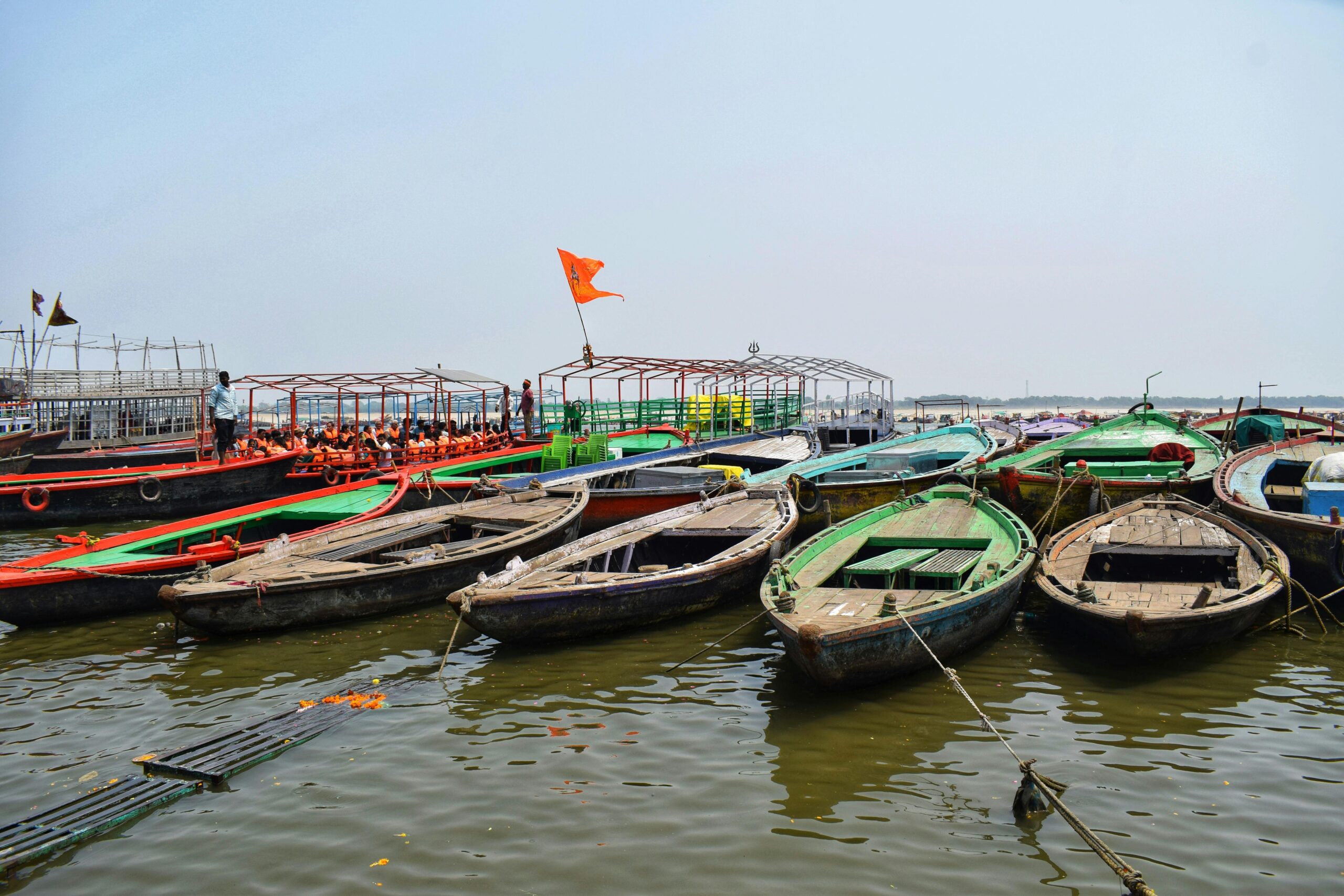
Evening boat parades featuring vessels decorated with flowers, lights, and colorful ornaments create spectacular visual displays on the river. Boats carrying musicians, dancers, or theatrical performers move along the ghats while audiences watch from the banks. The combination of moving performances, reflected lights on water, and the ancient ghat backdrop creates magical atmospheres.
These parades blend aesthetics with entertainment, transforming the river into a moving stage that highlights its beauty and cultural centrality.
Traditional Arts and Crafts Exhibition
Handloom and Textile Displays
Varanasi’s textile traditions, particularly Banarasi silk, receive comprehensive showcasing during Ganga Mahotsav. Exhibition spaces display various silk products – the famous Banarasi sarees, brocades, scarves, and contemporary adaptations. Demonstrations show the weaving process, helping visitors appreciate the skill and time investment in each piece.
Weavers are present to explain techniques, answer questions, and sell directly to customers, eliminating middlemen. This direct interaction benefits artisans economically while giving buyers confidence in authenticity and quality.
Pottery and Clay Work
The ancient craft of pottery, still practiced in traditional neighborhoods of Varanasi, gets featured through exhibitions and live demonstrations. Potters create various items – from functional cooking vessels to decorative pieces and the earthen lamps (diyas) used in religious ceremonies.
Watching skilled potters shape clay on traditional wheels, seeing the entire process from raw material to finished product, and understanding pottery’s continued role in daily life provides appreciation for this foundational craft.
Painting and Visual Arts
Visual arts exhibitions showcase various styles – traditional Madhubani paintings, contemporary works by local artists, miniature paintings, and experimental pieces that reinterpret traditional themes. Some exhibitions focus on Varanasi itself as subject matter, presenting the city through different artistic lenses.
Gallery spaces and outdoor displays make art accessible to broad audiences. Many artists remain present to discuss their work, creating dialogue between creators and viewers.
Banarasi Silk Showcase
Special pavilions dedicated entirely to Banarasi silk explain this textile’s history, demonstrate weaving techniques, showcase the variety of products possible, and offer purchasing opportunities. The presentations educate visitors about differentiating authentic Banarasi silk from imitations, understanding quality indicators, and appreciating the artistry involved.
These showcases serve economic purposes (connecting weavers with customers) while fulfilling educational and cultural preservation roles. They help sustain traditional livelihoods threatened by cheaper alternatives and changing fashion preferences.
Food Festival and Culinary Delights
Traditional Varanasi Cuisine
Ganga Mahotsav dedicates significant space to food, with stalls and exhibitions presenting Varanasi’s distinctive culinary traditions. Traditional dishes like kachori-sabzi, banarasi chaat varieties, thandai (spiced milk drink), malaiyo (seasonal milk foam dessert), and numerous sweet preparations are available for tasting.
The food presentations aren’t just commercial but educational, with explanations of ingredients, preparation methods, cultural significance, and the history behind various dishes. This contextual information transforms eating into cultural learning.
Street Food Stalls
Varanasi’s famous street food culture comes alive through numerous stalls offering city specialties. You can sample tamatar chaat (tomato chaat), palak chaat (spinach chaat), dahi vadas, golgappas, and countless other preparations that make Varanasi a paradise for food enthusiasts.
The festival setting provides safer, more hygienic street food experiences than navigating regular street vendors, making it ideal for cautious eaters wanting to try local specialties without significant health risks.
Regional Specialties
Beyond Varanasi-specific foods, the festival often includes stalls representing different regions of Uttar Pradesh and neighboring states. This diversity allows comparative tasting and understanding of regional variations in Indian cuisine. You might find Awadhi specialties from Lucknow, Mathura’s sweets, Bengali preparations, and Bihar’s distinctive dishes.
This regional representation demonstrates Indian cuisine’s diversity while highlighting common threads that connect different culinary traditions.
Cooking Demonstrations
Celebrity chefs, traditional cooks, and culinary experts conduct demonstrations showing preparation techniques for various dishes. These sessions reveal cooking secrets, explain ingredient purposes, and make complex preparations accessible to home cooks.
Interactive cooking workshops allow participants to try their hands at preparing dishes under expert guidance. These hands-on experiences create memorable learning that transcends simple food consumption.
Religious and Spiritual Events
Special Ganga Aarti Ceremonies
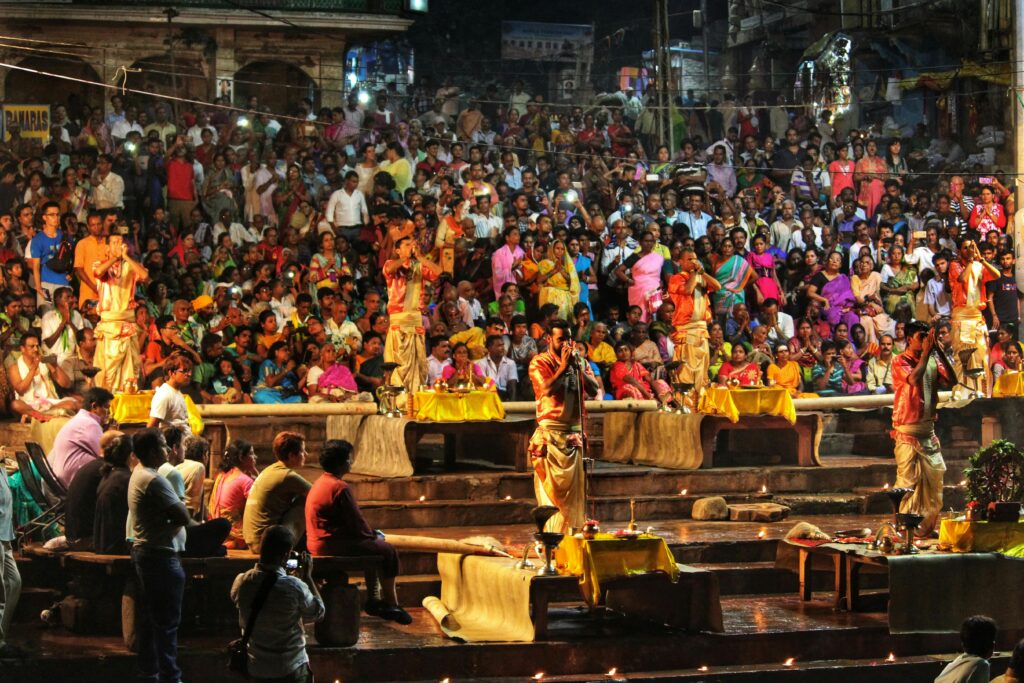
While Ganga Aarti occurs daily at Varanasi’s ghats, the festival period brings enhanced versions with additional priests, longer ceremonies, special music, and larger-scale presentations. The aarti becomes both religious observance and cultural performance, accessible to people of all backgrounds.
The combination of devotional sincerity with artistic presentation makes festival-time aartis particularly moving. The ceremonies acknowledge the Ganges’ spiritual significance while celebrating cultural traditions maintained for centuries.
Devotional Music Programs
Bhajan and kirtan sessions featuring devotional music in various styles occur throughout the festival. These range from traditional compositions sung by classical musicians to folk devotional forms and contemporary spiritual music. The programs create contemplative atmospheres distinct from the more performance-oriented classical concerts.
Participation is welcomed in many devotional sessions – audience members join in singing, creating communal spiritual experiences. Even non-devotees find the musical and communal aspects meaningful.
Spiritual Discourses
Scholars, spiritual teachers, and philosophers deliver talks on various topics – Hindu philosophy, the significance of the Ganges, Varanasi’s spiritual history, yoga and meditation traditions, and contemporary applications of ancient wisdom. These discourses cater to intellectually curious audiences seeking deeper understanding.
Some sessions include question-and-answer periods allowing direct interaction with knowledgeable speakers. The discussions bridge traditional knowledge and contemporary concerns, showing ancient teachings’ continued relevance.
Yoga and Meditation Sessions
Morning yoga and meditation sessions capitalize on the riverside setting’s natural serenity. Experienced instructors lead practices suitable for various skill levels, from beginners to advanced practitioners. The sessions often incorporate traditional Indian approaches rather than westernized yoga, providing authentic experiences.
Practicing yoga at sunrise beside the Ganges, within sight of ancient temples, creates powerful experiences connecting physical practice with spiritual context. These sessions are typically free or nominally priced, emphasizing accessibility over commercialization.
Evening Performances at the Ghats
Main Stage Performances
The principal evening programs feature major artists performing on stages constructed at main ghats. These high-profile concerts showcase nationally recognized musicians, dancers, and performers. Production values rival professional concerts with quality sound systems, lighting, and staging.
Attending these main stage performances provides world-class entertainment in unique settings – ancient ghats under open skies beside the sacred river. The combination of artistic excellence and atmospheric location creates unforgettable experiences.
Classical Music Recitals
Evening classical music concerts follow traditional formats – long, contemplative performances allowing artists to explore ragas (melodic frameworks) deeply. These aren’t brief entertainment pieces but serious musical journeys where skilled musicians improvise within classical structures.
Knowledgeable audiences appreciate subtle variations and technical mastery, but even newcomers can appreciate the meditative quality and virtuoso skill evident in these performances. Sitting under stars listening to ancient musical forms beside the eternal river creates profound aesthetic experiences.
Kathak Dance Shows
Kathak, North India’s classical dance form with strong Varanasi connections, features prominently in evening programs. Performances demonstrate the form’s technical complexity – intricate footwork creating rhythmic patterns, graceful upper body movements and hand gestures, storytelling through facial expressions, and the tradition’s both Hindu and Muslim influences.
Kathak performances are visually spectacular, making them accessible to audiences unfamiliar with classical Indian dance. The combination of rhythm, movement, music, and narrative creates complete theatrical experiences.
Folk Performances
Evening programming includes folk arts from various regions – energetic dance forms, traditional music using indigenous instruments, storytelling in folk theatre traditions, and performances celebrating agricultural and community life. These presentations contrast with classical arts’ refinement, offering vibrant, accessible entertainment.
Folk performances connect audiences with rural traditions and community-based arts often overlooked in urban cultural programming. They celebrate the diversity of Indian culture beyond elite classical forms.
Workshops and Interactive Sessions
Music and Dance Workshops
Hands-on workshops allow festival visitors to learn basics of various art forms directly from practitioners. Music workshops might introduce simple rhythms on tabla, basic sitar techniques, or vocal music fundamentals. Dance workshops teach basic steps of Kathak, folk dances, or other forms.
These sessions aren’t designed to create expert performers but to provide experiential understanding of these arts’ complexity. Trying even simple techniques reveals the years of training required for mastery, creating deeper appreciation for performances watched.
Craft Learning Sessions
Artisans teach basic techniques of their crafts – simple pottery shapes, basic weaving patterns, traditional painting styles, or other skills. Participants create simple objects to take home, transforming passive observation into active learning.
These hands-on experiences create lasting memories and understanding. Making even a crude clay pot yourself helps you appreciate skilled potters’ expertise. Trying to weave reveals silk brocade creation’s complexity.
Photography Workshops
Photography enthusiasts can attend workshops focused on capturing Varanasi’s essence, cultural photography ethics and techniques, low-light photography for evening performances, and compositional approaches for photographing people and performances.
Led by professional photographers familiar with Varanasi, these workshops combine technical instruction with cultural sensitivity, producing both better photographs and more respectful photographers.
Cultural Exchange Programs
Some festival programs facilitate direct interaction between visitors and local artists or community members. These might include conversation sessions about cultural differences and similarities, shared meals with local families, collaborative artistic projects bringing together different cultural perspectives, or language exchange opportunities.
These exchanges create meaningful human connections that transcend tourist-local dynamics, fostering mutual understanding and friendship.
Notable Performers and Artists
Classical Musicians
Ganga Mahotsav attracts accomplished classical musicians from Varanasi and across India. Artists from Varanasi’s traditional music families often perform, representing generations of musical lineage. The festival provides platforms for both established masters and promising young talents.
Specific performers vary annually, but the festival consistently books artists of serious caliber whose performances appeal to connoisseurs while remaining accessible to general audiences.
Renowned Dancers
Accomplished dancers in various classical and folk forms grace festival stages. Kathak specialists with connections to Varanasi’s dance traditions often feature prominently, but dancers representing other classical forms and regional traditions also perform.
The diversity of dance presentations demonstrates India’s rich choreographic heritage while maintaining high artistic standards.
Contemporary Artists
While traditional arts dominate, Ganga Mahotsav increasingly includes contemporary artists working in fusion styles, modern interpretations of traditional forms, visual arts reflecting current themes, and performances addressing contemporary issues through traditional mediums.
This contemporary inclusion keeps the festival relevant to younger audiences while demonstrating that traditional forms remain living, evolving practices rather than museum pieces.
Local Talent Showcase
Important to the festival’s mission is providing platforms for local, sometimes unknown, artists who maintain traditional practices. These might include neighborhood musicians who never sought professional careers, craftspeople working in obscurity, folk artists from nearby villages, or young students of traditional arts.
Showcasing local talent fulfills community purposes, recognizes unheralded expertise, and connects visitors with authentic grassroots culture often invisible in commercial tourism.
Accommodation and Logistics
Where to Stay During the Festival
Ganga Mahotsav occurs during peak tourist season, requiring advance accommodation booking. Options include budget guesthouses near ghats offering proximity to venues, mid-range hotels providing comfort and convenience, homestays for cultural immersion, and luxury properties for premium experiences.
Staying near Dashashwamedh Ghat or Assi Ghat provides easy access to main festival venues, though these areas become quite crowded. Accommodations slightly removed from the epicenter offer quieter retreats while remaining reasonably close to activities.
Transportation Options
Navigating Varanasi during the festival requires planning. Auto-rickshaws provide convenient transportation but charge premium rates during festival times. Booking through apps offers more transparent pricing. Cycle rickshaws access narrow lanes vehicles cannot, useful for reaching certain venues.
For venues near the river, walking often proves most efficient given traffic congestion. Boats offer alternative transportation between ghats, providing both practical transport and pleasant river experiences.
Ticket Information
Many Ganga Mahotsav events are free, supported by government funding and sponsorships. This accessibility is intentional, making culture available to all socioeconomic levels. Some premium events, workshops, or special performances might charge modest fees.
No advance ticketing system typically exists for free events – seating is first-come, first-served. For popular performances, arrive early to secure good spots. Paid events might have ticketing counters at venues or through local booking systems.
Crowd Management Tips
Festival times bring significant crowds requiring patience and strategy. Arrive at venues well before event start times, especially for popular performances. Weekday daytime events generally have smaller crowds than weekend evenings. Lesser-known ghats and secondary venues offer excellent experiences with fewer people.
Stay aware of belongings in crowds where pickpocketing can occur. Establish meeting points if attending with others, as mobile connectivity can be challenging in crowded areas. Maintain hydration and energy with snacks and water.
Photography and Documentation Opportunities
Ganga Mahotsav presents extraordinary photographic opportunities – performances on stages with dramatic lighting, river activities with boats and water reflections, craftspeople demonstrating traditional skills, crowds creating dynamic street photography subjects, architectural details of ghats and temples, and candid moments of cultural participation.
Photographers should respect performance settings by avoiding flash and minimizing disruption during shows. Always ask permission before photographing individuals, especially artisans and performers offstage. Many artists appreciate having photos shared with them afterward.
The festival’s visual richness makes even smartphone photography rewarding. The combination of colorful costumes, interesting faces, dynamic performances, and atmospheric locations creates compelling images that document both the festival and your experience.
How to Make the Most of Your Visit
Maximizing your Ganga Mahotsav experience requires some planning and the right mindset. Review the festival schedule in advance to identify priority events, but maintain flexibility for spontaneous discoveries. Balance structured event attendance with open exploration time. Arrive early to popular performances but don’t stress if you miss something – the festival offers abundant alternatives.
Engage actively rather than just observing – attend workshops, ask questions at demonstrations, strike up conversations with other attendees, and participate when appropriate. Your engagement enriches both your experience and the festival’s communal atmosphere.
Try various food offerings, not just familiar items. The culinary diversity provides education alongside enjoyment. Accept that you cannot experience everything – make peace with choices and fully engage with what you do attend rather than racing between events anxiously.
Document through photographs and journal notes, but also put devices aside and simply be present for some experiences. Some moments are better lived than photographed. The sensory richness and emotional resonance of live performances deserve undivided attention.
Conclusion
Kashi Ganga Mahotsav offers a window into the cultural soul of India’s most ancient living city. For five days each November, Varanasi becomes an open-air academy of Indian arts, a showcase of traditions spanning centuries, and a celebration of the sacred river that has sustained civilization on its banks since time immemorial. The festival presents both the refinement of classical arts and the vibrancy of folk traditions, the skill of master craftspeople and the energy of young innovators, the depth of spiritual practice and the joy of communal celebration.
What makes Ganga Mahotsav special isn’t just the quality of performances or the variety of programs, though both are impressive. It’s the setting – experiencing world-class classical music on ancient ghats beside the Ganges under open skies creates contexts that concert halls cannot replicate. It’s the accessibility – culture is presented as public good rather than exclusive commodity. It’s the integration – religious, artistic, culinary, and craft traditions presented holistically rather than compartmentalized. And it’s the participation – opportunities to engage actively rather than consuming passively.
For travelers, Ganga Mahotsav provides concentrated cultural education alongside entertainment. You’ll understand Varanasi’s significance beyond religious tourism, appreciate artistic traditions you might previously have found inaccessible, taste foods and observe crafts that connect you to living traditions, and experience Indian culture as practiced by Indians rather than adapted for tourist consumption. The festival reveals that culture isn’t just historical artifact but living, evolving practice maintained by dedicated practitioners and engaged communities.
Whether you’re an arts enthusiast, cultural explorer, spiritual seeker, or curious traveler, Ganga Mahotsav offers enriching experiences. It asks only openness, curiosity, and respect – qualities that transform tourists into genuine cultural participants and create memories that outlast vacation photographs.
FAQs
Q1: Is Ganga Mahotsav primarily for Indians, or are international tourists welcome and catered to?
Ganga Mahotsav warmly welcomes everyone regardless of nationality or background. While the festival obviously emerges from Indian cultural context and attracts primarily domestic audiences, international visitors are not only welcome but increasingly common. The festival’s organizers recognize tourism value and increasingly incorporate elements making events accessible to international audiences – English signage and programs, brief explanations before some performances, and staff at information booths who speak English. That said, this remains authentically Indian festival, not adapted or sanitized for foreign consumption. Most programs occur in Hindi, cultural references might be unfamiliar, and you’ll often be among few international visitors at certain events. This authenticity is actually the festival’s appeal. You’re experiencing genuine Indian culture rather than tourist-oriented simulation. Approach with openness to unfamiliar experiences, willingness to learn, and appreciation for being included in community celebration rather than being served as customer. Most Indians are delighted when foreigners show genuine interest in their cultural traditions and will gladly help explain things if you ask politely.
Q2: Do I need to buy tickets in advance, and how much does it typically cost to attend Ganga Mahotsav events?
Most Ganga Mahotsav events are completely free, funded by government tourism departments, sponsors, and cultural organizations. The festival’s mission includes cultural accessibility – ensuring people regardless of economic status can experience and appreciate traditional arts. Major concerts, dance performances, craft exhibitions, and most programs require no tickets or fees. Simply arrive at venues and find seating on a first-come basis. Some specialized events might charge nominal fees – certain workshops might have small material fees, premium seating sections at main stage performances might be ticketed, and some interactive sessions might charge modest amounts. These fees rarely exceed ₹100-200 (roughly $1-2 USD) and often less. There’s typically no advance online ticketing system for free events. Ticketed events usually sell tickets at venue box offices or designated counters. Given that most programming is free, budget constraints shouldn’t prevent festival attendance. Accommodation, food, and transportation form your main expenses. The free cultural programming represents remarkable value, offering world-class performances and exhibitions without admission charges.
Q3: What’s the best way to find out the detailed schedule and program lineup for the festival?
Finding detailed Ganga Mahotsav schedules requires some effort as information distribution isn’t always streamlined. Start with the Uttar Pradesh Tourism website and their social media channels, which typically post festival details closer to event dates. Local Varanasi tourism offices maintain information about programs. Check Varanasi-focused websites and travel blogs that cover festival dates and highlight programs. Follow relevant social media hashtags like #GangaMahotsav or #VaranasiCulture where updates appear. Local newspapers in Varanasi publish festival schedules – major hotels often have English newspapers. Upon arrival in Varanasi, visit tourism information booths near Dashashwamedh Ghat or at the airport/railway station for printed schedules. Festival venues post daily program schedules at information boards. Unfortunately, comprehensive schedules sometimes aren’t finalized or published until shortly before the festival begins, requiring some flexibility in planning. Specific performer names and exact timing might remain uncertain until very close to event dates. This somewhat chaotic organization is common in India and part of the experience. Rather than needing minute-by-minute schedules, arrive with general idea of festival dates, plan to attend evening performances and daytime exhibitions, and discover specific programs as they unfold.
Q4: Can I participate in the boat races or other competitions, or are they only for locals?
Most Ganga Mahotsav sporting competitions – boat races, swimming events, etc. – are organized with specific participant registration processes rather than open spontaneous participation. The boat races typically involve teams that have registered in advance, often representing local boating communities, clubs, or organizations. Similarly, swimming competitions have registered participants meeting certain qualification standards. As a tourist, spontaneous competition entry typically isn’t possible. However, exhibition events and demonstrations sometimes allow visitor participation. Water sports demonstrations might let interested people try kayaking or other activities under supervision. Some cultural competitions like rangoli or painting might have open categories welcoming all participants. Workshops and interactive sessions explicitly designed for visitor participation provide hands-on opportunities. If you’re specifically interested in participating in competitive events, contact organizers weeks before the festival through tourism office channels to inquire about registration. Being realistic, most competitive events serve local communities and aren’t set up for tourist participation. Instead, enjoy being spectator and cheering participants. The atmosphere and visual spectacle provide plenty of engagement without direct competition participation.
Q5: How does Ganga Mahotsav compare to Dev Deepawali, and should I try to attend both if I’m visiting Varanasi in November?
Ganga Mahotsav and Dev Deepawali offer complementary but distinct experiences, and attending both creates comprehensive festival immersion. Ganga Mahotsav is a cultural arts festival emphasizing performances, exhibitions, and cultural programs. Dev Deepawali is a religious observance involving massive lamp lighting creating spectacular visual beauty. Ganga Mahotsav features diverse programming across multiple days; Dev Deepawali centers on one dramatic evening. Ganga Mahotsav is participatory with workshops and interactive events; Dev Deepawali is primarily observational. If you can only attend one, choose based on priorities: for cultural arts and diverse programming, choose Ganga Mahotsav; for concentrated visual spectacle and religious atmosphere, choose Dev Deepawali. However, they’re intentionally scheduled close together (sometimes overlapping) allowing combined attendance. Ideally, structure your Varanasi visit to include both – perhaps arriving for the final days of Ganga Mahotsav and staying through Dev Deepawali. This provides cultural education through festival performances and exhibitions, followed by the spiritual and visual culmination of Dev Deepawali. The two festivals together showcase different facets of Varanasi’s identity – artistic/cultural and spiritual/religious – creating holistic understanding impossible through either alone.
Please don’t forget to leave a review.
Explore more by joining me on Patreon