
Pilgrim’s Guide to Varanasi , This isn’t a tourist guide filled with hotel recommendations and restaurant reviews. This is a pilgrim’s companion—a spiritual roadmap designed for those who seek not just to see these sacred cities but to experience their transformative power. Whether you’re fulfilling a vow, seeking redemption, honoring ancestors, or simply answering an inner calling, this guide will help you navigate the spiritual landscape of these three holy cities.
The beauty of this pilgrimage lies in its completeness. Ayodhya teaches dharma through Rama’s example, Prayagraj purifies through sacred waters, and Varanasi offers the ultimate spiritual goal—liberation from the cycle of rebirth. Together, they form a complete spiritual curriculum, each city building upon the lessons of the previous one.
As you prepare for this sacred journey, remember that pilgrimage isn’t measured in kilometers traveled but in spiritual distance covered. The outer journey mirrors an inner transformation, and if approached with devotion and sincerity, these three cities will change you in ways both subtle and profound.
Preparing for Your Pilgrimage Journey
Mental and Spiritual Preparation
True pilgrimage begins long before you board a train or plane. The most important preparation happens within your heart and mind. In the weeks leading up to your journey, establish a daily spiritual practice if you haven’t already. This might include morning prayers, reading sacred texts like the Ramayana or Bhagavad Gita, meditation, or chanting mantras.
Set clear spiritual intentions for your pilgrimage. Are you seeking forgiveness? Spiritual awakening? Fulfillment of a vow? Blessings for family? Clarity on your intention focuses your spiritual energy and makes the pilgrimage more meaningful. Write down your sankalpa (sacred intention) and revisit it throughout your journey.
Many pilgrims observe certain disciplines before departure—practicing vegetarianism if not already doing so, abstaining from alcohol and tobacco, maintaining celibacy, and cultivating qualities like patience, compassion, and humility. These practices purify the mind and body, preparing you as a worthy vessel for divine grace.
Consider reducing worldly distractions. Limit social media, excessive entertainment, and gossip. Create mental space for the sacred experiences ahead. Some pilgrims also fast or perform special pujas at their home temple before departure, seeking blessings for a successful pilgrimage.
Physical Preparation and Health Considerations
While spiritual preparation is paramount, physical readiness ensures you can fully engage with the pilgrimage experience without health issues derailing your journey.
If you’re not accustomed to walking, start building stamina weeks before departure. The ghats of Varanasi involve considerable stair-climbing, and temple visits require hours of standing and walking. Even moderate daily walking will significantly improve your pilgrimage experience.
Consult your doctor, especially if you have existing health conditions. Carry sufficient prescription medications plus extras in case of delays. The heat in northern India can be intense—if you’re traveling during summer months, ensure you’re accustomed to hot weather or consider rescheduling.
Update routine vaccinations and consider additional ones like Hepatitis A and Typhoid. Carry a basic first-aid kit including medicines for common ailments: diarrhea, headache, fever, cuts, and allergies. Include oral rehydration salts—dehydration is common among pilgrims.
For elderly pilgrims or those with mobility challenges, consider hiring assistance. Many temples and ghats offer wheelchair access or palanquin services. Don’t let physical limitations prevent spiritual fulfillment—arrangements can be made for almost any situation.
Essential Items to Pack
Packing wisely balances spiritual needs with practical considerations:
Spiritual Items:
- Small idols or images of your chosen deity
- Mala (prayer beads) for japa (chanting)
- Prayer book or sacred texts
- Notebook for recording spiritual experiences
- Small containers for collecting sacred water from Ganga and Sangam
- Fresh flowers and incense for offerings (though available locally)
- Red cloth or scarves for temple offerings
Clothing:
- Modest, comfortable clothes that cover shoulders and knees
- Extra sets for daily bathing rituals
- White clothes (especially for Prayagraj rituals)
- Warm shawl for early morning ceremonies
- Easily removable footwear for temple visits
- Waterproof bag for protecting clothes during river baths
Practical Items:
- Water purification tablets or portable filter
- Sunscreen and hat for sun protection
- Torch/flashlight for early morning visits
- Money belt for securing valuables
- Photocopies of important documents
- Adequate cash (many places don’t accept cards)
- Basic toiletries (preferably eco-friendly)
What NOT to Bring: Leave expensive jewelry at home. Avoid leather items near temples (considered impure). Don’t carry unnecessary valuables that increase worry and distraction.
Varanasi: The Gateway to Liberation
Understanding Varanasi’s Spiritual Importance
Pilgrim’s Guide to Varanasi, the eternal city of Lord Shiva, holds unique spiritual significance. Hindus believe that dying in Kashi grants instant moksha—liberation from the cycle of birth and death. Shiva himself whispers the Taraka mantra in the ears of the dying, ensuring their salvation regardless of their karma.
For pilgrims, Varanasi represents the ultimate spiritual destination. The city exists between heaven and earth, between time and eternity. Every ritual performed here carries multiplied spiritual merit. Bathing in the Ganga here washes away sins from countless lifetimes. Even residing in Varanasi temporarily brings divine blessings.
The city’s geography itself is sacred. Shaped like a crescent moon, Varanasi mirrors Shiva’s crescent. The Panchkroshi route—a five-kos (approximately 15 km) pilgrimage circuit around the city—defines the city’s sacred boundaries. Completing this circuit is considered highly meritorious.
Understanding Varanasi’s theology enhances your experience. This isn’t just another city; it’s Shiva’s earthly abode, where the material and spiritual worlds overlap seamlessly.
Essential Pilgrim Rituals in Varanasi
The Sacred Bath in Mother Ganga
Your first act upon arriving in Varanasi should be bathing in the holy Ganges. This ritual, called Ganga Snan, purifies you physically and spiritually, washing away accumulated sins and preparing you for temple visits.
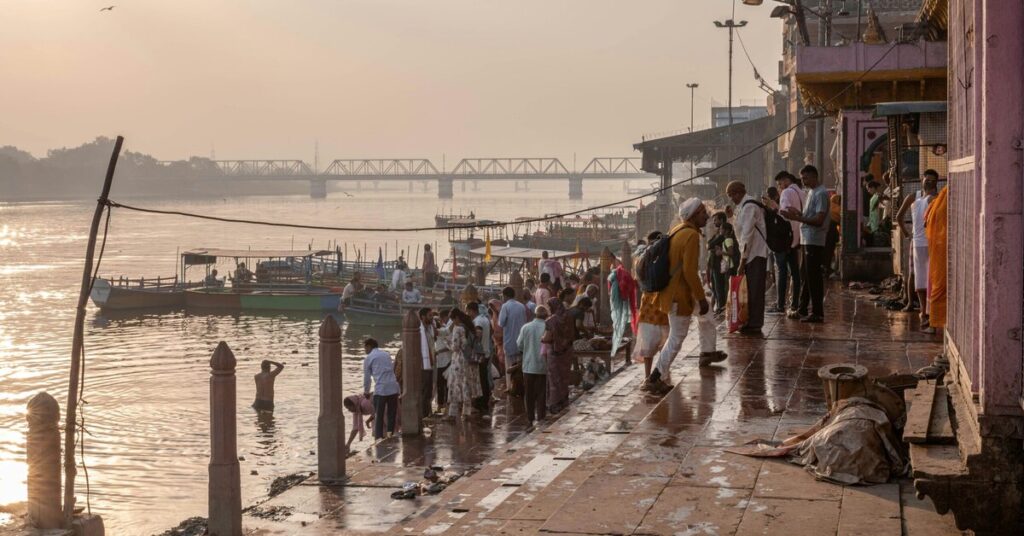
The best time is during Brahma Muhurta (approximately 4:30-6:00 AM), when the spiritual energy is strongest. Arrive at your chosen ghat before sunrise. Dasashwamedh, Assi, or Panchganga ghats are all excellent choices.
Before entering the water, mentally invoke Mother Ganga, asking her permission and blessings. Enter the water facing east (toward the rising sun). Immerse yourself completely three times, chanting:
“Om Gange cha Yamune chaiva Godavari Saraswati, Narmade Sindhu Kaveri jale’smin sannidhim kuru”
(O Ganges, Yamuna, Godavari, Saraswati, Narmada, Sindhu, and Kaveri, please be present in this water)
After bathing, offer water to Surya (the sun god) and your ancestors. Many pilgrims collect Ganga water in copper vessels to take home—this sacred water remains pure indefinitely and can be used for various rituals.
Offering Prayers at Kashi Vishwanath
After purifying yourself in the Ganga, proceed to Kashi Vishwanath Temple for darshan of the Jyotirlinga. This is the spiritual heart of Varanasi, where Shiva resides as the eternal light.
The temple opens at 2:30 AM, and early morning offers the most peaceful darshan. The queues can be long during peak season, but the wait is part of the pilgrimage discipline. Use the time for mental preparation and mantra chanting.
Upon entering the temple complex, maintain silence and focus. When you reach the inner sanctum and see the Jyotirlinga, offer your mental prayers with complete devotion. The moment of darshan is sacred—many pilgrims report profound spiritual experiences at this moment.
Offerings commonly include milk, bilva (bael) leaves, flowers, and coconut. Temple priests can perform detailed pujas on your behalf for a donation. Whether you opt for elaborate rituals or simple darshan, sincerity matters more than ceremony.
After darshan, sit quietly in the temple courtyard, absorbing the spiritual atmosphere. Many pilgrims recite the Shiva Chalisa or Mahamrityunjaya mantra here.
Lesser-Known Sacred Sites in Varanasi
While Kashi Vishwanath dominates Varanasi’s spiritual landscape, several lesser-known sites deserve pilgrims’ attention:
Sankat Mochan Temple: Dedicated to Hanuman, this temple removes obstacles and difficulties. Tuesday and Saturday see maximum crowds. The morning and evening aartis are particularly powerful.
Durga Temple (Durga Kund): The red-colored temple dedicated to Goddess Durga sits beside a holy kund (pond). The goddess here is believed to be especially powerful, granting protection and removing fear.
Tulsi Manas Temple: Built at the site where Sant Tulsidas composed the Ramcharitmanas, this marble temple depicts scenes from Ramayana on its walls. It’s less crowded and offers peaceful contemplation.
Vishalakshi Temple: One of the 51 Shakti Peethas, where Goddess Sati’s eyes fell. This Devi temple attracts devotees seeking the Mother Goddess’s blessings.
Kedareshwar Temple: Near Kedar Ghat, this ancient Shiva temple predates even Kashi Vishwanath and offers a more intimate darshan experience.
Annapurna Temple: Dedicated to the goddess of food and nourishment, Annapurna is worshipped alongside Lord Shiva. Never miss darshan here—she ensures devotees never go hungry.
Daily Spiritual Routine for Pilgrims
Establish a disciplined routine to maximize spiritual benefits:
4:30-5:00 AM: Wake during Brahma Muhurta. Bathe and perform personal prayers.
5:30-6:30 AM: Ganga Snan and morning prayers at the ghats. Watch sunrise over the sacred river.
7:00-9:00 AM: Temple visits for morning darshan when temples are peaceful and spiritually charged.
9:00-10:00 AM: Light, sattvic breakfast. Rest and meditation.
10:00-12:00 PM: Visit secondary temples or perform seva (service) like feeding the poor or supporting ashrams.
12:00-2:00 PM: Lunch and afternoon rest (essential in hot weather).
2:00-5:00 PM: Study sacred texts, attend satsang (spiritual discourse), or explore with spiritual focus.
5:00-6:30 PM: Evening temple visits and preparation for Ganga Aarti.
6:30-7:30 PM: Attend Ganga Aarti at Dashashwamedh or your chosen ghat.
8:00-9:00 PM: Light dinner (many pilgrims eat only fruits or milk at night).
9:00-10:00 PM: Personal prayers, journal spiritual experiences, early sleep.
This routine aligns with natural rhythms and maximizes spiritual energy. Adjust based on personal needs but maintain early rising and discipline.
Ayodhya: Walking the Path of Dharma
The Religious Significance for Pilgrims
Ayodhya holds special significance as Rama’s birthplace and the city where he established the ideal of righteous governance—Ram Rajya. For pilgrims, visiting Ayodhya means literally walking where God walked in human form.
The city embodies dharma—righteous living in accordance with cosmic law. Rama’s life demonstrates how to navigate the complexities of worldly existence while maintaining spiritual purity. Pilgrimage to Ayodhya is thus not just about seeking blessings but also about learning to embody dharmic principles in daily life.
According to sacred texts, taking darshan at Ram Janmabhoomi and bathing in the Sarayu River purifies devotees and grants them a place in Rama’s divine abode after death. The city’s very soil is considered sacred, having been sanctified by Rama’s presence.
Mandatory Pilgrimage Sites in Ayodhya
Performing Darshan at Ram Janmabhoomi
Your Ayodhya pilgrimage centers on Ram Janmabhoomi—the exact birthplace of Lord Rama. This is the spiritual epicenter of the city, drawing millions of devotees annually.
Before visiting, observe purity—bathe, wear clean clothes, and maintain a devotional state of mind. Many pilgrims fast or eat only fruits before darshan here.
The temple complex follows strict security protocols. Carry minimal belongings and be prepared for thorough checking. Electronic items including phones may not be permitted inside—check current rules before visiting.
Upon entering, first pay respects at the outer shrines, then proceed toward the main sanctum. The moment when you first see the birthplace shrine is deeply emotional for most devotees—many experience spontaneous tears or overwhelming devotion.
Offer your prayers silently, expressing your devotion and seeking Rama’s blessings. Common prayers include requesting strength to follow dharma, protection for family, and ultimately, Rama’s grace for spiritual liberation.
After main darshan, circumambulate (parikrama) the temple, visiting various smaller shrines depicting episodes from Rama’s life. This narrative journey through the Ramayana deepens your connection to the divine story.
Sacred Bath in River Sarayu
The Sarayu River flows through Ayodhya carrying the sanctity of Rama’s daily bathing here. Performing Sarayu Snan is essential for every Ayodhya pilgrim.
Ram Ki Paidi ghat is the primary bathing location. Like Varanasi, early morning during Brahma Muhurta is most auspicious. The atmosphere is peaceful, and the spiritual energy is palpable.
Before entering the water, pray:
“Sarva tirtha namaskara Sarayva tubhyam namo namah” (Salutations to you, Sarayu, who encompasses all pilgrimage sites)
Take three complete immersions, chanting “Jai Shri Ram” with each dip. The water is usually calmer than the Ganga, making bathing easier. After bathing, offer water to the sun and ancestors.
Collect some Sarayu water to take home—it’s used for purification rituals and given to the dying to ensure they depart chanting Rama’s name.
The Proper Sequence of Temple Visits
Following the traditional sequence ensures complete spiritual benefit:
1. Hanuman Garhi (First): Always begin with Hanuman before approaching Rama. Climb the 76 steps with devotion, seeking Hanuman’s blessings and permission.
2. Ram Janmabhoomi: The main pilgrimage destination after Hanuman’s blessings.
3. Kanak Bhawan: Visit this beautiful temple where Rama and Sita are worshipped as king and queen. The golden crowns and ornate decorations create a celestial atmosphere.
4. Nageshwarnath Temple: One of Ayodhya’s oldest temples, established by Rama’s son Kusha. Lord Shiva is worshipped here.
5. Treta Ke Thakur: Marks the site where Rama performed the Ashwamedha Yagna. The ancient idols here are believed to have been installed by Rama himself.
6. Sugriv Fort: Visit this site associated with Rama’s ally Sugriv, the monkey king.
7. Gulab Bari: The garden tomb complex offers a peaceful ending to your temple circuit.
Complete this sequence in one day if possible, or spread over two days if needed. Maintain a devotional mindset throughout, seeing each site as a chapter in the grand Ramayana narrative.
Participating in Daily Aarti Ceremonies
Ayodhya’s daily aartis, especially at Ram Ki Paidi and major temples, provide powerful collective worship experiences. The evening Sarayu aarti mirrors Varanasi’s Ganga aarti but with a distinctly Ayodhya character—more bhakti-focused and centered on Rama rather than Shiva.
Arrive early to secure a good viewing spot. The aarti usually begins at sunset. Thousands of diyas float on the Sarayu, creating a moving carpet of light while devotional songs echo across the water.
Participate by clapping, singing along if you know the bhajans, and absorbing the collective devotion. After the main ceremony, personally float a diya with your prayer—watch it drift downstream carrying your wishes toward fulfillment.
Prayagraj: The Land of Purification
Why Prayagraj is Essential for Spiritual Cleansing
Prayagraj represents the ultimate purification site in Hinduism. The confluence of three sacred rivers—Ganga, Yamuna, and the invisible Saraswati—creates a spiritual vortex of immense power. Bathing here doesn’t just cleanse sins from this life but from countless previous incarnations.
The city’s ancient name, Prayag, means “place of sacrifice,” reflecting its role as a premier location for yajna and spiritual practices. Gods, sages, and enlightened beings have performed penance here, charging the location with accumulated spiritual merit.
For pilgrims, Prayagraj completes the purification begun in Ayodhya and Varanasi. If Varanasi offers liberation and Ayodhya teaches dharma, Prayagraj provides the deep cleansing necessary to fully receive those blessings.
The Sacred Snan at Triveni Sangam
Best Time for the Holy Dip
While bathing at Sangam is beneficial anytime, certain dates carry extraordinary spiritual power:
Makar Sankranti (January 14-15): The sun enters Capricorn, considered highly auspicious.
Mauni Amavasya: The new moon day during Magh month, when sages observe silence.
Basant Panchami: Celebrates spring’s arrival and Goddess Saraswati.
Maghi Purnima: The full moon completing the auspicious Magh month.
Maha Shivratri: Though primarily Shiva-focused, bathing at Sangam on this day carries great merit.
During Kumbh Mela, specific bathing dates called Shahi Snan hold maximum spiritual power—bathing then equals performing thousands of regular holy baths.
If you can’t visit during these dates, don’t worry. Every sunrise at Sangam is auspicious. The spiritual power of the confluence doesn’t diminish—only our receptivity varies.
Rituals and Prayers at the Confluence
The traditional Sangam ritual involves specific steps:
1. Hire a Boat: Pandas (hereditary priests) or boatmen will ferry you to the exact confluence point. Negotiate prices beforehand—during peak times, rates increase significantly.
2. Preparation: As you approach Sangam, mentally prepare yourself. Many pilgrims chant mantras or recite prayers during the journey.
3. Identifying the Sangam: You’ll see where the muddy Ganga meets the clearer Yamuna. The exact meeting point shifts with seasonal water levels.
4. The Sacred Bath: Take three complete dips, each time chanting:
“Om Hrim Gange Yamune chaiva Saraswati namo namah”
5. Tarpan: Offer water to ancestors, cupping water in your palms and releasing it toward the east while reciting their names and gotras (lineages).
6. Sankalpa: Mentally reaffirm your spiritual intentions, asking for purification and blessings.
7. Offerings: Many pilgrims offer flowers, coins, or food to the rivers as thanksgiving.
8. Collecting Sacred Water: Fill containers with Sangam water—mix all three rivers for maximum potency. This water is precious and used for important rituals throughout the year.
The experience is profound. As you immerse in those sacred waters, feel centuries of spiritual practice, millions of prayers, and the divine presence of three river goddesses converging within and around you.
Visiting the Underground Akshaya Vat
Inside Allahabad Fort lies the Akshaya Vat—the immortal banyan tree mentioned in ancient texts. According to mythology, this tree has existed since the beginning of time and will survive until the end of creation.
Accessing the tree requires entering the fort (check visiting hours and permissions). The tree grows in an underground chamber reached through narrow passages. The atmosphere is cool, dark, and incredibly ancient—you’re literally stepping into living mythology.
Many pilgrims tie threads around the tree’s aerial roots while making wishes. The tree represents eternal stability amidst life’s changes—seeking its blessings grants steadfastness in spiritual practice.
The Patalpuri Temple near the tree marks one of Prayagraj’s most sacred spots. Offer prayers here for ancestral blessings and spiritual protection.
Performing Pind Daan and Ancestral Rites
Prayagraj is one of the primary locations for Pind Daan—ritual offerings for deceased ancestors. This ensures their peaceful transition in the afterlife and secures their blessings for living descendants.
If you’re performing Pind Daan, follow these guidelines:
Timing: Ideal during Pitru Paksha (fortnight of ancestors) in September-October, but possible year-round.
Location: Perform at designated ghats or at Akshaya Vat area.
Priest: Engage a qualified priest (panda) who knows your family’s gotra and traditional practices. Many family pandas maintain multi-generational records of visiting families.
Materials Needed: Rice balls (pinda), black sesame seeds, sacred grass (darbha), white flowers, and food offerings.
The Ritual: The priest guides you through complex mantras and offerings. The ritual typically takes 1-2 hours and concludes with a holy bath in Ganga.
Dakshina: Offer appropriate donations to the priest and feed poor people (considered feeding ancestors).
Even if you’re not performing complete Pind Daan, offering simple water oblations (tarpan) at Sangam benefits ancestors and removes familial karmic burdens.
Creating Your Pilgrimage Itinerary
The Ideal Pilgrimage Route
The most spiritually logical sequence begins at Ayodhya, proceeds to Prayagraj, and culminates at Varanasi:
Start with Ayodhya (2-3 days): Begin by absorbing dharma teachings where Rama lived. The gentler pace here helps you transition from worldly life to pilgrimage mode.
Move to Prayagraj (2 days): Purify yourself at Triveni Sangam, washing away accumulated karmic residues. This cleansing prepares you spiritually for Varanasi.
Conclude at Varanasi (3-4 days): End at the ultimate destination—the city of liberation. Having learned dharma and achieved purification, you’re now ready to receive Shiva’s moksha-granting grace.
This progression follows spiritual logic: learning righteous living → purification → liberation. Each city builds upon the previous one’s spiritual foundation.
Alternatively, if logistics favor starting in Varanasi, the reverse order works too. The sacred nature of these cities means any sequence brings benefits—intention and devotion matter more than sequence.
Recommended Duration at Each Sacred City
Ayodhya: 2-3 days
- Day 1: Arrive, settle, evening Sarayu aarti
- Day 2: Morning Sarayu bath, Hanuman Garhi, Ram Janmabhoomi, major temples
- Day 3: Complete remaining temples, final prayers, depart
Prayagraj: 2 days
- Day 1: Arrive, visit Allahabad Fort, Akshaya Vat, evening at Sangam
- Day 2: Early morning Sangam bath and rituals, optional Pind Daan, historical sites, depart
Varanasi: 3-4 days
- Day 1: Arrive, evening Ganga Aarti
- Day 2: Morning Ganga bath, Kashi Vishwanath, nearby temples
- Day 3: Early morning ghat tour, secondary temples, evening aarti
- Day 4: Optional day trip to Sarnath, final prayers, depart
Total: 7-9 days for a complete, unhurried pilgrimage allowing proper spiritual engagement at each location.
If time-constrained, the absolute minimum is 5 days (1-2-2 distribution), though this feels rushed and limits spiritual absorption.
Accommodation Options for Pilgrims
Dharamshalas and Ashrams
For authentic pilgrimage experiences, dharamshalas (pilgrim rest houses) and ashrams offer budget accommodations with spiritual atmosphere.
Advantages:
- Nominal charges (₹50-300 per night)
- Built specifically for pilgrims with simple, clean facilities
- Spiritual atmosphere with morning/evening prayers
- Community of fellow pilgrims for sharing experiences
- Often attached to temples, enabling easy darshan
Disadvantages:
- Basic amenities (shared bathrooms common)
- Strict rules (curfews, no alcohol/non-veg, mandatory prayer attendance sometimes)
- Limited privacy
- May require recommendations or advance booking
Popular Dharamshala Options:
Varanasi: Sankat Mochan Dharmashala, Shri Kashi Vishwanath Temple Trust Dharamshala, various ashrams near Assi Ghat
Ayodhya: Ram Janmabhoomi Trust Dharamshala, various temple-affiliated accommodations
Prayagraj: Sangam area dharamshalas, Arail area accommodations during normal times
Booking: Many require in-person booking, though some now accept online reservations. Carry identification and expect simple registration procedures.
Budget Pilgrimage Lodging
If dharamshalas aren’t available or you prefer slightly more comfort, budget hotels offer middle-ground options:
₹800-1500 per night typically gets you:
- Private room with attached bathroom
- Basic amenities (fan or AC, TV, hot water)
- Proximity to temples and ghats
- Flexible check-in/out
Look for hotels in these areas:
Varanasi: Near Godaulia Crossing, Luxa Road, or Assi area Ayodhya: Main market area or temple vicinity
Prayagraj: Civil Lines or Sangam area
Booking Tips:
- Read recent reviews carefully
- Confirm proximity to sacred sites
- Ask about early morning arrangements (needed for dawn rituals)
- Verify hot water availability (essential after cold river baths)
- Check if vegetarian food is available
Many budget hotels cater specifically to pilgrims and understand their unique needs—early departures, simple meals, prayer space requirements.
Pilgrimage Conduct and Sacred Protocols
Purity Practices and Restrictions
Traditional pilgrimage involves maintaining physical and mental purity:
Physical Purity:
- Bathe before temple visits and after bathroom use
- Wash hands and feet upon returning to accommodations
- Keep separate clothes for temple visits
- Avoid physical contact with opposite gender during pilgrimage
- Women traditionally don’t enter temples during menstruation (individual choice)
Mental Purity:
- Minimize worldly conversations; focus on spiritual topics
- Avoid anger, criticism, and negative emotions
- Practice truthfulness and kindness
- Limit entertainment and social media
- Maintain continuous devotional remembrance through mantra chanting
Dietary Purity:
- Strictly vegetarian food
- Many avoid onion and garlic (considered tamasic)
- Some pilgrims eat only once daily or fast on special days
- Avoid eating at places serving non-vegetarian food
- Don’t waste food (major spiritual demerit)
These practices aren’t rules but recommendations enhancing spiritual receptivity. Follow what feels appropriate for your practice level.
Appropriate Attire for Sacred Sites
Clothing guidelines ensure respect and facilitate temple entry:
Men:
- Dhoti-kurta or simple kurta-pajama ideal
- Long pants and shirt (covering knees and shoulders) acceptable
- Remove shirts when entering river for bath
- Avoid shorts, sleeveless shirts, or western casual wear in temples
- Clean, preferably white or light-colored clothes for Prayagraj rituals
Women:
- Salwar-kameez, saree, or long skirt with blouse
- Dupatta essential for covering head in many temples
- Avoid tight, revealing, or transparent clothing
- Full-length clothing covering arms and legs
- Bindi (forehead dot) optional but traditional
Both:
- Easily removable footwear (you’ll remove shoes constantly)
- Clean clothes daily (river baths and temple visits require frequent changes)
- Modest colors (avoid black in some temples)
- Natural fabrics better than synthetics
Many temples provide cloth coverings if your attire doesn’t meet requirements, but dressing appropriately from the start shows respect.
Fasting and Dietary Guidelines
Many pilgrims observe fasts during pilgrimage for spiritual merit:
Complete Fast (Nirjala): No food or water. Extremely difficult and unnecessary unless you’re experienced. Stay hydrated, especially in hot weather.
Fruit Fast (Phalahar): Only fruits, milk, water. Common and manageable for most people.
Single Meal (Ekadana): One meal per day, usually after completing day ‘s temple visits.
Sattvic Diet: Normal quantity but only pure, vegetarian food without onion, garlic, or tamasic items.
Fasting Days:
- Mondays (dedicated to Shiva, especially in Varanasi)
- Tuesday (Hanuman, especially in Ayodhya)
- Ekadashi (11th lunar day, twice monthly—highly auspicious)
- Personal vow days or special festival days
Health Considerations: Don’t compromise health for fasting. Elderly, children, pregnant women, and those with medical conditions should eat normally. Spiritual intent matters more than physical austerity.
If fasting, break fast properly—don’t overeat after prolonged fasting. Start with light, easily digestible food.
Working with Pandas and Temple Priests
Pandas (hereditary priests) and temple priests facilitate rituals and provide guidance. Understanding how to work with them ensures smooth experiences:
Who Are Pandas? Pandas maintain multi-generational records of pilgrim families. If your ancestors visited these cities, your family panda might have records. They specialize in complex rituals like Pind Daan and ancestral rites.
Finding Your Family Panda: Ask elders if your family has a panda in these cities. They often remember names and contact information passed down generations. If not, local pandas will approach you—choose one who seems knowledgeable and honest.
Negotiating Services:
- Discuss and agree upon costs before beginning any ritual
- Understand what’s included (materials, prasad, donations)
- Don’t be pressured into elaborate, expensive rituals you don’t want
- Simple rituals carry equal spiritual merit if performed with devotion
- Get recommendations from fellow pilgrims about fair prices
Expected Donations (Dakshina):
- Simple darshan guidance: ₹50-100
- Basic puja at temple: ₹200-500
- Complex rituals like Pind Daan: ₹1,000-5,000+
- Kumbh Mela or peak season prices: Higher
Red Flags:
- Priests creating fear or urgency
- Demanding specific large amounts before ritual
- Promising miraculous results
- Aggressive behavior or not allowing you to leave
Positive Engagement:
- Treat priests respectfully as spiritual guides
- Understand they support families through these services
- Appreciate their knowledge of complex rituals
- Fair compensation acknowledges their service
Many pandas are genuinely helpful and knowledgeable. The relationship works best with mutual respect and clear communication.
Managing Pilgrimage Expenses
Pilgrimage can range from extremely budget-friendly to expensive depending on choices:
Budget Breakdown (Per Person, 8 days):
Ultra-Budget Pilgrimage:
- Accommodation (Dharamshala/Basic): ₹2,000-3,000
- Food (Simple vegetarian): ₹1,500-2,500
- Local Transport (Shared/Walking): ₹500-1,000
- Inter-city Travel (Train, sleeper class): ₹1,000-1,500
- Temple donations and rituals: ₹1,000-2,000
- Miscellaneous: ₹1,000 Total: ₹7,000-11,000 ($85-130 USD)
Mid-Range Pilgrimage:
- Accommodation (Budget hotels): ₹6,000-10,000
- Food (Clean restaurants): ₹3,000-4,500
- Local Transport (Auto/taxi): ₹2,000-3,000
- Inter-city Travel (Train AC/Private car): ₹5,000-7,000
- Temple rituals and donations: ₹3,000-5,000
- Miscellaneous (souvenirs, etc.): ₹2,000-3,000 Total: ₹21,000-32,500 ($250-390 USD)
Comfortable Pilgrimage:
- Accommodation (Good hotels): ₹15,000-25,000
- Food (Quality restaurants): ₹5,000-7,000
- Local Transport (Private vehicles): ₹5,000-7,000
- Inter-city Travel (Private car/flights): ₹10,000-15,000
- Elaborate rituals and generous donations: ₹10,000-15,000
- Miscellaneous: ₹5,000 Total: ₹50,000-74,000 ($600-890 USD)
Money-Saving Tips:
- Travel during off-season for better rates
- Book train tickets well in advance
- Eat where locals eat—more authentic and cheaper
- Share vehicles with fellow pilgrims
- Simple rituals carry equal spiritual merit
- Carry sufficient cash—ATMs may be scarce or non-functional
Where to Splurge:
- Quality accommodation near sacred sites (saves travel time and energy)
- Hiring knowledgeable guides for deeper understanding
- Generous feeding of the poor (great spiritual merit)
- Quality sacred items to take home
Remember: Spiritual merit comes from devotion, not expenditure. Simple pilgrimages carry equal divine blessings.
Safety and Health During Pilgrimage
Staying healthy ensures you complete your pilgrimage successfully:
Water Safety:
- Drink only bottled or purified water
- The holy rivers are sacred but not potable—don’t swallow bath water
- Carry your own water bottle always
- Oral rehydration salts essential, especially in summer
Food Safety:
- Eat at busy, clean establishments
- Avoid raw vegetables from street vendors
- Stick to cooked, hot food
- Don’t eat cut fruits from roadside stalls
- Temple prasad is generally safe
Personal Safety:
- Keep valuables secured in money belt
- Travel in groups during early morning/late evening
- Be cautious on crowded ghats and temples (pickpockets operate)
- Inform someone of daily plans
- Keep emergency contacts accessible
Health Issues:
- Common: Diarrhea, dehydration, heat exhaustion, blisters
- Carry basic medicines and first-aid supplies
- Know location of nearest hospital at each city
- Travel insurance advisable for international pilgrims
- Elderly pilgrims should have companions
River Bathing Safety:
- Currents can be strong at Sangam especially
- Hold rope/chain provided at ghats
- Don’t venture deep if you can’t swim
- Early morning water is very cold—adjust gradually
- Watch belongings while bathing (have companion guard them)
COVID and Health Protocols:
- Check current requirements before travel
- Carry sanitizer and masks
- Maintain hygiene despite crowds
- Consider vaccination status for entry requirements
Don’t let fear dominate, but prudent caution ensures uninterrupted spiritual practice.
Spiritual Practices to Enhance Your Journey
Beyond visiting temples, engage in practices deepening your experience:
Japa (Mantra Repetition): Continuous chanting throughout pilgrimage maintains spiritual focus. Choose a simple mantra:
- “Om Namah Shivaya” (Shiva)
- “Jai Shri Ram” or “Ram Ram” (Rama)
- “Hare Krishna” (Krishna)
- Your chosen deity’s mantra
Use a mala for counting—aim for at least 108 repetitions daily.
Satsang (Spiritual Discourse): Many ashrams and temples offer evening discourses on scriptures. Attending these provides context and deeper understanding.
Keeping a Spiritual Diary: Record experiences, insights, and feelings daily. This documentation becomes a treasured spiritual record you’ll revisit for years.
Pradakshina (Circumambulation): Walk clockwise around temples and sacred sites. This moving meditation honors the divine and creates spiritual merit.
Seva (Service): Volunteer at temples, feed the poor, help elderly pilgrims. Service purifies the heart and creates positive karma.
Meditation and Contemplation: Spend quiet time daily reflecting on experiences, scriptures, and spiritual questions arising during pilgrimage.
Reading Sacred Texts: Carry a Bhagavad Gita, Ramayana excerpt, or devotional poetry. Daily reading aligns mind with sacred vibrations.
Mauna (Silence): Practice partial silence—speak only when necessary. This conserves spiritual energy and deepens inner experience.
These practices transform sightseeing into genuine spiritual transformation.
Conclusion: Completing Your Sacred Journey
As your pilgrimage through Varanasi, Ayodhya, and Prayagraj concludes, you’re not the same person who began this journey. Something within has shifted—perhaps subtly, perhaps dramatically. You’ve walked where sages walked, bathed in sacred waters, stood before ancient deities, and connected with an unbroken tradition spanning millennia.
The external journey ends when you return home, but the internal journey continues. The true test of successful pilgrimage isn’t the number of temples visited or rituals performed, but how you’ve changed. Do you carry forward the peace discovered at dawn on the Ganges? The devotion felt at Ram Janmabhoomi? The purification experienced at Triveni Sangam?
Pilgrimage isn’t escapism from life but preparation for living more consciously. The discipline, devotion, and detachment practiced during these days become templates for daily living. Every challenge faced with patience, every discomfort endured with grace, every moment of genuine devotion—these sculpt your spiritual character in ways that persist long after physical journey ends.
Before leaving the final sacred city, offer gratitude. Thank the rivers for purifying you, the temples for welcoming you, the deities for blessing you, and the countless known and unknown people who facilitated your journey. Carry home not just sacred water and souvenirs, but transformed consciousness.
The sacred geography of these cities now lives within you. Whenever life becomes overwhelming, close your eyes and return to that dawn on the Ganges, that moment of darshan at Ram Janmabhoomi, that purifying immersion at Sangam. These memories become internal pilgrimage sites you can visit anytime through meditation and remembrance.
Finally, share your experiences appropriately. Not to boast, but to inspire others toward their own spiritual journeys. In sharing, you extend the pilgrimage’s blessings beyond yourself, creating ripples of devotion that touch many lives.
May the blessings of Shiva, Rama, and the sacred rivers remain with you always. May your life reflect the dharma learned, the purification received, and the liberation glimpsed during this sacred journey.
Jai Shri Ram. Har Har Mahadev.
FAQs
1. Can I undertake this pilgrimage alone, or should I join a group?
Both approaches have merit. Solo pilgrimage offers complete flexibility, deeper introspection, and personal spiritual experience without group dynamics. However, group pilgrimage (through trusted organizations or temples) provides safety in numbers, logistical ease, experienced guidance, and the powerful energy of collective devotion. First-time pilgrims, elderly travelers, and women might prefer organized groups. Experienced spiritual seekers often prefer solo travel for its contemplative quality. Consider your comfort level, health, spiritual maturity, and practical needs when deciding.
2. What should I do with the sacred water I collect from these places?
Sacred water from Ganga, Sarayu, and Sangam remains potent indefinitely when stored properly. Keep it in clean copper, brass, or glass containers (avoid plastic for long-term storage). Store in your puja room or sacred space at home. Uses include: adding few drops to daily puja water, giving to dying family members to ensure they depart with sacred names on lips, sprinkling during house purification rituals, adding to bath water on auspicious occasions, giving to family members who couldn’t make pilgrimage, and using in sacred ceremonies. Never waste or discard carelessly—if needing to dispose of old sacred water, pour it into a plant or clean natural water body with respectful prayers.
3. I’m not physically able to bathe in the rivers. Can I still gain spiritual benefits?
Absolutely! Physical limitations never restrict spiritual attainment. If complete immersion isn’t possible: sprinkle sacred water on your head and body while chanting prayers (equally meritorious), have an able companion or priest perform the ritual on your behalf while you witness and meditate (vicarious participation carries full merit), simply sitting by the river in prayer and devotion while others bathe can be profoundly spiritual, or touch the water and apply to forehead, eyes, and heart while praying. Remember—God sees your devotion and sincere intention, not physical capability. Many great saints couldn’t perform all rituals physically but attained highest realization through heartfelt devotion. Your sincere pilgrimage carries complete spiritual benefit regardless of physical participation level.
4. How do I handle the emotional intensity that often arises during pilgrimage?
Pilgrimage frequently triggers deep emotions—tears during darshan, overwhelming devotion, sudden grief release, inexplicable joy, or emotional upheavals. This is normal and actually indicates spiritual opening. Allow emotions to flow naturally without suppression or embarrassment (everyone understands—you’re surrounded by fellow devotees experiencing similar things). Find quiet spaces when needing to process intense experiences. Keep a journal to express and integrate emotional experiences. Understand these aren’t random emotions but karmic releases and divine grace manifesting as feelings. Share with fellow pilgrims or ashram guides if needing support. Continue spiritual practices especially during emotional times—they help integrate experiences. After returning home, allow time for emotional and spiritual integration rather than immediately returning to hectic routines. These intense emotions are gifts—signs of genuine spiritual opening and transformation occurring.
5. What if I inadvertently break some religious protocol or rule during pilgrimage?
Don’t worry excessively about unintentional mistakes. The divine sees your sincere intention and devotion, which matters far more than technical perfection. If you realize you’ve made an error: acknowledge it mentally, apologize sincerely to the deity or sacred place, resolve to be more mindful going forward, and continue your pilgrimage without guilt or anxiety. Excessive worry about rules can actually obstruct spiritual experience—balance respect with natural spontaneity. If concerned about a specific action, ask a knowledgeable priest or guide who can advise whether any corrective ritual is needed (usually isn’t). Remember that pilgrimage is about love and devotion, not rule-following perfectionism. Even great devotees made mistakes; what distinguished them was humble acknowledgment and continued devotion. Your sincere heart matters infinitely more than perfect protocol executio