Prayagraj Ayodhya Kashi Tour After Magh Mela , Imagine a journey that takes you through the confluence of three sacred rivers, the birthplace of Lord Ram, and the oldest living city on Earth—all in one seamless experience. The Prayagraj–Ayodhya–Kashi circuit after Magh Mela offers exactly that: a spiritual odyssey through the heart of India’s religious consciousness.
Prayagraj Ayodhya Kashi Tour After Magh Mela , This isn’t just another temple-hopping itinerary. It’s a carefully sequenced journey that builds upon itself, where each destination deepens your understanding of the previous one. By timing this trip after Magh Mela, you’re catching the region at its spiritual peak while avoiding the overwhelming crowds that make meaningful experiences nearly impossible during the festival itself.
Whether you’re a devout pilgrim seeking blessings, a cultural explorer fascinated by ancient civilizations, or a traveler looking for experiences that transform rather than just entertain, this route delivers something profound. Let’s dive into how to make this journey unforgettable.

Why This Route After Magh Mela Makes Perfect Sense
The Spiritual Connection Between Three Sacred Cities
Prayagraj Ayodhya Kashi Tour After Magh Mela , These three cities aren’t randomly grouped together—they form a spiritual narrative. Prayagraj represents purification and new beginnings through its sacred Sangam. Ayodhya embodies dharma (righteousness) and devotion through its connection to Lord Ram. Kashi symbolizes the cycle of death and rebirth, liberation, and eternal knowledge through Lord Shiva.
Together, they offer a complete spiritual journey: cleansing, devotion, and ultimately, understanding the bigger picture of existence. Ancient texts mention this route as particularly auspicious, and millions of pilgrims have followed it for centuries. You’re not just traveling—you’re walking a path carved by faith across millennia.
Timing Advantages Post-Magh Mela
Here’s where strategic planning pays off big time. During Magh Mela, Prayagraj becomes almost impenetrable with crowds. The surrounding region, including Ayodhya and Varanasi, also experiences overflow crowds and inflated prices. Visit immediately after Magh Mela concludes, and you get the residual spiritual energy without the chaos.
The weather in late February through March remains pleasant—not too cold, not yet scorching. Roads are in better condition post-festival maintenance, accommodations return to reasonable prices, and local services are well-oiled from handling the Mela crowds. You’re essentially getting the infrastructure benefits of a major event without the major event headaches.
Planning Your Prayagraj–Ayodhya–Kashi Circuit
Ideal Duration for the Complete Tour
The minimum time you need is five days, but that’s rushed and you’ll miss nuances that make this journey special. Seven to ten days offers the sweet spot—enough time to explore thoroughly without feeling like you’re racing against the clock.
Here’s the breakdown: two days in Prayagraj, two to three days in Ayodhya, and three to four days in Varanasi, with travel days factored in. If you’re particularly interested in one city over others, adjust accordingly. Some travelers add an extra day in Varanasi because it simply demands more time—the city’s layers reveal themselves slowly.
Best Route and Sequence
The logical sequence is Prayagraj → Ayodhya → Kashi, and here’s why. Prayagraj marks your entry into the spiritual circuit, ideally catching the tail end of Magh Mela’s energy. Ayodhya serves as a beautiful middle ground—less overwhelming than Varanasi but more structured than Prayagraj. Finally, Kashi becomes your grand finale, offering the most intense spiritual experience.
This sequence also makes geographical sense, minimizing backtracking. The cities form roughly a triangle, with each leg being between 130-200 kilometers. You’re moving progressively deeper into Uttar Pradesh’s spiritual heartland.
Budget Planning: What to Expect
A comfortable mid-range budget for this entire circuit would be approximately ₹15,000-25,000 per person for 7 days, excluding travel to/from the starting point. This covers decent accommodation (₹1,500-2,500 per night), meals, intercity travel, local transport, and modest shopping or offerings.
Budget travelers can manage on ₹8,000-12,000 by choosing budget hotels or dharamshalas, eating at local joints, and using public transport. Luxury seekers could spend ₹50,000+ with premium hotels, private cars, and curated experiences. The beauty is that this circuit accommodates all budgets without compromising the core spiritual experiences, which are largely free.
Prayagraj: Beginning Your Journey
Post-Magh Mela Prayagraj Experience
Arriving in Prayagraj just after Magh Mela is like catching your breath after a marathon. The temporary tent cities are being dismantled, but the ghats still buzz with priests and lingering devotees. You get a glimpse of what the massive congregation was like without being swallowed by it.
The city feels both exhausted and energized—vendors are still stocked, guides are still available, and the spiritual atmosphere hasn’t dissipated. Many sadhus who came for the Mela linger for weeks afterward, making this an excellent time for philosophical conversations if you’re interested in deeper spiritual discussions.
Must-Visit Spots in Prayagraj
The Sacred Sangam
The Sangam—where the Ganga, Yamuna, and mythical Saraswati meet—is non-negotiable. Taking a boat to the exact confluence point and taking a dip (if you’re comfortable) is considered immensely purifying. Even if you don’t bathe, witnessing the distinct colors of the rivers merging is visually and spiritually striking.
Post-Magh Mela, the ghats are more accessible. You can actually find space to sit, reflect, and watch the rituals without being pushed around. Sunrise and sunset at the Sangam offer particularly magical light for photographers and contemplators alike.
Historical Monuments Worth Exploring
Prayagraj isn’t just about the Sangam. The Allahabad Fort (with its famous Akshaya Vat tree), Anand Bhawan (the Nehru family home turned museum), and Khusro Bagh (a beautiful Mughal garden with tombs) showcase the city’s layered history beyond its religious significance.
The colonial architecture in Civil Lines area tells stories of British India, while All Saints Cathedral stands as a stunning example of Gothic Revival architecture. These sites provide cultural context that enriches your understanding of why Prayagraj became such a significant city.
How Long to Spend in Prayagraj
Two full days work well for Prayagraj. Day one focuses on the Sangam experience—boat rides, riverside rituals, and nearby ghats. Day two explores historical monuments and the broader city, perhaps including a visit to Triveni Sangam Museum for historical context. If you’re deeply interested in colonial history or want a more relaxed pace, stretch it to three days.
Traveling from Prayagraj to Ayodhya
Transportation Options
The distance between Prayagraj and Ayodhya is approximately 165 kilometers, making it a manageable journey. Trains are your most reliable option, with several daily services taking 3-4 hours. The Prayagraj Junction to Ayodhya Junction route is well-serviced and comfortable.
Alternatively, hiring a private taxi offers flexibility and costs around ₹3,000-4,000 for the entire vehicle. This allows stops at interesting spots along the way and eliminates the need to coordinate with train schedules. State-run buses are the most economical option (₹200-300) but take longer and are less comfortable.
What to Expect During the Journey
The route takes you through rural Uttar Pradesh—endless fields, small towns, roadside temples, and glimpses of everyday Indian life that cities rarely show. If you’re taking a taxi, consider stopping at Sultanpur for its bird sanctuary (if you’re a nature enthusiast) or at local dhabas for authentic roadside food.
The journey is generally smooth on national highways, though occasional traffic slowdowns in towns are normal. Use this travel time to decompress from Prayagraj’s intensity and mentally prepare for Ayodhya’s focused Ram-centric spirituality.
Ayodhya: The City of Lord Ram
Why Ayodhya is the Perfect Middle Stop
Ayodhya serves as the circuit’s emotional and structural heart. After Prayagraj’s more diffused spiritual energy across multiple deities and rivers, Ayodhya offers singular focus—everything here revolves around Lord Ram and the Ramayana.
The city’s recent transformation means you experience ancient devotion through modern infrastructure. It’s less overwhelming than Varanasi’s sensory assault but more developed than Prayagraj’s work-in-progress revitalization. For many travelers, Ayodhya becomes the unexpected highlight—intimate, moving, and surprisingly manageable.
Top Attractions in Ayodhya
The Ram Mandir complex demands at least half a day—the architecture alone deserves hours of appreciation. Hanuman Garhi, perched on a hill, offers both spiritual significance and panoramic city views. Kanak Bhawan provides an intimate temple experience with stunning artwork.
Don’t miss the evening aarti at Ram Ki Paidi ghats along the Saryu River. The ceremony is beautifully organized, less chaotic than Varanasi’s Ganga aarti, yet deeply moving. The synchronized lamps, devotional songs, and riverside setting create an unforgettable atmosphere.
Experiencing Ayodhya’s Transformed Infrastructure
Ayodhya’s new international airport, widened roads, and beautified ghats represent India’s push to modernize pilgrimage infrastructure without destroying character. The city demonstrates that development and devotion can coexist—something refreshing for travelers weary of either overly commercialized religious sites or those trapped in decay.
Navigation is easier here than in older parts of Varanasi or Prayagraj. Signage is clear, distances are manageable, and the compact nature means you can cover major sites without exhausting yourself.
Recommended Stay Duration
Two to three days in Ayodhya hits the right balance. This allows thorough exploration of major temples, a leisurely day by the Saryu River, time for multiple darshans without rushing, and opportunities to simply wander and absorb the city’s atmosphere. The third day can include nearby sites like Faizabad’s historical monuments if you’re interested in Mughal and Nawabi architecture.
Journey from Ayodhya to Kashi (Varanasi)
Travel Options and Tips
Ayodhya to Varanasi spans roughly 200 kilometers, with excellent connectivity. Multiple trains run daily, taking 3-4 hours. The route passes through Jaunpur, historically significant in Islamic architecture, making taxi trips with a stopover worthwhile for history buffs.
Private taxis cost around ₹3,500-5,000 and offer maximum flexibility. Some travelers prefer overnight trains, arriving in Varanasi fresh for morning rituals. Whichever option you choose, book advance tickets or vehicles during post-Magh Mela period as demand remains higher than usual.
Scenic Stops Along the Way
If you’re driving, Jaunpur deserves a lunch stop. Its Atala Mosque and Jaunpur Fort showcase Indo-Islamic architecture’s evolution. The city feels frozen in time—few tourists venture here, making it an authentic experience between two heavily visited spiritual destinations.
Small roadside temples dot the highway, and stopping at one for chai and conversation with locals provides cultural insights that guidebooks miss. The Gomti River in Jaunpur offers peaceful riverside moments before Varanasi’s intense energy envelops you.
Kashi (Varanasi): The Grand Finale
Why Kashi is the Perfect Conclusion
Varanasi—or Kashi as devotees call it—is India’s spiritual intensity distilled into one city. Saving it for last makes sense because it’s overwhelming in the best possible way. After the structured experiences of Ayodhya and the purifying beginning at Prayagraj, Varanasi offers spiritual chaos—beautiful, profound, occasionally frustrating, always unforgettable chaos.
This is the city where Shiva himself resides, where death is celebrated as liberation, where the ancient and eternal feel tangible in every narrow lane and riverside cremation. It’s fitting that your spiritual triangle concludes at the place considered the center of the Hindu universe.
Unmissable Experiences in Varanasi
Ganga Aarti at Dashashwamedh Ghat
The evening Ganga aarti at Dashashwamedh Ghat is theatrical spirituality at its finest. Seven young priests performing synchronized rituals with massive brass lamps while bhajans echo across the river—it’s hypnotic. Arrive early to secure a good viewing spot (or watch from a boat for a different perspective).
Yes, it’s touristy. Yes, it’s somewhat commercialized. But it’s also genuinely powerful. The collective devotion of thousands of people creates an energy that transcends the spectacle’s commercial aspects.
Morning Boat Rides
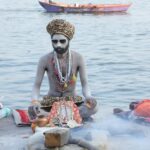
If the evening aarti is Varanasi’s theatrical face, the morning boat ride is its contemplative soul. Watching the city wake up from the river—witnessing morning bathing rituals, yoga practitioners, cremation ghats still smoking from overnight pyres, and the soft golden light transforming the ghats—is mesmerizing.
This isn’t about checking off a tourist activity; it’s about experiencing Varanasi’s rhythm. The morning offers the city at its most authentic, before the day’s chaos fully unfolds.
Ancient Temples and Narrow Lanes
The Kashi Vishwanath Temple is the spiritual epicenter, though be prepared for intense crowds and tight security. Sankat Mochan Hanuman Temple offers a more relaxed atmosphere. But Varanasi’s magic often reveals itself in unnamed small shrines tucked into impossibly narrow lanes.
Getting deliberately lost in the old city’s labyrinth is essential. You’ll stumble upon centuries-old buildings, tiny workshops making silk or musical instruments, improvised chai stalls, and moments of beauty in decay that define Varanasi’s character.
How Many Days for Varanasi
Minimum three days, but four or five let Varanasi properly sink in. Day one covers major ghats and evening aarti. Day two starts with the morning boat ride and temple visits. Day three explores the broader city—Sarnath (where Buddha gave his first sermon), Banaras Hindu University campus, and perhaps a silk shopping expedition.
Additional days allow repeat experiences (each morning boat ride is different), day trips to Ramnagar Fort, deeper exploration of the old city, or simply sitting at ghats watching life unfold. Varanasi demands time—rushing through defeats its purpose.
Accommodation Strategy Across Three Cities
Where to Stay in Prayagraj
Civil Lines area offers comfort and quiet while remaining accessible to the Sangam. Hotels here range from budget (₹1,000-1,500) to mid-range (₹2,500-4,000). Alternatively, stay near Allahabad Junction for maximum connectivity. Avoid the temporary accommodations that served Magh Mela pilgrims unless you’re extremely budget-conscious—they’re often substandard.
Ayodhya Accommodation Options
Properties near Ram Janmabhoomi or along the Saryu River offer the best experience. Ayodhya’s accommodation scene has significantly improved with several good mid-range hotels (₹2,000-3,500) offering modern amenities. The compact city means even properties slightly away from the center remain easily accessible.
Best Areas to Stay in Varanasi
This is crucial because Varanasi’s accommodation location dramatically affects your experience. Staying in the old city (near Assi Ghat or other ghats) immerses you fully but means navigating narrow lanes, minimal vehicle access, and constant noise. It’s authentic but exhausting.
Alternatively, areas like Lanka, Bhelupur, or near Varanasi Junction offer comfort, quiet, and easy transport while being 15-30 minutes from the ghats. Many travelers prefer this compromise—comfortable base with daily forays into the intensity. Budget hotels start at ₹800, mid-range at ₹2,000-4,000, and luxury heritage properties at ₹8,000+.
Food Journey: Culinary Highlights of Each City
Food across this circuit is predominantly vegetarian due to the region’s religious character, but that doesn’t mean bland. Prayagraj offers chaat varieties that could make a separate pilgrimage—aloo tikki, basket chaat, and local specialties you won’t find elsewhere. The city’s confectionery, especially around the Sangam area, is dangerously addictive.
Ayodhya’s cuisine reflects its spiritual nature—simple yet flavorful thalis, pedas from generations-old sweet shops, and street food that’s pure comfort. Don’t miss the local lassi, thick enough to stand a spoon in.
Varanasi is where foodies rejoice. Beyond the famous Banarasi paan and lassi, explore kachoris, tamatar chaat, malaiyo (available only in winter), and countless mithai varieties. The old city hides restaurants serving traditional Banarasi cuisine that hasn’t changed in decades. Blue Lassi Shop is Instagram-famous for good reason, but countless other establishments offer equally divine experiences without the wait.
Cultural Differences Between the Three Cities
Despite geographical proximity, these cities feel distinct. Prayagraj carries colonial grandeur mixed with religious fervor—it’s refined yet deeply traditional. The city’s administrative importance historically has created a more organized, spacious urban layout compared to its neighbors.
Ayodhya feels devoted and focused, almost meditative. Everything channels toward Ram-bhakti (devotion to Ram), creating a singular spiritual atmosphere. The city’s recent development has added efficiency without diluting this focus.
Varanasi is gloriously chaotic—spiritual, commercial, ancient, modern, profound, and profane all tumbling together in narrow lanes. The city doesn’t present itself neatly; you have to engage with its contradictions. It’s simultaneously India’s most sacred city and one of its most challenging to navigate.
Understanding these differences helps you adjust expectations and approaches, maximizing each city’s unique offerings.
Practical Tips for the Complete Circuit
Packing Essentials
Pack light but strategically. Modest clothing covering shoulders and knees is essential—multiple sets because you’ll be changing after river baths or temple visits. Comfortable walking shoes that slip on and off easily matter more than you think. A small daypack for temple visits beats lugging larger bags.
Include a power bank (electricity can be unreliable), water bottle with filter, basic medicines, sunscreen, and hat for daytime temple visits. A lightweight scarf or shawl serves multiple purposes—temple head covering, protection from sun, makeshift towel. Bring more cash than you think necessary; ATMs exist but aren’t always convenient when you need them.
Photography Guidelines
Rules vary by location. The Sangam in Prayagraj and Saryu ghats in Ayodhya generally permit photography, though asking permission from people before photographing them is respectful. Some temple interiors prohibit cameras, especially sanctum sanctorums.
Varanasi’s ghats allow photography, but be extremely sensitive at cremation ghats—never photograph the actual cremation process or grieving families. This isn’t just about rules; it’s about basic human decency. The old city’s narrow lanes offer incredible photographic opportunities, but always ask shopkeepers and residents before pointing your camera at them or their establishments.
Respecting Local Customs
Remove shoes before entering temples (designated shoe storage exists at major sites). Wash hands and feet before entering certain sacred spaces. Avoid leather items in some temples. During aartis, maintain respectful silence or join the chanting—treat it as worship, not entertainment.
In Varanasi particularly, avoid pointing your feet toward shrines or deities, don’t step over religious offerings, and be mindful that many activities you’re observing (especially at cremation ghats) aren’t performances for tourists but profound moments in people’s lives.
Common Mistakes to Avoid
Don’t try cramming all three cities into three or four days—you’ll be exhausted and miss the depth each offers. Avoid peak afternoon heat for extensive walking; schedule indoor sites or rest during 1-4 PM.
Don’t automatically trust every “guide” who approaches you, especially in Varanasi. Many are touts leading you to shops for commissions. Use guides recommended by your hotel or official tourism offices.
Avoid drinking untreated water, no matter how thirsty. Don’t skip meals because food seems unfamiliar—you need energy for this journey. Don’t over-pack your schedule; spontaneity and rest are crucial for absorbing these cities’ spiritual aspects.
In Varanasi especially, don’t rent rooms without actually seeing them first. Photos can be deceptive, and the difference between a ghat-view room facing the river versus one looking into a narrow alley matters immensely.
Sample Itineraries: 5-Day, 7-Day, and 10-Day Options
5-Day Express Route:
- Day 1: Arrive Prayagraj, Sangam visit
- Day 2: Prayagraj monuments, evening travel to Ayodhya
- Day 3: Ayodhya temples and ghats
- Day 4: Travel to Varanasi, evening aarti
- Day 5: Morning boat ride, temples, departure
7-Day Balanced Route:
- Day 1-2: Prayagraj (Sangam, forts, museums)
- Day 3: Travel to Ayodhya, initial temple visits
- Day 4: Complete Ayodhya exploration
- Day 5: Travel to Varanasi, settle in, evening aarti
- Day 6: Morning boat ride, Kashi Vishwanath, old city exploration
- Day 7: Sarnath, silk shopping, final ghat visit, departure
10-Day Comprehensive Route:
- Day 1-3: Prayagraj (includes leisurely exploration and rest)
- Day 4-6: Ayodhya (thorough temple circuit, Saryu river experiences, day trip possibilities)
- Day 7-10: Varanasi (multiple morning boat rides, extensive old city wandering, Sarnath, Ramnagar Fort, buffer day for spontaneity)
The 7-day option offers the best balance for most travelers, while the 10-day route is ideal if you want to truly absorb rather than just see each city.
Conclusion
The Prayagraj–Ayodhya–Kashi circuit after Magh Mela isn’t just a travel itinerary—it’s a journey through the very heart of Hindu spirituality and Indian cultural continuity. These three cities, each sacred in its own right, combine to offer something greater than their sum.
By timing this journey after Magh Mela, you’re making a smart choice that balances spiritual authenticity with practical travel comfort. You avoid the crushing crowds while still catching the heightened spiritual atmosphere the massive gathering creates. The weather cooperates, prices stabilize, and services are well-prepared from handling the Mela rush.
What makes this circuit special is its narrative arc. You begin with purification at the Sangam, move through devotion in Ayodhya, and conclude with the profound acceptance of life’s cycles in Kashi. Each city prepares you for the next, building layers of understanding about India’s spiritual traditions.
Whether this journey transforms you spiritually, educates you culturally, or simply provides unforgettable experiences, depends partly on what you bring to it. Approach with openness, patience, and respect, and these three cities will reveal treasures that guidebooks can’t capture and Instagram can’t contain.
Pack your bags, open your heart, and prepare for a journey that countless pilgrims before you have found life-changing. The Prayagraj–Ayodhya–Kashi circuit awaits, and after Magh Mela might just be the perfect time to answer its ancient call.
FAQs
1. What is the total cost for a 7-day Prayagraj–Ayodhya–Kashi tour?
For a comfortable mid-range experience, expect ₹15,000-25,000 per person for seven days, covering accommodation (₹1,500-2,500/night), meals (₹500-800/day), intercity travel (₹1,500-2,000 total), local transport, and incidentals. Budget travelers can manage on ₹8,000-12,000 using budget hotels, local eateries, and public transport. Luxury travelers spending ₹50,000+ can enjoy heritage hotels, private cars with drivers, and curated experiences. These estimates exclude travel to/from your starting point. The circuit accommodates various budgets because the core spiritual experiences—temples, ghats, aartis—are mostly free.
2. Is it safe for families with elderly members or children?
Yes, this circuit is family-friendly when planned properly. Post-Magh Mela timing means fewer crowds and better facilities, making it safer and more comfortable for elderly travelers and children. However, consider physical demands: temple stairs in Ayodhya, uneven surfaces at ghats, and Varanasi’s narrow lanes require reasonable mobility. Many families successfully complete this journey by pacing themselves—rest days, afternoon breaks, and hiring private vehicles instead of relying on public transport. Accommodations increasingly offer elevators and accessibility features. The key is realistic planning: don’t overschedule, choose centrally-located hotels to minimize travel, and prioritize comfort over trying to see everything.
3. Can I complete this tour during monsoon season?
Technically yes, but it’s not ideal. Monsoon (July-September) brings heavy rains that can disrupt travel between cities, cause flooding at ghats, make temple visits uncomfortable, and generally dampen the experience. The post-Magh Mela period (late February-March) offers far superior conditions: pleasant weather, accessible sites, and better visibility for photography. If you must travel during monsoon, bring appropriate rain gear, expect schedule flexibility, book accommodations away from flood-prone areas, and verify that major sites remain accessible. Winter (October-February) and early spring (February-March) are consistently the best times for this circuit.
4. How do I handle language barriers in these cities?
Hindi is the primary language across all three cities, but English is increasingly understood in hotels, major restaurants, and tourist areas—especially after recent infrastructure improvements in Ayodhya. However, in smaller establishments, local transport, and traditional neighborhoods (especially Varanasi’s old city), English is limited. Download a translation app with offline capabilities before your trip. Learning basic Hindi phrases (greetings, numbers, common questions) tremendously improves interactions and shows respect. Hotels can help arrange guides who speak English well. Younger people generally have better English proficiency. Despite language barriers, people across these cities are remarkably helpful to travelers—patience and good humor bridge most communication gaps.
5. What are the mobile connectivity and internet conditions like?
Mobile connectivity is generally good across all three cities with major Indian providers (Jio, Airtel, Vi). You’ll have 4G coverage in main areas, though signals may weaken in Varanasi’s densest old city lanes or during heavy usage periods. Most hotels offer Wi-Fi, though quality varies from excellent in newer properties to frustratingly slow in budget accommodations. For reliable connectivity, consider purchasing a local SIM card (available at airports or mobile shops with passport and photo). WhatsApp works reliably for staying connected with family. Download offline maps for all three cities before arrival, as GPS works even without data. Power banks are essential as you’ll use your phone extensively for navigation, translation, and photography throughout these information-rich cities.