
The Cultural Significance of Prayagraj , Have you ever wondered what makes a city not just a place on a map but a living embodiment of an entire civilization’s soul? Prayagraj stands as such a city—a cultural powerhouse where spirituality flows as abundantly as the sacred rivers that define it. This ancient city isn’t merely historically important; it’s a continuously beating heart of Indian cultural identity, where past and present merge as seamlessly as the Ganges and Yamuna at the Triveni Sangam.
Prayagraj represents something extraordinary in the Indian cultural landscape. While many cities can claim ancient origins or religious significance, few possess the multilayered cultural depth that Prayagraj embodies. Here, mythology breathes alongside history, spiritual traditions coexist with political movements, and ancient wisdom dialogues with modern thought. Understanding Prayagraj’s cultural significance is, in many ways, understanding India itself—its contradictions, its continuities, and its capacity to hold multiple truths simultaneously.

The Ancient Roots of Prayagraj
Mythological Origins and Sacred Texts
The cultural significance of Prayagraj begins in the realm of mythology, where the city occupies a place of supreme importance. According to Hindu cosmology, Prayagraj is one of the four sites where drops of amrita (nectar of immortality) fell from the sacred pitcher during the legendary battle between gods and demons. This mythological event establishes Prayagraj as inherently divine—not just a place that became holy through human actions, but one that carries cosmic sacredness in its very essence.
The Puranas, ancient Hindu texts composed between 400 BCE and 1000 CE, contain extensive references to Prayag. The Matsya Purana describes it as the supreme tirtha (pilgrimage site), declaring that bathing at the Sangam equals the merit of performing numerous elaborate sacrifices. The Padma Purana goes further, stating that Prayag is the king of all pilgrimage places—”Tirtharaj Prayag”—where even the gods come to purify themselves.
What makes these mythological foundations culturally significant? They’ve shaped the consciousness of countless generations, creating a shared cultural understanding that transcends individual belief. Whether one accepts these stories as literal truth or powerful metaphor, they’ve woven Prayagraj into the imaginative fabric of Indian civilization.
The City Through the Ages
Archaeological evidence suggests human settlement at Prayagraj dates back over 3,000 years, placing it among India’s oldest continuously inhabited cities. Ancient texts mention the city during the Vedic period (1500-500 BCE), indicating its importance in early Indian civilization. The Chinese traveler Xuanzang, who visited India in the 7th century CE, described Prayag as a thriving cultural center with magnificent temples and scholarly institutions.
Through successive empires—Mauryan, Gupta, Mughal, and British—Prayagraj maintained its cultural significance, adapting and absorbing influences while retaining its essential identity. Each era added layers to the city’s cultural personality without erasing previous ones, creating the rich palimpsest we see today.
Etymology: From Prayag to Allahabad to Prayagraj
The evolution of the city’s name tells its own cultural story. “Prayag” derives from Sanskrit, meaning “place of sacrifice” or “confluence”—both referring to its sacred geography. When Mughal Emperor Akbar established his fort here in 1583, the city came to be known as “Allahabad,” meaning “City of God” or “City of Allah”—a name reflecting the Islamic cultural influence while maintaining spiritual reverence.
In 2018, the government officially reverted to “Prayagraj,” a decision that sparked considerable cultural debate. Supporters viewed it as reclaiming historical identity, while critics saw it as erasing multicultural heritage. This naming controversy itself reveals Prayagraj’s cultural complexity—a city whose very identity embodies the tensions and syntheses that characterize Indian civilization.
The Triveni Sangam: Heart of Cultural Identity
The Sacred Confluence
The Triveni Sangam—where the Ganges, Yamuna, and mythical Saraswati converge—is far more than a geographical feature. It represents the cultural epicenter of Prayagraj’s identity, a physical manifestation of spiritual concepts that have shaped Indian thought for millennia. Standing at the Sangam, you witness something that exists simultaneously as natural phenomenon, mythological reality, and cultural symbol.
The visual experience of the Sangam captures the imagination immediately. The Ganges flows with its characteristic muddy brown color, the Yamuna carries a slightly greenish tint, and where they meet, you can actually see the distinct colors merging before gradually becoming one. This visible union has inspired countless philosophical interpretations—the coming together of different qualities creating something greater, the dissolution of differences in ultimate unity, the journey from duality to oneness.
Spiritual Symbolism in Hindu Philosophy
In Hindu philosophy, the Sangam symbolizes far more than three rivers meeting. The three rivers represent the three fundamental aspects of existence: creation (Brahma/Saraswati), preservation (Vishnu/Ganga), and destruction/transformation (Shiva/Yamuna). Their confluence represents the ultimate reality where these cosmic functions merge into unified consciousness.
The invisible Saraswati carries particular cultural weight. According to tradition, this river flows underground, invisible to physical eyes but present to spiritual perception. This belief has spawned rich philosophical discourse about hidden truths, inner knowledge, and realities that exist beyond sensory perception. The Saraswati’s invisibility doesn’t diminish its importance; rather, it elevates the metaphysical dimension of the Sangam, making it a place where the visible and invisible worlds meet.
The Science Behind the Sacred
Interestingly, modern science adds another dimension to the Sangam’s cultural significance. Geological studies confirm that a substantial underground aquifer exists beneath Prayagraj, supporting the ancient claims about Saraswati’s subterranean presence. Satellite imaging has traced what appears to be an ancient river course that once flowed above ground before changing geological conditions forced it underground.
This scientific validation doesn’t diminish the spiritual significance—rather, it demonstrates how traditional knowledge and modern science can coexist, each offering different lenses through which to understand sacred geography. This synthesis itself reflects a broader cultural pattern in India, where scientific inquiry and spiritual tradition aren’t necessarily opposed but can complement each other.
Kumbh Mela and Magh Mela: World’s Greatest Cultural Gatherings
UNESCO Recognition and Global Significance
In 2017, UNESCO inscribed the Kumbh Mela on its Representative List of Intangible Cultural Heritage of Humanity, recognizing it as an extraordinary cultural phenomenon. This recognition acknowledges what Indians have known for millennia—that Prayagraj hosts the largest peaceful gathering of humanity on Earth, a feat of cultural organization that defies modern imagination.
The Kumbh Mela isn’t just large; it’s astronomically vast. The 2019 Kumbh Mela in Prayagraj attracted over 150 million visitors across its 49-day duration, with nearly 50 million bathing on the single most auspicious day (Mauni Amavasya). To put this in perspective, this exceeds the entire population of most countries gathering voluntarily for spiritual purposes—a testament to the cultural pull Prayagraj exerts on the Indian consciousness.
The Living Tradition of Mass Pilgrimage
What makes these gatherings culturally significant isn’t merely their size but their continuity. The Kumbh tradition has persisted for over 2,000 years, surviving invasions, colonization, political upheavals, and the transition to modernity. This unbroken chain connects contemporary participants to countless generations of ancestors who made the same pilgrimage, creating a living thread of cultural memory.
The Magh Mela, occurring annually at Prayagraj, maintains this tradition on a smaller but still substantial scale. Together, these festivals ensure that Prayagraj remains not a museum of past culture but a continuously active cultural center where traditions are performed, not merely preserved.
Cultural Diversity at the Confluence
Akharas and Spiritual Orders
The Kumbh and Magh Melas showcase India’s incredible spiritual diversity. Thirteen major akharas (monastic orders) participate, each representing distinct spiritual lineages and philosophical traditions. From the ash-smeared Naga Sadhus who practice extreme renunciation to scholarly Brahmachari orders focused on Vedic learning, from Vaishnava traditions devoted to Vishnu to Shaiva orders worshipping Shiva—all converge at Prayagraj in peaceful coexistence.
These akharas aren’t mere historical curiosities but living institutions that have maintained continuity for centuries, preserving distinct philosophical traditions, yogic practices, and spiritual methodologies. Their presence at Prayagraj makes the city a living library of Indian spiritual culture, where diverse paths to enlightenment acknowledge their fundamental unity.
The Role of Saints and Sadhus
During the Melas, thousands of saints, sadhus, and spiritual teachers establish temporary camps, offering discourses, blessings, and spiritual guidance to pilgrims. This creates an unparalleled cultural exchange—village devotees might hear teachings from renowned spiritual masters they could never access otherwise, students can encounter diverse philosophical perspectives, and serious seekers can receive direct transmission of spiritual knowledge.
The cultural significance lies in democratization. At Prayagraj during the Melas, spiritual knowledge isn’t confined to elite institutions or wealthy patrons—it flows freely to anyone willing to listen, embodying the egalitarian impulse within Hindu culture that believes divine truth is accessible to all, regardless of birth or social status.
Prayagraj in Hindu Scriptures and Literature
References in Ancient Texts
Prayagraj’s cultural weight is reinforced by its prominent presence in Hindu scriptures. The Rigveda, composed around 1500 BCE, contains what scholars interpret as references to the confluence of rivers at Prayag. The Mahabharata, one of India’s two great epics, describes Prayag as a supreme pilgrimage site, stating that bathing here grants liberation from the cycle of rebirth.
The Ramayana connects Prayag to Lord Rama’s journey during his exile, establishing the city within the sacred geography of Rama’s story. According to tradition, Rama, his wife Sita, and brother Lakshmana spent time at the sage Bharadwaj’s ashram near present-day Prayagraj, adding another layer of mythological significance.
These scriptural references aren’t mere mentions—they establish Prayagraj as an essential node in the spiritual mapping of the Indian subcontinent, a place where humans can more easily access divine grace and spiritual transformation.
The City in Epic Poetry
Medieval bhakti poets and Sanskrit literary masters regularly featured Prayagraj in their works. Tulsidas, the 16th-century poet-saint who composed the Ramcharitmanas (the most popular Hindi version of the Ramayana), wrote lovingly about Prayag’s spiritual atmosphere. Kabir, the 15th-century mystic poet whose verses transcended religious boundaries, also referenced Prayag in his compositions.
These poetic traditions served crucial cultural functions—they disseminated knowledge about Prayagraj’s significance to non-literate populations, created emotional connections to places people might never physically visit, and wove the city into the collective imagination of Indian society.
Literary Traditions and Scholarly Heritage
Beyond religious texts, Prayagraj developed rich secular literary traditions. The city became renowned for its Urdu poetry gatherings (mushairas) where poets competed in wit and eloquence. During the colonial period, Prayagraj emerged as a center for both traditional Sanskrit scholarship and modern literary movements, producing writers who shaped Indian literature in multiple languages.
This intellectual vitality established Prayagraj as more than a pilgrimage destination—it became a crucible where ideas fermented, where traditional learning encountered modern thought, and where cultural synthesis occurred through artistic and intellectual exchange.
Architectural and Historical Heritage
Mughal Influence: Allahabad Fort
The Allahabad Fort, constructed by Emperor Akbar in 1583, represents one of the finest examples of Mughal military architecture. But its cultural significance extends beyond architectural merit. Akbar, known for his policy of religious tolerance and cultural synthesis (Din-i-Ilahi), chose Prayagraj for this massive fort precisely because of its existing cultural importance, seeking to connect Mughal authority with ancient sacred geography.
Inside the fort stands the Akshaya Vat (immortal banyan tree), mentioned in Hindu texts dating back over 2,000 years. The tree’s presence inside a Mughal fort symbolizes the cultural continuity underlying political changes—conquerors come and go, but sacred trees endure. This juxtaposition of Islamic architecture protecting Hindu sacred sites exemplifies the complex cultural synthesis that characterizes Indian civilization.
The fort also houses the Ashoka Pillar, inscribed with edicts of Emperor Ashoka from the 3rd century BCE, later receiving inscriptions from Gupta emperors and Mughal rulers. This single pillar thus bears witness to over 2,000 years of Indian history, with each era adding its voice to an ongoing cultural conversation.
Colonial Architecture and British Legacy
British colonial rule added another architectural layer to Prayagraj. The city became a major administrative center, leading to the construction of Gothic Revival churches, Victorian civic buildings, and spacious colonial-era neighborhoods. The All Saints Cathedral, locally called Patthar Girja (Stone Church), built in 1871, represents a stunning example of Gothic architecture transplanted to Indian soil.
The British also established Prayagraj as an educational center, founding institutions that would profoundly shape Indian intellectual life. This colonial legacy creates cultural complexity—these structures represent both foreign domination and the introduction of modern administrative, legal, and educational systems that Indians would later adapt to their own purposes.
Religious Architecture Through the Centuries
Prayagraj’s religious architecture spans multiple periods and traditions. The Hanuman Mandir near the Sangam contains a unique 20-foot reclining statue of Lord Hanuman, believed to lie submerged during floods and re-emerge as waters recede—a physical manifestation of the cycles of creation and dissolution central to Hindu cosmology.
Numerous temples, some dating back centuries, dot the riverbanks and city. Each tells stories of royal patronage, community devotion, and architectural evolution. The Alopi Devi Mandir, unusually dedicated to a goddess without any deity idol (only a wooden carriage is worshipped), demonstrates the diversity within Hindu practice. These architectural traditions create a built environment saturated with cultural memory and religious significance.
Prayagraj’s Role in India’s Freedom Movement
The Nehru Dynasty and Swaraj Bhawan
Prayagraj’s cultural significance extends crucially into India’s modern political identity. The city was home to the Nehru family, whose three generations shaped India’s freedom struggle and early independence period. Anand Bhawan, the Nehru family mansion, became an informal headquarters for the independence movement, hosting crucial meetings of the Indian National Congress.
Motilal Nehru, a wealthy lawyer, donated his grand home (rechristened Swaraj Bhawan—”House of Self-Rule”) to the Congress party in 1930. His son Jawaharlal Nehru would become India’s first Prime Minister, serving for 17 years and establishing many of the modern Indian state’s foundational policies and institutions. Jawaharlal’s daughter Indira Gandhi later served as Prime Minister, followed by her son Rajiv Gandhi—making the Nehru-Gandhi family synonymous with modern Indian politics.
This connection gives Prayagraj special significance in India’s national narrative. The city isn’t just where ancient spiritual traditions persist—it’s where modern Indian political consciousness crystallized, where the blueprint for an independent India was drafted in countless late-night conversations and strategy sessions.
Major Political Movements and Declarations
Several pivotal moments in India’s freedom struggle occurred in Prayagraj. The Indian National Congress held multiple annual sessions here, each advancing the movement toward independence. In 1929, the Congress session in Prayagraj passed the historic “Purna Swaraj” resolution, declaring complete independence (rather than mere dominion status within the British Empire) as India’s goal.
This declaration, made on the banks of the Yamuna with the Sangam nearby, deliberately connected modern political aspirations with ancient sacred geography—suggesting that the struggle for freedom was not merely political but also spiritual, a reclaiming of India’s civilizational identity from colonial subjugation.
The City as a Cradle of Modern Indian Identity
Prayagraj thus occupies a unique position—a bridge between India’s ancient spiritual traditions and its modern political identity. The city where millions have sought spiritual liberation for millennia became the place where India declared its intention to achieve political liberation. This synthesis of the spiritual and political, the ancient and modern, gives Prayagraj special resonance in Indian cultural consciousness.
The city symbolizes the argument that India’s modernity need not come at the expense of tradition, that being thoroughly modern doesn’t require abandoning ancient spiritual roots. This cultural stance—modernization without westernization, progress without cultural erasure—finds one of its most eloquent physical expressions in Prayagraj.
Cultural Traditions and Festivals
Beyond Kumbh: Year-Round Celebrations
While Kumbh and Magh Melas dominate international attention, Prayagraj’s cultural calendar includes numerous other festivals reflecting India’s diversity. Diwali, the festival of lights, sees the entire city illuminated, with elaborate decorations along the ghats. Holi, the spring festival of colors, transforms Prayagraj into a riot of vibrant hues as people celebrate the victory of good over evil.
Eid celebrations bring out the city’s Muslim heritage, with special prayers at historic mosques followed by community feasts that often transcend religious boundaries. Christmas sees the Christian community, though relatively small, contributing to the city’s festive atmosphere, particularly around the All Saints Cathedral.
These overlapping celebrations create a continuously festive cultural atmosphere, reinforcing Prayagraj’s identity as a city where diverse traditions coexist and interpenetrate.
Music and Arts Heritage
Prayagraj has nurtured significant musical traditions, particularly in classical Hindustani music. The city has produced renowned musicians and continues to host classical music festivals that attract connoisseurs from across India. The gharana (stylistic school) tradition in classical music found patronage here, with musicians developing distinctive styles that enriched India’s musical heritage.
The city’s Urdu poetry tradition remains vibrant, with regular mushairas (poetry symposiums) where poets recite verses exploring love, spirituality, social commentary, and philosophical reflection. These gatherings maintain a literary culture dating back centuries, creating living connections to past masters while encouraging contemporary creativity.
Culinary Culture and Traditional Cuisine
Food is culture made edible, and Prayagraj’s culinary traditions reflect its diverse heritage. The city is famous for its chaat—particularly the “Allahabad ka basket chaat” and variations that achieve the perfect balance of sweet, sour, spicy, and tangy flavors. These street foods aren’t mere snacks but cultural artifacts, recipes refined over generations.
Prayagraj’s location at the Gangetic plains ensures abundant agricultural produce, reflected in traditional vegetarian cuisine featuring seasonal vegetables, lentils, and wheat-based breads. The city’s Mughal influence appears in rich meat preparations and biryanis, while British colonial presence introduced certain bakery traditions. This culinary diversity mirrors the city’s broader cultural synthesis.
The Ganga-Jamuni Tehzeeb: Composite Culture
Hindu-Muslim Syncretism
“Ganga-Jamuni Tehzeeb” (the culture of the Ganges and Yamuna confluence) describes the cultural synthesis between Hindu and Muslim traditions that characterizes Prayagraj and similar cities in North India. This isn’t merely peaceful coexistence but genuine cultural interpenetration—Hindu devotional music adopting Urdu poetic forms, Muslim artisans creating Hindu religious art, shared festivals and food traditions.
This syncretism reflects historical reality. For over 800 years, Hindu and Muslim populations lived side by side, inevitably influencing each other. The result is a composite culture that defies simplistic categorization—is Urdu a Muslim or Indian language? Are certain architectural forms Islamic or Indian? Prayagraj demonstrates that such questions miss the point—culture is inherently syncretic, constantly evolving through exchange and adaptation.
Linguistic Diversity and Urdu Poetry
Prayagraj became a major center of Urdu literature, despite Urdu’s association with Muslim culture and the city’s Hindu majority. This apparent paradox reveals the complexity of Indian cultural identity. Urdu poetry, with its Persian-Arabic vocabulary and Devanagari script cousin Hindi, became a shared cultural language transcending religious boundaries.
Major Urdu poets either hailed from Prayagraj or spent significant time here, attracted by the city’s literary atmosphere and patron-supported culture. The city’s mushairas became legendary events where poets from different religious backgrounds competed and collaborated, creating a shared cultural space where religious differences receded before artistic excellence.
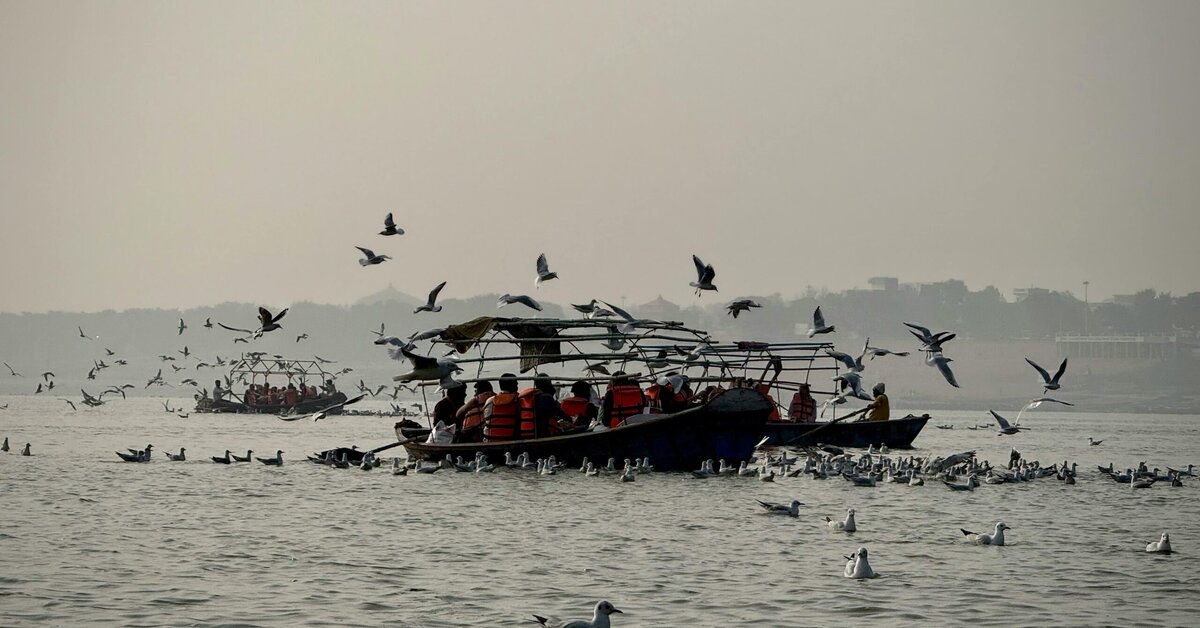
Prayagraj exemplifies—though not without tensions and occasional conflicts—the possibility of interfaith harmony in Indian society. Certain festivals and celebrations attract participation across religious lines. During Kumbh Mela, Muslim boatmen ferry Hindu pilgrims to the Sangam; many Muslim artisans create Hindu religious images and artifacts; Hindu and Muslim musicians collaborate in classical music performances.
This doesn’t mean perfect harmony or absence of communal tensions—such romanticization would be dishonest. But it demonstrates that cultural exchange and mutual influence persist despite periodic conflicts, creating deep civilizational patterns that transcend temporary political tensions.
Educational and Intellectual Legacy
University of Allahabad and Academic Excellence
The University of Allahabad, established in 1887, ranks among India’s oldest and most prestigious universities. It became a powerhouse of intellectual activity, producing numerous leaders, scholars, writers, and thinkers who shaped modern India. Seven Prime Ministers of India have connections to this university—either as students or faculty—a remarkable concentration of political leadership.
But beyond political leaders, the university nurtured poets, novelists, scientists, and philosophers. The noted Hindi writer Harivansh Rai Bachchan taught here; physicist Megh Nad Saha studied here; countless others passed through its halls, contributing to India’s intellectual and cultural life.
Centers of Learning Through History
Before the modern university, Prayagraj hosted traditional centers of learning. Sanskrit scholars established pathshalas where ancient texts were studied and preserved. During the medieval period, the city attracted scholars from across India, creating an intellectual atmosphere where philosophical debates and textual interpretations flourished.
This continuous tradition of learning—spanning from ancient gurukuls through medieval pathshalas to modern universities—establishes Prayagraj as not merely a pilgrimage destination but an intellectual center where knowledge is generated, preserved, and transmitted across generations.
Prayagraj’s Contribution to Indian Thought
The intellectual work conducted in Prayagraj has shaped Indian thought in multiple domains. Legal scholars here contributed to developing Indian jurisprudence blending indigenous traditions with colonial legal systems. Political thinkers debated the nature of Indian nationalism and independence. Literary figures experimented with modern forms while drawing on traditional aesthetics.
This intellectual vitality means that Prayagraj’s cultural significance extends beyond preserving tradition to actively creating culture—generating new ideas, artistic forms, and intellectual approaches that enrich the broader Indian cultural landscape.
Contemporary Cultural Life
Modern Artistic Expressions
Contemporary Prayagraj maintains cultural vibrancy through modern artistic expressions. The city hosts film festivals, contemporary art exhibitions, theater performances, and literary events that engage with both traditional forms and modern concerns. Young artists and writers draw inspiration from Prayagraj’s rich heritage while addressing contemporary issues—environmental challenges, social inequalities, technological changes.
This contemporary creativity ensures that Prayagraj’s culture remains living rather than fossilized, continually evolving while maintaining connections to its deep roots.
Preservation Efforts and Cultural Institutions
Various institutions work to preserve and promote Prayagraj’s cultural heritage. Museums like Anand Bhawan preserve the freedom movement’s history. Cultural organizations conduct classical music and dance programs. The Allahabad Museum houses remarkable collections of artifacts spanning prehistoric times to the colonial period.
These preservation efforts face the challenge of maintaining relevance in rapidly changing India. How do you make ancient traditions meaningful to smartphone-wielding youth? How do you preserve historical buildings while accommodating modern urban needs? Prayagraj’s cultural institutions grapple with these questions, seeking ways to honor the past while remaining relevant to the present.
Prayagraj’s Cultural Impact on India
National Symbolism
Prayagraj functions symbolically in Indian national consciousness as a place where fundamental aspects of Indian identity converge. The Sangam itself becomes a metaphor for Indian diversity achieving unity—different traditions flowing together while maintaining their distinctiveness, ultimately merging into a greater whole.
Political leaders regularly invoke Prayagraj when discussing national unity or spiritual values. The city appears in countless Hindi films, novels, and songs, often representing tradition, spirituality, or connection to roots. This symbolic presence amplifies Prayagraj’s cultural influence beyond those who actually visit.
Influence on Indian Arts and Literature
Prayagraj’s influence permeates Indian arts and literature in both obvious and subtle ways. Countless poems, stories, and songs reference the Sangam or Kumbh Mela. Visual artists paint scenes of pilgrims bathing or saints in meditation. Film directors use the city as setting or metaphor.
Beyond explicit references, Prayagraj’s cultural patterns—the synthesis of diverse traditions, the coexistence of ancient and modern, the spiritual infusing the everyday—influence how Indian artists conceptualize their work and their relationship to tradition and innovation.
Conclusion
The cultural significance of Prayagraj cannot be reduced to simple explanations or singular dimensions. It’s a city that operates simultaneously on multiple levels—as sacred geography, historical site, intellectual center, symbol of national identity, and living community. Each layer enriches the others, creating cultural depth that rewards exploration and contemplation.
What makes Prayagraj truly remarkable is not any single aspect but the integration of so many dimensions into a coherent whole. Ancient spirituality coexists with modern political consciousness; Hindu traditions interpenetrate with Islamic influences; preservation of the past enables creativity in the present. This complexity—sometimes contradictory, always fascinating—makes Prayagraj an essential key to understanding Indian civilization.
Perhaps most importantly, Prayagraj demonstrates culture as a living, evolving phenomenon rather than a museum piece. The same riverbanks that witnessed Vedic sages now host digital-age pilgrims taking selfies at the Sangam. Ancient rituals persist, but they’re performed by people grappling with contemporary concerns. Tradition and modernity don’t oppose each other here—they’re in constant, creative dialogue.
In understanding Prayagraj’s cultural significance, we understand something profound about culture itself: that it’s simultaneously ancient and contemporary, rooted in place yet universal in appeal, shaped by history yet continually remaking itself. This timeless city at the confluence of sacred rivers teaches us that culture, like water, flows continuously, nourishing the present while carrying the past forward into the future.
FAQs
1. Why is Prayagraj considered one of the holiest cities in Hinduism?
Prayagraj’s supreme sacred status derives from the Triveni Sangam—the confluence of three sacred rivers (Ganges, Yamuna, and the mythical Saraswati). Hindu scriptures, including the Rigveda, Mahabharata, and various Puranas, designate Prayag as “Tirtharaj” (king of all pilgrimage sites). The city is one of four locations hosting the Kumbh Mela, believed to be where drops of immortality nectar fell during a cosmic battle. Ancient texts proclaim that bathing at the Sangam, especially during auspicious periods like Magh or Kumbh Mela, grants liberation from the cycle of rebirth. This scriptural foundation, combined with over 2,000 years of continuous pilgrimage tradition, establishes Prayagraj’s unparalleled spiritual significance. The city represents not just a holy place but a gateway to divine connection, where the physical geography itself is considered a manifestation of cosmic spiritual principles.
2. How has Prayagraj contributed to India’s freedom movement and modern political identity?
Prayagraj played a pivotal role in shaping modern Indian political consciousness. The city was home to the Nehru family, whose members led India’s independence struggle and guided the nation through its crucial early decades. Motilal Nehru donated Swaraj Bhawan to the Congress party as its headquarters, making Prayagraj an informal capital of the freedom movement. The historic 1929 Congress session in Prayagraj declared “Purna Swaraj” (complete independence) as India’s goal—a turning point in the struggle against British rule. Seven of India’s Prime Ministers have connections to the city through the University of Allahabad. This concentration of political leadership, combined with the hosting of crucial Congress sessions and strategy meetings, made Prayagraj the intellectual and organizational hub where modern Indian nationalism crystallized. The city symbolizes the synthesis of ancient spiritual values with modern political aspirations—suggesting that India’s political independence represented not just throwing off colonial rule but reclaiming civilizational identity.
3. What is the Ganga-Jamuni Tehzeeb, and how does it manifest in Prayagraj?
Ganga-Jamuni Tehzeeb (culture of the Ganges-Yamuna confluence) describes the syncretic culture that emerged from centuries of Hindu-Muslim interaction in North India, with Prayagraj as a prime example. This isn’t mere tolerance but genuine cultural interpenetration—where Urdu poetry flourished among Hindu populations, Muslim artisans created Hindu religious art, architectural styles blended, and culinary traditions merged. In Prayagraj, this manifests in the thriving Urdu literary tradition despite a Hindu majority, in shared festivals and celebrations, in classical music forms that transcend religious boundaries, and in daily interactions where religious differences don’t preclude cultural exchange. The city’s architecture displays this synthesis—Mughal forts protecting ancient Hindu sacred trees, colonial buildings adjacent to medieval temples, creating layered cultural landscapes. While communal tensions exist and the relationship hasn’t always been harmonious, the deep patterns of cultural exchange have created shared traditions that constitute a distinct regional identity, demonstrating how diverse religious communities can create unified cultural expressions while maintaining their distinct practices.
4. How does the Kumbh Mela at Prayagraj differ from regular pilgrimage festivals?
The Kumbh Mela transcends typical pilgrimage festivals in scale, cultural significance, and organizational complexity. While most religious gatherings last days, Kumbh spans 49 days. Its attendance—over 150 million at the 2019 event—exceeds the population of most countries, making it humanity’s largest peaceful gathering. UNESCO recognition as Intangible Cultural Heritage acknowledges its unique position. What distinguishes Kumbh culturally is its role as a comprehensive display of Indian spiritual diversity—all major Hindu sects, monastic orders (akharas), philosophical schools, and spiritual lineages converge, creating an unprecedented concentration of religious authority and spiritual knowledge. The temporary tent city that emerges rivals major urban centers in complexity, with intricate infrastructure for sanitation, electricity, medical care, and crowd management. Culturally, Kumbh functions as a renewal mechanism for Hindu traditions—where ancient practices are performed publicly, ensuring transmission to new generations; where saints and scholars debate theology and philosophy; where artistic traditions (music, dance, religious art) are displayed and perpetuated. It’s simultaneously pilgrimage, cultural festival, spiritual conference, and social phenomenon, operating on a scale that defies comparison with other religious gatherings globally.
5. What role does Prayagraj play in contemporary Indian cultural identity?
In contemporary India, Prayagraj functions as a cultural anchor—a tangible connection to continuous civilizational identity amid rapid modernization. The city symbolizes the possibility of maintaining spiritual traditions while embracing modernity, of preserving ancient practices while engaging contemporary concerns. For India’s growing urban population, increasingly distanced from traditional practices, Prayagraj represents accessible tradition—millions can participate in Magh or Kumbh Mela, experiencing rituals their ancestors performed for millennia. The city appears regularly in popular culture—films, literature, music—often representing spiritual authenticity or connection to roots. Politically, leaders invoke Prayagraj when discussing national unity or cultural values, using the Sangam as a metaphor for diverse traditions achieving harmonious coexistence. Intellectually, the city’s history of synthesizing different cultural influences—Hindu-Muslim, traditional-modern, spiritual-political—offers models for navigating India’s contemporary diversity challenges. For the Indian diaspora globally, Prayagraj represents a pilgrimage destination connecting them to ancestral homeland and spiritual heritage. Thus, Prayagraj continues shaping Indian cultural identity not as a museum of past glories but as a living tradition actively negotiating between heritage and innovation, proving that modernity need not require cultural erasure.