Uttar Pradesh Pilgrim Tour Package , If you could draw a map of India’s spiritual soul, the lines would converge unmistakably in Uttar Pradesh. This single state contains more sacred geography, more pilgrimage destinations, and more concentrated spiritual power than entire countries. From the banks of the Ganges where Shiva’s eternal city of Varanasi rises, to the birthplace of Lord Rama in Ayodhya, to the confluence of holy rivers at Prayagraj, to the forests where Krishna played as a child in Vrindavan—Uttar Pradesh is quite literally where divinity touched Earth in Hindu, Buddhist, and Jain traditions.
Consider these extraordinary facts: Uttar Pradesh hosts four of Hinduism’s seven holiest cities. The entire Ramayana unfolded largely within what is now this state. Buddha achieved enlightenment in neighboring Bihar but gave his first sermon, spent significant teaching years, and attained Mahaparinirvana all within UP’s boundaries. Krishna was born and raised here. The Ganges flows through the state for hundreds of sacred kilometers.
For serious pilgrims—those seeking not a single destination but a comprehensive spiritual journey through India’s sacred heartland—Uttar Pradesh offers pilgrimage circuits that can span days or weeks, covering dozens of significant sites, each with profound religious meaning, each adding spiritual merit, each bringing the devotee closer to divine connection and ultimate liberation.
But here’s the challenge: How do you plan a pilgrimage across multiple cities, coordinate temples and rituals in different locations, manage travel between sacred sites separated by hours of distance, and ensure you’re not just rushing through tick-box tourism but actually absorbing the spiritual significance of each place?
This is where comprehensive Uttar Pradesh pilgrimage tour packages become not just helpful but essential. They transform what could be logistical nightmares into seamless spiritual journeys, allowing you to focus on devotion while experts handle routing, timing, accommodations, and coordination across multiple sacred destinations.
This complete guide explores the major Uttar Pradesh pilgrimage circuits, explains the significance of key sacred sites, details various package options, and helps you plan the comprehensive spiritual journey you’ve always envisioned.
Understanding Uttar Pradesh’s Spiritual Geography
The Ganges Belt Sacred Cities
The Ganges River—Ganga Ma—flows through Uttar Pradesh for over 1,000 kilometers, and along her banks sit some of Hinduism’s most important pilgrimage destinations:
Varanasi (Kashi): Where Shiva himself resides, where dying grants liberation, where the sacred and eternal intersect
Prayagraj (Allahabad): Where the Ganges meets the Yamuna (and mythical Saraswati), creating India’s most sacred confluence
Haridwar (technically Uttarakhand but often included): Where the Ganges descends from the Himalayas to the plains
This Ganges belt forms the backbone of Hindu pilgrimage in North India, with countless smaller sacred sites dotting the river’s course.
The Ramayana Circuit
The epic Ramayana—the story of Lord Rama, his exile, his wife Sita’s abduction, and his ultimate victory over evil—unfolded primarily in what is now Uttar Pradesh and neighboring states. Key Ramayana sites in UP include:
Ayodhya: Rama’s birthplace and capital, now home to the magnificent rebuilt Ram Mandir
Chitrakoot: Where Rama, Sita, and Lakshmana spent significant exile years
Various forest regions: Associated with different episodes of the epic
Following the Ramayana circuit means literally walking in the footsteps of divinity, visiting places where Rama lived, prayed, and performed his dharma.
Buddhist Pilgrimage Sites
While Buddha achieved enlightenment in Bodhgaya (Bihar), his subsequent journey and teachings centered significantly in Uttar Pradesh:
Sarnath (near Varanasi): Where Buddha delivered his first sermon, setting the Wheel of Dharma in motion
Kushinagar: Where Buddha attained Mahaparinirvana (final liberation)
Shravasti: Where Buddha spent many monsoon retreats teaching
Sankisa: Where Buddha descended from Trayastrimsa heaven
These sites form crucial stops on the international Buddhist pilgrimage circuit.
Lesser-Known Sacred Destinations
Beyond the famous sites, UP contains numerous powerful but less-visited sacred places:
Naimisharanya: Ancient forest where sages received the Puranas
Vindhyachal: Powerful Shakti Peetha where Goddess Vindhyavasini resides
Dewa Sharif: Sufi shrine attracting devotees of all faiths
Gorakhnath Temple (Gorakhpur): Important for the Nath tradition
Jhansi: Associated with warrior queen Rani Lakshmibai and nearby sacred sites
These destinations add depth and diversity to comprehensive pilgrimage circuits.
The Major Sacred Destinations
Varanasi – The Eternal City
Spiritual significance: Kashi (Varanasi’s ancient name) is considered the most sacred of all tirthas. Hindus believe dying here grants moksha—liberation from the cycle of rebirth. Lord Shiva himself is said to reside here eternally.
Key experiences:
- Kashi Vishwanath Temple darshan (one of twelve Jyotirlingas)
- Ganga Aarti at Dashashwamedh Ghat
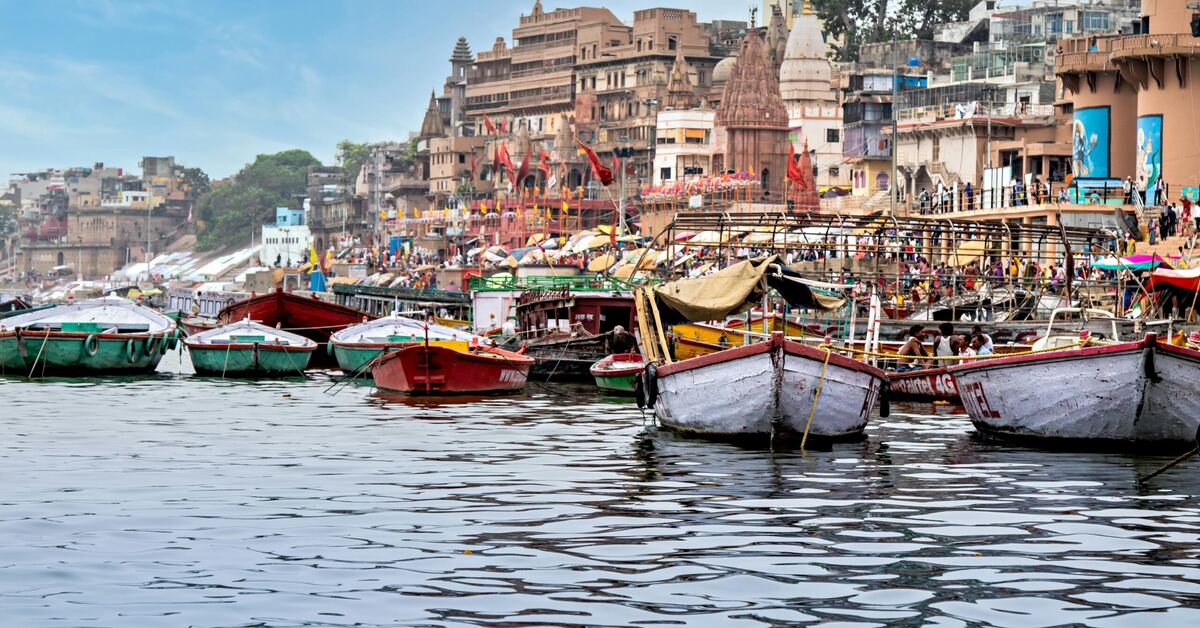
- Sunrise boat ride witnessing thousands performing ritual ablutions
- The 84 ghats, each with unique significance
- Sarnath Buddhist site nearby
Recommended duration: 2-3 days minimum for core experiences, 4-5 days for comprehensive coverage
Best for: All Hindu pilgrims (Varanasi is non-negotiable in any serious UP pilgrimage), Buddhist pilgrims (for Sarnath), spiritual seekers of all traditions
Ayodhya – Birthplace of Lord Rama
Spiritual significance: Ram Janmabhoomi—the exact spot where Lord Rama was born—makes Ayodhya supremely sacred for devotees of Vishnu in his Rama avatar. One of Hinduism’s seven holiest cities.
Key experiences:
- The magnificent new Ram Mandir at Ram Janmabhoomi
- Hanuman Garhi (where Hanuman is said to have lived guarding Ayodhya)
- Kanak Bhawan (palace given to Rama and Sita by Kaikeyi)
- Ramkatha Park with stunning sculptures depicting Ramayana scenes
- Saryu River banks for holy bathing
- Numerous sites associated with Ramayana events
Recommended duration: 1-2 days for major sites, 3 days for comprehensive coverage including nearby locations
Best for: Rama devotees, those interested in the Ramayana, anyone seeking blessings for dharmic life
Prayagraj – The Holy Confluence
Spiritual significance: Triveni Sangam—where Ganges, Yamuna, and mythical Saraswati converge—is considered especially purifying. Bathing here is believed to wash away sins of many lifetimes. Home to the massive Kumbh Mela every twelve years and the annual Magh Mela.
Key experiences:
- Boat ride and bathing at Triveni Sangam
- Major temples including Hanuman Temple (with reclining Hanuman)
- Allahabad Fort (restricted access but significant)
- Akshayavat (immortal banyan tree within fort)
- Anand Bhavan and Swaraj Bhavan (Nehru family homes, combining spiritual with national history)
Recommended duration: 1-2 days
Best for: All Hindu pilgrims seeking powerful purification, those interested in the confluence concept, history enthusiasts
Mathura-Vrindavan – Land of Krishna
Spiritual significance: Krishna Janmabhoomi in Mathura marks Krishna’s birthplace. Vrindavan is where Krishna spent his childhood performing miracles and playing his divine leela (sport). These twin cities form the heart of Krishna devotion.
Key experiences: In Mathura:
- Krishna Janmabhoomi Temple (birthplace site)
- Dwarkadhish Temple
- Vishram Ghat on Yamuna River
- Gita Mandir with entire Bhagavad Gita inscribed on walls
In Vrindavan:
- Banke Bihari Temple (most famous)
- ISKCON Temple with stunning architecture
- Prem Mandir (relatively new but spectacular)
- Radha Vallabh Temple
- Nidhivan (mysterious garden associated with Radha-Krishna’s eternal dance)
- Dozens of other temples and ashrams
Recommended duration: 2-3 days to experience the essential Krishna consciousness
Best for: Krishna devotees, ISKCON followers, those seeking devotional bhakti experiences
Chitrakoot – Rama’s Exile Sanctuary
Spiritual significance: Chitrakoot is where Lord Rama, Sita, and Lakshmana spent eleven of their fourteen exile years. The forests and hills here witnessed their austerities and peaceful forest life before Sita’s abduction.
Key experiences:
- Ramghat on Mandakini River for bathing and aarti
- Kamadgiri Mountain (circumambulation considered highly meritorious)
- Bharat Milap Temple (where Bharat met Rama during exile)
- Hanuman Dhara (spring where Hanuman cooled himself)
- Sati Anusuya Ashram
- Sphatik Shila (rock where Rama and Sita sat)
Recommended duration: 1-2 days
Best for: Rama devotees, those following complete Ramayana circuit, nature lovers (beautiful forested hills)
Vindhyachal – Abode of Goddess Vindhyavasini
Spiritual significance: One of the 51 Shakti Peethas where parts of Goddess Sati’s body fell. Vindhyavasini Temple is considered extremely powerful for wishes and protection.
Key experiences:
- Vindhyavasini Temple darshan
- Ashtabhuja Temple and Kali Khoh Temple (forming a triangle visited in single pilgrimage)
- Sita Kund (where Sita rested during forest exile)
- Beautiful location on Vindhya hills
Recommended duration: Half day to 1 day
Best for: Goddess devotees, those seeking Shakti blessings, completion of longer pilgrimage circuits
Naimisharanya – Forest of the Sages
Spiritual significance: This ancient forest (near Sitapur) is where Sage Vyasa’s disciple Suta narrated the Puranas to assembled sages. Considered the place where time and space intersect perfectly for spiritual practice.
Key experiences:
- Chakra Tirth (where Vishnu’s chakra fell creating a sacred pool)
- Lalita Devi Temple
- Hanuman Garhi
- Pandava Fort
- Extremely peaceful, off-beaten-path atmosphere
Recommended duration: 1 day
Best for: Those seeking tranquil, less-touristed sacred sites, serious spiritual practitioners
Kushinagar – Buddha’s Mahaparinirvana Site
Spiritual significance: Where Buddha attained Mahaparinirvana (passed away and achieved final liberation) at age 80. One of the four most important Buddhist pilgrimage sites in the world.
Key experiences:
- Mahaparinirvana Temple with stunning reclining Buddha statue
- Ramabhar Stupa marking cremation site
- Various international Buddhist temples
- Museums with Buddhist artifacts
- Meditation in places where the Buddha’s final moments occurred
Recommended duration: Half day to 1 day
Best for: Buddhist pilgrims, those on complete Buddhist circuit, peace seekers
Sarnath – Where Buddha First Taught
Spiritual significance: After achieving enlightenment in Bodhgaya, Buddha came to Sarnath and delivered his first sermon to five disciples, setting the Wheel of Dharma in motion. This “First Turning of the Wheel” makes Sarnath supremely important in Buddhism.
Key experiences:
- Dhamek Stupa (massive cylindrical structure marking the exact spot)
- Mulagandha Kuti Vihar with beautiful frescoes
- Archaeological Museum (exceptional Buddhist sculptures including the famous Lion Capital)
- Sacred Bodhi Tree
- Various international Buddhist temples
Recommended duration: Half day (often combined with Varanasi as it’s just 12km away)
Best for: Buddhist pilgrims, anyone visiting Varanasi, history and art enthusiasts
Complete Uttar Pradesh Pilgrimage Circuit Packages
Grand UP Pilgrimage (12-15 Days)
Coverage: Comprehensive circuit covering all major sacred destinations
Itinerary:
- Days 1-3: Varanasi (Kashi Vishwanath, ghats, Sarnath, rituals)
- Day 4: Travel to Prayagraj
- Day 5: Prayagraj (Sangam, temples)
- Day 6: Travel to Chitrakoot
- Day 7: Chitrakoot exploration
- Day 8: Travel to Ayodhya
- Days 9-10: Ayodhya (Ram Janmabhoomi, all major sites)
- Day 11: Travel to Naimisharanya (en route stop)
- Day 12: Travel to Mathura
- Days 13-14: Mathura-Vrindavan (Krishna sites)
- Day 15: Vindhyachal (en route) and departure
Optional additions: Kushinagar, Gorakhpur temples, Lucknow cultural sites
Best for: Those with time for comprehensive pilgrimage, first-timers wanting complete UP sacred geography, devout pilgrims seeking maximum spiritual merit
Pricing: ₹65,000-1,20,000 per person depending on accommodation level
Hindu Sacred Triangle (7-9 Days)
Coverage: The three most essential Hindu pilgrimage sites forming a powerful trinity
Itinerary:
- Days 1-3: Varanasi
- Days 4-5: Prayagraj (with travel day)
- Days 6-8: Ayodhya (with travel days)
- Day 9: Return/departure
Why this combination works: These three cities form the spiritual heart of Hindu UP—Shiva’s abode (Varanasi), Vishnu’s incarnation birthplace (Ayodhya), and the most sacred river confluence (Prayagraj). Completing this triangle fulfills core pilgrimage obligations.
Best for: Those with one week available, covering essential Hindu sacred sites, balanced comprehensive experience
Pricing: ₹35,000-65,000 per person
Ramayana Circuit (6-8 Days)
Coverage: Following Lord Rama’s journey through key Ramayana sites
Itinerary:
- Days 1-3: Ayodhya (Rama’s birthplace and capital)
- Days 4-5: Chitrakoot (exile forest)
- Day 6: Naimisharanya (ancient sage forest, Rama associations)
- Days 7-8: Return via Prayagraj (Rama’s connections) or extend to Nashik/other Rama sites
Thematic focus: Each day explores specific Ramayana episodes, stories, and teachings. Guides with deep Ramayana knowledge bring the epic alive at each location.
Best for: Rama devotees, families wanting children to learn Ramayana through travel, those fascinated by epic Hindu narratives
Pricing: ₹32,000-58,000 per person
Buddhist Pilgrimage Trail (5-7 Days)
Coverage: Major Buddhist sites within Uttar Pradesh, often extended to Bihar
Itinerary:
- Days 1-2: Varanasi and Sarnath (First Sermon)
- Day 3: Kushinagar (Mahaparinirvana)
- Days 4-5: Shravasti (if included—where Buddha spent many years)
- Optional Days 6-7: Extension to Bodhgaya (Bihar—Enlightenment site) and Gaya
Meditative focus: Each day includes meditation sessions at sacred Buddhist sites, teachings on relevant sutras, and time for personal practice.
Best for: Buddhist practitioners, meditation students, those following the complete Buddhist circuit across India/Nepal
Pricing: ₹28,000-52,000 per person
Customized Spiritual Journeys
TripCosmos.co specializes in custom pilgrimage circuits combining destinations based on your specific devotional interests, available time, physical capabilities, and spiritual goals. Examples:
- Goddess-focused circuit (Vindhyachal, Varanasi Shakti sites, Chitrakoot Sati Anusuya)
- Shiva pilgrimage (Varanasi plus other Jyotirlingas in nearby states)
- Sant tradition tour (visiting sites associated with various saints and poets)
- Extended family pilgrimage (paced for multiple generations traveling together)
Contact them to design your perfect sacred journey.
The Hindu Sacred Triangle: Varanasi-Prayagraj-Ayodhya
This three-city circuit represents the most popular and spiritually powerful mid-length pilgrimage option. Let’s understand why these three form such a meaningful trinity:
Varanasi: Represents Shiva, destruction of ego, liberation (moksha), transcendence of death
Prayagraj: Represents purification, washing away accumulated karmas, renewal
Ayodhya: Represents Vishnu/Rama, dharmic living, righteous action, divine incarnation
Together, they cover major theological bases—Shiva and Vishnu (the two primary focuses of Hindu devotion), karma and dharma, liberation and righteous living. Completing this triangle provides comprehensive spiritual engagement.
Detailed 8-Day Sacred Triangle Itinerary:
Day 1: Arrive Varanasi evening, orientation, evening Ganga Aarti
Day 2: Full Varanasi—sunrise boat ride, Kashi Vishwanath Temple, temple circuit, heritage walk
Day 3: Morning Varanasi rituals, afternoon Sarnath, evening free for personal practice
Day 4: Morning Varanasi, afternoon drive to Prayagraj (3 hours), evening arrival and rest
Day 5: Prayagraj—early morning Sangam bathing, temple visits, Allahabad Fort area (if accessible), evening aarti at Sangam
Day 6: Morning Prayagraj, afternoon drive to Ayodhya (3-4 hours), evening Ram Ki Paidi aarti on Saryu River
Day 7: Full Ayodhya—Ram Janmabhoomi temple, Hanuman Garhi, Kanak Bhawan, Ramkatha Park, other significant sites
Day 8: Morning final Ayodhya darshan, departure
This pacing allows depth at each destination without exhausting rush.
The Complete Ramayana Circuit
For devotees of Lord Rama, following his physical journey through Uttar Pradesh creates profound spiritual connection. This circuit doesn’t just visit temples—it walks where Rama walked, connects with forests where he lived in exile, and honors the complete narrative arc of the Ramayana.
Why the Ramayana Circuit matters:
- Physical connection to divine incarnation’s earthly journey
- Understanding dharma through Rama’s examples at each location
- Family bonding (the Ramayana is India’s great family story)
- Children’s education in values and mythology
- Deep devotional experience for Rama bhaktas
Core Ramayana Circuit (7 Days):
Days 1-2: Ayodhya (Rama’s birth and early life)
- Ram Janmabhoomi
- Palaces and sites from his childhood
- Saryu River where his coronation was to occur
- Understanding the kingdom he inherited and left
Days 3-4: Chitrakoot (Peaceful exile years)
- Where Rama, Sita, Lakshmana lived in forest tranquility
- Sites associated with Bharata’s visit
- Understanding renunciation and forest life
- Meditations on simplicity and contentment
Day 5: Prayagraj (Connected through various Ramayana references)
- Sangam bathing
- Bharadwaja Ashram (where Rama rested during exile)
- Understanding the sacred geography Rama honored
Days 6-7: Return via Naimisharanya or other forest sites
- Ancient sage forests
- Reflection on the complete journey
- Integration of lessons learned
Extended Ramayana Circuit can add:
- Nashik (Maharashtra, where Sita was abducted—requires significant extension)
- Rameshwaram (Tamil Nadu, where Rama built bridge to Lanka—major extension)
- Various smaller sites in UP associated with Rama
TripCosmos.co’s Ramayana packages include guides with deep knowledge of the epic, who narrate relevant stories at each location, help children engage with the material, and facilitate understanding of dharmic principles Rama embodied.
Buddhist Pilgrimage Across UP
While Buddha achieved enlightenment in Bodhgaya (Bihar), much of his subsequent 45-year teaching ministry occurred in what is now Uttar Pradesh. The Buddhist circuit across UP follows his footsteps after enlightenment.
The Buddha’s UP Journey:
Sarnath (near Varanasi): After enlightenment, Buddha came here and delivered his first sermon to five ascetic friends who had abandoned him earlier. This “First Turning of the Wheel of Dharma” established the Four Noble Truths and Eightfold Path—Buddhism’s foundation.
Shravasti: Buddha spent 24 monsoon retreats (extended teaching periods) here—more than any other location. Major discourses including many recorded in the suttas occurred here.
Kushinagar: At age 80, Buddha fell ill and came to this small town where he attained Mahaparinirvana (final passing and liberation from physical existence).
Sankisa: According to tradition, Buddha ascended to Trayastrimsa heaven to teach his deceased mother, then descended back to earth at Sankisa, demonstrating supernatural abilities.
Buddhist Pilgrimage Package (6 Days):
Days 1-2: Varanasi/Sarnath
- Extensive time at Sarnath exploring all sites
- Meditation at the spot of the First Sermon
- Study sessions on the Four Noble Truths
- Evening Ganga Aarti (appreciating Hindu-Buddhist coexistence)
Day 3: Travel to Kushinagar (250km, 5-6 hours)
- Afternoon arrival
- Evening meditation at Mahaparinirvana Temple
Day 4: Kushinagar exploration
- Morning meditation sessions
- Mahaparinirvana Temple with reclining Buddha
- Ramabhar Stupa (cremation site)
- Various international Buddhist temples
- Contemplation on impermanence and Buddhist teachings on death
Day 5: Travel to Shravasti (via Gorakhpur)
- Extensive site covering area where Buddha spent most teaching time
- Jetavana Monastery ruins
- Anathapindika’s garden
- Meditation in places where the Buddha taught
Day 6: Return or extend to Bodhgaya
This circuit can be extended to include complete Buddhist pilgrimage across India/Nepal:
- Lumbini (Nepal): Buddha’s birthplace
- Bodhgaya (Bihar): Enlightenment site
- Rajgir and Nalanda (Bihar): Important teaching locations
TripCosmos.co arranges Buddhist packages with guides understanding Buddhist philosophy, meditation instruction at sacred sites, and connections to local Buddhist communities.
Krishna Bhumi: Mathura-Vrindavan Experience
The twin cities of Mathura (Krishna’s birthplace) and Vrindavan (where he spent his childhood) create perhaps Hinduism’s most devotionally intense pilgrimage destination. Here, Krishna bhakti (devotion) expresses itself through ecstatic worship, continuous kirtan (devotional singing), and celebrations of Krishna’s playful divine nature.
What makes Mathura-Vrindavan unique:
- Bhakti focus: More than ritual correctness, the emphasis is on devotional love for Krishna
- Joyful atmosphere: Unlike Varanasi’s intensity or Ayodhya’s solemnity, these cities celebrate Krishna’s playful nature
- Living tradition: Thousands of widows and devotees live here permanently, dedicating lives to Krishna worship
- Artistic richness: Beautiful temple architecture, Tanjore-style paintings, devotional music
2-3 Day Mathura-Vrindavan Itinerary:
Day 1: Mathura
- Morning: Krishna Janmabhoomi Temple (birthplace site)
- Dwarkadhish Temple
- Vishram Ghat and boat ride on Yamuna
- Evening aarti at ghats
Day 2: Vrindavan
- Morning: Banke Bihari Temple (arrive early to avoid crowds)
- ISKCON Temple with guided tour
- Prem Mandir (stunning evening illumination)
- Nidhivan (mysterious garden)
Day 3: Extended Vrindavan
- Radha Vallabh Temple
- Madan Mohan Temple
- Seva Kunj
- Various ashrams and smaller temples
- Evening bhajan/kirtan session
Special experiences:
- Holi in Vrindavan: The multi-day Holi celebration here is legendary and spiritually charged
- Janmashtami: Krishna’s birthday celebration with all-night festivities
- Kartik month: Special devotional observances throughout this sacred month
Best Time for Multi-City Pilgrimage
Weather Considerations
Optimal season: October through March
All major UP pilgrimage destinations experience similar climate patterns:
- October-November: Post-monsoon freshness, comfortable temperatures (20-30°C), festival season
- December-February: Cool to cold (10-25°C), excellent for extensive travel and outdoor rituals
- March: Warming but still pleasant (18-35°C), spring beauty
Challenging seasons:
- April-June: Intense heat (35-45°C) makes extensive travel exhausting
- July-September: Monsoon brings rain and humidity, though some pilgrims embrace monsoon’s spiritual energy
For multi-city circuits requiring extensive travel and outdoor activities at each destination, the October-March window is strongly recommended.
Festival Coordination Across Cities
One advantage of comprehensive UP pilgrimage is timing your circuit to experience different festivals:
November example:
- Start in Varanasi during Dev Diwali
- Move to Prayagraj for Kartik Snan
- Complete in Ayodhya for Kartik Purnima celebrations
March-April example:
- Ram Navami in Ayodhya (Rama’s birthday—massive celebrations)
- Chaitra Navratri at Vindhyachal
- Regular sacred experiences in Varanasi and Prayagraj
August-September example:
- Janmashtami in Mathura-Vrindavan (Krishna’s birthday)
- Continue to other destinations after festival intensity
TripCosmos.co helps coordinate timing to align with festivals matching your devotional interests.
Crowd Management
High season challenges (November-February, especially around festivals):
- Larger crowds at temples
- Higher accommodation costs
- More traffic between cities
- Advance booking essential (2-3 months)
Advantages: Festival energy, perfect weather, vibrant atmosphere
Low season (April-September):
- Smaller crowds
- Better rates
- More personal space at sacred sites
- Easier accommodation booking
Challenges: Heat (summer) or rain (monsoon), less festival activity
Transportation and Logistics
Inter-City Travel Options
Professional pilgrimage transport (recommended):
- Air-conditioned vehicles appropriate to group size
- Experienced drivers familiar with pilgrimage routes
- Flexibility to adjust timing and stops
- Luggage management between cities
- Comfort during long drives
Distances between major destinations:
- Varanasi ↔ Prayagraj: 130km (3 hours)
- Prayagraj ↔ Chitrakoot: 130km (3-3.5 hours)
- Chitrakoot ↔ Ayodhya: 250km (5-6 hours)
- Ayodhya ↔ Mathura: 470km (8-9 hours, or split with overnight)
- Varanasi ↔ Kushinagar: 250km (5-6 hours)
Train options: UP has extensive rail network connecting major pilgrimage cities. However, train travel for pilgrimage circuits presents challenges:
- Luggage management
- Train delays affecting tight itineraries
- Station chaos especially for elderly or first-time India visitors
- Inflexible timing
For comprehensive multi-city pilgrimages, private vehicle transport proves far more practical.
Route Optimization
TripCosmos.co optimizes routing to minimize backtracking:
Efficient Grand Circuit routing: Varanasi → Prayagraj → Chitrakoot → Ayodhya → Mathura-Vrindavan → (Vindhyachal if included) → Exit from Delhi or return to Varanasi
This west-then-north progression avoids returning east multiple times.
Sacred Triangle optimization: Varanasi → Prayagraj → Ayodhya → Exit from Ayodhya or return to Varanasi
Both directions work; choice depends on arrival/departure cities.
Accommodation Across the Circuit
Multi-city pilgrimages require varied accommodation as each destination offers different options:
Varanasi: Widest range—dharamshalas to 5-star hotels, heritage properties near ghats
Prayagraj: Good mid-range and budget hotels, some heritage properties, dharamshalas
Ayodhya: Rapidly developing post-Ram Mandir reconstruction; new hotels opening, traditional dharamshalas, comfortable mid-range options
Chitrakoot: Simpler accommodations—ashrams, guesthouses, basic hotels (befitting the forest pilgrimage character)
Mathura-Vrindavan: Mix of ashrams (some very comfortable), hotels, ISKCON guest facilities
Kushinagar: Basic to mid-range, international Buddhist organization guest houses
Package approach: TripCosmos.co selects best available accommodation at each destination matching your comfort level—ensuring consistency of quality across the circuit while adapting to what each location offers.
Complete 15-Day Grand Pilgrimage Itinerary
Let’s detail the comprehensive Grand UP Pilgrimage Circuit:
Day 1: Arrival Varanasi
- Evening arrival, hotel check-in
- Orientation with guide
- Evening Ganga Aarti at Dashashwamedh Ghat
- Introduction to pilgrimage journey ahead
Day 2: Varanasi Sacred Experiences
- 5:00 AM sunrise boat ride
- Morning Ganga snan (holy bath)
- Breakfast and rest
- Kashi Vishwanath Temple darshan
- Surrounding temple circuit (Annapurna, Vishalakshi)
- Evening free for personal prayers
Day 3: Varanasi and Sarnath
- Morning temple visits (Sankat Mochan, Durga Temple, Tulsi Manas)
- Afternoon Sarnath excursion (Dhamek Stupa, temples, museum, meditation)
- Evening return to Varanasi
- Final evening at ghats
Day 4: Travel to Prayagraj
- Morning departure (130km, 3 hours)
- Afternoon arrival and hotel check-in
- Evening visit to Sangam area
- Sunset at Triveni Sangam
Day 5: Prayagraj
- Early morning Sangam bathing by boat
- Temple circuit (Hanuman Temple, Akshayavat if accessible)
- Anand Bhavan (Nehru family home—combining spiritual with national heritage)
- Evening aarti at Sangam
Day 6: Prayagraj to Chitrakoot
- Morning departure (130km, 3-3.5 hours)
- Afternoon arrival Chitrakoot
- Evening Ramghat aarti on Mandakini River
- Peaceful forest atmosphere
Day 7: Chitrakoot Exploration
- Morning Kamadgiri parikrama (mountain circumambulation)
- Sphatik Shila, Hanuman Dhara
- Sati Anusuya Ashram
- Bharat Milap Temple
- Understanding Rama’s exile period
Day 8: Chitrakoot to Ayodhya
- Longish travel day (250km, 5-6 hours)
- Possible stop at Naimisharanya en route (if time/route permits)
- Evening arrival Ayodhya
- Ram Ki Paidi evening aarti on Saryu River
Day 9: Ayodhya Full Day
- Morning: Ram Janmabhoomi temple (magnificent new structure)
- Hanuman Garhi (hilltop Hanuman temple overlooking city)
- Kanak Bhawan (palace temple)
- Lunch and rest
- Afternoon: Ramkatha Park with stunning sculptural narratives
- Other significant temples
Day 10: Ayodhya to Kushinagar (via Gorakhpur)
- Travel day (240km, 5-6 hours)
- Afternoon arrival Kushinagar
- Mahaparinirvana Temple visit
- Evening meditation
Day 11: Kushinagar and Travel to Mathura
- Morning: Ramabhar Stupa, International Buddhist temples
- Begin long travel to Mathura (500km, 9-10 hours or split into two days)
- Option: Overnight break midway, or full day drive with rest stops
Day 12: Mathura
- Morning: Krishna Janmabhoomi Temple
- Dwarkadhish Temple
- Vishram Ghat and Yamuna River
- Evening temple aarti
- Introduction to Krishna bhakti atmosphere
Day 13: Vrindavan
- Full day Vrindavan temples:
- Banke Bihari (arrive early)
- ISKCON Temple
- Prem Mandir
- Radha Vallabh, Madan Mohan
- Nidhivan
- Evening bhajan/kirtan session
Day 14: Vindhyachal and Travel
- En route to departure point, stop at Vindhyachal
- Vindhyavasini Temple darshan
- Ashtabhuja and Kali Khoh (triangle of goddess temples)
- Continue to Varanasi or departure city
Day 15: Departure
- Morning flight/train from final destination
- Or extra buffer day for rest and reflection
Modifications for 12-day version:
- Combine Varanasi days slightly
- Skip Kushinagar or Chitrakoot depending on Buddhist vs. Ramayana focus
- Reduce Mathura-Vrindavan to single day
This itinerary balances sacred experiences with necessary travel time, rest periods, and flexibility.
7-Day Sacred Triangle Package Detailed
For those with one week, the Varanasi-Prayagraj-Ayodhya Triangle provides comprehensive yet manageable pilgrimage:
Day 1: Varanasi Arrival and Evening Aarti
Day 2: Varanasi Morning Rituals and Temples
- Sunrise boat, Ganga snan
- Kashi Vishwanath and surrounding temples
- Heritage walk
- Personal time
Day 3: Varanasi Completion and Sarnath
- Morning additional temple visits or personal practice
- Afternoon Sarnath (3-4 hours)
- Evening final Varanasi experience or rest
Day 4: Travel to Prayagraj, Afternoon Sangam
- Morning checkout and drive (3 hours)
- Afternoon Sangam area exploration
- Evening boat ride and bathing at confluence
Day 5: Prayagraj Morning, Travel to Ayodhya
- Morning final Sangam rituals and temples
- Afternoon drive to Ayodhya (3-4 hours)
- Evening Ram Ki Paidi aarti
Day 6: Ayodhya Full Day
- Comprehensive coverage of Ram Janmabhoomi, Hanuman Garhi, Kanak Bhawan, Ramkatha Park, and other major sites
- Understanding Ramayana connections throughout
Day 7: Ayodhya Morning and Departure
- Morning final darshan
- Transfer to nearest airport/station
- Or return to Varanasi (200km, 4 hours) for evening departure
Why this works perfectly:
- Each city gets adequate time (2-3 days) for meaningful engagement without rush
- Travel days are reasonable (3-4 hours between cities)
- Covers three theological essences (Shiva, purification, Rama/dharma)
- Manageable for most fitness levels
- Fits standard week-long vacation
- Comprehensive enough to feel complete, not overwhelming
Pricing for 7-Day Sacred Triangle:
- Budget: ₹28,000-35,000 per person
- Mid-range: ₹40,000-55,000 per person
- Premium: ₹65,000-85,000 per person
Regional Cuisine and Food Considerations
Each destination in UP has distinct culinary traditions, though all maintain vegetarian focus appropriate for pilgrimage:
Varanasi specialties:
- Kachori-sabzi (morning breakfast)
- Chaat varieties (tamatar chaat, aloo tikki)
- Banarasi paan
- Malaiyo (winter-only dessert)
- Lassi (thick, sweet yogurt drink)
Prayagraj:
- Similar to Varanasi but with own variations
- Excellent sweets (Loknath being famous sweet shop)
- Street food at Chowk area
Ayodhya:
- Simple, sattvic food befitting the holy city
- Local sweets like pedas
- Increasing restaurant options post-Ram Mandir reconstruction
Mathura-Vrindavan:
- Famous for dairy products (Krishna’s association with cows and butter)
- Mathura pedas (traditional sweet)
- Temple prasad featuring milk-based offerings
- ISKCON has excellent sattvic restaurants
Chitrakoot:
- Simple fare, ashram-style meals
- Local forest produce
Pilgrimage food principles:
- Strictly vegetarian
- Many pilgrims also avoid onion, garlic (tamasic foods)
- Fresh, simply prepared meals
- Respect for food as divine blessing
Package inclusions: Most comprehensive packages include breakfast daily, with some additional meals. Your guide recommends authentic local establishments for remaining meals, ensuring both spiritual appropriateness and safety/cleanliness.
Special Considerations for Long Pilgrimages
Managing Pilgrimage Fatigue
Extended multi-city pilgrimages can be physically and emotionally intense:
Physical strategies:
- Adequate rest built into itineraries
- Not every day needs dawn wake-ups after initial days
- Comfortable transportation for long drives
- Mix of active days and lighter days
- Hydration and proper nutrition
- Comfortable footwear essential
Emotional/spiritual strategies:
- Journal daily to process experiences
- Don’t try to maintain peak devotional intensity constantly—natural ebbs and flows
- Personal quiet time beyond group activities
- Communication with guide about pacing needs
- Remember it’s a pilgrimage, not an endurance test
Health and Wellness on Extended Tours
Preparation:
- Physical fitness appropriate to walking demands
- Current on routine medications
- Basic health check before departure for those with conditions
During pilgrimage:
- Carry adequate medications
- Stay hydrated constantly
- Eat regularly even when fasting (appropriate simple foods)
- Watch for signs of heat exhaustion (summer travel)
- Rest when body signals need
Medical support: TripCosmos.co provides 24/7 emergency contact, knows medical facilities at each destination, and can arrange consultations if health issues arise.
Spiritual Practice Consistency
Maintaining personal spiritual practice across multiple cities:
Morning sadhana: Even with changing hotels and schedules, maintain personal morning practice (meditation, prayers, yoga)
Temple protocols: Each temple has slightly different customs—your guide ensures you understand and follow appropriately
Mantra practice: Many pilgrims maintain specific mantra japa throughout the journey—consistency across locations deepens practice
Integration time: Daily reflection on experiences helps prevent them from blurring together
Accommodation Variety
Spending 10-15 nights across different cities in various accommodation types can be challenging:
Strategies:
- Bring essential comfort items (pillow, sleep aids if needed)
- Maintain sleep routines despite changing environments
- View accommodation variety as part of pilgrimage—from luxurious to simple, each teaches something
- Pack light to make frequent hotel changes easier
- TripCosmos.co ensures all accommodations meet cleanliness and safety standards regardless of price level
Festival-Based Pilgrimage Packages
Duration: 7-8 days
Focus: Celebrating Rama’s birthday with grand celebrations in Ayodhya, combined with other Rama-associated sites
Highlights:
- Ayodhya during Ram Navami (massive celebrations, processions, special darshans)
- Chitrakoot
- Prayagraj
- Return via Varanasi
Special experiences: Participating in actual festival celebrations, witnessing traditional observances, heightened devotional atmosphere
Janmashtami Mathura Special (August)
Duration: 4-5 days
Focus: Krishna’s birthday celebration in his birthplace
Highlights:
- Mathura Krishna Janmabhoomi during Janmashtami
- Vrindavan temple celebrations
- All-night festivities
- Traditional ras leela performances
Atmosphere: Ecstatic, joyful, intensely devotional
Magh Mela Prayagraj (January-February)
Duration: 3-5 days centered on Magh Mela
Focus: The annual bathing festival at Prayagraj Sangam (smaller version of Kumbh Mela)
Highlights:
- Bathing at Sangam on auspicious dates
- Massive temporary city of tents and ashrams
- Sadhus, saints, and spiritual teachers
- Cultural programs and religious discourses
Can be combined with: Varanasi, Ayodhya for extended pilgrimage
Dev Diwali Varanasi Extension (November)
Duration: 5-8 days
Focus: The spectacular festival of lights in Varanasi, extended to other destinations
Highlights:
- Dev Diwali in Varanasi (hundreds of thousands of diyas lighting the ghats)
- Kartik Purnima significance
- Continuation to Ayodhya or Prayagraj for Kartik month observances
Atmosphere: Visually stunning, spiritually charged, crowded but magnificent
Important: Festival packages require advance booking (2-3 months minimum) and cost more due to high demand.
Package Inclusions and Pricing
Comprehensive Multi-City Package Inclusions:
Transportation:
- Arrival and departure transfers
- All inter-city travel in comfortable, air-conditioned vehicles
- Local transportation at each destination
- Boat rides where applicable
- Parking and tolls
Accommodation:
- Lodging for all nights (level depends on package tier)
- Breakfast daily
- Clean, safe, conveniently located properties
Guidance and Religious Services:
- Expert guide throughout entire journey
- Local guides at specific sites as needed
- Qualified priests for rituals at various destinations
- Assistance with temple darshans
- Cultural and spiritual context for all experiences
Activities and Entrance Fees:
- All temple entrance fees
- Site tickets where applicable
- Boat rides
- Essential ritual materials
Support:
- 24/7 emergency contact
- Pre-travel information and preparation guidance
- Coordination across multiple cities
- Flexibility for health or other issues
What’s typically NOT included:
- Flights or trains to/from start/end points
- Lunches and dinners (guidance provided, many options)
- Personal expenses and shopping
- Tips and additional dakshina beyond package provisions
- Optional add-ons or extensions
- Travel insurance (recommended to arrange separately)
Pricing Tiers (per person, double occupancy):
12-15 Day Grand Circuit:
- Budget: ₹55,000-70,000
- Mid-range: ₹85,000-1,10,000
- Premium: ₹1,30,000-1,75,000
7-8 Day Sacred Triangle:
- Budget: ₹28,000-38,000
- Mid-range: ₹45,000-60,000
- Premium: ₹70,000-95,000
Single occupancy supplement: +30-50% depending on hotels
Group discounts: 6+ people traveling together receive 10-15% discount
How TripCosmos.co Orchestrates Multi-City Pilgrimages
Multi-destination pilgrimage circuits present enormous logistical complexity:
Coordination expertise:
- Simultaneous management of hotels, guides, transport across multiple cities
- Timing optimization to maximize sacred experiences while allowing adequate travel
- Backup plans for each leg of journey
- Real-time adjustment capability if issues arise
Local knowledge in each city: Based in Varanasi with deep connections throughout UP, TripCosmos.co maintains:
- Vetted accommodation partners in all major destinations
- Qualified guides specializing in each location’s significance
- Priest and temple authority relationships across the circuit
- Understanding of local customs and optimal timings
Seamless transitions: The weakest point of multi-city tours is often the transition between destinations. TripCosmos.co ensures:
- Smooth checkouts and check-ins
- Comfortable travel with appropriate rest stops
- Luggage management
- No “dead time” where you’re uncertain what’s happening
- Each day flows naturally into the next
Religious authenticity: Understanding that this is pilgrimage, not tourism:
- Guides with genuine spiritual knowledge, not just historical facts
- Respect for religious practices and observances
- Appropriate pacing for devotional experiences
- Connections with authentic spiritual practitioners at each location
Crisis management: On extended tours, issues occasionally arise:
- Health problems
- Weather disruptions
- Festival crowd challenges
- Vehicle or accommodation issues
24/7 support (+91-9336116210) ensures immediate assistance, alternative arrangements, and solutions that keep your pilgrimage on track.
Special Packages for Different Groups
Family Pilgrimage Tours
Families traveling together need different considerations:
Pacing: Slower than adult-only groups, with activities engaging for children
Accommodation: Family rooms or adjoining rooms, safe properties
Education: Guides who can explain significance at age-appropriate levels
Flexibility: Understanding that children may need breaks, have different interests
Activities: Mix of sacred experiences and lighter cultural activities
Meals: Ensuring food options suitable for all ages
Senior Citizen Extended Pilgrimages
Elderly pilgrims fulfilling lifelong dreams require special care:
Physical accommodations:
- Hotels with elevators
- Minimal walking where possible
- Assistance at temples and ghats
- Comfortable vehicles with easy entry/exit
- Frequent rest periods
Pacing: Generous time at each destination, no rushing
Medical: Awareness of health needs, access to medical consultation
Respect: Honoring the profound spiritual significance this journey holds for seniors
Youth Spiritual Discovery Tours
Younger travelers (late teens to 30s) seeking spiritual connection:
Engagement: Deeper philosophical discussions, meditation instruction, interactive learning
Energy: More active pacing, possible additional cultural activities
Social: Group dynamics, shared experiences with peers
Modern approach: Balancing tradition with contemporary spiritual interests
Budget: Often more price-conscious, can use simpler accommodations
International Pilgrim Packages
Foreign-born Hindus and international spiritual seekers need:
Cultural bridge: Guides explaining practices for those raised outside India
Practical support: Help navigating unfamiliar systems, currencies
Extended context: More background on mythology, history, and practices
Comfort balance: Understanding needs for certain Western amenities while maintaining authentic experience
Documentation: Assistance with any permits or registrations if needed
TripCosmos.co customizes packages for each demographic, ensuring everyone’s needs are met while maintaining pilgrimage integrity.
Combining UP Pilgrimage with Other Regions
Extending to Haridwar-Rishikesh (Uttarakhand)
Distance from Varanasi: 800km to Haridwar (can be done by train, overnight)
Combined package (14-18 days):
- UP circuit as described
- Extension to Haridwar (Har ki Pauri Ganga Aarti, temple circuit)
- Rishikesh (yoga capital, ashrams, Ganges in Himalayan foothills)
- Possible further extension to Char Dham if season and time permit
Theme: Following the Ganges from holy plains (UP) to Himalayan source
Nepal Buddhist Circuit Addition
Connection: Kushinagar is near Nepal border
Combined package (10-14 days):
- UP Buddhist sites (Sarnath, Kushinagar, possibly Shravasti)
- Cross to Nepal for Lumbini (Buddha’s birthplace)
- Possibly Kathmandu valley Buddhist sites
- Return to India for Bodhgaya (Bihar)
Theme: Complete Buddhist pilgrimage following Buddha’s life journey
Char Dham Connection
Major extension (20-30 days):
- UP pilgrimage circuit
- Travel to Uttarakhand
- Char Dham yatra (Yamunotri, Gangotri, Kedarnath, Badrinath in Himalayas)
- Return via Haridwar-Rishikesh
Season: May-October only (Char Dham closes in winter)
Challenge: Physically demanding Himalayan portion
Theme: Comprehensive pilgrimage from plains to Himalayan abodes
Cultural and Historical Context
What transforms pilgrimage from sightseeing to spiritual journey is understanding the deep context—the mythology, history, and living traditions at each site.
How guides bring stories alive:
At Ayodhya: Not just showing you temples, but narrating the Ramayana—Rama’s birth, his perfect childhood, his exile decision, his return and coronation. You understand why this place matters, what dharma means through Rama’s example.
At Prayagraj: Explaining the Sangam’s cosmic significance—why three rivers meeting creates such spiritual power, the mythology of Brahma’s sacrifice here, the historical significance of Kumbh Mela.
At Varanasi: The layers of meaning—Shiva’s abode, the cycle of death and rebirth, the power of the Ganges, the continuity of practice unchanged for millennia.
At Mathura-Vrindavan: Krishna’s leelas (divine play)—each temple and grove associated with specific childhood stories, the theology of bhakti devotion, the living tradition of widows dedicating their lives to Krishna worship.
Historical context: Understanding how these sites developed, their role in Indian history, the waves of construction and destruction, the resilience of faith through empires and invasions.
Living traditions: Witnessing practices continued for centuries—morning prayers, evening aartis, ritual bathing, circumambulations, offerings—and understanding their significance beyond surface observation.
TripCosmos.co’s guides are trained not just in facts but in storytelling—making the myths, history, and practices come alive so each site becomes meaningful rather than just another stop.
Practical Tips for Extended Pilgrimage
Packing for multiple destinations:
- Layer-able modest clothing (5-7 changes maximum)
- Comfortable walking shoes
- Easily removable footwear for temples
- Shawl or scarf for religious sites
- Small day bag for temple visits
- Reusable water bottle
- Basic medications and first aid
- Journal for recording experiences
- Minimal luggage—you’ll move hotels frequently
Managing expectations:
- India’s intensity—noise, crowds, sometimes chaos—is part of the experience
- Not every moment will feel spiritual—some are just logistics
- Physical discomfort occasionally (heat, crowds, long drives)
- Trust that the overall journey creates transformation even through challenging moments
Staying spiritually focused:
- Morning personal practice regardless of location
- Daily reflection or journaling
- Openness to unexpected spiritual moments
- Balance between planned activities and spontaneous experiences
- Remember why you came—reconnect with intention regularly
Relationship with guide:
- Communicate needs, limitations, preferences
- Ask questions—guides love sharing knowledge
- Respect their expertise on timing, routes, and practices
- Be flexible when they suggest adjustments
- Appropriate tips at journey’s end honor their service
Money matters:
- Carry adequate cash (not all places accept cards)
- Small bills for offerings and donations
- Budget for meals not included in package
- Shopping if desired (silk in Varanasi, religious items throughout)
- Additional dakshina for special services
Environmental and Sustainable Pilgrimage
Sacred sites face environmental pressures from millions of annual pilgrims. Responsible pilgrimage honors both spiritual and environmental ethics:
Practices:
- No littering at temples, ghats, or during travel
- Proper disposal of ritual materials (many ghats have designated areas)
- Minimize plastic use—carry reusable water bottle and bags
- Respect natural environments, particularly forests at Chitrakoot
- Support local communities through responsible spending
- Choose operators like TripCosmos.co committed to sustainable practices
Sacred rivers: The Ganges and Yamuna face pollution challenges. Pilgrims can:
- Participate in river without adding pollutants
- Support cleanup initiatives
- Educate others on sacred river protection
- View river conservation as spiritual duty
Testimonials from Complete Circuit Pilgrims
Sharma Family, Delhi: “We did the 12-day Grand Circuit with parents (both 65+), ourselves (early 40s), and our two teenagers. TripCosmos.co paced it perfectly—elders never felt rushed, kids stayed engaged, and we all had profound experiences. My father cried at Kashi Vishwanath—lifelong dream fulfilled. My son, initially reluctant, now talks about the Ramayana sites constantly. This journey gave our family shared spiritual foundation and memories we’ll treasure forever.”
Dr. Patricia Wilson, USA: “As an American Hindu (converted 20 years ago), I’d read about these places but experiencing them was transformative. The guide helped bridge my Western background with Indian practices—explaining without condescension, adapting for my questions and perspective. The 7-day Sacred Triangle hit the perfect balance—comprehensive enough to feel complete, not so exhausting I couldn’t absorb. I left feeling truly connected to my adopted tradition’s roots.”
Swami Vivekananda Das, Rishikesh: “I’m a monk and have visited these places individually over years, but taking my elderly guru on the organized Grand Circuit allowed him to fulfill his wish to revisit all major UP sites one final time. The coordination across cities, the quality priests, the understanding of our specific requirements as traditional sany asis—everything was handled with genuine respect for tradition. This wasn’t generic tourism; it was authentic pilgrimage orchestration.”
Lakshmi and Ramesh, Bangalore: “We’re both working professionals with just one week of leave. The Sacred Triangle package fit perfectly. Every day mattered—no wasted time, yet never rushed. The sunrise at Varanasi, the Sangam bathing at Prayagraj, standing where Lord Rama was born in Ayodhya—these were bucket list spiritual experiences. We returned to work physically tired but spiritually recharged. Already planning to return for the extended circuit when we have more time.”
Chen Li, Singapore: “As a Buddhist from Southeast Asia, I came for the Buddhist circuit—Sarnath, Kushinagar, Bodhgaya extension. TripCosmos.co understood the deep reverence these sites hold in Buddhism. The guide arranged for meditation sessions at each location, connected us with monks for discussions, and gave us time for personal practice. At Kushinagar, sitting where the Buddha attained Parinirvana, something shifted in my understanding of impermanence. This wasn’t a tour; it was genuine Buddhist pilgrimage.”
Planning and Booking Your Sacred Journey
Step-by-step booking process:
1. Self-Assessment (before contacting):
- How much time do you have? (determines circuit length)
- What’s your primary spiritual interest? (Hindu general, Rama-specific, Krishna, Buddhist, comprehensive)
- Who’s traveling? (solo, couple, family, group—affects pacing and accommodation)
- What’s your budget range? (determines accommodation and service level)
- Any health or mobility considerations?
- Preferred travel dates?
2. Initial Contact with TripCosmos.co:
- Call +91-9336116210 or visit www.tripcosmos.co
- Discuss your spiritual goals and practical parameters
- Ask questions about different circuit options
- Share any special requirements or concerns
3. Package Proposal: They’ll present customized options:
- Recommended circuit based on your goals and time
- Day-by-day tentative itinerary
- Accommodation options at each destination
- Clear pricing breakdown
- Inclusions and exclusions specified
- Terms and conditions
4. Refinement:
- Adjust based on your feedback
- Add or remove destinations
- Change pacing or accommodation levels
- Incorporate special interests (festival timing, specific rituals, extended meditation time, etc.)
5. Booking Confirmation:
- Pay advance deposit (typically 30%)
- Receive booking confirmation
- Get preliminary information packet
- Emergency contact numbers
- Pre-travel preparation guidance
6. Pre-Departure:
- Balance payment (usually 7-14 days before departure)
- Final itinerary with all details
- Hotel information
- Guide contact details
- Packing reminders
- Cultural and spiritual preparation materials
7. Your Pilgrimage:
- Pickup at arrival point
- Seamless journey across sacred UP
- 24/7 support throughout
- Return home transformed
When to book:
- 3-4 months advance: Festival-based packages, peak season (November-February)
- 2-3 months advance: Regular peak season travel
- 4-6 weeks: Off-season or shoulder season
- Last-minute: Occasionally possible in off-season but limits choices
Payment options:
- Secure online payment
- Bank transfer
- International payment methods for foreign clients
- Transparent, no hidden charges
Cancellation policy:
- 30+ days: 80% refund
- 15-30 days: 50% refund
- 7-15 days: 25% refund
- Under 7 days: No refund, but rescheduling possible based on availability
Questions to ask during booking:
- Exact accommodation names and locations
- Guide qualifications and experience
- Vehicle type and condition
- Flexibility for adjustments during journey
- What happens if health issues arise
- Average group size (if group package)
- References from previous pilgrims
Conclusion
Uttar Pradesh is not just another Indian state—it is the sacred heartland where divine incarnations walked the earth, where sages received eternal wisdom, where the holiest rivers flow, and where millions upon millions of souls have sought and found spiritual liberation across thousands of years.
To undertake a comprehensive pilgrimage through Uttar Pradesh is to walk in the footsteps of Rama through forests of Chitrakoot, to bathe where three sacred rivers converge at Prayagraj, to seek Shiva’s blessing in the eternal city of Varanasi, to stand where Krishna played his divine leelas in Vrindavan, to follow Buddha’s final journey to Kushinagar. It is to connect with the deepest spiritual currents that have shaped not just India but the entire world’s religious consciousness.
But such a journey—spanning multiple cities, dozens of sacred sites, hundreds of kilometers, and days or weeks of travel—requires more than intention. It requires expertise in logistics, deep knowledge of religious significance, trusted connections with authentic spiritual practitioners, and the ability to coordinate complex moving parts while maintaining the sacred focus that makes this a pilgrimage rather than mere tourism.
This is precisely what TripCosmos.co brings to your sacred journey. Based in Varanasi with intimate knowledge of every major pilgrimage destination across Uttar Pradesh, they transform the complexity of multi-city circuits into seamless spiritual experiences. Their guides don’t just show you temples—they help you understand their significance. Their priests don’t just perform rituals mechanically—they guide you through proper procedures with spiritual depth. Their logistics don’t just get you from point A to point B—they ensure every transition serves your pilgrimage purpose.
Whether you have seven days for the essential Sacred Triangle, two weeks for the comprehensive Grand Circuit, or specific interests in the Ramayana, Krishna, or Buddhist paths, TripCosmos.co designs journeys that honor both your spiritual aspirations and practical realities.
The sacred geography of Uttar Pradesh awaits. The temples stand as they have for centuries, filled with the prayers of countless devotees. The Ganges flows, carrying the hopes and devotions of millions to the divine. Lord Rama’s birthplace in Ayodhya now hosts a magnificent temple welcoming pilgrims. Krishna’s Vrindavan echoes with eternal kirtans. The Buddha’s teaching spots in Sarnath and Kushinagar offer peace to seeking souls.
Your pilgrimage time has arrived. The merit earned, the blessings received, the spiritual transformation experienced, and the connection forged with India’s sacred heart will stay with you for all your remaining days—and according to the scriptures, beyond.
Contact TripCosmos.co today at www.tripcosmos.co or call +91-9336116210. Tell them about your spiritual dreams and practical constraints. Let them design the Uttar Pradesh pilgrimage that serves your soul’s deepest needs.
The sacred journey of a lifetime awaits. Take the first step today.
FAQs
1. What is the minimum time needed to cover the major sacred sites of Uttar Pradesh in a meaningful pilgrimage?
For the three most essential Hindu pilgrimage sites (Varanasi, Prayagraj, Ayodhya—the Sacred Triangle), 7-8 days provides meaningful coverage with proper time at each destination and reasonable travel pacing. For comprehensive coverage including Mathura-Vrindavan, Chitrakoot, and other significant sites, plan 12-15 days. Shorter 4-5 day circuits are possible focusing on just two cities (Varanasi-Ayodhya or Varanasi-Prayagraj), while Buddhist-focused pilgrimage (Sarnath, Kushinagar, Bodhgaya) requires 5-7 days. TripCosmos.co can design circuits for any duration, but shorter than 7 days means choosing between destinations rather than comprehensive coverage. The key is balancing enough time for spiritual depth at each site against practical travel time between cities.
2. Can elderly pilgrims with limited mobility undertake multi-city UP pilgrimage circuits?
Yes, absolutely, with proper planning and pacing. TripCosmos.co specializes in senior-friendly pilgrimage packages that accommodate mobility limitations through: comfortable vehicles with easy entry/exit for all inter-city travel, hotels with elevator access at each destination, assistance navigating temple stairs and ghats (wheelchairs where possible), generous rest periods built into daily schedules, flexible itineraries that can adjust to energy levels, prioritization of most important sites if full circuits prove too demanding, and availability of medical consultation if health issues arise. Many elderly pilgrims successfully complete extended UP circuits—the key is honest communication about limitations during planning so appropriate accommodations can be arranged. Some routes and hotels work better than others for mobility challenges, and experienced operators know which choices serve seniors best.
3. Is it better to do the Uttar Pradesh pilgrimage circuit clockwise or counterclockwise, and does direction matter spiritually?
Direction doesn’t carry inherent spiritual significance for UP pilgrimage circuits (unlike specific circumambulations like Kamadgiri in Chitrakoot where clockwise is prescribed). The choice of routing—whether starting from Varanasi and moving west or vice versa—depends primarily on practical factors: your arrival and departure cities (minimize backtracking), seasonal considerations (avoiding specific weather at certain times), festival timing (if coordinating with particular celebrations), and logical flow that minimizes total driving time. The most common routing for the Grand Circuit is: Varanasi → Prayagraj → Chitrakoot → Ayodhya → Mathura-Vrindavan, which flows geographically west then north. The Sacred Triangle can flow either Varanasi → Prayagraj → Ayodhya or reverse. TripCosmos.co optimizes routing based on your specific arrival/departure plans and timing, ensuring the smoothest logistics while maintaining spiritual focus.
4. Can Buddhist pilgrims and Hindu pilgrims travel together on the same UP circuit package?
Yes, and this actually works beautifully because many sites hold significance for both traditions. Varanasi/Sarnath combines Hindu and Buddhist sacred geography in one location. Many Hindu pilgrims are interested in Sarnath and Kushinagar even if not Buddhist themselves, as Buddha is considered the ninth avatar of Vishnu in Hindu tradition. A combined package might include: Varanasi (Hindu temples and Buddhist Sarnath), Kushinagar (Buddhist Parinirvana site), Prayagraj (Hindu Sangam), Ayodhya (Hindu Ram Janmabhoomi), allowing both traditions their primary sites. The guide can provide context appropriate to each tradition’s perspective. Some activities (like Hindu temple rituals) would be optional for Buddhist participants, while Buddhist meditation sessions would be optional for Hindu participants. TripCosmos.co has experience designing interfaith pilgrimage packages that honor both traditions respectfully.
5. What is the best way to coordinate a UP pilgrimage circuit with major festivals at different destinations?
Festival coordination requires careful planning as major celebrations occur at different times and cities. TripCosmos.co can design festival-focused circuits timing your visits to coincide with specific celebrations: for example, a March-April circuit timed for Ram Navami in Ayodhya, or a November circuit catching Dev Diwali in Varanasi plus Kartik celebrations in Prayagraj. The key considerations are: advance booking (2-3 months minimum for festival periods), higher costs during festivals, much larger crowds requiring patience, incredible energy and authenticity that makes crowds worthwhile, and building flexibility as festivals sometimes shift dates based on lunar calendar. For international travelers or those with fixed schedules, confirm exact festival dates (which shift annually on the Western calendar) before booking flights. TripCosmos.co tracks the annual festival calendar across all UP pilgrimage destinations and can advise optimal timing for your interests.