

Varanasi Cab Service with Hotel Pickup & Drop for Pilgrims , Picture this: You’ve traveled hundreds or thousands of miles to reach Varanasi for darshan at Kashi Vishwanath Temple. You wake at 4:00 AM for the auspicious morning puja, but your hotel is 5 kilometers from the temple, and you have no idea how to navigate the dark, winding lanes of this ancient city. Do you risk getting lost? Miss the morning aarti? Stand on a street corner hoping to find reliable transportation at dawn?
Varanasi Cab Service with Hotel Pickup & Drop for Pilgrims ,This scenario plays out daily for pilgrims arriving in Varanasi. Unlike casual tourists who can afford to wander and explore at leisure, pilgrims often operate on sacred timings—sunrise for Ganga darshan, specific hours for temple visits, prescribed ritual schedules that can’t simply be postponed because transportation failed.
Varanasi’s spiritual significance draws millions of pilgrims annually, but its geography presents genuine challenges. The old city’s narrow lanes don’t accommodate vehicles. The main temples and ghats spread across kilometers. Sacred sites often require arriving at very specific times—and the city’s transportation infrastructure wasn’t designed with pilgrims’ unique needs in mind.
This is where specialized Varanasi cab services with hotel pickup and drop for pilgrims become not just convenient, but essential. These services understand that pilgrims aren’t just travelers—they’re people on spiritual missions where timing, respect, and reliability matter profoundly. A missed morning aarti or inability to reach a temple during specific hours isn’t just an inconvenience; for many pilgrims, it’s a profound disappointment in a journey they’ve perhaps saved years to undertake.
Let me guide you through everything you need to know about pilgrim-focused cab services in Varanasi—how they work, what they offer, how to book them, and how to ensure your sacred journey isn’t compromised by transportation challenges.
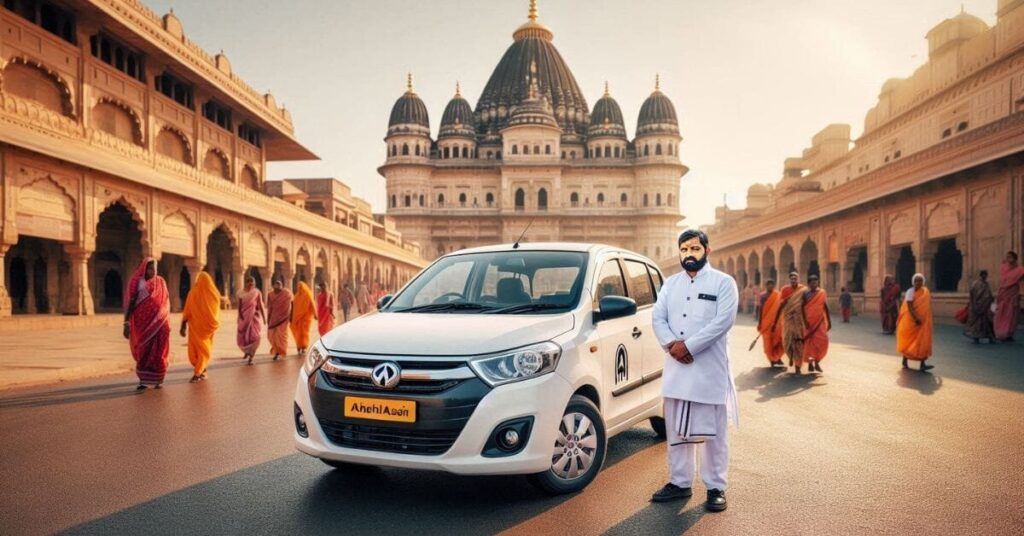
Why Pilgrims Need Specialized Cab Services
Varanasi Cab Service with Hotel Pickup & Drop for Pilgrims , Pilgrims have fundamentally different needs from general tourists. Understanding these differences explains why specialized services matter.
Different Needs from Tourist Transportation
Tourists typically want:
- Sightseeing at comfortable hours
- Photo opportunities and leisurely exploration
- Flexibility to shop, eat, and wander
- Entertainment and novelty
Pilgrims require:
- Reaching sacred sites during specific auspicious timings (often very early morning)
- Efficient routing between multiple temples in proper sequence
- Respect for religious practices and rituals
- Support for carrying puja materials and offerings
- Understanding of religious significance rather than just directions
- Accommodation for religious dress codes and cleanliness standards
- Patience during potentially lengthy temple visits or ceremonies
A standard tourist cab might drop you at a temple entrance and wait impatiently. A pilgrim-oriented service understands you might need two hours for proper darshan and rituals, and the driver won’t pressure you to hurry.
Sacred Site Accessibility Issues
Varanasi’s most sacred sites present unique access challenges:
Kashi Vishwanath Temple: Located in the heart of the old city, vehicles can’t reach the temple. Cabs drop you at designated points (like Godowlia Chowk or special entry gates), then you walk 500-800 meters through lanes. Pilgrim cab services know the closest drop points and best routes.
Ghats: The 88 ghats stretch along the Ganges, but vehicle access is limited. Drivers familiar with pilgrims know which ghats have road access versus which require walking.
Sankat Mochan Temple: Accessible by vehicle, but narrow approach roads require driver familiarity.
Durga Temple, Tulsi Manas Temple: Located in the same area, a knowledgeable driver can efficiently route you between them.
Pilgrim-focused services have drivers who know not just where temples are, but the practical logistics of reaching them—where to park, how long the walk is, which entrance to use, and how to navigate back to the vehicle.
Time-Sensitive Religious Activities
Religious practices in Varanasi operate on specific schedules:
Morning Ganga Aarti: Begins around 5:00-5:30 AM at various ghats. Missing this requires waiting until the next day.
Temple opening hours: Many temples open for morning darshan at 4:00-5:00 AM, close mid-morning, reopen evening. If you miss the window, you lose that day’s darshan.
Auspicious timings: Pilgrims often consult pandits about auspicious times (muhurta) for specific rituals. These might be extremely specific—”between 6:23-7:11 AM”—and cannot be adjusted.
Evening Ganga Aarti at Dashashwamedh: Begins around 6:45-7:00 PM depending on season. Arriving even 30 minutes late means terrible viewing positions or missing it entirely.
Regular cab services don’t appreciate these time sensitivities. Pilgrim services build their operations around them. They understand that a 4:30 AM pickup isn’t a mere preference—it’s essential for the spiritual purpose of the journey.
Elderly and Family Pilgrim Considerations
Many pilgrims are elderly or traveling in multi-generational family groups with specific needs:
Physical limitations: Elderly pilgrims may struggle with walking, stairs, or long periods standing. They need vehicles that drop them as close as possible to temples, and drivers patient with slower movement.
Family coordination: Families with young children and elderly members need larger vehicles, patient drivers, and understanding about more frequent stops.
Health concerns: Elderly pilgrims might need sudden bathroom breaks, rest stops, or even emergency medical access. Pilgrim cab services maintain relationships with clinics and know where clean rest facilities exist.
Carrying ritual items: Families bring puja thalis, offerings, sacred water containers, and religious items. They need vehicles with adequate space and respect for these sacred materials.
Types of Cab Services Available for Pilgrims
Different pilgrimage needs require different service types.
Airport/Railway Station Transfers
Service description: Direct pickup from Lal Bahadur Shastri International Airport or Varanasi Junction/Cantt railway stations to your hotel, or vice versa.
Typical timing: Available 24/7, including very early morning flights (3:00-4:00 AM departures common) and late-night train arrivals.
What’s included:
- Meet and greet with nameplate at arrivals
- Assistance with luggage
- Direct hotel transfer
- Waiting time for delayed flights/trains (usually 30-60 minutes free, then nominal charges)
Duration: 45-60 minutes from airport to hotels in ghat areas; 20-30 minutes from railway station depending on location.
Ideal for: First-time pilgrims unfamiliar with Varanasi who need safe, reliable arrival transportation without negotiating with touts or navigating unfamiliar territory.
Price range: ₹400-800 from railway station; ₹700-1200 from airport depending on vehicle type and hotel location.
Half-Day Temple Tours
Service description: 4-5 hour cab service for visiting multiple temples or combining temples with Ganga darshan.
Typical routes:
- Morning pilgrimage package: Hotel → Ghat for sunrise darshan → Kashi Vishwanath Temple → Annapurna Temple → Return to hotel (4-5 hours)
- South Varanasi temples: Hotel → Sankat Mochan → Durga Temple → Tulsi Manas Temple → BHU Vishwanath → Return (4 hours)
- Custom route: Based on your specific temple list and priorities
What’s included:
- Hotel pickup and drop
- Air-conditioned vehicle
- Waiting at temples while you perform darshan
- Driver guidance on parking and walking routes
- Fuel, parking, and toll charges
Duration: 4-5 hours typically, with flexible start time (though early morning most common for pilgrims).
Ideal for: Pilgrims wanting to cover multiple temples efficiently in one session, especially those with limited time in Varanasi.
Price range: ₹1,200-2,500 depending on vehicle type and exact route.
Full-Day Pilgrimage Packages
Service description: 8-10 hour comprehensive cab service covering major pilgrimage sites in and around Varanasi.
Typical itinerary:
- Early morning Ganga darshan and boat ride
- Kashi Vishwanath Temple complex
- Lunch break (driver can recommend pure vegetarian restaurants)
- Sarnath visit (Buddhist pilgrimage site)
- Evening return to major ghats for Aarti ceremony
- Return to hotel
What’s included:
- Hotel pickup and drop
- All-day vehicle availability
- Waiting time at all locations
- Driver expertise on optimal routing
- All vehicle-related costs
Duration: 8-10 hours, flexible start (usually 5:00-6:00 AM to capture morning rituals)
Ideal for: Pilgrims with one full day wanting comprehensive darshan at major sites, or those combining Hindu and Buddhist pilgrimage.
Price range: ₹2,500-4,500 depending on vehicle type.
Multi-Day Yatra Services
Service description: Multiple consecutive days of cab service for extended pilgrimage covering Varanasi and surrounding sacred sites.
Common multi-day configurations:
- 2-day Varanasi intensive: Day 1 covers Varanasi city temples; Day 2 covers Sarnath and peripheral sites
- 3-day Kashi yatra: Varanasi temples over 2 days plus day trip to Gaya for ancestral rites
- 4-5 day regional pilgrimage: Varanasi + Ayodhya + Prayagraj circuit
- Customized yatra: Based on your specific religious requirements or family traditions
What’s included:
- Same vehicle and driver for entire duration
- Daily hotel pickup and drop
- Flexible daily timing based on each day’s requirements
- Driver accommodation handled separately (not your concern)
- Comprehensive coverage of pilgrimage sites
Duration: 2-7+ days based on your pilgrimage plan
Ideal for: Serious pilgrims doing comprehensive regional yatra, families fulfilling longstanding pilgrimage vows, groups on organized religious tours.
Price range: ₹2,000-4,000 per day depending on vehicle type, with discounts for longer bookings.
Emergency and On-Call Services
Service description: Available on-demand for unexpected pilgrimage needs or emergencies.
Common scenarios:
- Medical emergency requiring hospital transport
- Sudden need to reach temple during specific auspicious timing
- Last-minute addition of temple visit not in original plan
- Early departure due to changed plans or emergency back home
How it works: You contact the service provider when need arises; vehicle dispatched based on availability (usually 20-45 minutes).
Ideal for: Backup option for pilgrims with unpredictable schedules or as emergency support.
Price range: Usually premium rates (₹500-1000 for short trips; ₹1,500-2,500 for longer service), but worth it for emergencies.
Understanding Hotel Pickup and Drop Services
Let’s demystify how pickup and drop actually works in practice.
How Hotel Pickup Actually Works
Standard process:
Day before: You receive confirmation call or message from the cab service confirming pickup time and location. The driver’s name and phone number are provided.
Morning of pickup:
- Driver arrives 5-10 minutes before scheduled time
- Parks in the designated pickup area (your hotel reception will guide you where)
- Either waits at reception or calls you when arrived
- Assists with luggage if needed
- Confirms your name and destination before departing
For hotels in old city lanes: Some heritage hotels are in narrow lanes where vehicles can’t reach. In such cases:
- The cab waits at the nearest accessible point
- Hotel staff guide you to the waiting vehicle (usually 2-5 minute walk)
- Driver may send a helper to assist with luggage
- Your booking confirmation should clarify this in advance
Important: Give your exact hotel name and address during booking, including landmarks. Many Varanasi hotels have similar names; clarity prevents confusion.
What to Expect During Drop-Off
At pilgrimage sites:
- Driver takes you to the closest vehicular access point
- Explains the walking route to the actual temple/ghat
- Provides estimate of walking time
- Gives you their phone number to call when ready for pickup
- Waits at the same location (for packages including waiting time) or returns at your scheduled time
Back at your hotel:
- Driver ensures you safely reach your hotel entrance
- In narrow lanes, drops at the nearest vehicle-accessible point
- Waits until you’re safely inside or met by hotel staff
- Provides receipt if required for expense reporting
Professional drivers: Won’t pressure you to hurry, will answer your questions about next destinations, and maintain respectful demeanor appropriate for pilgrims.
Timing Coordination for Early Morning Rituals
4:00-5:00 AM pickups are common for pilgrims. Here’s how services handle this:
Advance confirmation: The evening before, driver calls to reconfirm exact pickup time and any last-minute changes.
Driver punctuality: Reputable services ensure drivers arrive on time—your spiritual schedule depends on it.
Hotel coordination: Good cab services inform hotel reception about early morning pickup so night staff are prepared and can arrange early tea/breakfast if you need it.
Backup communication: Exchange direct numbers with your driver so you can call if anything goes wrong (you oversleep, can’t find the pickup point, etc.).
Cold mornings: In winter (December-February), mornings can be quite cold (8-12°C). Drivers start the car a few minutes early to warm the interior—this courtesy matters when you’re leaving at 4:30 AM.
Vehicle Options for Pilgrims
Choosing the right vehicle affects comfort and cost.
Sedans for Small Groups (1-4 Pilgrims)
Typical vehicles: Maruti Dzire, Honda Amaze, Toyota Etios, Hyundai Xcent
Capacity:
- Comfortable for 2-3 pilgrims with moderate luggage
- Can accommodate 4 pilgrims if luggage is minimal
Pros:
- Most economical option
- Easy maneuverability in Varanasi’s streets
- Fuel efficient for shorter distances
Cons:
- Limited luggage space (challenging if carrying many puja materials)
- Less comfortable for 4 adults on longer trips
- Smaller trunk difficult for elderly pilgrims with mobility aids
Best for: Couples or solo pilgrims, small families without heavy luggage, budget-conscious bookings, city-only temple tours.
Price range: ₹10-14 per km or ₹1,200-2,000 for half-day packages.
SUVs and Innova (4-7 Pilgrims)
Typical vehicles: Toyota Innova, Innova Crysta, Maruti Ertiga, Mahindra XUV
Capacity:
- Comfortably seats 5-6 pilgrims with luggage
- Can accommodate 7 pilgrims for shorter trips
Pros:
- Spacious and comfortable for extended trips
- Ample luggage and puja material space
- Higher seating provides better views
- Air suspension in premium models (Innova Crysta) for smoother ride
- Easier entry/exit for elderly pilgrims
Cons:
- More expensive than sedans (30-40% higher)
- Slightly less fuel efficient
Best for: Families of 4-6 pilgrims, groups with elderly members needing comfort, longer trips to Sarnath or multi-city yatras, pilgrims carrying substantial puja materials.
Price range: ₹16-22 per km or ₹1,800-3,000 for half-day packages.
Most popular choice: Toyota Innova strikes the best balance of comfort, space, and cost for most pilgrim groups.
Tempo Traveller (8-15 Pilgrims)
Capacity:
- 9-seater, 12-seater, or 15-seater configurations
- Pushback seats for comfort
- AC throughout
Pros:
- Ideal for group yatra or family reunions
- Per-person cost becomes very economical
- Enough space for everyone’s luggage and puja materials
- Group travels together maintaining spiritual unity
Cons:
- Limited maneuverability in narrow Varanasi streets
- Not all areas accessible by larger vehicles
- Requires experienced driver familiar with pilgrimage routes
- More expensive if your group is small (you pay for the vehicle regardless of occupancy)
Best for: Temple committee groups, extended family pilgrimage, organized yatra groups, friends/community members traveling together.
Price range: ₹22-30 per km or ₹3,500-5,000 for full-day packages, but when divided among 10-12 people, very economical per person.
Mini Buses for Large Pilgrim Groups
Capacity: 16-30 seats depending on configuration
Best for: Large organized pilgrimages, village/community groups, temple associations conducting group yatra.
What you get: Professional coach-style seating, good luggage space, audio system for playing bhajans during travel, experienced driver.
Price range: ₹35-50 per km or ₹6,000-10,000 per day, but highly economical per person for large groups.
Booking requirements: Usually requires advance booking (1-2 weeks) as availability is limited compared to smaller vehicles.
Specialized Services for Elderly Pilgrims
Many pilgrims are elderly devotees fulfilling lifetime spiritual goals. Their needs deserve special attention.
Accessibility Features
Low-floor vehicles: Some services offer vehicles with lower floor height for easier entry/exit. Innova and Ertiga are particularly good for this.
Grab handles: Ensure vehicles have sturdy handles for elderly pilgrims to grip while entering/exiting.
Steps or stools: Some services provide small portable steps to help elderly pilgrims manage vehicle entry, especially for SUVs.
Wheelchair accommodation: Tempo Travellers can often accommodate wheelchairs or walkers, though advance notification is required.
Patient and Experienced Drivers
What makes a driver good for elderly pilgrims:
- Speaks clearly and listens patiently to instructions
- Drives smoothly without sudden braking or sharp turns
- Offers a supporting arm when elderly pilgrims enter/exit vehicle
- Knows shortcuts to minimize travel time (reducing fatigue)
- Familiar with which temples have wheelchair access or minimal stairs
- Aware of clean bathrooms en route (essential for elderly)
Request experienced drivers: When booking, mention you have elderly pilgrims. Reputable services assign their most patient, experienced drivers to such bookings.
Comfortable Vehicles with Easy Entry
Vehicle height matters: For elderly pilgrims, sedans (low to ground) or Innovas (moderate height with grab handles) work better than high SUVs requiring significant step-up.
Suspension quality: Smooth suspension matters more for elderly pilgrims sensitive to bumpy roads. Innova Crysta and newer Ertiga models have notably better suspension than budget sedans.
AC control: Elderly pilgrims often need customized temperature. Ensure vehicles have working AC with temperature control.
Rest Stop Considerations
Planned breaks: For elderly pilgrims on longer trips (Varanasi to Ayodhya, full-day tours), plan rest stops every 90-120 minutes.
Clean facilities: Drivers should know which rest stops have clean, Western-style toilets that elderly pilgrims can use comfortably.
Shade and seating: During hot months, rest stops should offer shade and seating for elderly pilgrims to recover.
Medical preparedness: Carry basic medicines (elderly pilgrims should bring their prescriptions), and drivers should know locations of hospitals en route for emergencies.
Typical Pilgrim Itineraries and Cab Services
Let me show you what common pilgrimage routes look like with cab support.
Morning Ganga Darshan Route (3-4 hours)
Schedule:
- 4:30 AM: Hotel pickup
- 5:00 AM: Arrive at starting ghat (typically Assi Ghat or Dashashwamedh)
- 5:00-6:30 AM: Boat ride for Ganga darshan during sunrise
- 6:30-7:00 AM: Ghat-side prayers or simple walking observation
- 7:00-8:00 AM: Return to hotel for breakfast, or proceed directly to Kashi Vishwanath if you want morning darshan
- 8:00 AM: Return to hotel
Cab role: Picks you up in pre-dawn darkness, drops at ghat, waits during boat ride (driver may nap in vehicle), picks you up for return or next destination.
Price: ₹600-1,200 depending on waiting time and vehicle type.
Temple Circuit Package (4-5 hours)
Route A – Old City Temples:
- Hotel → Kashi Vishwanath Temple → Annapurna Temple → Kal Bhairav Temple → Tridev Temple → Hotel
Route B – South Varanasi Temples:
- Hotel → Sankat Mochan Hanuman Temple → Durga Temple → Tulsi Manas Temple → BHU Vishwanath Temple → Hotel
Route C – Custom Selection:
- Based on your specific devotional focus or family deity preferences
Timing: Usually 8:00 AM – 1:00 PM or 2:00 PM – 7:00 PM depending on preference
Cab role: Transports between temples (most are 10-30 minutes apart), waits while you perform darshan (30-60 minutes per temple), provides guidance on which entrance to use and how long walk is.
Price: ₹1,200-2,500 for 4-5 hours.
Comprehensive Full-Day Pilgrimage (8-10 hours)
Sample itinerary:
- 5:00 AM: Hotel pickup
- 5:30-7:00 AM: Sunrise Ganga darshan boat ride
- 7:00-8:00 AM: Walk Dashashwamedh and Manikarnika Ghats
- 8:00-9:00 AM: Breakfast at ghat-side restaurant or return to hotel
- 9:30-11:30 AM: Kashi Vishwanath Temple darshan
- 12:00-1:00 PM: Lunch
- 2:00-5:00 PM: Sarnath Buddhist temples and archaeological site
- 6:00-7:30 PM: Return to Dashashwamedh for evening Ganga Aarti
- 8:00 PM: Return to hotel
Cab role: All-day availability, transporting between sites, waiting during temple visits, flexibility if timing changes, driver recommendations for food.
Price: ₹2,500-4,500 for full day service.
Multi-Temple Yatra Over Several Days
Day 1: Varanasi city temples – Kashi Vishwanath, Sankat Mochan, Durga Temple, Tulsi Manas, BHU temple
Day 2: Ganga rituals and peripheral temples – Morning Ganga darshan, Tridev Temple, Kal Bhairav, Kedar Ghat, evening Aarti
Day 3: Sarnath Buddhist pilgrimage and Chunar Fort (historically significant)
Day 4: Extended yatra – Travel to Vindhyachal (125 km) for Vindhyavasini Devi darshan, return evening
Cab role: Same vehicle and driver all days, building familiarity and trust, flexible daily scheduling, comprehensive regional pilgrimage coverage.
Price: ₹2,000-4,000 per day depending on distances and vehicle type, with multi-day discounts usually available.
Pricing Structure for Pilgrim Cab Services
Understanding how pricing works helps you budget and avoid surprises.
Airport/Station Transfer Rates
Fixed rate structure (most common):
- Varanasi Junction/Cantt to central hotels: ₹300-500
- Railway station to ghat-area hotels: ₹400-600
- Airport to central hotels: ₹700-900
- Airport to distant hotels/guesthouses: ₹900-1,200
Factors affecting price:
- Vehicle type (sedan vs SUV)
- Time of pickup (midnight/early morning may have small surcharge)
- Distance to specific hotel
- Luggage volume (excessive luggage might require larger vehicle)
What’s included: Direct transfer, waiting for delayed arrival (30-60 minutes free), luggage assistance, fuel, toll
What’s extra: Waiting beyond free time (₹50-100 per 30 minutes), multiple stops en route
Half-Day and Full-Day Packages
Half-day (4-5 hours):
- Sedan: ₹1,200-1,800
- SUV/Innova: ₹1,800-2,500
- Tempo Traveller: ₹2,500-3,500
Full-day (8-10 hours):
- Sedan: ₹2,200-3,000
- SUV/Innova: ₹3,000-4,500
- Tempo Traveller: ₹4,500-6,000
What’s included:
- Vehicle for specified duration
- Fuel for approximately 80-100 km (half-day) or 150-200 km (full-day)
- Driver allowance
- Parking fees
- Base tolls (if any)
What’s extra:
- Overtime charges if you exceed package hours (₹100-200 per hour)
- Excess distance beyond package km (₹10-20 per additional km)
- Driver meal (₹100-150) for full-day service, though many pilgrims kindly include driver in their meal plans
- Toll charges for distant destinations (Sarnath typically included; places like Vindhyachal add ₹200-300 in tolls)
Per-Kilometer vs. Package Pricing
Per-kilometer pricing:
- Sedan: ₹10-14 per km
- SUV/Innova: ₹16-22 per km
- Tempo Traveller: ₹22-30 per km
How it works:
- Minimum 40-50 km typically required
- Round-trip distance calculated (even if you don’t return to starting point)
- Waiting charges: ₹50-100 per hour if driver waits
- Night charges (10 PM – 6 AM): 20-25% extra
When per-km is better: Very short trips, single temple visit, airport transfer
When package is better: Multiple temples, full-day service, extended waiting times
Most pilgrims choose: Package pricing for clarity and cost control—you know the exact cost upfront regardless of minor route variations.
What’s Included and What’s Extra
Always included:
- Vehicle with fuel
- Driver services
- Basic parking fees
- Standard tolls for included destinations
- Vehicle insurance
- 24/7 operator support
Usually included:
- Limited waiting time (30-60 minutes per stop for half-day, unlimited for full-day packages)
- Multiple stops within the service hours
- Basic route customization
Not included (pay separately):
- Temple entry fees (most temples free, but some have fees)
- Boat rides (₹200-600 per boat)
- Guide services (₹500-1,500 if you want professional guide)
- Your meals and refreshments
- Driver meal for full-day service (₹100-150, though offering to feed driver is good karma)
- Puja/ceremony costs at temples
- Tips for driver (discretionary, ₹100-300 based on service quality)
- Interstate travel permits if going to other states
Hidden costs to ask about:
- “Waiting charges” beyond free time
- “Night surcharge” for early morning pickups
- “AC surcharge” (rare, but some budget operators charge extra)
- “Outstation charges” for destinations beyond Varanasi city
Get it in writing: Before booking, get written confirmation of total cost and what’s included/excluded.
Booking Pilgrim-Friendly Cab Services
Multiple booking channels exist, each with pros and cons.
Through Your Hotel
How it works: Nearly all hotels in Varanasi have relationships with cab operators. Ask reception to arrange your cab needs.
Advantages:
- Hotel vouches for the service’s reliability
- If problems occur, hotel assists in resolution
- Driver knows your hotel location precisely
- Easy communication (hotel staff can translate if needed)
- Pickup coordination seamless
- Often get slightly better rates due to hotel’s bulk relationship
Disadvantages:
- Sometimes 10-15% commission added to price
- Limited vehicle choice (hotel works with specific operators)
- Less flexibility to negotiate rates
Best for: First-time pilgrims, elderly pilgrims wanting maximum simplicity, those uncomfortable negotiating directly.
How to book: Simply tell reception your needs (“I need a cab tomorrow morning at 5 AM for Ganga darshan and Kashi Vishwanath, about 4 hours”), and they’ll arrange everything.
Direct Operator Booking
How it works: Research and contact cab companies directly by phone, WhatsApp, or their websites.
Advantages:
- Often better rates (no hotel commission)
- More vehicle choices
- Direct relationship with operator
- Easier customization of complex itineraries
- Multi-day bookings often get discounts
Disadvantages:
- Need to research reliable operators
- Communication may be challenging if you don’t speak Hindi
- Less recourse if problems occur
- Must handle pickup coordination yourself
Best for: Cost-conscious pilgrims, those with specific vehicle requirements, multi-day bookings, repeat visitors familiar with reliable operators.
Finding operators: Google search “Varanasi cab services for pilgrims,” check TripAdvisor reviews, ask in India travel Facebook groups.
Key questions to ask:
- “What’s your total cost including all charges?”
- “What vehicle exactly will I get?”
- “Can I speak with/WhatsApp the driver before pickup?”
- “What if I need to extend hours?”
- “Do you have 24-7 support if issues arise?”
Online Platforms and Apps
Available options:
- Ola/Uber: Available in Varanasi for point-to-point trips
- Savaari, Zoomcar: Online car rental platforms with Varanasi presence
- Gozo Cabs, Travel Triangle: Tour-focused booking platforms
Advantages:
- Transparent pricing upfront
- Digital payment convenience
- Standardized service levels
- Easy cancellation/refund policies
- Track your cab in real-time (Ola/Uber)
Disadvantages:
- Ola/Uber drivers may lack pilgrimage route knowledge
- Less flexible for custom itineraries
- Communication can be impersonal
- May not be ideal for very early morning pickups (driver availability)
Best for: Tech-savvy younger pilgrims, simple point-to-point needs, those comfortable with app-based services.
Important note: For pilgrim-specific needs (early morning temple tours, multi-stop routes with waiting), direct booking or hotel arrangements usually work better than ride-hailing apps designed for point-to-point transport.
Advance vs. On-Arrival Booking
Advance booking (recommended):
Book 1-2 weeks ahead if:
- Traveling during peak season (October-March)
- Need specific vehicle type (Tempo Traveller, luxury vehicles)
- Require very early morning pickup (4-5 AM)
- Have complex multi-day itinerary
- Part of a large group
Advantages: Guaranteed availability, better rates, time to research operators, less stress upon arrival
How: Contact operators by email/WhatsApp, provide dates/needs, get quotes, book with advance payment (usually 20-30%)
On-arrival booking:
Can work if:
- Traveling off-season
- Flexible about vehicle type
- Simple needs (airport transfer, standard half-day tour)
- Comfortable negotiating in person
Advantages: See vehicle before committing, negotiate face-to-face, no advance payment
Disadvantages: Risk of no availability, higher rates, pressure to decide quickly, potential for less reliable operators
My recommendation for pilgrims: Book advance for first day (arrival transfer) and any time-critical activities (morning Ganga darshan). Additional needs can be arranged through your hotel after you assess initial service quality.
What Makes a Cab Service Pilgrim-Friendly
Not all cab services understand pilgrims’ needs. Here’s what to look for:
Driver Knowledge of Religious Sites
Beyond basic directions: Pilgrim-friendly drivers know:
- Which temples open when
- Best times to visit (less crowded periods)
- Which ghats are best for specific rituals
- Significance of different temples (can explain why you’re visiting)
- Proper sequence for multi-temple yatra (some pilgrims follow specific traditional sequences)
- Alternative temples if main ones are unexpectedly closed
Practical knowledge:
- Where to park nearest to each temple
- How long walk is from parking to temple
- Whether wheelchairs/elderly can access
- Which entrance to use (many temples have multiple)
- Where clean bathrooms are located en route
Religious sensitivity: Understanding that this isn’t sightseeing but spiritual practice, requiring different attitudes and pacing.
Respect for Religious Practices
Cleanliness standards: Vehicles maintained clean (you’re often carrying puja materials that should stay pure). Many pilgrims appreciate drivers who maintain vehicles as clean spaces out of respect for the sacred journey.
Appropriate music: If playing music, it should be bhajans/spiritual music or silence, not film songs or loud music inappropriate for pilgrimage atmosphere.
Patience during rituals: Understanding that temple darshan might take longer than expected because pilgrims are performing rituals, not just viewing.
Modest behavior: Professional, respectful interaction especially with female pilgrims, elderly, and families.
No pressure to shop: Not taking pilgrims to “cousin’s shop” for commissions (unfortunately common with some tourist-focused drivers).
Supporting rituals: Some drivers even assist—carrying puja thalis from car to temple, explaining ritual protocols, or waiting respectfully during ceremonies.
Flexibility for Ritual Timings
Understanding auspicious times: If you tell the driver “we must arrive between 6:15-6:45 AM,” they understand this isn’t arbitrary but spiritually significant.
Extending time: If your temple visit runs long because the queue was longer or the ceremony more elaborate, pilgrim-friendly services don’t complain about small time overages (reasonable overtime charges apply, but attitude remains supportive).
Adding stops: “Can we quickly stop at one more temple?” Often possible with pilgrim-friendly services that understand spiritual impulses.
Changed plans: “We want to stay longer here and skip the next temple” should be accommodated gracefully.
Cleanliness and Sanctity Standards
Vehicle cleanliness:
- Interior regularly cleaned
- No food/drink smells (many pilgrims maintain fasting)
- Seat covers clean
- No smoking smell (many pilgrims avoid tamasic environments)
Driver presentation:
- Clean, modest clothing
- Respectful demeanor
- Non-smoking (at least during service)
- Understanding of pilgrims’ potential dietary/purity observances
Sacred item handling:
- Respectful placement of puja materials (not on floor)
- Careful handling of offerings, holy water, or religious items
- Clean trunk space for these materials
Safety and Security Considerations
Pilgrims must consider safety, especially when traveling alone or with elderly/children.
Verified Drivers and Vehicles
What to verify:
- Driver has valid commercial driving license
- Vehicle registration is current
- Insurance covers passengers
- Operator is registered tourism business
- Vehicle passes basic safety inspection (brakes, tires, seatbelts)
How to verify:
- Ask operator for driver and vehicle details before pickup
- Reputable operators willingly provide this information
- Check that driver’s name and vehicle number match what was provided
- Vehicle should have visible operator name/contact (sticker or display)
Red flags:
- Operator refuses to provide driver details in advance
- Vehicle doesn’t match what was described
- Driver can’t produce license when asked
- Vehicle appears poorly maintained
Safe Practices for Solo Pilgrims
Especially for solo female pilgrims:
- Book through reputable operators (hotel recommendations or well-reviewed companies)
- Share driver details and vehicle number with family/friends
- Sit in back seat
- Keep phone charged and accessible
- Have operator’s 24/7 contact number
- Trust instincts—if something feels wrong, end the service and find alternative
For elderly solo pilgrims:
- Inform operator you’re elderly and alone (they should assign most trustworthy driver)
- Have hotel reception note your departure and expected return
- Carry emergency contact card with hotel name, your name, and emergency numbers
- Keep medications accessible
- Don’t carry excessive valuables
General practices:
- Agree on route and price before starting
- Use Google Maps to verify route (shows if driver is taking unusual paths)
- Keep some cash accessible but not visible wealth
- If uncomfortable, ask driver to stop at a public place (temple, hotel) and arrange alternative transport
Emergency Contact Protocols
Before your trip:
- Save operator’s 24/7 helpline number
- Save hotel reception number
- Save local emergency numbers (Police: 100, Ambulance: 102)
- Share your itinerary with someone not traveling with you
During service:
- Keep phone charged (carry power bank)
- If problems arise, first contact operator’s helpline
- For serious issues (safety threat, medical emergency), call 100 or 102
- For breakdowns, operator should send replacement vehicle—stay with vehicle in safe spot
Medical emergencies:
- Driver should know nearest hospitals (Heritage Hospital, Swami Parmanand Hospital are reputable)
- Operator should have protocol for medical assistance
- Your travel insurance should cover India
Most pilgrim cab services: Maintain high safety standards because reputation in the pilgrim community matters enormously—word of mouth drives their business.
Common Challenges and Solutions
Anticipating problems helps you handle them smoothly.
Challenge: Driver doesn’t arrive on time for early morning pickup Solution: Confirm twice (evening before, morning of) with both operator and driver. Have backup—hotel night manager can usually arrange emergency cab. Include buffer time in your schedule.
Challenge: Language barrier with driver Solution: Use Google Translate app (works offline if you download language packs). Have hotel write key destinations in Hindi. Use screenshots of temples/ghats to show driver.
Challenge: Driver tries to take you shopping for commissions Solution: Politely but firmly decline. Say “This is spiritual yatra, not shopping trip. Please take me only to the places we discussed.” If persistent, contact operator to complain.
Challenge: Vehicle breaks down during your yatra Solution: Reputable operators send replacement vehicle (30-60 minutes typically). Meanwhile, wait in safe location. This is why booking through established operators matters.
Challenge: Driver doesn’t know specific temple you want to visit Solution: Have address written in Hindi. Use Google Maps location sharing. Consider brief phone call to operator for guidance.
Challenge: You want to extend time but driver says no Solution: Offer to pay reasonable overtime (₹100-150 per extra hour is fair). If driver genuinely has next booking, operator should assist in extending or arranging continuation service.
Challenge: Temple is closed unexpectedly Solution: Good drivers know alternative temples or can suggest returning later. Build flexibility into your schedule for such contingencies.
Challenge: Excessive heat/cold makes journey uncomfortable Solution: Ensure AC (in summer) or heating (in winter) works before starting. Carry water bottle. Plan rest stops. For extreme weather, shorten time outside vehicle between temples.
Tips for Pilgrims Using Cab Services
Practical wisdom for smooth pilgrimage:
1. Communicate clearly: Explain you’re on pilgrimage, not tourism. This sets the right tone and expectations.
2. Provide written list: Give driver written list (in Hindi if possible) of temples in order you want to visit.
3. Confirm timings repeatedly: For critical early morning pickups, confirm evening before AND morning of.
4. Be respectful to driver: They’re facilitating your spiritual journey. Courtesy matters. Offering them prasad from temples or including them in meals is appreciated.
5. Build buffer time: Don’t pack itinerary too tight. Spiritual experiences shouldn’t feel rushed.
6. Keep phone charged: You need it for communication with driver and navigation verification.
7. Carry cash: For offerings, prasad purchases, and emergency needs. Not everything accepts cards.
8. Dress appropriately: Modest clothing respectful of sacred sites. Keep shawl/scarf handy.
9. Manage expectations: Varanasi is crowded, hot (in summer), and sometimes chaotic. Accept this as part of the authentic experience.
10. Maintain purity observances: If you’re maintaining specific purity practices (fasting, no onion/garlic), inform driver so they can recommend appropriate food stops.
11. Trust but verify: Use Google Maps casually to ensure you’re on right routes. Not to doubt driver, but to orient yourself.
12. Take photos respectfully: Ask driver if photography is okay at specific places. Some sites prohibit or restrict it.
13. Rate and review: After your yatra, leave honest reviews to help future pilgrims find good services.
14. Tip appropriately: If service was good, ₹100-300 tip shows appreciation (not mandatory, but customary for excellent service).
Seasonal Considerations
Different seasons present different challenges for pilgrim cab services:
Winter (November-February):
- Weather: Cool to cold (8-20°C), sometimes foggy mornings
- Challenges: Fog can delay morning starts; heaters needed in vehicles
- Advantages: Pleasant for temple walking; peak pilgrimage season with vibrant atmosphere
- Cab considerations: Request vehicles with heating; allow extra time for fog-delayed travel
Summer (March-June):
- Weather: Hot to very hot (30-45°C)
- Challenges: Extreme heat drains energy; walking between vehicle and temples exhausting
- Advantages: Fewer pilgrims, lower cab prices, easier bookings
- Cab considerations: AC quality crucial; plan temple visits for early morning/late evening; more rest stops needed
Monsoon (July-September):
- Weather: Rain, humidity, 25-35°C
- Challenges: Boat rides may be canceled; walking in rain difficult; some routes flooded
- Advantages: Lowest prices, minimal crowds, lush scenery
- Cab considerations: Vehicle should have good wipers and working AC; build extreme flexibility for weather delays; waterproof bag for puja materials
Festival seasons (variable):
- Mahashivratri, Dev Deepawali, Kartik Purnima: Massive crowds, traffic congestion
- Challenges: Longer travel times; parking far from temples; everything more expensive
- Advantages: Spectacular ceremonies; highly charged spiritual atmosphere
- Cab considerations: Book well in advance; allow double the normal time for each destination; expect premium pricing
Language and Communication
Driver English proficiency:
- Basic: Most drivers know English numbers, common temple names, and basic phrases
- Intermediate: Some drivers comfortable with simple conversations
- Fluent: Rare, but premium services often ensure English-speaking drivers
If language barrier exists:
- Use hotel staff as interpreter for initial instructions
- Write destinations in English and Hindi
- Use Google Translate app (download Hindi offline language pack)
- Show pictures of temples/ghats on your phone
- Learn basic Hindi phrases:
- “Yahan rukiye” (Stop here)
- “Kitna time?” (How much time?)
- “Wapas chaliye” (Let’s go back)
- “Dhanyavaad” (Thank you)
Operator communication: Most operators have at least one English-speaking staff member for bookings and problem resolution.
Conclusion
For pilgrims, transportation in Varanasi isn’t just logistics—it’s an integral part of the sacred journey. Missing a dawn Ganga aarti because you couldn’t find transport, or rushing through temple darshan because of uncertain return transportation, can diminish a pilgrimage you’ve perhaps dreamed of for years.
Specialized Varanasi cab services with hotel pickup and drop for pilgrims exist precisely to prevent these disappointments. They understand that pilgrimage operates on sacred time—that 4:30 AM isn’t just inconvenient, it’s when the divine reveals itself most clearly on the Ganges; that spending two hours at a temple isn’t inefficiency, it’s devotion properly expressed.
The best pilgrim cab services become more than mere transportation—they become facilitators of spiritual experience. A good driver who knows when temples open, who can explain the significance of what you’re seeing, who waits patiently while you perform rituals, and who treats your pilgrimage with the respect it deserves, enhances your sacred journey immeasurably.
Whether you’re a solo seeker fulfilling a personal vow, an elderly devotee making perhaps your final pilgrimage, or a family introducing children to ancestral spiritual traditions, choosing the right cab service with proper hotel pickup and drop makes the practical seamless so the spiritual can flourish.
Varanasi calls millions of pilgrims annually for a reason—it’s where the material and spiritual worlds interpenetrate most visibly, where ancient rituals continue unchanged, where the divine feels tangible. Don’t let transportation challenges prevent you from fully receiving what this sacred city offers.
With careful planning, appropriate booking, and the right cab service, your pilgrimage can unfold with the smoothness and timeliness it deserves, allowing you to focus not on logistics but on the spiritual experiences you came for—the blessings you seek, the rituals you perform, the darshan that fulfills lifelong yearnings.
May your pilgrimage to Kashi be blessed, and may your journey there be as smooth as the Ganges is sacred.
FAQs
1. Can cab services help elderly pilgrims who have difficulty walking reach temples with many steps?
Yes, many services specifically cater to elderly pilgrims with mobility challenges. Drivers experienced with elderly pilgrims know which temples have wheelchair access or fewer stairs (like BHU Vishwanath Temple vs. Kashi Vishwanath). Some temples offer “palkhi” or chair services to carry devotees up stairs—your driver can arrange this for ₹200-500. For temples requiring significant walking, drivers can drop you at the closest possible point and provide a supporting arm or arrange for assistance. When booking, explicitly mention mobility limitations—reputable services will suggest the most accessible pilgrimage route and assign patient, helpful drivers. Some services even maintain wheelchairs or walkers available for temporary use.
2. What happens if my flight/train is delayed and the cab waits for me—will there be huge extra charges?
Most pilgrim cab services include 30-60 minutes of complimentary waiting time for airport/station pickups specifically because delays happen frequently. If your delay extends beyond this, charges are usually reasonable—₹50-100 per additional 30 minutes. When booking, provide your flight/train details so operators can track delays. If you know about a significant delay, inform the operator as soon as possible—they may adjust driver timing rather than having them wait unnecessarily. Some premium services track flights automatically and adjust pickup accordingly. This is why booking through reputable operators matters—they understand travel realities and don’t exploit situations with unreasonable charges.
3. Is it appropriate to include our cab driver in our temple visits or offer them prasad from our puja?
This is not only appropriate but often deeply appreciated. Many pilgrims treat their driver as part of their spiritual journey, especially on multi-day yatras where you’re together extensively. Offering prasad to your driver is a kind gesture that acknowledges their role in facilitating your pilgrimage. Some devout drivers even appreciate being invited to darshan, though they’ll typically wait outside if they sense you prefer privacy for rituals. If you’re having a meal, inviting the driver to eat (you can simply say “Please join us” or “Aap bhi khaiye”) is seen as gracious. This creates positive karma and often results in drivers going above and beyond in their service. That said, it’s not mandatory—professional drivers understand if you prefer to keep spiritual activities private.
4. Can I book a cab for just the early morning Ganga darshan (5-7 AM) and then book the same company again later in the day for temple visits?
Absolutely. Many pilgrims book services in segments—early morning for Ganga darshan, then return to hotel for breakfast/rest, then afternoon/evening for temple visits. Just communicate this to the operator when booking. They’ll arrange morning pickup, drop you back at hotel, then schedule a second pickup later (same vehicle or different, depending on availability). This is often more economical than booking an all-day cab with hours of unused waiting time. You can even request the same driver for continuity if you liked the morning service. Many operators offer “split service” packages specifically for this pattern, which is common among pilgrims who need the intense morning experience but also require midday rest, especially elderly visitors.
5. Do pilgrim cab services accommodate very specific religious requirements like stopping at certain ghats in a particular order or avoiding certain routes?
Yes, reputable pilgrim-focused services are accustomed to accommodating religious requirements. Some pilgrims follow specific traditional sequences (like visiting certain temples in prescribed order per family tradition), need to avoid certain routes for religious reasons, or must reach places at precise auspicious times calculated by their pandit. When booking, clearly explain any specific requirements: “We must visit temples in this exact order,” or “We cannot take the route past [location] for religious reasons,” or “We must arrive at exactly 6:23 AM.” Most operators respect these needs—pilgrimage is their specialty, and they understand that what might seem arbitrary to outsiders carries deep spiritual significance for devotees. Having requirements written down (preferably in Hindi as well) helps ensure drivers understand and follow them precisely. This is another reason booking through pilgrim-specific services rather than general tourist cabs works better.