Varanasi Tour Package Price , Ever looked at a Varanasi tour package price and wondered what exactly you’re paying for? You see numbers like ₹5,000, ₹10,000, or ₹20,000 per person, but the breakdown remains frustratingly vague. “All-inclusive” packages somehow still require extra spending, while “budget” options end up costing more than expected. Sound familiar?
Understanding where your money goes isn’t just about budgeting—it’s about getting genuine value for your rupees. Let’s pull back the curtain on Varanasi tour package pricing and decode exactly what you’re actually paying for.

Understanding the Base Components of Tour Packages
Accommodation Costs
Varanasi Tour Package Price , Accommodation typically eats up 30-50% of your package price. In budget packages (₹3,000-6,000), you’re looking at basic guesthouses or hostels with shared bathrooms, minimal amenities, and locations away from prime ghat areas. These usually cost operators ₹800-1,500 per night.
Mid-range packages (₹8,000-15,000) include comfortable hotels with air conditioning, private bathrooms, WiFi, and locations closer to the ghats—operator costs around ₹2,000-4,000 per night. Luxury packages (₹20,000+) feature heritage hotels, river-view properties, or boutique accommodations costing operators ₹5,000-15,000 per night.
Transportation and Transfers
Airport or railway station pickups, drop-offs, and inter-city transportation account for 15-25% of package costs. Budget packages might use shared auto-rickshaws or basic cars (₹500-800 for airport transfers). Mid-range packages provide private air-conditioned sedans (₹1,200-2,000 per transfer). Luxury packages offer SUVs or premium vehicles with professional chauffeurs (₹2,500-5,000 per transfer).
If your package includes a Sarnath visit, add ₹800-2,000 for round-trip transportation depending on vehicle type.
Guide Services
Professional guide fees constitute 10-20% of package costs. Budget packages often use entry-level or trainee guides earning ₹500-800 per day. Mid-range packages employ experienced licensed guides charging ₹1,200-2,000 daily. Luxury packages feature specialized guides—sometimes scholars or historians—commanding ₹2,500-5,000 per day.
Quality guides don’t just recite facts; they bring Varanasi’s stories alive, provide cultural context, and enhance your experience exponentially. This is one area where paying more genuinely delivers value.
Activity-Specific Costs Breakdown
Boat Ride Charges
Boat rides are quintessential Varanasi experiences, and costs vary significantly based on timing and type.
Sunrise vs. Evening Rides
Shared sunrise boat rides cost operators ₹100-150 per person for basic 60-minute tours. Private sunrise boats run ₹800-1,500 depending on boat size. Evening rides, especially those positioned for Ganga Aarti viewing, command premium prices—₹200-300 per person for shared boats and ₹1,200-2,500 for private ones due to higher demand.
Luxury packages often include private boats with cushioned seating, refreshments, and extended durations, adding ₹2,000-4,000 to overall package costs.
Temple Entry and Donation Fees
Here’s something interesting—most Varanasi temples don’t charge official entry fees. However, packages budget ₹300-800 per person for “temple expenses.” This covers voluntary donations at major temples, shoe-keeping charges (₹10-20 per temple), and sometimes fast-track entry arrangements at Kashi Vishwanath Temple (₹300-500).
Some operators include special darshan arrangements at Kashi Vishwanath, which involves coordination fees with temple authorities—this alone can add ₹500-1,000 per person.
Ganga Aarti Seating Arrangements
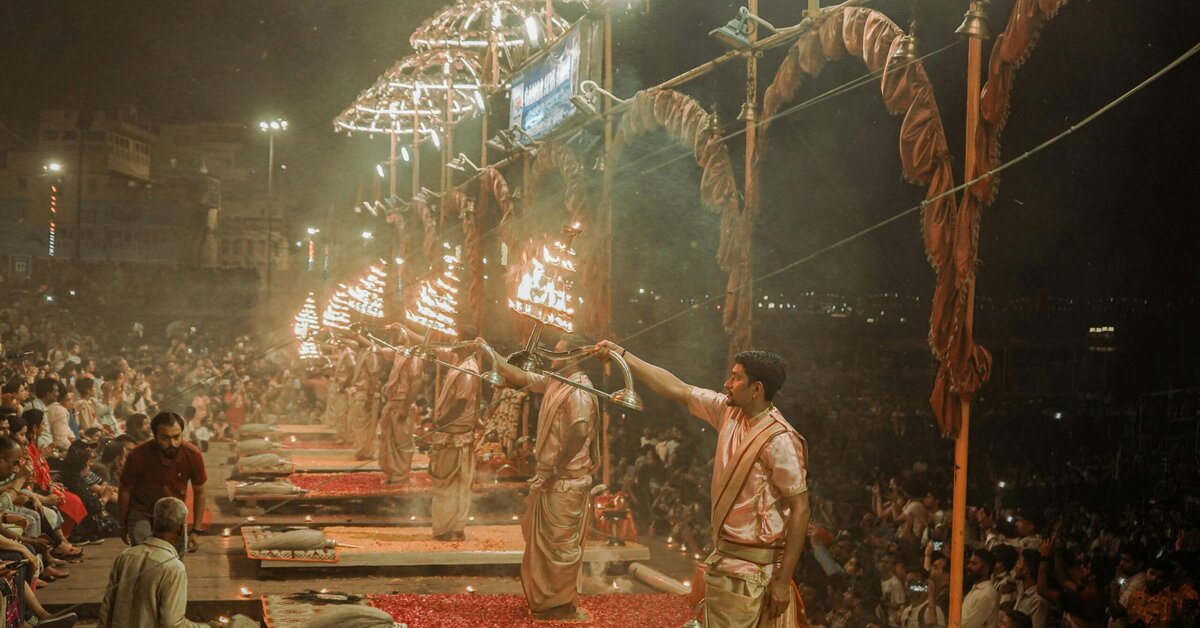
The evening Ganga Aarti is free to watch from the ghat, but good viewing spots are hard to secure. Budget packages include basic standing spots (essentially free). Mid-range packages might reserve chairs or mats on the ghat (₹100-200 per person). Luxury packages secure premium seating platforms or private terraces overlooking the ceremony (₹500-1,500 per person), or include the boat viewing option mentioned earlier.
Meals and Food Inclusions
What’s Typically Included
Budget packages usually include just breakfast—basic Indian fare like poha, paratha, or idli costing operators ₹80-150 per person. Mid-range packages add one additional meal (lunch or dinner) at decent restaurants, adding ₹300-500 per person per meal to costs. Luxury packages often include all meals at upscale restaurants or heritage hotels, plus evening chai and snacks, totaling ₹1,500-2,500 per person daily.
Additional Meal Costs
If meals aren’t included, budget ₹300-500 daily for decent vegetarian meals in Varanasi. The city’s famous street food (chaat, lassi, kachori) costs ₹30-100 per item but typically isn’t included in packages. Many travelers spend an additional ₹500-1,000 trying local specialties beyond their package inclusions.
Hidden Costs Most Packages Don’t Advertise
Photography Fees
Some temples and the Allahabad Fort charge camera fees (₹20-100). More significantly, if you want professional photography during your tour—increasingly popular for social media—expect ₹2,000-5,000 extra. This isn’t usually mentioned in package descriptions but is offered as an “add-on” once you arrive.
Tipping Culture
Tipping is customary but rarely included in package prices. Budget ₹100-200 daily for your guide, ₹50-100 for boatmen, ₹50-100 for drivers, and small amounts for temple helpers or musicians you encounter. Over a 2-3 day package, tips easily add ₹500-1,000 to your actual spending.
Shopping and Souvenir Expenses
Tour packages often include “visits to local artisan workshops”—which are essentially curated shopping opportunities. While there’s no obligation to buy, social pressure and genuine interest mean most tourists spend ₹1,000-5,000 on Banarasi silk, handicrafts, or souvenirs. Smart operators receive commissions (10-30%) from these shops, which is why they’re enthusiastically promoted.
Budget vs. Mid-Range vs. Luxury Package Comparison
Budget Package Breakdown (₹3,000-6,000)
For a 2-day/1-night budget package priced at ₹4,500 per person:
- Accommodation: ₹1,200 (basic guesthouse)
- Transportation: ₹800 (shared pickups, auto-rickshaws)
- Guide: ₹600 (entry-level guide)
- Boat ride: ₹300 (shared sunrise ride)
- Meals: ₹400 (breakfasts only)
- Temple coordination: ₹300
- Operator margin: ₹900
You’re getting the essentials with minimal comfort. Expect basic facilities, larger group sizes, and limited flexibility.
Mid-Range Package Breakdown (₹8,000-15,000)
For a 2-day/1-night mid-range package priced at ₹11,000 per person:
- Accommodation: ₹3,500 (comfortable hotel)
- Transportation: ₹2,200 (private AC car)
- Guide: ₹1,500 (experienced licensed guide)
- Boat rides: ₹800 (sunrise + evening rides)
- Meals: ₹1,200 (breakfast + one meal daily)
- Ganga Aarti seating: ₹300
- Temple coordination: ₹500
- Operator margin: ₹1,000
This represents the sweet spot—decent comfort, personalized attention, and comprehensive experiences without extravagance.
Luxury Package Breakdown (₹20,000+)
For a 2-day/1-night luxury package priced at ₹25,000 per person:
- Accommodation: ₹9,000 (heritage hotel with river view)
- Transportation: ₹4,000 (premium SUV with chauffeur)
- Guide: ₹3,000 (specialized expert guide)
- Boat rides: ₹2,500 (private boats with amenities)
- Meals: ₹3,000 (all meals at upscale venues)
- Ganga Aarti: ₹1,000 (private terrace viewing)
- Special experiences: ₹1,500 (classical music, private ceremonies)
- Operator margin: ₹1,000
You’re paying for exclusivity, comfort, and curated experiences that avoid crowds and chaos.
Seasonal Price Variations
Peak Season Pricing (October-March)
During peak tourist season, especially November-February, prices inflate 20-40%. Hotel rates spike, boat ride prices increase, and availability becomes scarce. A package costing ₹10,000 in July might cost ₹13,000-14,000 in December for identical services. During Diwali or Dev Deepawali (November), prices can double.
Off-Season Discounts (April-September)
Summer months (April-June) and monsoon (July-September) see significant discounts—30-50% off peak prices. The catch? Extreme heat (40°C+) or unpredictable rains. If you can handle the weather, value-for-money is exceptional. That ₹10,000 peak-season package drops to ₹6,000-7,000.
Group vs. Private Tour Pricing
Group tours (8-15 people) cost 30-50% less per person than private tours because costs are distributed. A private 2-day package might cost ₹18,000 per person for a couple, while joining a group tour drops this to ₹10,000-12,000 per person for identical itineraries.
However, private tours offer flexibility—customize timings, skip activities that don’t interest you, and move at your own pace. Groups follow fixed schedules with less personalization.
How to Evaluate if a Package Offers Good Value
Look beyond the headline price. Calculate what you’d pay independently:
- Hotel booking directly
- Individual boat ride costs
- Guide hiring separately
- Transportation costs
- Meal expenses
If the package price is within 15-20% of DIY costs while eliminating planning stress, it’s fair value. If it’s 40-50% more, you’re overpaying. If it’s significantly less, scrutinize what’s actually included—corners are likely being cut somewhere.
Read reviews specifically mentioning guide quality, hotel conditions, and whether “hidden” costs emerged. Transparency in initial communication is a good value indicator.
Conclusion
Varanasi tour package pricing isn’t arbitrary—it reflects tangible costs for accommodation, transportation, guides, activities, and operator margins. Budget packages sacrifice comfort for affordability, luxury packages offer exclusivity and ease, while mid-range packages balance both. Understanding this breakdown empowers you to choose packages aligned with your priorities rather than just your budget. Remember, the cheapest package isn’t always the best value, and the most expensive isn’t always superior. The best package is one where you know exactly what you’re paying for and why—and that knowledge makes every rupee feel well-spent.
Frequently Asked Questions
1. Can I negotiate Varanasi tour package prices, or are they fixed?
Prices are often negotiable, especially for direct bookings with local operators and during off-season. You can typically negotiate 10-15% discounts, particularly for group bookings or multi-day packages. Online platform prices are generally fixed but watch for seasonal promotions. Never hesitate to ask for a better rate—worst case, they say no.
2. Are there additional taxes or service charges added to the quoted package price?
Yes, most packages add GST (5-18% depending on hotel category and services) to the base price. Some operators include this in their quoted price, others add it later. Always confirm whether the price is “all-inclusive” or “plus taxes.” Service charges (5-10%) might also apply at hotels. Clarify this before booking to avoid surprises.
3. What’s included in “all-inclusive” packages—are meals really all covered?
“All-inclusive” varies by operator. Typically it means accommodation, specified meals (often breakfast plus 1-2 meals daily, not all meals), transportation as per itinerary, guided tours, and major activities like boat rides. It rarely includes personal expenses, tips, shopping, alcohol, or activities outside the itinerary. Always request a detailed inclusions list in writing.
4. Is it cheaper to book a Varanasi package online or through local operators upon arrival?
Online booking through established platforms typically costs 10-20% more but offers security, reviews, and accountability. Booking directly with local operators upon arrival can be cheaper and allows negotiation, but carries risks—quality uncertainty, no recourse for problems, and potential scams. For first-timers, online booking provides peace of mind worth the modest premium.
5. Do Varanasi tour packages include travel insurance, and should I purchase it separately?
Most Varanasi packages don’t include travel insurance. Given the relatively short duration and domestic nature of most trips, operators assume travelers either have existing coverage or don’t require it. However, purchasing basic travel insurance (₹200-500 for a 2-3 day trip) covering medical emergencies and trip cancellations is wise, especially for elderly travelers or during monsoon season.