Your cart is currently empty!
You may check out all the available trips and book one that suits you.
Continue Browsing Trips
Special Pilgrimage Package – Varanasi + Sarnath , In the spiritual landscape of India, few destinations hold as much sacred significance as Varanasi and Sarnath. Located just 10 kilometers apart, these two holy cities represent the pinnacle of Hindu and Buddhist spiritual heritage respectively, creating a unique pilgrimage opportunity that spans two of the world’s great religious traditions. A special pilgrimage package combining both destinations offers seekers, devotees, and spiritually curious travelers an extraordinary journey through ancient wisdom, timeless rituals, and profound sacred energy that has drawn pilgrims for over 2,500 years.
Special Pilgrimage Package – Varanasi + Sarnath , Varanasi, known as Kashi in ancient texts, stands as Hinduism’s holiest city—the eternal abode of Lord Shiva, where death brings liberation (moksha) from the cycle of rebirth. For millennia, Hindus have journeyed here to bathe in the sacred Ganges, worship at countless temples, and if blessed, to die on these hallowed banks where cremation ensures direct passage to spiritual freedom. The city embodies Hindu cosmology made manifest—a tirtha (crossing place) where earthly and divine realms intersect, making every moment here spiritually potent.
Sarnath represents an equally momentous Buddhist pilgrimage site—one of the four holiest places in Buddhism. Here, in the deer park called Isipatana, Buddha delivered his first sermon after achieving enlightenment under the Bodhi tree in Bodhgaya. This “First Turning of the Wheel of Dharma” introduced the Four Noble Truths and the Eightfold Path that form Buddhism’s philosophical foundation. For Buddhists worldwide, visiting Sarnath means walking where Buddha walked, standing where he taught, and connecting directly with the origins of their spiritual tradition.
Special Pilgrimage Package – Varanasi + Sarnath , The proximity of these two sacred sites creates exceptional pilgrimage value. In a single journey, you engage with two profound spiritual systems—Hinduism’s devotional theism and ritualistic practices alongside Buddhism’s meditative philosophy and path of personal enlightenment. This juxtaposition illuminates both traditions’ unique characteristics while revealing their shared Indian cultural roots and complementary approaches to life’s ultimate questions about suffering, meaning, and liberation.
Special Pilgrimage Package – Varanasi + Sarnath , Your pilgrimage begins immersed in Varanasi’s overwhelming spiritual intensity. The experience centers on the Ganges River, personified as the goddess Ganga, whose waters purify sins and grant spiritual merit. The ritual morning bath (snan) forms an essential pilgrimage component—descending ancient stone ghats as dawn breaks, immersing in the holy river while reciting prayers or mantras, and offering water to the rising sun. For many pilgrims, this represents a lifelong dream’s fulfillment, an act connecting them to countless generations who performed identical rituals on these same stones.
Special Pilgrimage Package – Varanasi + Sarnath , The pilgrimage package typically includes guided visits to Varanasi’s most significant temples, beginning with Kashi Vishwanath Temple housing one of twelve sacred Jyotirlingas—self-manifested Shiva lingams of supreme sanctity. Darshan (sacred viewing) of this deity represents a primary pilgrimage objective, believed to grant immense spiritual merit and divine blessings. Special pilgrimage packages often arrange VIP darshan, minimizing the hours-long queues that can test even the most devoted pilgrims’ patience.
Additional temple visits might include Annapurna Temple dedicated to the goddess of nourishment, Sankat Mochan Hanuman Temple founded by the saint Tulsidas, and Durga Temple where the protective goddess resides. Each temple contributes to comprehensive spiritual engagement with different aspects of Hindu divinity—Shiva’s transformative power, the goddess’s nurturing and protective energies, and Hanuman’s devotional strength. Your guide explains each deity’s significance, appropriate worship protocols, and the mythological stories connecting them to Varanasi’s sacred geography.
The Panchakroshi Yatra represents an ancient pilgrimage circuit encompassing Varanasi’s sacred boundaries—a 50-kilometer walking route connecting 108 shrines traditionally completed over five days. While full pilgrimage packages might include abbreviated versions visiting key points, even understanding this tradition’s existence deepens appreciation of Varanasi’s comprehensive sacred landscape extending far beyond the famous riverfront ghats.
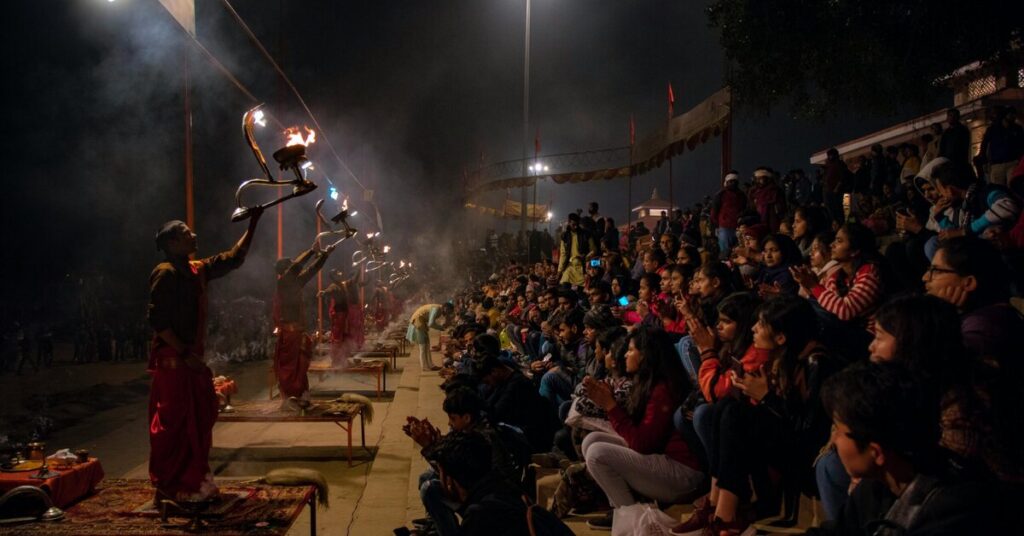
Evening participation in the Ganga Aarti at Dashashwamedh Ghat provides the day’s devotional crescendo. This elaborate ceremony—seven priests performing synchronized movements with fire lamps, accompanied by bells, chants, and devotional music—offers collective worship honoring the Ganges. For pilgrims, this isn’t touristic entertainment but genuine spiritual practice, an opportunity to offer gratitude to the divine river sustaining all life. Many pilgrimage packages provide boat positions allowing you to float diyas (oil lamps) on the river as personal prayer offerings.
The pilgrimage journey to Sarnath typically occurs on the second or third day, allowing proper time for each location’s spiritual absorption. The transition from Varanasi to Sarnath mirrors a shift from devotional intensity to meditative contemplation—from Hinduism’s colorful ritualistic expressions to Buddhism’s simpler, more introspective practice.
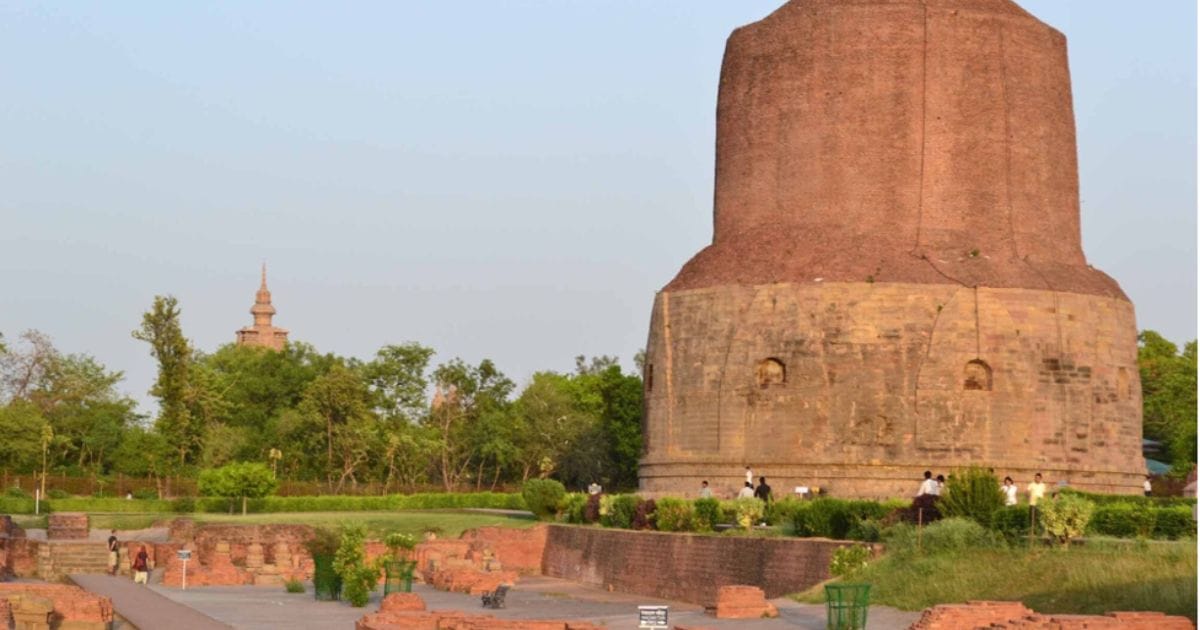
Sarnath’s primary pilgrimage site is the Dhamek Stupa, a massive cylindrical structure rising 43.6 meters, marking the precise location where Buddha delivered his first teaching. Pilgrims circumambulate (walk around) the stupa clockwise while reciting mantras, spinning prayer wheels, or simply maintaining meditative awareness. The act of circumambulation—repeated circuits while maintaining focused intention—creates moving meditation connecting physical action with spiritual aspiration. The stupa’s ancient brickwork, dating to around 500 CE though marking an event 1,000 years earlier, emanates palpable sacred energy that visitors frequently describe as peaceful and centering.
The Mulagandha Kuti Vihar, a modern temple built in 1931, houses beautiful frescoes depicting Buddha’s life painted by Japanese artist Kosetsu Nosu. The temple’s atmosphere encourages quiet reflection, and pilgrims often sit in meditation within its peaceful halls. The adjacent Bodhi Tree, grown from a cutting of the original tree in Bodhgaya under which Buddha achieved enlightenment, provides another focus for contemplation and prayer.
The Deer Park where Buddha taught retains surprising tranquility despite its proximity to modern development. Pilgrims walk its grounds imagining Buddha’s presence, the small community of early disciples, and the revolutionary teachings first articulated here that would spread across Asia and eventually worldwide. The park’s resident deer—descendants perhaps of those present during Buddha’s teaching—add living continuity to the site’s ancient history.
The Archaeological Museum houses exceptional Buddhist art, including the famous Ashoka Lion Capital that became India’s national emblem. For pilgrims, these aren’t merely artistic treasures but sacred objects created by devotees across centuries, tangible connections to Buddhism’s historical development. The museum visit provides intellectual context complementing the emotional and spiritual experiences at the sacred sites themselves.
Special pilgrimage packages enhance the journey through practices facilitating deeper spiritual engagement. Many include guided meditation sessions—perhaps at sunrise beside the Ganges or within Sarnath’s peaceful grounds—led by experienced practitioners who introduce techniques for centering awareness, cultivating compassion, or contemplating impermanence and other Buddhist teachings.
Satsang (spiritual discourse) sessions with learned teachers provide opportunities to ask questions, discuss philosophical concepts, and receive guidance on integrating pilgrimage experiences into daily life after returning home. These might involve Hindu pandits explaining Vedantic philosophy or Buddhist monks discussing dharma practice, depending on the package’s specific focus.
Puja (worship ritual) participation allows active devotional engagement rather than passive observation. In Varanasi, this might involve performing a personalized puja at the Ganges with priest assistance—offering flowers, lighting lamps, reciting mantras, and receiving blessings. At Sarnath, Buddhist pilgrims might participate in group chanting sessions, light butter lamps, or make offerings at the stupa according to Tibetan, Thai, Japanese, or other Buddhist traditions represented by the various national monasteries surrounding the main archaeological sites.
Many pilgrimage packages incorporate charitable components—feeding sadhus (holy men), donating to temple maintenance, supporting local monasteries, or contributing to educational programs serving poor children. This dana (generosity) practice generates spiritual merit while materially supporting communities sustaining these sacred sites for future pilgrims.
Pilgrimage packages understand that accommodation forms part of the spiritual journey, not merely logistical necessity. Options range from simple ashrams offering basic but clean rooms with vegetarian meals, perfect for pilgrims seeking austere environments conducive to spiritual focus, to comfortable hotels providing modern amenities while maintaining reverent atmospheres and proximity to sacred sites.
Many packages include stays at dharamshalas—pilgrim guesthouses often attached to temples or religious institutions, offering affordable accommodation specifically for spiritual travelers. These environments facilitate connections with other pilgrims, creating community and shared purpose that enhances individual journeys. Evening satsangs, group prayers, or simply informal conversations with fellow seekers add meaningful dimensions beyond what isolated hotel stays provide.
Transportation between Varanasi and Sarnath, though just 10 kilometers, requires thoughtful arrangement. Pilgrimage packages provide comfortable private vehicles, allowing contemplative transition between these distinct sacred spaces rather than the stress of negotiating with auto-rickshaw drivers or managing public transportation while maintaining spiritual focus.
Meal arrangements respect religious dietary practices—purely vegetarian (often vegan) options prepared according to sattvic principles avoiding overly stimulating ingredients like onion and garlic. Some packages include langar-style community meals where pilgrims eat together, fostering fellowship and humility through shared simple food.
Pilgrimage packages vary in duration based on depth desired and time available. Minimum two-day/one-night packages provide essential experiences—Ganges bath, Kashi Vishwanath darshan, Ganga Aarti in Varanasi, plus Sarnath’s main sites—suitable for those with severe time constraints but still seeking genuine pilgrimage rather than mere tourism.
Three to four-day packages allow more contemplative pacing—multiple sunrise Ganges experiences, extended temple visits, additional meditation sessions, and proper time absorbing Sarnath’s peaceful atmosphere without rushing. This duration permits the psychological transition from ordinary consciousness to pilgrimage mindset and back, rather than jarring shifts that can diminish spiritual integration.
Week-long comprehensive pilgrimage packages might include the Panchakroshi circuit, visits to additional significant sites like Allahabad (Prayagraj) where Ganges, Yamuna, and mythical Saraswati rivers converge, or extended meditation retreats. These extended journeys allow transformation beyond quick inspiration—actual practice development, relationship building with teachers, and deep rest facilitating the inner work pilgrimage ultimately serves.
Successful pilgrimage requires appropriate preparation—physical, mental, and spiritual. Physically, ensure reasonable fitness for walking on uneven ghat steps, standing during ceremonies, and tolerating heat or cold depending on season. Mentally, approach with openness and respect regardless of your personal religious affiliation—these sites hold profound meaning for millions, and reverent behavior honors that significance.
Spiritually, consider setting clear intentions. What do you seek from this pilgrimage? Healing, guidance, merit, connection with tradition, personal transformation? Clear intention focuses your experience, helping you recognize meaningful moments and integrate insights that arise. Some pilgrims maintain journals recording observations, feelings, and realizations, creating records for future reflection.
Practical preparation includes appropriate clothing—modest covering shoulders and knees for temple entry, easily removed footwear for frequent shoe removal, layers for varying temperatures. Bring minimal valuables as you’ll need to leave items outside temples. Consider a small bag for carrying offerings like flowers, incense, or donation money.
Research basic ritual protocols—how to approach temples, receive prasad (blessed food), participate in aarti. While guides provide instruction, prior familiarity reduces self-consciousness allowing fuller participation. Learning a few simple mantras or prayers, even if you don’t fully understand Sanskrit or Pali, enables you to join communal chanting rather than merely observing.
Absolutely. While designed with Hindu and Buddhist pilgrims in mind, these packages welcome spiritually curious people from all backgrounds, including those without specific religious affiliation. The experiences offer profound insights into two great spiritual traditions, contemplation of universal themes like meaning and mortality, and exposure to practices like meditation and ritual that transcend particular belief systems. Guides adapt explanations to your background, and you participate at whatever level feels comfortable—from full devotional engagement to respectful observation. Many participants report the experience deepening their own spiritual path, whatever form that takes.
October through March offers optimal conditions—comfortable temperatures (15-28°C), minimal rainfall, and pleasant weather for outdoor activities and early morning rituals. Winter months (November-February) are most popular, particularly around significant festivals like Diwali, Dev Deepawali, or Buddhist celebrations, though these periods see increased crowds and higher prices. Monsoon season (July-September) brings dramatic beauty and fewer pilgrims but occasional rain disruptions. Summer (April-June) features intense heat (35-45°C) challenging for extended outdoor activities, though sacred sites remain powerfully present regardless of weather. Major Buddhist pilgrimage seasons coincide with Vesak (Buddhau0027s birthday, typically May) and the anniversary of his first sermon (July).
Physical demands vary by package but generally include significant walking on uneven surfaces, climbing ghat steps, and standing during ceremonies. However, pilgrimage packages can be customized for limited mobility—arranging accommodations near sacred sites minimizing walking, providing vehicle access where possible, securing seating during ceremonies, and adjusting itineraries to emphasize accessible experiences. Wheelchair access exists at some but not all sacred sites. Communicate physical limitations clearly during booking to ensure appropriate planning. Many elderly pilgrims successfully complete these journeys with proper accommodations and realistic pacing.
Standard pilgrimage packages typically include accommodation (ashram, dharamshala, or hotel based on preference), daily vegetarian meals, transportation between Varanasi and Sarnath, knowledgeable guide familiar with religious significance, Ganges boat ride, temple entry fees, and assistance with basic ritual participation. Additional costs might include personal puja ceremonies with priests (₹500-5,000 depending on elaborateness), donations to temples and monasteries, shopping for religious items or souvenirs, upgraded accommodation, VIP temple darshan arrangements, and extended meditation programs or spiritual consultations. Packages range ₹5,000-25,000 per person for 2-4 day programs depending on accommodation level and inclusions.
Yes, extended pilgrimage packages often incorporate additional sacred destinations. Allahabad/Prayagraj (120km away) features the Triveni Sangam where three holy rivers converge, particularly significant during the Kumbh Mela festival. Bodhgaya (250km) where Buddha attained enlightenment completes the Buddhist pilgrimage circuit with Sarnath. u003Ca class=u0022wpil_keyword_linku0022 href=u0022https://tripcosmos.co/destinations/ayodhya/u0022 title=u0022Ayodhyau0022 data-wpil-keyword-link=u0022linkedu0022 data-wpil-replace=u0022u0022u003EAyodhyau003C/au003E (200km), Lord Ramau0027s birthplace, adds significant Hindu sacred geography. Kushinagar (250km) where Buddha attained final nirvana rounds out the four major Buddhist pilgrimage sites accessible from Varanasi. These extensions typically add 2-5 days depending on sites included, creating comprehensive sacred journeys through Uttar Pradesh and Biharu0027s extraordinary spiritual landscape.