Your cart is currently empty!
You may check out all the available trips and book one that suits you.
Continue Browsing Trips
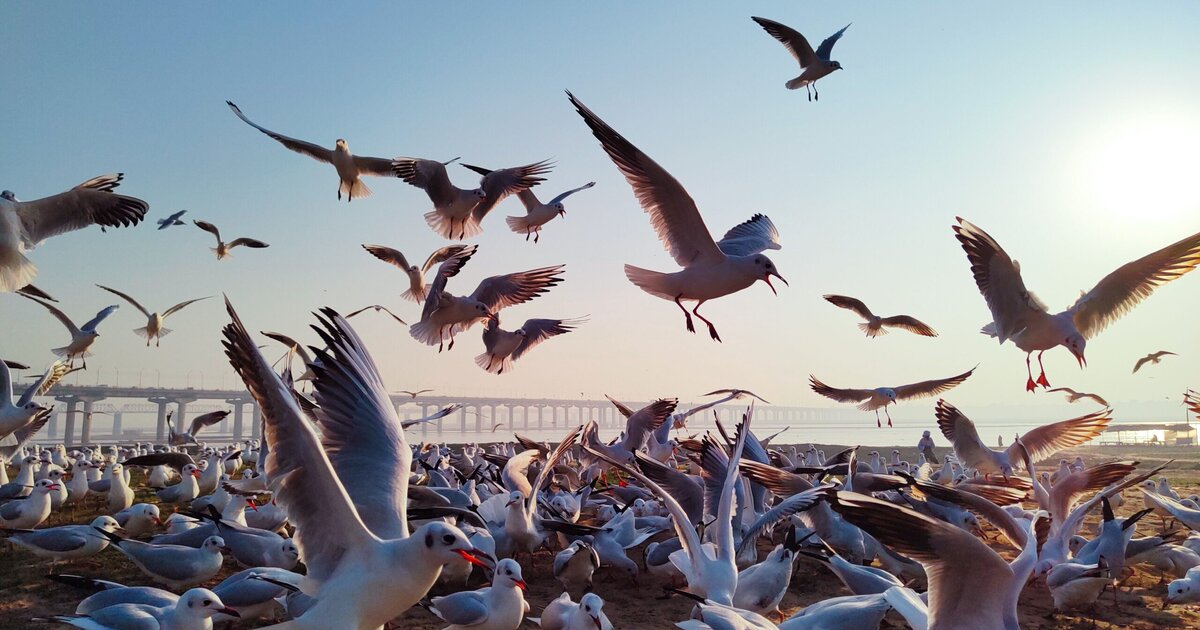
Prayagraj with Parents , There is a particular kind of trip that doesn’t fit neatly into any travel category. It isn’t a holiday. It isn’t purely pilgrimage. It’s something more intimate than both — the act of taking your parents to a place they have wanted to go for most of their adult lives, and making sure that the journey is as meaningful for them as they have always imagined it would be.
Prayagraj is that place for countless Hindu families. Not because it is beautiful — though the confluence of the Ganga and Yamuna at dawn is genuinely extraordinary. But because the Hindu tradition assigns Prayagraj a specific and irreplaceable sacred status that no other city in India holds. The ancient texts call it Tirtharaj — the king of all pilgrimages. <cite index=”138-1″>The Matsya Purana declares that the merit earned at Prayagraj surpasses the combined merit of all other tirthas.</cite>
For parents who carry a lifetime of devotion and a long-held wish to stand at the Triveni Sangam, taking them there is not just logistics. It is an act of love.
This guide covers both dimensions — the spiritual significance of Prayagraj that makes this trip matter so much, and the practical planning that makes it genuinely possible.
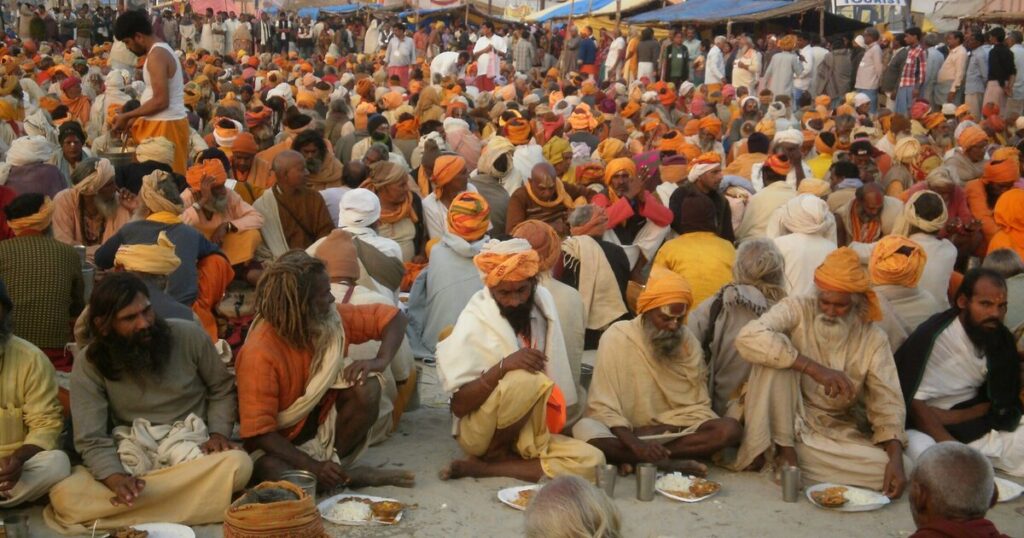
Most sacred cities in Hinduism are associated with a specific deity — Varanasi with Shiva, Ayodhya with Ram, Mathura with Krishna. Prayagraj’s significance is different in kind. It is the Tirtharaj — the place where all merit, all ritual, all prayer is considered most fully received.
<cite index=”135-1″>Tarpan performed at the Sangam is said to liberate ten generations of ancestors both above and below. This is why Prayagraj is among the premier sites for Pind Daan and ancestral rites.</cite>
<cite index=”137-1″>The Hindu scriptures — the Garuda Purana, the Padma Purana, the Mahabharata — describe Prayagraj as the place where Lord Brahma performed the original yajnas, making it a sacred land for rituals that touch on life, death, and liberation.</cite>
For Hindu families, bringing parents to Prayagraj carries a specific meaning: honouring them while they are still here to receive that honour, and connecting the family across generations through the rituals that the tradition has maintained, unbroken, for thousands of years.
The Sangam Snan — a holy dip at the confluence of the three rivers — is the act most parents travel to Prayagraj to perform. <cite index=”116-1″>Visitors take boat rides to reach the exact confluence point, where the differently coloured waters of the Ganga and Yamuna meet visibly.</cite> A floating wooden platform anchors at the confluence; your parents lower themselves into the river from this platform, supported by the boatman and family members.
For elderly parents with limited mobility: the holy dip can be done with physical assistance in waist-deep water from the platform. Many elderly pilgrims who cannot fully immerse themselves still touch the water and offer prayers — the ritual intention, not the physical completeness, is what the tradition honours.
What to arrange in advance: A private boat from Qila Ghat (the closest authorised boarding point to the Sangam). A private boat gives your family the platform to yourselves — no strangers, no time pressure, and the space to let your parents experience the moment at their own pace. TripCosmos arranges private Sangam boat rides as part of every Prayagraj family package — confirmed boatman, confirmed timing, confirmed platform access.
If your family has elderly parents who have lost their own parents — your grandparents — Prayagraj is one of the most powerful sites in Hindu tradition to perform Pind Daan and Tarpan (ancestral rites). <cite index=”133-1″>Triveni Sangam is among the most important pilgrimage sites for Pind Daan — performed during Pitru Paksha or on Amavasya dates.</cite>
<cite index=”134-1″>Pitru Paksha 2026 runs from September 26 to October 10.</cite> This is the most auspicious period for ancestral rites at the Sangam — families travel from across India and the Indian diaspora specifically for this fortnight. If your parents have been carrying the intention to perform Pind Daan for their own parents, Prayagraj during Pitru Paksha is the most complete fulfilment of that intention available.
TripCosmos coordinates pandit arrangements and ritual scheduling for families visiting during Pitru Paksha — contact the team in advance as this period books up months ahead.
A 10-minute walk from the Sangam ghat. The reclining Hanuman idol here is unique in India — partially submerged in the earth, self-manifested, and deeply venerated. Elderly parents who have heard of this idol their entire lives often find this stop the most unexpectedly moving of the entire visit. Free entry; simple and uncrowded compared to the main ghat area.
<cite index=”131-1″>The sankalpa performed at Prayagraj — the sacred declaration of intent — connects the individual to their ancestors, naming them specifically as the recipients of the ritual.</cite> Akshayavat, the ancient banyan tree inside the Allahabad Fort, is where this sankalpa has been recited by pilgrims for centuries. Government-issued photo ID required for fort entry. Carry ID for every family member.
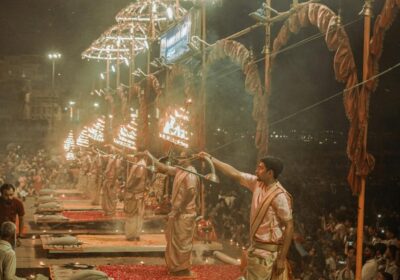
Families spending more than one day in Prayagraj can include an evening at the Ganga ghat — the prayer ceremony at the riverside at dusk is simpler and more intimate than Varanasi’s Dashashwamedh Aarti, but deeply peaceful for elderly parents who find large crowds difficult.
A day trip works for families where parents are in good health and the primary purpose is the Sangam Snan.
From Varanasi (most common): Depart 7:00 AM. Reach Prayagraj by 10:30 AM. Sangam boat ride and holy dip by noon. Bade Hanuman Ji and Akshayavat afternoon. Return to Varanasi by 8:00–9:00 PM.
From Lucknow: Depart 8:00 AM. Reach Prayagraj by 11:00 AM. Full circuit by 5:00 PM. Return to Lucknow by 8:30 PM.
The honest assessment for elderly parents: A day trip is physically demanding — it involves 12–14 hours of travel plus temple circuits. For parents above 65, or for anyone with knee, cardiac, or fatigue concerns, the overnight format below is meaningfully more humane.
This is the format most families who have done the trip say they wished they’d chosen from the start.
Day 1:
Day 2:
The extra night is not wasted — it is what allows the sunrise Sangam experience, which is categorically different from a midday visit.
The Varanasi Prayagraj Ayodhya 4N5D Tour Package from TripCosmos structures the three-city sacred triangle with this exact pacing — overnight stays in each city, early morning sacred experiences, and midday rest built into the itinerary for families with elderly members.
For elderly parents, two criteria matter above all others in accommodation:
1. Central location: Civil Lines and the area near Sangam are the two sensible zones. Civil Lines hotels are quieter, cleaner, and more amenity-focused. Sangam-area guesthouses put you within walking distance of the ghat for the early morning Snan — invaluable when the 6:00 AM window matters.
2. Ground floor rooms or lifts: Confirm this before booking. Many mid-range and budget properties in Prayagraj are 3–4 storey buildings with no lifts. A first-floor room for elderly parents is non-negotiable — not a preference.
Budget range (per night, Prayagraj):
By train: The most practical option. Prayagraj Junction (PRYJ) is one of the busiest railway hubs in UP — well-connected from Delhi (7–8 hours), Mumbai (14–16 hours), Kolkata (10–12 hours), Lucknow (3–4 hours), and Varanasi (2–2.5 hours). 3AC is the recommended class — berths allow elderly passengers to lie down and rest during longer journeys.
By cab from Varanasi: The 130 km NH19 / NH27 route takes 3 to 3.5 hours in an AC cab. For families already visiting Varanasi, a Prayagraj cab transfer is the most practical option — TripCosmos provides direct cab service from Varanasi to Prayagraj with fixed fares and elderly-experienced drivers.
By tempo traveller (for large joint families): For families of 8 or more — grandparents, parents, adult children, and grandchildren all travelling together — a 12-seater tempo traveller on the Varanasi-Prayagraj-Ayodhya circuit keeps everyone in one vehicle, reduces per-person cost, and eliminates the coordination overhead of multiple cabs.
By air: Prayagraj Airport (IXD) now has expanded connectivity from Delhi, Mumbai, and several other cities. The airport is approximately 20–25 km from the Sangam ghat. A useful option for families flying in directly, particularly from South India or metros.Health and Comfort Planning for Elderly Parents
River water and the holy dip: The Ganga-Yamuna confluence water is not recommended for drinking. The dip itself is the ritual; avoid ingesting the water during immersion. Elderly parents with open wounds, recent surgeries, or compromised immunity should discuss the dip with their physician beforehand.
The boat: <cite index=”117-1″>Life jackets are provided on all boats, and a brief safety orientation precedes departure.</cite> Ensure your parents wear the life jacket throughout the boat ride — this is not optional and should be enforced even if they resist for comfort reasons.
The ghat walk: The path from the vehicle drop point to the boat boarding area at Qila Ghat involves some uneven stone surfaces. Bring a walking stick if your parents use one, wear comfortable rubber-soled footwear, and move slowly. There is no rush at the ghat.
After the dip: Elderly parents will feel the cold river water for some minutes after the dip. Carry warm clothing — particularly during October to February visits — and help them change promptly after the ritual. A thermos of hot tea or soup waiting in the vehicle afterwards is a small but genuinely important gesture.
Medications: Carry all regular medications in hand luggage with a two-day buffer beyond your return date. Keep a copy of prescriptions
| Season | Suitability for Elderly Parents |
|---|---|
| October – November | Excellent — post-monsoon, cool mornings, Pitru Paksha in this window |
| December – February | Very good — coldest months; carry warm layers for early morning |
| March | Good — shoulder season, comfortable weather, fewer crowds |
| April – June | Not recommended — Prayagraj summer reaches 42–45°C |
| July – September (Monsoon) | Avoid — high humidity, river levels variable, ghat access limited |
| Pitru Paksha (Sep 26 – Oct 10, 2026) | Most auspicious for ancestral rites; book 3–4 months in advance |
TripCosmos is based in Prayagraj and Varanasi — the two anchor cities of the UP sacred circuit. The team plans family Prayagraj visits regularly, with specific attention to elderly parent requirements: ground-floor hotel rooms, driver assistance at the ghat, private boat booking with confirmed timing, pandit coordination for Pind Daan and Tarpan, and flexible itinerary pacing.
For families combining Prayagraj with Varanasi and Ayodhya, the complete Varanasi Prayagraj Ayodhya 4N5D package covers the full sacred triangle with overnight stays, private cab throughout, and senior-friendly scheduling built into every day.
For the full Prayagraj cost picture, the complete tour cost guide for Varanasi, Ayodhya and Prayagraj breaks down every expense category across all three cities.
Website: https://tripcosmos.co WhatsApp: +91 9336116210
Yes — with proper planning. The main Sangam experience requires a walk of approximately 300–500 metres from the vehicle drop point to the boat boarding area at Qila Ghat. This surface is partially uneven. A private boat means no queue and full assistance from the boatman and family members for the boarding and disembarking process. The Bade Hanuman Ji temple and Akshayavat are both manageable with walking support. Inform TripCosmos of your parents’ mobility needs at the time of booking — the team adjusts vehicle drop points and pacing accordingly.
Pind Daan is an ancestral ritual — the offering of rice balls (pinda) combined with sesame seeds and water — performed to provide peace and liberation to departed family members. It is traditionally performed at Prayagraj’s Triveni Sangam for deceased parents, grandparents, and ancestors. <cite index=”135-1″>Tarpan at the Sangam is believed to liberate ten generations of ancestors.</cite> If any of your parents have lost their own parents and haven’t yet performed this rite, Prayagraj is one of the most powerful sites to do so. TripCosmos coordinates qualified pandit arrangements for Pind Daan and Tarpan at the Sangam — contact the team in advance, particularly if visiting during Pitru Paksha (September 26 – October 10, 2026).
Two days and one night is the recommended minimum for families with elderly parents. This allows an overnight stay close to the ghat, an early morning sunrise Sangam Snan in the quietest and most spiritually charged window of the day, and a comfortable afternoon for Bade Hanuman Ji, Akshayavat, and rest — without back-to-back travel in a single long day. One-day trips from Varanasi or Lucknow are possible but not ideal for parents above 65.
Yes — and for most families, this is exactly the right approach. The UP sacred triangle covers the three most significant pilgrimage experiences in North India: Kashi Vishwanath darshan and Ganga Aarti in Varanasi, Triveni Sangam holy dip in Prayagraj, and Ram Mandir darshan in Ayodhya. The 4N5D Varanasi Prayagraj Ayodhya Tour Package paces this circuit with overnight stays in each city and elderly-friendly scheduling. Mention your parents’ mobility requirements at booking.
October to March is the recommended window overall. November and early December offer the best combination of comfortable temperatures, lower crowds, and post-Pitru Paksha spiritual energy. If your family’s primary purpose includes ancestral rites, the Pitru Paksha fortnight (September 26 – October 10, 2026) is the most auspicious period despite being the busiest — book accommodation and cabs at least 3–4 months in advance for Pitru Paksha travel.
Prayagraj’s position in Hindu sacred geography — as Tirtharaj, the king of all pilgrimages — is not ceremonial language. It describes a place where the tradition believes spiritual acts have their fullest effect. Taking your parents there is not a tourism decision. It is the fulfilment of something older than planning.
The Sangam is waiting. The river will be there at dawn. TripCosmos will handle the rest.
Visit: https://tripcosmos.co | WhatsApp: +91 9336116210

Comments are closed.