Your cart is currently empty!
You may check out all the available trips and book one that suits you.
Continue Browsing Trips
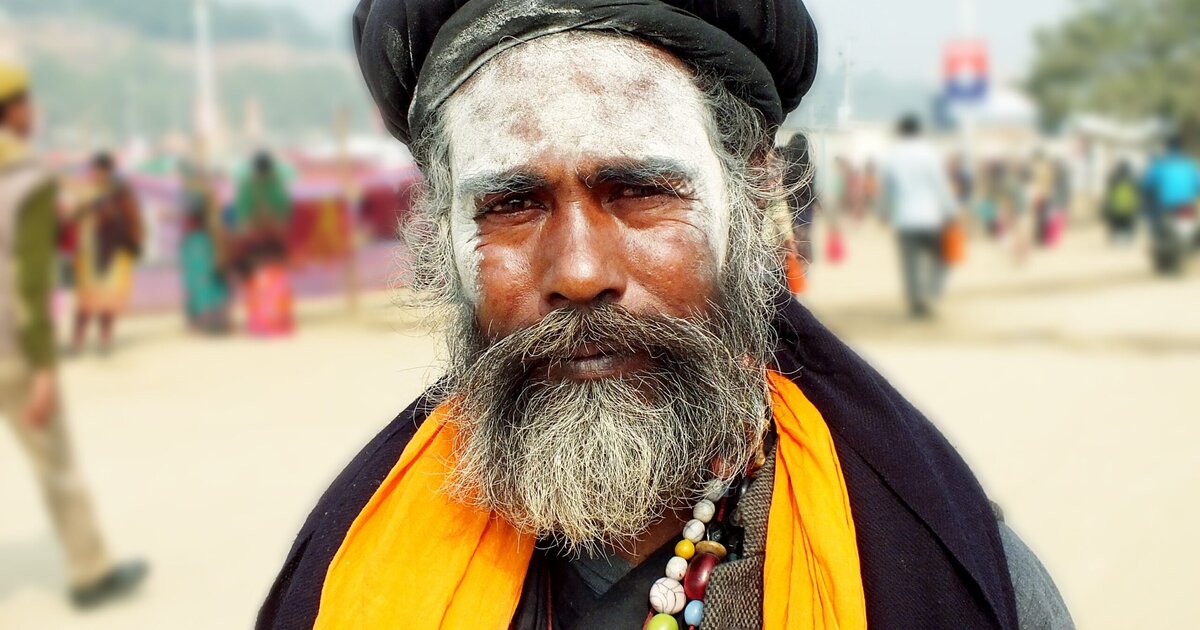
Sangam Visit Guide for First-Time Travelers , Most people who visit the Triveni Sangam at Prayagraj for the first time say some version of the same thing afterwards: “I didn’t expect it to feel like that.”
They expected a river. They got something harder to explain.
The Sangam — where the Ganga, the Yamuna, and the invisible Saraswati converge — is one of those places that operates on more than one level simultaneously. There’s the physical reality of it: two visibly different rivers meeting in a wide, open expanse of water, with a floating wooden platform in the middle where pilgrims step down to take their holy dip. And then there’s everything else — the sound of prayers from a hundred boats, the weight of the moment for the elderly woman beside you completing a lifetime’s wish, the startling quiet that settles over you once you’re actually on the water.
This guide is for first-time visitors who want to know what the Sangam experience actually involves — from the moment you arrive at the ghat to the moment you leave — so nothing catches you unprepared.
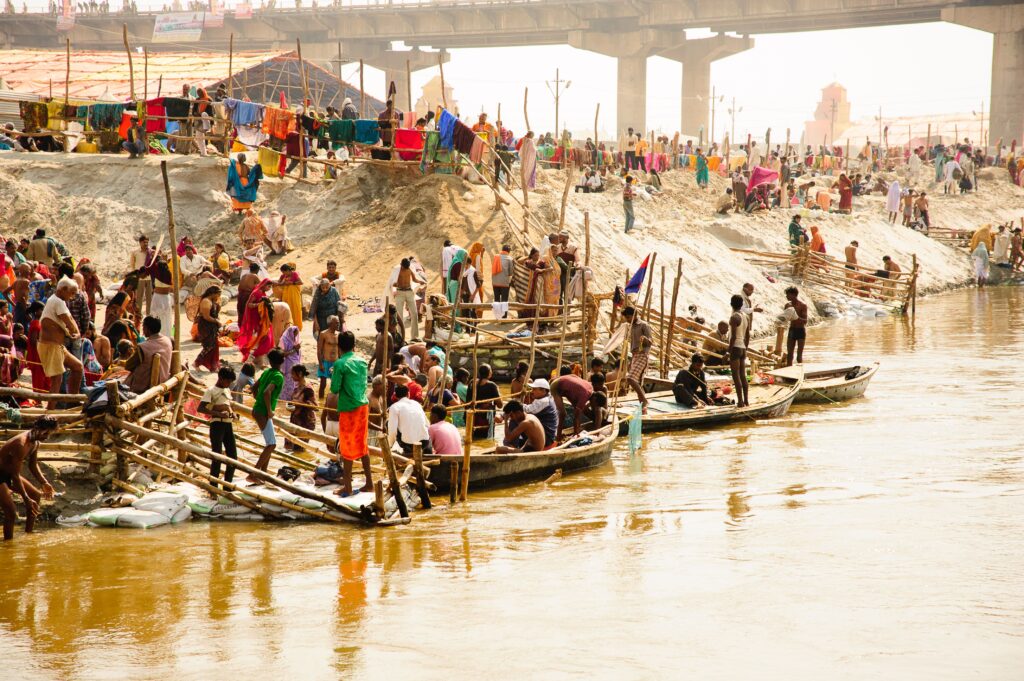
The Sangam is the confluence of three rivers: the Ganga (flowing from the north), the Yamuna (from the west), and the Saraswati — a river mentioned throughout ancient Hindu scripture, considered invisible to the eye but present beneath the waters. <cite index=”116-1″>Visitors to Triveni Sangam take boat rides to reach the exact confluence point, where the differently coloured waters of the Ganga and Yamuna meet visibly — the Ganga’s muddy brown and the Yamuna’s greener, cleaner flow.</cite>
<cite index=”122-1″>The Prayagraj Sangam is specifically revered in ancient texts as the doorway to heaven, where the physical and spiritual realms intersect.</cite> The Sanskrit verse from the Mahabharata puts it plainly: one who bathes at the Triveni confluence instantly sheds accumulated sin and attains the highest realm.
Whether you approach this as a devotee, a curious traveller, or something in between — understanding what the Sangam means to the people around you changes what you see when you get there.
Your journey to the Sangam begins at the ghat — the riverbank boarding point. <cite index=”122-1″>The two main authorised boarding points are near Allahabad Fort (Qila Ghat) — the closest to the Sangam confluence point, where the boat ride to the holy dip spot takes approximately 15–20 minutes — and near Mankameshwar Temple on the Yamuna bank.</cite>
<cite index=”119-1″>The most common mistake first-time visitors make is thinking that reaching the ghat means they have already reached the Sangam point. The experience always breaks into two steps: reach the fort-side riverbank, then take a boat to the actual confluence zone.</cite>
At the ghat, you will find:
The atmosphere is busy but purposeful. People are not here to sightsee. They are here to do something that matters to them — and that collective intentionality is palpable from the moment you arrive.
<cite index=”117-1″>All boats are equipped with life jackets, and a brief safety orientation is provided before departure. The holy dip is optional and can be done under the supervision of the crew, with safety guidelines followed throughout.</cite>
Shared boat vs. private boat: First-time visitors often assume shared boats are fine because they’re cheaper (₹100–₂00 per person). In practice, shared boats mean sharing your Sangam experience with strangers, no flexibility on timing or duration at the confluence point, and less space for changing or ritual. A private boat for your group — typically ₹500–₂,000 depending on size and timing — gives you the space and time the experience deserves.
<cite index=”122-1″>Boats dock at a wooden platform floating in the middle of the river. You step onto this platform to bathe safely in waist-deep water.</cite> The platform is anchored at the confluence point — you can see both rivers meeting around you as you stand in the water.
What first-timers find surprising: The current. The Sangam is a real, moving river — not a calm pool. The water at the confluence point is cool to cold (October–February), fast-moving in places, and reaches waist-height at the bathing platform. The boatman will guide you — follow his instructions, particularly about where to stand and how to lower yourself into the water.
The visual: <cite index=”116-1″>The differently coloured waters of the Ganga and Yamuna meeting is a genuine natural spectacle.</cite> You can see the line where the two rivers meet — the muddy ochre of the Ganga and the cleaner grey-green of the Yamuna flowing alongside each other before merging. This is visible to the naked eye and is one of those things photographs never fully capture.
The Sangam Snan (holy dip) is the centrepiece of most visits. Here is what the ritual sequence looks like for first-timers:
Before you board the boat: Purchase puja samagri at the ghat — marigold flowers, a small clay diya, some sindoor, and a coconut are standard. Your boatman will guide the puja sequence at the water if you ask; many have guided thousands of pilgrims through this and do it naturally.
At the confluence platform: Remove footwear before the dip. Men typically enter the water in dhoti or shorts; women in a salwar or saree that they’re prepared to get fully wet. Changing rooms are available at the ghat on return. <cite index=”123-1″>Changing rooms are available near the ghats for modesty.</cite>
The ritual sequence most pilgrims follow:
If you’re not taking a dip: You can participate fully in the puja from the boat without entering the water. Many elderly visitors, non-Hindu travellers, or those with health constraints do exactly this — and the experience is complete. The Sangam does not require you to be in the river to be moved by it.
What to carry for the dip:
The Sangam is the heart of a Prayagraj visit, but first-timers consistently underestimate how much else the city holds. A complete Prayagraj day includes:
A 10-minute walk from the Sangam ghat. The idol of Lord Hanuman here is unique in India — a reclining form, partially submerged in the ground, worshipped as self-manifested. The temple floods during monsoon and the Hanuman idol is believed to hold back the Ganga’s rising waters. Unusually moving for first-time visitors who don’t expect it. Free entry.
Inside the Allahabad Fort — the ancient banyan tree believed to be eternal, mentioned in the Mahabharata and the Puranas. Entry requires government-issued photo ID. A short walk from the Sangam ghat. <cite index=”118-1″>Visits to the Hanuman Temple and Akshaya Vat are standard inclusions in most Prayagraj Sangam circuits.</cite> Entry: Free with ID.
Adjacent to Akshayavat inside the fort — an underground temple complex. First-timers are often surprised by its existence. Cool, quiet, and profoundly atmospheric.
The ancestral home of the Nehru family, now a national museum. 30 minutes here gives remarkable insight into the independence movement. Ideal for families with older children or for travellers combining pilgrimage with history. Entry: ₹70 per adult.
<cite index=”116-1″>The best time to visit Triveni Sangam is between October and March, when the weather is pleasant.</cite> Within a day, the timing makes a significant difference:
5:30 AM – 8:00 AM (Strongly recommended): <cite index=”119-1″>Early morning provides cooler weather, cleaner light, easier ritual flow, and better family comfort.</cite> The ghat is quiet, the boatmen are attentive, and the sunrise over the Sangam is genuinely beautiful. This is the window most experienced pilgrims choose.
8:00 AM – 11:00 AM: Moderate crowds, still comfortable. The best compromise for families arriving from Varanasi or Lucknow who can’t reach before dawn.
11:00 AM – 2:00 PM: Busiest and hottest window. Not recommended for elderly visitors or young children during summer months.
Late afternoon (4:00 PM – 6:00 PM): <cite index=”119-1″>A good option if atmosphere matters more than the ritual bath</cite> — the golden light on the water is extraordinary, and crowd levels drop from the midday peak. Not the traditional window for Snan but a genuinely beautiful time to be on the river.
| Item | Budget Range |
|---|---|
| Private boat (group of 4, 45–60 min) | ₹500 – ₹1,500 |
| Shared boat (per person) | ₹100 – ₹200 |
| Puja samagri (flowers, diya, coconut) | ₹50 – ₹150 per person |
| Changing room at ghat | ₹20 – ₹30 |
| Auto/cab from city to ghat | ₹100 – ₹300 (one way) |
| Bade Hanuman Ji + Akshayavat | Free (ID required for fort) |
| Anand Bhawan entry | ₹70 per adult |
The Prayagraj Sangam darshan tour package from TripCosmos starts from ₹2,999 per person and covers pickup, private boat with confirmed boatman, the full Sangam circuit including Bade Hanuman Ji and Akshayavat, and return drop — significantly simpler than coordinating each element at the ghat.
Trusting unofficial boatmen who approach you before you reach the ghat. These are touts, not registered boatmen. Walk past them to the authorised boarding area near the fort.
Underestimating the physical experience. The Sangam involves standing in a moving river. People with heart conditions, recent surgeries, or severe mobility limitations should discuss this with their doctor before planning a Snan. The puja from the boat is a complete alternative.
Leaving valuables at the ghat unattended. Leave phones, cameras, and cash in your vehicle or with a trusted family member who is not going into the water.
Going without dry clothes. This sounds obvious. Many first-timers pack one set of clothes, get completely soaked, and spend the rest of the day uncomfortably wet in an AC cab. Pack a complete dry set in a waterproof bag.
Not allowing enough time. First-timers often budget 90 minutes for the Sangam. The boat ride alone is 30–45 minutes. Add the ghat walk, the puja, the dip, changing, and the walk to Bade Hanuman Ji, and a proper Sangam visit takes 3 to 4 hours minimum.
Prayagraj is most powerfully visited as part of the UP sacred triangle rather than in isolation. The 4N5D Varanasi Prayagraj Ayodhya Tour Package covers all three cities with private cab, hotel stays, Sangam boat ride, and guided darshan at every major site — the most complete North India pilgrimage circuit in a single booking.
For travellers combining Varanasi with a Prayagraj Sangam day, the Prayagraj Sangam tour from Varanasi runs as a 130 km, 3.5-hour morning-departure day trip — departing Varanasi at 7:00 AM, reaching Prayagraj by 10:30 AM, and returning to Varanasi by evening.
For families or groups of 8 or more, the TripCosmos tempo traveller service handles the Varanasi–Prayagraj–Ayodhya circuit in a single vehicle throughout, keeping the group together at every stop.
TripCosmos is based in Prayagraj and Varanasi — both anchor cities of the UP sacred circuit. The team handles Sangam boat arrangements, private cab transfers, hotel bookings, and full multi-city itineraries for every group size and budget.
For first-time visitors especially, having local coordination at the Sangam ghat — a confirmed boatman, a guide who explains the ritual sequence, and a vehicle waiting — removes every logistical uncertainty and lets the experience be what it’s meant to be.
Website: https://tripcosmos.co WhatsApp: +91 9336116210
The holy dip is not mandatory — it is the traditional and most spiritually significant act at the Sangam, but many visitors, particularly elderly pilgrims, non-Hindu travellers, and those with health conditions, participate fully in the puja ritual from the boat without entering the water. Both approaches are respected and complete in their own right.
<cite index=”117-1″>All boats are equipped with life jackets, and a brief safety orientation is provided before departure.</cite> Private boats are strongly recommended for families with children or elderly members — they offer more space, flexibility, and time at the confluence point. The boat ride to the Sangam platform takes 15–20 minutes from Qila Ghat. Children above 5 years and elderly visitors who are comfortable on water manage the experience well with a private boat.
Carry a complete change of dry clothes in a waterproof bag (essential if you’re taking the dip), a quick-dry towel, government-issued photo ID (required for Akshayavat inside the fort), a small cash amount for puja materials and the boatman, sunscreen for afternoon visits, and any personal medications. Leave valuables in your vehicle.
A shared boat groups you with strangers, moves on a fixed schedule, and gives you limited time at the confluence platform. A private boat gives your family or group exclusive space on the boat, flexibility on how long you stay at the Sangam point, and the privacy for personal prayer and puja. For most families, the extra cost of a private boat (₹500–₁,500) is the single best investment in the Prayagraj experience.
A day trip from Varanasi is entirely feasible — the journey is 130 km, approximately 3 to 3.5 hours. Departing Varanasi by 7:00 AM allows you to complete the full Sangam circuit including Bade Hanuman Ji and Akshayavat and return to Varanasi by 8:00–9:00 PM. For families with elderly members or young children, an overnight stay in Prayagraj is more comfortable and allows an early morning Sangam visit in the golden dawn window the following day.
The Triveni Sangam is one of those places that resists adequate description. The confluence of the Ganga and Yamuna at Prayagraj is simultaneously one of the most sacred sites in Hinduism and one of the most visually extraordinary natural phenomena in India — two rivers of different colours meeting in an open expanse of water, with a floating platform in the middle where pilgrims have been taking their holy dip for thousands of unbroken years.
Go early. Go with a private boat. Carry dry clothes. Let the experience unfold without rushing it.
TripCosmos will handle everything else.
Visit: https://tripcosmos.co | WhatsApp: +91 9336116210
TripCosmos guarantees verified Kashi Vishwanath Sugam Darshan passes (zero line waiting), private Dev Deepawali & Ganga Aarti Bajra boats, and verified Toyota Innova Crysta cabs with trusted local chauffeurs.


Comments are closed.