Your cart is currently empty!
You may check out all the available trips and book one that suits you.
Continue Browsing Trips
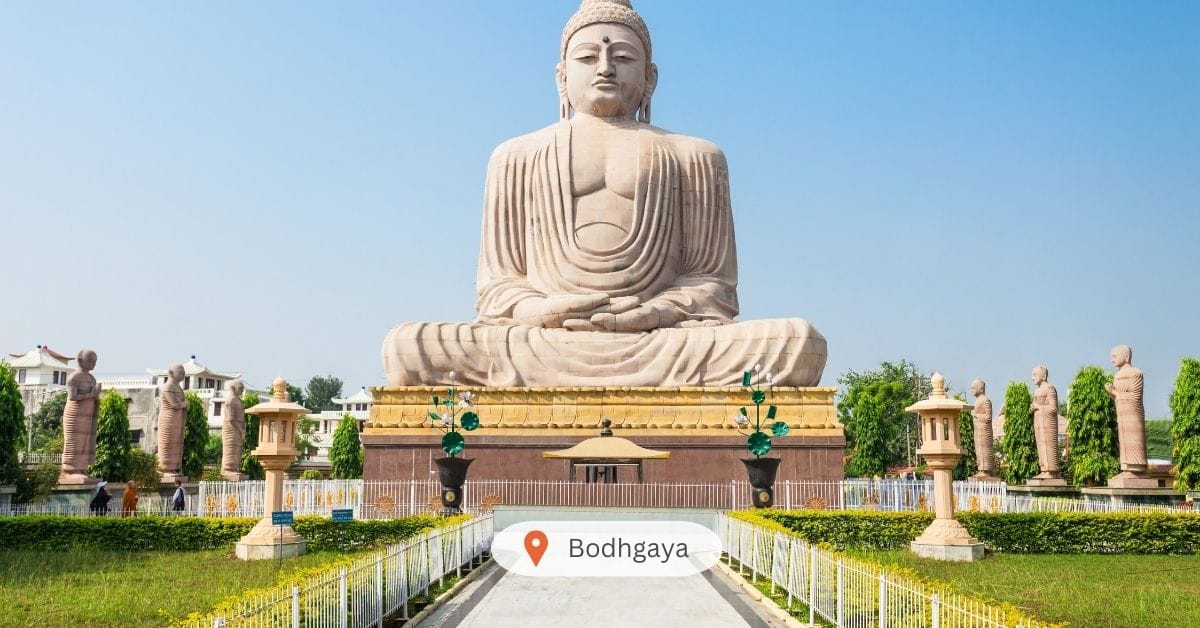
Japan Buddhist Varanasi tour guide 2026. Japanese temple Sarnath, Kosetsu Nosu frescoes, Japanese-speaking guides. TripCosmos — WhatsApp +91 9336116210.
For Japanese Buddhist pilgrims, the journey to Varanasi is not simply a visit to India. It is a return to the source — the precise geography where the Dharma that has shaped Japanese civilisation for over thirteen centuries was first spoken aloud.
When Emperor Shōmu enshrined Buddhism as Japan’s state religion in the 8th century, when the monk Kūkai brought Shingon teachings from Tang-era China to Mount Koya in 816, when Pure Land Buddhism spread from the temples of Kyoto across every province of Japan — all of it traces back to a deer park 10 kilometres from Varanasi, where Gautama Buddha delivered the Dhammacakkappavattana Sutta to five disciples sometime in the 5th century BCE.
Sarnath is where the Wheel of the Dharma first turned. For Japanese pilgrims, standing on that soil is the oldest homecoming available anywhere on earth.
This guide covers the Sarnath + Varanasi circuit specifically for Japanese Buddhist groups and individuals — what to visit, the unique Japan connection at Sarnath that most visitors don’t know, the logistics of the circuit, and how TripCosmos’s Japanese-speaking guides enhance the experience.
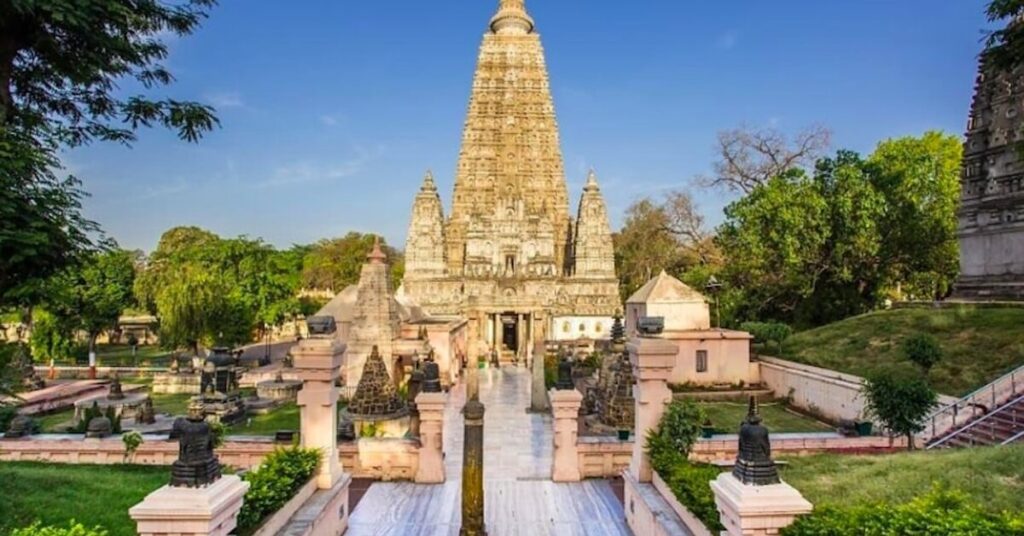
Most international visitors to Sarnath know about the Dhamek Stupa, the Ashoka Lion Capital, and the Mulagandha Kuti Vihar. What they don’t know is that Japan’s presence at Sarnath is both beautiful and specific.
Nichigai Suzan Horinji — The Japanese Temple, Sarnath
Located within the sacred zone of Sarnath, the Japanese temple — officially Nichigai Suzan Horinji — is a Nichiren Buddhist sanctuary that brings the meditative precision of Japanese Zen aesthetics to the soil where Buddhism was born. Clean wooden architecture, sliding paper doors, a radiant golden Buddha statue, and a Zen-style meditation hall where visitors can observe or participate in the chanting of Nam Myoho Renge Kyo. Japanese monks at the temple welcome pilgrims for cultural exchange and offer insights into their practice.
For Japanese Buddhist groups, this is the most personally resonant stop in all of Sarnath — a piece of home placed with intention at the most sacred location in Buddhist geography.
Mulagandha Kuti Vihar — Frescoes by Kosetsu Nosu
The main Sarnath Buddhist temple — Mulagandha Kuti Vihar, built in 1931 by Anagarika Dharmapala — is most celebrated for its interior frescoes. Those frescoes were painted by Kosetsu Nosu, a celebrated Japanese artist. The life of the Buddha depicted across the interior walls of the temple that marks his first sermon site — painted by a Japanese hand in 1931 — is an artistic and devotional act that most Japanese visitors find profoundly moving when they learn its provenance.
The temple opens at 9:00 AM daily. The fresco viewing is free
The foundational sequence:
Dhamek Stupa (first stop, always): The 43.6-metre cylindrical stone stupa marks the exact spot where Buddha delivered the first sermon. This is the ground zero of all Buddhist teaching — the most sacred physical location in the entire circuit. Entry: ₹25. Allow 30 minutes for contemplation; rush through this at your loss.
Archaeological Museum: Houses the original Ashoka Lion Capital — the four-lion emblem now used as India’s national symbol, originally erected by Emperor Ashoka at Sarnath in the 3rd century BCE. Also contains some of the finest early Buddhist sculpture in existence. Entry: ₹25. Opens 10:00 AM, closed Fridays. Allow 45 minutes.
Mulagandha Kuti Vihar: Kosetsu Nosu’s frescoes. The Bodhi Tree cutting planted here from the original tree in Sri Lanka. The most actively worshipped modern temple in the complex. Entry: free.
Nichigai Suzan Horinji (Japanese Temple): Plan 30–45 minutes here. For Japanese pilgrims specifically, arriving at the meditation hall and sitting quietly for even 15 minutes is worth more than any number of photographs.
Deer Park (Rishipattana): Where the five disciples gathered. Now a peaceful archaeological green with visible deer — the living continuity of the Mrigadava (Deer Grove) that the Buddha chose for his first teaching. Free. Allow 15 minutes.
Chaukhandi Stupa: Where the five disciples first met the newly enlightened Buddha. A Mughal-era octagonal tower sits atop the ancient stupa — a layered sacred site that encapsulates 2,500 years of Sarnath’s complex history. Free. 10 minutes.
International Monastery Circuit: Buddhist monasteries from Thailand (golden spire, 9 AM–6 PM), Tibet (prayer wheels, morning chanting 6–7 AM), Myanmar, Korea, Sri Lanka, and China all sit within the Sarnath sacred zone. Visiting the full circuit gives Japanese pilgrims a living picture of global Buddhism gathered at its source. All free.
Total Sarnath circuit time: 3.5 to 4.5 hours for a complete, unhurried visit.
Sarnath is 10 kilometres from Varanasi’s ghats. Most Japanese Buddhist groups visit both in a single trip — and they should. The combination is uniquely powerful.
Varanasi — Kashi, the city of Lord Shiva — is where the Buddha himself walked before his enlightenment, studying the Brahmanical tradition that he would go on to transcend. The ghats, the cremation fires at Manikarnika, the Ganga at dawn — all of this was the living backdrop of the Buddha’s world before Sarnath.
Witnessing the Ganga Aarti from a private boat on the Dashashwamedh Ghat — priests, fire lamps, the river at dusk — gives Japanese Buddhist pilgrims the visual and devotional context from which Buddhism emerged. Many describe the Ganga Aarti as the experience that makes Sarnath comprehensible in a new way: the living Hindu sacred tradition that the Buddha knew, still alive, unchanged in its essential form.
The recommended 3-day Japanese Buddhist circuit:
Day 1 (Varanasi): Private sunrise boat ride on the Ganga (5:30 AM). Kashi Vishwanath Temple darshan with Japanese-speaking guide providing interfaith context. Evening Ganga Aarti from private boat.
Day 2 (Sarnath — full day): Complete Sarnath circuit as described above, timed for the museum’s 10 AM opening. Japanese temple visit with temple meditation session. Afternoon at international monastery circuit. Return to Varanasi for evening.
Day 3 (Varanasi extension or Bodhgaya departure): Old city walk through the lanes behind the ghats — the same streets that Shakyamuni walked. Manikarnika philosophical visit with guide. Afternoon departure for Bodhgaya (250 km, 5–6 hours) to complete the sacred Buddhist circuit — the Bodhi Tree, the Mahabodhi Temple, the site of enlightenment itself.
Language: TripCosmos guides include Japanese-speaking specialists for Buddhist circuit tours. This is confirmed at booking — mention Japanese-language guidance when contacting the team. A specialist who can narrate Sarnath’s history in Japanese, explain the Wheel of Dharma in its proper doctrinal context, and facilitate the Japanese temple visit with cultural depth transforms the entire circuit.
Dietary requirements: Varanasi is predominantly vegetarian and handles Buddhist dietary requirements naturally. Japanese-specific preferences (no onion/garlic where required by certain traditions) can be arranged in advance through TripCosmos with pre-selected restaurants.
Best time: October to March for comfortable Sarnath and Varanasi. Buddha Purnima (April–May) is the most spiritually charged period but brings the largest crowds. For Japanese groups wanting both devotional intensity and manageable logistics, November and February are ideal.
Group vehicle: For groups of 6–12, a 12-seater AC Tempo Traveller covers the complete Varanasi-Sarnath-Bodhgaya circuit in one confirmed vehicle. For 2–4 people, an Innova Crysta with Japanese-speaking guide and driver. TripCosmos provides the complete Buddhist circuit cab service with experienced drivers on all Buddhist pilgrimage routes.
For the complete Varanasi + Sarnath + Bodhgaya package, the TripCosmos Varanasi Buddhist Circuit Tour Package covers the full North India Buddhist circuit with Japanese-speaking guide option, private AC vehicle, hotel coordination, and all site entries from ₹7,999 per person for 3N/4D.
Sarnath’s significance in Buddhist tradition as the site of the first sermon — the turning of the Wheel of Dharma — makes it the most important teaching site in all of Buddhism. That the Japan connection runs so deep here — through a dedicated temple, through the frescoes of a Japanese master’s hand on the walls of the holiest modern building in the complex — is not coincidence. It is the natural expression of a devotion that has run from this deer park to the temples of Japan for thirteen unbroken centuries.
Website: https://tripcosmos.co WhatsApp: +91 9336116210
Two specific Japan connections exist at Sarnath. First, the Nichigai Suzan Horinji — a dedicated Nichiren Buddhist Japanese temple within the Sarnath sacred zone, with traditional Japanese architecture, a golden Buddha statue, and a Zen meditation hall. Second, the interior frescoes of the Mulagandha Kuti Vihar — the main Sarnath temple — were painted in 1931 by Kosetsu Nosu, a celebrated Japanese artist, depicting the life of the Buddha across the walls of the most sacred modern building at the first-sermon site.
Yes — Japanese-speaking specialist guides are available for the Buddhist circuit covering Sarnath and Varanasi. Confirm language requirement at the time of WhatsApp booking. These guides provide Sarnath’s doctrinal context in Japanese, facilitate the Japanese temple visit, and narrate the Ganga Aarti and Varanasi sacred geography through the lens of Buddhism’s Indian origins.
A complete unhurried Sarnath visit — Dhamek Stupa, Archaeological Museum, Mulagandha Kuti Vihar (Kosetsu Nosu frescoes), Japanese temple, Deer Park, Chaukhandi Stupa, and the international monastery circuit — takes 3.5 to 4.5 hours. The museum opens at 10 AM and closes Fridays — plan your Sarnath day around this timing.
The standard Buddhist circuit for Japanese groups is Varanasi (2 nights, Ganga experience + Kashi Vishwanath) → Sarnath (full day from Varanasi base) → Bodhgaya (250 km, 5–6 hours drive, 1–2 nights for Bodhi Tree + Mahabodhi Temple). The TripCosmos Varanasi Buddhist Circuit Tour Package covers this complete circuit from ₹7,999 per person for 3N/4D with Japanese-speaking guide.
The Dhammacakkappavattana Sutta — the Setting in Motion of the Wheel of Dharma — was the Buddha’s first teaching after his enlightenment, delivered to five disciples in the Deer Park at Sarnath. It established the Four Noble Truths and the Eightfold Path — the foundational doctrines of all Buddhist traditions, including every school practiced in Japan (Zen, Shingon, Pure Land, Nichiren, Tendai). Every form of Buddhism that reached Japan traces its doctrinal origin to this single discourse delivered in this specific location. Sarnath is not one of many important Buddhist sites. It is the starting point of all of them.
TripCosmos guarantees verified Kashi Vishwanath Sugam Darshan passes (zero line waiting), private Dev Deepawali & Ganga Aarti Bajra boats, and verified Toyota Innova Crysta cabs with trusted local chauffeurs.

One Comment
Comments are closed.