
Varanasi for South Indian Pilgrims tour package 2026. Telugu, Tamil, Kannada & Malayalam guides, Kashi Yatra ritual, Shraddha & South Indian temples. TripCosmos — +91 9336116210.
Every year, millions of pilgrims travel to Varanasi from Tamil Nadu, Andhra Pradesh, Telangana, Karnataka, and Kerala. They come for the same Kashi Vishwanath darshan that North Indian pilgrims seek — but they carry a different devotional tradition, visit different temples, follow a different ritual sequence, and speak four different languages that most standard Varanasi guides do not.
South Indian Kashi Yatra is one of the most deeply rooted pilgrimage traditions in Hindu practice. In many Telugu and Tamil families, the Kashi Yatra is a ritual performed specifically before or during a wedding — the bridegroom’s symbolic journey to Varanasi as a sanyasi, interrupted by the bride’s family who invite him back. In Kannada and Malayalam households, the Kashi Yatra is a lifetime pilgrimage milestone — often performed after retirement, often by parents before a child’s wedding, always with specific rituals that are different from the generic darshan circuit that most standard guides provide.
This guide covers what South Indian pilgrims specifically need from Varanasi — the temples unique to their tradition, the ritual sequence specific to South Indian Kashi Yatra, the language-specific guide service TripCosmos provides, and the complete package format that makes the experience what it should be.
Ghat
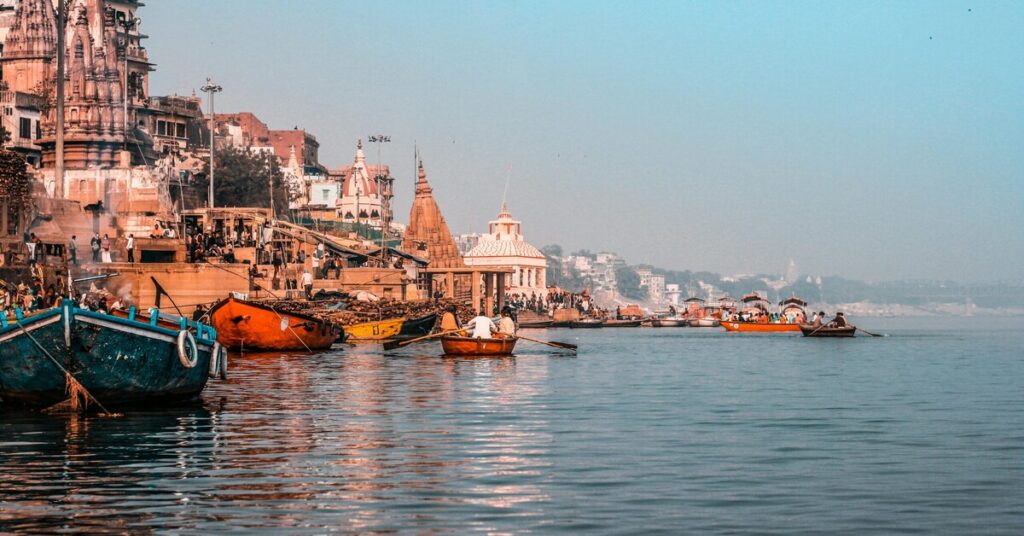
The Temples South Indian Pilgrims Visit That Most North Indian Tourists Miss
Kedar Ghat — The Heart of South Indian Varanasi
Kedar Ghat is where South India lives in Varanasi. The ghat is home to the Kedareshwar Temple — a South Indian-style shrine dedicated to Lord Shiva, managed by a South Indian matha (monastic institution) with continuous South Indian priests. The Kedar Ghat area is where Tamil, Telugu, Kannada, and Malayalam-speaking pilgrims have settled for centuries — running dharamshalas, temples, and pilgrimage support services in South Indian languages.
For South Indian pilgrims visiting Varanasi, Kedar Ghat is not just a stop on the circuit. It is the base from which the entire pilgrimage radiates. Staying near Kedar Ghat, beginning the day with Kedareshwar darshan before proceeding to Kashi Vishwanath, and ending the day at the Kedar Ghat evening puja — this is the South Indian pilgrim’s Varanasi.
Markandeya Mahadev Temple (Manikarnika Area)
Named for the sage Markandeya, who attained immortality through Shiva’s grace at this very site. The Markandeya legend is particularly beloved in South Indian Shaiva tradition — the story of the young sage who clung to the Shivalinga as Yama’s noose descended, and Lord Shiva who kicked away Death himself to save his devotee. For South Indian pilgrims with Shaiva devotion, the Markandeya temple carries a specific sacred charge that most North Indian pilgrims pass by.
Vishalakshi Shakti Peetha
One of the 51 Shakti Peethas — the eyes of the goddess Sati are believed to have fallen here. The Vishalakshi Temple is situated in the lanes near the Kashi Vishwanath corridor. For South Indian pilgrims with strong Devi traditions — particularly Shaiva-Shakta households from Tamil Nadu and Andhra Pradesh — Vishalakshi is an essential stop that most standard Varanasi guides skip.
Sankat Mochan Temple
Beloved by all Hindu pilgrims but carrying specific significance for South Indian devotees of Hanuman — particularly those from Andhra Pradesh and Karnataka where Hanuman is a primary deity. The Sankat Mochan Hanuman is in his form as the remover of all obstacles — the name of the temple — and the Tuesday darshan is particularly auspicious.
Kashi Vishwanath — The Abhishek Tradition
South Indian pilgrims perform Kashi Vishwanath darshan differently from the general queue. The South Indian Shaiva tradition includes a specific abhishek sequence — milk, curd, honey, ghee, and flowers offered to the Jyotirlinga with specific South Indian Sanskrit mantras (not the North Indian puja sequence). TripCosmos’s South Indian Kashi Yatra specialist guides coordinate this with authorised pandits who know the South Indian puja tradition specifically. This is a meaningful distinction — a pandit unfamiliar with South Indian Shaiva rites performs a generic abhishek; a specialist pandit performs your family’s tradition correctly.
The South Indian Kashi Yatra — What Makes It Different
South Indian pilgrims follow a specific ritual sequence in Varanasi that differs from the standard North Indian Kashi Yatra:
The Five Gangas sequence: Panchganga Ghat — where five sacred rivers are believed to converge underground — is particularly important in South Indian pilgrimage tradition. A ritual bath at Panchganga Ghat at dawn is essential in many South Indian family traditions and often skipped on standard tourist itineraries.
Manikarnika rituals: South Indian families often perform Shraddha (ancestral rites) at Manikarnika Ghat specifically — the burning ghat where the sacred fire is believed to have burned since time immemorial. For families who have lost elderly members, performing Shraddha at Manikarnika is one of the primary reasons for the Kashi Yatra. TripCosmos coordinates pandit arrangements for South Indian Shraddha at Manikarnika — including priests who know the South Indian Vedic tradition (Apastamba or Baudhayana sutra, as relevant to different South Indian communities).
The Kashi Yatra marriage ritual: In Telugu and some Tamil families, the groom performs a symbolic Kashi Yatra — dressed as a sanyasi with umbrella and fan, walking away from the wedding venue toward Varanasi — before the bride’s father intercepts him and invites him back with the offer of his daughter’s hand. In Varanasi itself, families sometimes perform the complete ritual at the ghats. TripCosmos’s South Indian specialist guide understands this tradition and can coordinate the ghat location, priest, and puja materials for families wanting to perform this ritual in Kashi itself.
Language-Specific Guide Service
TripCosmos’s South Indian Kashi Yatra specialist is available in Telugu, Tamil, Kannada, and Malayalam — confirmed at the time of booking. This is not translation assistance attached to a general guide. It is a specialist who:
- Knows the South Indian Shaiva and Shakti pilgrimage traditions specific to each community
- Understands the South Indian abhishek sequence at Kashi Vishwanath and coordinates the right pandit
- Narrates each temple’s significance in the devotee’s own language with doctrinal accuracy
- Manages the Manikarnika Shraddha pandit coordination for families performing ancestral rites
- Sequences the South Indian Varanasi circuit — including Kedar Ghat, Vishalakshi, Markandeya, Panchganga — in addition to the standard North Indian circuit
South Indian Kashi Yatra specialist guide cost: ₹2,000–₂,800 per day. Available for Telugu, Tamil, Kannada, and Malayalam. Confirm language and community-specific ritual requirements (Smartha, Shaiva, Vaishnava, Iyengar, etc.) at the time of booking for the right pandit coordination.
Complete South Indian Varanasi Tour Package — What’s Included
TripCosmos’s South Indian Kashi Yatra package for a group of 4–6 from South India:
Standard package (2N/3D):
- South Indian language specialist guide (Telugu/Tamil/Kannada/Malayalam)
- Private Innova Crysta or Tempo Traveller depending on group size
- Hotel accommodation near Kedar Ghat or Assi Ghat (South Indian community areas)
- Kashi Vishwanath VIP darshan (₹300 per person — eliminates 1 to 3-hour queue)
- South Indian abhishek pandit coordination
- Complete South Indian circuit: Kedar Ghat + Kedareshwar Temple, Kashi Vishwanath, Vishalakshi, Annapurna, Sankat Mochan, Manikarnika, Markandeya, Panchganga Ghat
- Private sunrise Ganga boat ride
- Ganga Aarti private boat (evening)
- Shraddha pandit coordination at Manikarnika if required (confirm in advance)
Package pricing:
- Group of 4 (sedan, 2-star hotel, 2N/3D): ₹5,499–₷,000 per person
- Group of 6–8 (Innova, 3-star, 2N/3D): ₹6,500–₸,500 per person
- Group of 10–12 (Tempo Traveller, mid-range, 2N/3D): ₹5,000–₶,500 per person
For South Indian families combining Varanasi with the UP sacred triangle — adding Ayodhya and Prayagraj — the Varanasi Ayodhya Prayagraj Tour Package extends the South Indian guide circuit across all three cities from ₹11,999 per person.
Varanasi’s significance in Hindu sacred tradition encompasses every regional devotional tradition — South Indian, North Indian, and international. The city’s sacred geography has drawn pilgrims from Tamil Nadu, Andhra Pradesh, Karnataka, and Kerala for as long as any written record exists. What TripCosmos’s South Indian specialist package adds is the bridge between your family’s specific tradition and the city that has always been its destination.
Website: https://tripcosmos.co WhatsApp: +91 9336116210
Contact TripCosmos on WhatsApp in Telugu, Tamil, Kannada, Malayalam, or English. Mention your language, state, community tradition (Smartha, Shaiva, Vaishnava, etc.), and any specific rituals required. The team confirms your South Indian specialist guide and complete package within 24 hours.
Frequently Asked Questions
Q1: Does TripCosmos have Telugu, Tamil, Kannada, and Malayalam-speaking guides for Varanasi?
Yes — TripCosmos maintains South Indian Kashi Yatra specialist guides available in Telugu, Tamil, Kannada, and Malayalam. These are not general guides with translation assistance — they are specialists familiar with South Indian pilgrimage traditions, the South Indian abhishek sequence at Kashi Vishwanath, and the specific temples (Kedar Ghat, Vishalakshi, Panchganga, Markandeya) that are central to South Indian Varanasi circuits. Confirm your language and community tradition at the time of WhatsApp booking.
Q2: What is the South Indian Kashi Yatra wedding ritual, and can it be performed in Varanasi?
In Telugu and many Tamil families, the groom performs a symbolic Kashi Yatra before the wedding — walking away as a sanyasi before the bride’s father recalls him with the offer of his daughter’s hand. Families who want to perform this ritual at the ghats of Varanasi itself — at Kedar Ghat or Dashashwamedh — can do so with TripCosmos’s coordination: location, priest, and puja materials all arranged in advance. Mention the Kashi Yatra wedding ritual requirement at the time of booking.
Q3: Can TripCosmos arrange Shraddha at Manikarnika Ghat for South Indian families?
Yes — pandit coordination for South Indian Shraddha (ancestral rites) at Manikarnika Ghat is available as a confirmed add-on to any package. The pandit knows South Indian Vedic tradition (Apastamba or Baudhayana sutra as applicable). Confirm your community tradition (Iyer, Iyengar, Smartha, Shaiva Siddhanta, etc.) when booking — it determines the correct ritual format and pandit assignment.
Q4: Where should South Indian pilgrims stay in Varanasi?
Near Kedar Ghat (also called South Indian Ghat) — this area has the highest concentration of South Indian dharamshalas, South Indian temple-managed guesthouses, and South Indian restaurants. The Kedar Ghat dharamshalas managed by South Indian mathas start from ₹400–₸00 per night. Mid-range South Indian-friendly hotels in the Kedar-Assi Ghat corridor start from ₹1,200–₂,500 per room. TripCosmos recommends and books accommodation in this zone as standard for all South Indian pilgrim packages.
Q5: What is the complete cost of a South Indian Kashi Yatra package for a group of 6?
A 2-night, 3-day private South Indian Kashi Yatra package for 6 people — including South Indian specialist guide, Innova Crysta, 3-star hotel near Kedar Ghat, Kashi Vishwanath VIP darshan, complete South Indian temple circuit, sunrise Ganga boat, and Ganga Aarti private boat — costs approximately ₹6,500–₸,500 per person. Shraddha pandit coordination at Manikarnika is an add-on: ₹1,100–₂,100 depending on ritual scope. Contact TripCosmos on WhatsApp for a complete itemised quote for your specific group size and tradition.



[…] businesses requiring reliable, professional transportation for teams, clients, and delegates. Our Varanasi-based fleet includes luxury sedans, spacious SUVs, comfortable Tempo Travellers, and premium buses with […]
[…] Varanasi Prayagraj group tour with Sangam boat […]
[…] Varanasi group tour package for 25-30 Persons with Hotel , When you book a Varanasi group tour package with hotel through TripCosmos, we handle every aspect of your travel from the moment your group arrives until departure. Your 25 to 30 travelers will be accommodated in comfortable, hygienically maintained hotels located conveniently near major ghats and temples, ensuring minimal travel time during sightseeing. We arrange either one large AC bus or multiple vehicles based on your preference and comfort requirements, all driven by experienced drivers familiar with Varanasi’s narrow lanes and traffic patterns. […]