
Banaras Tour Package Top Tourist Attractions , Banaras is a city where every stone whispers ancient stories, where spirituality manifests in physical form, and where the sacred and everyday intertwine seamlessly. With over 3,000 years of continuous habitation, this eternal city offers an overwhelming array of attractions that span spiritual, cultural, historical, and architectural wonders. At Tripcosmos, we’ve curated comprehensive tour packages that ensure you experience the most significant and soul-stirring attractions Banaras has to offer. This guide takes you through the must-visit sites that define the essence of this extraordinary city.
The Sacred Ghats: Banaras’s Living Heart
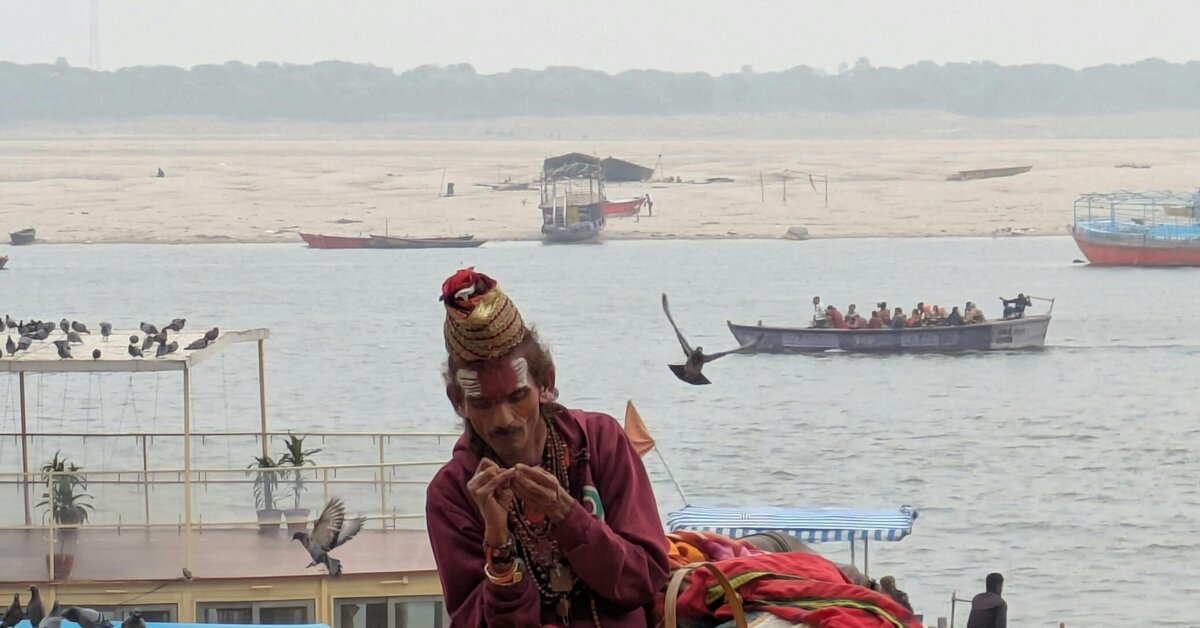
Banaras Tour Package Top Tourist Attractions , The ghats of Banaras are not mere riverfront steps—they are stages where the drama of life, death, devotion, and celebration unfolds continuously. Stretching over six kilometers along the western bank of the Ganges, these 88 ghats form the spiritual backbone of the city.
Dashashwamedh Ghat: The Crown Jewel
Dashashwamedh Ghat stands as Banaras’s most famous and vibrant ghat, pulsating with energy from dawn until late night. The name translates to “the ghat of ten horse sacrifices,” referring to a mythological ritual performed here by Lord Brahma. According to legend, Lord Shiva created this ghat to welcome Brahma, making it one of the most sacred bathing spots.
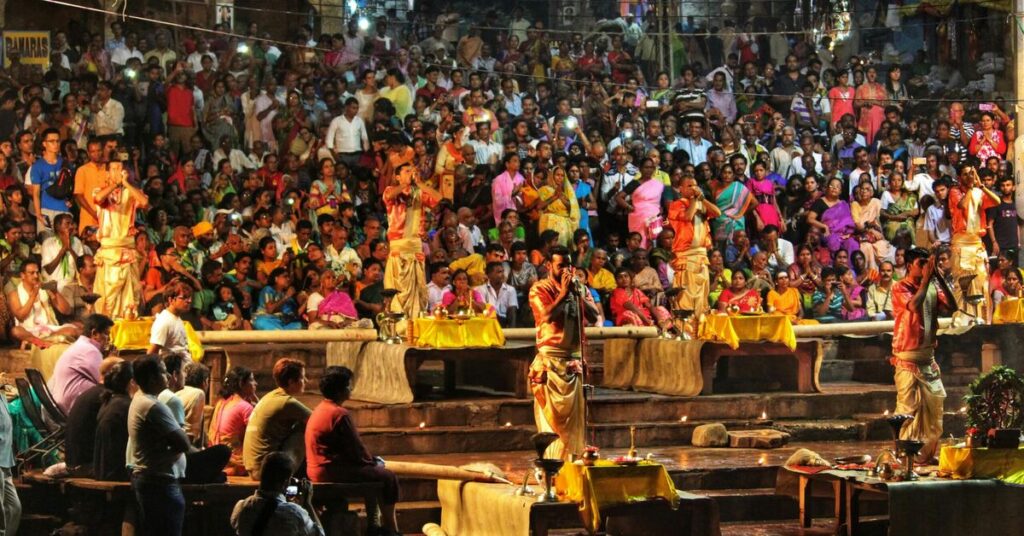
The ghat truly comes alive each evening during the Ganga Aarti, a spiritual ceremony that has become Banaras’s signature spectacle. As dusk approaches, thousands gather to witness seven young priests in saffron robes perform synchronized rituals with massive brass lamps, conch shells, incense, and fire. The ceremony is a feast for the senses—the rhythmic chanting, the clanging of bells, the fragrance of incense mixing with river breeze, and the visual poetry of flames dancing against the darkening sky. The reflection of countless diyas floating on the river creates a scene so beautiful it feels almost unreal.
During daylight hours, Dashashwamedh Ghat showcases Banaras’s everyday spiritual life. Pilgrims from across India take holy dips, pandas (priests) perform personalized pujas under colorful umbrellas, flower vendors arrange marigolds and roses in intricate patterns, and tourists jostle with devotees in democratic chaos. The ghat connects directly to the ancient lanes leading to Kashi Vishwanath Temple, making it a natural gathering point for spiritual seekers.
Assi Ghat: The Intellectual’s Sanctuary
Located at the confluence of the Assi and Ganges rivers, Assi Ghat offers a more contemplative atmosphere compared to Dashashwamedh’s intensity. This southern-most major ghat has become the cultural heart of Banaras, attracting artists, musicians, scholars, and those seeking quieter spiritual experiences.
The morning Subah-e-Banaras program at Assi Ghat is a hidden gem. As the sun rises, local musicians perform classical ragas and devotional songs in an intimate setting that feels like being invited into Banaras’s living room. The crowd here tends toward genuine music lovers rather than casual tourists, creating an atmosphere of shared appreciation for the city’s artistic heritage.
Evenings at Assi Ghat feature a smaller-scale aarti that, while less grand than Dashashwamedh, offers better proximity and personal connection to the ceremony. The ghat is also home to a large Shiva lingam under a peepal tree where devotees offer prayers throughout the day. The surrounding area has developed into a vibrant neighborhood with cafes, bookshops, and guesthouses catering to long-term visitors and students studying Indian classical arts.
Manikarnika Ghat: Where Death Becomes Sacred
Manikarnika Ghat, one of Banaras’s two cremation ghats, confronts visitors with life’s ultimate reality. Here, funeral pyres burn continuously, 24 hours a day, 365 days a year, as they have for millennia. According to Hindu belief, cremation at Manikarnika liberates the soul from the cycle of rebirth, granting moksha (salvation). Lord Shiva himself is said to whisper mantras into the ears of the deceased here, ensuring their liberation.
The ghat takes its name from a mythological event where Goddess Parvati lost her earring (manikarnika) while bathing, and Lord Shiva dug a kund (pond) to retrieve it. The sacred kund still exists at the ghat’s upper levels.
Visiting Manikarnika requires emotional preparation and cultural sensitivity. The atmosphere is surprisingly matter-of-fact—death here is not hidden or feared but accepted as natural transition. Families sit patiently through cremation processes that can last hours, priests recite Vedic mantras, and the Dom Raja (the traditional cremation ground keeper) oversees proceedings with authority passed down through countless generations.
The smoke rising continuously from the pyres, the heat from burning sandalwood and ghee, and the reality of human mortality create a profound experience that challenges modern tendencies to sanitize death. Visitors should observe respectfully, avoid photography, dress modestly, and remember they’re witnessing deeply personal family moments. The experience, while intense, offers perspective on Hindu philosophy’s understanding of life’s temporary nature and the soul’s eternal journey.
Panchganga Ghat: Where Rivers Meet
Panchganga Ghat holds special significance as the mythological confluence point of five rivers—Ganga, Yamuna, Saraswati, Kirana, and Dhupapapa. While only the Ganges visibly flows here, the other rivers are believed to exist spiritually, making it an exceptionally sacred bathing spot.
The ghat features impressive architecture, including ornate palaces built by various Maratha rulers. The Alamgir Mosque, built by Mughal Emperor Aurangzeb after demolishing a Vishnu temple, sits atop the ghat, creating an interesting historical and architectural juxtaposition. The mosque’s minarets are visible across the cityscape, marking Banaras’s complex religious history.
During festivals, particularly on Kartik Purnima, Panchganga Ghat becomes a focal point for pilgrims who believe bathing here on auspicious days multiplies spiritual merit. The ghat also hosts boat races and cultural programs during the annual Ganga Mahotsav festival.
Harishchandra Ghat: The Second Cremation Ground
Named after the legendary King Harishchandra, who worked at a cremation ground to fulfill his vow of truthfulness, this ghat serves as Banaras’s second cremation site. While smaller than Manikarnika, it offers similar insights into Hindu funeral practices and philosophical approaches to death. The ghat is less crowded, providing a slightly more peaceful environment for contemplation on mortality and spiritual beliefs surrounding death rituals.
Temples: Architecture of the Divine
Kashi Vishwanath Temple: The Golden Temple
The Kashi Vishwanath Temple represents Banaras’s spiritual epicenter and one of Hinduism’s most revered shrines. Dedicated to Lord Shiva in his form as Vishwanath (Lord of the Universe), this temple has been destroyed and rebuilt multiple times through history, each iteration reflecting the indomitable spirit of devotion that defines this city.
The current structure dates to 1780 when Maharani Ahilya Bai Holkar of Indore rebuilt it after Mughal Emperor Aurangzeb demolished the previous temple in 1669. The temple’s most striking feature is its gold-plated spire and dome, topped with an inverted lotus and a gold pot and flag—a visual beacon visible across Banaras. Maharaja Ranjit Singh of Punjab donated 820 kilograms of gold for this plating in 1835.
Reaching the temple involves navigating the ancient Vishwanath Gali, a narrow lane packed with devotees, vendors selling religious items, flower sellers, and pilgrims from across India. The sensory intensity builds with each step—temple bells ringing, Sanskrit chants echoing, incense smoke drifting, and rose petals crushing underfoot. The lane itself becomes part of the pilgrimage experience.
Inside, devotees queue for darshan of the Jyotirlinga, one of twelve across India where Shiva manifested as a column of light. The temple complex houses multiple smaller shrines, including temples to Goddess Annapurna, Lord Hanuman, and other deities. The architecture showcases traditional North Indian temple design with intricate carvings, though much interior decoration was lost during historical destructions.
Photography inside is prohibited, and security is stringent given the temple’s religious importance. Non-Hindus face restrictions on entering certain inner sanctum areas, though they can experience much of the complex. The atmosphere vibrates with devotion—priests performing abhishekam (ritual bathing of the deity), devotees making offerings, and Vedic chants creating a sonic backdrop that feels timeless.
Sankat Mochan Hanuman Temple: The Remover of Obstacles
Established by the revered saint-poet Tulsidas in the early 16th century, Sankat Mochan Temple holds immense importance for devotees of Lord Hanuman. Sankat Mochan translates to “reliever of troubles,” and countless devotees visit seeking Hanuman’s intervention in life’s difficulties.
The temple sits in a quieter area away from the ghats’ bustle, surrounded by trees that create a peaceful atmosphere. Unlike many ornate Indian temples, Sankat Mochan maintains relative architectural simplicity, allowing focus to remain on devotion rather than decoration. The main shrine houses an orange-colored Hanuman idol in a standing position, which devotees believe personally appeared to Tulsidas.
Tuesday and Saturday see particularly large crowds, as these days are considered especially auspicious for Hanuman worship. The temple management organizes classical music concerts in the courtyard, continuing a tradition that honors Tulsidas’s contribution to devotional literature and music. The annual Sankat Mochan Music Festival, held over five days during the full moon in March or April, attracts India’s finest classical musicians and thousands of music enthusiasts.
Durga Temple: The Fortress of the Goddess
The Durga Temple, instantly recognizable by its distinctive red ochre color, sits in a pleasant garden area that provides respite from the old city’s density. Built in the 18th century by a Bengali Maharani, the temple showcases North Indian Nagara architectural style with multiple shikhara (spires) rising in tiers, creating a striking silhouette against the sky.
Legend states that the Durga idol wasn’t installed by humans but appeared on its own—a swayambhu (self-manifested) form of the goddess. The temple is popularly called “Monkey Temple” due to numerous monkeys inhabiting the premises, considered holy as they’re associated with Hanuman. Visitors should secure belongings, as these monkeys are bold and will snatch food or shiny objects.
The temple complex includes a rectangular water tank (kund) where devotees perform rituals before entering the main shrine. During Navratri, the nine-day festival celebrating the divine feminine, the temple becomes a focal point of celebration with special pujas, cultural programs, and thousands of devotees seeking the goddess’s blessings.
Tulsi Manas Temple: Where Ramayana Came Alive
This relatively modern temple, built in 1964, stands on the spot where Tulsidas is believed to have composed the Ramcharitmanas, his Hindi retelling of the Ramayana that made the epic accessible to common people. The white marble temple’s walls are inscribed with verses from the Ramcharitmanas, turning the entire structure into a physical manifestation of this beloved text.
The temple’s architecture differs from traditional styles, incorporating more modern elements while maintaining spiritual atmosphere. The main shrine houses statues of Lord Rama with Sita, Lakshmana, and Hanuman. An adjacent hall features scenes from the Ramayana depicted through paintings and sculptures.
During Ram Navami (Lord Rama’s birthday) and other Ram-related festivals, the temple hosts special programs including continuous Ramcharitmanas recitations, devotional singing, and cultural performances. The temple management also organizes educational programs about Tulsidas’s life and literary contributions.
Bharat Mata Temple: A Unique Patriotic Shrine
Breaking from traditional deity worship, the Bharat Mata (Mother India) Temple, inaugurated by Mahatma Gandhi in 1936, features a relief map of undivided India carved in marble instead of traditional religious idols. This eight-story temple represents different aspects of Indian nationalism, history, and spiritual traditions.
Each floor is dedicated to different themes—one floor honors freedom fighters and national heroes, another showcases India’s religious diversity through representations of various faiths, and the top floor offers panoramic views of Varanasi. The temple reflects the nationalist movement’s attempt to create unified Indian identity transcending religious divisions.
While not as spiritually charged as traditional temples, Bharat Mata Temple provides historical and cultural context about India’s independence struggle and the role Banaras played in national consciousness. It’s particularly meaningful for those interested in modern Indian history beyond purely religious aspects.
Sarnath: Where Buddhism Began Its Journey
Located just ten kilometers from Banaras, Sarnath ranks among Buddhism’s four most sacred sites alongside Lumbini (Buddha’s birthplace), Bodh Gaya (where he attained enlightenment), and Kushinagar (where he achieved parinirvana). After attaining enlightenment under the Bodhi tree, Buddha walked to Sarnath’s Deer Park and delivered his first sermon to five ascetics, setting in motion the Wheel of Dharma (Dharmachakra Pravartana).
Dhamek Stupa: Monument to the First Sermon
The Dhamek Stupa dominates Sarnath’s landscape as a massive cylindrical structure standing 43.6 meters tall and 28 meters in diameter. Built during the Gupta period (5th-6th century CE), though earlier structures may have existed on the site, it marks the precise spot where Buddha delivered his first teaching expounding the Four Noble Truths and the Eightfold Path.
The stupa’s surface features intricate geometric and floral patterns carved into stone, demonstrating the sophisticated artistry of Gupta-era craftsmen. Walking clockwise around the stupa (parikrama) in meditation, you’ll encounter Buddhist pilgrims from Thailand, Myanmar, Sri Lanka, Tibet, Japan, and Korea—each bringing their unique Buddhist traditions to this shared sacred space.
The atmosphere at Dhamek Stupa carries profound peace. Unlike Banaras’s intense energy, Sarnath offers contemplative calm that reflects Buddhist philosophy’s emphasis on inner stillness. Sitting in the gardens surrounding the stupa, with ancient ruins scattered around and monks in meditation, provides a stark yet complementary contrast to the Hindu spirituality dominating Banaras.
Sarnath Archaeological Museum
This museum, built in 1910, houses one of India’s most important archaeological collections. The star attraction is the Lion Capital of Ashoka—the polished sandstone sculpture that serves as India’s national emblem. Originally atop an Ashoka Pillar at Sarnath, this 3rd century BCE masterpiece features four lions standing back-to-back atop a circular abacus decorated with sculptures of animals and a Dharma Chakra (wheel).
The museum contains hundreds of Buddha and Bodhisattva sculptures spanning several centuries and artistic styles—Mauryan, Kushana, and Gupta periods. The Buddha images display various mudras (hand gestures)—dhyana mudra (meditation), bhumisparsha mudra (earth-touching), vitarka mudra (teaching), and abhaya mudra (fearlessness)—each conveying different aspects of Buddha’s teachings through symbolic body language.
Particularly striking is the Buddha giving his first sermon, with detailed carving showing disciples and deer (representing the Deer Park setting). The museum also displays inscribed pillars, coins, pottery, and jewelry that provide insights into ancient Indian life and the spread of Buddhism.
International Buddhist Temples and Monasteries
Sarnath hosts temples and monasteries built by Buddhist communities from around the world, each reflecting their nation’s architectural traditions while honoring the universal Buddhist message. The Thai temple features characteristic pointed roofs and golden decorations, the Tibetan temple incorporates colorful paintings and prayer wheels, the Japanese temple emphasizes minimalist aesthetics and Zen gardens, and the Myanmar temple showcases distinctive Burmese architectural elements.
Walking through this international Buddhist enclave feels like traveling through Asia’s diverse Buddhist cultures condensed into one location. Monks from different traditions practice alongside each other, and the various chanting styles, architectural approaches, and ritual practices demonstrate how Buddhism adapted to different cultures while maintaining core teachings.
Mulagandha Kuti Vihar
This modern temple, built in 1931 by the Maha Bodhi Society, features beautiful frescoes by Japanese artist Kosetsu Nosu depicting scenes from Buddha’s life. The temple houses a gold Buddha statue and regularly holds prayer ceremonies with monks chanting in Pali, Buddhism’s sacred language. The adjacent Bodhi tree, grown from a sapling of the original tree in Bodh Gaya, provides a shaded space for meditation.
The temple’s serene gardens, well-maintained lawns, and the distant sound of chanting create an atmosphere conducive to contemplation. Many visitors find the peaceful energy here provides perfect balance after experiencing Banaras’s intensity.
Museums and Cultural Centers
Bharat Kala Bhavan Museum
Located on the Banaras Hindu University campus, Bharat Kala Bhavan ranks among India’s finest university museums. Its collection spans over 100,000 objects including ancient sculptures, miniature paintings, manuscripts, coins, textiles, and decorative arts.
The sculpture gallery displays pieces from the Mauryan period through medieval times, showcasing the evolution of Indian artistic styles. The miniature painting collection includes exquisite examples from various schools—Mughal, Rajasthani, Pahari, and local Banaras styles. The manuscript collection contains rare texts written on palm leaves and illustrated with natural pigments.
For those interested in understanding Banaras’s role in Indian art history, this museum provides essential context. The textile gallery showcases traditional Banarasi weaving techniques and historical silk pieces that demonstrate why Banaras silk achieved legendary status.
Ramnagar Fort and Museum
Located across the Ganges from the main city, Ramnagar Fort serves as the ancestral home of the Maharaja of Banaras and houses a fascinating museum of royal collections. Built in the 18th century, the sandstone fort showcases Mughal-influenced architecture with balconies overlooking the river.
The museum’s eclectic collection includes vintage cars, palanquins, ivory work, medieval costumes, weaponry including swords and old guns, astronomical clock, and royal furniture. While the presentation might seem haphazard by modern museum standards, this adds to the experience of exploring a living palace-turned-museum.
Ramnagar is also famous for its month-long Ramlila performances during September-October, considered the oldest and most authentic Ramlila tradition in India. The Maharaja still sponsors these performances, which involve the entire town and attract thousands of devotees who watch episodes from the Ramayana enacted across various locations.
Markets and Bazaars: Commercial Soul of Banaras
Vishwanath Gali: The Temple Approach
The narrow lane leading to Kashi Vishwanath Temple is itself an attraction—a chaotic, colorful, intensely commercial yet deeply spiritual space where commerce and devotion intermingle naturally. Shops sell everything necessary for temple worship—coconuts, flowers, incense, sacred threads, rudraksha beads, brass idols, religious texts, and prasad (blessed food offerings).
The lane’s architecture, with balconies nearly touching across the narrow space, creates a tunnel-like atmosphere where sunlight filters through gaps, and sounds echo and amplify. Navigating requires patience and awareness—the crowd moves with its own rhythm, and you must yield to cows (sacred and legally protected), who wander freely and receive right-of-way from everyone.
Thatheri Bazaar: Symphony in Brass
Thatheri Bazaar specializes in brass and copper utensils, creating a unique soundscape as craftsmen hammer metal sheets into pots, plates, lamps, and decorative items. This market has existed for centuries, with families passing down metalworking skills through generations.
Watching artisans work—heating metal over charcoal fires, hammering it into shape with practiced precision, and applying final polish—provides insights into traditional craftsmanship that persists despite modern manufacturing. The items range from everyday cooking vessels to elaborate ritual objects used in Hindu ceremonies.
Chowk and Gol Ghar: Evening Street Food Hub
The Chowk area, particularly around the Gol Ghar (round house) landmark, transforms into a street food paradise each evening. This is where Banaras’s legendary culinary traditions become accessible in their most authentic form.
Tamatar (tomato) chaat at Deena Chat Bhandar, kachori sabzi at Ram Bhandar, lassi at Blue Lassi, paan from famous paan shops, malaiyyo (available only in winter), freshly made jalebis, and countless other delights create a gastronomic journey through Banarasi flavors. The experience involves not just eating but observing preparation methods unchanged for decades and sharing crowded bench spaces with locals.
Silk Weaving Centers
Banaras silk sarees represent one of India’s most prestigious textile traditions, and visiting weaving centers provides insights into the painstaking artistry involved. The Chaukaghat, Lallapura, and Madanpura areas house numerous looms where families have woven silk for generations.
Watching weavers work on handlooms, creating intricate brocade patterns with gold and silver threads (zari), demonstrates why a single saree can take months to complete and command premium prices. Many centers welcome visitors, explaining the difference between quality levels, discussing how designs are created, and showing both traditional and contemporary patterns.
River Experiences: The Ganges as Attraction
Sunrise Boat Ride
The sunrise boat ride stands as an essential Banaras experience, offering perspectives impossible from land. As your boat pushes off in pre-dawn darkness, the ghats slowly reveal themselves—first as dark silhouettes, then gradually illuminated by the rising sun’s golden light.
From the river, you witness Banaras awakening—priests preparing ghats for the day’s rituals, devotees taking morning dips, yoga practitioners in various asanas, children playing, washermen (dhobis) beating laundry against stones, and sadhus in meditation. The changing light transforms the same view continuously, and the boat’s gentle rocking adds a meditative quality to the experience.
Your boatman, often from families who’ve worked the river for generations, narrates the ghats’ histories, points out architectural features, and explains ongoing rituals. The hour-long journey covers the main ghat stretch, providing comprehensive visual understanding of Banaras’s riverfront geography.
Evening Boat Ride During Aarti
Watching the Ganga Aarti from a boat offers entirely different perspective than viewing from the ghat itself. From mid-river, you see multiple ghats simultaneously—Dashashwamedh’s grand ceremony, smaller aartis at adjacent ghats, and countless diyas floating past your boat creating trails of reflected light.
The sound of bells and chanting carries across the water, and the visual spectacle of thousands gathered in devotion creates powerful imagery. The boat provides both proximity and distance—close enough to feel the energy yet far enough for contemplative observation. Photographers particularly appreciate the boat’s vantage point for capturing the ceremony’s grandeur.
Frequently Asked Questions
Which attractions should I absolutely not miss in Banaras?
While Banaras offers countless attractions, certain experiences form the absolute core of any visit. First and foremost is witnessing the Ganga Aarti at Dashashwamedh Ghat—this spectacular evening ceremony encapsulates Banaras’s spiritual energy in one overwhelming sensory experience. The sunrise boat ride on the Ganges is equally essential, providing perspective on the city’s relationship with the sacred river that defines its identity. Visiting Kashi Vishwanath Temple, even if you can only access certain areas, connects you to the spiritual heart that has drawn pilgrims for millennia. Exploring Manikarnika Ghat, while emotionally challenging, offers profound insights into Hindu philosophy regarding life, death, and moksha that you cannot gain elsewhere. Finally, Sarnath deserves a half-day minimum to understand Buddhism’s origins and appreciate the contrast between Buddhist and Hindu spiritual approaches. These five experiences—river sunrise, evening aarti, Vishwanath Temple, Manikarnika Ghat, and Sarnath—form the essential foundation. Everything beyond these enriches the experience but these core elements capture Banaras’s essence. Our Tripcosmos packages ensure all these must-see attractions are covered comprehensively with proper timing, guidance, and cultural context that transforms sightseeing into meaningful experience.
How much time should I allocate for visiting the main ghats?
The ghats require more time than most visitors initially anticipate because they’re not static monuments but living spaces where observing ongoing life is as important as seeing physical structures. For a comprehensive ghat experience, plan at least two full days. The first day should include a morning boat ride (2-3 hours including sunrise viewing and returning to your hotel) allowing you to see all major ghats from the river while understanding their geographical relationship. Afternoon can include walking between Dashashwamedh, Manikarnika, and a few other significant ghats (3-4 hours allowing time for observation, not just rushing past). Evening should center on the Ganga Aarti, arriving at least 30 minutes early to secure good viewing positions. The second day might explore southern ghats like Assi Ghat for the morning cultural program, visit northern ghats like Panchganga, and simply spend time sitting at different ghats watching daily life—something many initially dismiss but that often becomes the most memorable part of their visit. The ghats reveal different characters at different times and under different light conditions. Early morning brings spiritual seekers and meditation, midday shows commercial and daily life activities, late afternoon offers beautiful photography light, and evening brings ceremonial grandeur. Trying to “do” all ghats in a few rushed hours misses their essence entirely. Quality time at fewer ghats, really observing and absorbing the atmosphere, provides deeper value than superficially visiting many.
Is it possible to visit both Banaras’s main attractions and Sarnath in one day?
Technically possible doesn’t mean advisable. While Sarnath sits only 10 kilometers from Banaras (30-45 minutes driving depending on traffic), attempting to cover both comprehensively in a single day results in exhausting rush with insufficient time for either location to make proper impact. A realistic single-day attempt might include sunrise boat ride and Dashashwamedh Ghat in early morning (finishing by 9 AM), quick breakfast, then departing for Sarnath by 10 AM for 3-4 hours covering Dhamek Stupa, archaeological museum, main temples, and gardens. Returning by 3-4 PM allows afternoon rest before evening Ganga Aarti. However, this schedule eliminates Kashi Vishwanath Temple, Manikarnika Ghat, cultural experiences, walking through old city lanes, and all Banaras sites beyond the main ghats. You’ll achieve superficial coverage while missing deeper connections either place can provide. We strongly recommend allocating separate days—one full day for Sarnath allowing leisurely exploration without rushing, and at least two days for Banaras’s main attractions. This pacing lets experiences breathe rather than becoming checklist items. If time is absolutely limited and you must choose, consider your primary interest: if Buddhist spirituality and history fascinate you more, prioritize Sarnath; if Hindu traditions and the Ganges draw you more strongly, focus on Banaras itself. Our Tripcosmos tour packages are designed with realistic timing that balances comprehensive coverage with quality experience rather than rushing through exhausting itineraries that leave you overwhelmed rather than enriched.
Are there any offbeat or lesser-known attractions worth visiting?
Beyond the famous sites, Banaras hides numerous gems that fewer tourists visit but that offer rich experiences. The Alamgir Mosque, built atop Panchganga Ghat by Aurangzeb, showcases interesting religious history and provides views across the ghats from its elevated position. The New Vishwanath Temple (Birla Temple) on BHU campus features white marble construction and beautiful architecture without the crowds of the original temple. Man Mandir Ghat houses an 18th-century observatory built by Maharaja Man Singh of Jaipur, featuring stone astronomical instruments similar to those in Jaipur and Delhi—a fascinating stop for science and history enthusiasts. The Nepali Temple (Kathwala Temple) showcases stunning terracotta work and Nepali architectural style quite different from typical North Indian temples. For cultural experiences, the Ravi Kiran Sangeet Sammelan, an annual classical music festival, offers performances by renowned musicians in intimate venues. The early morning yoga sessions at Assi Ghat, while increasingly popular, still feel relatively uncrowded compared to major temples. The Weaver’s Quarters in areas like Lallapura and Madanpura allow you to watch traditional Banarasi silk weaving on handlooms—far more interesting than commercial silk shops. The Jantar Mantar (observatory ruins) near Dasaswamedh Ghat offers historical intrigue for those interested in astronomy’s history. Finally, simply getting lost in narrow lanes of areas like Chaukaghat or behind Vishwanath Temple, without specific destination, often leads to unexpected discoveries—tiny ancient shrines, artisan workshops, authentic local life, and the real Banaras that exists beyond tourist circuits.
Banaras’s navigation challenges stem from its ancient layout never designed for modern transportation. The old city features lanes barely wide enough for two people to pass, impossible for vehicles. The most effective approach combines multiple transportation modes strategically. For reaching the old city area from your hotel, use auto-rickshaws or app-based cabs (Ola/Uber operate here) to the nearest main road access point. From there, walking becomes essential—embrace it as part of the experience rather than an inconvenience. Comfortable walking shoes and willingness to ask directions (locals are generally helpful despite language barriers) are essential. The ghat area stretches linearly along the river, so walking between ghats happens naturally. Boats offer alternative ghat-to-ghat transport and add experience value, though they’re slower than walking. For Sarnath, hiring a car/taxi for the half-day provides comfort and flexibility—negotiate fixed rates beforehand or book through your hotel or Tripcosmos. For Ramnagar Fort across the river, local boats provide the most atmospheric transport, though bridge crossing by vehicle is also possible. The city is developing pedestrian pathways along ghats and improving lane infrastructure, but navigation remains organic rather than organized. Getting “lost” temporarily is normal and not dangerous—ghat areas are compact, and you’ll eventually reach recognizable landmarks. Our Tripcosmos tours include experienced guides who know every shortcut and alternative route, dramatically simplifying navigation while explaining what you’re seeing along the way, transforming confusing maze into comprehensible map.
Experience Banaras’s Treasures with Tripcosmos
Banaras’s attractions aren’t merely sights to check off lists—they’re doorways into understanding one of humanity’s oldest continuous civilizations, profound spiritual traditions, and the timeless relationship between human devotion and sacred geography. From the Ganges’s life-giving waters to temples echoing with millennia of prayers, from cremation grounds confronting mortality to Buddhist stupas marking enlightenment’s first sharing—each attraction adds depth to your understanding of India’s spiritual heart.
At Tripcosmos, our comprehensive tour packages ensure you experience these attractions not as isolated sites but as interconnected elements of Banaras’s living tapestry. Our expert guides provide historical context, spiritual insights, and practical navigation through the city’s complex geography, transforming tourism into genuine cultural immersion.
Contact us today to design your perfect Banaras itinerary, balancing must-see highlights with hidden gems, accommodating your interests and pace while ensuring you miss nothing essential to understanding this extraordinary eternal city.
Tripcosmos: Guiding you through Banaras’s treasures, one sacred step at a time.