Your cart is currently empty!
You may check out all the available trips and book one that suits you.
Continue Browsing Trips

Chitrakoot Temple Circuit Guide , is not a single-temple destination. It is a complete living Ramayana landscape — the exact forests, rivers, rocks, and hills where Lord Rama, Sita, and Lakshmana spent eleven and a half years of their fourteen-year exile.
Most first-time visitors arrive knowing only Kamadgiri and Ramghat. The complete Chitrakoot temple circuit has ten distinct sacred sites — each with its own Ramayana chapter, its own ritual purpose, and its own emotional register. Visited in the correct sequence, they tell the complete story of Rama’s exile in the order it actually unfolded. This guide maps every one of them with timing, accessibility, and the mythological context that makes each site genuinely meaningful.
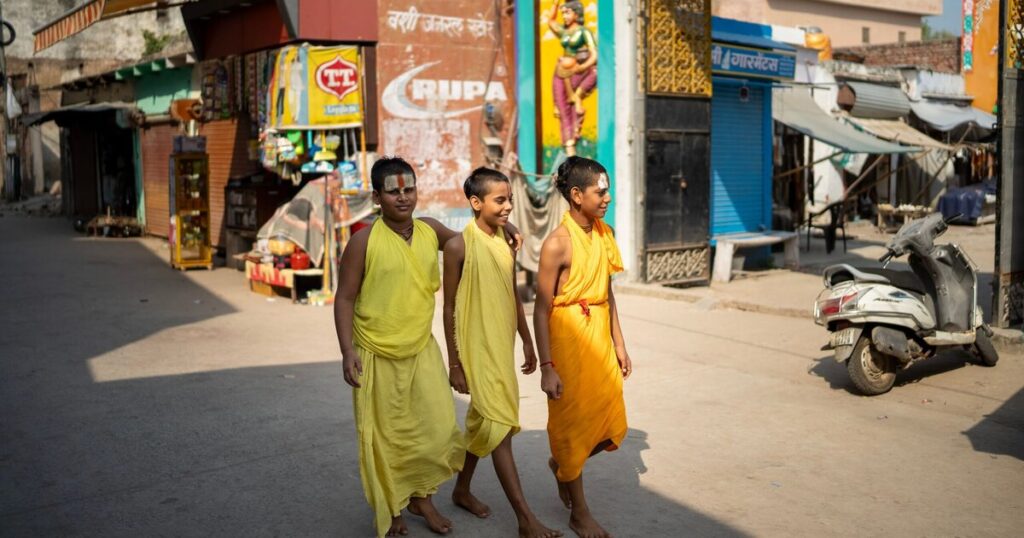
The darshan sequence at Chitrakoot mirrors the narrative sequence of Lord Rama’s time here — beginning at the river where he first arrived, moving to the hill where he resided, and extending into the forest where the most significant encounters of the exile took place. Visiting in the correct order means each site prepares you spiritually for the next. Visiting out of sequence means each site stands alone — interesting but disconnected. Your Tripcosmos guide follows this traditional sequence at every stop, with narration that links each site to the Ramayana chapter it represents.
VIP Sugam Darshan passes, verified outstation cabs, Ganga aarti boat allocations, and clean hotel stays — fully coordinated by our on-ground team.
Start here. Always. Ramghat on the Mandakini river is the spiritual heart of Chitrakoot — the ghat where Lord Rama, Sita, and Lakshmana first bathed after arriving from Ayodhya, and where the river’s sacred character was established for all pilgrims who followed. The Mandakini sunrise boat ride at 5:30–6:30 AM is the most powerful opening to any Chitrakoot visit — the river in morning mist, the forest on both banks still dark, the first temple bells beginning as the light arrives. Pre-book through Tripcosmos — Mandakini boat: ₹300–₀500 per boat. Free ghat entry. Allow 60 minutes.
The barefoot 5-kilometre circumambulation of the Kamadgiri hill — worshipped as the living form of Lord Rama himself — is the single most important sacred act available in Chitrakoot and one of the most powerfully moving pilgrimage rituals in all of North India.
The path passes through ancient forest alongside 33 temples, each marking a different episode from Rama’s time on this hill. Remove footwear completely before stepping onto the parikrama path — barefoot contact with the sacred earth is the ritual, not optional etiquette. Never rush the Kamadgiri parikrama. The families who complete it at a comfortable, devotional pace — stopping at each of the 33 temples, praying at each — have the deepest experiences. Allow 1.5–2 hours at a comfortable pace. Free entry. Best timing: 6:30–8:30 AM immediately after the Mandakini boat.
The Bharat Milap Temple marks the exact spot where Bharata met Lord Rama during the exile — arriving with the entire kingdom of Ayodhya to beg his brother to return and reclaim the throne. This is the moment where fraternal love and dharma collide most powerfully in the entire Ramayana. The temple is small, uncrowded, and deeply moving. This is a darshan of devotion rather than formal ritual — stand before the temple, reflect on Bharata’s love for Rama, and offer whatever prayer feels natural. Allow 25 minutes. Free entry.
A large sacred boulder on the serene bank of the Mandakini river bearing the impression of Lord Rama’s feet. According to legend, it is here where Goddess Sita was pecked by Jayant — Indra’s son disguised as a crow — and where Lord Rama responded with the Brahmastra. A few kilometres beyond Janaki Kund, Sphatik Shila is located on the riverbank where Rama and Sita sat together during the exile. Allow 20 minutes. Free entry.
Located 2 km from Ramghat, Janaki Kund is the ancient spot where Goddess Sita is believed to have bathed during the exile. The kund’s sacred water and tranquil riverbank setting make it one of the most peacefully feminine sites on the complete circuit — particularly meaningful for women pilgrims. Allow 20 minutes. Free entry.
The ashram of Sage Atri and his wife Sati Anusuya — the sage couple who received Rama, Sita, and Lakshmana during the exile. Sati Anusuya is credited with creating the Mandakini river through her prayers and devotion, making this ashram the theological origin point of the sacred river that flows through the entire Chitrakoot circuit. It is widely held that the formation of the Mandakini River resulted from Anusuya’s prayers and dedication. A deeply peaceful site in the forest — allow 30 minutes. Free entry.
A hilltop spring with a waterfall and a cluster of major temples dedicated to Lord Hanuman — supposedly created by Lord Rama to cool and appease Hanuman after he returned from setting fire to Lanka. The climb to Hanuman Dhara requires approximately 360 steps — manageable for most visitors but not recommended for elderly pilgrims with limited mobility. The hilltop view of the Mandakini valley and the surrounding Vindhya forest is among the most beautiful panoramas available anywhere at Chitrakoot. Allow 40 minutes. Free entry.
Eighteen kilometres from the main Chitrakoot complex — the caves where Lord Rama held royal court during the exile. The sacred underground river flowing through the cave is considered a manifestation of the Godavari. What to do: Wade through the cave — knee-deep water in sections — toward the inner sanctum where the throne is represented. No formal puja is required; the cave itself is the darshan. Children consistently describe Gupt Godavari as the most exciting stop of their entire North India pilgrimage trip. Important: Not suitable for elderly pilgrims or anyone with claustrophobia or mobility limitations. Plan this for morning when the cave is cooler and water levels are more manageable. ASI entry: ₹20–₀25 per person. Allow 45 minutes.
Located just outside the main Chitrakoot complex, Valmiki Ashram is where Sage Valmiki composed the Ramayana and where Luv and Kush — the twin sons of Rama and Sita — were born. The ashram carries a literary and devotional significance that is unique on the complete circuit — this is the origin point of the text that made every other site in Chitrakoot meaningful. Allow 25 minutes. Free entry.
In Bharatpur hamlet, Bharat Koop is the well into which Bharata poured water collected from every sacred river and shrine in India — making it theologically equivalent to bathing at all pilgrimage sites simultaneously. A less visited but deeply significant site for serious pilgrims. Allow 20 minutes. Free entry.
| Site | Duration | Entry Cost | Best Timing |
|---|---|---|---|
| Ramghat + Mandakini boat | 60 min | Boat ₹300–₀500 | 5:30 AM |
| Kamadgiri Parikrama | 90–120 min | Free | 6:30 AM |
| Bharat Milap Temple | 25 min | Free | 9:00 AM |
| Sphatik Shila | 20 min | Free | 9:30 AM |
| Janaki Kund | 20 min | Free | 10:00 AM |
| Sati Anusuya Ashram | 30 min | Free | 10:30 AM |
| Hanuman Dhara | 40 min | Free | 11:15 AM |
| Gupt Godavari Caves | 45 min | ₹20–₀25 | Morning |
| Valmiki Ashram | 25 min | Free | Afternoon |
| Bharat Koop | 20 min | Free | Afternoon |
A minimum of 1 night and 2 days is required to cover the complete temple circuit including Kamadgiri parikrama, Ramghat aarti, Gupt Godavari, and Sati Anusuya Ashram without rushing. The complete circuit is best spread across two mornings — giving each site the time it deserves.
Tripcosmos manages the complete Chitrakoot temple circuit — private cab from Prayagraj, Varanasi, or Lucknow, local guide with Ramayana narration at each site, Mandakini boat, accommodation near Kamadgiri or Ramghat, and 24/7 WhatsApp support throughout. From the Chitrakoot Tour Package to the Chitrakoot Spiritual Trip Planning Guide — every format is available with transparent pricing. The Varanasi Ayodhya Prayagraj Tour Package extends naturally to include Chitrakoot as the complete UP sacred circuit’s fourth city.
Website: https://tripcosmos.co WhatsApp: +91 9336116210
The Chitrakoot temple circuit is ten sacred sites telling one continuous Ramayana story — from Rama’s first arrival at the Mandakini river to the forest hermitages where the exile’s most intimate chapters unfolded. Visited in the correct sequence, with a guide who connects each site to the narrative it represents, the circuit is one of the most complete and most personally moving pilgrimage experiences available anywhere in North India. Every site is free. The only investment is time, preparation, and the willingness to walk barefoot on the earth where Lord Rama walked. For historical context, the Wikipedia article on Chitrakoot is worth reading before your visit.
The Kamadgiri Parikrama is the single most important sacred act in all of Chitrakoot — the barefoot 5-kilometre circumambulation of the hill worshipped as the living form of Lord Rama, passing 33 temples through ancient forest. It should never be skipped or rushed. Ramghat at dawn is the essential opening experience of the complete circuit.
A minimum of 1 night and 2 days covers the complete circuit — Kamadgiri parikrama, Ramghat morning and evening aarti, Mandakini boat ride, Gupt Godavari caves, Sphatik Shila, Janaki Kund, Sati Anusuya Ashram, and Valmiki Ashram — without rushing. Two nights and three days is recommended for serious pilgrims.
No — the Gupt Godavari caves involve wading through knee-deep water in low-ceiling passages and are not recommended for elderly pilgrims, those with claustrophobia, or anyone with mobility limitations. All other major Chitrakoot circuit sites — Kamadgiri parikrama with palanquin option, Ramghat, Sphatik Shila, and Bharat Milap — are accessible for elderly visitors with appropriate pacing.
Almost the entire circuit is free — Kamadgiri parikrama, Ramghat, Bharat Milap Temple, Sphatik Shila, Janaki Kund, Sati Anusuya Ashram, Hanuman Dhara, Valmiki Ashram, and Bharat Koop all have zero entry cost. Gupt Godavari Caves charges an ASI nominal fee of ₹20–₀25 per person. Mandakini boat ride costs ₹300–₀500 per boat.
Yes — Tripcosmos manages private cab from your departure city, local Chitrakoot guide with Ramayana narration, Mandakini boat, accommodation booking, and the complete temple circuit sequence in one confirmed booking. WhatsApp +91 9336116210 with your travel dates, departure city, and group size for complete pricing within 60 minutes.
VIP Sugam Darshan passes, verified outstation cabs, Ganga aarti boat allocations, and clean hotel stays — fully coordinated by our on-ground team.
TripCosmos guarantees verified Kashi Vishwanath Sugam Darshan passes (zero line waiting), private Dev Deepawali & Ganga Aarti Bajra boats, and verified Toyota Innova Crysta cabs with trusted local chauffeurs.

Comments are closed.