Your cart is currently empty!
You may check out all the available trips and book one that suits you.
Continue Browsing Trips
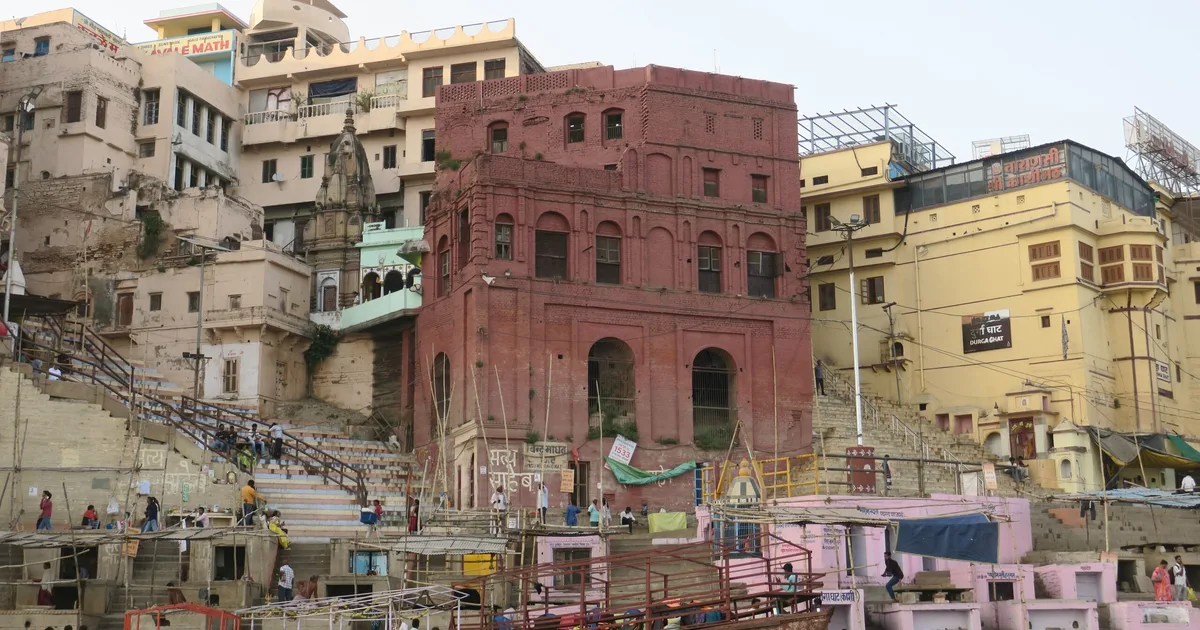
Israeli Backpacker Varanasi Guide 2026. Assi Ghat stay, dawn boat, Manikarnika, Vipassana & Sarnath. Budget from ₹600/day. TripCosmos — WhatsApp +91 9336116210.
Varanasi is not a surprise for most Israeli backpackers. By the time they arrive — typically overland from Goa, or by train from Delhi after flying in — they’ve already heard about it from people they met at the Pushkar camel fair, at the Rishikesh ashram, at the Hampi guesthouse. They know the Ganga Aarti happens at sunset. They know about the burning ghats. They know someone who cried there.
What they don’t know, usually, is why.
VIP Sugam Darshan passes, verified outstation cabs, Ganga aarti boat allocations, and clean hotel stays — fully coordinated by our on-ground team.
Varanasi is the most philosophically dense city on earth — and Israeli travellers, who arrive in India after military service with a specific hunger for something real and difficult to name, tend to find exactly that here. The city does not perform. It simply continues, as it has for three thousand years: births, cremations, prayers, philosophy, the river. For travellers who have spent the last few years in a world of extreme structure and discipline, this continuous, unhurried sacred life is the exact opposite of everything they’ve come from — and often, exactly what they were looking for.
This guide covers everything an Israeli backpacker needs before arriving in Varanasi: the budget circuit, where to stay, what to eat, the specific things that matter to Israeli travellers, and how to avoid the three mistakes that consistently ruin the experience.
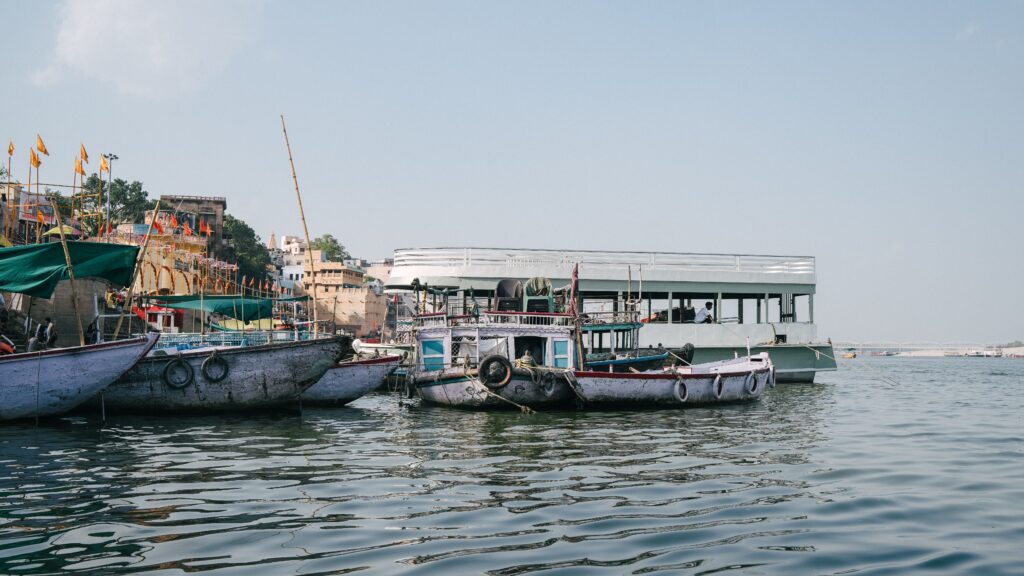
The standard Israeli India backpacker route runs: Goa → Hampi → Mysore → Rishikesh → Varanasi → Bodhgaya → Rajasthan → Delhi. Varanasi sits in the middle of this circuit — typically visited after the Rishikesh yoga and Vipassana experience and before the Rajasthan historical circuit.
This sequence is not random. Rishikesh provides the physical and meditative opening — yoga, Ganga, mountains, the beginning of something. Varanasi provides the depth — philosophy, death, the oldest city, the most honest confrontation with impermanence available in the physical world. The sequence works because Rishikesh prepares and Varanasi delivers.
From Rishikesh to Varanasi: 700 km, 12–14 hours by overnight train from Haridwar Junction. The overnight Ganga-Yamuna Express or Maha Kaushal Express covers this route — book on IRCTC or at the station 1–2 days ahead. Sleeper class is ₹300–₅00 per person, 3AC is ₹600–₸00.
From Varanasi to Bodhgaya: 240 km, 5–6 hours by shared cab or private taxi. Many Israeli travellers add Bodhgaya for the Bodhi Tree and the Vipassana Centre at Dhamma Bodhi — one of the most accessible 10-day Vipassana courses in India, running continuously and internationally popular.
From Goa to Varanasi: Long — typically 30+ hours by train or a combination of short flights. Most Israeli travellers flying directly to Goa first take the overnight train to Mumbai and then the Varanasi-bound Kashi Express. Alternatively: fly Goa → Delhi → Varanasi (the cheapest option if booked 2–3 weeks ahead).
The most important accommodation decision for any Varanasi backpacker is Assi Ghat vs. Dashashwamedh Ghat area. For Israeli travellers specifically — Assi Ghat is the answer.
Assi Ghat is Varanasi’s most cosmopolitan ghat — the area where international long-stay visitors, yoga practitioners, Vedanta students, and backpackers have settled for decades. It has the highest concentration of rooftop cafes, international restaurants, yoga studios, and guesthouses that understand international traveller needs.
Budget guesthouses near Assi Ghat: ₹400–₸00 per night for a private room. Several well-regarded guesthouses in the Assi area have rooftop views of the Ganga, reliable hot water, and working Wi-Fi — the three requirements of every backpacker regardless of nationality.
Israeli community presence at Assi Ghat: A small but consistent Israeli traveller community maintains informal presence at Assi Ghat throughout the year. The cafes near the ghat — particularly those serving hummus, shakshuka, and falafel — have become informal gathering points. This is not an official “Israeli quarter” like Paharganj in Delhi, but the density of Israeli travellers means meeting others from Israel at Assi Ghat is almost guaranteed.
The rooftop cafe circuit: Varanasi’s rooftop cafes — with Ganga views, strong coffee, and slow service — are the Israeli backpacker’s natural habitat. The most popular cluster is within 5 minutes walk of Assi Ghat: Brown Bread Bakery (famous among long-stay international visitors), Dosa Cafe (exactly what the name says), and several unnamed rooftop spots that Israeli travellers seem to find within hours of arrival and tell nobody about.
Varanasi is a completely vegetarian city in its pilgrimage economy. Street food, dhaba meals, and restaurant menus are almost entirely vegetarian — which works well for most Israeli dietary preferences.
What’s available: Hummus and falafel are available at several Assi Ghat cafes that have responded to the Israeli traveller demand over the years. Quality varies significantly. The best strategy: the hummus at Varanasi rooftop cafes is serviceable; the kachori-sabzi and tamatar chaat at street stalls near Assi Ghat are extraordinary. Eat local.
The Israeli-friendly food list:
What to avoid: Cold pre-made food, cut fruit from street vendors, anything with tap water (use only bottled or filtered). Stomach problems are the most consistent disruption to any Varanasi experience — budget travellers who eat street food incautiously lose 2–3 days of their visit.
The burning ghats — Manikarnika: This is the stop that every Israeli traveller mentions in retrospect as the most significant. The continuously burning cremation ghats — where 200+ bodies are cremated daily, 24 hours, 365 days — are the most direct confrontation with mortality available in any public space in the world. For travellers who have spent years in a military context where mortality is present but ritualised, seeing the Hindu relationship with death — open, unhurried, not hidden — is deeply affecting.
Protocol: Stand at a respectful distance. Do not photograph. Do not ask intrusive questions. A short time spent quietly observing is enough. Your guide can explain what you’re seeing — the wood measurements, the family rituals, the Dome caste’s role — in ways that make the experience comprehensible rather than simply overwhelming.
Vipassana at Dhamma Varanasi: Several Israeli travellers use Varanasi as the entry point for a 10-day Vipassana course at the Dhamma Varanasi centre (10 km from the city). Registration is free, the course is by donation, and the experience consistently described as among the most significant of the India trip. Book at dhamma.org well in advance — courses fill months ahead.
Sarnath: 10 km from Varanasi — the site of the Buddha’s first sermon. For Israeli travellers with spiritual interest in Buddhism (common given the prevalence of Vipassana and Buddhist meditation practice in the Israeli post-army travel community), Sarnath is the logical day trip. The Dhamek Stupa, the Archaeological Museum with the Ashokan Lion Capital, the Mulagandha Kuti Vihar temple — half a day covers the complete circuit.
The Dawn Boat Ride: The most universally recommended Varanasi experience — shared boat from Assi Ghat at 5:30 AM along the full ghat arc as the city wakes up. ₹200–₄00 per person on a shared boat. A private boat for 2–3 people: ₹800–₁,200. The experience is not describable. Go.
The Ganga Aarti: Evening at Dashashwamedh Ghat. You don’t need to book anything — arrive by 6:15 PM, find a spot on the ghat steps, and stay for the full ceremony (approximately 45 minutes). For a better view with less crowd pressure, a shared river boat for the ceremony costs ₹200–₃00 per person.
Mistake 1 — Rushing. Varanasi is not a 2-day stop. The travellers who describe it as life-changing stayed 5 to 7 days. The travellers who say “it was fine” stayed 2. Give it minimum 4 nights.
Mistake 2 — Staying near Dashashwamedh instead of Assi Ghat. Dashashwamedh is more central but also more chaotic, more tourist-facing, and further from the intellectual and international traveller community. Assi Ghat is slower, more genuine, and where the city reveals itself.
Mistake 3 — Photography at Manikarnika. Photography at the burning ghats is not permitted and is genuinely disrespectful in this context. Several Israeli travellers have had confrontational experiences resulting from attempting this. The experience does not require documentation — it requires presence.
India e-Visa: Israeli passport holders qualify for the India e-Tourist Visa — apply at indianvisaonline.gov.in minimum 5 days before arrival. Valid for 90 days, multiple entry. Straightforward process.
Currency: Israel Shekel (ILS) to Indian Rupee — approximately ₹22–₂3 per ILS. India is extremely affordable. A complete Varanasi day (accommodation, food, boat, local transport) costs approximately ₹600–₁,000 per person on a budget. Weekly spend: ₹4,000–₷,000 for a comfortable backpacker budget.
SIM card: Purchase an Indian SIM at the airport on arrival. Airtel or Jio. Required for UPI payments, WhatsApp, maps, and IRCTC train booking. Passport required for registration.
Hebrew in Varanasi: Some Assi Ghat guesthouse owners have basic Hebrew phrases from years of Israeli guests. Google Translate handles anything more complex. English is universally workable for all practical interactions.
Varanasi’s significance as one of the world’s oldest continuously inhabited cities — and its particular draw for international spiritual travellers — makes it one of the most distinctive urban experiences available anywhere in Asia. Israeli backpackers who arrive expecting a tourist site and stay long enough to encounter the actual city consistently describe it as the India experience that most exceeded expectation.
For any specific logistics — cab bookings, Sarnath day tours, Ganga Aarti boat pre-booking, or guide service for a deeper cultural experience — TripCosmos operates from Varanasi and responds to WhatsApp messages in English within minutes.
Website: https://tripcosmos.co WhatsApp: +91 9336116210
The complete Varanasi budget travel tips guide on TripCosmos covers all the cost-saving strategies relevant to budget international travellers. For the Sarnath day trip, the Sarnath Complete Visitor Guide gives the full circuit with timings and entry costs.
Yes — Varanasi is one of India’s safest cities for solo international travellers, including women. The Assi Ghat area specifically has a longstanding international traveller community and guesthouse owners who are experienced with solo international visitors. Standard India travel safety applies: use rickshaws and autos with agreed fares, avoid isolated areas after midnight, and keep valuables in a money belt rather than an open bag.
Minimum 4 nights — ideally 5 to 7. The travellers who describe Varanasi as a defining India experience almost universally stayed 5 or more days. 2-night visits cover the dawn boat and the Ganga Aarti but miss everything that requires time: the burning ghats at different hours, the early morning 5 AM ghat quiet, the old city lanes on an afternoon with no agenda, and Sarnath.
Yes — Dhamma Varanasi operates 10-day Vipassana courses approximately 10 km from the city centre. Registration is free and the course is by donation. Book at dhamma.org well in advance — courses fill months ahead, particularly for the popular October–March season. Many Israeli travellers combine a Varanasi city visit before or after a Dhamma Varanasi course.
Overnight sleeper train from Haridwar Junction (15 km from Rishikesh) — ₹300–₵00 per person in sleeper class, 12–14 hours. Book on IRCTC at least 1–2 days ahead. 3AC (₹600–₸00) is significantly more comfortable for a 12-hour journey and worth the upgrade. The Varanasi City Express and Maha Kaushal Express cover this route.
Yes — including private dawn boat bookings (₹800–₁,200 for 2–3 people), English-speaking cultural guides for Manikarnika and Sarnath, cab bookings for the Varanasi-to-Bodhgaya leg, and general Varanasi arrival logistics. Contact via WhatsApp in English with your dates and requirements.
VIP Sugam Darshan passes, verified outstation cabs, Ganga aarti boat allocations, and clean hotel stays — fully coordinated by our on-ground team.
TripCosmos guarantees verified Kashi Vishwanath Sugam Darshan passes (zero line waiting), private Dev Deepawali & Ganga Aarti Bajra boats, and verified Toyota Innova Crysta cabs with trusted local chauffeurs.

One Comment
Comments are closed.