Your cart is currently empty!
You may check out all the available trips and book one that suits you.
Continue Browsing Trips
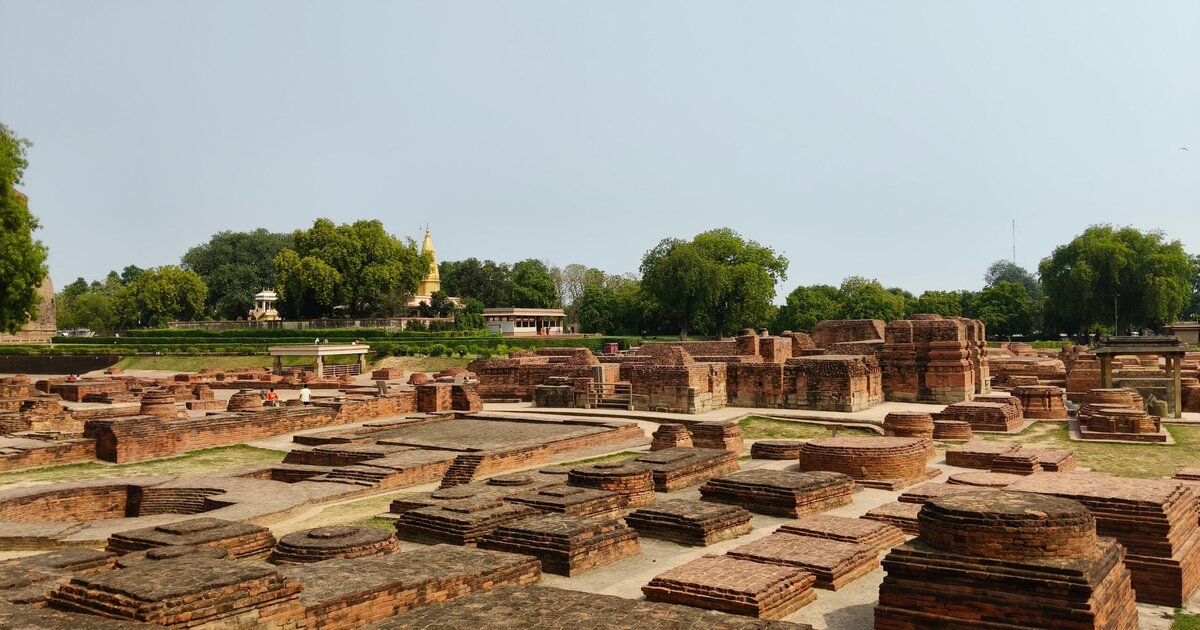
Sarnath Complete Visitor Guide 2026. Dhamek Stupa, Ashoka Lion Capital, Japanese temple & timings. Don’t miss on Friday. TripCosmos — WhatsApp +91 9336116210.
Ten kilometres from Varanasi’s ghats, the Ganga bends north, and the noise of the city falls away. The road through Sarnath passes through quiet residential lanes and emerges at a deer park where, sometime in the 5th century BCE, a man who had just understood the nature of suffering, its cause, and its end, sat down with five companions and spoke for the first time about what he had realised.
The Dhammacakkappavattana Sutta — the Setting in Motion of the Wheel of Dharma — was delivered here. Every school of Buddhism that exists anywhere on earth traces its foundational teachings to this deer park, this conversation, this morning.
VIP Sugam Darshan passes, verified outstation cabs, Ganga aarti boat allocations, and clean hotel stays — fully coordinated by our on-ground team.
Sarnath is the most important teaching site in all of Buddhism. It is 10 kilometres from most Varanasi hotels. And it is consistently the stop that most Varanasi visitors either rush through in 45 minutes or skip entirely.
This guide gives you the complete picture — every site, the right sequence, how long each stop takes, what each one means, and how to experience Sarnath as what it actually is rather than what a hurried day-trip makes it feel like.
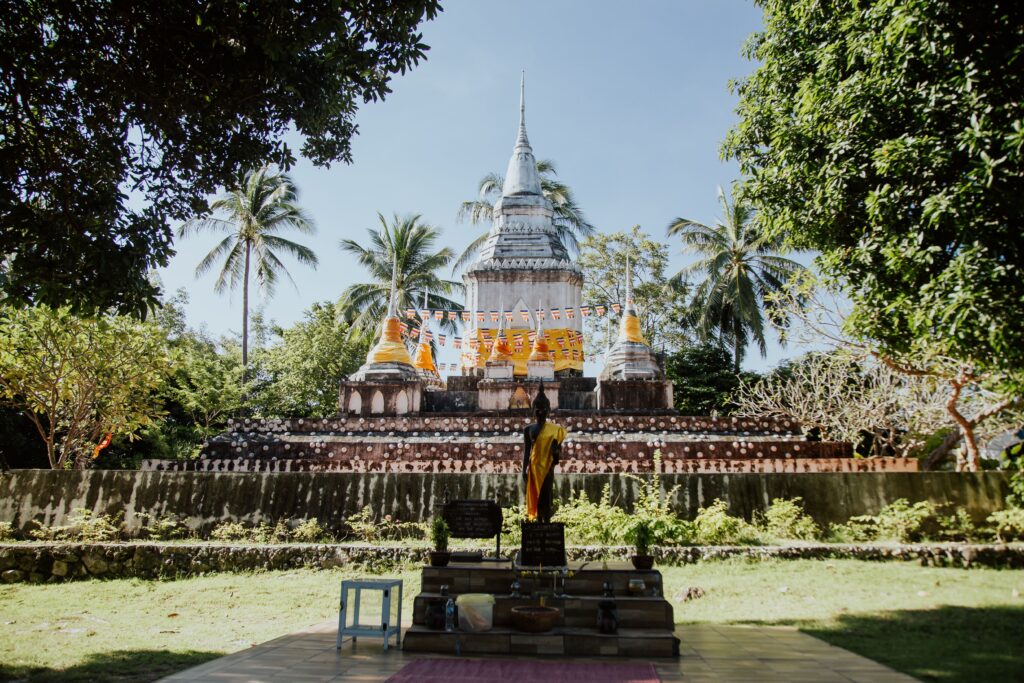
The 43.6-metre cylindrical stone stupa rising from the Sarnath sacred zone marks the precise spot where the Buddha delivered the first sermon. It was built in its current form during the Gupta period (4th–6th century CE) on the foundation of an earlier Ashokan structure. The geometric stone carvings around the base — floral and geometric patterns from the 6th century — are among the finest examples of Gupta-era Buddhist decorative art.
For Buddhist pilgrims, this is the most sacred outdoor space in the world outside Bodhgaya. For Hindu pilgrims, the Dhamek marks the site where a great tradition of dharmic inquiry reached its most articulate expression. For everyone who stands before it quietly — it is a place that communicates something without language.
Entry: ₹40 per person (Indians), ₹600 per person (foreign nationals). Timing: Sunrise to sunset. Allow: 30–45 minutes.
The Sarnath Archaeological Museum houses the most important collection of early Buddhist sculpture in India — and one of the finest collections of Gupta-period art anywhere. The centrepiece: the Ashoka Lion Capital, originally erected atop a pillar by Emperor Ashoka in the 3rd century BCE at Sarnath, now India’s national emblem. Four roaring lions on an abacus decorated with the Dharma Chakra and four animals. Every Indian passport carries this image. The original is here.
Also in the museum: the first-century CE sandstone Buddha seated in dharmachakra mudra — considered one of the most perfect representations of the teaching Buddha in Indian art history. The museum’s collection spans five centuries of Buddhist sculpture from the Mauryan through the Gupta period.
Entry: ₹25 per person. Timing: 10:00 AM – 5:00 PM, closed Fridays — plan your Sarnath day around this. Allow: 45–60 minutes.
Built in 1931 by Anagarika Dharmapala, Sri Lankan Buddhist reformer, this is the most actively worshipped modern temple in Sarnath. The interior frescoes were painted by Kosetsu Nosu, a Japanese artist — depicting the complete life of the Buddha across the walls of the temple that marks his first teaching site. The contrast between the 2,500-year-old stupa and the 1931 temple is precisely what makes Sarnath so remarkable: the living tradition and its ancient geography exist side by side.
A cutting of the original Bodhi Tree from Sri Lanka is planted in the temple courtyard. The tree under which the Buddha was enlightened at Bodhgaya, its cutting taken to Sri Lanka in the 3rd century BCE, and its cutting’s cutting planted here at Sarnath in the 1930s.
Entry: Free. Timing: 9:00 AM – 6:00 PM. Allow: 30 minutes.
The deer park where the five disciples gathered. The name Rishipattana means “the place of rishis” — this land was considered sacred before Buddhism arrived. The name Mrigadava means “deer grove.” Both names survive because both traditions were always present here.
The park today has actual deer — the living continuity of the animals that have been here for 2,500 years. For families with children, the deer park provides a natural, engaging context for the Sarnath visit. For adults, walking the same ground where the first Buddhist community gathered and heard the first teaching is quietly extraordinary.
Entry: Included in the main site ticket (₹40). Allow: 15–20 minutes.
A 5-minute walk from the main Sarnath complex. An ancient stupa — marking the spot where the five disciples first met the newly enlightened Buddha as he walked from Bodhgaya — topped with an octagonal Mughal tower built by Humayun’s son in the 16th century in honour of his father’s stay on the site.
The layered history: 2,500-year-old Buddhist stupa, 500-year-old Mughal tower, the same sacred ground. Sarnath’s entire history is concentrated in this single structure. Most day-trippers skip it. It deserves 15 minutes.
Entry: Free. Allow: 15 minutes.
Sarnath’s sacred zone contains Buddhist monasteries from multiple countries — each a national expression of the tradition that was born here:
Thai Temple (Wat Thai Sarnath): Gold spire, elaborate Theravada interior, the most visually striking monastery on the circuit. Open: 9 AM–6 PM.
Tibetan Monastery: Prayer wheels on the outer walls, morning chanting session (6–7 AM, open to respectful visitors), Vajrayana iconography throughout. Particularly significant for Buddhist pilgrims from Ladakh, Sikkim, and the Himalayan communities.
Japanese Temple (Nichigai Suzan Horinji): Nichiren Buddhist sanctuary — traditional Japanese wooden architecture, golden Buddha, Zen meditation hall. For Japanese Buddhist pilgrims specifically, the most personally resonant stop in the complete Sarnath circuit.
Chinese Temple, Sri Lankan Temple, Korean Temple, Myanmar Temple: Each a distinct architectural and devotional expression of the same tradition.
The international monastery circuit adds 60–90 minutes to a Sarnath visit and gives the most complete picture of Buddhism as a living global tradition returning to its source.
Entry: All free.
The sequence that works best:
Timing: A complete, unhurried Sarnath visit takes 3.5 to 4.5 hours — not the 45 minutes most day-trippers give it. Allow an early afternoon arrival (12:30–1:00 PM) from Varanasi, spend the full afternoon, and return before sunset.
The Friday warning: The Archaeological Museum is closed on Fridays. This is the most common avoidable Sarnath disappointment. Check your day of travel before planning.
By private cab (recommended): ₹400–₆00 for a round trip from central Varanasi ghats. Your Varanasi driver can drop you at the main Sarnath gate and wait during your visit. TripCosmos includes Sarnath as a standard afternoon option on all multi-day Varanasi packages — the complete Varanasi tour packages include Sarnath within the full-day cab itinerary.
By auto-rickshaw: ₹100–₁50 one-way from Varanasi Cantt. Shared autos are available from Varanasi Junction for approximately ₹30–₄0 per person.
By taxi from Babatpur Airport: For visitors landing at Varanasi Airport and wanting to go to Sarnath before checking in to their hotel — Sarnath is on the route from Babatpur into the city. Ask your TripCosmos driver to route via Sarnath on the airport transfer.
Sarnath pairs most naturally with:
Varanasi (10 km): The standard combination — Varanasi sacred circuit in the morning, Sarnath in the afternoon. Both in a single full day.
Bodhgaya (250 km, 5–6 hours): The Buddha’s enlightenment site — the natural continuation from Sarnath for Buddhist pilgrims. Spend two nights in Varanasi, one day at Sarnath, then travel to Bodhgaya for the Bodhi Tree and Mahabodhi Temple. TripCosmos’s Varanasi Buddhist Circuit Tour covers this complete circuit with private cab and specialist guide.
For Japanese Buddhist pilgrims specifically, the Japanese temple at Sarnath and the Kosetsu Nosu frescoes at Mulagandha Kuti Vihar carry a deeply personal significance — see the dedicated Japan Buddhist Varanasi guide for the complete Japan connection at Sarnath.
Sarnath’s place in Buddhist sacred geography is unambiguous — it is one of the four most important Buddhist pilgrimage sites on earth, alongside Lumbini (birth), Bodhgaya (enlightenment), and Kushinagar (passing). Of the four, it is the most accessible from a major Indian city and the most intellectually rich in terms of what its museum and archaeological sites offer.
Website: https://tripcosmos.co WhatsApp: +91 9336116210
The main Sarnath archaeological site including the Dhamek Stupa and Deer Park: ₹40 per person for Indian nationals, ₹600 per person for foreign nationals. The Archaeological Museum charges ₹25 per person separately. Mulagandha Kuti Vihar and all international monasteries are free. Total entry cost for an Indian visitor completing the full circuit: ₹65 per person.
The museum is closed every Friday. This is the single most important planning detail for any Sarnath visit — arriving on a Friday means missing the Ashoka Lion Capital and the complete Gupta-period Buddhist sculpture collection. Plan your Sarnath day for any day except Friday.
A complete, unhurried Sarnath visit — covering the Dhamek Stupa, Deer Park, Archaeological Museum, Chaukhandi Stupa, Mulagandha Kuti Vihar with Kosetsu Nosu frescoes, and the international monastery circuit — takes 3.5 to 4.5 hours. Most day-trippers allocate 45 minutes and miss the museum, the Chaukhandi Stupa, and the international monasteries entirely. An afternoon arrival (12:30–1:00 PM) from Varanasi, after the museum opens at 10 AM and has had its morning visitors, works well.
Yes — unequivocally. Sarnath’s significance transcends religious identity. The Ashoka Lion Capital is India’s national emblem. The Gupta-period Buddhist sculpture in the museum is among the finest art produced in the subcontinent. The 2,500-year archaeological history of the deer park is extraordinary regardless of faith. Hindu, Jain, and secular visitors consistently rate Sarnath among the most powerful experiences of their Varanasi circuit — often more so than many of the city’s major temples.
Yes — Sarnath is included as a standard afternoon option in all TripCosmos Varanasi packages. The standard full-day itinerary covers the Varanasi ghat circuit and Kashi Vishwanath in the morning and routes to Sarnath in the afternoon for the museum and main site. The cab is included in the package fare — Sarnath adds approximately 20 km to the day’s distance. Contact TripCosmos on WhatsApp with your dates and group size to confirm a Sarnath-inclusive Varanasi package.
VIP Sugam Darshan passes, verified outstation cabs, Ganga aarti boat allocations, and clean hotel stays — fully coordinated by our on-ground team.
TripCosmos guarantees verified Kashi Vishwanath Sugam Darshan passes (zero line waiting), private Dev Deepawali & Ganga Aarti Bajra boats, and verified Toyota Innova Crysta cabs with trusted local chauffeurs.

One Comment
Comments are closed.