Your cart is currently empty!
You may check out all the available trips and book one that suits you.
Continue Browsing Trips
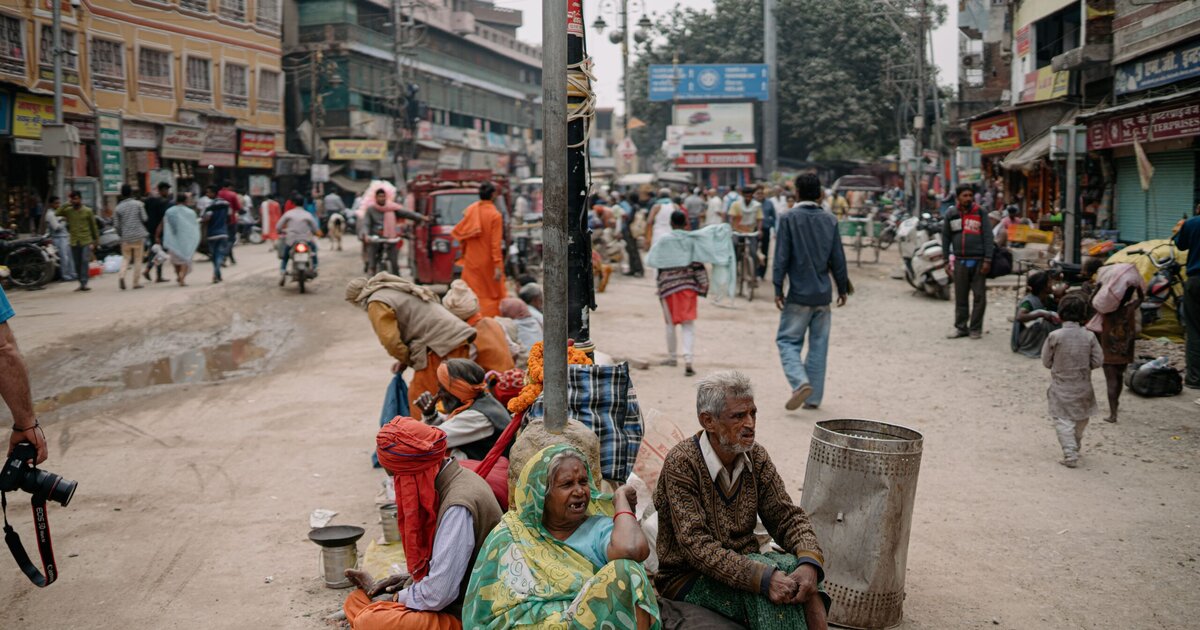
Mauritius Indian diaspora Varanasi package 2026. Return to ancestral Ganga, Pind Daan at Gaya & complete sacred circuit. TripCosmos from ₹11,999 — WhatsApp +91 9336116210.
In Mauritius, there is a sacred crater lake called Ganga Talao — the Lake of Ganga. It sits high in the mountains of Savanne district, surrounded by towering statues of Lord Shiva, visited by hundreds of thousands of Hindu devotees every Maha Shivaratri. In 1972, holy water from the actual Ganga river in India was poured into its waters — creating a symbolic, physical, spiritual connection between the Indian Ocean island and the river 4,000 miles away.
That connection was not symbolic. It was urgent. It was an act of longing that had been building for over a century.
VIP Sugam Darshan passes, verified outstation cabs, Ganga aarti boat allocations, and clean hotel stays — fully coordinated by our on-ground team.
The Indian community in Mauritius — numbering over 500,000, representing more than 40% of the island’s population — descends primarily from indentured labourers brought from Bihar, eastern Uttar Pradesh, and parts of Tamil Nadu between the 1830s and the 1920s. Most of the Hindi and Bhojpuri-speaking community traces its ancestry to the Ganga-Yamuna plains of eastern UP and Bihar — precisely the region where Varanasi stands, where the Ganga flows, where Kashi Vishwanath has received pilgrims for three thousand unbroken years.
For five or six generations, Indo-Mauritians maintained the Ganga Talao as a substitute for the river their forebears left behind. When the first Mauritian Hindus walked barefoot up the mountain to Grand Bassin in the 1890s, they were trying to bathe in sacred waters once more — the waters they had been separated from when their ancestors boarded ships at Calcutta or Madras for the sugar fields of a small island in the Indian Ocean.
A Varanasi pilgrimage for an Indo-Mauritian family is not simply a religious tour. It is a return. It is the completion of a journey their great-great-grandparents never made back.
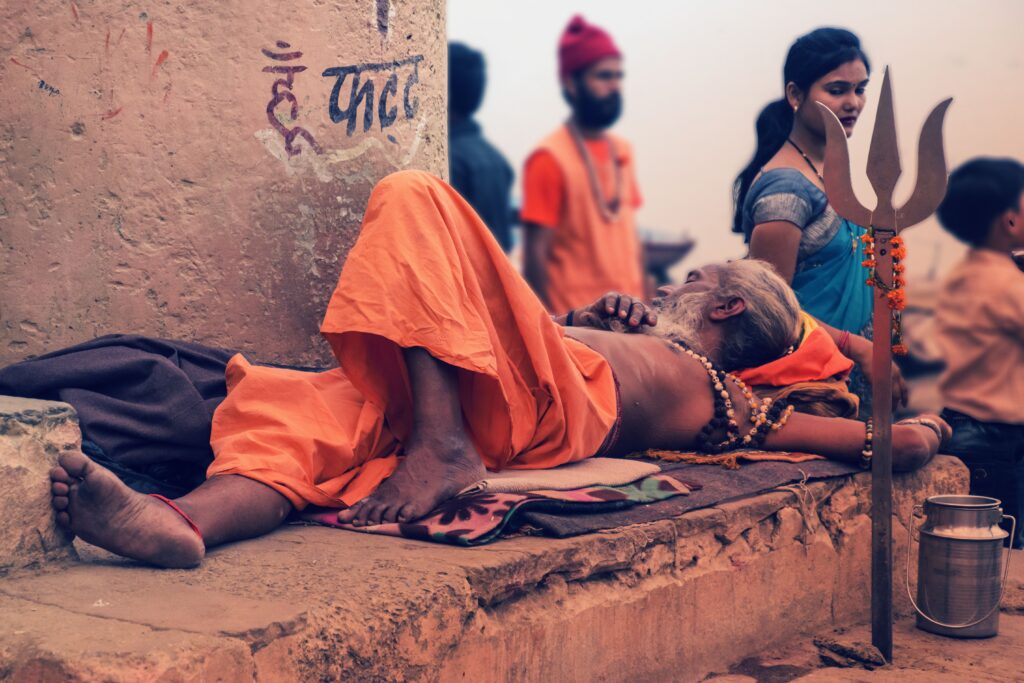
The Bhojpuri-speaking Hindu community of Mauritius carries a devotional tradition that is specifically rooted in the sacred geography of eastern UP — Kashi, Prayagraj, Ayodhya, Chitrakoot. These are the cities their ancestors knew. These are the temples their grandmothers spoke of. The Ganga they maintained in miniature at Ganga Talao is the same Ganga that flows at Dashashwamedh Ghat.
For many Mauritian Hindu families making their first India visit, the sequence they want to complete is:
Prayagraj — The Triveni Sangam Holy Dip: In March 2025, PM Modi visited Ganga Talao and poured holy water from the Triveni Sangam into the lake — an act that resonated deeply across Mauritius. For Mauritian Hindus, the Sangam dip at Prayagraj is the sacred act that connects their personal devotion directly to what Ganga Talao represents. The boat ride to the confluence, the dip in the three-river sacred water, the offering of flowers on the current — this is the experience that the Ganga Talao has pointed toward for over a century.
Varanasi — Kashi Vishwanath and the Ganga Aarti: The Kashi Vishwanath darshan for Mauritian Bhojpuri-speaking families is among the most emotionally charged temple visits that TripCosmos manages. These are families whose ancestors may well have taken this very darshan before boarding the ship that took them to Mauritius — and never returned. Standing at the Jyotirlinga, many Mauritian visitors are moved in a way they did not fully anticipate before arriving.
The Ganga Aarti from a private boat — lamps on the river at dusk, the sound of the Dashashwamedh ceremony carrying across the water — is the Ganga that Ganga Talao has been reflecting for over 150 years. Mauritian Hindus who have attended the Ganga Talao Maha Shivaratri pilgrimage since childhood and then see the actual Ganga Aarti for the first time consistently describe the moment as the most overwhelming of their lives.
Ayodhya — Ram Mandir: Ram bhakti is central to the devotional tradition maintained by the Indo-Mauritian Hindu community — Ramayan recitations, Ramleela performances, and the Ram Charit Manas are alive in Mauritius in the same way they are alive in eastern UP. The Ram Mandir at Ayodhya carries specific significance for a community that has maintained Ram devotion in their island home for six generations.
Gaya + Bodhgaya — Pitru Daan: For Mauritian families whose ancestors died in Mauritius — in the sugar fields, in the hospitals, in the indentured labour settlements — Gaya Pind Daan carries an extraordinary weight. Offering the ancestral rites at Gaya for grandparents and great-grandparents who lived and died in Mauritius, far from the sacred rivers they revered, is for many Mauritian families the primary purpose of the entire India journey.
Language: Most Mauritian Bhojpuri Hindu families understand Hindi well, though Bhojpuri is the home language. TripCosmos guides are Varanasi-native Hindi speakers — Bhojpuri and Hindi are mutually intelligible for this community. No specialist language barrier exists for Mauritian pilgrims.
Dietary requirements: The vegetarian food tradition in Varanasi — the kachori, the thalis, the prasad — is culturally familiar to Mauritian Hindu families who maintain similar vegetarian food traditions. Varanasi’s food is not unfamiliar. It is, in many ways, a homecoming for the palate too.
Visa: Mauritian citizens holding a Mauritian passport can obtain an Indian e-Visa online at indianvisaonline.gov.in before travel. The tourist e-Visa covers pilgrimage visits of up to 90 days and is straightforward to obtain.
Flight connection: Mauritius to India is well-served by Air Mauritius, Air India, and IndiGo with direct flights to Delhi (approximately 7 hours) and Mumbai (approximately 6 hours). From Delhi, Varanasi is 2 hours by flight or 11 hours by overnight train. From Mumbai, Varanasi is 2.5 hours by flight.
Currency: The Mauritian Rupee (MUR) exchanges to approximately ₹2.1–₂.3 INR per MUR. India is affordable for Mauritian visitors — a complete premium 5-night circuit costs approximately MUR 45,000–70,000 per person all-inclusive.The Complete Mauritius Diaspora Varanasi Package — What TripCosmos Arranges
Standard Mauritius Family Package (2N/3D Varanasi + 1N Ayodhya + 1N Prayagraj, 4N/5D total):
Package pricing:
All prices confirmed at booking — no on-ground surprises. International payment accepted via bank transfer, PayPal, or Western Union for Mauritius-based families.
For the complete North India ancestral pilgrimage — adding Gaya for Pind Daan, or Chitrakoot for the Ramayana forest geography — TripCosmos builds the extended circuit around your family’s specific devotional priorities. Contact via WhatsApp with your travel dates, group size, and any specific ritual requirements.
The Mauritius Indian diaspora’s connection to the Ganga — maintained through the Ganga Talao for over 150 years — is one of the most profound and least-told stories of the Indian Ocean diaspora. The return to Varanasi is not tourism. It is the completion of an unfinished journey that their ancestors began 180 years ago.
TripCosmos is honoured to manage these journeys. We understand what they mean.
Website: https://tripcosmos.co WhatsApp: +91 9336116210
For the base Varanasi + Ayodhya + Prayagraj circuit, explore the 4N5D Varanasi Prayagraj Ayodhya Tour Package. For private cab service and airport transfers from any Indian city, the TripCosmos cab service covers all routes.
The Indo-Mauritian Hindu community descends primarily from indentured labourers brought from Bihar and eastern Uttar Pradesh — the exact region where Varanasi is located. Their Bhojpuri language, their Hindu traditions, their devotional practices, and the Ganga Talao sacred lake they maintained in Mauritius for over 150 years are all rooted in the Ganga-Yamuna sacred geography of eastern UP. A Varanasi pilgrimage for an Indo-Mauritian family is literally a return to their ancestral homeland.
Yes — Mauritian passport holders can apply for an Indian e-Visa online at indianvisaonline.gov.in before travel. The tourist e-Visa covers pilgrimage visits of up to 90 days and is processed within 3-5 business days. Apply at least 7 days before your travel date. OCI (Overseas Citizen of India) card holders of Mauritian nationality can enter India visa-free.
Ganga Talao (Grand Bassin) is Mauritius’s most sacred Hindu site — a crater lake spiritually connected to the actual Ganga river. In 1972, holy water from the Ganga was mixed into the lake. In March 2025, PM Modi poured holy water from the Triveni Sangam at Prayagraj into Ganga Talao during his Mauritius visit. For Mauritian Hindus who have made the Ganga Talao pilgrimage for generations, visiting the actual Triveni Sangam at Prayagraj and the actual Ganga at Varanasi is the completion of what Ganga Talao has pointed toward for over a century.
Yes — Gaya Pind Daan for ancestral rites, including for family members who lived and died outside India, is one of the most frequently requested arrangements for Mauritian diaspora families. TripCosmos coordinates qualified pandits at Gaya with experience in overseas ancestral lineage documentation. Gaya is 240 km from Varanasi — 5 to 6 hours by road, or accessible by train. Confirm Pind Daan requirements at the time of WhatsApp booking.
October to March is ideal — comfortable temperatures across the full circuit and all major festivals available during this period. November (Kartik month, Dev Deepawali) and February (Maha Shivaratri — the same festival celebrated at Ganga Talao in Mauritius) are the most spiritually resonant months. Maha Shivaratri in Varanasi for a Mauritian family who has celebrated the same festival at Ganga Talao for generations is an experience of extraordinary personal significance.
VIP Sugam Darshan passes, verified outstation cabs, Ganga aarti boat allocations, and clean hotel stays — fully coordinated by our on-ground team.
TripCosmos guarantees verified Kashi Vishwanath Sugam Darshan passes (zero line waiting), private Dev Deepawali & Ganga Aarti Bajra boats, and verified Toyota Innova Crysta cabs with trusted local chauffeurs.

Comments are closed.