Your cart is currently empty!
You may check out all the available trips and book one that suits you.
Continue Browsing Trips
Why Cheap Varanasi Tour Packages Cost 40% More Later , Fast forward to your trip. By day three, you’ve already spent ₹8,000 on “extras” not mentioned in the package. The hotel is nothing like the photos—it’s 12 kilometers from the ghats in a noisy neighborhood. Half your day wastes away in “optional” shopping stops where aggressive salespeople pressure you into purchases. That “all-inclusive meals” promise? It covered only bland breakfast; lunch and dinner come out of your pocket.
Why cheap Varanasi tour packages Cost 40% More Later , When you tally everything at trip’s end, you’ve actually spent ₹18,200—40% more than the advertised price and still less comfortable than your friend’s straightforward ₹22,000 package. Welcome to the cheap tour package trap that catches thousands of travelers annually. Let’s expose exactly how this deception works and why that “bargain” costs you far more than honest pricing ever would.
Why Cheap Varanasi Tour Packages Cost 40% More Later , Budget tour operators exploit cognitive biases brilliantly. They understand that travelers shop by price first, reading details later if at all. That ₹12,999 price tag triggers immediate interest—you click, you engage, and now you’re invested in believing this deal is real.
Why Cheap Varanasi Tour Packages Cost 40% More Later , This psychological commitment makes you overlook red flags. When you read buried in paragraph seven that “lunches and dinners are not included,” your brain minimizes this because you’ve already emotionally committed to the “great deal.” You think, “Well, I’m saving ₹9,000 on the package, so I can afford meals separately.” You’ve rationalized away the deception.
Why Cheap Varanasi Tour Packages Cost 40% More Later , Cheap operators also exploit urgency. “Only 2 seats left at this price!” “This offer expires tonight!” These artificial scarcity tactics pressure immediate booking before rational analysis kicks in. You book impulsively, then discover the problems only after cancellation becomes financially painful.
The comparison trap is equally effective. When you see packages ranging from ₹12,999 to ₹35,000, your brain automatically excludes the extremes and gravitates toward middle options—even if the ₹12,999 is deceptively priced and the ₹22,000 represents fair value. The cheap option exists partly to make mid-range pricing seem expensive by comparison.
“All meals included” sounds comprehensive. Then you discover it means basic breakfast only—chai, toast, and perhaps an egg. Lunch and dinner? Those cost ₹300-600 per meal at even modest restaurants. Over five days, that’s ₹3,000-6,000 per person not mentioned in the “all-inclusive” advertising.
Some operators claim dinner is included but take you to affiliated restaurants serving unappetizing set menus. You end up eating elsewhere, paying again for acceptable food. You’ve paid once in the package price and again for edible meals—double charging disguised as inclusion.
“All sightseeing covered” appears in the package description. Reality? This covers transportation to sites, not entry fees. Monuments, museums, boat rides, and certain temple access all carry charges. Individually small (₹50-200), they accumulate to ₹1,500-3,000 across your trip.
Premium operators transparently list “all entry fees included” or specify exclusions. Cheap operators use vague language allowing them to claim compliance while excluding actual entry costs.
Your package promises “private AC vehicle.” You arrive to find you’re sharing a cramped van with 12 other tourists. Technically it’s “private” to the tour group, not other random passengers, so the operator hasn’t technically lied—just deliberately misled you.
Or the AC works sporadically. Or the vehicle is decades old with broken suspension turning every pothole into spine-jarring impacts. You get transportation, just not the comfortable private experience you envisioned from promotional photos showing luxury sedans.
Package photos show a beautiful hotel near the ghats. You arrive to find you’re staying at a completely different property—the operator’s “partner hotel” because the pictured one was “fully booked.” This hotel sits 15 kilometers from attractions in a residential area.
The photos weren’t technically fraudulent—that hotel exists and the operator occasionally uses it when forced to. But 90% of bookings go to the terrible alternative. The nice photos exist purely for bait; the switch happens after you’ve paid and arrived.
Here’s how cheap packages actually make their profit: commission from shops, not from tour fees. Your ₹12,999 package price barely covers operator costs. They make real money by delivering you to silk shops, carpet stores, jewelry outlets, and handicraft emporiums paying 20-40% commission on any sales.
Your five-day spiritual tour includes mandatory stops at 6-8 shops consuming 8-10 hours total—nearly two full days of your precious vacation time. You’re trapped because the vehicle won’t leave until the shopping session concludes. Even if you buy nothing, you’ve lost irreplaceable time.
The pressure is intense. Shop owners know you’re a captive audience. They employ high-pressure tactics—emotional appeals about supporting local artisans, aggressive discounting creating false urgency, and sometimes subtle intimidation suggesting rudeness in leaving empty-handed.
Many travelers capitulate, spending ₹5,000-15,000 on items they don’t want at inflated prices. You think you’re getting “wholesale” rates because the guide vouched for the shop’s authenticity. Reality? You’re paying retail or higher, with the operator collecting commission on your unwanted purchases.
The commission system extends beyond shopping. Restaurants, hotels (when operators downgrade you), auto-rickshaw drivers, and even some temple “facilitators” pay kickbacks to tour operators for delivering customers.
That eatery where your guide insists you have lunch? He’s collecting 15-25% of your bill. The auto-rickshaw stand where you’re dropped for “independent exploration”? The drivers are paying per-tourist fees to the operator. Every service becomes a commission opportunity rather than genuine tour component.
This perverse incentive structure means operators maximize commissions, not your experience. Why take you to the authentic, amazing local restaurant when the mediocre tourist trap pays better kickbacks? Why use hotel pickup times that maximize sightseeing when delayed departures mean more shopping stop time?
Your interests and the operator’s interests completely diverge in cheap package models. Premium operators make money from tour fees themselves, aligning their incentives with your satisfaction. Cheap operators make money from what they extract from you beyond the advertised price.
Remember that ₹12,999 package price? Here’s the math: if the operator is paying ₹800-1,200 per room night (budget hotel rates), across four nights that’s ₹3,200-4,800 just for accommodation. Add transport costs (₹600-800 daily, ₹3,000-4,000 total), guide fees (₹800-1,000 daily, ₹4,000-5,000 total), and even basic meals (₹150 per breakfast, ₹600-750 total). We’re already at ₹11,000-14,000+ in hard costs before the operator takes any profit margin.
The only way to deliver a ₹12,999 package profitably is cutting quality drastically. Hotels drop to ₹400-600 per night properties—guesthouses in terrible locations with questionable cleanliness, unreliable hot water, paper-thin walls, and zero amenities.
Location becomes the critical sacrifice. Prime areas near ghats command premium rates. Budget operators place you 10-15 kilometers away where land is cheap and hotels desperate for any business. Your daily commute time doubles or triples. What should be a five-minute walk becomes 45 minutes in traffic each way.
Those two hours lost daily accumulate to 8-10 hours over your trip—another full day wasted in transportation that better-located hotels would eliminate. You’re saving ₹6,000 on accommodation while losing an entire day’s worth of experiences. Terrible math.
Quality guides with government certification, extensive knowledge, and good English skills charge ₹1,500-2,500 daily. Cheap packages can’t afford this. They employ unlicensed guides working for ₹500-800 daily—often young men with minimal training, poor language skills, and surface-level knowledge.
Your “guide” recites memorized facts without understanding their significance. Ask deeper questions? You get vague non-answers or admissions of ignorance. Want cultural context explaining why rituals occur? He doesn’t know beyond “it’s traditional.” Hoping for recommendations on authentic local experiences? He only knows the commission-paying establishments.
This knowledge gap transforms sightseeing into box-checking. You visit temples without understanding their significance, witness rituals without grasping their meaning, and explore neighborhoods without cultural context. You’re physically present at profound sites while intellectually and spiritually absent from their depths.
The experience waste is tragic. You’ve traveled thousands of kilometers and invested significant money to visit sacred cities offering transformative spiritual insights. Instead, you’re getting superficial touring that would bore you at any destination.
Cheap operators excel at manufacturing unexpected costs. Your vehicle “breaks down” requiring taxi rental at inflated rates (₹1,500-2,500) to reach your destination. The hotel “lost your booking” requiring you to pay directly (₹2,000-3,000) which the operator promises to refund (they won’t). The boat ride wasn’t “technically included” despite being on the itinerary (₹500-800 additional).
Medical emergencies expose the cheap package’s true cost. You get food poisoning from questionable hotel breakfast. The operator has no medical support system—you’re finding a hospital independently, paying out of pocket, and receiving zero assistance. A mid-range operator would have hospital partnerships and emergency protocols. The cheap operator has your booking fee and nothing more to offer.
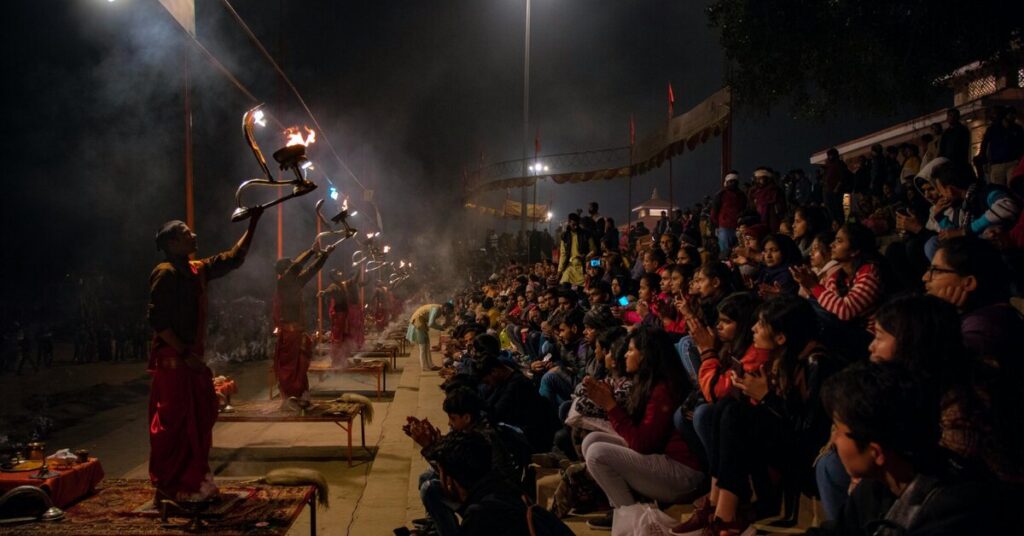
Last-minute upsells are constant. “The regular Ganga aarti viewing area is very crowded—for just ₹800 more per person, we can arrange better seating.” “The temple queue is 3 hours today—₹1,500 gets you faster entry.” These aren’t scams exactly, but they’re situations better operators prevent through proper planning rather than exploiting for additional revenue.
Let’s compare actual all-in costs:
Advertised Cheap Package: ₹12,999
Honest Mid-Range Package: ₹22,000
The “cheap” package costs ₹21,500 with inferior experience. The honest package costs ₹22,500 with superior quality. You’ve saved ₹1,000 while suffering through a demonstrably worse trip. Some bargain.
But wait—the calculation above assumes only moderate shopping pressure compliance. Many travelers spend ₹12,000-18,000 on pressured purchases, pushing cheap package total costs to ₹24,000-28,000—significantly more than honest mid-range pricing for far worse experiences.
Red flag #1: Pricing significantly below market average. If 20 operators charge ₹20,000-25,000 and one charges ₹12,999, either they’ve discovered magical cost reductions (they haven’t) or they’re hiding costs elsewhere.
Red flag #2: Vague inclusions language. “Meals provided” vs. “All breakfasts, lunches, and dinners included at listed restaurants.” “Sightseeing covered” vs. “All entry fees to monuments and boat rides included.” Specificity indicates transparency; vagueness enables later charges.
Red flag #3: Hotel photos without property names. If listings show beautiful hotels without naming them, assume you’re not staying there. Legitimate operators list actual hotel names or narrow options to 2-3 named properties.
Red flag #4: Brand new operators with few reviews. Cheap operators often rebrand after accumulating negative reviews. An operator with 500+ reviews has reputation to protect. One with 12 reviews can vanish and restart under new names.
Red flag #5: Pressure for immediate booking. Artificial urgency indicates desperation or deception. Quality operators with genuine good pricing don’t need pressure tactics—their value is obvious.
Red flag #6: Communication quality issues. Poor English, unprofessional emails, reluctance to answer specific questions—these signal overall operation quality problems.
For a 5-day Varanasi-Ayodhya-Prayagraj tour, fair pricing breaks down approximately:
Budget: ₹18,000-24,000 per person – Basic but honest. 2-3 star hotels in reasonable locations, private transport, breakfast included, certified guides, transparent about exclusions.
Mid-Range: ₹24,000-35,000 per person – Comfortable and comprehensive. 3-4 star hotels well-located, private comfortable vehicles, most meals included, experienced guides, most entry fees covered.
Premium: ₹35,000-55,000 per person – Superior quality. 4-5 star or heritage hotels, luxury vehicles, all meals at quality venues, expert guides, all fees included, special experiences.
Packages under ₹18,000 can’t deliver honestly on actual costs. The math doesn’t work without cutting quality, hiding charges, or commission schemes. Be extremely skeptical of anything advertised under ₹15,000—it’s almost certainly deceptive.
Cheap packages occasionally work for specific travelers in limited circumstances:
Extreme budget backpackers who understand they’re getting bare-minimum service and can handle surprises independently. They’re consciously trading money for significant inconvenience.
Last-minute distressed inventory sales when operators have unfilled seats days before departure. They discount genuinely to avoid complete loss. But this requires flexibility on your dates and luck in timing.
Off-season desperation pricing when tourism craters (monsoon, extreme summer heat). Operators discount legitimately to maintain some cash flow. But you’re still getting budget-tier service—just at prices matching actual value.
For regular travelers during normal seasons seeking normal comfort, cheap packages virtually never represent smart value. You’re either getting defrauded outright or paying hidden costs that exceed honest operators’ transparent pricing.
Beyond financial costs, cheap packages exact other prices:
Time waste: 8-12 hours lost to shopping stops and poor hotel locations—nearly two full days of a five-day trip consumed by operator convenience rather than your experiences.
Experience degradation: Superficial touring with poor guides, missing the spiritual depth and cultural understanding that makes this circuit transformative rather than just sightseeing.
Stress and frustration: Constant surprises, unexpected charges, uncomfortable accommodations, and realization you’re being manipulated creates trip-long anxiety destroying the peace spiritual tourism should provide.
Relationship strain: Family trips turn contentious when one person’s “great deal” proves to be a nightmare everyone suffers through together. The money saved isn’t worth the family harmony lost.
Opportunity cost: This might be your only visit to these sacred cities. Choosing the cheap package means your singular opportunity gets squandered on a subpar experience you’ll regret for years.
The cheap Varanasi tour package promising incredible value at ₹12,999-15,000 is almost always a deceptive bargain that costs 40% more than advertised while delivering 60% less satisfaction than honest mid-range packages. Hidden meal costs, excluded entry fees, forced shopping commissions, terrible hotel locations, and constant emergency charges transform that “amazing deal” into expensive regret.
The arithmetic is brutal but simple: budget ₹22,000-25,000 per person for genuine honest packages delivering actual value. Anything substantially cheaper achieves low pricing through deception, hidden costs, or quality degradation that destroys your experience while still costing you nearly the same money—just extracted through manipulation rather than transparent pricing.
Your spiritual journey through India’s most sacred cities deserves better than cheap package deception. Pay fair prices to honest operators. Get the experiences you’re seeking. Return home with transformative memories rather than expensive frustrations. Sometimes the real bargain isn’t the lowest advertised price—it’s the honest value that costs slightly more upfront but delivers immeasurably more in satisfaction, learning, and spiritual depth.
Request a detailed itemized breakdown showing exactly what’s included and excluded—specific hotel names, which meals (breakfast/lunch/dinner), all entry fees covered, exact vehicle type, and guide credentials. Compare this against 3-4 other operators’ offerings. Calculate what excluded items cost independently (use restaurant prices online, monument entry fees from official sites). If the package price plus excluded costs equals or exceeds other operators’ all-inclusive pricing, the u0022cheapu0022 package is deceptive. Also read 20+ recent reviews focusing on comments about unexpected costs—patterns reveal truth. Legitimate operators provide transparency eagerly; deceptive ones evade specifics or become defensive when questioned.
Check cancellation terms immediately. If you’re more than 30 days from departure, most operators allow cancellations with 25-50% penalty—paying ₹3,000-6,000 to escape a ₹12,999 bad package is smart economics. Between 15-30 days, penalties increase to 50-75%, requiring harder calculations. Under 15 days, you’ve likely lost most money. If cancellation isn’t viable, minimize damage: research and book your own hotels in better locations (paying the package hotel loss but gaining location value), decline all shopping stops firmly regardless of pressure, hire independent certified guides for key days (₹1,500-2,000 well spent), and document everything for potential complaints or credit card disputes if the operator completely fails to deliver advertised services.
Yes, but they’re transparent about limitations. Honest budget operators charge ₹18,000-22,000 and clearly state: u0022Breakfast only included, lunches/dinners are your responsibility (budget ₹300-500 per meal). Hotels are clean 2-star properties located 4-6 km from main attractions (20-30 minute commute). Entry fees to monuments not included (approximately ₹1,500 additional). No shopping stops included.u0022 This honesty lets you budget accurately and decide if the trade-offs suit you. These operators make modest profit margins on tour fees themselves rather than relying on hidden charges or commissions. Look for transparent operators with specific exclusion lists rather than vague u0022all-inclusiveu0022 claims at suspiciously low prices.
For genuinely all-inclusive mid-range packages (₹24,000-30,000), budget an additional ₹5,000-8,000 per person for tips (₹2,000-3,000), personal shopping you actually want (₹2,000-3,000), snacks and drinks beyond included meals (₹800-1,200), and emergency contingency (₹1,000-1,500). For budget packages honestly priced at ₹18,000-22,000, add ₹8,000-12,000 for excluded lunches/dinners (₹4,000-6,000), entry fees (₹1,500-2,000), tips (₹1,500-2,000), shopping (₹2,000-3,000), and contingency (₹1,000-1,500). For deceptively cheap packages under ₹15,000, budget ₹10,000-15,000 additional because virtually everything beyond basic transport and bad accommodation will cost extra.
Document everything: save all promotional materials, emails, and communications showing what was promised. Take photos/videos of actual hotels, vehicles, and services received vs. what was advertised. File complaints with the state tourism department (Uttar Pradesh Tourism in this case) and Ministry of Tourism Consumer Grievance cell. If you paid by credit card, dispute the charge through your bank citing services not as described—credit card companies often side with consumers in clear misrepresentation cases. Small claims court is viable for domestic operators if amounts are under ₹20,000-50,000 (varies by state). For serious fraud, file police complaints, though resolution is slow. Practically, choosing reputable operators upfront prevents needing legal recourse. Public reviews on Google, TripAdvisor, and social media often prompt operator response and partial refunds faster than legal channels.
TripCosmos guarantees verified Kashi Vishwanath Sugam Darshan passes (zero line waiting), private Dev Deepawali & Ganga Aarti Bajra boats, and verified Toyota Innova Crysta cabs with trusted local chauffeurs.

Comments are closed.