Your cart is currently empty!
You may check out all the available trips and book one that suits you.
Continue Browsing Trips
Complete Varanasi ghat walking route 2026 — full map guide. Assi to Raj Ghat (84 ghats, 6.5 km), best timing, what to see at each ghat. From free to ₹1,399. WhatsApp now!
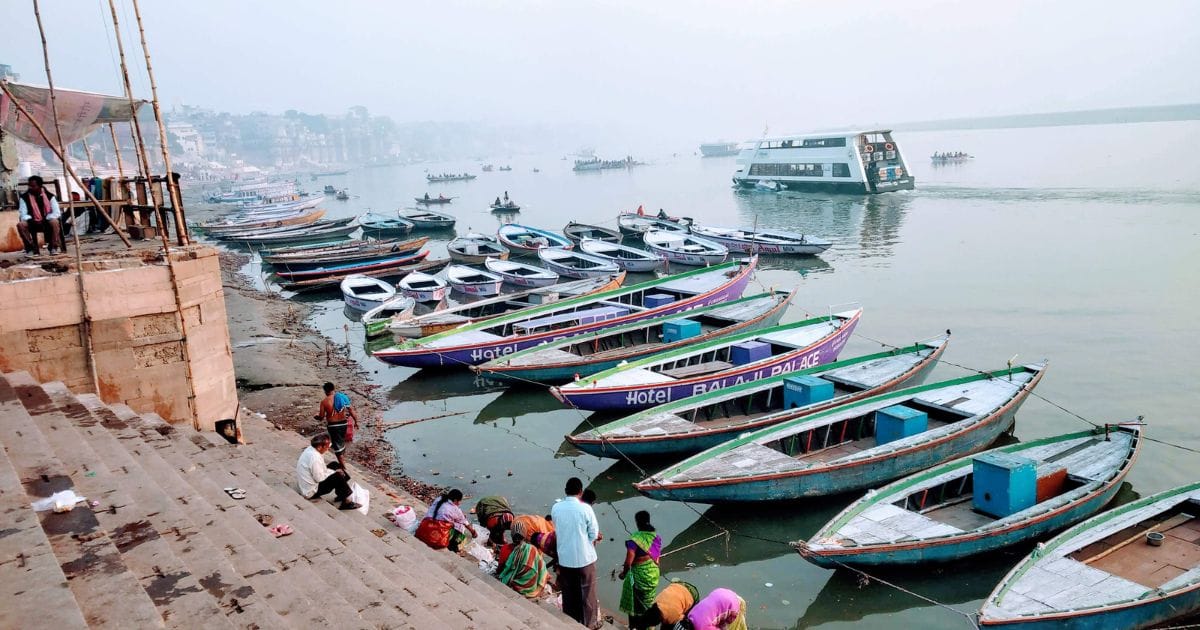
If you’ve been searching for the most complete Varanasi ghat walking route guide, this is the most honest, most practically useful resource available in 2026. The ghats of Varanasi are more than just riverside steps — they’re sacred thresholds where life, death, and spirituality converge in a mesmerizing dance. Varanasi has 84 ghats along the western bank of the Ganges — stretching approximately 6.5 kilometres from Assi Ghat in the south to Raj Ghat in the north. Every single ghat is free to visit on foot. This guide maps the complete walking route in two formats: the focused southern circuit (most popular, 2–3 hours) and the complete 84-ghat north-south walk (4–5 hours, requiring an early start and reasonable fitness).
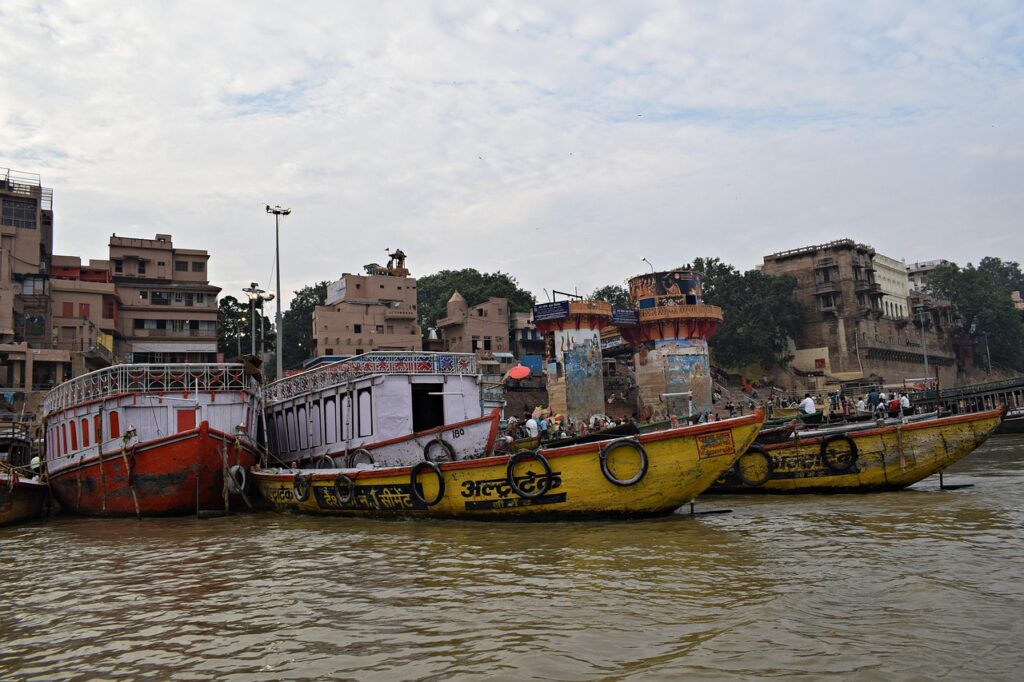
Ghat walking: Completely free. Private dedicated old city walking tour (half day, hidden temples + ghats): ₹1,500–₀2,500 total for group. Standard shared guided day (ghat walk + boat + temples + Aarti): ₹1,399 per person. Morning ghat walk + boat combined package: From ₹1,399 per person — 3–4 hours total from pickup to ghat breakfast completion. Private Aarti boat (evening, required for full ghat-from-river experience): ₹1,299–₀2,500 total.
The optimal morning sequence on foot after the boat: Dashashwamedh Ghat → Manikarnika Ghat (respectful observation only, no photography) → Man Mandir Ghat → Darbhanga Ghat → back to Dashashwamedh via the narrow lanes behind the ghats — a 45-minute ghat walk that shows you more of Varanasi’s morning life than any boat ride can.
Located at the confluence of the Assi and Ganges rivers, Assi Ghat has a more relaxed, contemplative atmosphere. It’s popular with students, yogis, and those seeking a quieter spiritual experience. The morning Subah-e-Banaras ceremony at Assi Ghat — beginning around 5:30–6:00 AM — is the most intimate Aarti available in Varanasi. Start your ghat walk here, walk north along the riverfront steps.
Tulsi Ghat, named after the poet-saint Tulsidas who composed the Ramcharitmanas here, carries the most literary heritage of any ghat. Kedar Ghat’s distinctive South Indian temple architecture — brought by Tamil Nadu pilgrims centuries ago — is visually unique among the predominantly North Indian styles of the 84-ghat sequence. Harishchandra Ghat claims to be Varanasi’s oldest cremation ground — approach with solemnity and compassion.
During your morning visit, you’ll see the ghat transitioning from the quiet dawn prayers to increasing activity as the day progresses. This is where the famous Ganga Aarti takes place in the evening, but morning offers a more intimate, less crowded experience. Dashashwamedh is the most photographed, most devotionally charged, and most practically important ghat — the central boarding point for sunrise and Aarti boats, and the closest ghat to the Kashi Vishwanath corridor entrance.
Manikarnika Ghat holds profound significance as Varanasi’s primary cremation ground. While it might seem somber, Hindus view it as the most auspicious place to be cremated, believing it grants immediate moksha (liberation from the cycle of rebirth). Your guide will explain the cremation rituals respectfully, helping you understand this important aspect of Hindu philosophy regarding death and rebirth. Never photograph here — observe only from respectful ghat-level distance. The eternal fire viewed from the river by boat delivers the most philosophically powerful single visual of the complete Varanasi experience.
Man Mandir Ghat showcases stunning architecture with its distinctive facade and observatory built by Maharaja Man Singh of Jaipur, featuring astronomical instruments. Darbhanga Ghat and Munshi Ghat display beautiful old palace architecture, some now converted to heritage hotels — the most visually spectacular ghat for architectural photography.
Continuing north from Darbhanga past Panchganga Ghat, the ghat walk becomes progressively more local and less tourist-heavy — the most authentically residential section of the Varanasi waterfront. Panchganga Ghat, believed to mark the confluence of five sacred rivers, is one of Varanasi’s most important pilgrimage ghats for bathing ritual. The 17th-century Alamgir Mosque above the ghat creates the most dramatically layered architectural history of any single ghat location. Raj Ghat at the northernmost point marks the end of the sacred riverfront — the road and rail bridge creating a distinctive visual frame between ancient Kashi and modern Varanasi.
Best timing: The morning hours, particularly between 5:30 AM and 7:30 AM, transform the ghats into a canvas painted with golden hues. Second-best: evening 5:30–6:30 PM for golden hour light and Aarti preparation atmosphere. Footwear: Comfortable sandals or rubber-soled walking shoes — remove for any shrine or temple you enter. The ghat steps themselves do not require shoe removal. Photography: Avoid photographing cremation ceremonies at Manikarnika Ghat — always ask permission before taking close-up shots of people engaged in religious activities. Distance: Assi to Dashashwamedh: approximately 2.5 km. Dashashwamedh to Raj Ghat: approximately 4 km. Complete south-to-north: 6.5 km.
The combination of a walking tour and boat ride gives you dual perspectives of this ancient city. From the ghats, you’re part of the action, feeling the pulse of daily rituals. From the boat, you become an observer, witnessing the grand panorama of Varanasi’s spiritual theater unfold before your eyes. These insights transform your tour from simple sightseeing into genuine cultural immersion. The answer is both — the sunrise boat delivers the panoramic river perspective, and the ghat walk delivers the ground-level lived experience. Neither fully replaces the other.
👉 Click Here to WhatsApp TripCosmos — +91 93361 16210 — Instant Ghat Walk Package Confirmation
All 84 ghats stretch along the western bank of the Ganges. Complete south-to-north: 6.5 km, 4–5 hours. Southern circuit (Assi to Darbhanga): 2.5 km, 2–3 hours.
The morning hours, particularly between 5:30 AM and 7:30 AM, transform the ghats into a canvas painted with golden hues. Evening 5:30–6:30 PM for Aarti preparation atmosphere.
Most ghats welcome photography. Never photograph cremation ceremonies at Manikarnika Ghat — always ask permission before taking close-up shots of people engaged in religious activities.
In Varanasi’s labyrinthine old quarter, GPS fails and narrow alleys lead to unexpected dead ends — a specialist guide transforms the walk from navigation into a genuinely meaningful sacred experience.
WhatsApp +91 93361 16210 with your date, group size, and preferred route — morning boat + walk or evening only. Confirmed within minutes — Book Now!