Your cart is currently empty!
You may check out all the available trips and book one that suits you.
Continue Browsing Trips
Common Mistakes Tourists Make in Banaras , Let’s talk about something most Varanasi travel blogs completely skip. Banaras — also known as Varanasi or Kashi — is one of the most spiritually extraordinary cities on the planet. It is also one of the most unforgiving cities for unprepared tourists. Every year, thousands of visitors return from Banaras feeling cheated, confused, or vaguely disappointed — not because Kashi failed to deliver its legendary magic, but because entirely preventable mistakes transformed what should have been a life-changing pilgrimage into a stressful, expensive, and sometimes embarrassing ordeal.
The narrow gullies of the old city that look like a maze because they genuinely are one. The ghat-side boatman whose ₹200 “special sunrise ride” turns into a ₹3,000 extortion mid-river. The photographer who points a camera at Manikarnika Ghat and finds an angry crowd surrounding them within seconds. The family that dressed for a beach holiday and gets turned away at Kashi Vishwanath’s entrance. These are not rare edge cases — they happen every single day. This guide covers every major mistake tourists make in Banaras, exactly why each one happens, and precisely how to avoid each one so your visit captures the genuine spiritual essence of this eternal city.
This is the most serious and the most commonly made cultural mistake in all of Banaras — and it is the one with the most immediate and serious consequences. Manikarnika Ghat and Harishchandra Ghat are active cremation grounds where Hindu families bring their loved ones for the final rites. These are places of genuine grief, sacred ritual, and deeply private family moments. Never photograph at Manikarnika cremation ghat without explicit permission — it is a place of genuine grief, not a tourist spectacle.
What actually happens when tourists photograph at Manikarnika is not a polite request to stop. Taking photos at cremation ghats is deeply offensive and can result in angry confrontations or even physical altercations. There are also individuals at Manikarnika who approach tourists claiming to collect an “official photography fee” of ₹200–₹1,000. Photography at Manikarnika is not a paid service — it is disrespectful and should not happen at all regardless of payment. The solution is straightforward: put your camera and phone away completely when your boat or walking route approaches the cremation ghats. A good Tripcosmos guide will brief you on this before you arrive. The smoke, the fire, and the sacred atmosphere of Manikarnika are best experienced through your eyes alone — and honestly, they are more powerful that way.
Tourists wearing shorts, sleeveless tops, revealing clothing, or beachwear-style outfits at temples and ghats face denied entry, uncomfortable stares, disrespectful treatment, and diminished spiritual experiences. This is not a vague guideline — it is actively enforced at Kashi Vishwanath, Sankat Mochan, Durga Temple, and BHU Vishwanath, among others. BHU Vishwanath has some of the strictest dress code enforcement of any temple in the city.
The practical rule is simple: covered shoulders and covered knees are the baseline requirement at every temple in Banaras. Women should carry a light dupatta or shawl — both for temple entry and for general ghat-side comfort. Men should avoid shorts below the knee in temples even when the weather makes this uncomfortable. Banaras is a holy city, and funerals are happening every day on the river — so make sure you cover your legs and shoulders throughout your visit, not just at temple entrances. Pack one dedicated “temple outfit” that stays in your day bag — lightweight cotton or linen works perfectly in Banaras’s climate and packs to almost nothing in a side pocket.
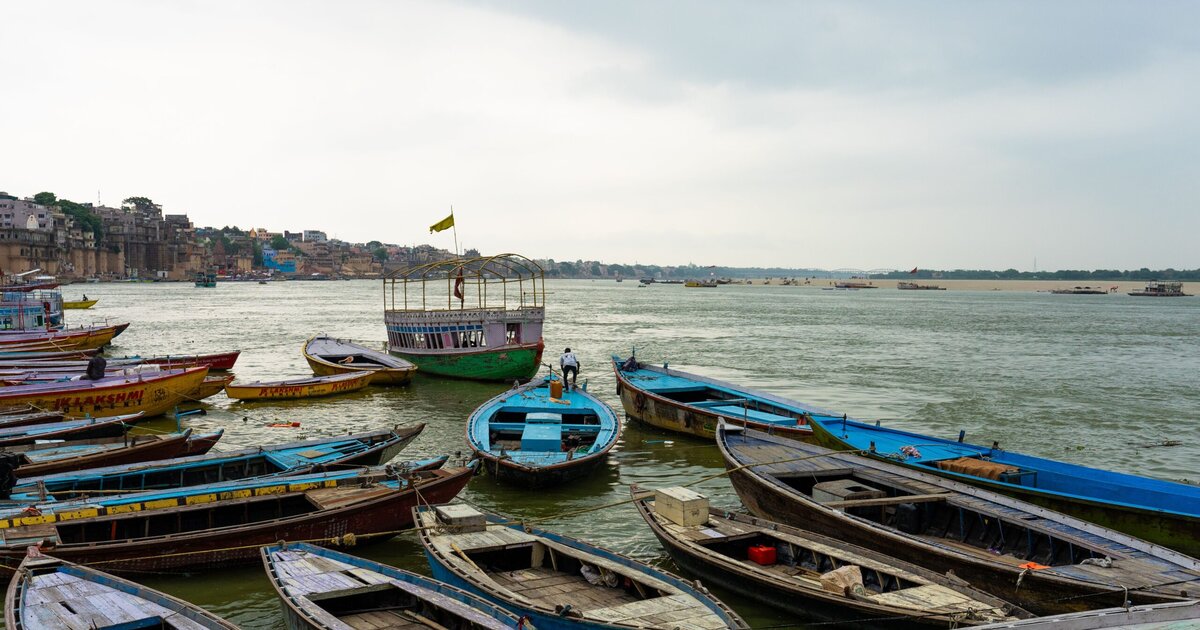
The ghat-side boat negotiation experience is one of the most well-mapped tourist traps in all of India — and yet it catches new visitors consistently because the initial offer sounds so reasonable. A man approaches you near Dashashwamedh or Assi Ghat offering a “special sunrise boat ride” at ₹200–₹300 per person. Once on the water he stops midway and demands ₹2,000–₹5,000 for the “complete tour” — refusing to return until paid. The boat is in the middle of the river. You have no leverage. You pay.
The reality is that a legitimate private boat for a family or group costs ₹1,200–₹2,000 total — agreed and confirmed before boarding, not discovered mid-river. Always pre-book your Varanasi Boat Ride through Tripcosmos. Never negotiate with boatmen who approach you on the ghat steps. The Varanasi Boat Ride booking through Tripcosmos is pre-confirmed, prepaid by UPI, and your boatman is identified and waiting when you arrive at the ghat. No negotiation, no mid-river surprises, no stress. This single pre-booking eliminates the single most common financial trap in Banaras.
Friendly locals approaching tourists near temples, ghats, or hotels offering “free tours” or “special help” represent Varanasi’s most persistent tourist trap. These unauthorized individuals lead tourists to commission-based shops, demand payment for “services” never requested, or create elaborate scams extracting money. The moment you step off the train at Varanasi Cantt or Manduadih station, this begins. A friendly man offers to help you find a rickshaw, then guides you to a hotel paying him commission. Another offers a “shortcut” to Kashi Vishwanath and leads you through a silk shop first.
Politely but firmly decline all unsolicited “help” using phrases like “No thank you, I have a guide” or simply “No, thank you” repeatedly without engagement or explanation. Arguing or providing reasons invites persistent pressure. The key word is “without engagement” — once you start explaining yourself, the conversation continues indefinitely. A firm, brief, non-aggressive “no thank you” repeated as many times as necessary is the only effective response. Pre-booking your Tripcosmos guide and cab means your designated guide is waiting for you at the station exit — walk directly to them and you bypass the entire approach entirely. The Varanasi Cab Service from Tripcosmos includes a driver with a name board at the station exit so there’s zero confusion about who to approach.
The old city features impossibly narrow lanes (some barely 3 feet wide), unmarked pathways forming intricate mazes, inconsistent street signage, and thousands of similar-looking alleys. This is not an exaggeration for effect — it is a genuine geographic reality of a city that has been continuously inhabited for over 3,000 years and was never designed for modern navigation. Smartphone maps lose accuracy inside the oldest lanes consistently and confidently, sometimes directing you in entirely the wrong direction for extended periods.
First-time visitors who attempt the old city independently frequently spend 30–45 minutes finding a single temple that a guide would have reached in five minutes — time that could have been spent in the sanctum or on the ghat. For first-time visitors, the difference between a forgettable tourist experience and a truly transformative journey often comes down to one crucial decision: choosing a local driver-guided cab tour over a standard taxi service. Additionally, there are bulls in the narrow alleyways of the old city, and navigating around them in tight spaces requires local awareness that first-time visitors simply don’t have. Your Tripcosmos guide knows exactly which gullies are accessible, which are blocked by morning market activity, and which approach to each temple avoids the most concentrated crowd pressure — knowledge that no map can replicate.
Fixed fares do not exist for most auto-rickshaw trips in Varanasi — prices are negotiated. International tourists and visibly unfamiliar Indian tourists are often quoted 3–4x the local rate. The standard auto fare from Varanasi Cantt to Dashashwamedh Ghat is ₹80–₹120. The common tourist overcharge is ₹300–₀500. Multiply that across eight to ten auto rides across a two-day visit and you’ve spent ₹2,000–₀4,000 on transport that should have cost ₹600–₀800. The solution is to pre-book a full-day private cab through Tripcosmos — a full-day private sedan costs ₹1,800–₂,999, which when shared across a family of four works out cheaper per person than haggling with autos at every stop while also being infinitely more comfortable and reliable. Always ask your hotel what the fair fare is for common routes before stepping into a vehicle. Use Ola or Rapido where available for transparent metered pricing.
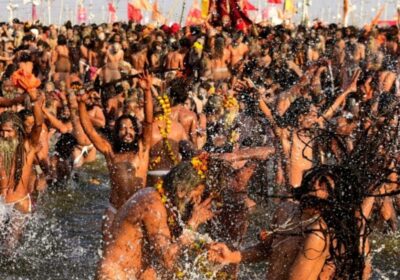
Swimming or dipping your feet in the Ganges as a tourist, especially without understanding the context, can be problematic given the pollution levels in the river. This is a nuanced point that requires a careful distinction. The Ganga is deeply sacred to Hindus, and bathing pilgrims who take a ritual dip have been doing so with spiritual intent for thousands of years — this is a deeply personal act of faith. As a tourist, however, and particularly as a foreign visitor without immunological familiarity with the river, swimming or recreational bathing carries genuine health risks that your body may not be equipped to handle. The correct approach is to respectfully observe and honour the ritual significance of what you are witnessing on the ghats rather than participating in river bathing as a tourist activity. A diya floating on the Ganga from your boat, or a flower offering at the water’s edge, is the appropriate and deeply meaningful way to honour the sacred river.
Varanasi is famous for its Banarasi silk sarees — and also for selling synthetic fabric at pure silk prices. If you want to buy genuine Banarasi silk, research prices before you arrive (a real Banarasi saree starts at around ₹3,000–₅,000 for simple weaves), buy from reputable shops with clear bills, and be skeptical of any shop a guide or auto driver takes you to (they earn commission). The Banarasi silk scam is one of the most financially costly mistakes visitors make in the city — and it happens most often when a friendly auto driver or unsolicited guide offers to take you to a “family shop” with “the best prices.” The shop pays them commission on every sale, which means their incentive is to take you to the highest-markup establishment rather than the most honest one.
The practical rule: buy Banarasi silk only at established shops in the Vishwanath Gali and Godowlia area that display prices clearly, issue printed bills, and allow you time to compare without pressure. Your Tripcosmos guide can recommend trusted establishments — this is one of the most valuable uses of local knowledge on the entire trip. Genuine Banarasi silk has a distinctive sheen, weight, and weave pattern that becomes recognisable after seeing a few pieces in person. Take your time, ask questions, and never buy under time pressure.
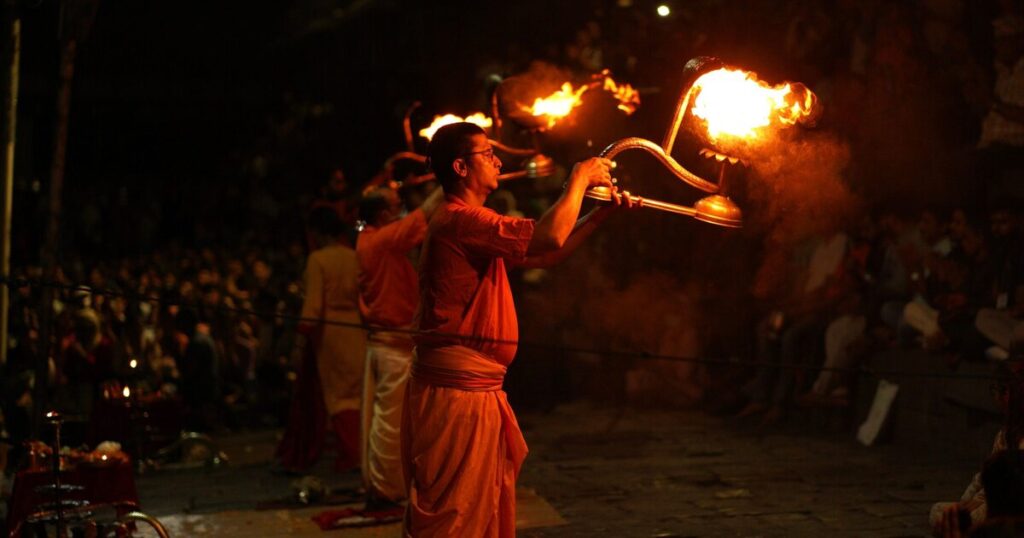
This is the mistake that doesn’t feel like a mistake when you’re planning the itinerary at home — and feels catastrophic by 2 PM on your first full day in Banaras. Varanasi is emotionally and spiritually intense in ways that no other Indian city matches. The cremation smoke, the aarti fire, the ancient temple sanctums, the narrow lanes, the heat, the crowds, the sounds — it is genuinely overwhelming for the unprepared. First-time visitors who schedule seven or eight temples across a single morning arrive at the Ganga Aarti in the evening too exhausted to actually experience it. Learn basic etiquette: remove shoes before entering temples (you’ll see shoe racks outside), wash hands and feet at provided facilities before entry, walk clockwise around sanctums, and ask permission before photographing anything. All of these small actions take time and attention — they cannot be done well while rushing between stops on an overstuffed schedule.
The correct pace for a first-time Banaras visit is two to three deep, unhurried experiences per morning, a genuine afternoon rest, and the evening aarti as the day’s culmination. Tripcosmos designs all its first-timer packages around this rhythm specifically — the Complete Family Darshan Route in Varanasi builds in rest time, meal stops, and transitional breathing room that self-planned itineraries almost never do.
Someone dressed as a priest may approach you at the ghat, perform a brief puja on your behalf without asking, and then demand a large sum. This is one of the most distressing experiences tourists report from Banaras because it feels disrespectful to refuse a religious ceremony — and the “priests” performing this unsolicited puja know this and count on it. The experience typically unfolds like this: a man in religious attire greets you near the ghat steps, begins placing a tilak on your forehead or tying a thread on your wrist before you understand what’s happening, chants a brief prayer, and then demands ₹500–₀2,000 for the “puja.” The amount escalates if you hesitate.
Genuine priests performing temple pujas at registered temples are a completely different category — these are legitimate, meaningful rituals that you can voluntarily participate in and pay the displayed or agreed amount. The distinction is entirely in the initiative: any puja performed without your prior explicit agreement and initiated by someone approaching you unsolicited is a scam, not a blessing. Politely decline all ghat-side approaches and receive any puja or blessing you want inside a temple from the temple’s own priests. Your Tripcosmos guide will be present at all major stops to navigate these approaches cleanly and without confrontation.
Many vehicles in Varanasi don’t meet basic safety standards. Self-planners rarely check things like seatbelts, insurance, or driver credentials that reputable companies verify automatically. Beyond safety, unplanned transport in Banaras creates the logistical chaos that ruins spiritual momentum. Scrambling for an autorickshaw at 5 AM for a sunrise boat in the dark, waiting 40 minutes for an Ola that keeps cancelling in the old city, negotiating with a random cab for the Sarnath drive and then being taken to a commission shop en route — these are the experiences that turn a pilgrimage into a travel complaint.
The Varanasi Taxi Service from Tripcosmos and complete private tour packages eliminate every one of these friction points before you arrive. One driver. One fixed price confirmed in advance. One vehicle waiting at every stop. For families of 8 or more, the Tempo Traveller hire in Varanasi through Tripcosmos keeps everyone together across the complete circuit. The Varanasi Ayodhya Prayagraj Tour Package extends this seamless transport coordination across all three sacred cities for families doing the full circuit.
Tripcosmos is a Varanasi and Prayagraj-based verified tour operator with deep local roots in the city’s spiritual geography, its scam landscape, and its genuine experiences. Their guides are briefed to address every mistake in this guide proactively — before you encounter the situation rather than after. From the biggest scams in Varanasi guide on Tripcosmos to completely managed private family tours with VIP darshan, boat rides, and 24/7 WhatsApp support — every element of your Banaras visit is handled by people who know the city as residents, not as visitors.
Website: https://tripcosmos.co WhatsApp: +91 9336116210
Share your travel dates, group size, and any specific concerns you have about your upcoming Banaras visit. The team responds with honest, specific guidance — and a complete package proposal if you want the entire trip managed under one confirmed booking.
Banaras rewards the prepared visitor with experiences that stay in the heart for a lifetime. The same city punishes the unprepared with financial traps, cultural missteps, and logistical chaos that make it genuinely difficult to access the spiritual depth underneath. The mistakes in this guide are not obscure edge cases — they happen every day to intelligent, well-intentioned travellers who simply didn’t know what to expect. Now you do. Dress modestly, never photograph cremation ghats, pre-book your boat and cab, decline all unsolicited guides and puja performers, carry small denomination cash, and pace your day with genuine rest periods. Do all of this — and Banaras will give you everything it has been giving pilgrims for three thousand years. For historical context on this ancient city’s significance in Hindu tradition, the Wikipedia article on Varanasi and Pilgrimage are worth reading before your visit.
Yes — photography in Varanasi is generally welcome at ghats, markets, temples (where permitted), and public spaces with respectful awareness. The absolute exception is Manikarnika and Harishchandra cremation ghats, where photography is deeply disrespectful and can trigger serious confrontations. Always ask permission before photographing individuals. Your Tripcosmos guide will brief you on all photography etiquette before each stop on the circuit.
Never negotiate with boatmen who approach you on the ghat steps with low initial quotes — this is the most reliable setup for mid-river extortion. Always pre-book your boat ride through Tripcosmos at a confirmed, prepaid price before you arrive at the ghat. A legitimate private boat for a family group costs ₹1,200–₀2,000 total when booked through a verified operator.
Covered shoulders and covered knees are the baseline requirement at every temple in Banaras without exception. Women should carry a dupatta or light shawl. Men should wear full-length trousers rather than shorts. Remove footwear at every temple entrance without being told, accept prasad with your right hand, and walk clockwise around the sanctum. These are non-negotiable cultural requirements, not suggestions.
Ghat-side chai and established street food stalls serving kachori sabzi, lassi, and chaat are generally safe for most visitors and are a genuine highlight of any Banaras visit. Avoid food from visibly unhygienic vendors, drink only sealed bottled water, and exercise particular caution with the famous bhang lassi — it is significantly stronger than most first-time visitors expect and has disrupted many otherwise well-planned pilgrimage days.
Ask your hotel for the standard fare for common routes before stepping out. The standard auto fare from Cantt to Dashashwamedh Ghat is ₹80–₀120 — not ₹300–₀500 as commonly quoted to unfamiliar tourists. Use Ola or Rapido where available for transparent metered pricing. Better still, pre-book a full-day private cab through Tripcosmos — a full-day private sedan costs ₹1,800–₂,999 total for your group, typically cheaper than eight to ten individual auto rides across the day while being dramatically more reliable.
TripCosmos guarantees verified Kashi Vishwanath Sugam Darshan passes (zero line waiting), private Dev Deepawali & Ganga Aarti Bajra boats, and verified Toyota Innova Crysta cabs with trusted local chauffeurs.

Comments are closed.