Your cart is currently empty!
You may check out all the available trips and book one that suits you.
Continue Browsing Trips
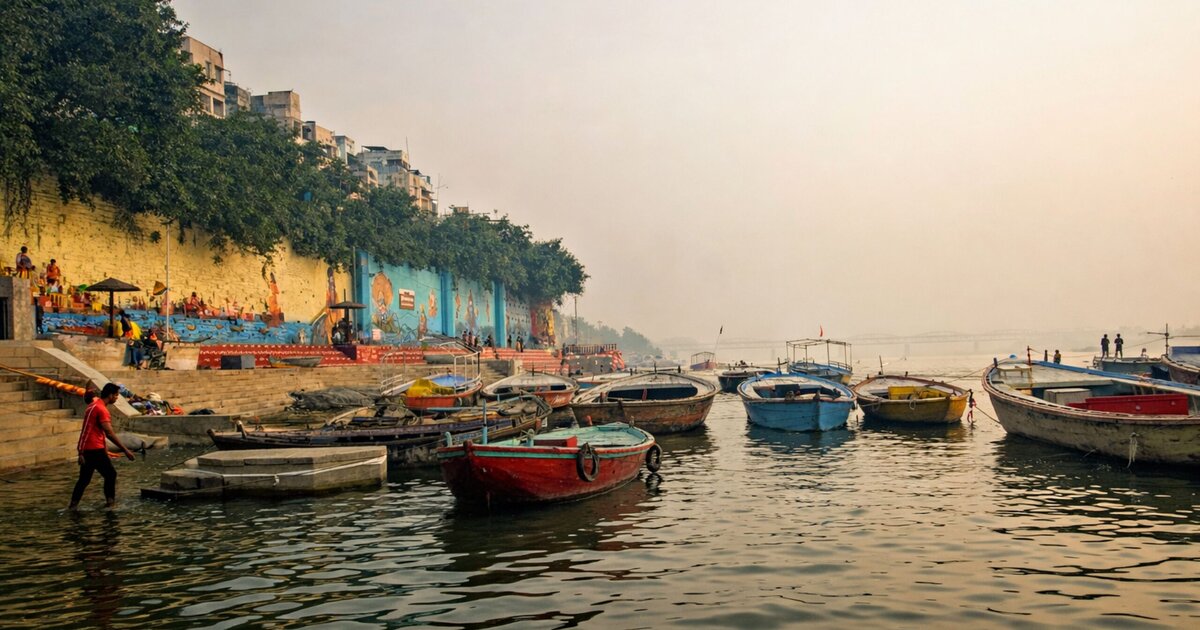
Every year, as the monsoon arrives over the Gangetic plains, the same question surfaces in travel forums, WhatsApp groups, and family planning conversations: should we visit Varanasi in the rainy season, or wait?
It is a fair question — and the honest answer is more nuanced than either a flat yes or a flat no. Varanasi during monsoon is simultaneously one of its most spiritually charged seasons and one of its most logistically challenging. Whether it is worth it depends entirely on who you are, what you are seeking, and how well you plan for the conditions you will actually encounter.
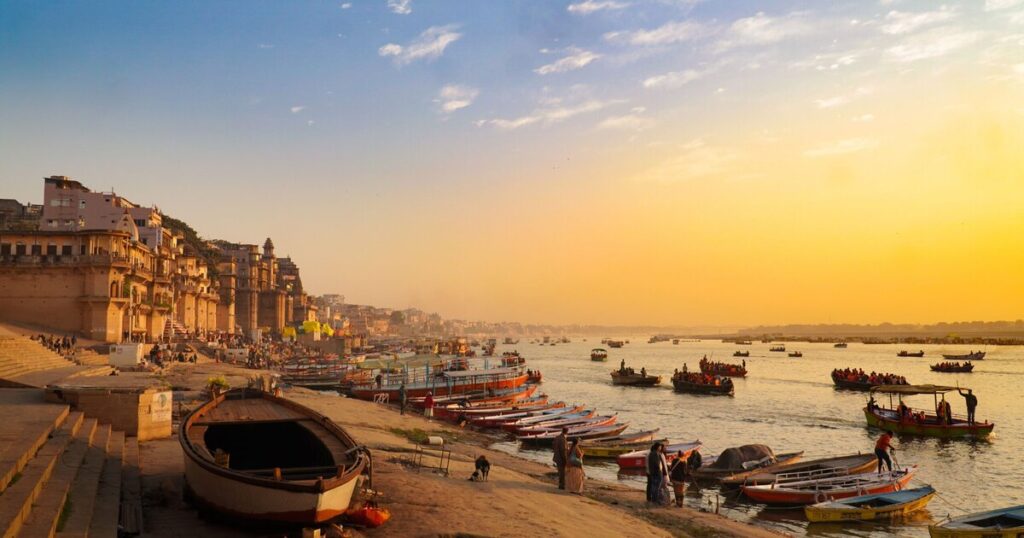
Varanasi’s monsoon typically runs from late June through mid-September, with the heaviest rainfall concentrated in July and August. The Ganga rises significantly during this period — sometimes dramatically so. Temperatures drop from the brutal 44°C of May and June to a more tolerable 28–34°C range, but humidity climbs steeply and the city’s ancient lanes can become slippery, waterlogged, and difficult to navigate after heavy rain.
The most spiritually significant month within this window is Shravan — the holy month of Lord Shiva on the Hindu calendar, which typically falls across July and August. This single fact changes the entire calculation for pilgrims and devotees.
If your primary purpose in visiting Varanasi is Kashi Vishwanath darshan, Shravan is arguably the most powerful time to come. The entire month is considered sacred to Lord Shiva, and the Kashi Vishwanath Temple during Shravan carries an atmosphere that no other season replicates.
The temple sees enormously elevated darshan numbers during this period — Kanwariyas (devotees who carry Ganga water on foot from Varanasi to pour over Shiva lingas in their home cities) fill the streets of Kashi throughout the month. The collective devotional energy is palpable in a way that is difficult to describe and impossible to replicate in October.
According to Hindu calendar traditions, Shravan Somvar — the Mondays of the Shravan month — are considered among the most auspicious days of the entire year for Shiva worship. Darshan on a Shravan Monday at Kashi Vishwanath is a spiritual experience that devotees travel hundreds of kilometres to seek.
If you are a Shiva devotee who has been waiting for the right time to make the Kashi pilgrimage, there is a compelling argument that Shravan is it.
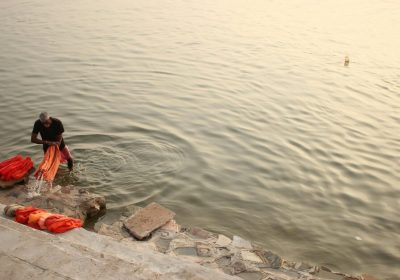
The Ganga during monsoon is a completely different river from the one visitors see in winter. Swollen with monsoon rainfall from across the Gangetic basin, the river rises to cover many of the lower ghat steps and takes on a powerful, dark, fast-moving character that is simultaneously humbling and deeply impressive.
The visual impact of Varanasi from the water during this period — the ghats rising steeply from the swollen river, the ancient city silhouetted against monsoon clouds — is among the most dramatic sights in India. Photographers and artists consistently cite the monsoon as their preferred season in the city precisely for this reason.
A private boat ride on the Ganga during this season has to be carefully timed — early morning or during a break in the rain — but when conditions are right, it is genuinely extraordinary.
Varanasi during peak season (October–February) is crowded. The ghats are packed, hotel prices are at their highest, and darshan queues at major temples can stretch for hours. Monsoon strips most of this away. International tourists are largely absent. Domestic leisure tourism drops considerably. What remains is the city’s essential character — pilgrims, priests, local residents, and the river — without the overlay of peak-season tourism infrastructure.
For travelers who want to experience Kashi as a living sacred city rather than a tourist attraction, monsoon provides exactly this. Accommodation prices drop by 30–50% compared to peak season. The city’s lanes feel more genuinely inhabited and less like a managed heritage experience.
The heat and dust that define Varanasi in April, May, and early June are entirely absent during monsoon. The city turns genuinely green. The air clears after heavy rain. The light during breaks in the cloud cover has a quality — soft, diffused, luminous — that is unique to this season and beloved by anyone who has experienced it.
When the Ganga rises significantly — which it does reliably every monsoon season — the lower ghat steps submerge. This is not a minor inconvenience. During heavy monsoon years, water can reach the doorways of ghat-level buildings and make long stretches of the ghat promenade completely inaccessible. The famous burning at Manikarnika Ghat continues regardless, but much of the leisurely ghat walking that defines a Varanasi visit becomes impossible.
Check the Ganga water level before finalizing travel dates. The Central Water Commission publishes daily river level data. Aim for September if possible — the rains are beginning to ease, the river is still dramatically full, but extreme flooding is less likely than in July and August.
The narrow lanes of the old city — already challenging to navigate even in dry conditions — become genuinely treacherous after heavy rain. Stone pavements become slippery, drainage overflow is common, and the lanes can fill with water in localized areas. This is particularly challenging for elderly pilgrims, anyone with mobility limitations, or families with young children.
Appropriate footwear is essential. Sandals with grip or rubber-soled shoes are far more practical than any kind of smooth-soled footwear in monsoon Varanasi. And the pace of moving through the lanes must slow considerably — this is not a season for rushing.
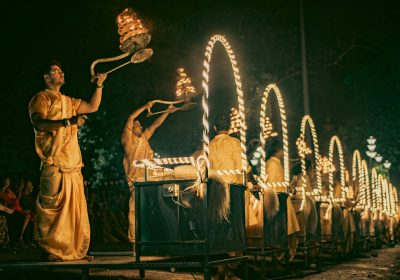
The Ganga Aarti at Dashashwamedh Ghat takes place every evening regardless of season. But during heavy rain, the ceremony is shortened, the atmosphere is different, and the experience from the ghat steps — standing in rain, visibility reduced — is significantly less immersive than on a clear winter evening. Watching from a covered boat position is one solution, but even boat rides are weather-dependent during active rainfall.
Build flexibility into your itinerary during monsoon. Plan for the aarti across two consecutive evenings so that even if one is heavily rained out, the other offers a better experience.
Road conditions between Varanasi and neighboring sacred cities like Prayagraj, Ayodhya, and Chitrakoot can deteriorate during heavy monsoon periods. Some rural stretches develop potholes, flooding, or diversions that significantly extend travel times. River crossings and low-lying roads near the Ganga system are particularly variable.
This is why reliable, locally knowledgeable transport is especially important during this season. A pre-booked cab or Tempo Traveller with a driver who knows the current road conditions and alternative routes is genuinely essential for monsoon multi-city travel — not an optional upgrade.
July is the most intense monsoon month — highest rainfall, greatest risk of significant flooding, but also the period with maximum Shravan devotional atmosphere. For Shiva devotees specifically, Shravan Somvar Mondays in July are worth the logistical difficulty. Go if Kashi Vishwanath is your primary purpose and you have a flexible itinerary.
August is the peak of Kanwariya season and continues Shravan’s spiritual significance. Rainfall remains heavy. The Ganga is typically at or near its highest. Ghat access is most restricted this month. Plan for temple-focused darshan rather than ghat exploration. Janmashtami in August adds another major devotional dimension.
September is the sweet spot for most travelers. The rains begin easing. The Ganga remains dramatically full and visually spectacular. Crowds are still low, prices still off-peak, but logistical challenges reduce considerably. If you want the atmosphere of monsoon Varanasi without its most difficult conditions, September is your month.
Tripcosmos has extensive experience planning Varanasi visits across all seasons, including the specific logistical demands of monsoon travel. Whether you are a Shiva devotee planning around Shravan Somvar, a photographer drawn by the dramatic monsoon atmosphere, or a family that can only travel during the July–September window, the team can build an itinerary that maximizes what this season offers while honestly planning around its challenges.
Tripcosmos can help with:
Also read the 7-Day Temple Tour Across Uttar Pradesh for a broader sacred circuit that can be adapted for the September window when conditions begin to ease.
📍 Website: https://tripcosmos.co 📱 WhatsApp: +91 9336116210
Share your travel dates and the Tripcosmos team will give you an honest assessment of conditions and a plan that works for your specific travel window.
Yes, with appropriate planning. The main risks — flooded lower ghats, slippery lanes, and variable road conditions — are all manageable with the right footwear, flexible itinerary, and reliable pre-booked transport. The city itself does not become unsafe during monsoon; it becomes logistically more demanding. Avoid booking the trip for peak flooding windows (typically mid-July to mid-August) if you have mobility concerns or are travelling with elderly family members.
Yes. The Ganga Aarti is performed every single evening of the year without exception. However, during active heavy rainfall, the ceremony may be shortened and the full seven-priest aarti experience can be less elaborate than in clear weather. Booking a private covered boat position through Tripcosmos is the most reliable way to witness the aarti regardless of weather conditions.
Shravan is the holiest month for Lord Shiva in the Hindu calendar. During this month — particularly on Shravan Somvar (Mondays) — the Kashi Vishwanath Temple sees exceptional devotional energy, elevated ritual activity, and a collective atmosphere of worship that is fundamentally different from other times of year. For Shiva devotees, a Shravan darshan at Kashi Vishwanath is considered among the most auspicious religious acts possible.
Yes, significantly. Monsoon is the off-peak season in Varanasi and most hotels and guesthouses offer rates 30–50% lower than their October–February peak pricing. This makes it possible to stay in ghat-facing or better-quality accommodation at budget-friendly rates — a genuine advantage for travelers with flexible timing.
September is generally the best balance. Rainfall eases, temperatures are comfortable, the Ganga remains dramatically full and visually spectacular, accommodation remains at off-peak prices, and most of the logistical difficulties of peak monsoon (flooding, heavily disrupted roads) reduce considerably. For devotees specifically seeking the Shravan atmosphere, late July or early August despite the heavier rains is the most spiritually significant window.
Varanasi during monsoon is not for everyone. If you need easy ghat access, reliable boat rides every evening, and dry lanes for leisurely exploration, plan your visit for October through February instead.
But if you are a Shiva devotee who wants Shravan darshan at Kashi Vishwanath, a photographer drawn to the river at its most dramatic, or a traveler who prefers an authentic city to a tourist-season experience — monsoon Varanasi will give you something that no other season can.
Plan honestly around the conditions. Pack for the rain. Book your transport in advance. And arrive open to what the city offers when the river is full, the priests are chanting through the rainfall, and Kashi wears its most ancient, unadorned face.
TripCosmos guarantees verified Kashi Vishwanath Sugam Darshan passes (zero line waiting), private Dev Deepawali & Ganga Aarti Bajra boats, and verified Toyota Innova Crysta cabs with trusted local chauffeurs.

Comments are closed.