Your cart is currently empty!
You may check out all the available trips and book one that suits you.
Continue Browsing Trips
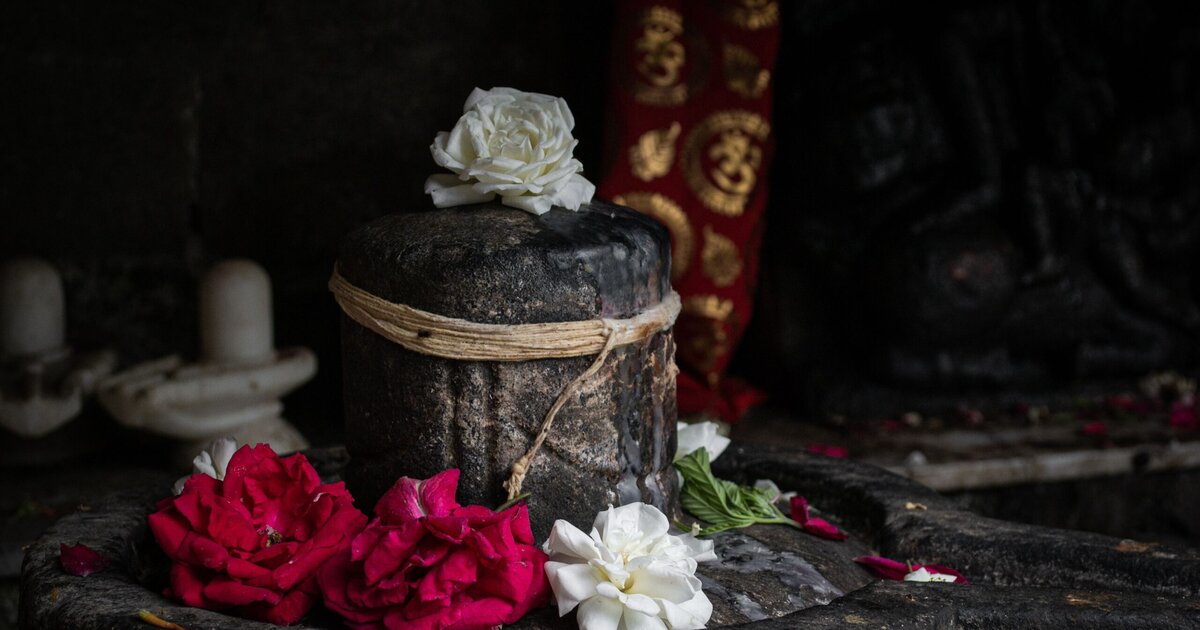
Complete Vindhyachal Devi Temple guide 2026. Trikon Parikrama, timings, Kali Khoh, Ashtabhuja & day trip from Varanasi. TripCosmos — WhatsApp +91 9336116210.
Seventy kilometres from Varanasi, on the banks of the Ganga where the Vindhya mountain range meets the river, sits one of the most powerful Shakti shrines in India — and one of the most overlooked stops on the UP pilgrimage circuit.
Vindhyachal is home to Maa Vindhyavasini — a form of Goddess Durga who chose to reside in the Vindhya mountains after the events of Lord Krishna’s birth night. When Vasudeva carried the infant Krishna across the Yamuna to safety, the divine child Yogamaya who replaced him in Kansa’s prison was snatched away and hurled to the ground — at which point she transformed into her goddess form and declared that the one who would destroy Kansa was already born. She then chose the Vindhya mountains as her eternal home. That story, rooted in the Bhagavata Purana, is why Vindhyachal exists — and why millions of Devi devotees consider a visit here both urgent and irreplaceable.
For families already visiting Varanasi, Vindhyachal is the natural half-day extension most pilgrims never make — and consistently regret missing.
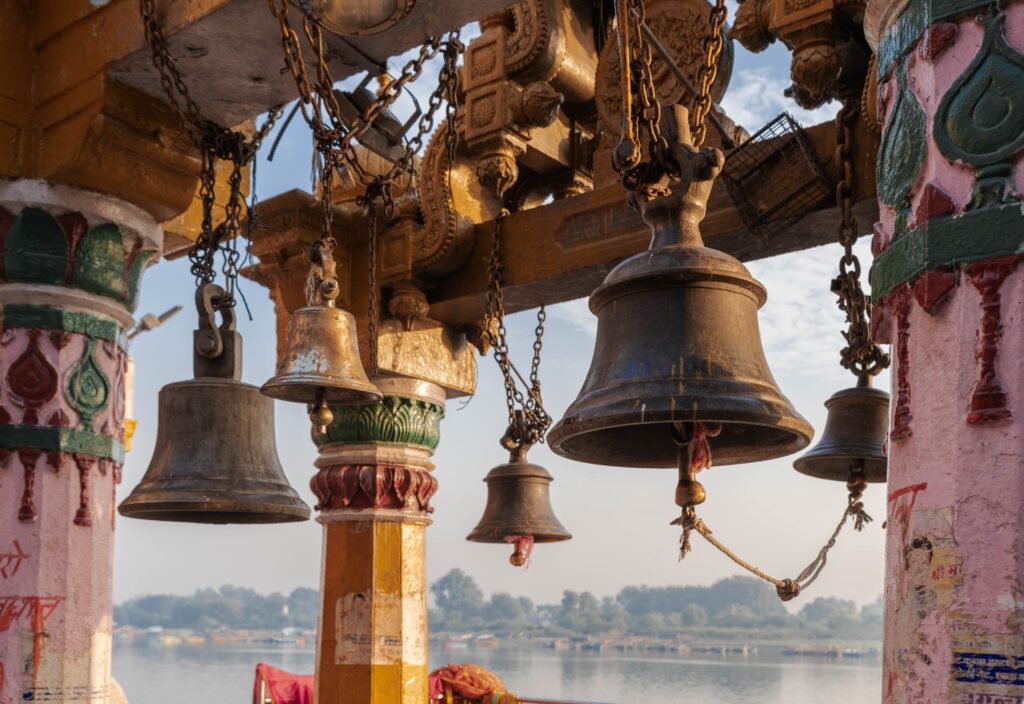
A visit to Vindhyachal is technically incomplete with just the main temple. The sacred geography of Vindhyachal is built around the Trikon Parikrama — the circumambulation of a spiritual triangle formed by three goddess shrines, each representing a different aspect of the Divine Mother.
The central and most visited temple — Maa Vindhyavasini in her form as Mahalakshmi, the goddess of prosperity and protection. The sanctum holds the primary murti, richly adorned, and is the most energetically charged space in the entire complex. Pilgrims offer red chunari (a red cloth), coconut, and marigolds as the traditional offering.
The new corridor development has significantly improved the approach — wider lanes, better crowd management, proper shade. The temple is active and alive from the moment it opens at 5:00 AM.
Temple timings: 5:00 AM to 12:00 PM | 1:30 PM to 7:15 PM | 8:15 PM to 9:30 PM
Two kilometres from the main temple — a natural cave dedicated to Maa Kali. The cave is real, low-ceilinged in sections, and genuinely atmospheric in a way that no constructed temple can replicate. The Mahakali idol inside the cave is considered among the most powerful in the region.
For devotees who practise the Tantric tradition or who specifically worship Kali, this is the most significant stop in the Trikon Parikrama. The enclosed cave, the idol illuminated by lamp, and the continuous chanting create an experience unlike any other on the UP pilgrimage circuit.
Note for families: the cave is slightly claustrophobic. Children and elderly members who are comfortable in enclosed spaces manage well. Those with claustrophobia should be aware before entering.
On a hill above the town — Maa Ashtabhuja in her form as the eight-armed goddess of knowledge and inner strength. The climb is manageable (easier than Ayodhya’s Hanuman Garhi). The view of the Ganga from the Ashtabhuja hilltop is, as many pilgrims describe it, the finest view of the sacred river available anywhere in this stretch of UP.
The hilltop atmosphere is quieter and more meditative than the main temple — a natural conclusion to the Trikon Parikrama before descending for the return journey.
The traditional sequence: Vindhyavasini → Kali Khoh → Ashtabhuja. Always clockwise, always in this order.
Depart Varanasi at 5:00 AM. Reach Vindhyachal by 7:00 AM — ideal for the morning darshan session before crowd build-up.
Total time at Vindhyachal: approximately 8 hours. This covers the complete Trikon Parikrama, Sita Kund, and the Ganga ghat without rushing any stop.
Private cab from Varanasi (return, sedan): ₹2,500–₃,500. Fixed rate, AC vehicle. TripCosmos provides cab service from Varanasi to Vindhyachal with drivers who know the Trikon Parikrama sequence and can park at each temple point for efficient movement.
Offerings: Red chunari (available at all stalls near the temple, ₹50–₁00), coconut, marigold flowers, and sindoor. These are the traditional Devi offerings and are sufficient for all three temples without additional purchases.
Dress code: Modesty required at all three temples. Women should cover their heads with a dupatta inside the main sanctum. Remove footwear at all three sites — rubber slip-on footwear saves significant time across the full Trikon circuit.
Avoid: Weekends and festival days if visiting for quiet darshan. Navratri (Chaitra: March–April, Sharad: September–October) brings crowds of lakhs — the darshan queue at Vindhyavasini during Navratri Ashtami can exceed 3–5 hours. Early morning arrivals by 5:00 AM manage even Navratri days more comfortably.
The best time for quiet darshan on regular days: 5:00 AM to 7:00 AM. Weekday mornings outside Navratri, the Trikon Parikrama can be completed in 2.5 to 3 hours with no significant queue at any of the three temples.
Vindhyachal sits almost exactly midway between Varanasi (70 km) and Prayagraj (90 km) on NH19. This geographic position makes it the single most logical addition to any Varanasi–Prayagraj family circuit — without any detour.
The routing is straightforward: Varanasi → Vindhyachal (70 km, 1.5 hours) → Prayagraj (90 km, 1.5 hours).
Families driving from Varanasi to Prayagraj for the Sangam darshan can stop at Vindhyachal for the complete Trikon Parikrama, reach Prayagraj by early afternoon, and still complete the Sangam boat ride and Bade Hanuman Ji in the same day.
TripCosmos coordinates this Varanasi–Vindhyachal–Prayagraj route as a single cab booking — one vehicle, fixed price, all three destinations on one confirmed itinerary. For families extending to Ayodhya, the 4N5D Varanasi Prayagraj Ayodhya Tour Package can be extended with a Vindhyachal half-day on the Varanasi–Prayagraj leg. For the dedicated Vindhyachal day trip from Varanasi, contact TripCosmos on WhatsApp for a fixed-rate cab booking.
Vindhyachal’s significance as a Shakti Peetha in the Hindu tradition is rooted in both the Devi Mahatmya and the Bhagavata Purana — making it one of the most scripturally grounded goddess shrines in North India.
Website: https://tripcosmos.co WhatsApp: +91 9336116210
The Trikon Parikrama is the sacred circumambulation of three goddess temples — Vindhyavasini Devi (Mahalakshmi), Kali Khoh (Mahakali), and Ashtabhuja Devi (Maa Saraswati) — which form a spiritual triangle around Vindhyachal town. On normal weekdays, the complete Trikon takes 2.5 to 3 hours by auto-rickshaw. During Navratri, the same circuit can take a full day due to queue times at the main temple.
Normal darshan timings: 5:00 AM to 12:00 PM, 1:30 PM to 7:15 PM, and 8:15 PM to 9:30 PM. During Navratri, the temple extends to near-24-hour operation with only a 4-hour closure. The most peaceful darshan window on regular days is 5:00 AM to 7:00 AM.
Vindhyachal is approximately 70–75 km from Varanasi — 1.5 to 2 hours by private cab on NH19. A return sedan from Varanasi costs ₹2,500–₃,500 with TripCosmos. By train, Vindhyachal railway station is directly connected to Varanasi Junction — journey time approximately 1.5 hours, fare from ₹130 in general class.
The main Vindhyavasini temple and Kali Khoh are both manageable for elderly visitors with walking support. The Ashtabhuja temple involves a hill climb — assess individually based on mobility. For elderly family members who cannot climb, the Vindhyavasini and Kali Khoh darshans constitute a spiritually complete visit.
October to March is the most comfortable season — cool mornings, manageable crowd levels outside festival dates. Navratri (Chaitra in March–April and Sharad in September–October) is the most spiritually charged but also the most crowded period. For quiet darshan with full Trikon Parikrama completed in a morning, a weekday visit in November or January is ideal.
TripCosmos guarantees verified Kashi Vishwanath Sugam Darshan passes (zero line waiting), private Dev Deepawali & Ganga Aarti Bajra boats, and verified Toyota Innova Crysta cabs with trusted local chauffeurs.

One Comment
Comments are closed.